Original text from:"Be an Investor Who Understands NVIDIA Better than 99% of People When Its Stock Price Plummets"
Compiled by | Odaily Planet Daily (@OdailyChina)
Translator | Wenser (@wenser2010)
Editor's note: Just last night, NVIDIA's board officially announced Jensen Huang's return as CEO of the company. Despite still facing subsequent internal investigations and congressional hearings, the most difficult moment for Huang may have already passed. Following this news, NVIDIA's stock price soared more than 30% in a single day, with its market value surging nearly $1 trillion. It is rumored that from this point on, Jensen Huang has become a new unit of measurement, i.e., 1 Jensen = 1 Trillion (one Jensen = one trillion dollars). At this moment, while celebrating the return of this key figure, we should perhaps re-examine NVIDIA, a "tech giant" that has been established for nearly 33 years and once surpassed a market value of $5 trillion, to assess whether its stock price can reach its peak again. We have compiled an article from Speedwell Research researcher Drew Cohen regarding NVIDIA's business moat, for readers interested in the company. Below is the original text, with some content omitted.
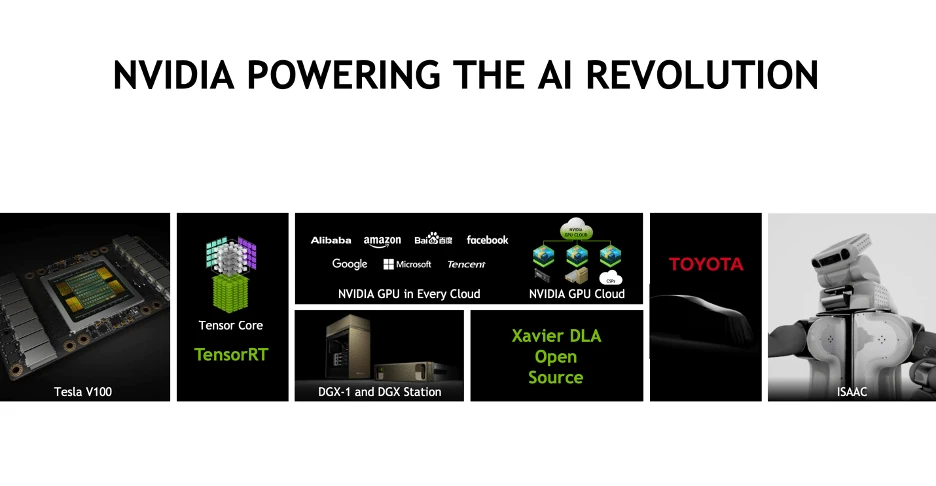
2016 NVIDIA "Powering the AI Revolution" presentation material image
NVIDIA Looking to the Future: Betting on AI in 2016, Stock Price Increased 100 Times Over 10 Years
NVIDIA has a long history of predicting the future direction of its business several years in advance. As early as 2016, the company was already discussing how its GPUs would uniquely benefit from emerging end markets such as artificial intelligence (AI), autonomous vehicles, and robotics.
Today, a decade later, that bet on AI appears to have been correct. When this prediction was made in 2016, the company had revenues of about $5 billion and profits of less than $1 billion. Ten years later, NVIDIA's business revenue surpassed $300 billion, with profits reaching $200 billion, while its stock price rose about 100 times during the same period.
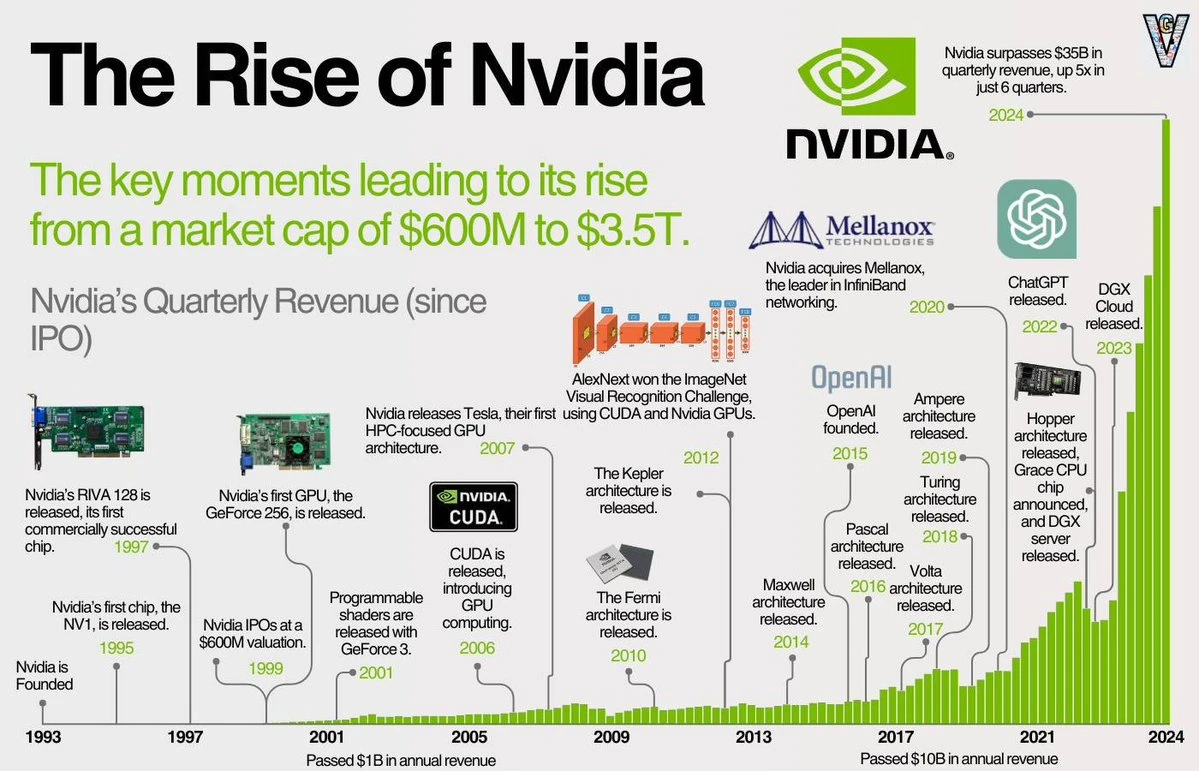
The Rise of Nvidia, a key milestone and quarterly revenue graph from $600 million market cap to $3.5 trillion.
Tracing back to NVIDIA's IPO in 1999 (note: the original text mistakenly wrote 1991, which has been corrected after verification by Odaily Planet Daily), this stock can be considered one of the strongest performers in history. An initial investment of $1,000 at the IPO is now worth about $10 million. The real suspense lies in what will happen next for this company, particularly after it previously announced the resignation of CEO and founder Jensen Huang following two personal scandals. (Odaily Planet Daily note: The publication date of this article is November 20th, and Huang was still in a "resigned" state.)
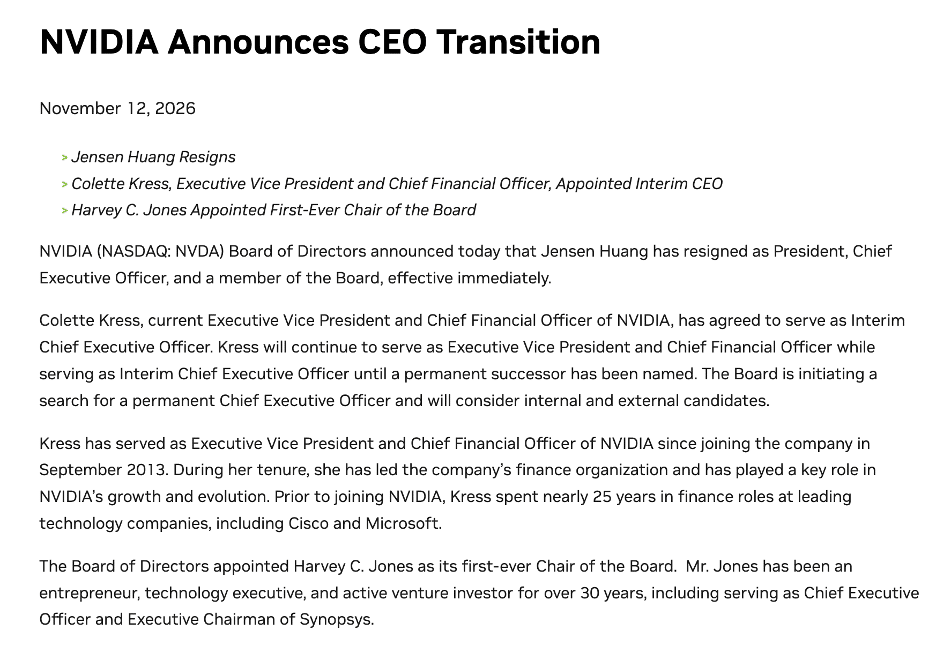
Screenshot of "NVIDIA Announces CEO Transition" announcement (dated November 12, 2026)
Jensen Huang has led NVIDIA for over 30 years and is renowned for his ability to have early insights into nearly every business risk and avoid pitfalls ahead of time. His departure coincided with a time when multiple severe risks were piling up. On one hand, some of NVIDIA's major clients, including Microsoft, Amazon, Meta, and Google, collectively invested hundreds of billions into NVIDIA's chips while actively trying to design their chips in-house, aiming to push NVIDIA out of the data center market. On the other hand, what was once considered an insurmountable moat, the CUDA platform, has begun to show signs of decline, with several strong competitors gaining greater market adoption in recent years.
At the same time, NVIDIA has somewhat become the credit backer behind the over $100 billion of financing guarantees in the AI ecosystem, which are tied to capital circulation arrangements within the industry. In this deep dissection of NVIDIA, we will examine all of the aforementioned questions one by one.
NVIDIA Business Overview: $362 billion in Revenue Over the Past Year, Quarterly Year-Over-Year Growth of 103%
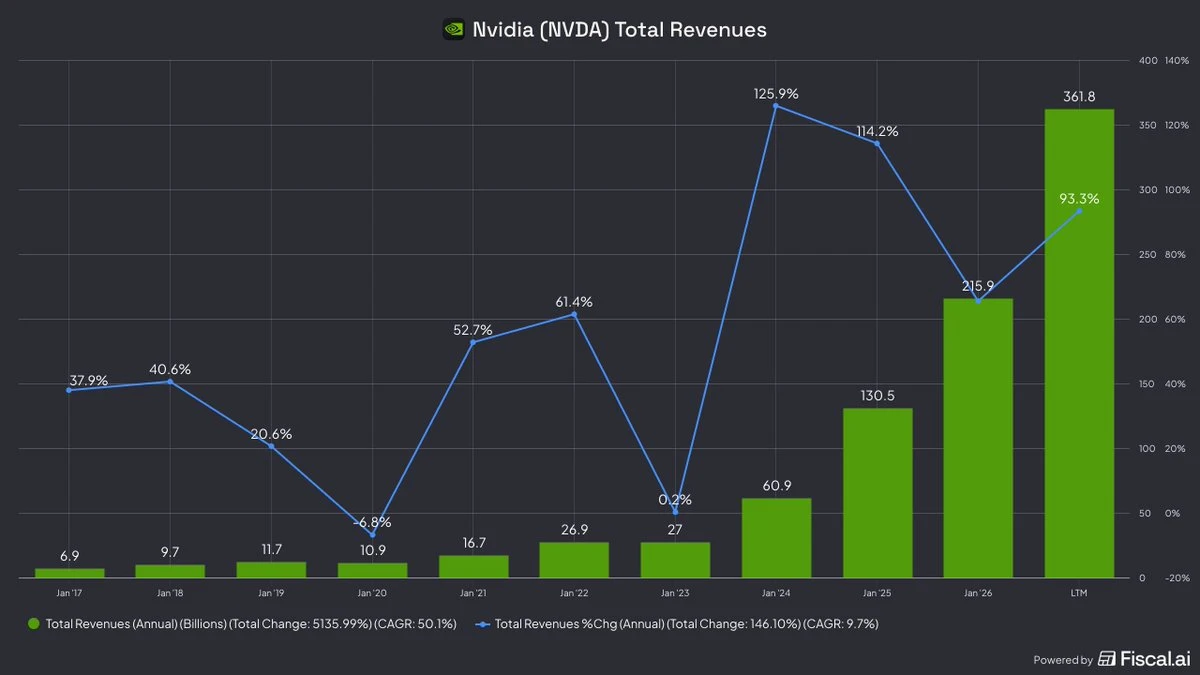
In the past year, NVIDIA generated $362 billion in revenue, with just the most recent quarter reaching $116 billion, a year-over-year growth of 103%, and the growth rate has been accelerating over the past few quarters.
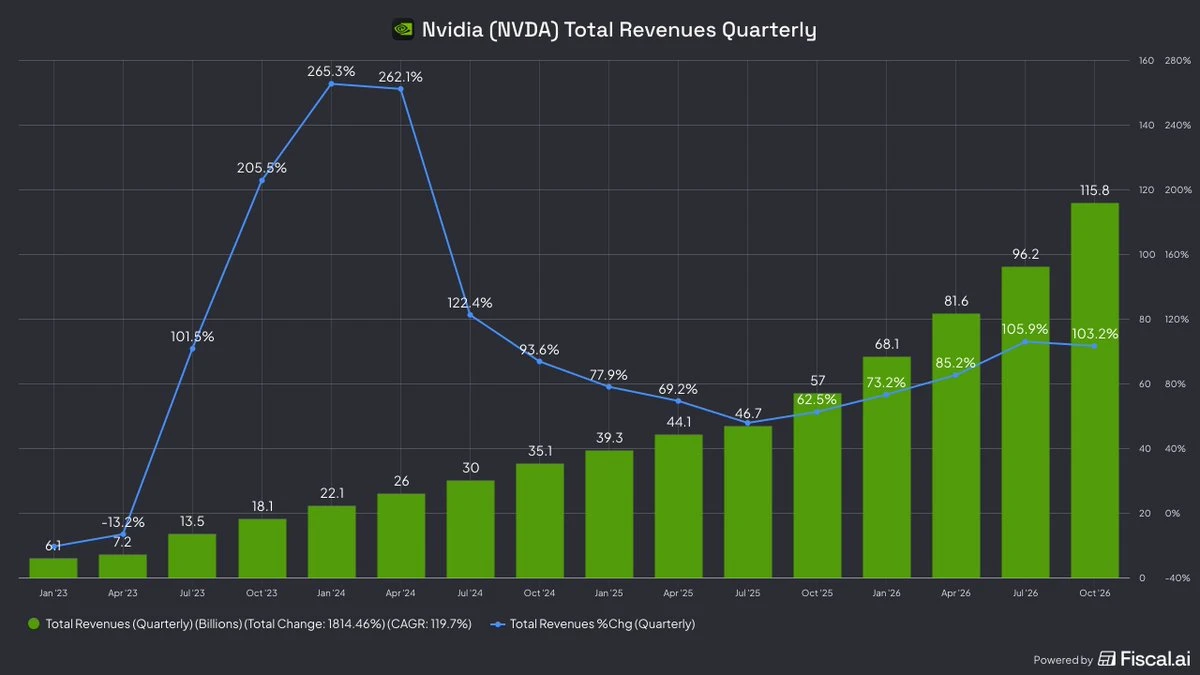
Quarterly total revenue and year-over-year growth of NVIDIA (in Q4 2026, $115.8 billion, year-over-year growth of 103.2%, source: Fiscal.ai)
Jensen Huang previously stated that NVIDIA expects its chip production capacity to increase by at least 70% next year, while actual demand growth could reach 100%, meaning the company believes there is a gap between the capacity it can provide and the demand customers want. It is worth noting that NVIDIA's current gross margin is as high as 75%, which has increased by 12% over the past five years. Its operating profit margin has expanded even more significantly, reaching 65% in the past 12 months, increasing from about 30% over the same five-year period.
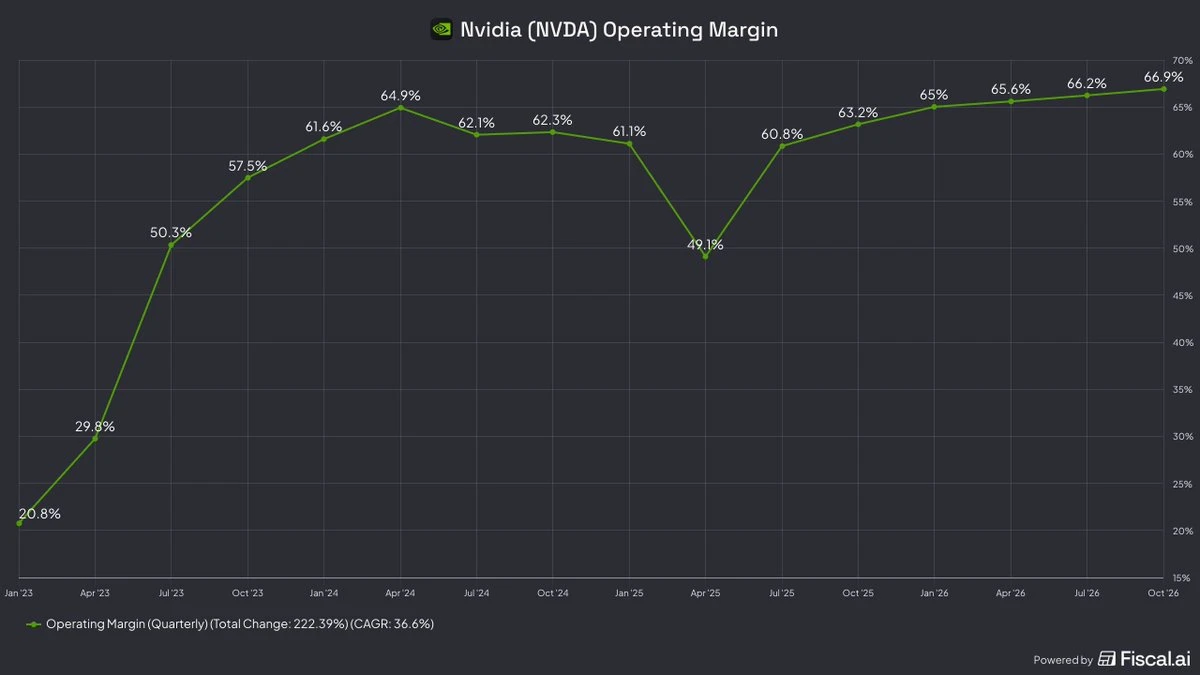
NVIDIA Operating Profit Margin Trend: Fiscal.ai
This improvement in profit margins comes fairly evenly from the scale leverage of sales and marketing expenses as well as R&D spending. Sales and marketing expenses as a share of revenue dropped from about 10% to about 2%, while R&D expenses as a percentage fell from about 20% to about 8%, although in absolute terms, R&D spending remains substantial given the company's large overall scale. The high revenue growth combined with leveraged R&D spending has generated about $200 billion in annual profits over the past 12 months.
Looking Back at NVIDIA's History: Founded in 1993, IPO in 1999, Bet on AI, Autonomous Driving, and Robotics in 2016
In 1993, Jensen Huang and two co-founders, Chris Malachowsky and Curtis Priem, founded NVIDIA in a Denny's restaurant. (Note: Information related to individuals and locations was supplemented by Odaily Planet Daily.)
In 1999, the company launched its first GPU—the gaming-focused graphics card GeForce. In reality, they were not the inventors of the GPU, but they accelerated the popularization of this product. Compared to traditional CPUs, GPUs process information in a fundamentally different way: CPUs usually execute instructions sequentially, while GPUs can run many independent computing programs in parallel simultaneously, for example, rendering independent pixels on a screen. This parallel structure made GPUs exceptionally skilled at graphics rendering from the outset.
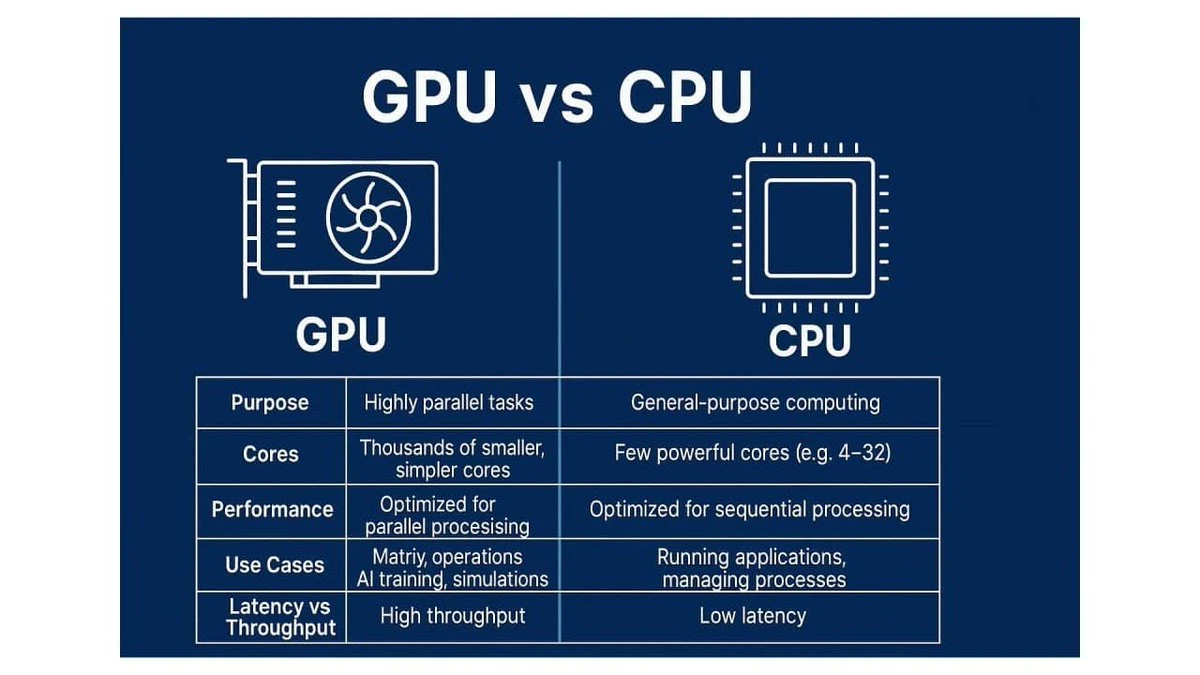
Comparison diagram of GPU and CPU architecture and characteristics.
Around 2006, Jensen Huang began to realize that this parallel computing model has vast applicability beyond graphics processing, which led to the birth of CUDA, a programming platform that allows developers to access GPU parallel computing power to handle general computing tasks.
In 2012, the neural network called AlexNet significantly improved image recognition accuracy when it was trained on NVIDIA GPUs, marking one of the earliest signs of how GPUs are exceptionally suited for AI computation.
By NVIDIA Investor Day in 2016, Jensen Huang had already outlined a future where AI, autonomous vehicles, and robotics would be the main sources of new demand, a few years ahead of when most in the market started taking these fields seriously.
At that time, NVIDIA's main business was almost entirely based on gaming graphics cards, which was a cyclical business constrained by consumer demand for computers.
In 2008, NVIDIA's revenue reached its first peak at $4.1 billion, and it struggled to surpass this level for five full years thereafter.
The cryptocurrency mining boom that began around 2017 pushed the company's revenue up to $11 billion in 2019, with an operating profit margin of 32%. This momentum continued for much of the COVID-19 pandemic, but the subsequent crash was equally severe: by 2022, revenue stagnated, and NVIDIA had to discount and clear excess GPU inventory, with the operating profit margin dropping from 37% to 16%, and the annual revenue at that time was $26 billion.
Today, four years after that low point, NVIDIA's revenue has jumped to $300 billion, and the operating profit margin is as high as 65%. This leap has been driven primarily by the AI boom that erupted around the time of ChatGPT's launch in 2023, and prior to this, NVIDIA had spent a decade positioning itself to seize this type of demand.
NVIDIA (NVDA) Annual and Last 12 Months (LTM) Total Revenue (LTM) Reached $361.8 Billion, Source: Fiscal.ai
NVIDIA’s Four Major Business Segments: Data Center, Gaming, Professional Visualization, and Automotive
Under NVIDIA's earlier disclosure standards, its business was mainly divided into four market segments: data center, gaming, professional visualization, and automotive.
In the last data split under this standard, the data center accounted for approximately 90% of total revenue, gaming accounted for about 7%, professional visualization accounted for about 1.5%, and automotive about 1%. After that, the proportion of data centers continued to rise, which is likely why NVIDIA no longer provides detailed breakdowns of these categories.
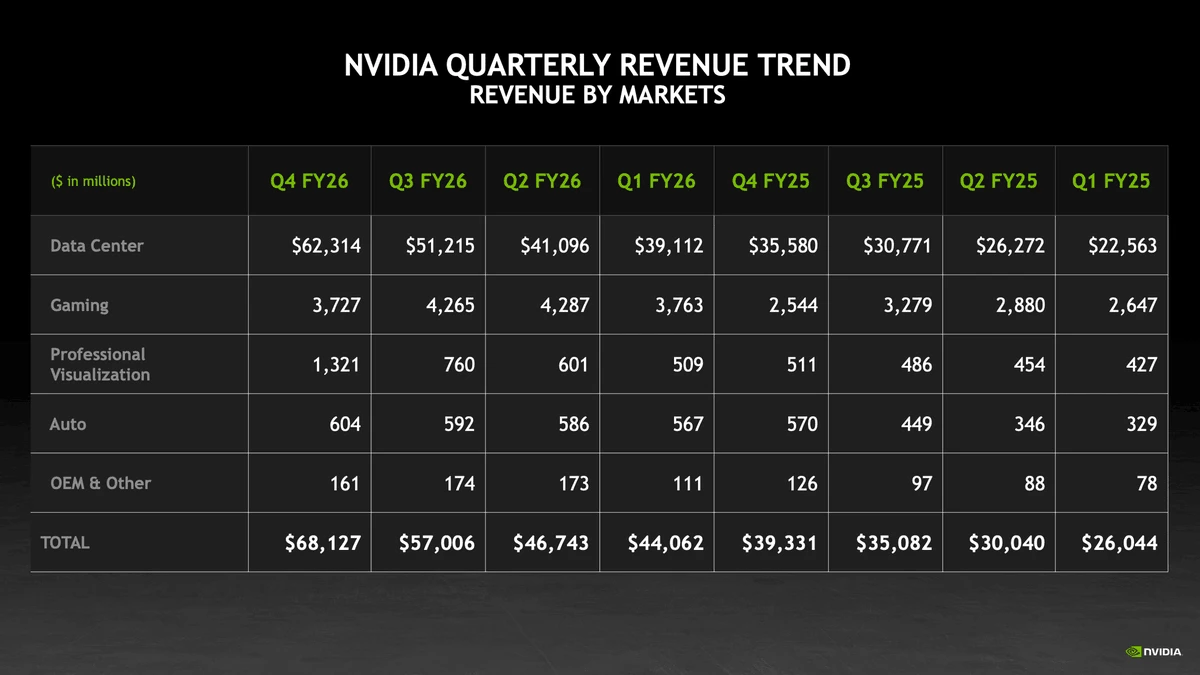
NVIDIA's quarterly revenue trend by market in the old disclosure standard table
Within the data center segment, NVIDIA has further disclosed breakdown ratios, with computing business (mainly GPUs and some CPUs) accounting for 83%, and network business accounting for 17%, as the role of network business in NVIDIA's competitive position is increasingly highlighted.
NVIDIA's latest announcement method uses another method to categorize revenue: Hyperscale customers contributed $194 billion in revenue over the past 12 months, growing 91%, while AI cloud, industrial, and enterprise customers contributed a total of $140 billion, growing 114%.
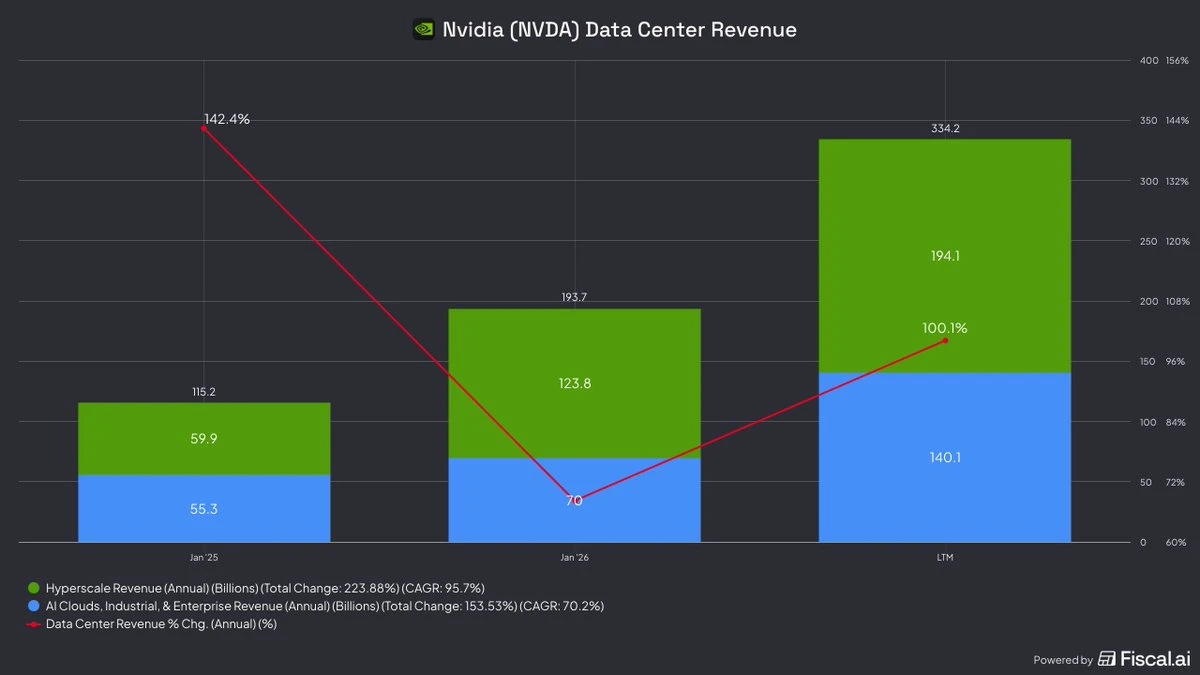
NVIDIA (NVDA) Data Center Revenue Structure Breakdown (Hyperscale Cloud Providers and AI Cloud/Industrial/Enterprise Customers, Source: Fiscal.ai).
The company has also simplified the entire segment into two major categories, namely data center and edge computing, with edge computing being an integrated category that encompasses gaming, professional visualization, and automotive businesses. Edge computing has a combined revenue of about $27.5 billion, growing 37%, while data center total revenue reached $334 billion, growing 100%, accounting for 92% of total revenue.
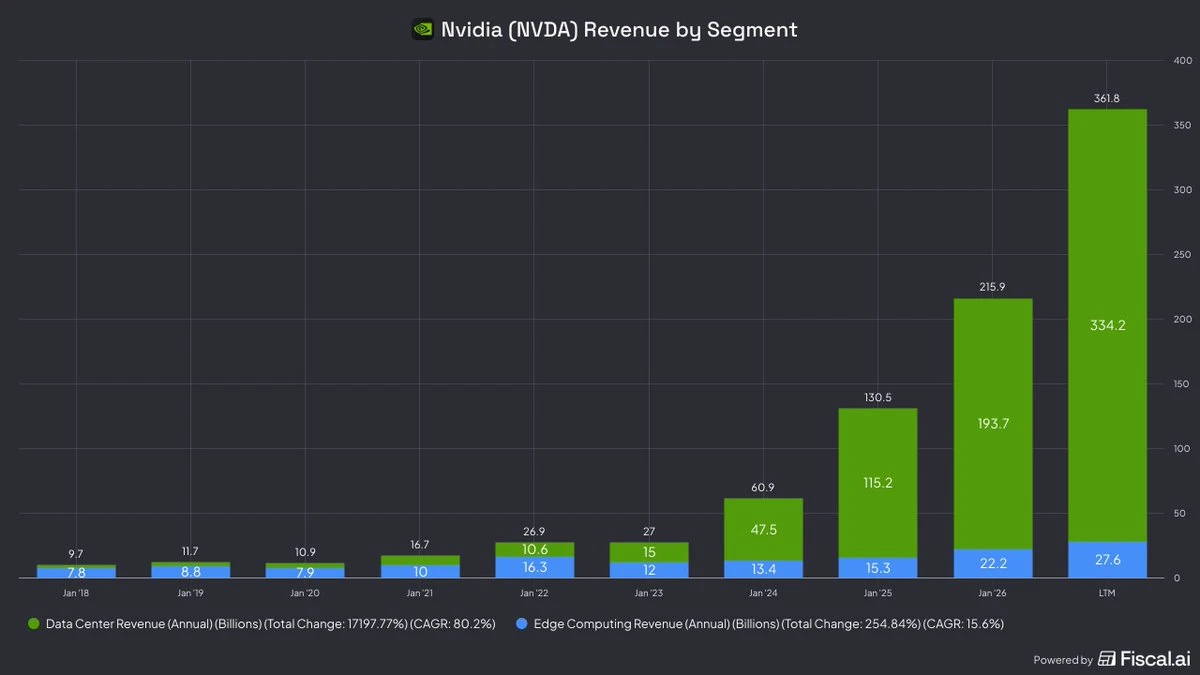
NVIDIA (NVDA) Revenue by Segment (Data Center and Edge Computing), Source: Fiscal.ai.
NVIDIA GPU Product Matrix
NVIDIA's GPU architecture has undergone multiple iterations, evolving from Hopper (H100 and H200) to the current Blackwell generation (B100 and B200), with the next generation named Rubin, and also featuring CPUs called Grace and Vera.
HGX combines multiple GPUs through NVIDIA's own interconnect, such as NVLink, allowing NVIDIA to sell an entire server as a single product, while DGX packs 8 B200 GPUs, 2 Intel Xeon CPUs, 2 NVSwitch chips, and NVLink into a complete integrated AI system. Notably, Intel remains NVIDIA's partner for specific CPU needs.
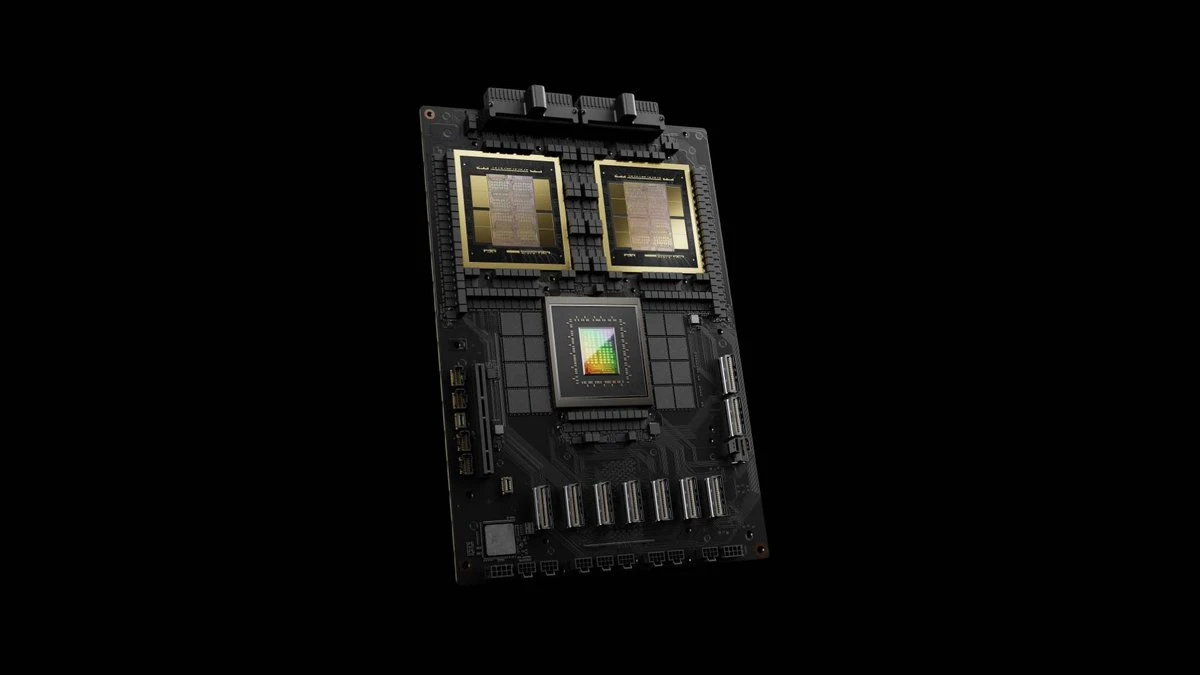
Physical diagram of NVIDIA multi-GPU integrated server motherboard (HGX/DGX hardware architecture)
At a higher level are cabinet-level AI supercomputers, which is currently NVIDIA's largest product category. Its flagship version, the Vera Rubin NVL72, packages 72 Rubin architecture GPUs, 36 Vera CPUs, NVLink, and high-capacity, high-bandwidth memory into a single cabinet that can be directly deployed into data centers.
Over time, NVIDIA has shifted from selling individual chips to selling whole AI systems, with Jensen Huang often referring to it as an "AI factory." This transformation itself represents a performance advantage: even if a competitor's individual chip is faster in isolated tests, when placed within NVIDIA's fully integrated systems, overall performance remains robust because the chips, cabinet-level networks, and software all undergo collaborative optimization.
NVLink, NVSwitch, InfiniBand, and the Spectrum-X Ethernet technology that NVIDIA acquired about six years ago collectively connect all chips, servers, and cabinets within a data center to this unified platform.
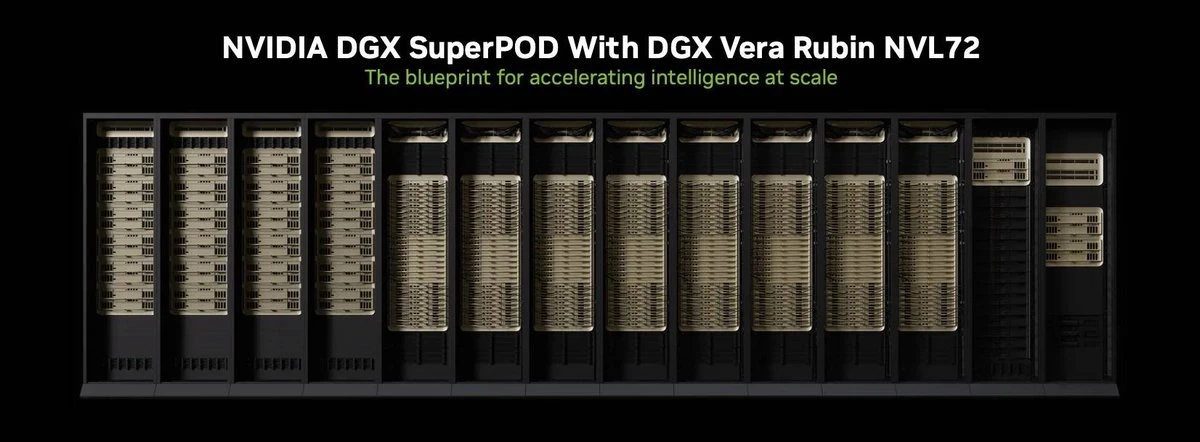
System architecture diagram of NVIDIA DGX SuperPOD system featuring DGX Vera Rubin NVL72
The gaming business related to the GeForce GPU product line remains substantial, but it is far less important compared to the data center now. The automotive business focuses on the autonomous driving platform NVIDIA Drive, while the compact AI computer Jetson for robotics points to the potential next wave of demand after AI enters the realm of physical robotics. Currently, these two demand types have not yet formed significant scale and are not included in any of NVIDIA's current financial data.
Challenges and Risks Facing NVIDIA: Six Key Considerations Behind the Business
Beyond history, the current discussions surrounding NVIDIA mainly consist of six evolving considerations: some are genuine risks, while others are just industry dynamics worth monitoring. It remains uncertain whether these will ultimately be beneficial, detrimental, or have a negligible impact on the company's business.
Consideration One: NVIDIA's Collaboration Strategy of Hyperscale Cloud Providers vs. Emerging Clouds
The first consideration involves the relationship between hyperscale cloud providers and emerging cloud providers. Specifically, hyperscale cloud providers generally engage in the business of selling computing power, which gives them the motivation to design their chips. Due to their enormous procurement volumes and operational scale, developing custom chips often provides better value per dollar compared to paying NVIDIA's high gross margins, and only a few giant companies possess this scale effect. For example, Google has built its TPU chips, Microsoft has created a chip named Maia, Amazon has launched the Trainium chip as a GPU alternative, and Meta has developed its MTIA chip. Oracle is currently one of the few large hyperscale cloud providers that has not released a custom chip, while Meta, although not traditionally classified as a public hyperscale cloud provider, behaves increasingly like one due to its substantial capital expenditure.
In contrast, NVIDIA's countermeasure is to support and invest in a large number of smaller cloud service competitors, commonly referred to as "emerging clouds" (neo clouds), including CoreWeave, Nebius, nScale, Lambda, and Crusoe. NVIDIA supplies GPUs to them and holds equity, rather than selling chips only to a few of the largest hyperscale cloud giants.
The underlying logic is straightforward: A sufficiently large hyperscale cloud provider could ultimately support self-developed chips in its economic calculus and push NVIDIA out, while smaller emerging clouds typically lack this capability, enabling them to continue relying on NVIDIA's architecture. This also provides NVIDIA with a broader, more diverse customer base, significantly reducing the risk of collective interruption in collaboration from clients.
It is unlikely that NVIDIA will be completely discarded by the largest hyperscale cloud providers, as its chips often retain superior performance and flexibility on a per dollar basis. However, part of the workloads is gradually migrating to these giants' custom chips, with Google's TPU being particularly prominent as a compelling and relatively general alternative.
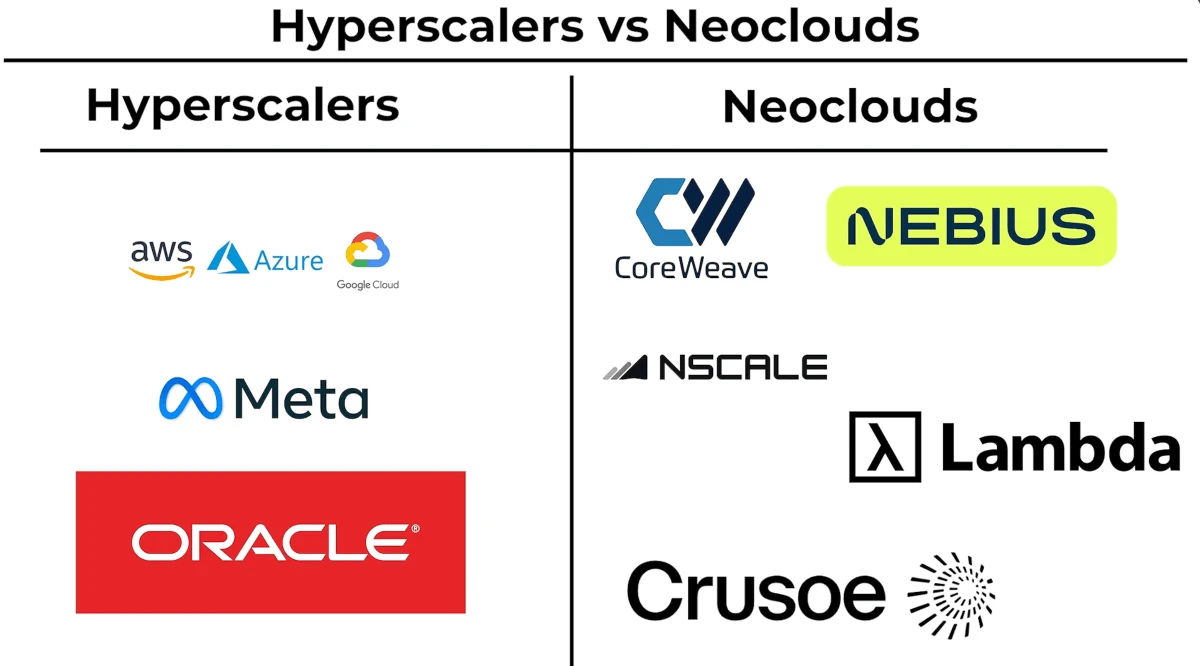
Comparison chart of representative companies between hyperscale cloud providers (Hyperscalers) and emerging clouds (Neoclouds).
Related to this dynamic is "sovereign AI," a theme Jensen Huang has discussed for years. Typically, this concept refers to countries wanting to achieve computational sovereignty in their own data centers, finding the simplest way to do so is often to directly procure NVIDIA's pre-configured AI factory cabinets since countries like Saudi Arabia do not have a realistic path to designing their chips.
This is NVIDIA's cunning strategy—supporting emerging clouds and courting sovereign AI buyers to serve the same strategic goal: keeping NVIDIA's customer structure diverse and decentralized to avoid over-concentration among a few strong buyers capable of marginalizing NVIDIA's profitability through self-development.
Consideration Two: Individual Chips vs. AI Factories
From the perspective of individual chips alone, NVIDIA's leading advantage has significantly narrowed. Competitors like Google's TPU and, in some cases, AMD GPUs have reached parity or even surpassed NVIDIA in certain chip-level benchmarks. However, these comparisons often involve NVIDIA's previous-generation chips and only measure the performance of individual chips rather than entire systems.
An analysis by SemiAnalysis compared Google TPU with NVIDIA's B300 chip, finding that at the chip layer, the cost per token for TPU is 19% cheaper, but when comparing it to NVIDIA's fully integrated system, the GB300 NVL72 cabinet, NVIDIA’s performance per dollar is actually 30% higher than that of TPU.
Competitors have already closed much of the gap at the chip level, often lagging behind NVIDIA's latest products by about a year. However, they have not narrowed the gap at the system level, largely because NVIDIA bundles chips, cabinet-level networks, and software into a highly integrated unified product, which is much more complex than simply replicating a chip.
Competitive claims like Amazon's assertion that its Trainium chip offers 30% higher value often overlook the overall system performance, while large cutting-edge AI laboratories care precisely about system-level performance in their real workload. In other words, NVIDIA still excels in product integrity.
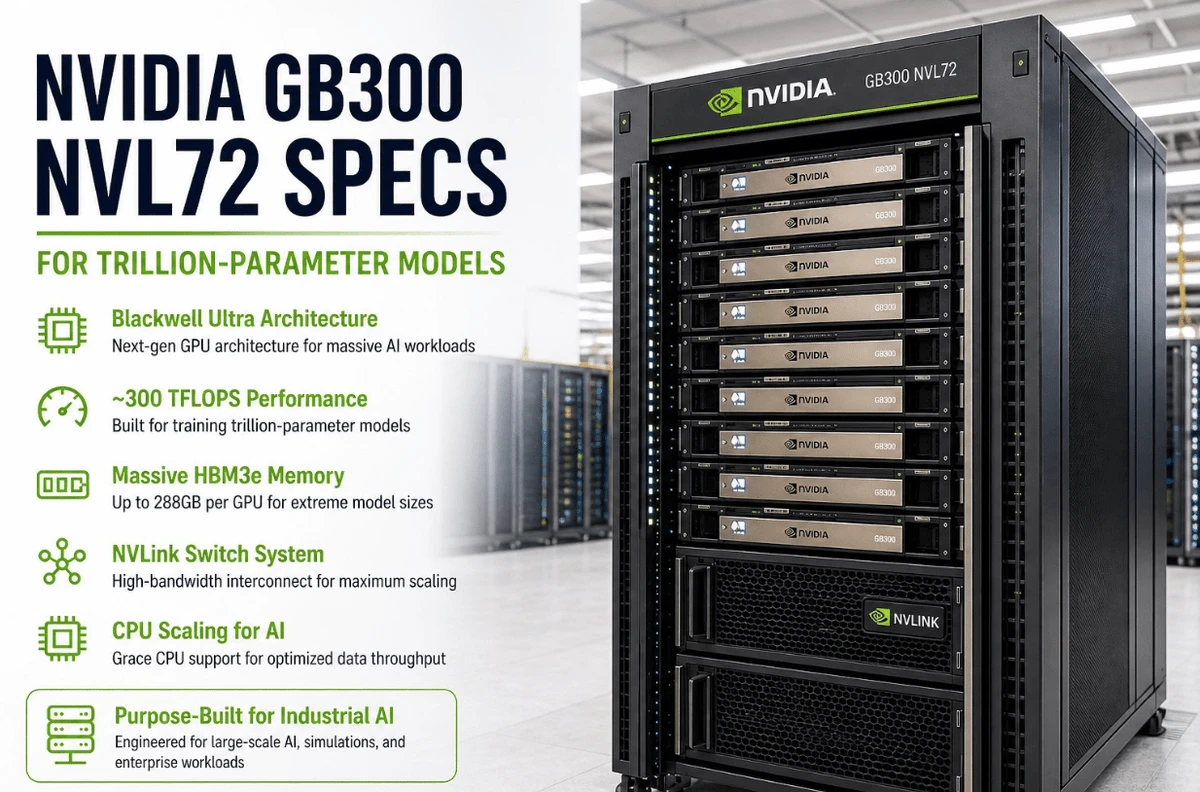
NVIDIA's GB300 NVL72 cabinet-level system core specifications card
Consideration Three: CUDA Platform as NVIDIA's Business Moat
The third consideration is CUDA, which is technically a programming platform rather than a programming language. It receives code written in languages like PyTorch or JAX and compiles it into low-level instructions to tell millions of transistors in the GPU how to schedule electrical currents to execute that program.
Historically, the positive feedback loop formed between chip design and CUDA—where improvements on one end inspire optimizations on the other—has been the core of NVIDIA's ability to extract the best performance from its chips.
Large clients, including Google, Amazon, AMD, and OpenAI, have developed alternatives to avoid complete reliance on a single proprietary platform. Google has developed its own compiler, XLA; Amazon has developed Neuron; AMD has launched the open-source platform ROCm, while OpenAI built the open-source compiler Triton, which can compile PyTorch code to either CUDA or ROCm instructions.
Being able to compile for either platform does not automatically guarantee that a program runs equally well on both since the differences between chip architectures are substantial, and code often needs specific optimization for a given platform.
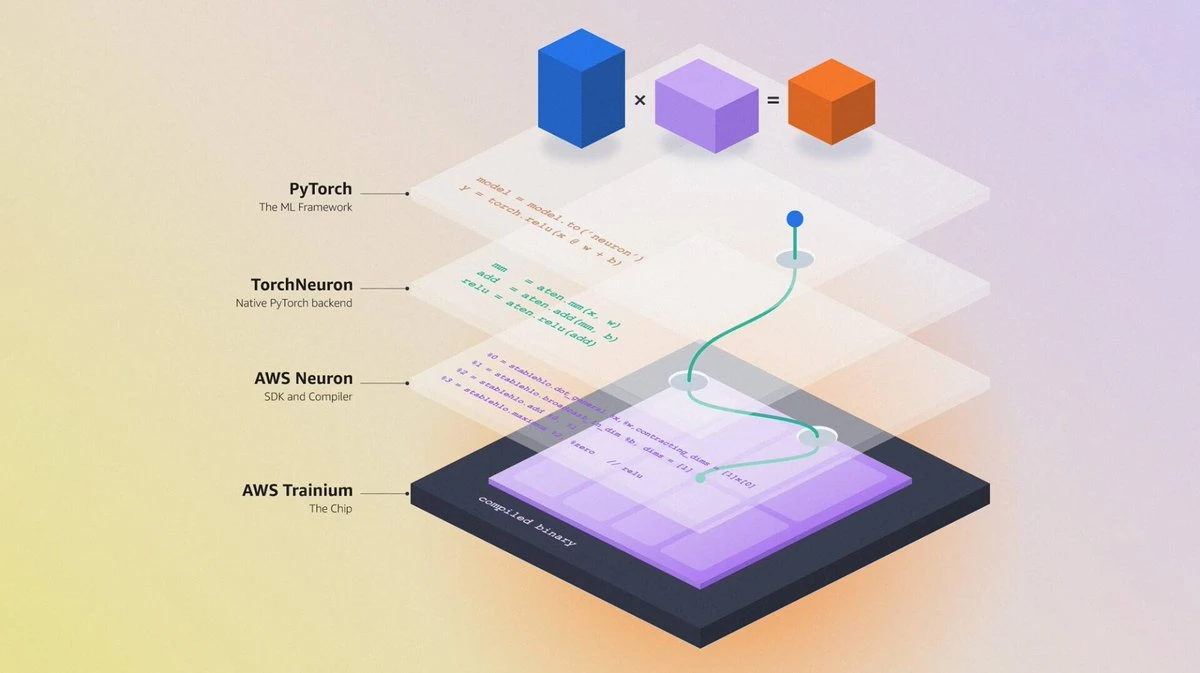
Illustrative diagram of deep learning frameworks (PyTorch/TensorFlow/JAX) adapted to GPU/TPU and other hardware architectures via compilers and software stacks.
Recently, a substantial change has occurred: AI itself is becoming exceptionally good at code translation and optimization, which are the two core capabilities in chip programming. AI can understand the intent behind the code, translate it to another hardware architecture, and then repeatedly run the translated code to learn the optimal execution method.
While this translation is still imperfect, it could significantly lower the migration costs for developers originally tied to CUDA.
Overall, the CUDA platform’s business moat has shrunk compared to historical peaks; however, it is still far from losing its advantage, thanks to the lead accumulated based on a large number of real-world AI workloads, which allows NVIDIA to continually optimize hardware and software. Hence, today NVIDIA accompanied by CUDA often delivers the best processing results.
Consideration Four: Training and Inference of Chips and Interconnects
In the past, it was widely believed that NVIDIA had a stronger position on the training side because training needs a large number of chips to communicate with extremely low latency, which gives NVIDIA's powerful interconnect a tangible advantage. The inference side was seen as a target more easily tackled by dedicated chips like Amazon's Trainium, but over time, an increasing amount of AI workloads have been shifting from training to inference, which originally could have worked against NVIDIA.
However, recently, inference itself has become much more complex, particularly when coordinating multiple steps or multiple agents' workflows, often requiring the completion of one step before moving on to the next. This has begun to resemble the stringent communication requirements of training processes.
In such scenarios, powerful interconnect capabilities like NVLink are nearly as crucial for inference as they are for training, thus narrowing the advantage that simpler dedicated inference chips originally held. Therefore, while this risk is worth discussing, it currently does not appear to pose a serious threat to NVIDIA's dominant position.
Consideration Five: Open Source Models vs. Closed Source Models in AI
Simply put, open-source models can be downloaded and deployed anywhere without restrictions, while closed-source models (like AI large language models from OpenAI or Anthropic) are hosted and controlled entirely by the companies that developed them, granting those companies the power to decide where the workloads run, including the ability to direct computing power to their custom chips. This is not merely theoretical; OpenAI has previously designed its chips, which may be hosted by Microsoft; additionally, reports indicate that Anthropic is doing the same.

OpenAI CEO Sam Altman and Broadcom CEO Hock Tan holding customized chip wafers
If the world ends up dominated by a few extremely powerful closed-source models, the risks for NVIDIA will rise accordingly, as these companies will have substantial bargaining chips to lower NVIDIA's pricing, or could migrate workloads away.
However, market evolution does not support this view: the broader AI landscape is more likely to showcase a variety of models flourishing rather than consolidating into one or two closed-source models, and NVIDIA's strategy of supporting diverse emerging cloud customers also mitigates this concentration risk. Comparatively, this does not seem to be NVIDIA's single biggest risk.
Consideration Six: Chip Obsolescence and Depreciation Risk
As NVIDIA's GPUs can be flexibly programmed across different workloads like training and inference, they offer better versatility. For a long time, it has been thought that NVIDIA has a longer lifespan compared to narrowly focused chips designed for single tasks, as data center operators desire durable equipment rather than cheap solutions that quickly become outdated.
This advantage appears to still hold, reassuring buyers in their commitment to procure NVIDIA chips. However, competitors, including Google's TPU, are narrowing the gap; other dedicated chips may follow closely behind, which could gradually erode NVIDIA's previously moderate competitive advantage.
Currently, in an environment of extreme computing power shortages, where nearly every chip produced is utilized, the urgency of this risk is lower than in normal times.
NVIDIA's Six Moats: From Software to Ecosystem, the Key is Cost-Effectiveness
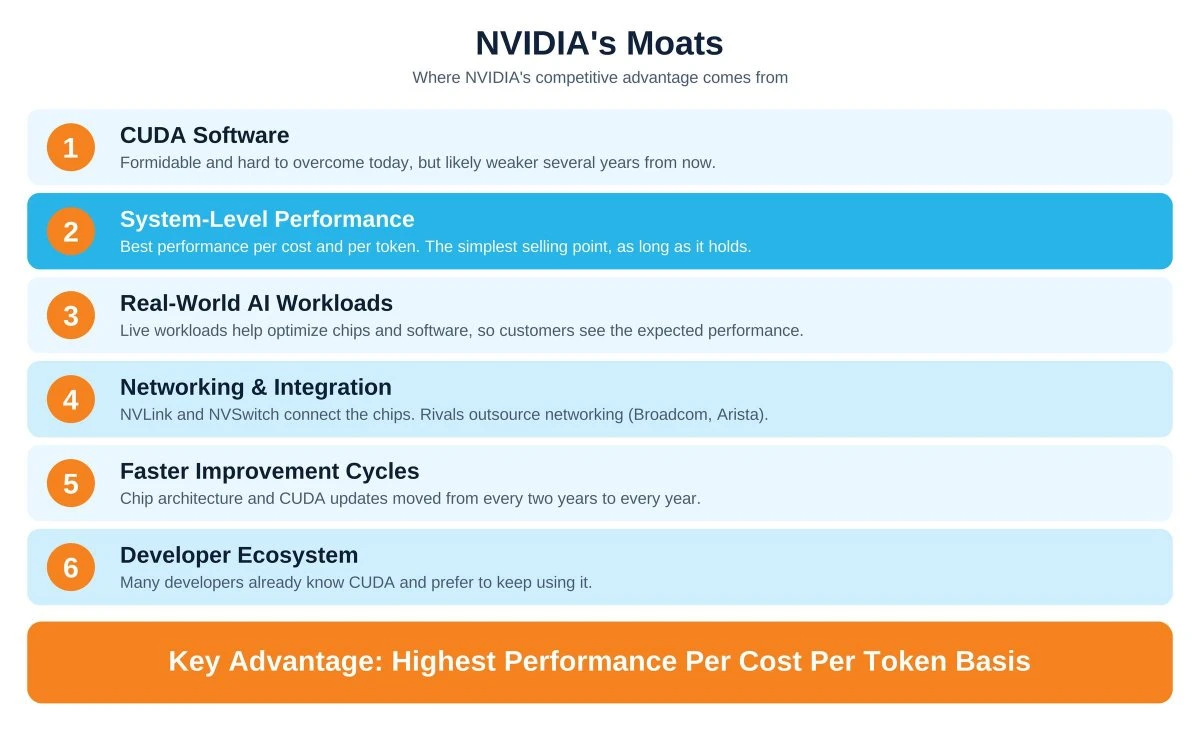
Summary of "NVIDIA's Moats," the core advantage lies in the best cost-effectiveness per token.
From the six considerations mentioned above, NVIDIA's competitive moats can be directly summarized as follows:
- The CUDA platform remains extremely powerful, even if its advantage compared to historical strength is showing gradual decline, competitors still need to address tangible performance gaps to catch up;
- The clearest barrier currently is system-level performance. Across the entire AI factory, NVIDIA still offers the best cost-effectiveness;
- The vast real-world AI workload base, in turn, helps it continue refining its chips and software;
- With NVLink, NVSwitch, InfiniBand, and Spectrum-X, NVIDIA can compete as a complete AI system rather than merely a chip supplier. If network components are outsourced to third-party providers like Broadcom or Arista, the lower integration and insufficient collaborative tuning of assembled solutions often struggle to achieve equivalent performance, making this advantage hard to replicate;
- NVIDIA has also accelerated its innovation pace, shortening the chip architecture iteration cycle from about two years to approximately one year;
- A large developer ecosystem familiar with the CUDA platform constitutes the final layer of stickiness.
Among all these advantages, the core one ultimately boils down to providing the highest cost-effectiveness per token. As long as this remains true, NVIDIA's position remains secure, but maintaining this requires the company to continually outpace its competitors to prove the rationality of its price premium.
Competitors like Google could, in principle, leverage chips with slightly inferior performance to push prices down, maintaining parity in performance per dollar with NVIDIA—this means that to defend its current profit margins, NVIDIA must continuously evolve faster than anyone else, which itself represents a significant risk.
Other Key Risks Facing NVIDIA: Financing,
Circular Financing: A Unique Malady of the AI Industry
A widely discussed risk involves NVIDIA's circular financing arrangements. Currently, NVIDIA has made approximately $100 billion in equity investments, including substantial shares of about $30 to $40 billion each in Anthropic and OpenAI, resulting in a circular model where some of the invested funds are used by these companies to purchase NVIDIA chips; NVIDIA invests in emerging clouds like CoreWeave to assist their expansion, and they subsequently spend a significant portion of those funds on NVIDIA chips, leading NVIDIA to simultaneously gain equity and profit from chip sales, deeply embedding it within the entire AI ecosystem.
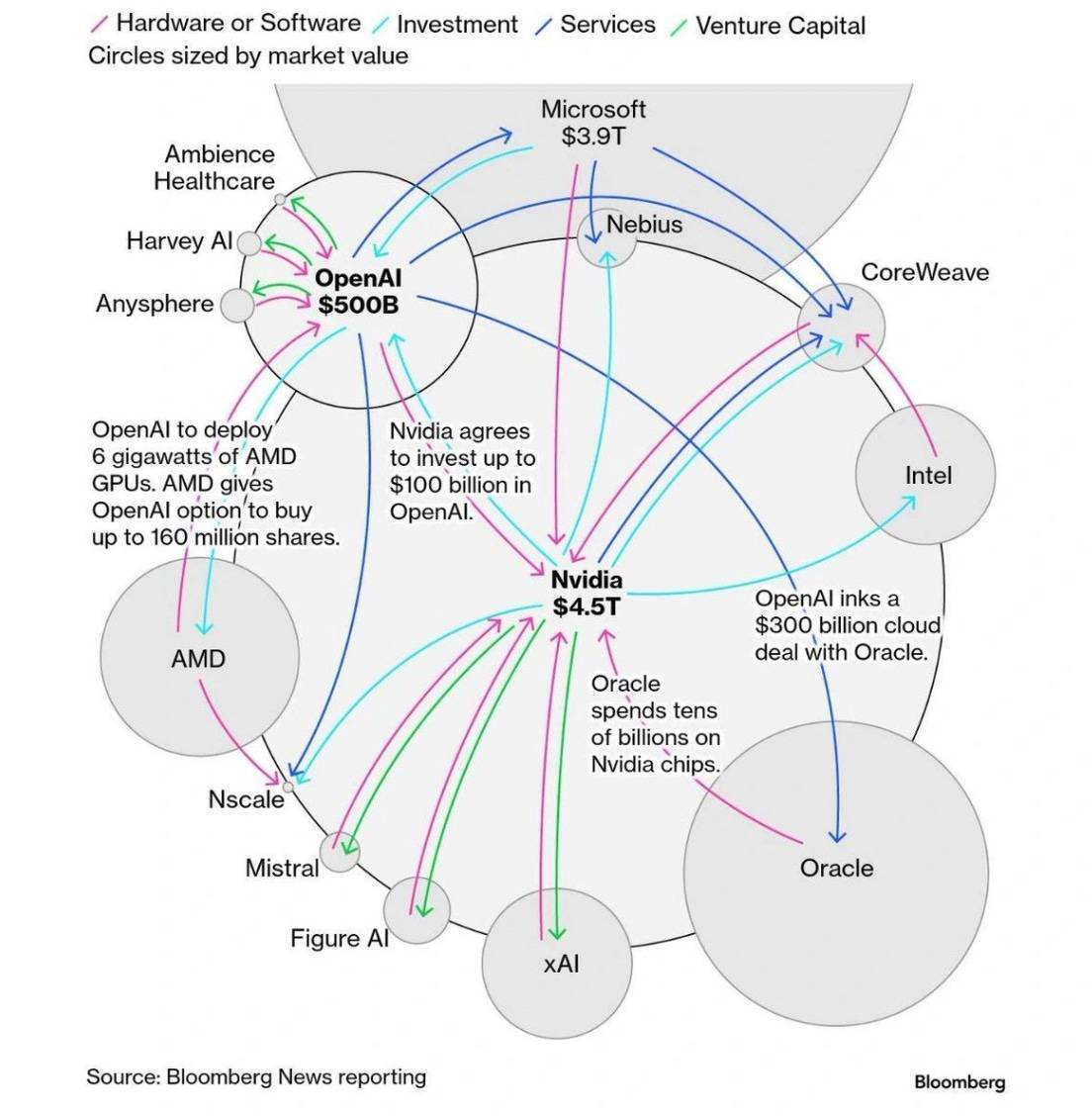
Diagram showing the relationship between AI ecosystem circular financing and supply chain cash flow direction, source: Bloomberg
Beyond the completed equity investments, NVIDIA has approximately $25 billion in future investment commitments, $36 billion in emerging cloud computing procurement commitments, and an estimated $100 billion in credit guarantees to support the entire industry's financing arrangements.
Adding these investment commitments together results in a total amount of around $100 billion to $200 billion, roughly equivalent to NVIDIA's profits over the past year; this model has drawn comparisons to the excessive expansion during the tech bubble in the early 2000s, though relative to NVIDIA's size and cash generation capabilities, the scale is still far from as exaggerated as it was back then.
Given its exceptionally strong cash flow generation capability, the current financing volume does not appear to raise alarm bells, but if this arrangement continues to expand significantly from current levels, it could become a genuine concern.
Management Transition Risk: Temporarily Mitigated

NVIDIA Founder and Departed CEO Jensen Huang with Interim CEO Colette Kress
The most significant risk currently seems to be not so much in financial or competitive dynamics but in the tangible execution risk during the management transition period.
During his tenure, Jensen Huang had about 60 direct reports, creating an extremely flat organizational structure that only functioned because he was the company's founder.
Colette Kress, who has been NVIDIA's CFO since 2012, has taken over as interim CEO, but inserting a new management layer between these 60 direct reports and the company's top management may create friction - some of the executives may feel dissatisfaction in reporting to someone who isn't a founder, and some might even choose to resign.
The bold, non-traditional strategic initiatives discussed earlier, such as the approximately $100 billion equity investment and $100 billion credit guarantees, would be much harder to replicate and advance with the same decisiveness under an interim leader, which also implies a lower possibility of initiating significant investment acquisitions in the short term.
Jensen Huang has consistently demonstrated a knack for discovering risks and opportunities years ahead, from early support for emerging clouds to the shift towards complete AI systems, advancing sovereign AI deals, and the recent layout in inference chips and the open-source model community. At a time when NVIDIA had just compressed its product development cycle to about a year with virtually no margin for error, and competition is most eager to close the gap, losing such a forward-looking helm person undoubtedly amplifies real risks.
A valuable analogy is Intel's development pace: it reliably progressed every two years between process technology and architectural advances over about ten years, but once execution fell behind that cadence, it declined rapidly. This serves as a reminder that in such a high-intensity competition, even one setback can be challenging to reverse because losing the performance leadership could mean simultaneously losing the pricing power that supports NVIDIA's current 65% operating profit margin.
Fortunately, from a commercial operation perspective, NVIDIA appears to have "set things right."
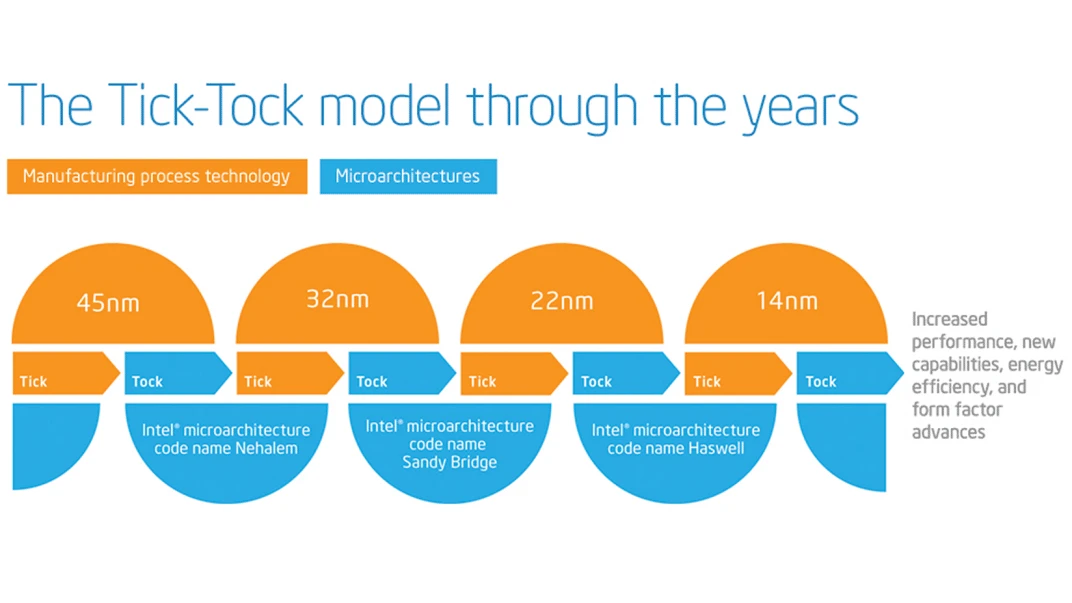
Illustrative diagram of Intel's historical "Tick-Tock" alternating process with architecture (from 45nm to 14nm)
The Self-Prediction of the AI Bubble: Spending and Capacity Risks
Another macro-layer risk worth noting is the potential for an overall AI expenditure bubble. Regulatory resistance from state or federal levels in the United States, including shutdowns of large-scale data center construction projects concentrated in Texas, could slow new capacity implementations.
On the other hand, capital expenditures in the hundreds of billions cannot be sustained indefinitely without clear returns, and if investment returns disappoint, hyperscale cloud providers may contract their spending.
Meta, Amazon, and Google have already presented tangible evidence of investment returns, yet a significant portion of current AI spending remains experimental in nature. Compared to the commitments of several trillion dollars, how much sustainable real economic activity AI is generating remains unclear.
Historically, every cycle of major capital expenditure often involves some level of over-construction beyond actual demand; there are currently no compelling reasons to assume this instance will be an exception. Of course, another possibility is that this time is different—the AI boom might indeed represent an extraordinarily long cycle.
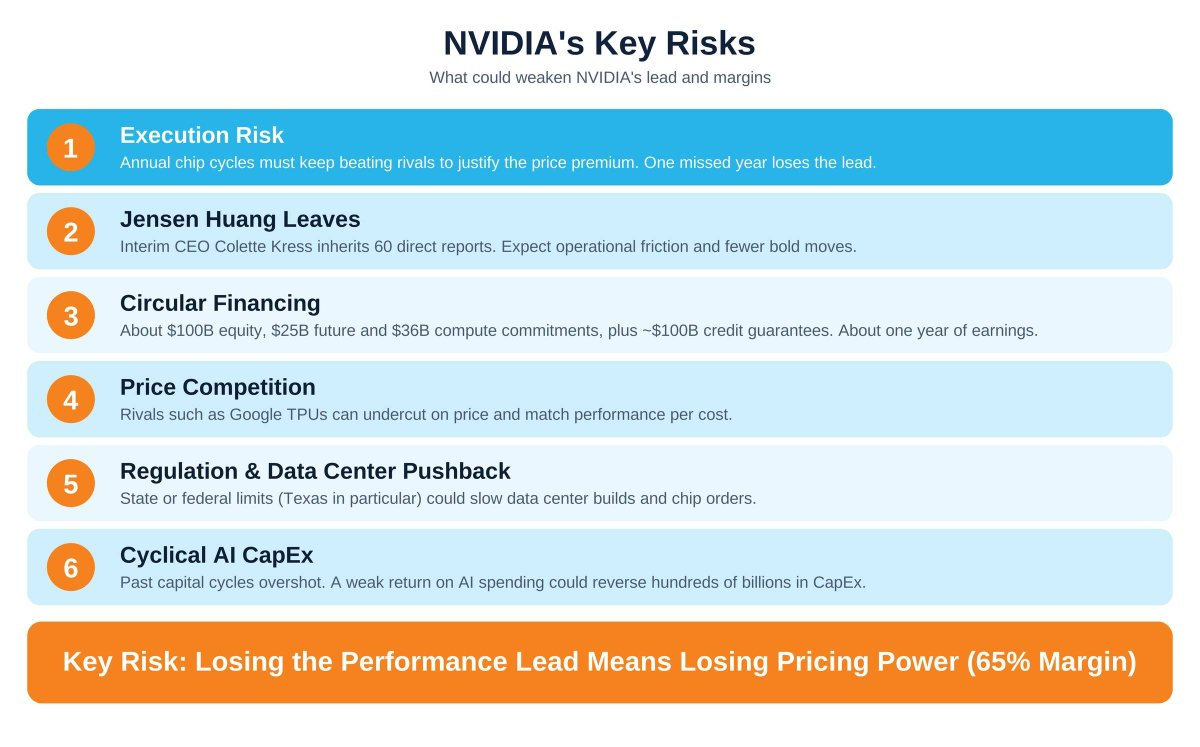
Six Key Risks Facing NVIDIA (NVIDIA's Key Risks) with Core Conclusion Cards.
NVIDIA's Valuation Analysis
From a valuation perspective, based on a stock price of $140, NVIDIA's total market value is tentatively reported at $3.4 trillion (Odaily Planet Daily note: as of the editing time of this translation, this number has elevated to around $4 trillion), corresponding to $226 billion in earnings over the last 12 months, or approximately 15 times the price-to-earnings ratio from the past year, around 10 times future 12-month expected P/E ratio, and about 8.5 times the expected earnings in 2027.
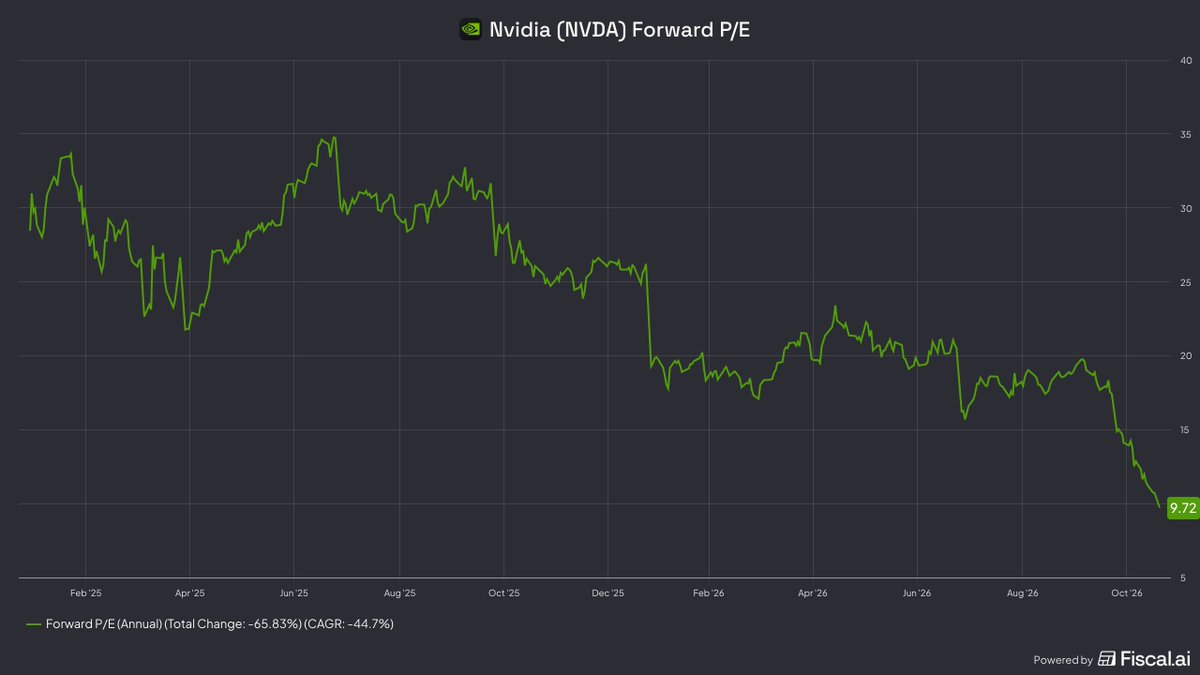
NVIDIA (NVDA) Forward P/E Trend: Fiscal.ai
Before setting any specific valuation multiples, the more crucial question is: how should NVIDIA be regarded—as a cyclical chip company or as a long-term growth stock?
Because this distinction fundamentally determines how it should be valued: cyclical companies are notoriously difficult to value using standard discounted cash flow (DCF) models since analysts have to guess which years will experience growth and which will contract, and there's no reliable method to determine exactly where the company stands in its cycle at any given time. This uncertainty is why chip stocks often trade at unusually low multiples at cyclical profit peaks.
For example, Micron once fell to a low point of around three times its earnings (which can even be regarded as excessively low), but as profits approached cyclical lows, the P/E ratio would accordingly rise, sometimes reaching double digits. For such companies, whether a particular valuation multiple is reasonable can only be judged after completing the cycle.
To frame a concrete evaluation framework, we can build a bottom-up revenue model around the gigawatt installed capacity of data centers up to 2031, NVIDIA's assumed share within that capacity, and the revenue NVIDIA generates per gigawatt. Jensen Huang directly mentioned this metric during a conference call, noting that as NVIDIA's products increasingly include network devices and other data center hardware beyond chips, this index has risen from approximately $18 billion to $25 billion for the Blackwell generation, currently advancing toward $40 billion for the Vera generation.
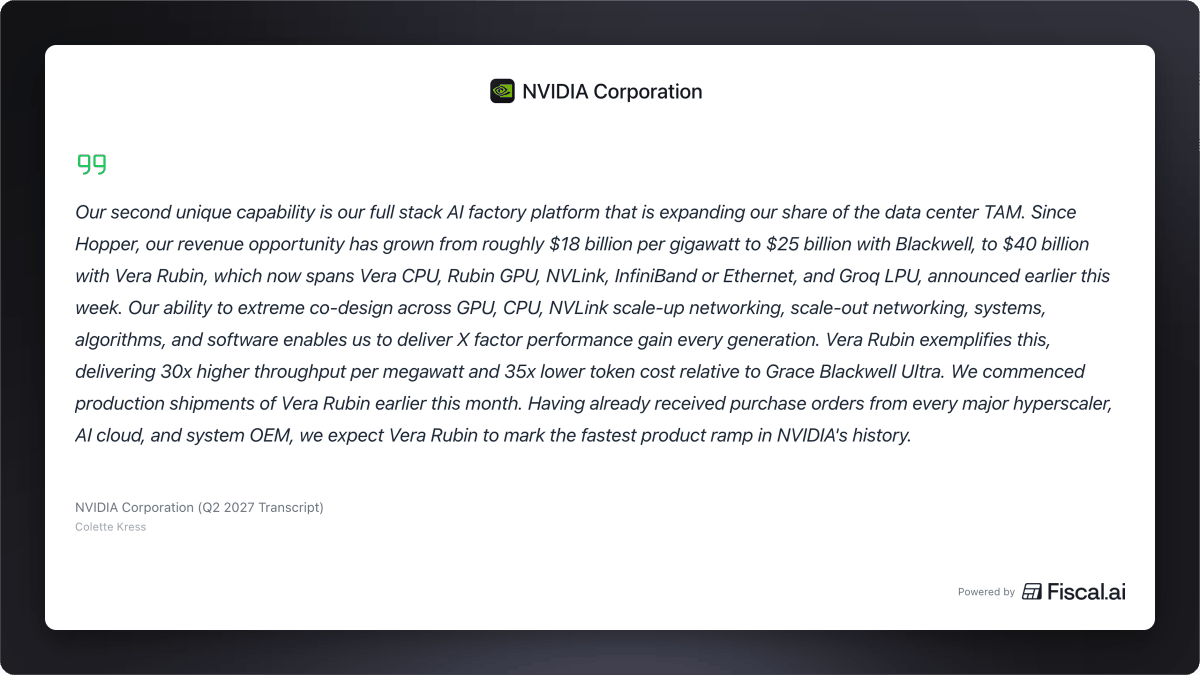
Minutes from NVIDIA's Q2 FY2027 call, Colette Kress remarked about revenue per gigawatt increasing from about $18 billion to Blackwell's $25 billion, and Vera Rubin's $40 billion: Fiscal.ai
This model also tracks new gigawatts versus replacement gigawatts, as the industry generally assumes chips need replacement about 4 to 6 years after usage. If this pattern holds, a significantly larger proportion of future revenue will convert into a form similar to recurring revenue rather than strictly being tied to one-time new expansions, akin to smartphone users replacing their phones every few years.
The model further assumes that after the initial construction period matures, the industry will eventually enter a maintenance phase, at which point growth will significantly slow as revenue stems mainly from replacing existing installed capacity rather than adding new installations. However, as long as the accumulated installed base at that stage is substantial enough, even the revenue floor after growth slows may still exceed today’s revenue levels.
Under a baseline scenario assuming NVIDIA holds a 55% market share and a total data center capacity of 40 gigawatts (Odaily Planet Daily note: the original text mistakenly states 40 billion gigawatts; corresponding table data should be 40 gigawatts, though this number itself is somewhat high even based on the table's standards), the model computes approximately $1 trillion in data center revenue plus about $50 billion in edge computing revenue, corresponding to about $460 billion in net operating profit (NOPAT) after tax.
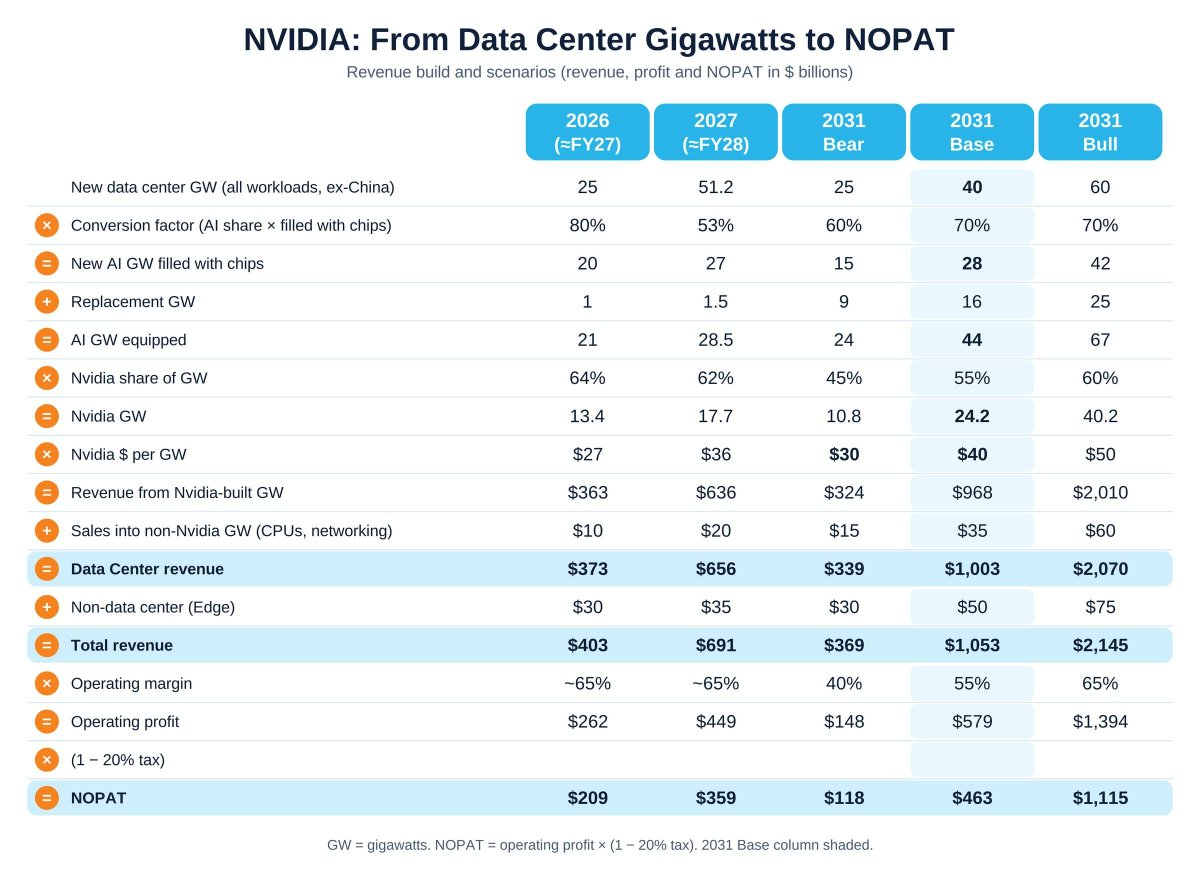
NVIDIA: From Data Center Gigawatt Capacity to Tax After Net Operating Profit (NOPAT) Scenarios Calculation Model (Unit: Billion USD)
Applying different valuation multiples to profits from this baseline scenario yields a wide range of results: a 15 times multiple corresponds to a market value of about $7 trillion, a 20 times multiple corresponds to about $9.2 trillion, and a 25 times multiple corresponds to about $11.5 trillion.
From now until 2031, NVIDIA is projected to generate around $1.7 trillion in cash, and if this cash is returned to investors as it is generated, using the same three multiples above, the expected annualized returns from the current stock price are approximately 22%, 28%, and 33%. This is undoubtedly a terrifying rate of return.
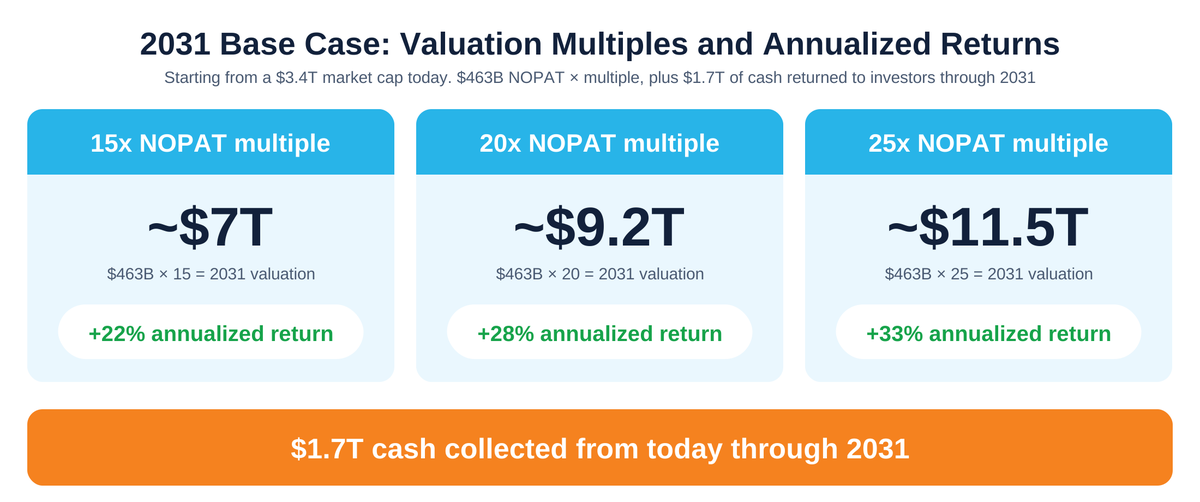
2031 Baseline Scenario: Valuation Multiples and Annualized Rates of Return (15 times/20 times/25 times NOPAT corresponding to market value and 2031 cash flow return estimation)
Each assumption in these baseline scenarios is still fundamentally built upon highly optimistic premises: they require that the AI cycle is long enough, that NVIDIA maintains its dominant position, and that margins are preserved.
The bear market scenario could differ radically: if its annual earnings are halved to about $118 billion, and the market reclassifies NVIDIA as a cyclical stock with no growth rather than as a long-term growth stock, the valuation multiples the market might be willing to assign could sharply compress to around 30 times high multiples (note: the original text stated “high 30sx earnings,” which conflicts with “sharply compressed multiples at the current approximately 15 times”; here we retain the literal translation as in the original), causing the stock price to decline significantly from its current trading position.
These numbers are inherently fraught with uncertainty, helping to explain why NVIDIA is currently trading at such valuation multiples: there exists genuine disagreement in the market over how far this AI cycle can go. Forcing a precise discounted cash flow valuation on such an unpredictable company would often result in a "false sense of precision," rather than providing truly useful answers.
A more honest approach is to look to years investors reasonably forecast, such as 2027, and see at what multiple the stock currently trades based on expected earnings for that year (around 8.5 times), then compare it to the usual multiples at which cyclical chip stocks trade during cyclical lows and periods still experiencing growth.
Given such high levels of uncertainty, choosing not to place heavy bets and make statements is entirely reasonable.
For a company so reliant on consistently perfect execution, genuine confidence in its leading management team is crucial. Previously, while there was no appointed permanent CEO, the capital markets lacked precisely this confidence. At that time, its stock price fell nearly 35%, and whether the trading multiples then sufficiently accounted for this management uncertainty remains open to debate.
In hindsight, losing Jensen Huang at the helm has clearly rendered NVIDIA a concerning investment, and that sense of unease was indeed the best opportunity to buy in previously.
免责声明:本文章仅代表作者个人观点,不代表本平台的立场和观点。本文章仅供信息分享,不构成对任何人的任何投资建议。用户与作者之间的任何争议,与本平台无关。如网页中刊载的文章或图片涉及侵权,请提供相关的权利证明和身份证明发送邮件到[email protected],本平台相关工作人员将会进行核查。