TL;DR
· From November 16 to 22, Strategy purchased 457 bitcoins at a cost of about 29.6 million dollars. In the same week, it repurchased 211.8 million dollars of its own STRC preferred stock, an amount about seven times that of the bitcoin purchase.
· The company converted up to 1 billion dollars of reserves into cash and raised the buyback authorization limit to 4 billion dollars. Founder Saylor called this a proactive reduction of leverage, while the market is questioning whether the pace of hoarding bitcoin has slowed down.
· Related assets: MSTR, STRC, BTC.
From November 16 to 22, Strategy bought 457 bitcoins at an average price of 64,898 dollars, spending about 29.6 million dollars. In the same week, it repurchased 2.118 million shares of its own STRC preferred stock for 211.8 million dollars, an amount about seven times that of the bitcoin purchase.
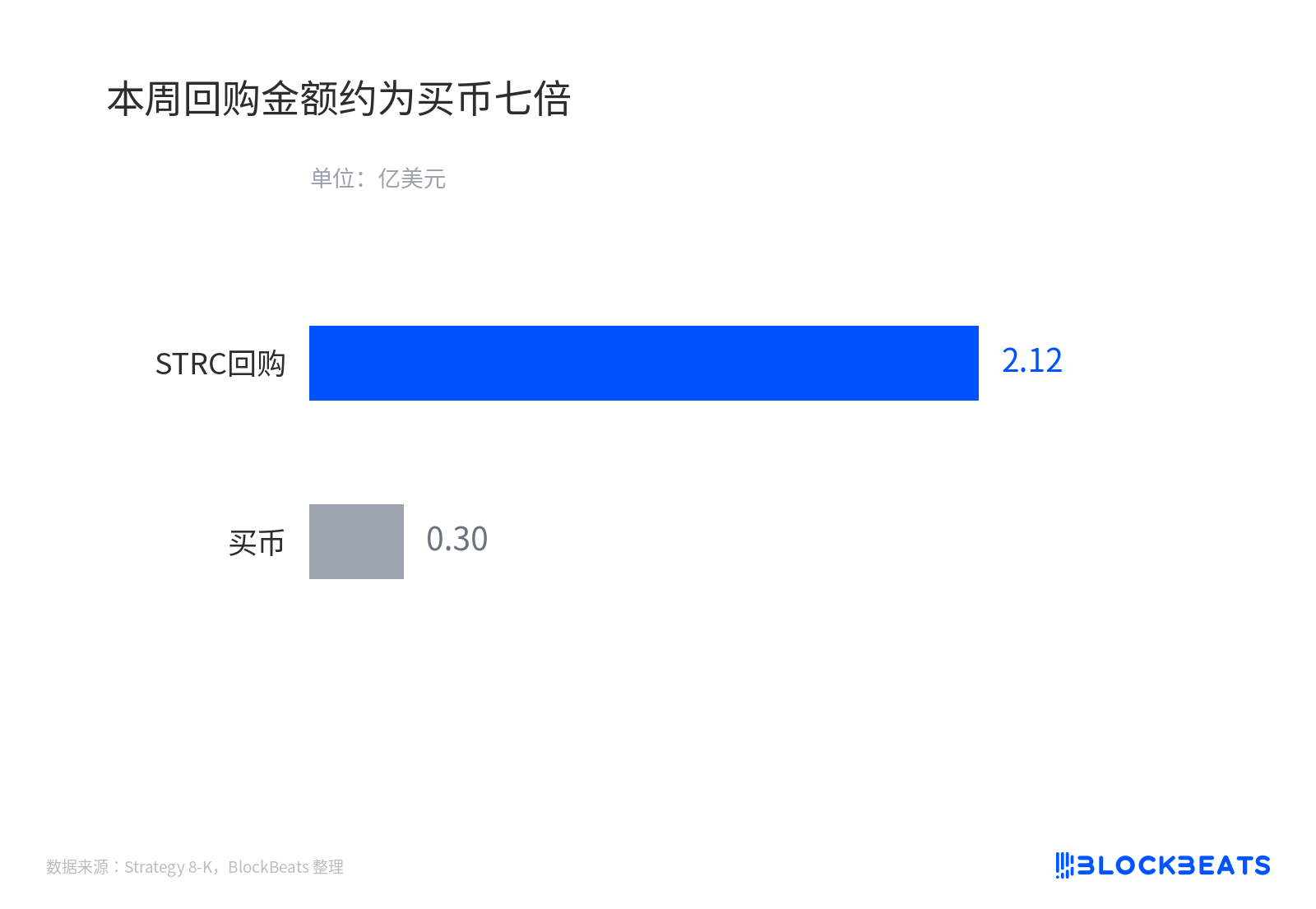
This week's buyback amount is about seven times the bitcoin purchase
STRC is a perpetual preferred stock designed by the company for bitcoin purchases, with no maturity date and an annual dividend of about 12%. The goal is to stabilize trading near a par value of 100 dollars, distributing dividends and liquidation proceeds ahead of common stock.
In the same week when bitcoin fell to a more than two-year low and the U.S. spot bitcoin ETF saw a net outflow of 1.79 billion dollars, Strategy chose to buy fewer bitcoins and significantly repurchase preferred stock. Saylor stated that this is a proactive optimization of the capital structure, while some in the community are questioning if Strategy is transforming from a bitcoin-buying company into a preferred stock defensive company.
Where the money flows this week
Let’s first look at the source of funds. Of the 211.8 million dollars in buybacks, 147 million dollars came from the proceeds of issuing common stock at market price, while another 64.8 million dollars came from company cash, with a buyback average price of about 97 dollars, below the par value of 100 dollars. The 29.6 million dollars for bitcoin purchases came entirely from the proceeds of the issuance.
In the same batch of financing, most went into the preferred stock buybacks, and a small portion went into bitcoin. Over the past four weeks, the size of bitcoin purchases dropped from 811, 1036, and 485 down to this week’s 457, while the buyback amount has always been several times the bitcoin purchase amount.
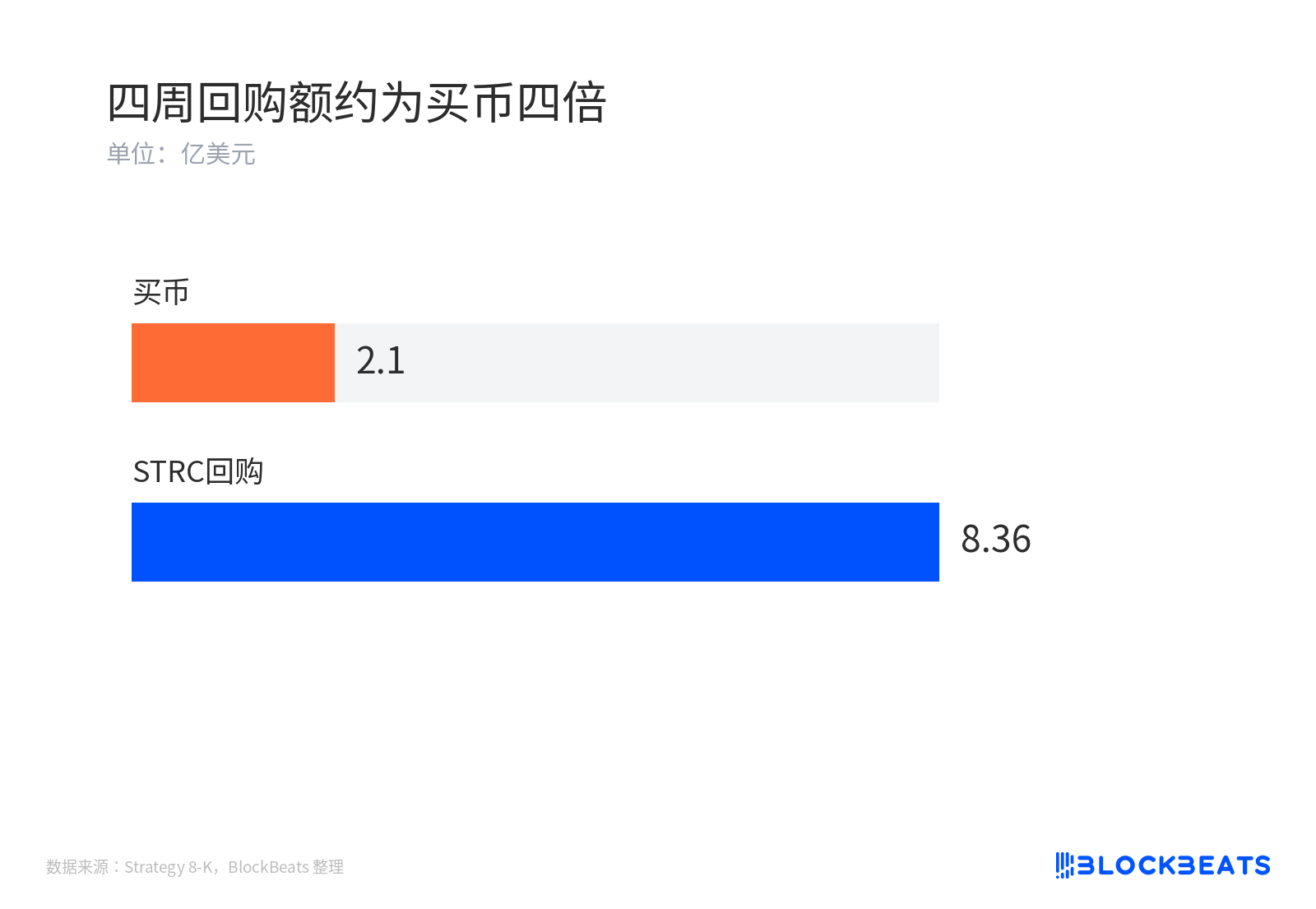
The buyback amount over four weeks is about four times the bitcoin purchase
The company’s 8-K filing simultaneously disclosed two adjustments to the authorizations. The board increased the buyback authorization limit for digital credit securities from 3 billion dollars to 4 billion dollars; this limit is mainly used to support the price of preferred stocks and ensure dividend payments.
The other authorization allows up to 1 billion dollars to be converted from dollar reserves to cash, providing more flexibility for direct use in buybacks or bitcoin purchases. As of November 22, the company held 851,305 bitcoins, with a total cost of 64.23 billion dollars.
Why STRC is more urgent than buying more BTC
STRC is the digital credit tool used by Strategy to finance bitcoin purchases. Its price needs to stay close to 100 dollars, and dividends must be paid on time for the market to continue buying it. With the decline in bitcoin and a credit market contraction since May, STRC has fallen below par value.
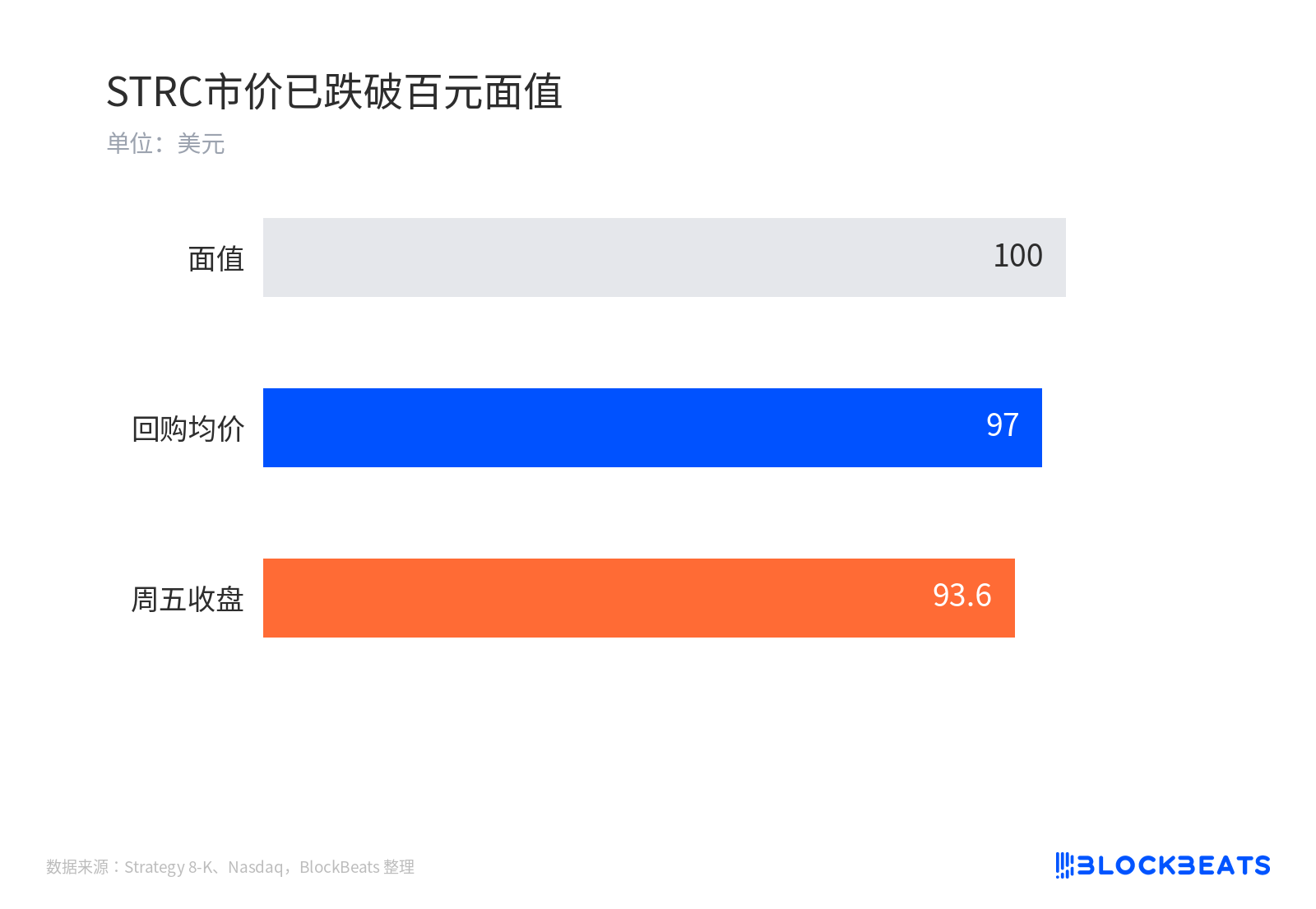
STRC market price has fallen below par value of 100 dollars
The cost of the price loss is not just superficial. It ranks ahead of common stock in receiving cash, and once the market questions its ability to pay, the company’s future financing costs will rise, and the cycle of buying bitcoin through issuance will also be affected.
Therefore, the essence of this buyback is to repurchase an eternal claim for one that requires a dividend payment of about 12% annually at a price below par value, while reducing the claims that rank ahead of common equity.
According to Saylor, in recent months, the company has reduced 2.9 billion dollars of outstanding credit, decreasing annual dividends by 353 million dollars. He also mentioned that this transaction increased net reserves by 183 million dollars, and the number of bitcoins per share increased by 6 satoshis (satoshi is the smallest unit of bitcoin).
Assuming an annual return of 10% for bitcoin and a volatility of 40%, the company's model indicated that the STRC credit spread narrowed by 2 basis points to 71 basis points. The credit spread can be understood as the market’s additional yield requirement for STRC, and a narrowing indicates that the model assesses it has become safer. However, this is an internal estimate, not a transaction quote.
Saylor’s ledger and community’s questions
The management's framework is clear. A discounted buyback of preferred stock equals deleveraging, reducing future dividend expenditures while increasing the bitcoin content per share. CEO Phong Le stated in an investor Q&A on November 20 that the company had cumulatively repurchased about 3 billion dollars of STRC, with transaction prices between 95 and 99 dollars.
There are also voices of skepticism. Some X users and individual analysts believe that the continuous decrease in bitcoin purchase scale over four weeks, while the buyback amount remains several times that of bitcoin purchases, indicates that the narrative of unlimited bitcoin buying has yielded to prioritizing the preservation of financing tools. In their view, the opportunity cost of this buyback in bitcoin terms is significant.
The two interpretations are not entirely opposed. A more realistic interpretation might be that stabilizing the preferred stock financing engine during a credit contraction is a necessary step to maintain future bitcoin buying ability, at the cost of slowing down short-term accumulation speed. In the same week, the ETF saw a net outflow of 1.79 billion dollars, of which BlackRock's IBIT accounted for about 1.37 billion dollars, and the timing of reduced corporate buying coincided with institutional withdrawals.
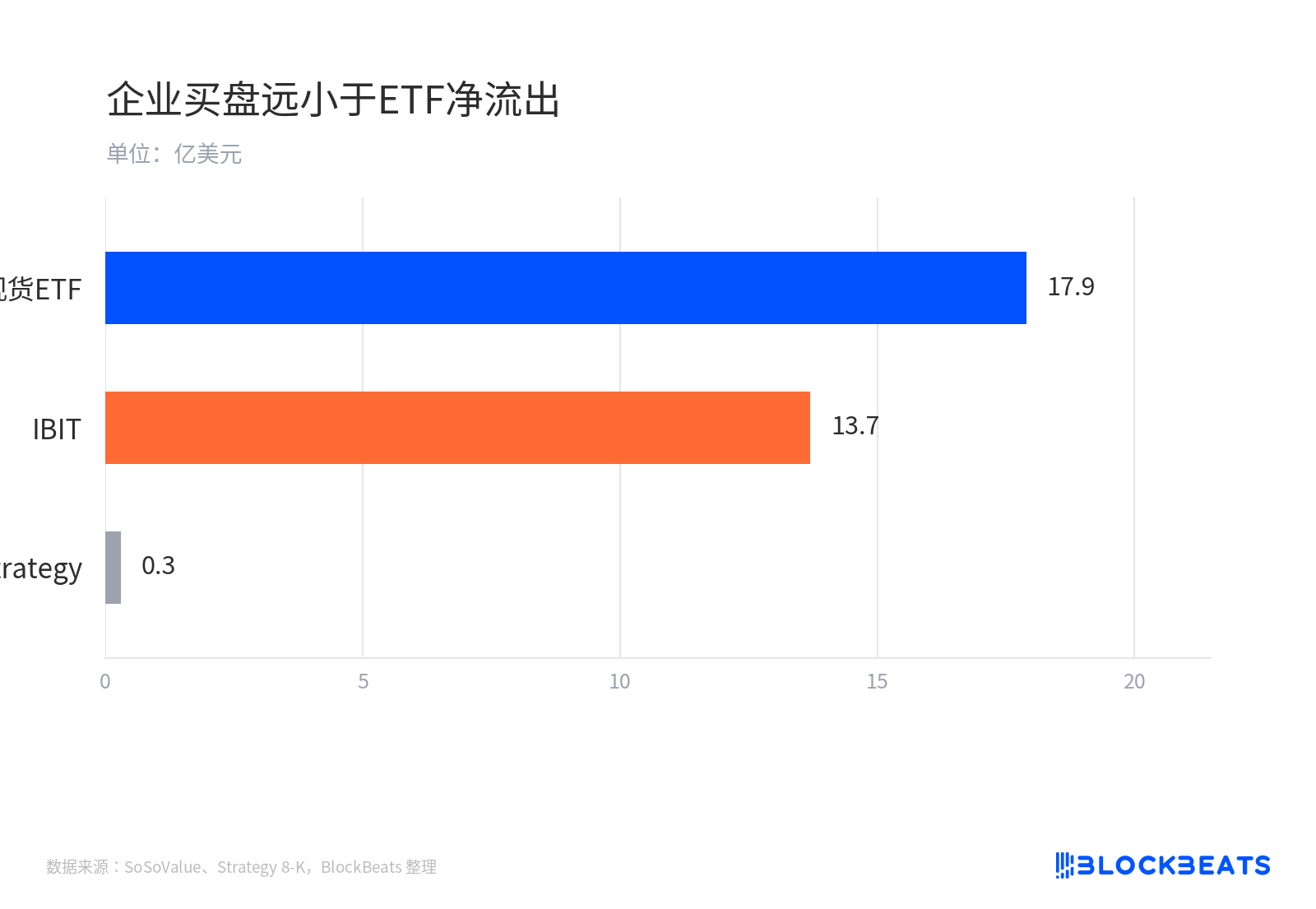
Corporate buying is far less than ETF net outflow
Where the 1 billion dollars in cash goes and the true price of STRC
The strategic narrative ultimately has to come down to observable variables. If that 1 billion dollars in cash continues to flow into STRC buybacks, it indicates that credit defense is still ongoing. Only reinvesting back to bitcoin buying can be considered a true expansion after contraction.
Another unanswered question is the true market pricing of STRC. Currently, only an average buyback price of 97 dollars is publicly available, lacking current outstanding scale and secondary market transaction prices; the 71 basis points are merely internal estimates. Whether the preferred stock price is truly stabilized will depend on the next trading data.
The pace of bitcoin acquisitions itself is also a variable. Dropping continuously to 457 bitcoins over four weeks raises questions as to whether the company is waiting for market stabilization or if the premium arbitrage for issuance to buy bitcoin is no longer economically viable; the existing materials do not include MSTR's market value and mNAV (the multiple of market value relative to bitcoin holdings' net value), making it impossible to determine.
Until these variables are resolved, the interpretations of proactive optimization and forced defense remain two readings of the same set of facts. On November 23, MSTR closed up 8.5% at 84.40 dollars, indicating at least on that day, the market was willing to believe the former first.
Click to learn about job openings at BlockBeats
Welcome to join the official BlockBeats community:
Telegram subscription group: https://t.me/theblockbeats
Telegram discussion group: https://t.me/BlockBeats_App
Official Twitter account: https://twitter.com/BlockBeatsAsia
免责声明:本文章仅代表作者个人观点,不代表本平台的立场和观点。本文章仅供信息分享,不构成对任何人的任何投资建议。用户与作者之间的任何争议,与本平台无关。如网页中刊载的文章或图片涉及侵权,请提供相关的权利证明和身份证明发送邮件到[email protected],本平台相关工作人员将会进行核查。