Flying North | Tian Chang
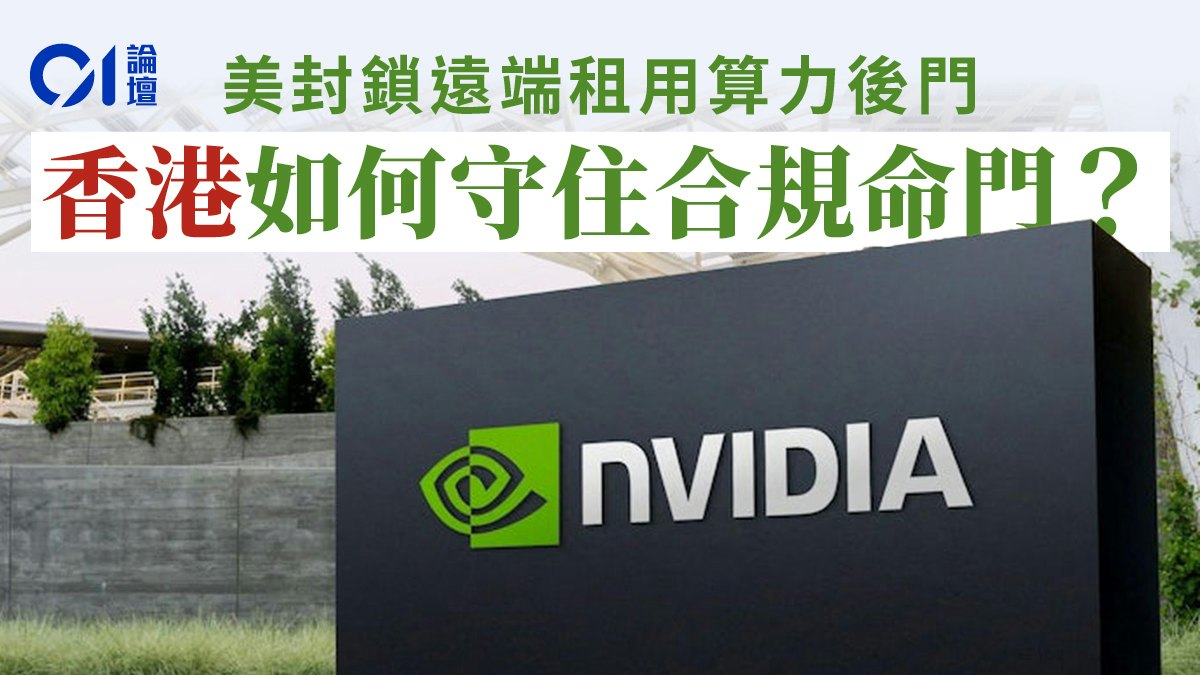
The U.S. Department of Commerce announced a new round of advanced AI chip export controls in November, listing Singapore, Malaysia, Thailand, Indonesia, and Brazil as high-risk transshipment countries, requiring high-end chips exported to data centers in these locations to obtain U.S. permission. On the surface, it is a technical regulation adjustment, but in reality, it is a formal acknowledgment from Washington: merely "banning chips from entering China directly" is no longer sufficient; it is necessary to block the backdoor through which Chinese enterprises can "remotely lease computing power" via overseas data centers. This is not just a simple upgrade of trade controls, but a signal that the U.S.-China technology war has entered the "scenario control" stage.
From Banning Chip Sales to Controlling Computing Power Usage
In recent years, Chinese technology companies, faced with U.S. export restrictions, have gradually developed an alternative path: leasing or building data centers in Southeast Asia and using cloud services to remotely train large models. The demand from companies like Alibaba and ByteDance is a significant driving force behind the rapid expansion of data centers in Malaysia, Thailand, and elsewhere. These facilities are nominally not within China, yet they can effectively provide advanced computing power.
The core of the new regulations specifically targets this model. Any overseas data center providing substantial computing power to companies "headquartered in China" must obtain U.S. export permission within 90 days, or they will face further restrictions. The permissions will be reviewed on a case-by-case basis. At the same time, companies headquartered in the U.S. can continue to import with compliance to reporting conditions, and some computing power used for e-commerce recommendations and community commercial systems may be exempt.
The U.S. Department of Commerce clearly stated that this move is to ensure that "existing restrictions on sensitive technologies will not be circumvented by remote computing arrangements of third-country data centers." In other words, Washington is no longer only watching "whether chips enter China," but has begun to monitor "who ultimately uses the computing power and where it is used."
NVIDIA Scandal and Internal Pressure as Catalysts
The timing of the new regulations is no coincidence. NVIDIA's former CEO Jensen Huang resigned amidst controversy involving former executives of the Singapore cloud computing company Speed International, which is under investigation by the U.S. for allegedly illegally transshipping advanced AI chips to China. This incident concretized the accusations of "bypassing through third countries."
What is even more noteworthy is the internal pressure within the U.S. government. Treasury Secretary Yellen publicly criticized the Department of Commerce for not fully implementing export controls and revealed that multiple government agencies supported placing Speed International on the trade blacklist, but the Department of Commerce has yet to take action. When announcing the new regulations, the Department of Commerce emphasized that the content "was drafted by the Treasury Department and the National Security Council and formulated according to their directives," effectively acknowledging that the authority is not entirely in the hands of the Department of Commerce.
This indicates that there are still disputes over the enforcement strength of export controls within the U.S. The true effectiveness of the new regulations ultimately depends on whether enforcement is in place.
Hong Kong Needs to Reassess Compliance Risks
Hong Kong, as an international financial and professional services center, may seem distanced from AI chip export controls, but the logic of this wave of "scenario control" is not entirely unrelated to the local industry and policy environment.
First, the compliance requirements of global high-tech supply chains are becoming more detailed. Any future business arrangements involving high-end computing power, cloud services, and data centers may be required to trace the "end users" and "usage scenarios." Technology companies in Hong Kong, data center operators, and even companies providing cloud services to mainland clients may need to reassess their compliance risks.
Second, Southeast Asian data centers, once regarded as regional industrial opportunities, are now flagged by Washington as potential "transshipment risks." This could impact funding flows and investment assessments, indirectly influencing Hong Kong's role in the regional technology ecosystem.
Third, the new regulations officially abolish some global AI chip export license restrictions from the Biden era, replacing them with a more targeted "high-risk countries + Chinese end users" model. This reflects the Trump administration's preference for "precise containment" rather than a complete blockade. However, the precondition for precision is that enforcement capabilities keep pace; if enforcement falters, Chinese companies may still find new gray areas, and compliance costs will continue to rise.
New Signals Before the Meeting of U.S. and Chinese Leaders
As the new measures were announced, a meeting between the U.S. and Chinese leaders was being prepared to take place this week in Shenzhen. The U.S. tightening of advanced technology export restrictions is bound to add variables to the talks. This can be interpreted as a hard-line signal released by Washington before negotiations, and could also become a bargaining chip in subsequent trade discussions.
This upgrade of control from chips to computing power scenarios highlights that against the backdrop of deepening U.S.-China technology competition, any "neutral" or "bridge" role must be built on a clear compliance awareness.
If Hong Kong is to continue to leverage its advantages in international finance and professional services, it cannot ignore the reshaping of the rules boundaries in the global high-tech supply chain.
The U.S. shifting regulation from "products" to "usage scenarios" essentially acknowledges that a simple export ban is no longer sufficient to stop the spread of technology. For China, this is yet another layer of pressure; for Hong Kong, it serves as a wake-up call - in this smoke-free technology war, compliance ability and risk management will increasingly determine who can maintain their footing.
This article is reproduced from Hong Kong 01, with copyright belonging to the original author and original media.
免责声明:本文章仅代表作者个人观点,不代表本平台的立场和观点。本文章仅供信息分享,不构成对任何人的任何投资建议。用户与作者之间的任何争议,与本平台无关。如网页中刊载的文章或图片涉及侵权,请提供相关的权利证明和身份证明发送邮件到[email protected],本平台相关工作人员将会进行核查。