
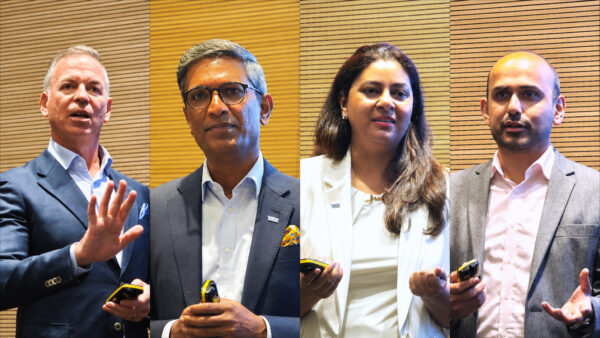
Visa stated at the Singapore FinTech Festival media briefing that AI agents are transitioning from "helping people search and compare" to "making payments on behalf of people." T.R. Ramachandran, head of products and solutions for Visa Asia-Pacific, estimated that currently transactions handled by agents account for almost zero percent of total commerce, which could reach 25% to 30% by 2030. More than 100 issuing institutions in the Asia-Pacific region are already participating in Visa's Agentic Ready program, which is now expanding to acquirers, payment service providers, and merchants. Even if banks are ready for agent payments, if agents cannot access online stores or read product information, merchants will still miss out on this group of "customers."
Even if agents find suitable products, merchants still have to verify before accepting payments what exactly the customers authorized for purchase and how much they are willing to pay. Visa also discussed another layer of impact on businesses from changes in payment methods: the treasury department can expect to use stablecoins for cross-border payments, and merchants in Hong Kong participating in the program have already been able to continue using existing QR codes to collect payments from travelers using specific foreign wallets.
74% of respondents in Asia-Pacific have used AI to find products; online store catalogs must be understandable to AI agents
Stephen Karpin, president of Visa Asia-Pacific, quoted a survey commissioned by Visa conducted by YouGov, which indicated that among 14,764 adult respondents from 14 markets in Asia-Pacific, 74% had used AI to discover, track, or understand products. For online stores, even if customers ultimately pay in person, AI may have already filtered brands and products for them before they open the website.
Ramachandran pointed out that merchants have invested in websites and apps for many years, focusing on how customers browse. Where to place offers prominently and whether the shopping cart button is easy to find all affect business. With AI agents making purchases, the first thing merchants have to deal with is granting access to their websites. Some online stores block automated scripts (bots) to prevent malware, resulting in even authorized shopping agents being unable to enter the store.
If agents can access online stores, they still need to understand the product catalogs. Customers can glance at a product page to see if their desired style is in stock. Agents need to match the price and inventory of each product item to know which items are available for purchase. Even if an online store has stock, agents might respond to customers with "not found" because they are unable to read the inventory data.
Visa's expansion of Agentic Ready to the payment receiving side is aimed at helping merchants and payment service providers identify trustworthy agents and manage transactions initiated by agents. Over 50 institutions participated on the first day of the receiving side plan, including acquirers, payment service providers, payment gateways, and some merchants. Participating institutions in Hong Kong include Bank of China Hong Kong, Hang Seng, ICBC Asia, and AsiaPay. Ramachandran anticipates that the number of participants will likely increase to about 500 in the short term. Using the Philippines as an example, he estimated that about sixty percent of issuing institutions there are ready to handle agent transactions, and Visa is currently collaborating with the receiving side.
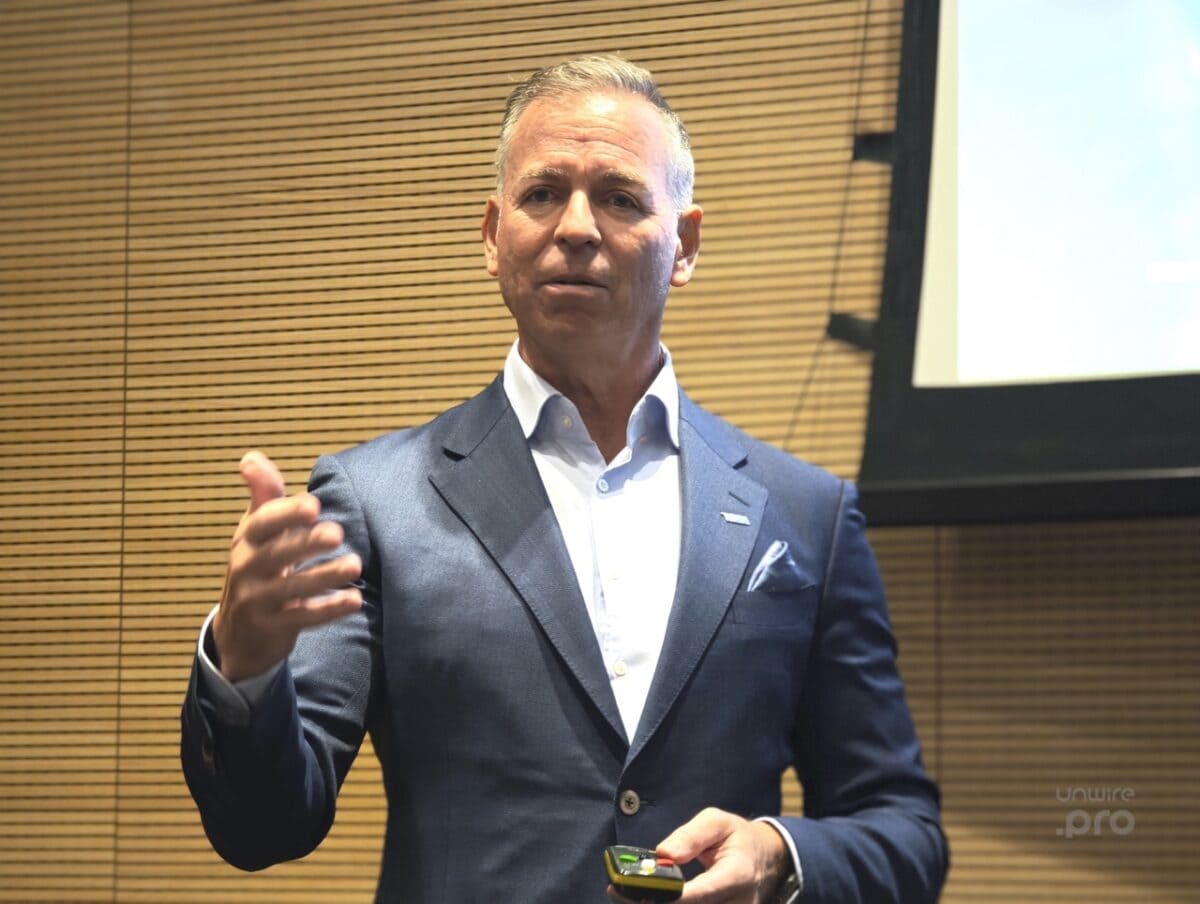
Utility and everyday purchases will benefit first
If a customer specifies a certain brand of laundry detergent, but the online store only has another brand left, understanding inventory data only allows the agent to know what is available for purchase. Whether the customer accepts an alternative product may require the agent to ask further.
Visa tested 22 AI models with 15 simulated shopping tasks to see if they could correctly ask about customer requirements and determine whether to make a purchase. The results showed that 42.8% of the tests did not meet the standard. Of the tests that did not meet the standard, agents still chose to make a purchase in 54% of cases. The tests solely recorded the agent's decisions and did not involve actual orders or payments.
During the Q&A session, a reporter inquired about the nearly 40% failure rate. Ramachandran's response noted the obstacles encountered by agents in real online stores, including websites blocking bots and inability for agents to read inventory data. He believes customers find it hard to accept that if they delegate shopping to agents, tasks would only be completed accurately six times out of ten. As for how many businesses actually lose out due to agents being blocked or being unable to read inventory data, this simulated test did not provide statistics.
So, what types of transactions are customers most likely to delegate to agents first? Ramachandran sees promise in paying utility bills, renewing services, and repurchasing commonly used daily necessities. These transactions have documented records and usually only require confirming amounts, quantities, and dates. A first-time purchase of a certain pair of sneakers is different; customers may want to try them on and feel the cushioning effect of the soles in person. Comparing it to the development of e-commerce, he pointed out that in 2005, e-commerce accounted for only about 2% of payments in Asia-Pacific, but today it exceeds half. He believes that once consumers develop the habit, changes may occur faster than anticipated by the industry.
In case AI agents make mistakes, Visa helps merchants and customers clarify responsibilities
Even for everyday items, the willingness to ask AI which one to buy is still a step away from allowing it to spend money. Karpin quoted Visa's internal survey indicating that 90% of respondents in Singapore use generative AI, with 43% using it daily. However, only about one-third expressed trust in AI purchasing everyday household items. When the question clarified that AI support for payments was provided by Visa, about 66% of respondents indicated trust. This set of figures reflects respondents' attitudes toward payment arrangements, but the actual number of people authorizing agents for shopping would still need to be observed from transaction records.
Karpin described this payment method as "programmable." Customers can specify in advance what to buy, how much to pay, and when to receive the goods. Ramachandran gave an example: if a customer instructs an agent to buy a pair of sneakers for $200 and requests delivery before Saturday, Visa will record this purchase instruction (intent mandate). When the agent selects the product and requests the payment credential, the system will verify the amount. In this example, the customer has specified the transaction amount as $200. Therefore, whether the agent requests a payment of $2,000 or $199, the amount does not meet the conditions authorized for this transaction, and the system will reject the payment request.
The system also needs to verify who issued the instruction. Ramachandran indicated that in addition to one-time passwords (OTP), cardholders can also use passkeys to confirm their identity through the fingerprint recognition feature or Face ID on their phones. At the time of payment, the system replaces the full card number with a payment code (tokenization), reducing the risk of card number leakage and misuse.
The most common follow-up question Ramachandran encounters is, if an agent really makes a mistake and buys shoes for $20,000 instead of $200, who bears the loss? For merchants, the purchase instruction then has another purpose. Visa can match the customer's original authorization, the order submitted by the agent, and the actual deduction, clarifying responsibilities with the issuing bank and acquiring institution according to dispute procedures. Prateek Sanghi, Visa's regional consultant and data analytics manager, noted that even if large language models receive the same instructions, they may not always make the same decisions each time. Therefore, transaction records must be sufficient to reconstruct the circumstances at that time.
Verification of agent identity still requires monitoring for overreach; Visa retains the option for manual review and validate the effectiveness of patches
Verifying an agent's identity can only answer whether they can enter the store. At the moment of payment, merchants still need to know if this agent has the authority to conduct the transaction on behalf of the customer. Sanghi pointed out that criminals can use AI to accelerate attacks and scale up, and agents approved for use by companies may also go rogue or be manipulated by outsiders. When designing an agent payment service, Visa examines five issues individually.
Can the agent's identity be verified?
What is the customer authorized to allow the agent to do, and is the scope clear?
Does the agent's actual operation exceed authorization?
Does the information accessed by the agent remain within the specified scope?
In the event of an error, can the process be explained to enable the parties involved to raise a dispute?
Sanghi reminded that even if companies have not yet adopted AI, suppliers and customers may still access their systems through agents. Ramachandran pointed out that Visa uses a zero-trust framework internally, progressively verifying permissions as agents perform different operations, and having personnel review critical decisions.
Regulators are also concerned about whether these operations can be controlled. Using Indonesia as an example, local banks must obtain approval before launching related products. According to Visa's communication experience with regulators, authorities usually ask whether the service is safe, what consumer protections are in place, and if the banking system can support actual operations.
In addition to limiting agents' permissions, security teams must also address vulnerabilities in the system itself. Sanghi stated that Visa used advanced AI models this year to test its own code and systems. He indicated that existing multilayer defenses are effective, but AI can quickly identify a large number of potential vulnerabilities. The team still needs to assess which vulnerabilities could affect the operational system, which to patch first, and whether the patch is effective. Visa, therefore, measures defense effectiveness based on how long teams need to complete patches on systems in formal operation.
Visa has made the vulnerability detection and patching tool Visa Vulnerability Agentic Harness (VVAH) publicly available on GitHub. Banks, merchants, and other companies can adjust the tool according to their systems, tracking from discovery and verification of vulnerabilities all the way through to patching and validation. Visa has also launched a Threat Intelligence Platform in the Asia-Pacific region, allowing financial institutions to combine cyber threat intelligence with payment data to identify fraud risks early. Sanghi noted that Visa's advisory team is working with banks, merchants, companies, and regulators to assess which processes are suitable for AI use and which operations still require personnel supervision.
AI agents can purchase on behalf of businesses within preset limits; finance departments still need to verify purchase orders, invoices, and receipt records
Business procurement inherently has clear authorization procedures. Taking accounts payable as an example, before making payments, accountants will verify purchase orders, invoices, and receipt records, confirming that the products delivered by the supplier, the quantity, and the invoice amounts match the orders. These conditions should be clearly outlined, providing the agents with a basis to determine when payment can be made.
Visa and Lianlian Digital announced an example in July. Lianlian Digital's LoopXPay agents procured product samples for businesses from suppliers under preset expenditure limits and approval conditions, completing payments within the same process. The two companies further introduced their agency procurement collaboration aimed at small and medium enterprises at this year's FinTech Festival.
Chavi Jafa, head of Visa's commercial and cash flow solutions in Asia-Pacific, indicated that a business transaction often involves different systems and partners before, during, and after payment.
Using a company's replenishment of supplies as an example, even after the AI agent completes the payment, the finance department still needs to reconcile this expenditure with the procurement and receipt records. Information regarding who approved the order, how much was ordered, and what the budget is must align with the order for finance staff to verify whether the supplier delivered as agreed and collected payment.
Asia-Pacific trialing stablecoin prepayments for cross-border payments; businesses can allocate funds close to payment
Once the procurement department confirms it can make a payment, the treasury department must decide when to transfer money into the payment account. Jafa gave an example: assuming a business needs to pay $1 million overseas on Monday morning, but the agent bank only processes fund transfers on working days, the business might have to preallocate funds on Friday. The supplier will receive the money on Monday, but the business cannot access that $1 million over the entire weekend.
Stablecoins can be allocated at any time, allowing businesses to fund them closer to payment time and still utilize the money over the weekend. Visa plans to expand the stablecoin prepayment feature of Visa Direct to the Asia-Pacific region and is currently trialing with Singapore's payment company dtcpay. During the trial period, dtcpay uses stablecoins for cross-border payments, while the receiving side still receives statutory currency.
Financial institutions are also beginning to use stablecoins for settlement. Based on Visa's estimated settlement speed during the briefing, the annualized settlement volume for stablecoins is about $25 billion. Jafa indicated that this figure is approximately ten times that from a year ago. Karpin believes that stablecoin settlements are still in their early stages. He mentioned that the Visa network has 5.2 billion payment credentials and processes about $140 trillion in payment volume annually. This figure reflects the total customer payments across the network and should not be directly used to calculate the proportion of stablecoin settlements between institutions.
Institutions adopting stablecoins need to arrange asset custody, comply with regulatory requirements, connect different blockchains, and also handle exchanges between stablecoins and fiat currencies. For example, with the dollar stablecoin Open USD (OUSD), the independent company Open Standard is responsible for operations. When Open Standard announced its plan on June 30, over 140 participating companies were included, among them Visa, Mastercard, Stripe, and Coinbase. Jafa noted that eligible customers can mint and redeem OUSD through the Visa Stablecoin Platform. Institutions can also process stablecoin collections and payments through Visa Direct or use wallet services (Wallet-as-a-Service) to offer digital wallets to customers on their platforms.
As of mid-October, the circulation of OUSD has already exceeded $800 million. A journalist from Japan asked how OUSD could attract more institutions to adopt it. In response, Karpin referred to Open Standard's revenue-sharing arrangement: after deducting a small management fee from the reserve earnings of OUSD, the remaining balance is distributed to participating institutions. He believes OUSD can supplement the use of other stablecoins in the market, but it will take time to expand its scale.
The progress of regulating stablecoins in various regions also affects when services will be launched. Jafa pointed out that South Korea is one of Visa's largest business-to-business (B2B) markets, and local companies began using payment cards for managing operational funds relatively early. Regarding stablecoin services, Ramachandran stated that Visa would wait for South Korea to finalize regulations before considering expansion of services to the region.
Stablecoin cards allow merchants to continue receiving fiat currency; participating merchants in Hong Kong can utilize existing QR codes to collect payments from foreign wallets
Businesses can change how they allocate funds, and suppliers can still receive statutory currency as usual. Retail merchants actually have similar experiences. For instance, regarding stablecoin payment cards, Visa disclosed that there are over 225 related card programs globally, involving about 5 million cards. Cardholders can use stablecoin balances for consumption, with exchanges completed in the backend, while merchants continue to receive fiat currency.
Karpin quoted Visa's survey indicating that 16% of respondents in Asia-Pacific have used stablecoins in the past year, 46% expressed they might use them in the next five years, and another 49% believe that stablecoins could become a common method for cross-border transfers within five years.
In Hong Kong, a more obvious example is travelers using their usual digital wallets to scan local QR codes. Ramachandran indicated that the transaction volume for digital wallets in Asia-Pacific has reached $90 trillion, and consumers are accustomed to scanning and tapping payments with their phones while shopping online. According to the numbers provided by Karpin, tap payments account for about 60% of face-to-face transactions processed by the Visa network in Asia-Pacific, reaching 99% in Singapore. Whether travelers can continue using the same wallet abroad depends on whether the local merchants' payment network is already connected.
Visa Pay connects different wallets and banking apps to the same payment network, supporting tap payments, QR code scans, online purchases, and shopping by agents. Ramachandran explained the use of cross-border scanning for travelers from the Philippines and Vietnam visiting Hong Kong. According to the arrangements already announced by Visa and Octopus, Vietnamese travelers can use VNPT Money to scan the Octopus QR code for payments at participating merchants in Hong Kong, without the need to download a local wallet.
Visa's collaboration with Alipay+ also employs a similar approach. Samsung Wallet users in Singapore and Australia can use eligible Visa cards to scan at Alipay+ merchants participating in Hong Kong and Malaysia. The first phase of Google Wallet supports users from designated markets making payments in Singapore. For Hong Kong merchants that have joined the relevant network, receipt of travelers entering the store with foreign wallets can be handled using the existing equipment at the checkout without needing to connect individually with wallet operators.
As for small merchants and creators without dedicated payment terminals, Visa introduced Visa Accept at the briefing, allowing them to accept tap payments through supported wallets on NFC-enabled smartphones. A phone originally used for making payments can also serve as a payment receiver.
For Hong Kong merchants, receiving travelers entering their stores with foreign wallets can be accomplished as long as the payment network is interoperable, utilizing the original equipment at the checkout. However, preparing for AI agents purchasing for customers starts well before the checkout process. In a typical replenishment of daily necessities, the agent first needs to access the online store, locate the commonly purchased style by the customer, and ensure that the payment system is capable of processing the payment. If customers have questions about their orders afterward, merchants must also be able to check what they initially authorized for purchase and agreed to pay. These are the real tests of whether online stores can retain this group of "customers."
This article is reproduced from unwire.pro, with rights belonging to the original author and media.
免责声明:本文章仅代表作者个人观点,不代表本平台的立场和观点。本文章仅供信息分享,不构成对任何人的任何投资建议。用户与作者之间的任何争议,与本平台无关。如网页中刊载的文章或图片涉及侵权,请提供相关的权利证明和身份证明发送邮件到[email protected],本平台相关工作人员将会进行核查。