Original author: Long Yue
Original source: Wall Street Insight
Legendary investor Stan Druckenmiller openly stated that he has nearly cleared his equity positions and entered "capital preservation mode"—a rare proactive exit in his 50-year investment career.
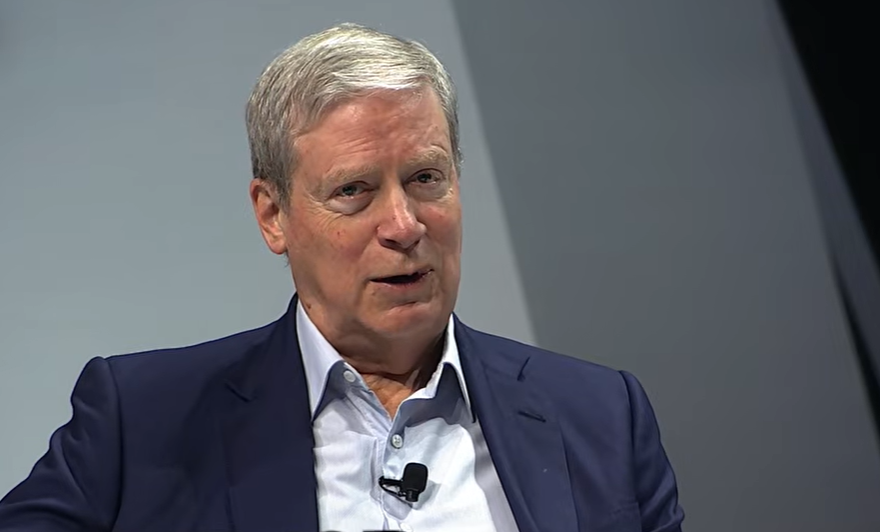
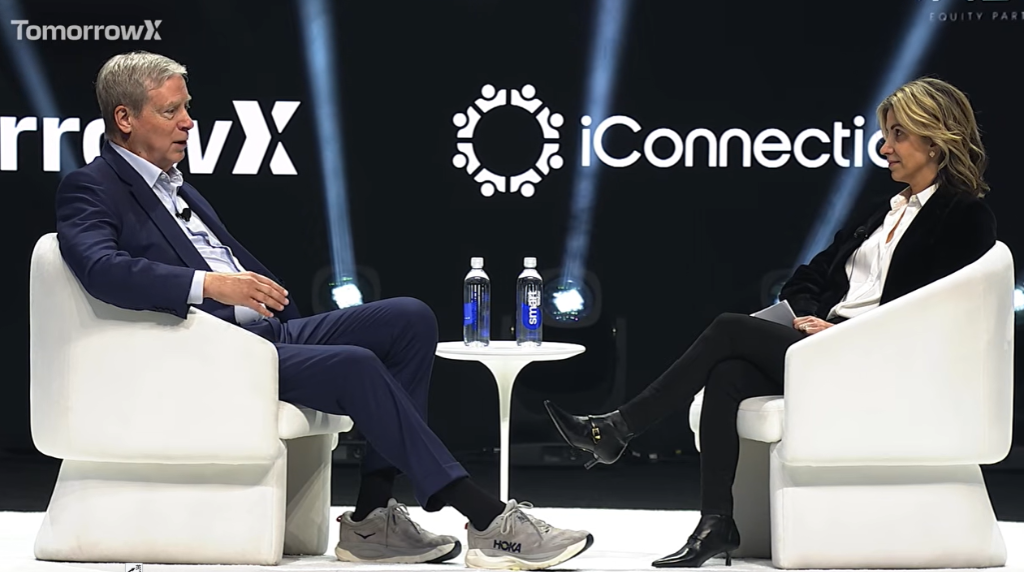
On November 18, 2026, at the TomorrowX Summit held in Austin, Texas, Druckenmiller spoke with Iliana Bouzali, head of global derivatives at Morgan Stanley. He bluntly said that today’s macro environment has “completely flipped” compared to January of this year: the Fed has shifted from rate cuts to rate hikes, commodities have turned from rising to falling, and credit spreads continue to widen. The low visibility in the market is unprecedented in his career. “I can't remember a time when I had such a lack of judgment about the direction in the next 12 months,” he said.
Just nine months ago, Druckenmiller was bullish within the same discussion framework—long on stocks, long on copper, short on U.S. bonds, and betting on breakthroughs in healthcare. Now, that combination has almost been wiped out. He described his current positions as: essentially neutral on stocks, holding a small amount of dollar positions while shorting copper. Overall, we are in "capital preservation mode".
His phone's automatic reply is said to be just a few short words: “Don't talk to me. I'm not playing.”
He also revealed his belief that the next big opportunity in the AI field lies in "selling tasks" rather than "selling computing power"—once top AI laboratories harness the world's strongest intelligence, they can completely bypass the token pricing model and directly enter verticals like cybersecurity and healthcare, establishing their own business landscape.
The bullish logic of January has completely collapsed
Druckenmiller's judgment in January was based on a complete macro framework: a federal funds rate of 3.5%, a nominal growth rate of 6%, and an extremely loose monetary policy; the Fed's dot plot indicated more rate cuts to come within the year; commodities like copper were breaking new highs; the market breadth line continued to set new highs; and credit spreads were extremely tight.
“In a situation of excessively loose monetary policy, a recession within 6 to 12 months seems nearly impossible to me,” he said. At that time, he was also optimistic about accelerating AI capital expenditures, going long on stocks, long on copper, and short on U.S. bonds as a hedge, while also viewing the healthcare sector favorably.
However, about a month later, the “tariff” incident disrupted the rhythm. He admitted there was a panic sell-off, but quickly bought back in, completing a natural purification of his positions in the process—targets that lacked significant upside potential were cleared out, while positions related to AI infrastructure became clearer.
As of today in November, he enumerated every condition that initially supported his bullish judgment and pointed out that they have all reversed: the Fed is no longer cutting rates but is instead raising them; he mentioned a person who worked closely with him for 15 years, who is deeply dissatisfied with the zero interest rate policy over the past 15 years and is outraged that inflation has exceeded targets for five consecutive years, implying that there has been a fundamental shift in the Fed's policy direction. Commodities have gone from breaking new highs to seeing peaks and declines, and he is currently shorting copper; the market breadth line peaked back on August 14, although the index high occurred in October; and credit spreads continue to widen.
“You should get my point. Everything has completely reversed from then,” he said.
“I'm not playing!” A proactive exit in a moment of confusion
Faced with this situation, Druckenmiller's choice is to withdraw. His equity positions have essentially balanced out, holding a small amount of dollar positions and overall remaining in a wait-and-see state. Bouzali joked that he set an “automatic reply” button during Zoom calls with just one sentence: “Don't talk to me. I'm not playing.” He did not deny that.
He explained that this proactive exit is not a sign of defeat, but rather a reflection of his consistent risk management logic. His investment framework spans four major asset classes: commodities, bonds, stocks, and rates, which means he never has to maintain continuous exposure in any one category. “Bonds and currencies often perform the best during stock bear markets,” he said, which makes him more willing to stay put on stocks while looking for opportunities in other macro tools.
He also admitted that he does not use VaR, nor does he conduct stress tests; the core signal of risk management is whether the P&L performance itself meets expectations. “When markets are in chaos and enter bear phases, all correlations fail,” he said. “Some very talented people this year, when shorting software and going long on AI infrastructure, have painfully validated this point.”
He also discussed his belief in “winning and losing streaks”—he believes that the state cycles in investing are far from random distributions, and recognizing whether he is currently in a “hot hand” or “cold hand” state is one of the most important parts of this job.
“When I am in good shape, I go in heavily; when I am in bad shape, I only make small bets, waiting for the average cost to recover before deciding whether to re-enter.” He characterizes the current period as a “rest,” which could last for two days or could extend to six months.
From selling shovels to selling services, the second half of AI?
Despite the overall position contraction, Druckenmiller's long-term judgment on AI has not wavered. He explicitly stated that he will not short this field's innovations, partly because the related targets are already oversold and positions have been cleared.
His judgment on the next phase of AI focuses on “use cases” rather than “infrastructure.” He believes there may be tactical trading opportunities in the AI infrastructure sector, but it will not again be the main engine as it was in the past four years. The real opportunity, he believes, lies within the top AI laboratories themselves.
His logic is: laboratories controlling the world’s top intelligence have no reason to remain aligned with a token-based business model. “If you have the world's strongest intelligence, you can start selling tasks instead of selling tokens, you can create your own business,” he said.
He identified cybersecurity as the most direct example: “Who can compete with these people in the field of cybersecurity? They created these problems, so now they can use groups of intelligent agents to protect us.” Healthcare is also within his sights.
He sums up this judgment with a single sentence: “Sell tasks, not tokens.”
Fiscal risks and educational concerns: slow-moving variables happening quietly
When asked what important trends are “quietly happening,” Druckenmiller raised two structural issues he has long been concerned about.
The first is the ongoing degradation of K-12 education in the U.S. He pointed out that the U.S. has long compensated for this shortcoming by attracting top talents from abroad. “I bet that out of the top ten tech companies, eight were founded or led by immigrants.” However, he worries that tightening immigration policies threaten this compensatory mechanism, and the two issues, together, have not generated sufficient policy attention.
The second is fiscal issues. As early as 2011 to 2012, he ran around various universities trying to persuade young people to pay attention to intergenerational fiscal injustice, but he was largely ignored. He quoted the old saying: “How does bankruptcy happen? Slowly, and then suddenly.” He believes that the U.S. is highly likely to experience fiscal reforms driven by financial market crises within the next decade, “this will be a crisis that is fundamentally different from the current one.” He also expressed cautious optimism that reform will eventually happen.
Ten-year predictions: nuclear fusion, space data centers, conquering cancer
Druckenmiller also provided three ten-year predictions, each with what he considers plausible probabilities:
- Nuclear fusion: 20% probability of being achieved within ten years, or at least being clear that “we are about to achieve it.”
- Space data centers: speaking this in Austin, he gave a probability of “at least 70%.”
- Conquering cancer: he has been on the board of the Sloan Kettering Cancer Center for 30 years and has witnessed the iterations from gene sequencing, immunotherapy to AI. “I believe we will conquer cancer. I believe it will become a manageable disease. I’m saying within ten years, not twenty.”
What makes a top investor
At the end of the conversation, Druckenmiller shared his judgment on the qualities of investors. He believes the difference between a top investor and a good investor lies in four points: a near-pathological passion for the business, extremely strong thirst for knowledge, a competitive spirit that borders on pathology, and strict self-discipline. “Every time you buy, there’s a seller on the other side; if you're not investing incredible amounts of effort, you’ll lose in this field,” he said.
He also discussed common pitfalls for high-IQ individuals: loving their arguments so much that they forget the latter half of the saying “put all your eggs in one basket and watch that basket closely.” “They can have great arguments, or make great bets, but things change, and they can’t adjust as quickly as others can.”
He also mentioned his most painful lesson: in January 2000, he sold the Nasdaq but bought back on the same day it hit its all-time high, “I think I was less than an hour late to the top.” When asked what he learned from it, his answer was: “Nothing. I knew I shouldn’t have done that, but I just couldn’t control myself.”
The full interview text is as follows:
Stan Druckenmiller: Why is he now “sitting on the sidelines” | TomorrowX Summit
November 18, 2026
Legendary investor and CEO of the Duquesne Family Office, Stan Druckenmiller, engaged in conversation on the main stage of the Austin TomorrowX Summit with Iliana Bouzali of Morgan Stanley.
Stan shared why after 50 years of investing, he has never felt such a lack of certainty; and his current focus: AI application scenarios rather than infrastructure, why top laboratories can sell "tasks" instead of "tokens," and how AI agent clusters can assist in cybersecurity defense. He also talked about the moment he realized AI was the most significant event in American business history, his bold predictions for the next decade—from nuclear fusion, space data centers, to conquering cancer within ten years—and the key differences between top investors and good investors.
Chapter One: How Gavin Baker Predicted the AI Boom
Iliana: Stan, hello.
Stan: Iliana, hello. Gavin, thank you for giving us a reason to reunite. Our last conversation was about nine months ago.
Before we begin, I know time is tight, but I want to tell a little story about Iliana and Gavin. Iliana runs the global derivatives business at Morgan Stanley. She organizes Zoom calls, and we were referred to as the “macro legends”—though I think a more accurate title would be “macro has-beens.”
About a month after the release of ChatGPT, we had a Zoom meeting where those so-called “macro legends” were discussing interest rates and other topics. At that moment, a person I had never seen before—Gavin—joined the meeting and said, “You are all fooling yourselves. The most significant event in American business history is happening, and you are here quibbling over small details.”
Chapter Two: Reflecting on January's Portfolio
Stan (continued): Gavin, I want to thank you because that was the inflection point; you anticipated everything about it, its depth and breadth. I also want to thank Iliana; if it weren’t for you, I wouldn’t have met Gavin. Thank you both.
Iliana: You’re welcome. I revisited our similar conversation from January, when the audience was smaller. At that time, you were optimistic about the economy, going long on stocks, shorting government bonds as a hedge, going long on copper, and firmly believing the healthcare sector would emerge. How many of those positions do you still hold today?
Stan: Basically, I’ve almost cleared them all.
Looking back at that interview in January, it was a special time. There are times in my career when I have clear visibility, and times when I have none at all. When I have clarity, I like to go in heavily; when I lack clarity, I tend to remain almost entirely on the sidelines.
At that time, the economy was very strong. More importantly, from a forward-looking perspective, the federal funds rate was at 3.5%, the nominal growth rate was 6%, and monetary policy was extremely loose. According to the so-called Fed dot plot, more rate cuts were expected within the year. Commodities—including copper—were breaking through to new highs. The breadth of advancing versus declining stocks and other technical indicators I used in my market observations were also setting new highs. Credit spreads were very, very tight.
Thus, in the context of excessively loose monetary policy, a recession within the next 6 to 12 months seemed almost impossible to me. Additionally, in the fall of the previous year, Claude Code had just ignited enthusiasm about accelerating AI among insiders. We were quite optimistic about capital expenditures, all of which made us very bullish on stocks and the economy.
Regrettably, about a month later, a so-called “trade war” broke out. I panicked, and we sold off a number of positions. But ironically, it turned out to be a blessing in disguise—because when we bought back in (very quickly), the trend of AI infrastructure taking off was clearer than ever before. This move also naturally cleared out those holdings in our portfolio that would not see significant increases.
Chapter Three: Why Everything Has Reversed
Stan (continued): Now let’s look at today’s situation.
The economy remains strong, but all those other aspects I mentioned have completely reversed. The Fed is no longer cutting rates; on the contrary, it is raising them—there has been a shift in the Fed's policy direction. I know someone who sat next to me for 15 years, who is dissatisfied with the monetary loosening, deficits, and everything that has followed over the past 15 years, and is outraged that inflation has persistently exceeded targets for five years.
Thus, we are currently in a monetary tightening cycle. Commodities, which were breaking new highs in January, now seem to be peaking and declining—in fact, we are currently shorting copper. The breadth line hit new highs during our interview, but its peak had actually occurred back on August 14, although the market index peak was in October. Credit spreads are widening.
I think you understand—everything now is completely the opposite of what it was then. So, we are neither long nor short stocks.
Chapter Four: I am on the sidelines
Stan (continued): I admit I like to short. But for the reasons most people came to this conference, I dare not short the technological innovations and advancements discussed here. Furthermore, many related targets have already been oversold, and from a tactical perspective, positions are rather low.
So, my choice remains consistent—when I have uncertainty, I step back and observe. I have been in this business for 50 years, for goodness’ sake. I can’t remember a time when I had so little certainty about the direction in the upcoming 12 months, which is utterly different from last January.
Just like you joked a few days ago on Zoom—you said, “Stan has an automatic reply button; it displays: ‘I’m sitting on the sidelines.’”—automatic reply: Don’t talk to me, I’m not playing.
This is our current situation. We still hold a small amount of dollar positions; our stock positions are basically flat, but there are some misalignments internally—there are several shorts and longs, but we are essentially avoiding the market.
Iliana: The opening introduction had a few flattering remarks about your performance. Are you implying that you've never lost money? That you've never had a losing year?
Stan: Indeed not. But that’s just calendar luck—I’ve experienced significant drawdowns, I just have never had a full-year loss from December 31 to December 31.
In terms of my performance, fundamentally, it’s partly due to a few factors: first, we trade across four asset classes—commodities, bonds, stocks, and rates—so we don’t feel a need to maintain large positions in any single asset class.
Iliana: And this style was pioneered by you; it’s clear that you are not constrained by investment mandates.
Stan: This style may indeed be my innovation, but it came from necessity—I simply didn't know what I was doing back then. In any case, it’s a coincidence that bonds and currencies often make the largest moves during stock bear markets. This has made me more willing to temporarily put stocks aside, as there are other alternative choices, which naturally creates a discipline.
We have gone through periods of exiting the market, as well as active operation periods in macro tools outside of stocks. Now, because I have little certainty on anything, we are generally in a capital preservation stage—we are focused on not losing money rather than on making money.
Iliana: When we were chatting in the back, you mentioned that someone analyzed your investment style over your 50 years, which made us all laugh. Can you share that with everyone?
Stan: You weren’t paying attention because I think what I just said is the answer. Duquesne has made money over the years by "explosive growth": we would have a few years of steady performance, gaining 5% to 8%, then suddenly have a multi-year explosive rise, followed by a period of sideways movement. But we’ve avoided declines.
I think this is largely because I’ve been lucky enough to have many young people on the team, and Gavin’s call was also critical. We just went through a fantastic three to four years of explosive growth, and many of the factors I mentioned have substantial uncertainty, so I’m just taking a breather—this might last two days, or it could extend to six months; I don’t know.
Chapter Five: Hot hand and cold hand, and risk management
Iliana: So you are in a "cold hand" phase; how do you know when you can regain your form?
Stan: I am not in a "cold hand" phase; I am in an "out-of-the-game" period. What you’re referring to is my risk management style—which is indeed somewhat different. We don’t use VaR, don’t do stress tests, and don’t use any of those tools. I remember when managing the Quantum Fund for Soros, banks were unwilling to lend to us because we didn’t use VaR, so I provided them with that useless VaR model.
My long-standing approach—because we are cross-asset class investors—has been to look at my profit and loss performance. If the performance doesn’t meet expectations, or if the correlations are off, I start to reduce positions. The P&L performance is my real signal. Why do I think this is better than VaR? Because in chaotic markets, entering bear phases, all those correlations fail. I believe that earlier this year, some very talented people, when shorting software and going long on AI infrastructure, painfully validated this point—strange things started happening, and your P&L performance captures all of it.
You mentioned one of the most important parts of my work—I believe in the “winning streak effect.” Friends in Texas understand sports; just like consecutive hits in baseball or winning streaks, this phenomenon greatly surpasses random probability. My business is similar—sometimes I am in great shape, sometimes I’m just not on point.
Chapter Six: What he is focused on: AI application scenarios
Stan (continued): A significant part of my work is judging whether I am currently in a "cold hand" or "hot hand." When I’m in good shape, I go boldly; when I’m in poor shape, I play it small. If my "batting average" starts to rise, I feel I might be starting to see clearly again, and then I would increase my positions.
Iliana: I originally had a multiple-choice question for you to pick investment targets from several themes or stocks, but you seem not to want to buy anything, so we’ll skip that question. A different but similar question: while you are not ready to make large-scale purchases, is there anything in the stock market that you are keeping an eye on, are interested in, or might consider positioning in the future?
Stan: Given the movements in commodities, and one point I haven’t mentioned—the cyclical stocks outperformed defensive stocks one year ago, while now defensive stocks are leading—I'm highly alert to the possibility of a disappointing economy in the second half of 2027, along with considerations regarding interest rates.
Regarding stocks, we are focused on AI application scenarios rather than infrastructure. Infrastructure may be a good tactical trade—related positions have been significantly oversold—but I don’t think it will serve as our "explosive growth" engine as it did in the past four years.
The application scenarios may actually represent the most interesting opportunities. Ironically, the most interesting application scenarios might be the AI laboratories themselves. Personally, I don’t believe they will remain in the “Token sales” business for long. My judgment is that they won’t always just be releasing models—if you have the world’s top intelligence, you can start selling “tasks” instead of “tokens” and create your own business.
This doesn’t require much imagination. For example, in cybersecurity—who can compete with these AI laboratories in the cybersecurity field? They are the ones who created these problems, so now they are also the party most capable of deploying AI agent clusters to protect us. Similarly, healthcare and a variety of other application scenarios are also within my view.
So, if the stock market has another major driving force, I think it will be there. Selling tasks, not tokens—this is something you heard first here.
Chapter Seven: Quietly happening things
Iliana: Okay, let’s switch to a slightly different question and temporarily set AI aside for five minutes. Social media is very good at capturing the current hot topics, but many important things are quietly happening, evolving slowly beneath the surface over longer time spans. What important things are happening quietly in the world that we should pay attention to?
Stan: One thing that is quietly happening, but I find distressing, is the ongoing deterioration of K-12 education in this country. Closely related to this is that we have long made up for this shortfall by bringing in a large number of top talents from abroad. At tech conferences, it’s hard to imagine the top ten tech companies—I can’t recall specific names right now—but I bet at least eight of them are led or founded by immigrant founders or managers.
What I worry about now is that not only is K-12 continuing to decline, but no one is simultaneously examining the accompanying issues—our immigration policy is threatening the influx of this talent. I am optimistic that policy will eventually adjust, but this is something I have been thinking about for a long time, independent of our business.
Another slowly unfolding issue reminds me of the old saying: how do people go bankrupt? Slowly, and then suddenly.
For those who don’t understand the context, between 2011 and 2012, I ran around various universities, trying to persuade young people to pay attention to how my generation has plundered their future using the welfare system; we must tackle the deficit issue—because simply looking at the demographic tables, one can know that the time bomb will undoubtedly explode between 2020 and 2030.
Of course, the U.S., with its reserve currency status, could still maintain this situation despite what I targeted in 2011 and 2012—and I also did not foresee that $5 trillion would be spent on the pandemic, which piled on further expenditures, and zero interest rates gave them the confidence to continue squandering.
But I fear that at some point, we will see the U.S. walking the same path as France. I am also cautiously optimistic that if that day comes, we will decisively push for reform. But as a macro investor, it will be a crisis fundamentally different from the current one. I do believe that at some point in the next decade, we will experience a fiscal reform induced by a financial market crisis.
Chapter Eight: How smart people self-sabotage
Iliana: About nine months ago, you said some things that impressed me—I like to quote that interview because the timing was quite good.
Stan: You must be deliberately selecting the good parts to mention.
Iliana: Indeed. You said my advantage lies not in IQ but in decisiveness. You said that contrarian thinking has been overhyped, and many people sacrifice substantial profits to appear different. You also talked about how smart people hinder themselves by not knowing when to stop researching. Now, let’s add another point to this list—how else do smart people sabotage themselves?
Stan: I believe this industry requires intellectual humility, and intellectual humility requires an open mindset. I greatly admire strong convictions—I’ve quoted Mark Twain as saying, “Put all your eggs in one basket, and watch that basket closely.” I agree with concentrated bets, but the problem is that many high-IQ individuals often forget the latter half of that: “watch that basket closely.” They love their constructed investment logic so much that they cease to maintain an open-minded attitude.
Chapter Nine: The Key to Distinguishing Top Investors
Stan (continued): You can have a great thesis, make a good bet, but things change, and they seem unable to adjust as quickly as others. I can’t quite articulate why, but high IQ often tends to lead to rigid thinking—not always, but often.
Iliana: This is closely related to another matter—you’ve interacted with and guided some outstanding investors. What is the key to distinguishing good investors from top investors?
Stan: They must have an almost pathological passion for the industry, they must have a strong thirst for knowledge. They must possess a competitive spirit that borders on pathology—that desire to win and fear of losing exceeds normal boundaries, and there’s fundamentally no work-life balance. But every time you buy something, there’s a seller on the other side. If you don’t put in an incredible amount of effort, you will lose in this industry.
The fourth point, which may be equally important: they are all extremely disciplined. Each person’s method of discipline may vary greatly; it might be completely different from mine, but whatever the discipline, they stick to it. When you put these four points together, I believe it answers your question.
Chapter Ten: How Stan Makes Decisions
Iliana: If our audience worked with you for a month—of course, that would be strange—what would surprise them most about your decision-making process?
Stan: It’s what we call at our firm “invest first, research later.” I’ll hear an idea, or as a technical analyst, see a chart I like, if the story makes sense, or the person telling it has been working in that field for years, and I can feel their genuine enthusiasm—then I will build a position, not a huge one, but enough that if I’m wrong, it will hurt. At that point, I probably only have about 15% of the information that a traditional investor would require before pulling the trigger.
Then, I hand that idea off to the research team to do deeper research over two to three weeks, and then decide whether to add to or exit the position. So, there are plenty of intuitive elements in my operations, involving some things I might not really have the qualifications to buy—but over the long term, this approach has worked for me.
Chapter Eleven: Predictions for the Next Decade
Iliana: We chatted a lot in the back about history, psychology, markets, and various bold hypotheses. I want to include the audience in this conversation: give me one or two predictions about the next decade that sound unlikely but you would quietly assign a 20% probability to.
Stan: First, I believe there is a 20% probability that we will achieve nuclear fusion, or at least clearly see that fusion is imminent.
Second, I am in Austin, so I would say at least 70% or even higher probability that we will build space data centers.
Third, I have been on the board of the Sloan Kettering Cancer Center for 30 years. The first decade was basically stagnant, but then we got gene sequencing, we recognized that cancer is an individualized disease, and then came gene mutation studies, immunotherapy, and now AI.
I believe we will conquer cancer. I believe it will become a manageable chronic disease—and I'm saying within ten years, not twenty.
[Applause]
Chapter Twelve: Fill-in-the-blank questions
Iliana: Awesome. Before we get kicked off the stage, let's finish this segment with a fill-in-the-blank question. Those terrible red warning lights...
Stan: I know, I think someone will directly ask us to leave the stage, but I want to finish this question.
Iliana: Alright, starting the fill-in-the-blank. Meeting someone, in the first 15 minutes...
Stan: I can judge whether he’s a fraud.
Iliana: The personal trait that has made me the most money is...
Stan: An open mindset.
Iliana: And work-life balance.
Stan: [laughs] The personal trait that has made me lose the most money is...
I have messed up my discipline several times. I lost my composure and did things I knew I shouldn't do—that was about 26 years ago, but I remember it like yesterday. In January 2000, I shorted the Nasdaq and then bought back at its historic peak; I think I was probably an hour late to the top. Because I had the worst FOMO. When asked what I learned from it, I said, “Nothing. I knew I shouldn’t have done that, but I just couldn’t control myself.”
Iliana: You still probably have PTSD from that. The AI bearish argument that I most agree with is...
Stan: Political factors and concerns regarding financing—both are worrisome.
Iliana: It is my honor to share the stage with you, Gavin, thank you for giving us this opportunity again. Stan, more importantly, thank you for your friendship.
Stan: Thank you, Iliana. Thank you to everyone present.
免责声明:本文章仅代表作者个人观点,不代表本平台的立场和观点。本文章仅供信息分享,不构成对任何人的任何投资建议。用户与作者之间的任何争议,与本平台无关。如网页中刊载的文章或图片涉及侵权,请提供相关的权利证明和身份证明发送邮件到[email protected],本平台相关工作人员将会进行核查。


