On November 17 in the United States, Nvidia announced its Q3 financial report for fiscal year 2027, with revenue of $115.8 billion, a quarter-on-quarter increase of 20.3% and a year-on-year increase of 103.1%. This is the first time in Nvidia's history that a single quarter's revenue has exceeded $100 billion.
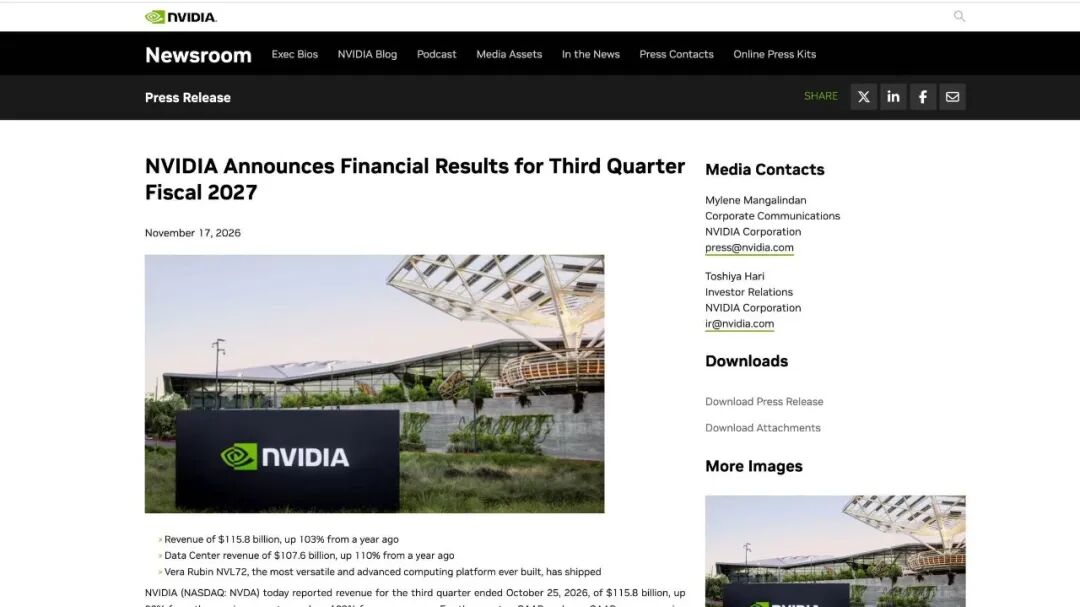
This is also the first financial report issued by Jensen Huang after leaving Nvidia due to a scandal. Although the company still appears to operate normally in the short term, there is growing concern among the public for this trillion-dollar chip giant that holds the key to global AI computing power. Additionally, the policy uncertainties brought by the U.S. midterm elections add a cloud of doubt over the development of the AI industry, making market sentiment increasingly fragile.
What does a Nvidia without Jensen Huang mean? What does it mean for global AI development? In this episode, we focus on interviews with several guests from the chip, technology, and finance industries in Silicon Valley and Wall Street, digging deep into over 60 executives who reported directly to Jensen Huang. We discuss aspects such as Nvidia's management, sales, technology research and development, supply chain, open-source ecological layout, and next-generation technology bets to deeply explore: Where is Nvidia's future without Jensen Huang?
This article is a video rewrite, and we welcome everyone to watch the following video.
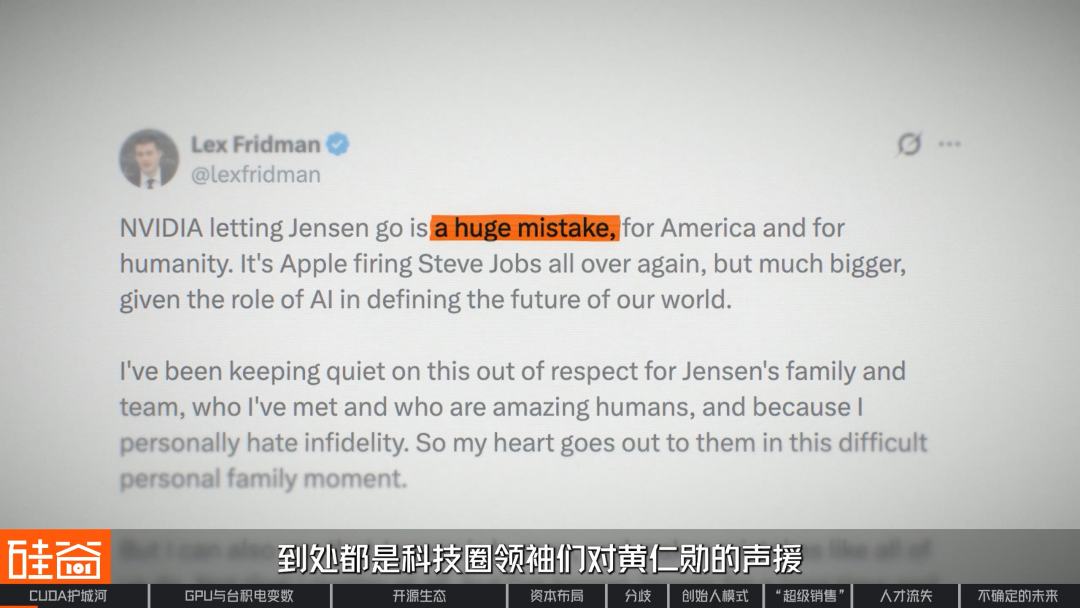
After Jensen Huang's resignation, social media X in the U.S. was filled with support for him from technology leaders in the industry, urging Nvidia's board to think twice, because "Nvidia without Jensen is nothing."
Silicon Valley believes that Nvidia, and even the entire AI sector, is currently at a moment when it needs Huang the most, for a simple reason: The moat of the CUDA ecosystem may soon be shaken by AI large models.
▍"CUDA Ecosystem is About to Break"
The latest generation of AI large models is eating away at the software ecosystem moat, and this time it has reached CUDA.
CUDA is a parallel computing platform and programming model introduced by Nvidia in 2006. Simply put, it allows developers to perform general computing tasks using GPUs. Although GPUs have powerful computing capabilities, developers also need a set of software tools to easily call and fully leverage these capabilities. This was previously Nvidia's strongest moat, as the entire AI industry has deeply relied on the CUDA ecosystem.
Even competitors like AMD can produce GPUs with better performance or lower prices, getting customers to abandon the familiar CUDA system still requires significant time and engineering costs. This high migration cost also exists between GPUs and ASICs (Application-Specific Integrated Circuit) like Google TPU.
However, Anthropic stated in its latest roadshow that now, migration time can be compressed to just a few days.
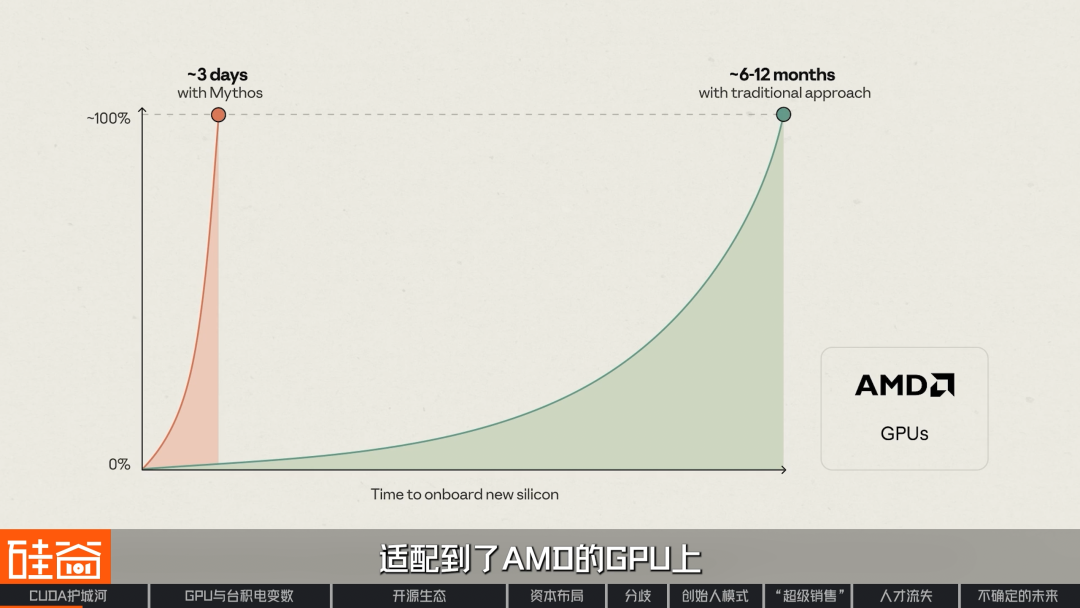
According to the roadshow PPT disclosed by The Decoder, Anthropic claimed that previously connecting to a new chip platform could take dozens of engineers 6 to 12 months; this time, Claude Mythos adapted a specific reasoning task of an AI model to AMD's GPU in just about three days.
Howie Xu
Chief AI/Innovation Officer at Gen Digital
Because of AI coding agents, CUDA will eventually no longer be a moat. This is not a vision, but a fact. It’s not that CUDA is gone overnight, but we can see a direction. The reason CUDA was a moat before was that things could be done, but required a lot of manpower, and only a few people understood it. Now, both issues are solved because Mythos or new models can address these problems.
Of course, truly seeing CUDA as no longer important is not something that will happen this year or next; it will take time. But thinking from first principles, what used to require humans to write can now be written by machines or agents, that’s what it is.
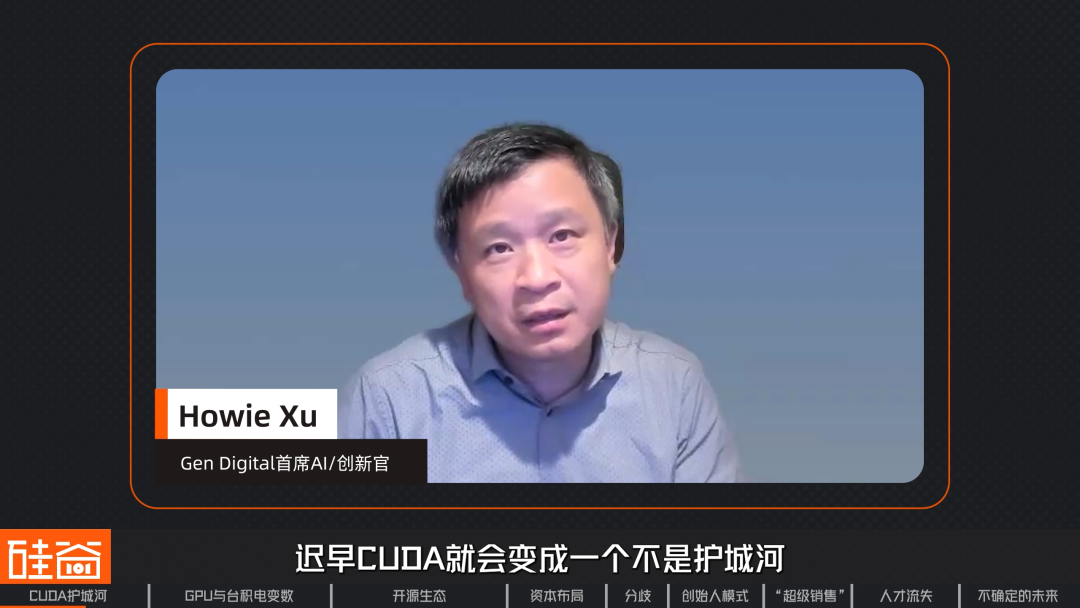
Anonymous Interviewee
Senior Semiconductor Industry Practitioner in Silicon Valley
First, at the Kernel (computational kernel) level, you don't even need to write CUDA anymore; you can directly write lower-level assembly to achieve better optimization. Secondly, during the time of CUDA, a heterogeneous system was used with GPUs across various industries, requiring manual writing of all kinds of operator libraries. With AI now, if a new field emerges, these originally hand-written operator libraries can adapt quickly.
The second point is that with AI, the orchestration capabilities of agents are very strong; at the level of system scheduling, AI's capabilities are also very strong. I now even see some signs: AI can end-to-end generate the entire assembly and subsequent source code directly from any application, customizing serving frameworks, software, and runtime scheduling. Each model and application has its own unique software stack.
These can all be completed end-to-end, and the ecology of CUDA itself is essentially drowned within it.
It should be emphasized here that the experiments referenced in the Anthropic roadshow PPT exposed by the media only concern a model's prompt processing task on AMD's MI355X GPU and cannot be directly equated to the cross-platform migration of the entire AI system. We still need to wait for more reproductions and validations concerning the specific effects.
However, it is certain that Nvidia's proud CUDA moat is on the verge of collapse, which is precisely when the company needs Jensen Huang the most.
▍"The Innovation of the Entire Semiconductor Industry Will Slow Down"
If CUDA's moat is breached, what advantages does Nvidia have left? Senior semiconductor industry practitioners in Silicon Valley told us that Jensen Huang already foresaw the erosion of CUDA, so moving forward, chip manufacturers will compete not just on single-card performance but also on heterogeneous chip and systemic integration capabilities. Previously, Nvidia had already moved in this direction.
Anonymous Interviewee
Senior Semiconductor Industry Practitioner in Silicon Valley
What they are really competing on is still system integration capability. On the software side, Nvidia was also very strong, such as with Dynamo and other new system scheduling software. Nvidia's acquisition of Groq, doing prefill and decode disaggregation; later they also developed CPX for StorageChain, which means unloading KV cache to the storage layer, which is also a heterogeneous system. Grace Hopper is about combining CPU and GPU, which is also heterogeneous.
The entire system has many heterogeneous elements; Nvidia has actually been moving in that direction.
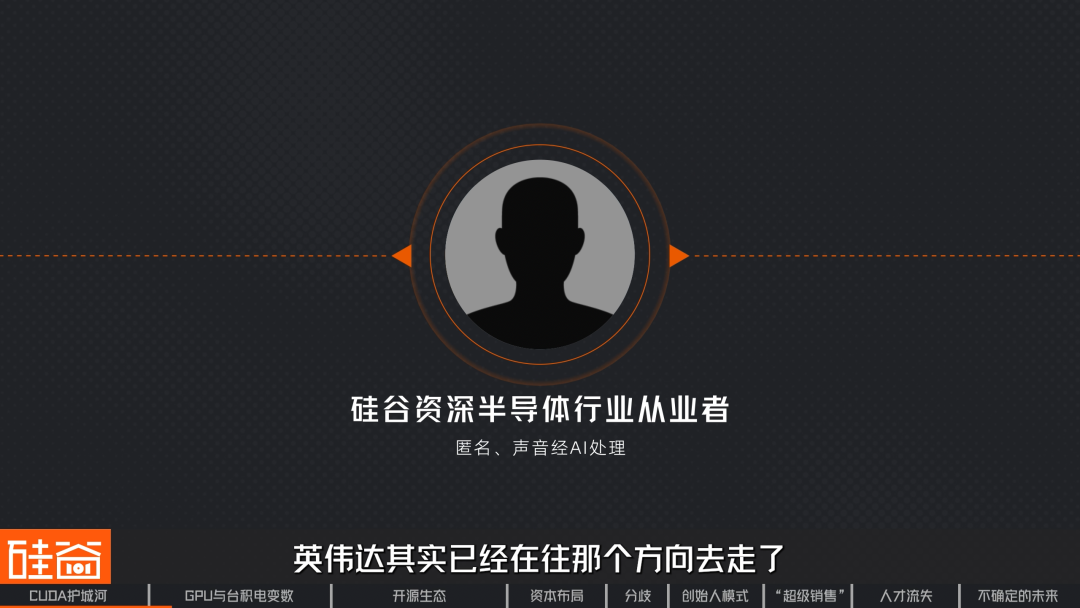
Jensen Huang has been paving the way for heterogeneous chip systems; in the future, Nvidia's competitive advantage may not only come from GPUs and CUDA but shift further towards the entire server cabinet or even data center system integration capabilities.
However, this requires significant innovations in cutting-edge technologies, such as high-speed optical interconnects, liquid cooling, and more efficient power supply systems. These technologies were not invented by Nvidia, but in recent years, Nvidia, with its aggressive product iteration pace and increasing system performance requirements, has pushed the entire supply chain to accelerate innovation, enabling many hardware technologies that originally required long research, validation, and deployment cycles to enter large-scale commercial applications rapidly.
Anonymous Interviewee
Senior Semiconductor Industry Practitioner in Silicon Valley
Like Nvidia’s Vera Rubin system, it may have six different chips. Because it acquired Mellanox, it is very strong in networking; it is also very strong in CPUs because it has its own Grace Hopper. It has also made great strides in liquid cooling and optical technology.
Including OCS, which is Optical Circuit Switch, developed by Google first. Nvidia also recently published some papers showing they are replacing NVLink Switch with OCS. These are very forward-looking options.
These technologies require the foresight of a CEO and founder. Huang’s current layout can still help Nvidia for a while, but what about later? Guests worry that without anyone with Huang's charisma and decisiveness, the innovation of the entire semiconductor industry will slow down.
Anonymous Interviewee
Senior Semiconductor Industry Practitioner in Silicon Valley
When Huang makes a phone call, everyone responds, proactively advancing the AI industry together. This includes some very aggressive routes, such as CPO and 800V high voltage transmission, which Huang proposed most aggressively and first, prompting the industry to follow.
So, for the industry, people might be unsure how to handle certain matters moving forward. There could be a pause, capital expenditures might also slow down, and the positive expansion of the industry may also halt, including uncertainty about how to handle Huang's future orders, which could have far-reaching impacts.
▍"For TSMC, Nvidia Will Be No Different from Competitors"
Next, an important point is Huang's influence in the supply chain. Huang once said in an interview with Lex Fridman in March this year:
Jensen Huang
Founder of Nvidia
For thirty years, we have done hundreds of billions of dollars worth of business through them, but we don’t even have a contract signed, which is quite remarkable.
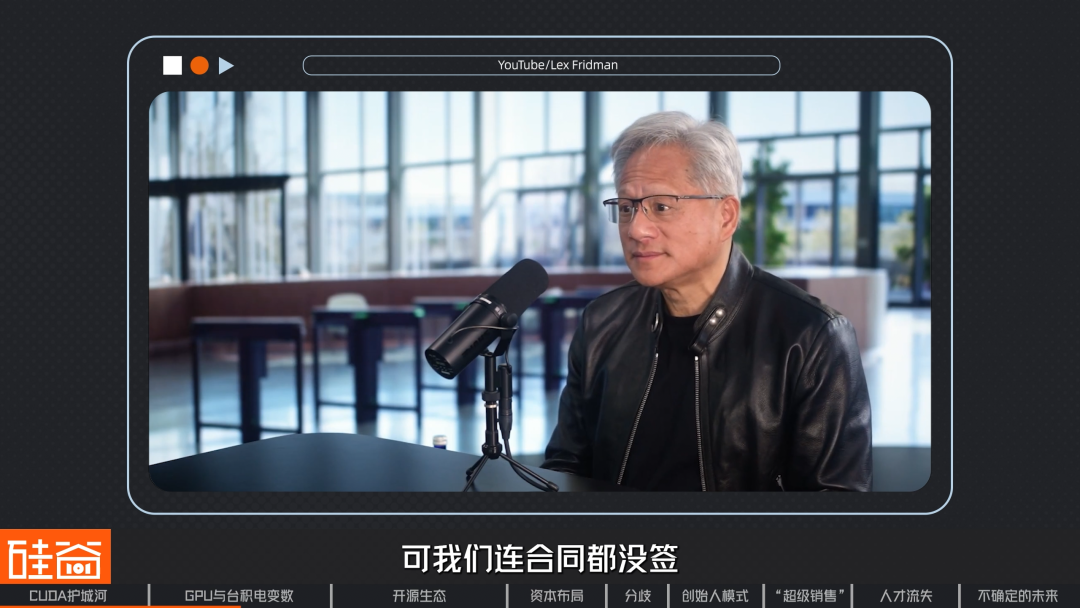
Nvidia has worked with TSMC for 30 years without needing to sign an agreement; it relies on "trust".
According to TSMC's 2025 financial report, Nvidia has surpassed Apple to become TSMC's largest customer, contributing 19% to TSMC's annual revenue. In the key advanced packaging phase of AI chips, research institutions estimate that Nvidia will consume about 60% of global capacity in 2025.
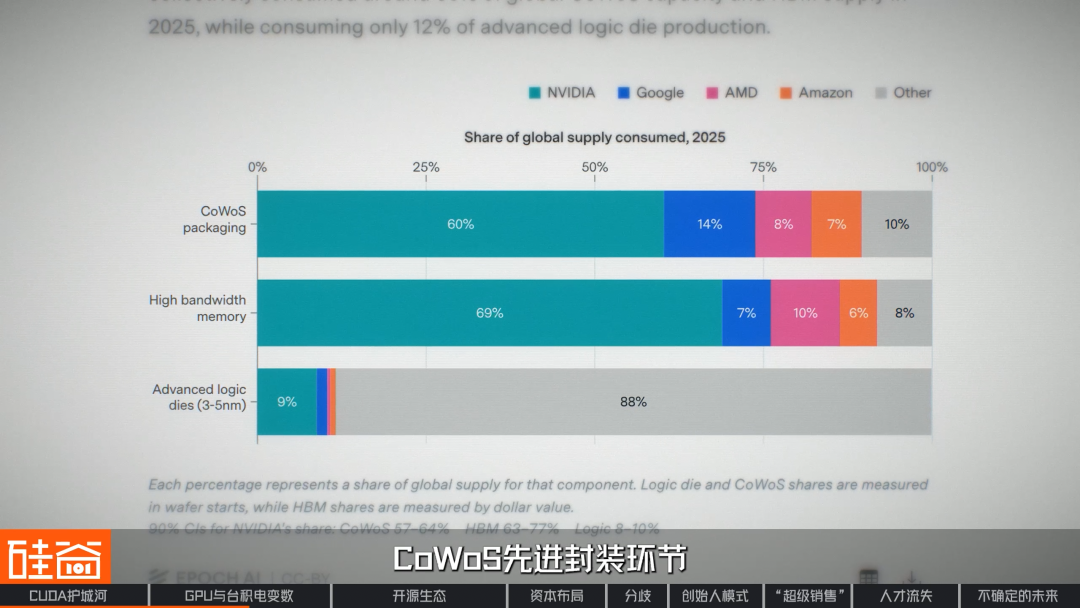
With so many order demands, why is TSMC only willing to take large orders from Nvidia? The answer may still lie with Jensen Huang.
Because Nvidia not only brings enormous orders but more importantly, it can provide TSMC with a sustainable growth forecast for the coming years. Jensen Huang launches a new generation of AI chips every year, continuously increasing demands for advanced processes and packaging technologies, which effectively urges TSMC to invest early and expand capacity.
For a company that needs hundreds of billions of dollars to build a wafer fab with investment returns lasting over several years, the most valuable customers are not just those who purchase the most today, but those who can convince them they have long-term profitability.
Howie Xu
Chief AI/Innovation Officer at Gen Digital
I think the supply chain may be more important than CUDA. This presents a big shock for Nvidia, as the impact on supply chain influence is not marginal but makes it almost comparable to other ordinary competitors.
In the supply chain, you need to trust before you can earn money, or earn well like in the past few years. If you don't have that trust, you won't make money. This impact is not just on Nvidia but on the entire industry.
Nvidia's relationship with TSMC has long surpassed ordinary chip procurement; through decades of technical collaboration, capacity planning, and business commitments, they have established a highly interdependent relationship. Now, with Huang stepping down, TSMC may have to consider placing their eggs in different baskets, which means that Nvidia's solid supply chain might no longer be as solid.
Anonymous Interviewee
Senior Semiconductor Industry Practitioner in Silicon Valley
TSMC will allocate capacity, including advanced packaging and advanced process capacity. They will evaluate which enterprises have potential and support them with capacity allocation.
If there are some enterprises, like AMD, whose ROCm ecosystem has no significant bottlenecks and whose performance is improving, TSMC will allocate more capacity to AMD in capacity distribution. I think this situation will increase, and Nvidia's competitive or dominant position may become balanced.
Besides its core business, Jensen Huang has invested a lot of effort in other fields, including open-source ecosystems, autonomous driving, robotics, and quantum computing. These fields currently have little impact on Nvidia's financial reports, but Huang bets on the next direction of accelerated computing eruption. He wants to ensure that when that field explodes, the power ecology and system standards are led by Nvidia. In the post-Huang era, will these layouts still be realized?

Huang has said that AI is a five-layer cake: the bottom layer is energy, followed by chips, infrastructure, models, and applications.
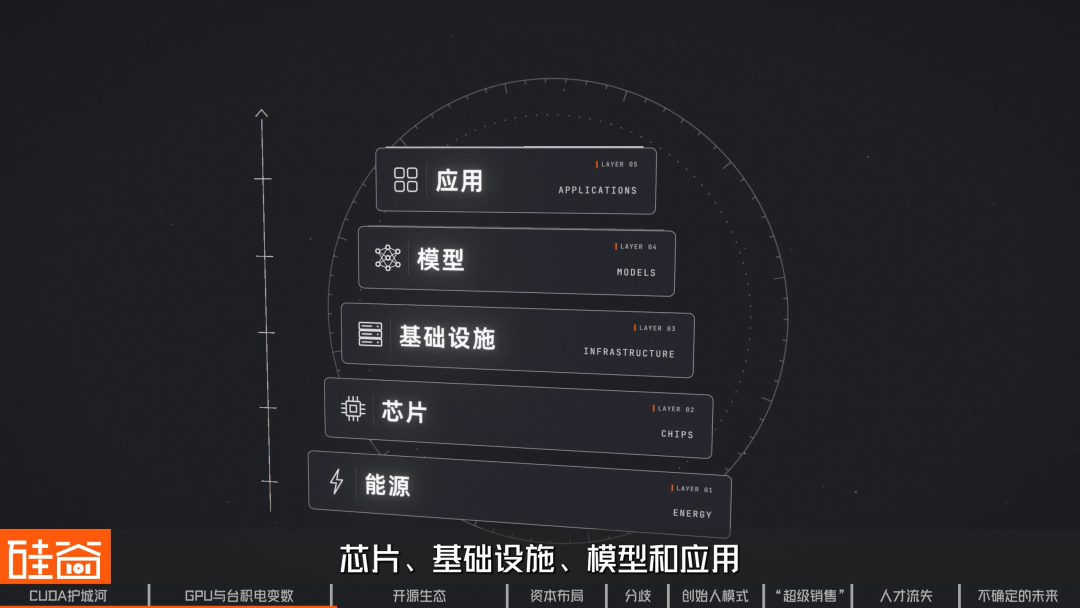
Nvidia started as a chip company but, through acquisitions, investments, and partnerships, its capital has penetrated into every layer of this cake. That is to say, today's AI ecosystem is inextricably linked with Nvidia, no matter where it goes.
Through Nvidia's latest significant acquisition—Hugging Face—its acquisition map can be understood.
Since the rise of open-source models, Hugging Face has become increasingly well-known. Today, most open-source models released worldwide take their first stop at Hugging Face. The platform now has over 20 million users, including 200,000 companies, around 3.23 million models, 1.13 million datasets, and over 1.4 million applications. It can be said that this is the first step for developers to find models, download weights, fine-tune, and deploy.
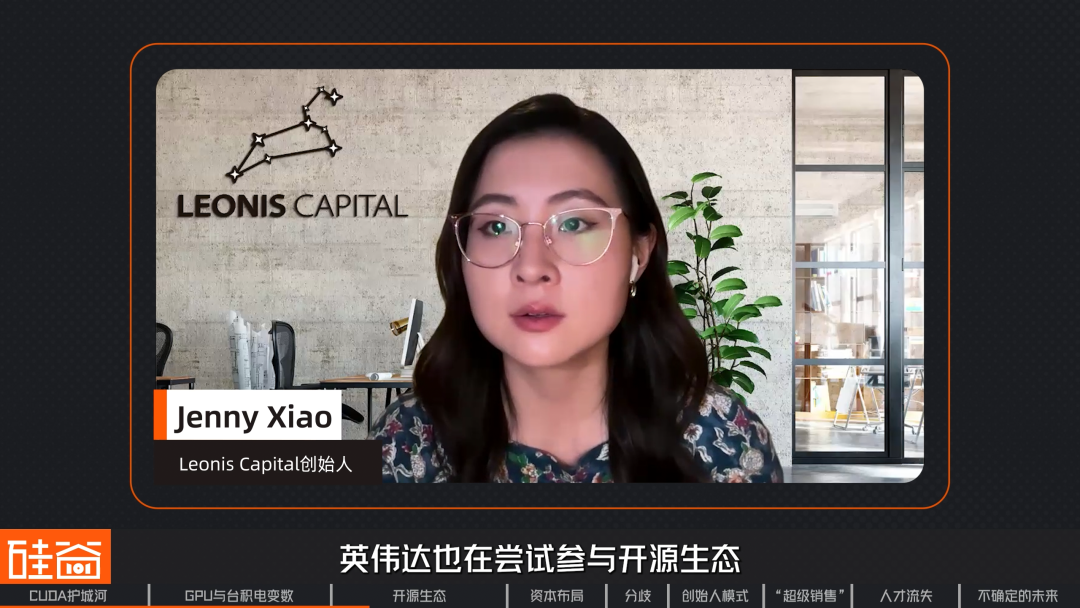
Therefore, Huang personally announced this acquisition at the beginning of September, buying the most important distribution channel and entry point for open-source AI. Jenny Xiao, a partner at Leonis Capital, told Silicon Valley 101 that this is a key signal of Nvidia's support for the open-source ecosystem.
Jenny Xiao
Partner at Leonis Capital
As these closed-source labs increasingly turn to chips outside Nvidia, Nvidia is also attempting to participate in the open-source ecosystem. I think acquiring Hugging Face is a very clear move: Nvidia not only wants to be a chip supplier for open-source models, but also wants to be at the center of open-source AI.
Of course, this acquisition is still going through regulatory processes, and reports indicate that the U.S. Department of Justice has raised antitrust concerns. Coupled with Nvidia's current turbulent state, this deal is not a foregone conclusion.
This acquisition can be understood from two perspectives: why Nvidia values open-source so highly and how this relates to Nvidia's overall layout.
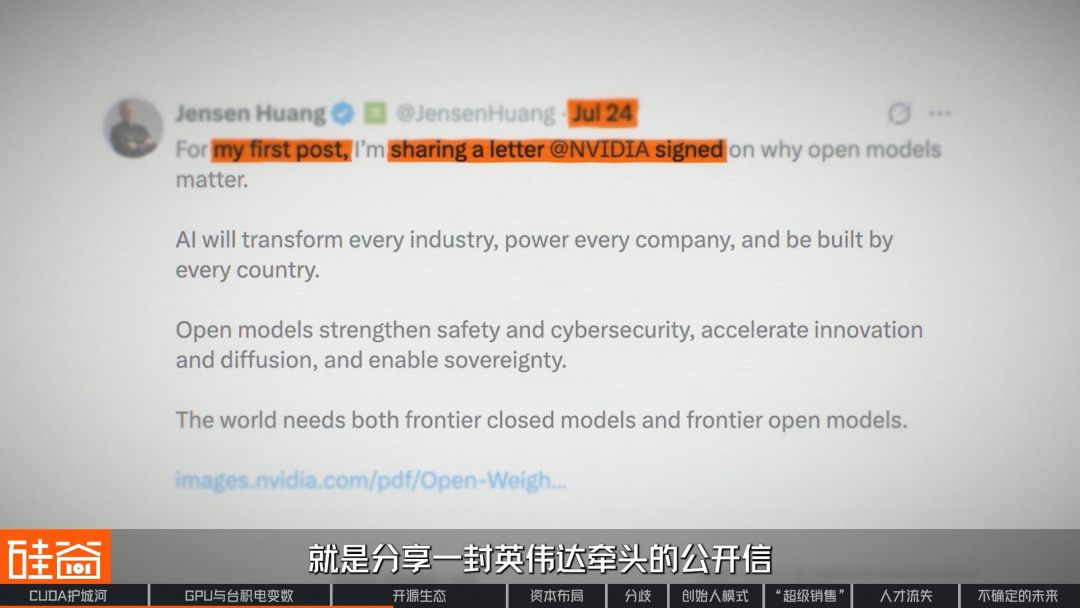
The first is open-source. Before announcing the acquisition of Hugging Face, Jensen Huang and Nvidia had publicly supported open models multiple times. On July 24 this year, his first tweet on X was sharing an open letter led by Nvidia urging policymakers to support open weight models and avoid premature restrictions and suppressing competition.
Nvidia is also releasing its own models, datasets, and training tools. From the language model Nemotron to GR00T and Cosmos aimed at robotics and the physical world, and to the autonomous driving large model Alpamayo, Nvidia is continuously helping developers build their own AI.
Why does Nvidia, a chip seller, support open-source so vigorously? The reason is quite simple: among all U.S. tech giants, Nvidia's interests are most aligned with open source.
It sells shovels, so the larger the computing power market, the better. Developers conducting experiments on Nvidia today may further continue using familiar tools and hardware as their projects grow. Thus, serving developers is also to serve future customers.
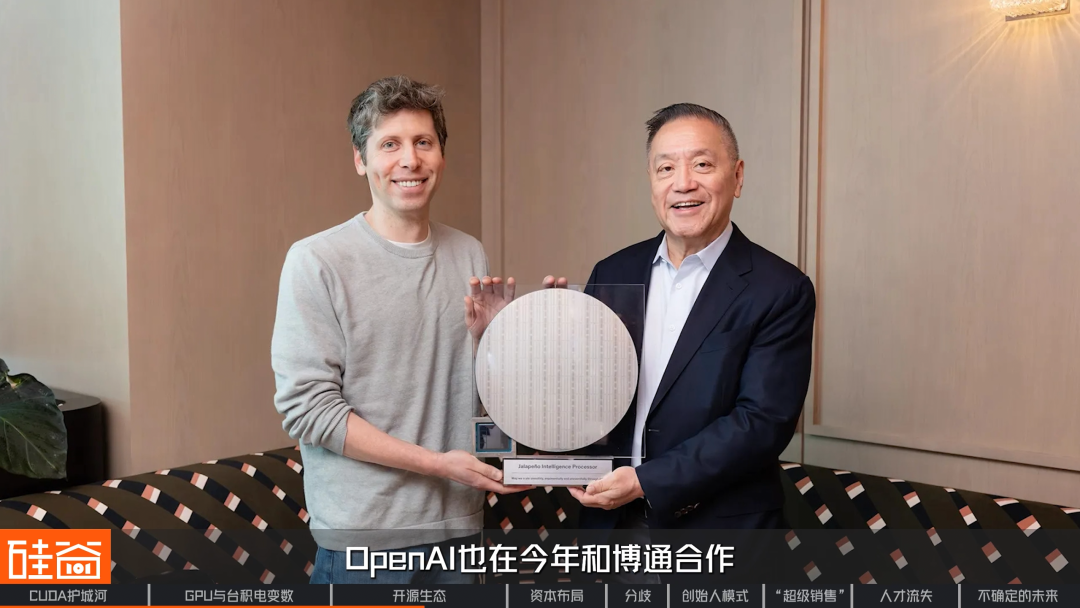
At the same time, closed-source labs are gradually reducing their dependence on Nvidia. With rising computing power costs, resource-rich labs like OpenAI and Anthropic are seeking options beyond Nvidia. For example, Anthropic has been promoting a multi-cloud, multi-chip approach, collaborating with many other suppliers. OpenAI has also partnered with Broadcom this year to develop its own Jalapeño chip.
Moreover, Nvidia's largest clients—cloud vendors. Companies like Amazon, Microsoft, Meta, Oracle, and Google are also looking for alternatives to Nvidia.
However, small companies, researchers, and individual developers in the open-source community find it challenging to bear the same costs. They need to be able to run new models quickly on their devices after release instead of spending time adapting hardware and accelerators. Furthermore, in a situation where many new open-source models are released every month, adapting every model is nearly impossible.
Nvidia just happens to have mature tools that can support various models, and the more popular open-source models are, the more people participate in their development, fine-tuning, and deployment, which means Nvidia will encounter more computing power demands.
Wang Tiezhen
Former APAC Ecosystem Head of Hugging Face
So for a long time, the open-source community will continue to be a partner for Nvidia. After Hugging Face provides a standard interface, if it can integrate with Nvidia and play a very important role, it may form Nvidia’s moat for the next several years or even longer.
But this is also a gamble and depends on the speed at which other competitors catch up. From my observation, including AMD and TPU, they place greater emphasis on the experience of large customers and support for the developer community, while the vision and plans in this area from Nvidia are considerably lacking.

Understanding this, one can grasp Hugging Face's significance to Nvidia: Hugging Face serves as an entry point for developers to find and download models, but developers also use it as an interface to utilize models.
The Hugging Face Hub centrally hosts model weights, and software libraries like Transformers provide relatively standardized calling methods. When developers switch models, they do not have to re-study entirely different codes from scratch each time.
In the early days, after models were released, code might be on GitHub while weights were stored in cloud storage, and others wanting to replicate would need at least a week’s time; Hugging Face solved this problem. Thus, Nvidia's acquisition of such a platform allows it to participate more deeply in the developers' process of discovering, selecting models, and then choosing computing power.
So what impact will Jensen Huang's departure have on Nvidia's open-source business and even the entire U.S. open-source ecosystem? Currently, most researchers supporting open-source are quite pessimistic.
Nathan Lambert, who once visited Silicon Valley 101, stated, "Jensen Huang no longer serving as CEO is very, very detrimental to open models in America."
Clem Delangue, CEO of Hugging Face, also remarked after Huang's departure that this is a very sad day, but he and the Hugging Face team will continue to support open-source AI.
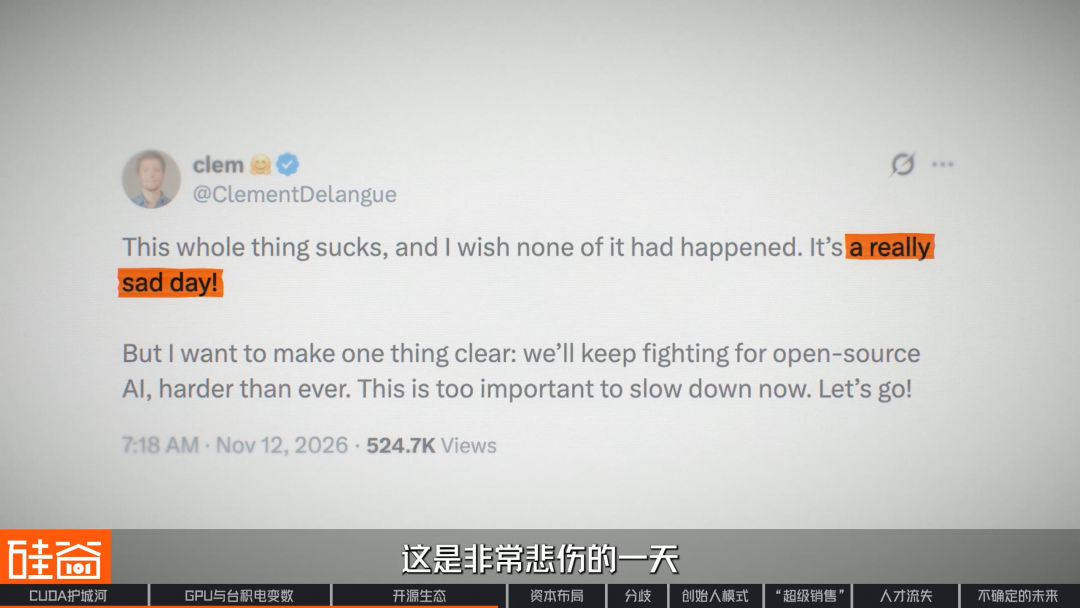
Of course, open-source is not merely Huang's personal interest; it has deeply embedded itself into Nvidia's business logic. Although many media believe the new management will approach open-source more cautiously, that does not necessarily mean this route will vanish.
And Hugging Face is just one piece of the vast capital layout he left behind. Taking a broader perspective, from models and applications to data centers, chips, and even energy, the connections Nvidia has built through acquisitions, investments, and collaborations span the "five layers" of AI.
According to Jenny Xiao's analysis, Nvidia's past investments, acquisitions, and computing power collaborations include almost every area its business involves: computing power, laboratories, cutting-edge models, applications and robotics, and the distribution layer represented by Hugging Face.
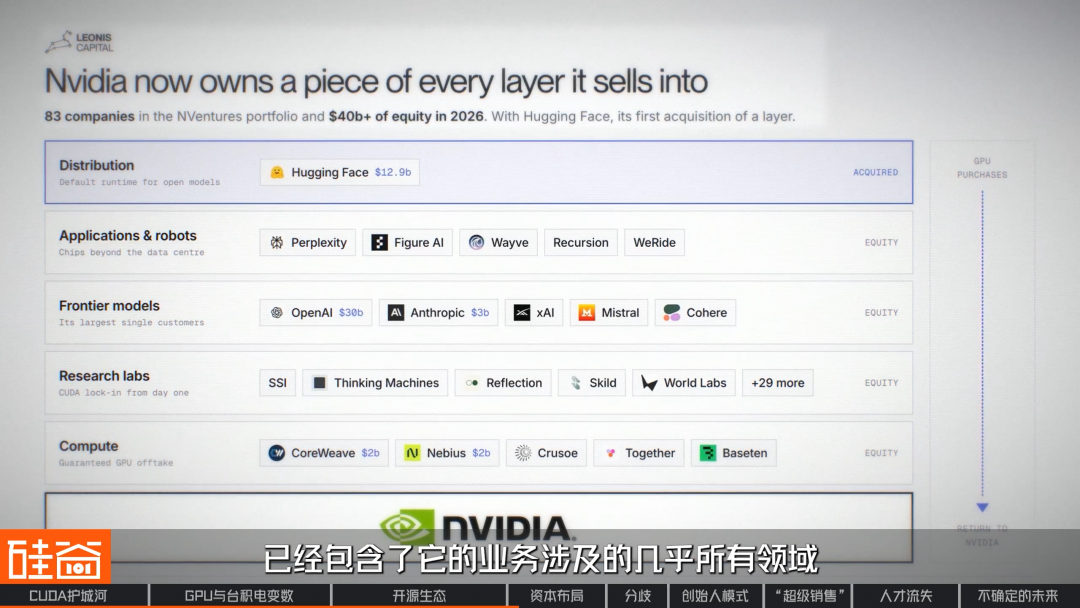
As of July 2026, Nvidia's cash used to purchase ownership stakes in other companies had reached $42.4 billion. By the end of July, the value of its equity investments had reached $99 billion, along with an additional $25 billion in follow-up investment commitments.
Jenny Xiao
Partner at Leonis Capital
If you look at Nvidia's investment and acquisition activities, it is indeed striving to participate in every layer. Hugging Face supplements the distribution layer of this map, further extending its layout from applications, cutting-edge models, and computing power.
Nvidia's investment targets also include a number of newly established, exploratory technology route research AI companies, commonly referred to as neolabs. Thinking Machines Lab, founded by former OpenAI CTO Mira Murati, announced its partnership with Nvidia in March this year to deploy at least one gigawatt of the next-generation Vera Rubin system, with Nvidia also investing in it concurrently.
These companies have varying relationships with Nvidia. Some are acquired, with their technology and teams entering Nvidia; others receive equity investments while operating independently; while some establish collaborations through supply, computing power, or infrastructure. However, when looked at together, they all point in one direction: Nvidia is engaging earlier in AI project growth and diving deeper into the infrastructure needed for those projects.
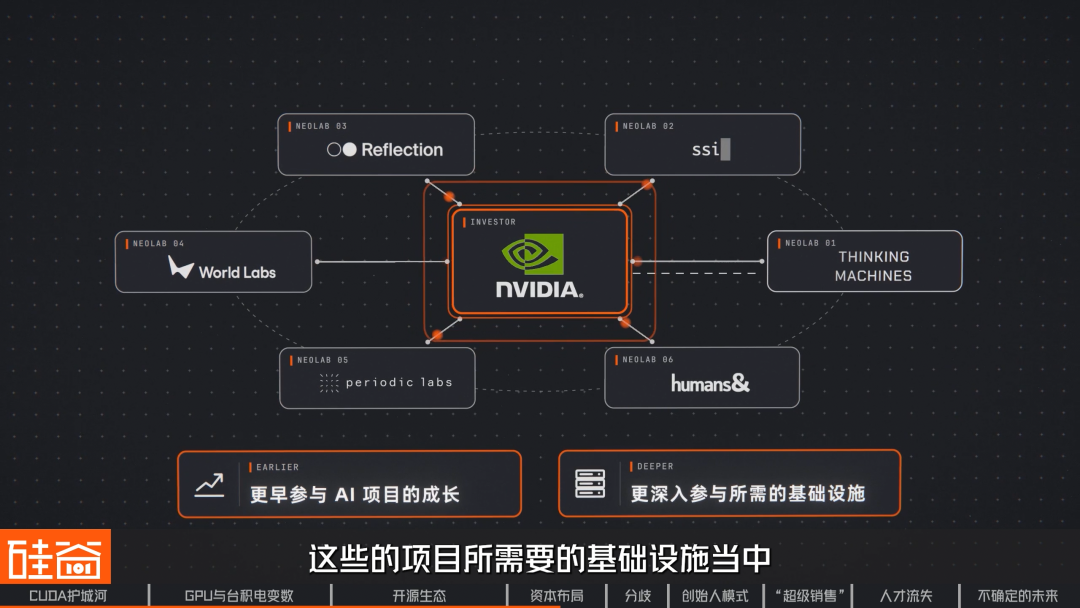
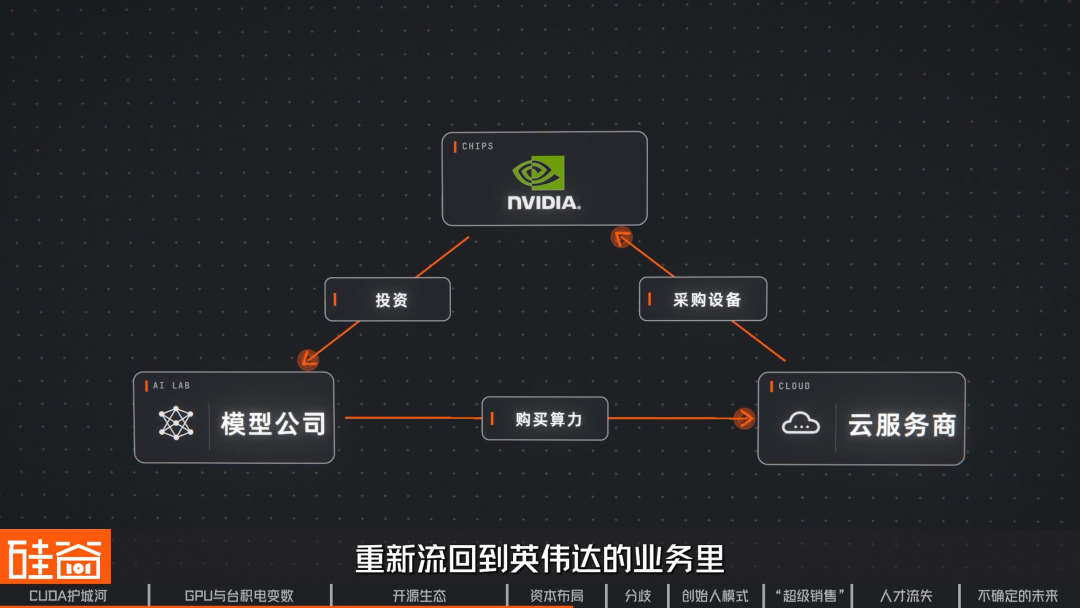
This also raises a question that is becoming increasingly hard to avoid: when a chip supplier like Nvidia simultaneously becomes an investor in its clients, can we still clearly judge current computing power demands in the AI industry?
If Nvidia invests in a model company, and the model company purchases computing power from cloud service providers, which in turn procure Nvidia's equipment, funds may flow back into Nvidia's business through these ties.
Jenny Xiao
Partner at Leonis Capital
Nvidia is the most active funder of neolabs. When we researched neolabs in the U.S., one particularly prominent phenomenon is that Nvidia has been involved with nearly all companies. This indeed creates a feeling of circular financing, leading to doubts: is there an AI bubble? Why are AI valuations so high?
Because a lot of the funds that neolabs receive do not come from financial investors but from strategic investors who care less about financial returns. As a financial investor, we’ve been pondering what this means for the entire AI investment landscape. Do we have to support these neolabs simply because Nvidia is involved? Or is Nvidia’s involvement artificially inflating these companies' valuations? Does this circular financing render the entire AI market vulnerable?
Silicon Valley 101 has repeatedly analyzed the current “circular financing” in AI, and the Nvidia managed by Huang has created a set of business relationships that far exceed mere chips.
It is noteworthy that Huang’s massive AI investments and financing in recent years are not shared by all executives within Nvidia. According to The Wall Street Journal, Huang has had differences with Nvidia CFO Colette Kress, the executive temporarily appointed to take over the CEO role, regarding financing strategies.
Huang wanted to support cloud computing companies and data center construction through investments and credit guarantees to further expand the market demand for Nvidia GPUs. However, Kress raised concerns about the risks of these transactions: What projects should Nvidia support? How to assess the value of hundreds of billions of dollars' worth of credit guarantees? And how to ensure that these investments ultimately yield returns?
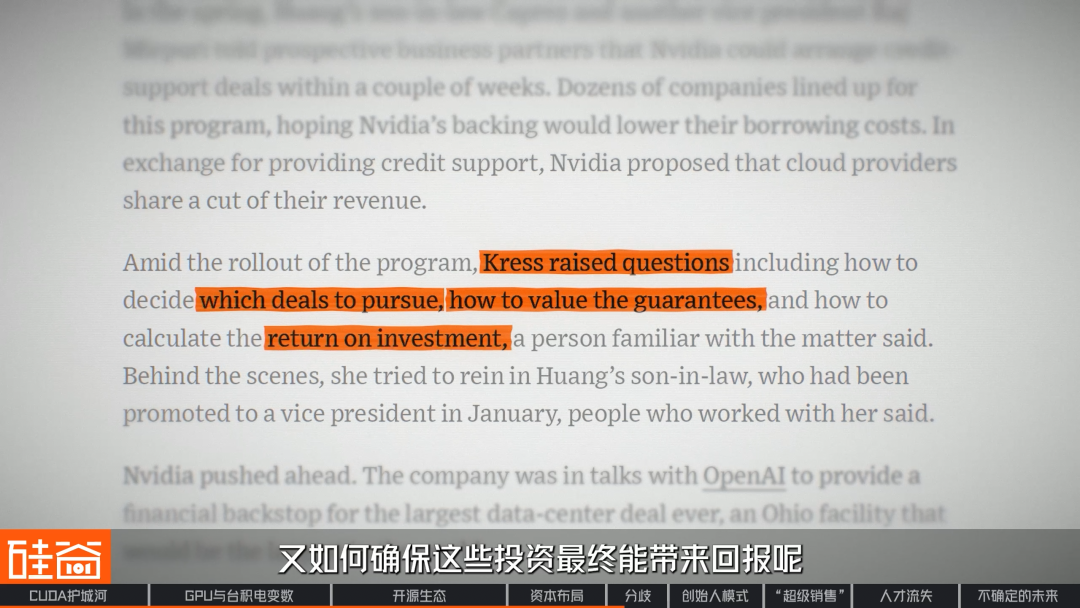
One typical case is that Nvidia originally planned to provide up to $250 billion in financing guarantees for OpenAI's data center project, helping OpenAI secure funding, lease data centers, and deploy Nvidia chips. According to The Information, Kress had voiced objections against this high-risk project; later she personally participated in redesigning the deal, reducing Nvidia's first-phase financing guarantees to less than half of the original plan.
These disagreements even escalated into public conflicts among executives, with Huang having severely criticized Kress in a meeting, saying she lacked strategic judgment and called her "a deer in the headlights."
With Huang's resignation and Kress’s interim appointment, a new suspense arises: will Nvidia continue its previous aggressive investment strategy and construction of aggressive ecosystems? Many people have expressed very negative expectations.
Rob Li
Managing Partner at Amont Partners, New York
If the new CEO does not spend money to support or cultivate other participants in the industry's ecosystem, many people's future financing may encounter problems, which will undoubtedly drag the entire ecosystem down. Unless the new CEO's ideas, decisiveness, judgment, and willingness to spend money align with Huang's. But currently, it seems there is definitely a significant gap.
With the rapid follow-up of Chinese open-source models, some have referred to Nvidia as "the last opportunity for the U.S. open-source ecosystem." Does this opportunity still exist after Huang’s departure? We will continue to pay attention.

▍"Nvidia’s Efficiency Secret Is Now Its Biggest Weakness"
Besides the chip business and aggressive bets on the open-source ecosystem, another secret to Nvidia’s success is Huang's founder's mode.
As a technology giant with a market value of several trillion dollars, Nvidia may be the least like a "large company" among large companies. Over the past several decades, Huang has established a uniquely distinct management system: more than 60 executives report directly to him, covering almost every important business line from GPUs, CPUs, networks, and software to robotics, autonomous driving, and healthcare; he personally participates in decision-making.
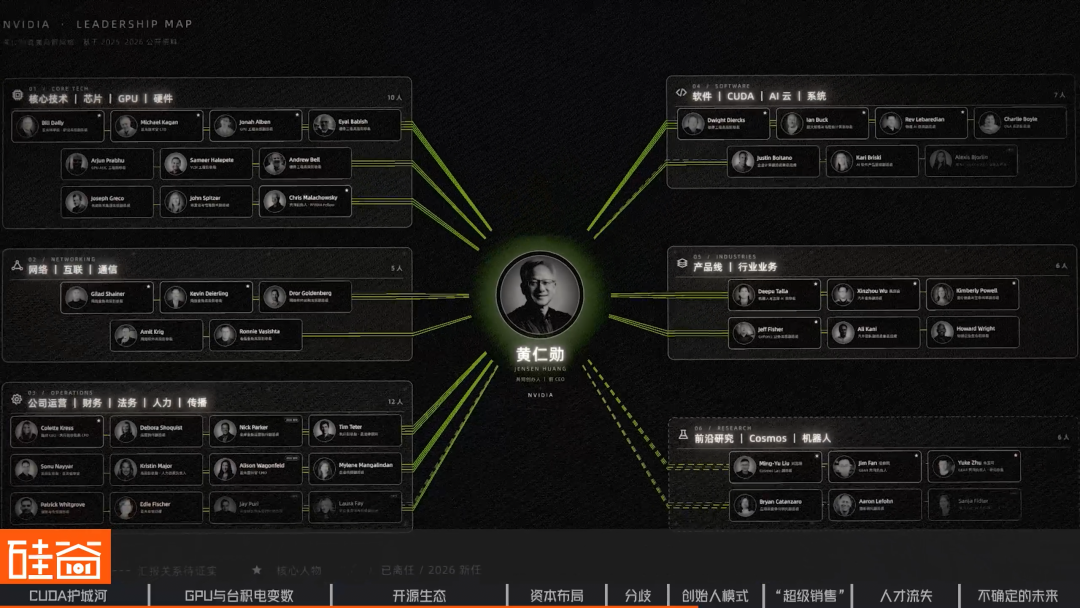
Nvidia has maintained a long-standing system called "Top 5 Things". All employees report through regular emails about five important things they are currently working on, which Huang personally reads and responds to quickly, keeping him well-acquainted with the organization's and projects’ progress.
Traditional large companies require decisions to go through multiple levels of reporting, coordination, and approval. At Nvidia, decisions can directly reach the highest decision-maker, significantly reducing office politics.
In meetings, over 60 executives participate together; if Huang scolds someone, he does so directly in front of over 60 executives. We have even heard that very senior male executives have been brought to tears during meetings.
This flattened structure largely explains why Nvidia can maintain astonishing execution speed at such a large scale, but it also conceals a fatal weakness: Nvidia has not established a management system that any CEO can govern but instead has designed an operation system centered around Huang’s capabilities.
Sixty executives are each proficient in their specialized areas, but very few people in the company have a holistic perspective like Huang that spans technology, products, business, and capital. When all significant decisions converge in one individual, it becomes challenging for the company to naturally cultivate a second leader with the same comprehensive abilities, and Huang himself has no succession plan because he believes he can work for several more decades.
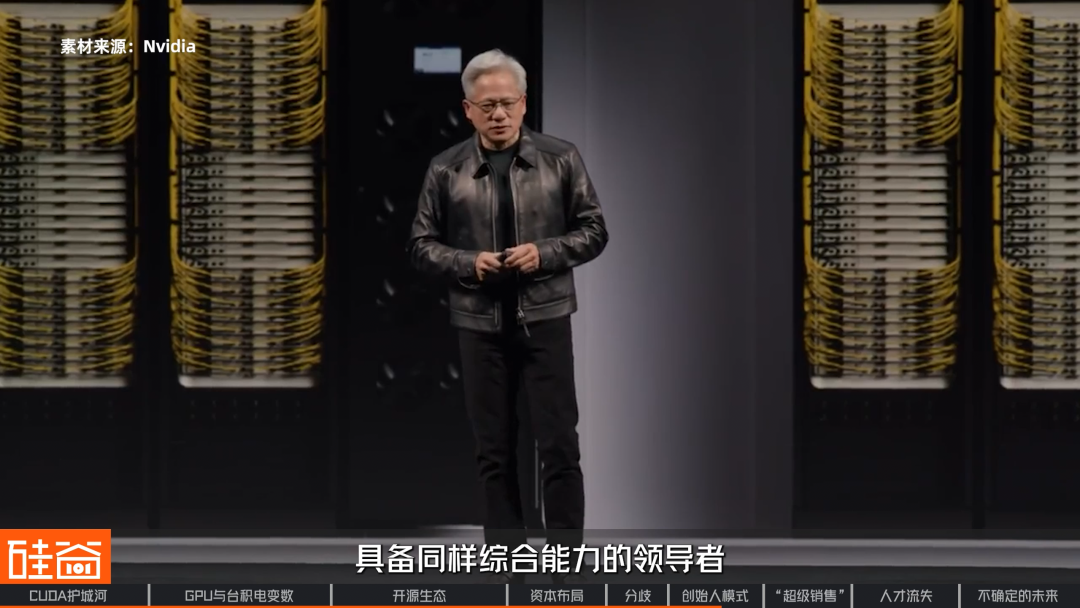
In light of the recent scandal where Huang was voted out by the board within days, the efficiency secret he engineered over 33 years became the biggest weakness of this trillion-dollar giant.
Rob Li
Managing Partner at Amont Partners, New York
It can basically be understood that everything in this company is decided by him alone. So after he leaves, especially troublesome is that he not only lost the CEO position but also left the board, which is equivalent to resigning without any other options left.
Thus, even though the figures for 2027 might not be affected, and even those for 2028 might also remain intact, from the perspective of company valuation, this will definitely be a significant setback.
A simple analogy can be made: many people invest in Berkshire Hathaway largely because its helm is held by Buffett. If one day Buffett passes away, although the business may remain stable, Berkshire Hathaway's valuation will certainly be affected because this founder is too significant.
Chen Qian
Co-founder of Silicon Valley 101
How much of a discount do you think the valuation should take?
Rob Li
Managing Partner at Amont Partners, New York
This is hard to say. The market consensus now is that the valuation may need to be adjusted down by at least 25 percentage points, meaning his individual contribution likely accounts for at least one-fourth of the company’s total valuation. He might not be as critical as Musk is to SpaceX and Tesla, but it should still be around a quarter, I believe.
▍"Old Huang Himself Is the Best Salesperson"
Nvidia's sales system is also noteworthy. An insider told me that when Nvidia’s sales face clients, they ask one question: "What keeps you up at night?" After that, Nvidia goes to solve that problem, and Huang personally takes the lead, flying to various places in Asia each year to meet clients and partners.
Anonymous Interviewee
Senior Semiconductor Industry Practitioner in Silicon Valley
Old Huang is the best salesperson. First, he knows his company’s products like the back of his hand. He has been cultivating clients and even guiding them, just like with CUDA. He does not sell after making something; rather, he subtly embodies the product's value.
Secondly, Nvidia’s products are indeed good. Although there are all sorts of problems, they solve them very quickly, so the products remain good. They have a very deep understanding of their customers.
If you closely study Nvidia’s history over the past 30 years, you’ll find that Nvidia's sales capability is absolutely unparalleled and its core capability still lies with Huang.
In 1994, when Nvidia's first salesperson Jeff Fisher joined the company, it had only 25 employees and hadn't launched a product yet.
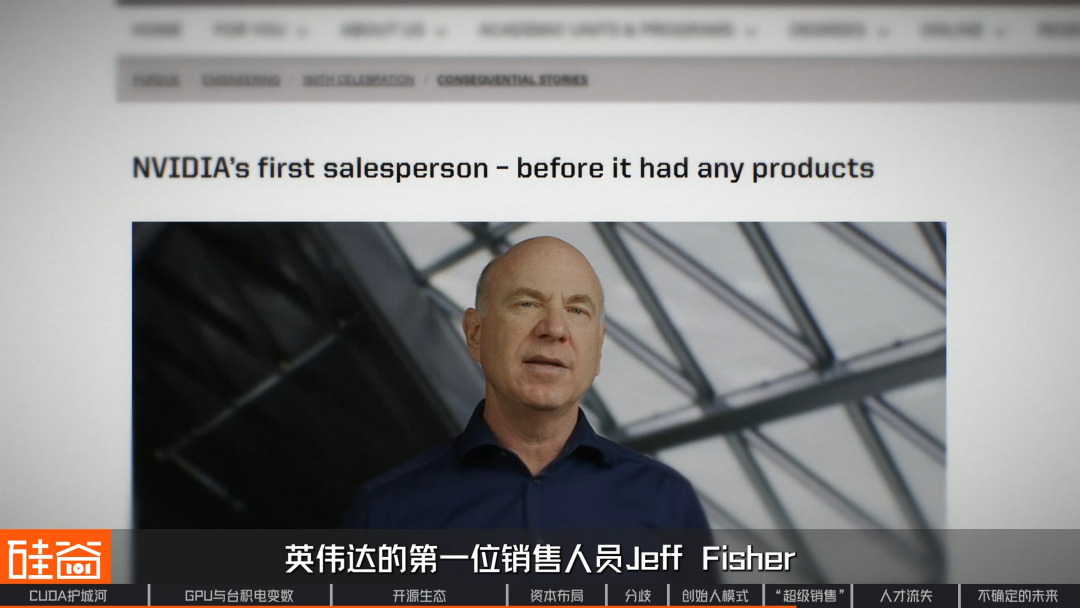
In 2005, Huang brought in Jay Puri from the industry to gradually transform Nvidia from a graphics card supplier for computer manufacturers into a compute platform company capable of serving global enterprises.
However, the sales system of Nvidia is remarkable for being a highly integrated system of technology, products, ecosystem, and customer relations. It not only enables sales personnel to communicate with customers, but also involves engineers in solving customer problems, getting developers acquainted with CUDA in advance, enabling investment funds to assist emerging AI firms, and even having the CEO personally involved in the most important transactions.
Moreover, Huang himself is the best salesperson. In 2016, Huang personally delivered the first DGX-1 to a cash-strapped OpenAI. Eight years later, founders like Ellison from Oracle and Musk would have to beseech Huang at the dining table to sell them more GPUs.
Later, Huang began appearing before national leaders, selling them on national-level AI infrastructure. Over the past few years, Nvidia has completed the evolution of its "super sales model": moving from selling chips to selling computing platforms and participating in creating demand for the entire AI industry.
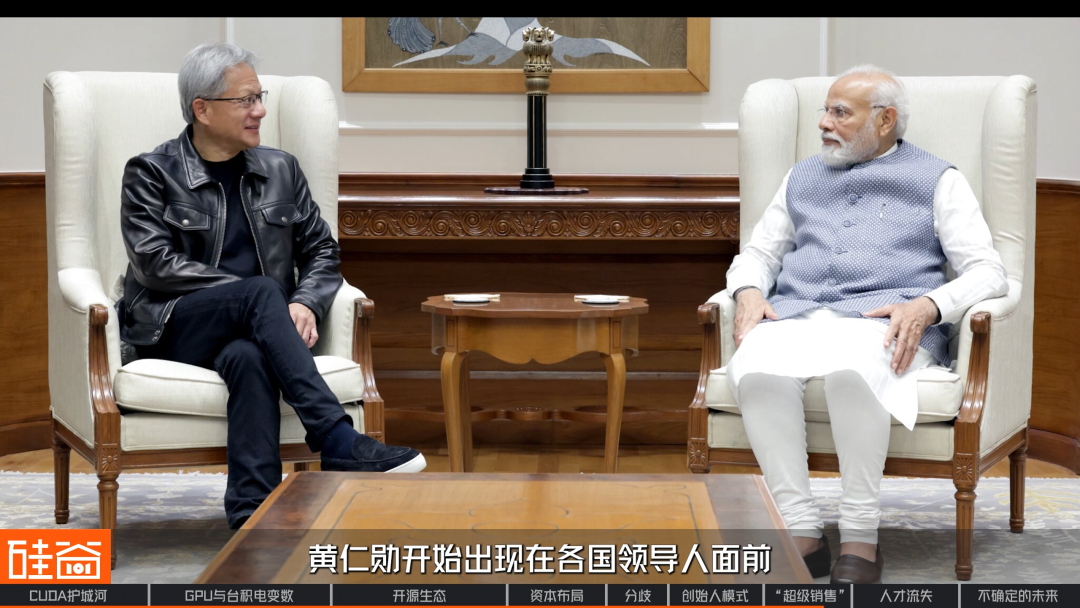
However, this system also has a latent concern: while traditional companies can pass the sales system through processes, organization, and customer management, Nvidia's core strategic sales capability is largely centered on Huang alone..
He is the definitor of technological routes, the relationship manager for significant global clients, and the most influential evangelist of the entire AI ecosystem. While such personal capabilities can bring astonishing commercial efficiency to a company, they may not automatically transfer with the handover of the CEO position.
This means Nvidia cannot replicate Huang's inherent super sales capabilities. Even if someone can take over global sales, managing the relationships Huang established with clients, the industry, and the government remains another level of challenge.
▍"Talent Will Flow Out in Large Numbers"
Another challenge Nvidia faces today is talent. Over the past thirty years, Nvidia's most critical technological capabilities have been concentrated in GPU architecture, chip design, CUDA, computing systems, and high-speed networking, which are precisely the mainstay areas where it can offer engineers the most resources, influence, and the best career development opportunities.
However, in fields like autonomous driving, robotics, world models, foundational large models, and even healthcare, the situation is quite different. Though these areas are closely related to Nvidia's hardware and software platforms, they do not represent the company's primary revenue sources.
A top world model researcher at Nvidia might only be one of many project leaders; however, if he chooses to start a business or join a leading model laboratory, he would have the opportunity to define the direction of an entire product. This difference is changing Nvidia's talent competition landscape.
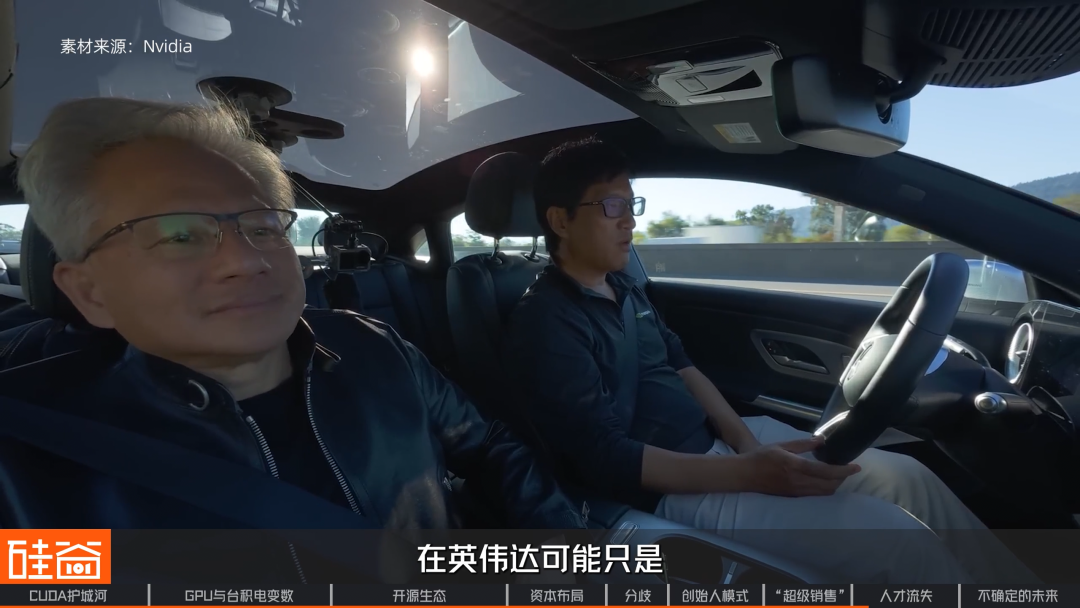
We have repeatedly heard from Nvidia employees in the robotics team that retaining top interns is very challenging, as other tech giants, top AI laboratories, and star startups are competing for this talent. Nvidia cannot offer the highest salary packages, and the work is not in the company’s core businesses; combined with the stock price being lukewarm this year, how can they compete with companies like OpenAI and Anthropic?
Previously, Huang had long been aware of this issue. Nvidia has increasingly actively sought to acquire external entrepreneurial teams' technology and talent through acquisitions and technology licensing deals in recent years, but being able to buy a team does not mean that they can be retained permanently. Moreover, for the top scientists, money might not be the most critical factor.
At Nvidia, they can access world-class computing resources and research platforms but must align these with the company’s overall business strategy. For OpenAI, Anthropic, or a startup focused on robotics foundational models, the model itself is the product and the entire company’s future. But for Nvidia, it inevitably focuses not on products but on infrastructures, ultimately aiming to have more enterprises and developers utilize its computing power.
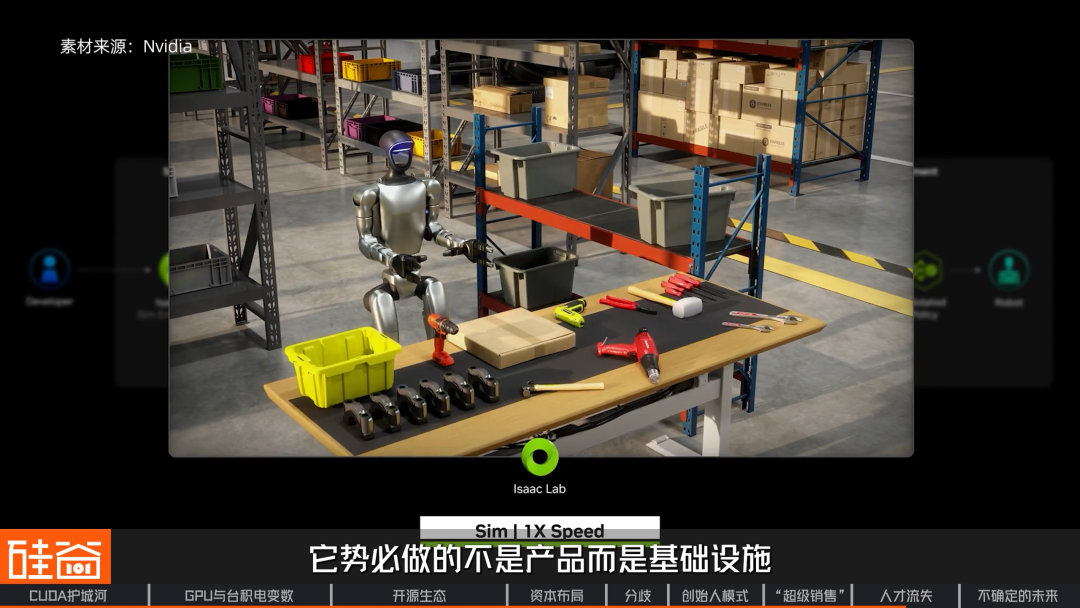
For many top talents seeking to make a greater impact or to change the world through real products, this becomes less appealing. And more subtly, Nvidia's most effective talent retention tool in the past—stock—has started to see new changes.
In recent years, Nvidia’s explosive stock price growth created a large number of millionaires, allowing some ordinary engineers to achieve financial freedom and retire early. However, this wealth accumulation also produced a paradox: as they became wealthier, employees tended to leave.
According to a report from Business Insider, Nvidia's stock price increased about 1400% from the end of 2022 to September this year. According to Levels.fyi’s estimates, a senior software engineer who joined the company in 2022 has stocks worth about $4.1 million, so some employees are beginning to coordinate their retirement and entrepreneurial plans around stock vesting timelines.
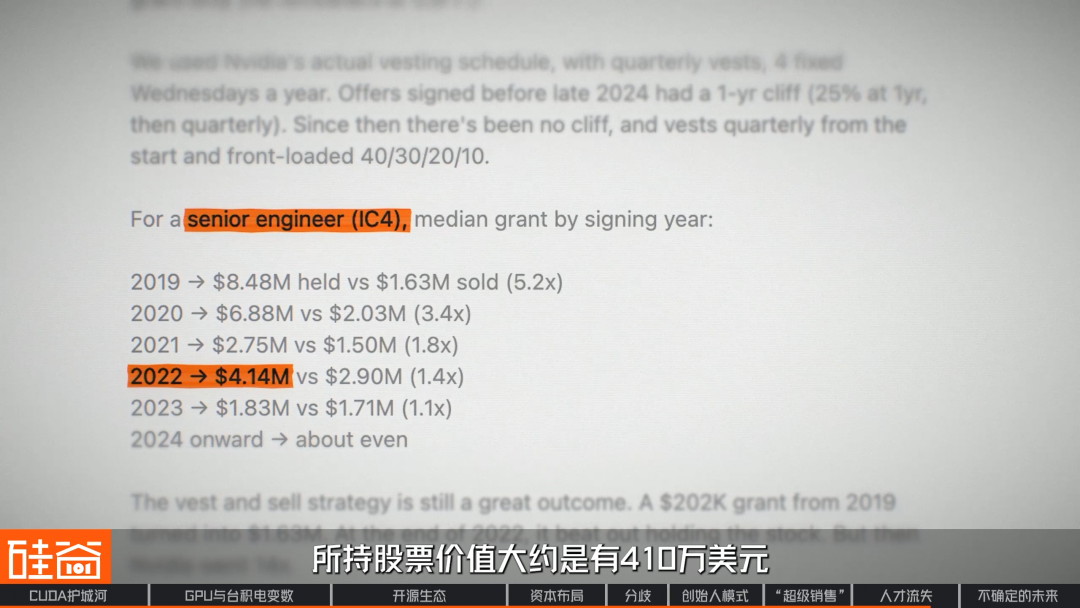
However, new employees face a different situation: when they join Nvidia, the company’s stock price is already at a high level, and as Nvidia's stock price saw a noticeable correction this year, the actual value of future stock incentives has become even more uncertain.
This poses a very practical problem: if employees no longer believe their stocks can continue to generate excess wealth, the company will need to rely on higher cash salaries, greater technical autonomy, and more attractive career development opportunities to retain them.
And now, the largest variable is Huang himself. In fact, many people would like to stay just because they can work for Huang, they desire to be “working for Jensen.” Young people admire him and wish to work for him; these sentiments have also been echoed in companies like Tesla, SpaceX, and xAI under Musk. Now, Huang's departure may increase the risk of brain drain among key talents.
Anonymous Interviewee
Senior Semiconductor Industry Practitioner in Silicon Valley
I even think Nvidia will see many people leave to either start their own businesses or join other companies.
Howie Xu
Chief AI/Innovation Officer at Gen Digital
Or they might join Huang’s new company.
Anonymous Interviewee
Senior Semiconductor Industry Practitioner in Silicon Valley
That is also possible.

For everyone in Silicon Valley, including Nvidia employees, the past week has been a period of shock. No one expected that the seemingly most firmly established leader in AI could be ousted in just days; it seems too absurd.
Only at this point did the outside world realize that Huang held only a 3.58% stake in Nvidia and that when Nvidia went public in 1999, it did not establish a dual share structure to allow Huang to retain super voting rights. In other words, Huang did not set up A and B shares to ensure his influence over the board.
Howie Xu
Chief AI/Innovation Officer at Gen Digital
I was quite surprised he did not stabilize the board. This reminds me of the old days at Uber, where Travis thought he could stabilize the board, but suddenly, the board turned against him.
Rob Li
Managing Partner at Amont Partners, New York
I think Huang's biggest mistake was not establishing an AB share structure like new-generation tech companies. After all, this is a tech company established over thirty years ago.
If there had been AB shares, even with "minimal holdings" accounting for only 3%, less than 4% of economic interests, a share could still count as ten thousand shares, allowing control of the company, avoiding the situation we have today.
In recent years, we have participated in several Nvidia GTC conferences, and we also had opportunities to closely participate in media interviews with Huang.
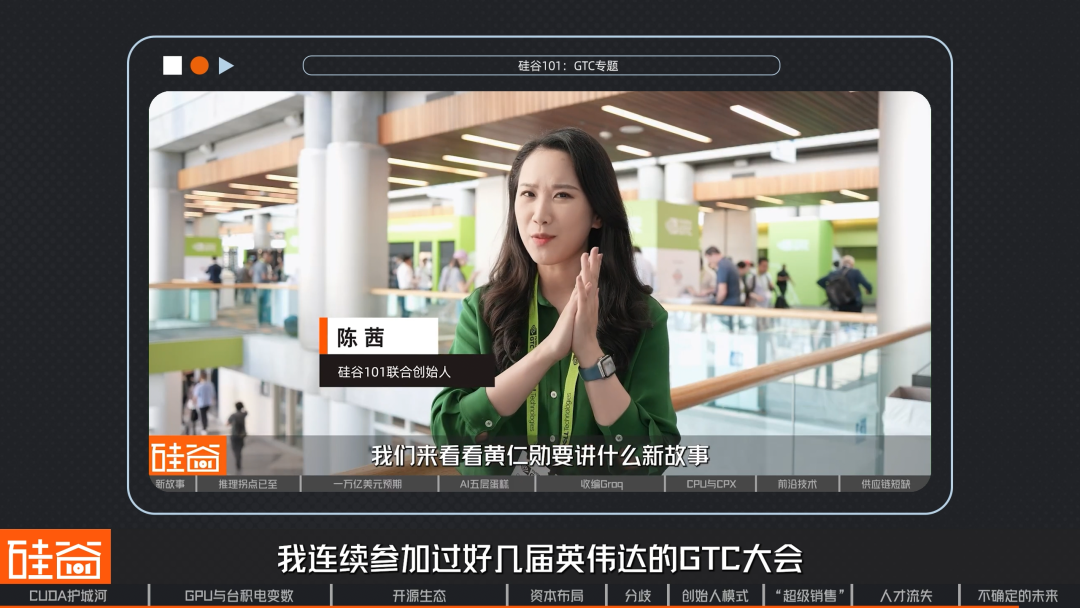
Three years ago, we made an in-depth video titled: "The Rise of Nvidia GPU Amidst Lawsuits and Bad Reputation: Never Ceasing to Fight and Having No Permanent Friends." Watching Nvidia grow into one of the most important tech giants in the global AI wave, we have always held deep respect for Huang.
This respect is not just due to his wealth or Nvidia's market capitalization, but because of his exceedingly rare entrepreneurial qualities: visionary tech foresight, unwavering dedication over decades, resilience in the face of failures and doubts, and the ability to unify a group of top engineers under a common vision. His support for the entrepreneurial ecosystem and belief in engineering technology have made him a highly influential and respected entrepreneur in Silicon Valley.
In this turmoil, there are still some accusations that need to be investigated and clarified, but Huang’s achievements should not be overshadowed by today’s chaos. Hence, this incident elicits a particularly poignant sentiment.
Three years ago when we spoke about Nvidia, we remarked: "Nvidia has no permanent customers, no permanent friends. Huang is lonely and rebellious. All he can do is keep moving forward, and the battle never stops."
We do not know if Huang's battle will stop here, but we hope it won't.

Note: Some images are sourced from the internet.
免责声明:本文章仅代表作者个人观点,不代表本平台的立场和观点。本文章仅供信息分享,不构成对任何人的任何投资建议。用户与作者之间的任何争议,与本平台无关。如网页中刊载的文章或图片涉及侵权,请提供相关的权利证明和身份证明发送邮件到[email protected],本平台相关工作人员将会进行核查。


