Original Author: Tanay Ved, CoinMetrics
Original Compilation: Shenchao TechFlow
Abstract: The basis arbitrage, once a "cash cow" for crypto hedge funds, is undergoing severe restructuring. With the launch of the Bitcoin spot ETF and massive institutional inflows, the annualized funding rate of traditional crypto perpetual contracts has plummeted from the era of 40% profit to 3% to 5%, falling below the yield of U.S. Treasury bonds during the same period, forcing arbitrage capital to seek new avenues.
Correspondingly, real-world asset (RWA) perpetual contracts, based on U.S. stocks, have seen explosive growth. Currently, the total open interest across the network has surpassed $11 billion, accounting for 18% of the total positions on mainstream platforms, with Binance and the decentralized order book leader Hyperliquid almost monopolizing all liquidity.
The top ten U.S. stock perpetual contracts offered an average annualized funding rate as high as 11% in 2026, showing an overwhelming premium compared to crypto assets. As the CFTC approves single-stock perpetual contracts for trading on compliant exchanges, this cross-market capital migration led by crypto-native protocols is becoming a key opportunity connecting Wall Street and the on-chain world.

Key Points Overview
· The arbitrage space in crypto has been severely compressed in 2026: The funding rate of Bitcoin perpetual contracts and the annualized basis of 30-day futures have crashed from a high of 20% to 40% since early 2024 to 3% to 5%, approaching or even falling below the yield of U.S. Treasury bonds during the same period.
· RWA stock perpetual contracts have seen exponential growth: Since October 2025, the open interest of stock perpetual contracts has surged from nearly 0% to 18% of total positions on mainstream platforms, with a value exceeding $11 billion, where Binance (39%) and Hyperliquid (38%) hold absolute dominance.
· U.S. stock perpetual assets enjoy a significant funding rate premium: The top ten U.S. stock perpetual contracts have an average annualized funding rate of about 11%, while the top ten crypto asset perpetual contracts only reach around 3%, with the interest rate spread maintained at a healthy high level.
· Regulatory easing and the compliance rollout will open a trillion-dollar blue ocean: The U.S. Commodity Futures Trading Commission (CFTC) has recently confirmed that single-stock perpetual contracts can be traded on regulated U.S. compliant exchanges, and alongside the predicted surge in trading volume on prediction markets and derivative platforms, stock perpetuals may welcome a broader range of institutional and retail clientele.
Introduction: Basis Changes After the Bitcoin Spot ETF
Basis trading, also known as "cash and carry arbitrage," rapidly became a mainstream trading strategy for Wall Street hedge funds after the introduction of the Bitcoin spot ETF in early 2024.
The core logic of this strategy is exceptionally clear: Investors buy Bitcoin (or Bitcoin spot ETF) in the spot market while simultaneously selling an equivalent amount of futures contracts or shorting perpetual contracts in the derivatives market, thus locking in positive futures premiums or funding rate returns during market uptrends.
During fervent bull market sentiments, the robust demand for long positions pushes the derivatives prices above the spot premiums, allowing arbitrageurs to capture low-risk annualized returns of up to 20% or even 40%.
However, the most enduring rule in financial markets is the self-destructive effect of capital. When massive institutional funds enter the market with low-cost capital, traditional crypto asset basis arbitrage has encountered unprecedented compression over the past two years.
Crypto Basis Compression: From 40% Annualized to Below U.S. Treasury Yields
As institutional investors fully take over spot ETF trading, market pricing efficiency has significantly improved, and the once rampant bull market sentiment premium has gradually calmed.
From data indicators, the two core barometers measuring arbitrage returns—the annualized basis of 30-day Bitcoin futures and the funding rates of centralized platform perpetual contracts—have slid to historical low ranges in 2026.
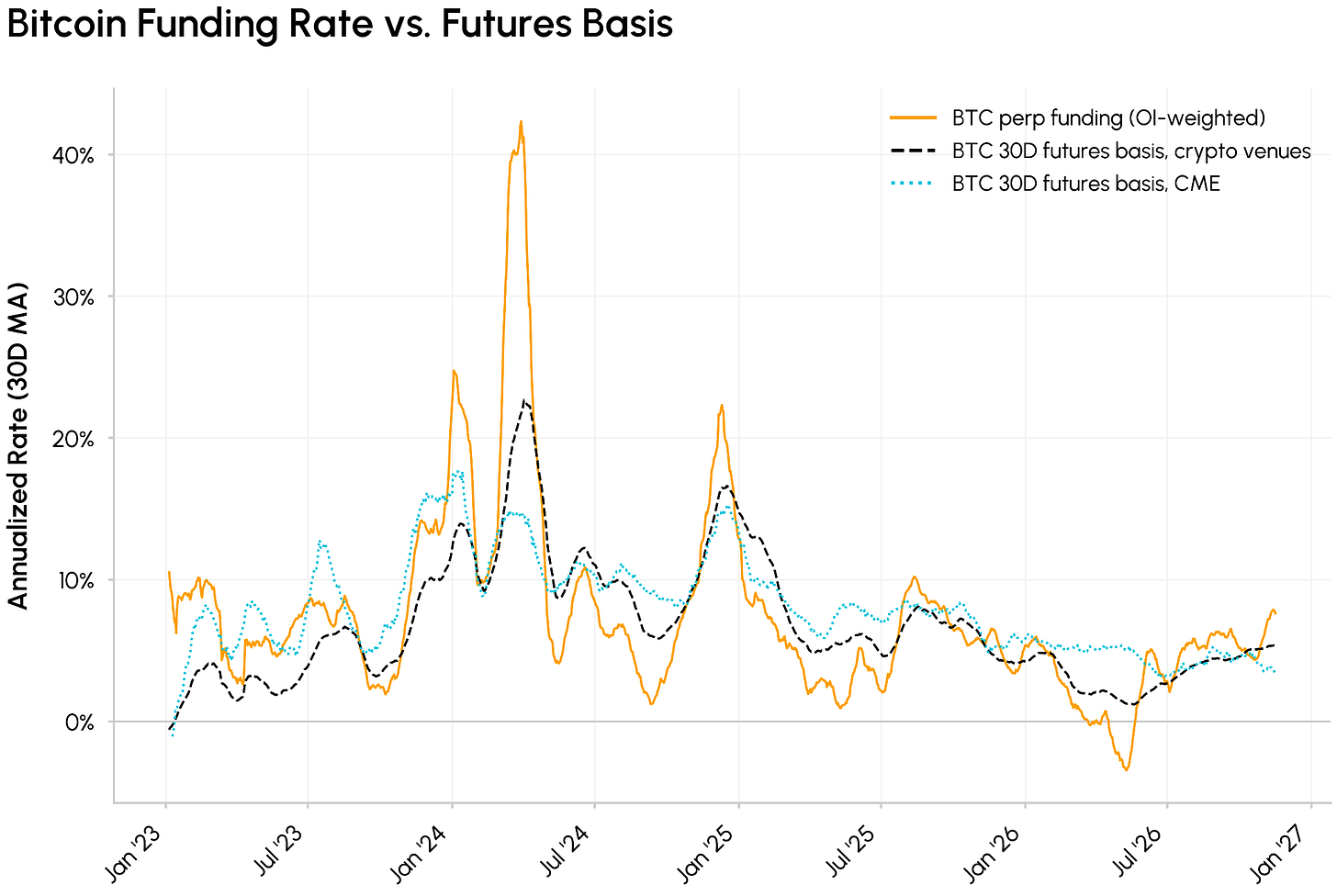
Figure: Trends of Bitcoin 30-day futures annualized basis and perpetual funding rates
As shown in the chart, the Bitcoin basis and funding rates reached peaks of 20% to 40% in Q1 2024, and then declined all the way. Entering 2026, these indicators have lingered annually between 3% and 5%.
What does this mean? In the context of the Federal Reserve maintaining a moderately high benchmark interest rate, an annualized return of 3% to 5% cannot even outperform the risk-free cash yield of U.S. three-month Treasury bonds.
Faced with the need to bear smart contract risks, counterparty default risks from exchanges, and slippage costs from forced liquidation, many quantitative funds reliant on basis arbitrage have had to withdraw from crypto-native assets, beginning to search for new targets in cross-asset markets.
RWA Perpetual Rise: Binance and Hyperliquid Divide Billions in Positions
As the rate premium from crypto-native assets diminishes, astute arbitrage capital has swiftly shifted to another unexplored territory opened up by crypto derivatives trading platforms: RWA perpetual contracts based on U.S. stocks and macro assets.
These contracts break the barriers of traditional U.S. stocks which are only tradable during specific hours on weekdays, requiring high margins and strict account audits, enabling global users to engage in leveraged trading with stablecoins 24/7.
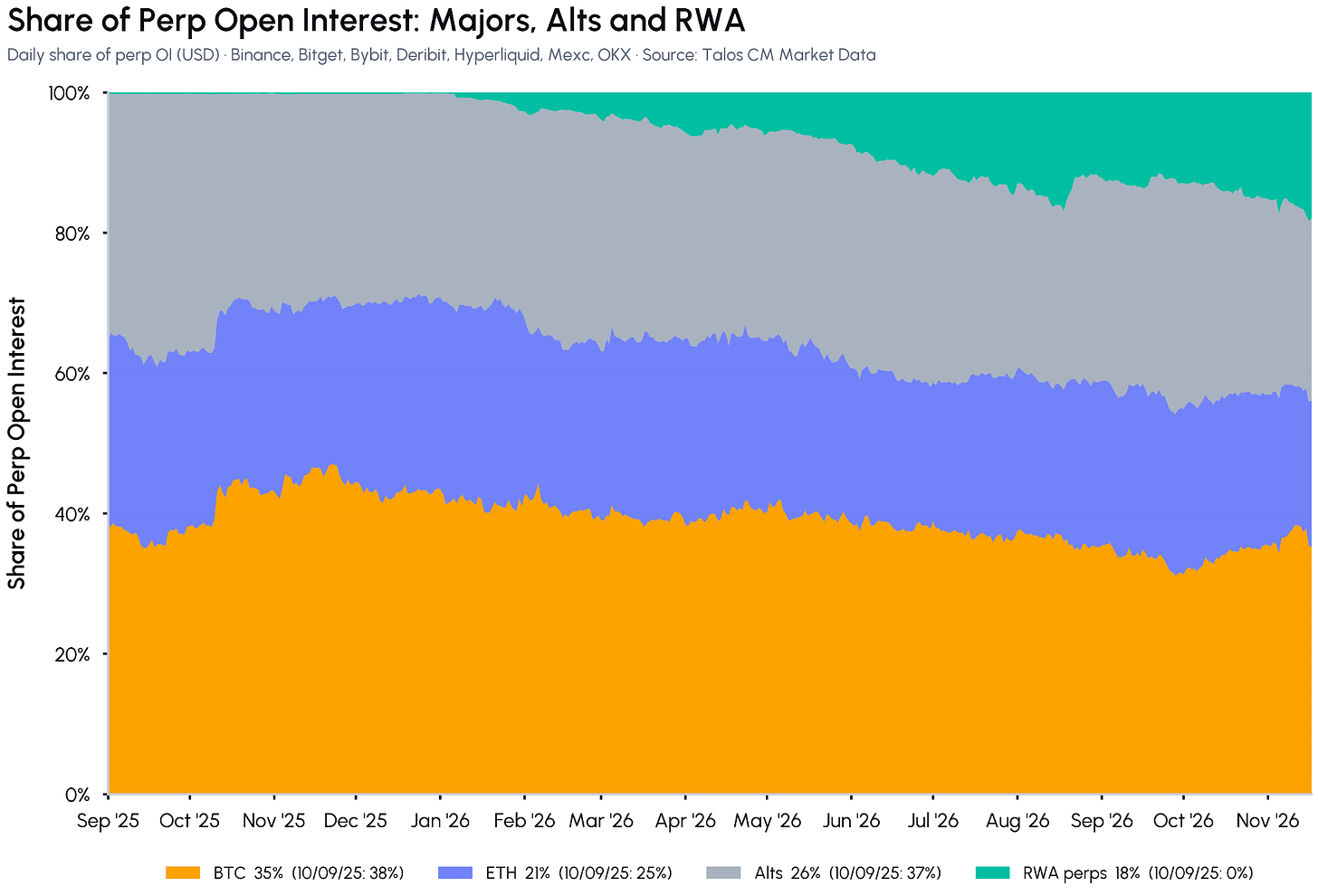
Figure: Open interest and market share of RWA perpetual contracts on mainstream trading platforms
On-chain data confirms this explosive trend. Since the beginning of Q4 2025, the open interest of RWA perpetual contracts has surged from less than 1% of the total market to currently over $11 billion, accounting for 18% of the open interest in major derivatives across the network.
In this market restructuring, centralized exchange giant Binance and decentralized derivatives blockchain Hyperliquid have shown absolute dominance.
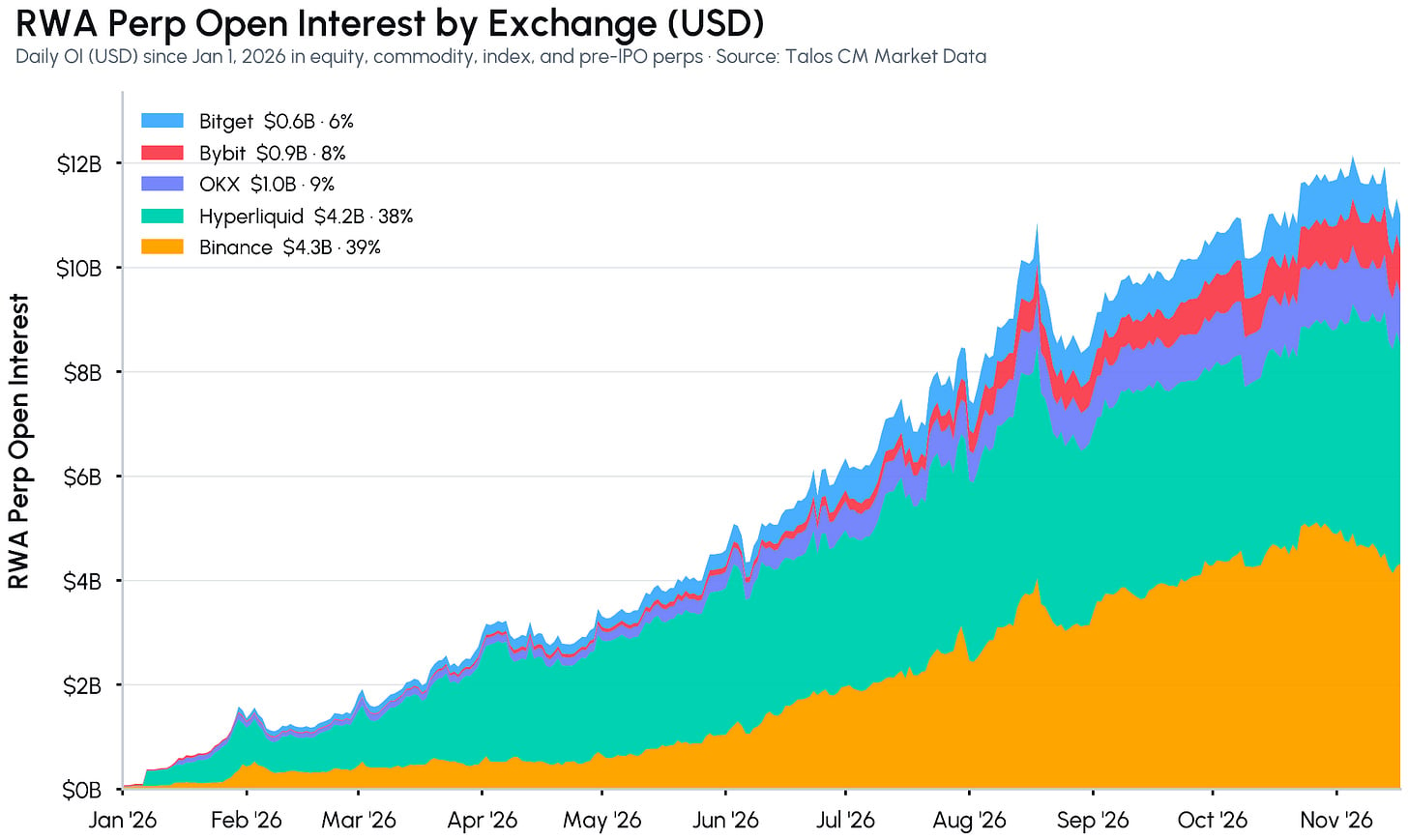
Figure: Distribution of U.S. stock perpetual contract positions between Binance and Hyperliquid
Data shows that Binance holds about 39% of the RWA perpetual market share, while Hyperliquid, built entirely based on high-performance on-chain layer 1, follows closely with a 38% share. Together, the two platforms control over 77% of liquidity across the network.
Rate Gap: Why Do U.S. Stock Perpetuals Have an 11% Annualized Premium?
Why is arbitrage capital so decisively flowing into U.S. stock perpetuals? The most direct driving force comes from the enormous funding rate gap.
Due to the massive retail investor following for U.S. tech giants (such as Nvidia, Tesla, Apple), bullish speculative sentiment in perpetual contracts—high leverage tools—often exceeds that of the spot market.
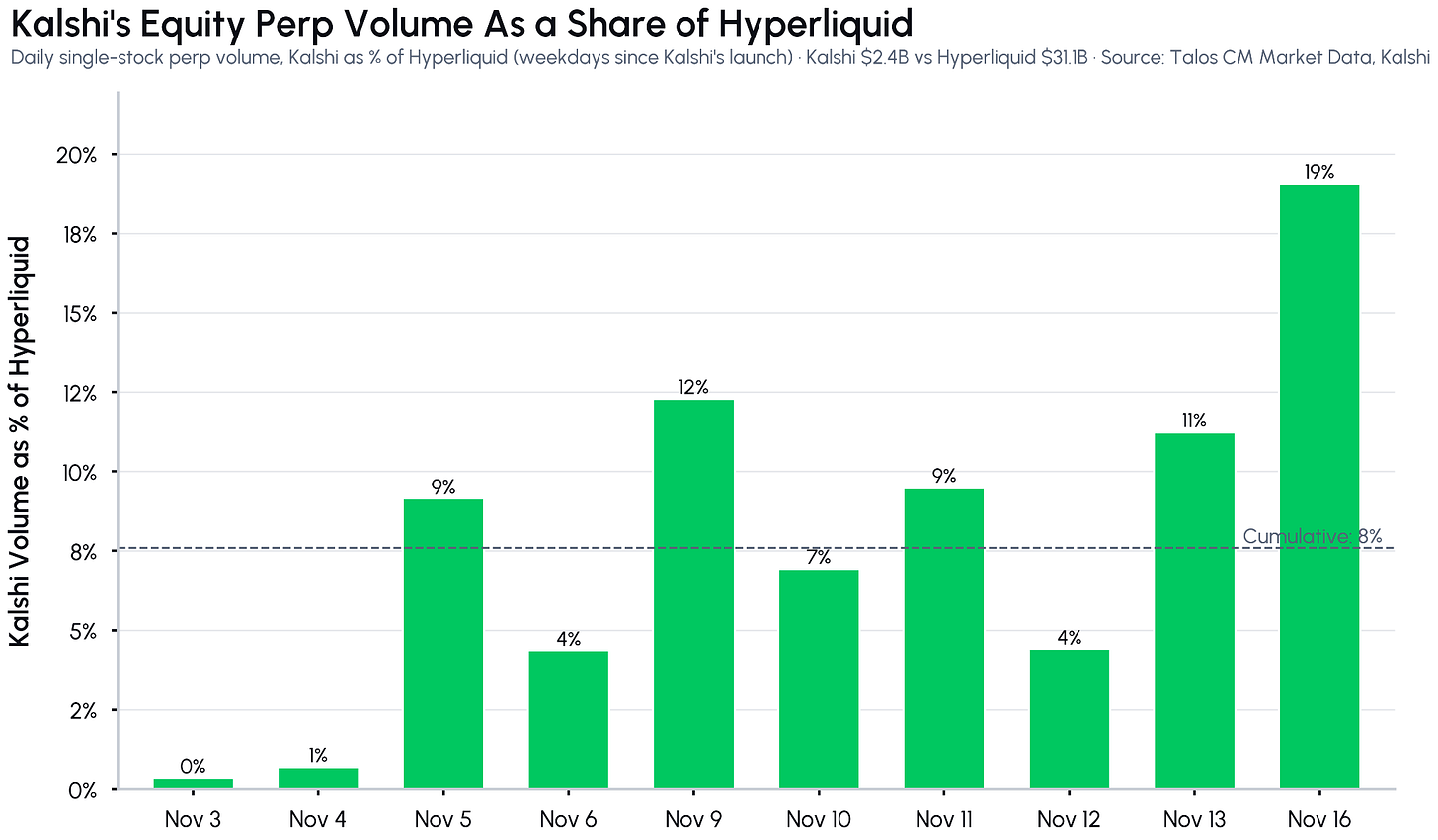
Figure: Comparison of annualized funding rates between mainstream cryptocurrencies and U.S. stock perpetual contracts
To maintain the contract prices anchored to the spot index, long traders must continuously pay high funding rates to shorts. Statistics show that the top ten U.S. stock perpetual contracts ranked by open interest in 2026 have an average annualized funding rate of about 11%, with peaks occasionally exceeding 25%.
In contrast, the top ten crypto-native assets have an annualized funding rate of only around 3% during the same period. The excess spread of up to 800 basis points provides arbitrage institutions with a highly attractive profit cushion.
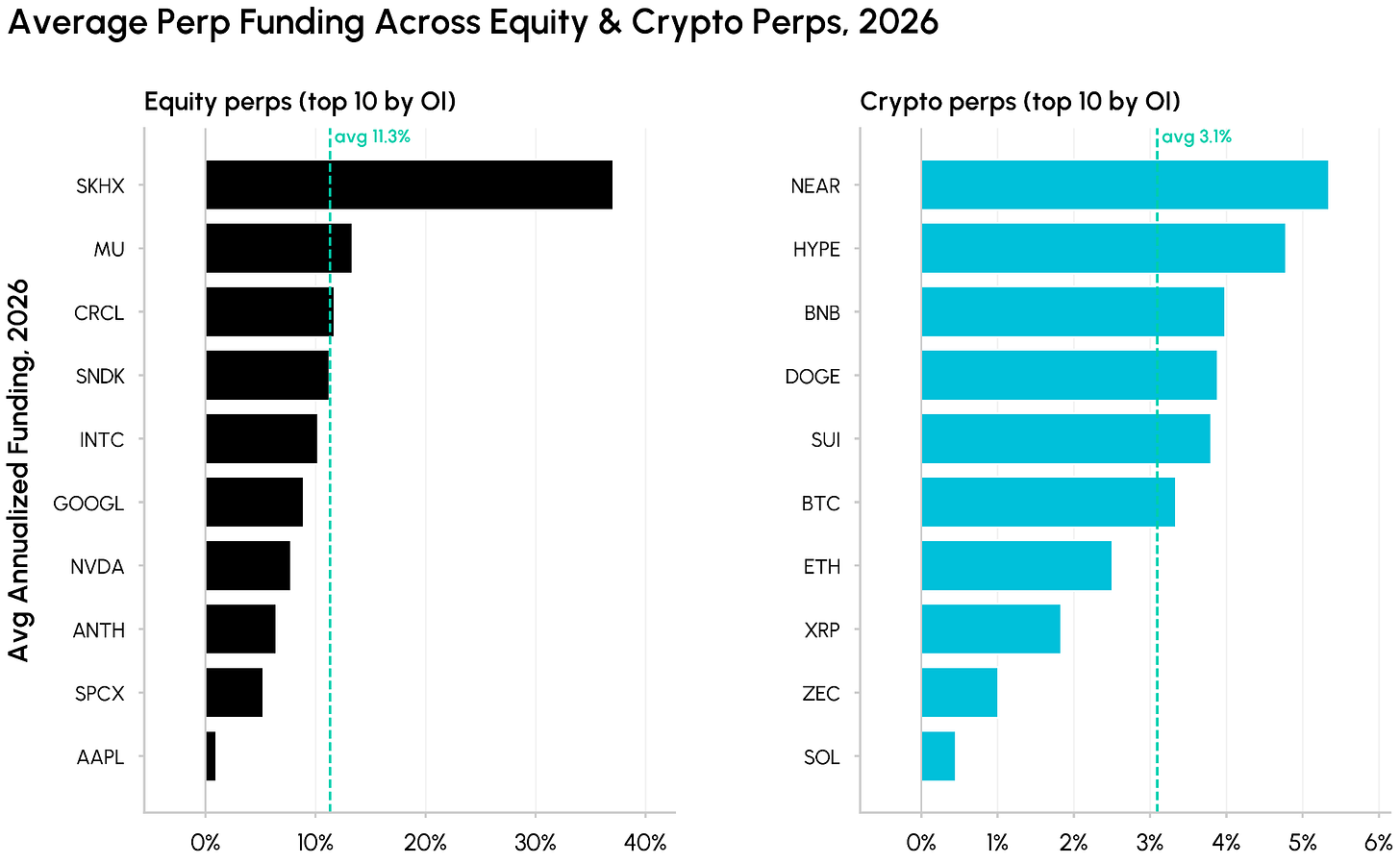
Figure: Historical funding rate percentiles of the top ten stock perpetual contracts
Arbitrageurs' operational patterns have evolved into a new form of hybrid trading: going long on U.S. stock spot or a basket of stock ETFs in a traditional brokerage account, while shorting the corresponding U.S. stock perpetual contracts on Binance or Hyperliquid, passively earning an annualized return of 11% on funding rates around the clock.
Market Structure Split: A Dual Game of Trading Platforms and Asset Choices
However, stock basis trading is not without its barriers—there's no such thing as a "free lunch." As increasingly diversified funds join the fray, arbitrage returns have become highly dependent on the matching mechanisms of trading platforms and specific asset choices.
Different platforms exhibit significant differences in funding rate calculation formulas, spot index pricing sources, funding rate settlement frequency (every 8 hours vs. every 1 hour), and margin liquidation rules.
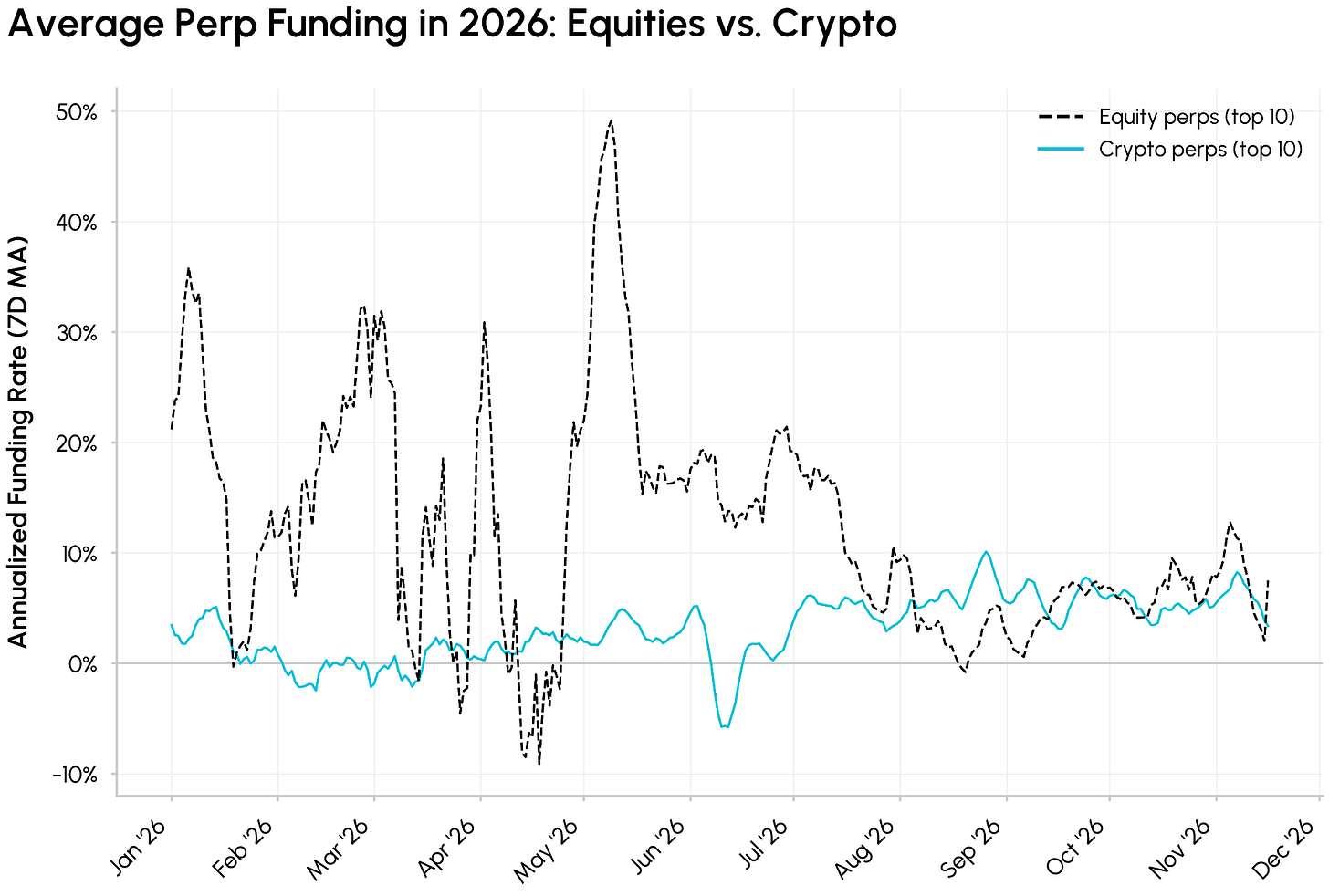
Figure: Analysis of funding rate dispersion for single assets across different trading platforms
For example, some second-tier decentralized exchanges experience extreme funding rate surges due to insufficient depth from market makers, allowing a single large trader's leveraged buy order to drive the short-term funding rates to extreme levels, but accompanied by slippage losses resulting from liquidity depletion.
Additionally, the U.S. stock market has pre-market, after-hours, and off-hours, while crypto derivatives platforms operate continuously 24/7. During non-trading hours of the U.S. stock market, unexpected macro news or financial report releases may lead to sharp basis swings between perpetual contract prices and spot, placing a high requirement on arbitrageurs' dynamic position adjustment capabilities.
Future Outlook: CFTC Regulatory Easing and Compliance Exchange Entry
The current boom in U.S. stock perpetual contracts is merely the prologue to the integration of cross-market derivatives. More profound changes are accelerating within the U.S. domestic regulatory landscape.
Recently, the U.S. Commodity Futures Trading Commission (CFTC) made a crucial confirmation that single-stock perpetual contracts can be listed for trading on U.S. compliant derivatives exchanges that meet specific clearing and reporting standards.
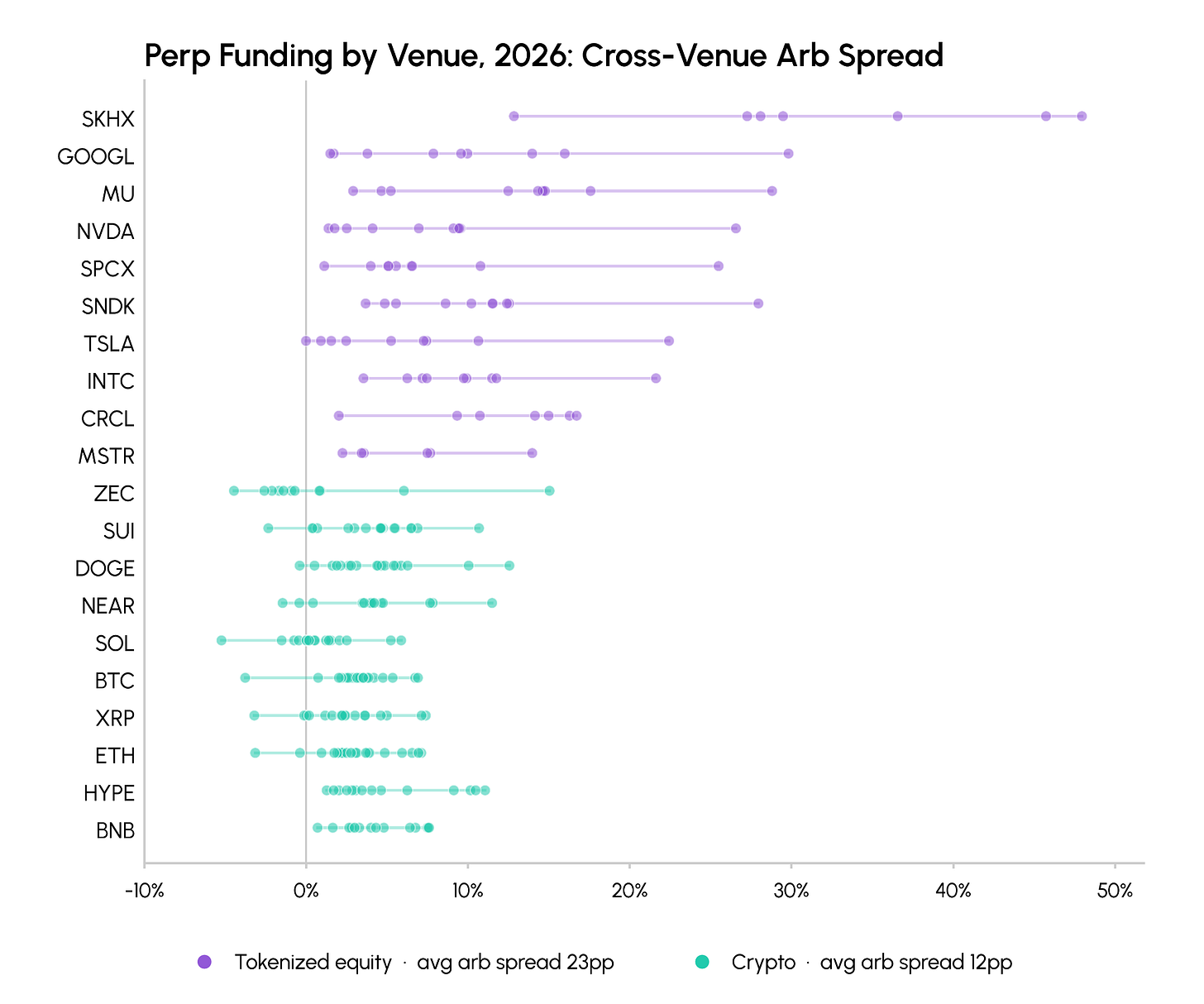
Figure: Estimated potential market space for stock perpetual contracts under the CFTC regulatory framework
This regulatory signal clears compliance obstacles for traditional Wall Street financial institutions to participate directly in this market. Meanwhile, prediction markets such as Kalshi and Polymarket have rapidly surpassed $1 billion in trading volume, confirming retail users' hunger for event-driven derivative tools.
Once regulated U.S. licensed institutions launch compliant U.S. stock perpetual contracts, barriers to capital access will be completely dismantled, and market participants will expand from offshore hedge funds to domestic pension funds, family offices, and large market makers.
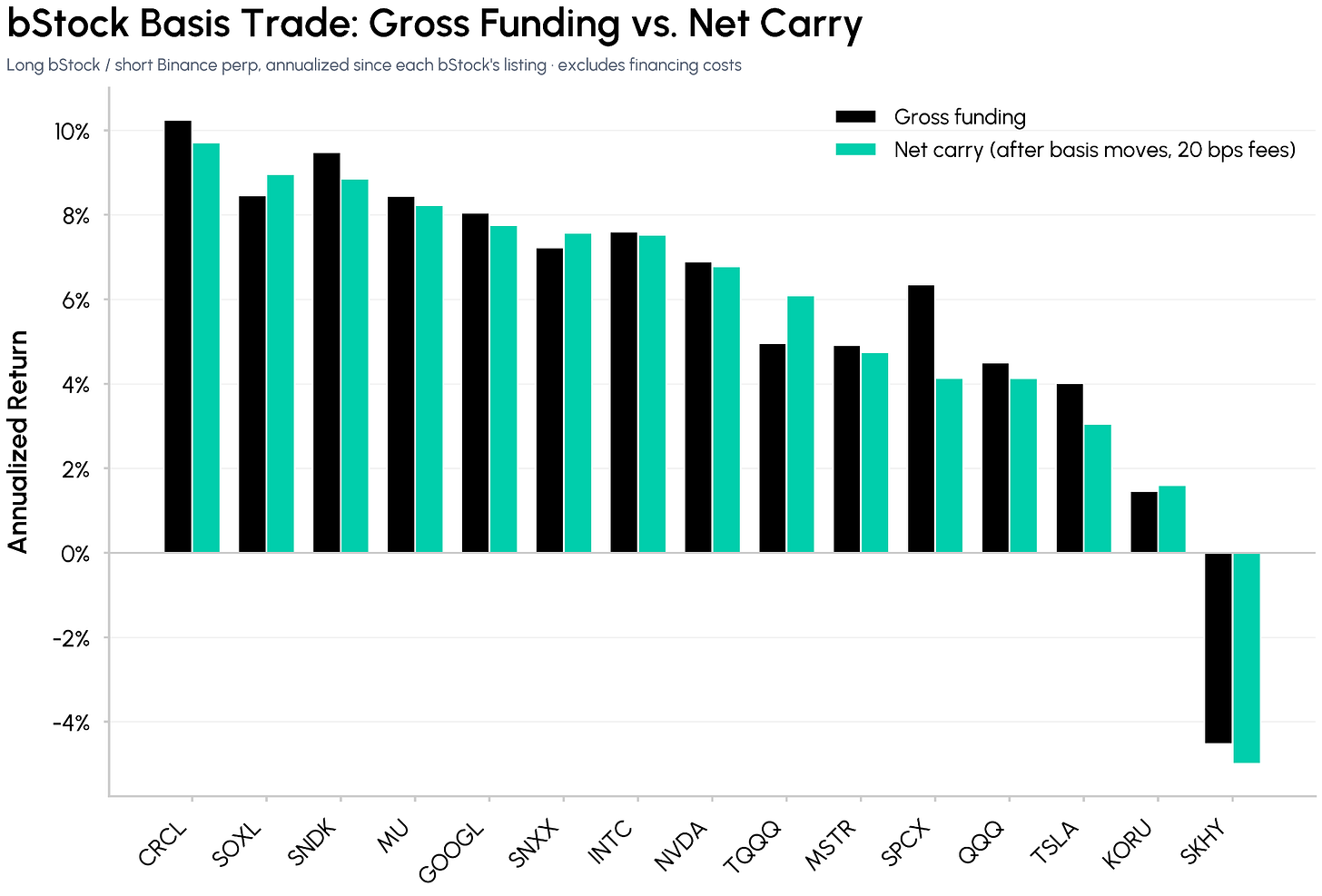
Figure: Illustration of capital flow paths for cross-market basis arbitrage
Conclusion and Insights
From the traditional basis boom and bust brought about by the Bitcoin spot ETF to the strong rise of RWA U.S. stock perpetual contracts, the crypto market once again showcases its astonishing self-evolving and asset-absorbing capabilities.
For professional institutions, the era of relying solely on the intrinsic rates of crypto assets for unilateral arbitrage is coming to an end. The hybrid architecture crossing traditional finance and blockchain protocols has become the core barrier for generating excess alpha.
For the industry as a whole, when real-world stock assets possess deeper round-the-clock derivative liquidity on-chain than domestic markets, the ultimate vision of crypto infrastructure as the "global financial superhub" is gradually becoming an irreversible reality.
免责声明:本文章仅代表作者个人观点,不代表本平台的立场和观点。本文章仅供信息分享,不构成对任何人的任何投资建议。用户与作者之间的任何争议,与本平台无关。如网页中刊载的文章或图片涉及侵权,请提供相关的权利证明和身份证明发送邮件到[email protected],本平台相关工作人员将会进行核查。


