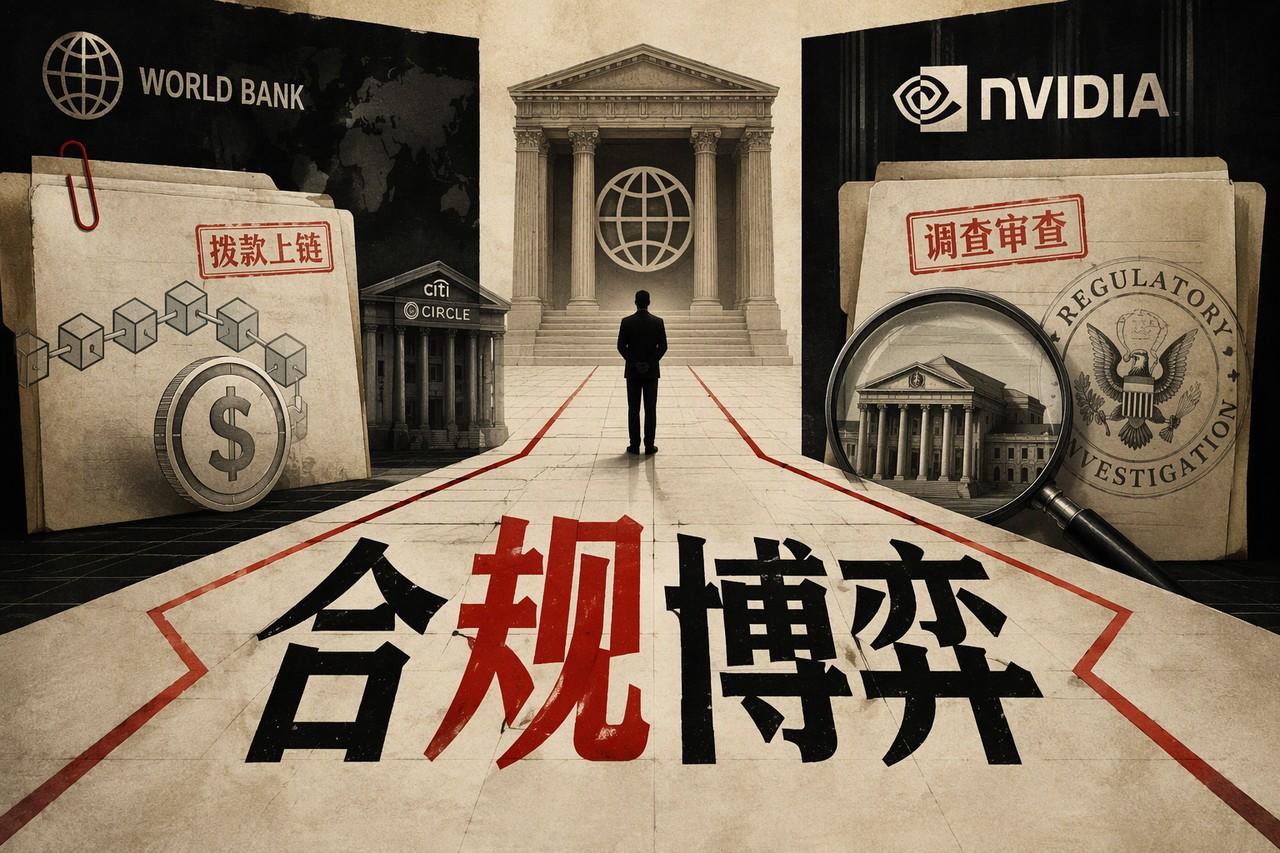
NVIDIA announced a revenue of $115.8 billion for the third quarter of the 2027 fiscal year, showing significant growth both sequentially and year-over-year, with data center revenue reaching $107.6 billion, earnings per share of $2.70, and upwardly revised fourth-quarter revenue guidance to $130 billion. Additionally, the board increased the share buyback program by another $150 billion, forming a combination of "better-than-expected fundamentals + strong signal buyback." Following the earnings report, the stock price rose over 2% during after-hours trading, boosting overall strength in the U.S. stock market AI and "new cloud" sectors, lifting global risk asset sentiment once again, providing external risk appetite support to BTC and ETH, which are often viewed as high-beta assets closely related to tech stocks. Concurrently, Coinbase disclosed that it intercepted a fraud scheme involving a deepfake video of Elon Musk, with an amount of approximately $4.7 million at stake, highlighting the real threat of AI abuse in the crypto space and the rising compliance requirements. The conflicting signals of macro benefits from AI and AI fraud risks are reshaping the pricing framework of "returns - compliance - trust" for BTC, ETH, and on-chain funds.
AI Giants' Earnings Exceed Expectations: Risk Assets Rise Again
NVIDIA reported a third-quarter revenue of $115.8 billion for the 2027 fiscal year, significantly above market expectations of $109.3 billion, with a sequential growth of 20% and year-over-year growth of 103%. Earnings per share of $2.70 also exceeded expectations, directly bringing the "AI story" from valuation narrative back to profitability evidence. Data center revenue reached $107.6 billion, accounting for the majority, indicating that current AI investments are not merely conceptual but have already formed substantial orders and cash flow on the infrastructure side such as servers and computing power. More importantly, the company provided guidance for fourth-quarter revenue at $130 billion, higher than market expectations of $125.2 billion, with management signaling that "AI demand is still ramping up," which means systematic upgrades to tech stock earnings expectations at the pricing level, inadvertently compressing implied equity risk premiums and raising the valuation center.
In this context, after the earnings report and the expansion of the buyback plan were announced, NVIDIA's stock price surged in after-hours trading, jumping over 2%, leading the overall strength of the "new cloud" sector in after-hours trading, indicating that capital began to reinvest at higher prices for high-growth, high-volatility assets. BTC and ETH are often treated as high-beta risk assets closely related to the U.S. tech sector; when the AI leader reinforces the narrative that "the AI cycle is still in its early stages" through real earnings, the cross-market funds' requirements for the discount rate of growth assets decrease, and the rising risk appetite translates through U.S. stock sentiment into the crypto market: on one hand, compressing the risk premiums for BTC and ETH, supporting their short-term resilience against adverse macro variables; on the other hand, increasing funds' tolerance for "tech narrative + on-chain risk assets," making it easier for the crypto market to gain incremental allocations under the AI concept and computation narrative.
$150 Billion Buyback Plan: Spillover Effects of the U.S. Stock Buyback Wave
Beyond the better-than-expected revenue and earnings guidance, NVIDIA's board has also approved an additional $150 billion for its stock buyback program, creating a strong signal combination that ties performance with capital returns. Following the earnings report and buyback announcements, NVIDIA's stock price saw a brief increase, rising over 2% in after-hours trading, while related sectors in the U.S. stock market "new cloud" also strengthened, indicating that the market interpreted this as management's strong endorsement of future cash flows and profitability. Large-scale buybacks essentially provide a long-term buyer for the stock price based on the company's balance sheet, reducing equity risk premiums and reinforcing the valuation anchor of tech leaders at the sector level, lowering investors' required discount rates for such assets.
From the investor's perspective, this combination of "performance realization + buyback support," coupled with expectations of a macro environment favoring growth assets, effectively provides a dual safety net for leading tech stocks in the U.S. When traditional assets gain clear support in valuation and liquidity, global funds' risk budgets will prioritize U.S. stocks, while more certainty in beta returns compresses the necessary compensating premium for high-volatility assets like BTC and ETH. On one hand, with the risk premium for tech stocks compressed, BTC and ETH as high-beta assets would achieve some emotional spillover through correlation; on the other hand, marginal funds would re-evaluate the trade-off between the "high certainty buyback premium in U.S. stocks" and the "high-risk premium in crypto," making the price elasticity of the crypto market more reliant on new funding rather than sitting passively with stock market liquidity.
The Return of the Computing Power Narrative: AI Sector Guides On-Chain Narratives
NVIDIA's revenue grew by 103% year-over-year this season, with data center revenue hitting $107.6 billion, holding a dominant position and being the core driver behind a sequential growth of 20%. This set of data brings the narrative of "computing power is king" back to the forefront. The market can clearly read the signal: capital expenditures for AI training and inference are still accelerating, and GPU and related computing resources have not reached a turning point. Following the earnings report and the $150 billion buyback authorization, the U.S. "new cloud" and AI sectors strengthened in after-hours trading, materializing the premium of the combination of "high prosperity in AI infrastructure + buyback support" at the pricing level, reinforcing risk preference for all computing power-related assets.
This sentiment is not confined to the stock market. Tokens related to on-chain, GPU, computing power, and AI narratives have historically received excess attention during favorable traditional AI cycles, and this cycle also faces opportunities for re-packaging: mining, computing-related tokens, and public chains branding themselves as AI applications or infrastructure are more likely to be seen as "AI beta" tools, utilized for hedging or amplifying exposure to traditional AI stocks. In terms of capital flow, some speculative capital may switch between U.S. AI concept stocks and on-chain AI narrative tokens, using the earnings season of leaders like NVIDIA as a rhythm reference; on the other hand, for high-beta assets like BTC and ETH which are highly correlated with tech stocks, improvements in sentiment in the AI sector further elevate the valuation center of the overall tech risk basket, making each round of AI earnings reports and signals of capital expenditures in computing power critical nodes for assessing the relative performance of the on-chain computing power sector and the directional shifts of fund flows.
Elon Musk Deepfake Scam: AI Risks Elevate Compliance Premium
At the same time that NVIDIA's earnings ignited sentiment in AI, Coinbase disclosed that it intercepted a fraud scheme involving a deepfake video of Elon Musk, with an amount of approximately $4.7 million at stake. This case involved a video generated by AI impersonating Musk's likeness and speech to lure users into transferring funds. It represents a typical "celebrity + AI-generated content" fraud scheme. Unlike traditional phishing attacks, the cost of such attacks has been driven down to extremely low levels by AI tools, but can cover a large number of crypto users in a short time, directly hitting retail risk preferences while making the "AI narrative" in the crypto market simultaneously carry contradictory signals of emotional premium and safety discount.
From the perspective of regulation and compliance costs, Coinbase, through internal monitoring and risk control processes, successfully prevented the transfer of all funds, proving the value of large compliant exchanges as the "last line of defense" against money laundering and fraud. However, this case has also amplified the regulatory concerns regarding compliance risks for crypto assets and consumer protection issues, objectively providing a real-life example for stricter KYC/AML, trading behavior monitoring, and content verification requirements. On a macro level, this means that the "compliance premium" between compliant exchanges and non-custodial scenarios may be repriced: on one hand, institutions and conservative funds prefer to allocate high-beta assets like BTC and ETH through platforms with monitoring capabilities, viewing safety and compliance as necessary costs; on the other hand, decentralized scenarios lack similar risk control interception capabilities; in the context of rising AI-driven fraud risks, the risk premiums for long-tail on-chain assets and permissionless protocols have been passively raised, making the structural differentiation between "safety-controlled concentrated flows" and "high-risk unregulated flows" of crypto funds an important variable to observe how the AI narrative reshapes market structure in the near future.
Risk Pricing of BTC and ETH in the Wave of AI
NVIDIA recorded a revenue of $115.8 billion for the third quarter of the 2027 fiscal year, with a sequential growth of 20% and a doubling year-over-year, while providing guidance of $130 billion for the next quarter, simultaneously increasing the stock buyback amount by another $150 billion, directly causing the stock price to rise over 2% in after-hours trading, boosting related sectors like "new cloud" and AI, cloud computing. This set of data and the buyback signal primarily affect the "risk premium" rather than "fundamentals" for high-beta risk assets such as BTC and ETH: the earnings and buybacks in the AI sector have strengthened the expected returns and downside protection for equity assets, compressing the risk premiums, thereby increasing the attractiveness of tech stocks in terms of risk-reward ratio. The result is that incremental funds find it easier to stay invested in, or even increase positions in leading U.S. tech stocks rather than significantly shifting risk exposure to on-chain assets at the same time; the weights of BTC and ETH in multi-asset portfolios are constrained, their elasticity to follow upward trends in the Nasdaq sentiment is retained, but it is challenging to gain an "AI premium" independent of U.S. stocks.
For BTC and ETH, NVIDIA's earnings report and the $150 billion buyback seem more like "emotional and correlation factors": the repair of sentiment in AI and tech sectors enhances the overall beta demand for risk assets, with historically high correlation with tech stocks, BTC and ETH will gain passive support due to the risk appetite of cross-asset funds, but what drives their prices is not the earnings cash flow of AI companies themselves, but the chain of "AI rise = high-growth tech continues to be chased = high-beta risk assets overall being repriced." Meanwhile, Coinbase's interception of approximately $4.7 million fraud using a deepfake video of Musk further enhances its compliance image, attracting funds preferring regulated environments to enter and exit mainstream assets more through compliant over-the-counter and centralized platforms; however, the increase in cases of AI fraud also implies that regulators have reason to raise monitoring requirements for exchanges and on-chain activities, compressing available channels for anonymous, high-risk funds, increasing implicit costs for their activities on-chain. Under this dual signal, in the short term, BTC and ETH are more likely to price in the AI theme through "correlation with U.S. tech + amplification of risk sentiment," rather than relying on direct links to cash flows of the AI industry; their price fluctuations will primarily reflect changes in cross-asset risk budgets and the redistribution of compliant funds and gray funds among different channels.
Join our community for discussions and to grow stronger together!
Exclusive Hyperliquid benefits for AiCoin: https://app.hyperliquid.xyz/join/AICOIN88
Exclusive Aster benefits for AiCoin: https://www.asterdex.com/zh-CN/referral/9C50e2
On-chain Telegram community: https://t.me/AiCoinWhaleData
On-chain community: https://www.aicoin.com/link/chat?cid=N6OVMor5g
AiCoin on-chain Twitter: https://x.com/aicoinwhaledata
免责声明:本文章仅代表作者个人观点,不代表本平台的立场和观点。本文章仅供信息分享,不构成对任何人的任何投资建议。用户与作者之间的任何争议,与本平台无关。如网页中刊载的文章或图片涉及侵权,请提供相关的权利证明和身份证明发送邮件到[email protected],本平台相关工作人员将会进行核查。