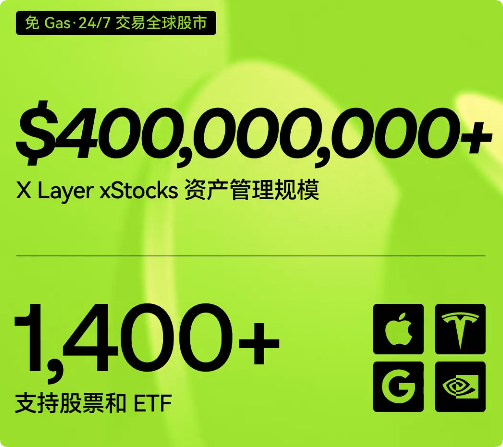
Hyperliquid was first remembered by the market because it turned cryptocurrency perpetual contracts into a core on-chain product.
However, recent data indicates another point: Hyperliquid's revenue sources are no longer solely reliant on the market cycles of BTC, ETH, and other crypto assets.
Delphi Digital analysis shows that over the past year, daily trading volume for Hyperliquid's stocks and commodity perpetuals grew from about $140 million to over $4 billion, currently accounting for about one-third of the platform's total trading volume; among them, Nvidia, the S&P 500 index, and oil contracts are the most active. During the same period, revenue from stock and commodity trading increased about sixfold, and it continued to rise even during multiple downturns in the crypto market.
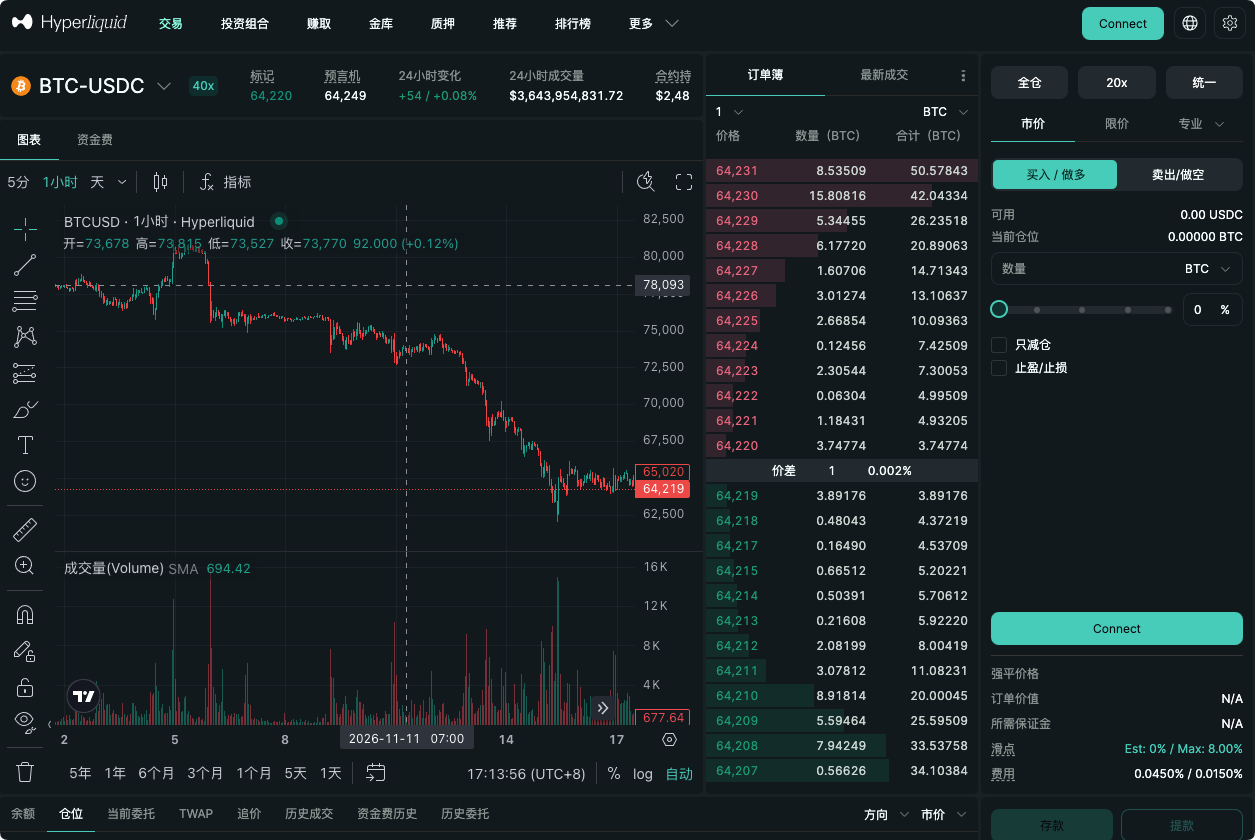
On another note, Wintermute's on-chain analysis of Hyperliquid's low-latency mechanism shows that professional market makers are paying real costs for quicker reading of trading flows and faster adjustments of quotes. The analysis estimates that Wintermute spent about $824,000 over the past 30 days on Gossip priority positions, equivalent to an annualized amount of about $10.02 million; however, the cumulative account profit and loss of $229.7 million cannot simply be attributed to this 60-millisecond reading advantage.
When looking at these two pieces of information together, Hyperliquid's changes become clear:
On one end are the new trading demands brought by stocks, indices, and commodities, while on the other end are the infrastructure costs that market makers pay for execution quality and low latency. Hyperliquid is simultaneously expanding "what to trade" and "how to trade."
1. Revenue Growth of 6x: What Matters is Not the Number Itself
The phrase "revenue from stock and commodity trading increased sixfold" can easily be written as a simple positive statement, but what deserves more analysis is how it has changed Hyperliquid's revenue structure.
According to Delphi Digital data, the daily trading volume of the related contracts increased from about $140 million to over $4 billion over the past year, expanding the scale by about 28 times; currently accounting for approximately one-third of the platform's total trading volume.
These two numbers do not represent that revenue has also increased by 28 times. Trading volume, fee rates, market structure, and distributor splits are different, and cannot be equated directly.
However, it indicates at least that stock and commodity perpetuals have transitioned from an early experimental market to a phase that can influence the total trading activity of the platform.
More importantly, the related trading volume has not only increased during bull markets in cryptocurrency. Analyses quoted by Wu note that revenue from stocks and commodities has continued to rise during multiple downturn periods in the crypto market this year.
This is the core value of "revenue diversification."
If a platform's main revenue comes solely from crypto perpetuals, then when BTC volatility declines and the market enters a consolidation phase or risk appetite decreases, trading volume and fees typically feel pressure together.
If the platform concurrently has markets for Nvidia, the S&P 500, oil, etc., then users may still express views through trading tech stocks, indices, and commodities when the crypto market worsens. Platform revenue does not have to fully follow the single cycle of the crypto market.
This does not mean Hyperliquid has detached itself from the crypto market, but rather that it has begun to possess a second set of trading cycles.
2. Why Stock and Commodity Perpetuals Could Become the Next Stop for Crypto Users
For users familiar with crypto perpetuals, stock and commodity perpetuals are not completely unfamiliar products.
They can still go long or short, maintain margin, funding rates, leverage, and liquidation, and can still complete trades via the order book. The main change is that the underlying reference assets have expanded from BTC and ETH to stocks, indices, and commodities.
This migration of products has three practical reasons.
All-Weather Trading
Traditional stock markets have opening and closing times. After U.S. markets close, Nvidia, indices, and commodities may still be influenced by macro data, company news, geopolitical events, and crypto market volatility.
Perpetual contracts allow users to continue expressing price views during traditional market off-hours. However, this also means that price discovery during off-hours will rely more heavily on oracles, distributor rules, and market liquidity, and cannot simply be understood as "there is always a real spot price supporting it."
Unified Trading Habits
Crypto users are already accustomed to bidirectional trading, leverage, and 24-hour markets. Stock and commodity perpetuals extend these trading habits to new asset classes.
A trader can first trade BTC and then switch to the S&P 500 or Nvidia without needing to completely change trading interfaces and margin systems.
Cross-Market Risk Expression
Macro traders may pay attention to USD, interest rates, tech stocks, crude oil, and BTC simultaneously. By putting different markets into the same on-chain trading system, they can more quickly engage in long-short combinations and relative value trades.
However, it is important to emphasize: stock perpetuals are price exposures, which do not equate to real stock ownership. They typically do not automatically confer voting rights, dividend rights, or corporate governance rights. Users are trading contract prices, rather than stocks registered in their name.
3. HIP-3 is Not Just a Simple Token Launch, But Opens Up Market Deployment Rights
Hyperliquid officially defines HIP-3 as Builder-deployed perpetuals, referring to perpetual markets created and operated by deployers.
Deployers need to be responsible for market definitions, including oracles and contract specifications; they also need to be responsible for market operations, including setting oracle prices, leverage limitations, and settling markets when necessary.
Each HIP-3 DEX has its own independent margin, order book, and deployer settings.
This explains why Hyperliquid can expand from crypto assets to stocks, indices, and commodities: the platform does not need a centralized team to set identical parameters for all markets, but rather allows different deployers to build markets around different assets.
From a platform economics perspective, HIP-3 is akin to increasing the new market supply side.
From a risk perspective, it also places more responsibility on deployers. Users cannot simply look at asset names and trading volume, but must also understand the corresponding market's oracles, margins, leverage, settlement, and liquidity rules.
HIP-3 official documentation also stipulates that deployers need to maintain staking, and validators may impose penalties for malicious market operations; cross-margin markets must meet observability, reliable external oracles, and anti-manipulation requirements.
Therefore, HIP-3's true competitiveness lies not just in "being able to launch more assets," but whether these markets can still maintain explainable prices and executable liquidity during extreme market conditions.
4. Wintermute Spending $10 Million on Speed Indicates the Platform is Starting to Sell Execution Quality
If the expansion of stocks and commodities reflects Hyperliquid's demand side, then the Wintermute case illustrates the supply side: professional market makers are willing to pay for better execution conditions.
Official documents show that Hyperliquid has set up three independent 3-minute Dutch auction positions, with lower-numbered positions having higher priority; the mainnet experiences currently indicated about a 25-millisecond reduction in latency per auction seat.
Wintermute spent about $824,000 over the last 30 days, approximately $27,464 per day, annualized to about $10.02 million.
The implication of this figure is not that "anyone spending money can steadily earn $10 million," but rather:
When market competition is sufficiently intense, even a matter of a few tens of milliseconds of relative information advantage can be priced.
The core issue for market makers is not predicting whether BTC will go up or down tomorrow, but whether they can judge the risk earlier than other quote providers when a large order is about to enter the market, and quickly withdraw orders, adjust prices, or reestablish inventory.
Hyperliquid's official documents also clearly distinguish between read priority and order priority: Gossip priority affects the order of reading trading flows, while Order priority affects order sending and sorting.
Official documents indicate that order priority fees will impact end-to-end delay for IOC orders; within the range of 0 to 8 basis points, priority fees are related to delay improvement, with current mainnet experience indicating that each payment of 1 basis point reduces end-to-end delay by about 45 milliseconds.
This means Hyperliquid is forming a more complete trading infrastructure market:
- Ordinary users focus on order book, funding rates, and liquidation;
- Market makers focus on inventory, withdrawal speed, and execution selection;
- Professional institutions are willing to pay costs for reading and execution priority;
- The protocol uses auctions and priority fees to bring part of the infrastructure value chain on-chain.
5. But $229.7 Million of Profit and Loss Cannot Be Attributed to 60 Milliseconds
Wintermute's main account has a cumulative profit and loss of about $229.7 million from 2024 to present, with cumulative transactions of about $325 billion, of which perpetual profit and loss is around $203 million.
This indicates that low latency is more likely a marginal improvement in market-making strategy rather than the sole source of all revenue.
Professional market makers' earnings typically come from multiple sources:
- Bid-ask spread;
- Inventory management;
- Cross-platform hedging;
- Liquidity pricing across different markets;
- Order flow selection;
- Funding rate and financing cost management;
- Avoiding losses resulting from faster order withdrawals.
The Wintermute account exhibits significant directional positions, with current shorts and longs not being symmetrical, and parts of the positions may be used to hedge inventory risks at other locations.
Therefore, one cannot simply divide the "annualized expenditure of about $10 million" by "cumulative profit of $229.7 million" to arrive at the return on investment for read priority.
This also provides an important insight for ordinary users:
When seeing large players profiting on-chain, first break down the sources of profit; do not conflate total account profit and loss, market-making income, and a specific infrastructure cost into the same causal relationship.
6. Revenue Diversification and Low-Latency Infrastructure are Actually the Same Thing
At first glance, the growth in stock and commodity trading volume seems unrelated to Wintermute's purchase of priority.
However, from the perspective of the exchange's business model, they both point to a change: Hyperliquid is no longer just providing an order book for crypto assets, but is building a foundational on-chain trading system capable of accommodating multiple markets.
The more markets there are, the more complex user trading scenarios become; the more complex trading scenarios are, the higher the demand for liquidity, quote quality, execution speed, and risk management.
If HIP-3 only has assets without stable market makers, the trading volume for stocks and commodities will likely struggle to sustain.
If the platform only has BTC liquidity but no cross-asset markets, the strategic space for professional market makers would also be limited.
Therefore, Hyperliquid's growth flywheel may be as follows:
More stock and commodity markets
→ More cross-asset trading demands
→ Higher market liquidity value
→ Market makers invest in higher quality infrastructure
→ Better execution experience
→ Attract more traders and deployers
Of course, this is just a commercial logic deduction and does not represent that the growth flywheel has been fully validated.
Its sustainability depends on three conditions:
First, whether the trading volume of non-crypto markets can remain stable during calm periods rather than only experiencing temporary spikes during declines and high volatility.
Second, whether the oracles, settlement, and liquidity of stock and commodity markets can withstand extreme conditions.
Third, whether the revenue generated by the platform can truly cover market-making incentives, infrastructure costs, risk reserves, and market operation costs.
The "revenue growth of 6x" proves that trading activities and revenue sources are expanding, but it does not mean profits are increasing in tandem or that the platform has fully divorced itself from crypto cycles.
7. What Ordinary Users Should Pay Attention To
Ordinary users do not need to replicate Wintermute's nodes, priority fees, and market-making strategies, nor should they interpret the infrastructure expenditures of professional institutions as personal trading tutorials.
What is more valuable is observing changes in market structures.
When observing Hyperliquid on the AiCoin mobile terminal, consider the following questions together:
Watch Whether Non-Crypto Market Volumes Are Sustained
Do not just look at the trading volume of Nvidia or crude oil on a single day; instead, check whether the overall proportion of HIP-3 remains stable under different market conditions. Short-term spikes may come from event-driven markets, while sustained proportions can better illustrate product migrations.
Watch Whether Trading Volumes Are Accompanied by OI Growth
Rising volumes without significant changes in OI may indicate high-frequency turnover; simultaneous increases in volume and OI could mean new leverage risks are entering the market.
Watch the Relationship Between Funding Rates and Prices
If the prices of stock or commodity perpetuals rise while funding rates quickly skew positive, this may suggest crowded bullish trading. Increased trading volume does not equal safer opportunities.
Watch the Order Book and Liquidation, Not Just the K-Line
The liquidity of niche HIP-3 markets cannot be directly compared to BTC perpetuals. Price movements, order book depth, mark prices, and liquidation distribution determine whether a trade can be executed as expected.
The value of the AiCoin mobile terminal is that it places K-lines, OI, funding rates, liquidations, large orders, and cross-asset market conditions into the same observation framework. Users can first assess which types of markets are receiving capital before deciding whether to connect to Hyperliquid, rather than chasing hot assets just because they saw "revenue growth of 6x."
If you need to connect to Hyperliquid, you can use the exclusive entrance: Connect to Hyperliquid.
Invitation code: AICOIN88. Transactions that meet the criteria can receive a 4% rebate on fees, with specific eligibility, rebate calculation, and account credit timing subject to event rules.
The rebate can only reduce a portion of trading costs and cannot offset risks such as funding rates, slippage, oracle deviations, liquidation, insufficient liquidity, and market rule changes.
Conclusion: Hyperliquid is Competing for More Than Just Crypto Trading Volume
The sixfold growth in trading revenue from stocks and commodities indicates that Hyperliquid is gaining a second set of revenue sources; Wintermute's payments for reading and execution prioritization suggest that the market is beginning to price the on-chain trading infrastructure itself.
With these two changes combined, Hyperliquid's competitive landscape will also expand.
It no longer merely needs to compare BTC trading volume with other perpetual DEXs but must prove its capability of sustaining liquidity migration between stocks, indices, commodities, and crypto assets.
For users, the most worthwhile observations are not whether a particular hot contract can continue to rise, but three long-term indicators:
- Whether non-crypto asset trading volume can traverse different market cycles;
- Whether HIP-3 markets can continually provide reliable prices and adequate depth;
- Whether the low-latency infrastructure invested by market makers ultimately translates into better execution quality for ordinary users.
Exclusive Benefits for AiCoin Users
👉 Enter the invitation code AICOIN88 when binding your Hyperliquid account to enjoy a 4% fee rebate.
🔗 Exclusive Registration Link:
https://app.hyperliquid.xyz/join/AICOIN88
📖 Beginner's Tutorial:
- "AiCoin PC Terminal Hyperliquid Authorized Trading Tutorial":
https://www.aicoin.com/zh-Hans/article/514197
- "AiCoin Mobile Terminal Hyperliquid Authorized Trading Tutorial":
https://www.aicoin.com/zh-Hans/article/541383
- "Beginner's Guide! Hyperliquid First Trade Super Detailed Illustrated Tutorial":
https://www.aicoin.com/zh-Hans/article/510225
📖 Community Communication:
- Telegram:
https://t.me/AiCoinWhaleData
- Discord:
https://discord.gg/5XSXjXSpz
- AiCoin Group Chat:
https://www.aicoin.com/link/chat?cid=N6OVMor5g
The content of this article only represents the author's personal views and does not represent the stance of this platform. The opinions, conclusions, and suggestions in the text are for reference only and do not constitute any investment advice related to this platform. Investors in U.S. stocks still need to bear market risks, regulatory risks, and compliance risks of local laws and regulations (especially for foreign exchange controls, offshore investment declarations, etc.).
免责声明:本文章仅代表作者个人观点,不代表本平台的立场和观点。本文章仅供信息分享,不构成对任何人的任何投资建议。用户与作者之间的任何争议,与本平台无关。如网页中刊载的文章或图片涉及侵权,请提供相关的权利证明和身份证明发送邮件到[email protected],本平台相关工作人员将会进行核查。