Many people, when first encountering on-chain US stocks, focus on the question of "can I buy them?" However, a more important question to consider is: Are there enough people on-chain holding, trading, and using these assets?
On November 16, OKX Wallet stated that the scale of tokenized stock assets on X Layer continues to rise, having set a historic high of 400 million dollars.
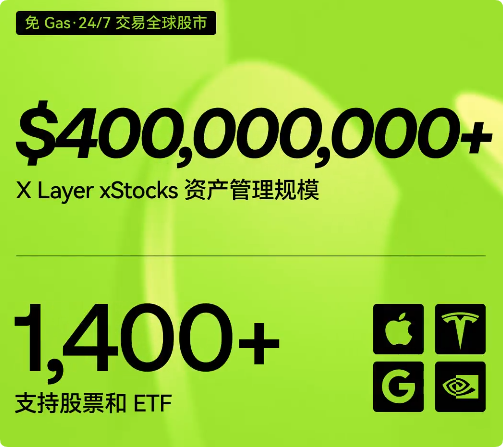
This figure signifies more than just an increase in market size. It indicates that tokenized stocks are gradually transitioning from a new concept into an actual component of on-chain asset allocation, trading, and DeFi portfolios.
For ordinary users, the opportunities are also changing: previously, trading US stocks required opening an account, depositing funds, and waiting for trading hours; now, through OKX Wallet, one can view, trade, and manage related tokenized assets on-chain, participating without being fully restricted by the opening and closing hours of traditional exchanges.
What does 400 million dollars mean?
First, on-chain US stocks are beginning to have a stronger asset network effect
When the asset scale is small, users are most worried about the lack of trading partners, insufficient liquidity, and inadequate price discovery.
As the scale of tokenized stock assets on X Layer reaches 400 million dollars, the market will naturally form a richer trading demand:
- Some will hold assets waiting for long-term appreciation;
- Some will engage in short-term trading;
- Some will use stock-like assets to allocate investment portfolios;
- Some will create trading pairs with stablecoins and crypto assets;
- Some will explore lending, liquidity, and other on-chain financial applications.
Growth in scale does not guarantee price increases, nor does it mean all assets have the same liquidity. However, a larger scale typically means an increase in market participants, types of assets, and application scenarios.
Second, tokenized stocks are moving from "showing prices" to "composable assets on-chain"
X Layer will continue to provide low-cost, round-the-clock settlement infrastructure to support tokenized stocks being held, traded, and lent on-chain.
The order of these three words is important:
- Hold: Users can include related assets in their on-chain asset portfolios;
- Trade: Users can buy and sell based on market conditions and strategies;
- Lend: In the future, more applications can be built around asset collateral, liquidity, and yield strategies.
This means the value of tokenized stocks lies not only in "moving stock prices on-chain," but also in their ability to enter the blockchain-native composable financial system.
Third, the timing of traditional finance and on-chain trading is starting to differ
Traditional US stock trading is limited by trading hours and market holidays, while blockchain networks can operate continuously. The X Layer official page shows that its network's average block time is about 1 second, with average transaction costs around 0.0005 dollars, and average TPS noted as 5,000.2
These are network indicators displayed on the X Layer page and do not represent that every tokenized stock transaction will have fixed costs. Actual costs still depend on asset contracts, transaction paths, network status, liquidity, and project rules.
But from a product experience perspective, low costs and round-the-clock operations can reduce barriers for users to view, adjust portfolios, and participate in on-chain markets.
What tokenized stocks on OKX Wallet are worth observing?
The token page of OKX Wallet provides data fields such as prices, 24-hour price changes, market capitalization, trading volume, and price-to-earnings ratios for stock-like tokens.
Current representational assets displayed on the page include:
- NVDAx: Nvidia;
- SPYx: S&P 500 ETF;
- QQQx: Nasdaq 100 ETF;
- MUx: Micron Technology;
- AMDx: Advanced Micro Devices;
- SPCXx: SpaceX;
- MSFTx: Microsoft;
- AAPLx: Apple;
- AMZNx: Amazon;
- TSLAx: Tesla;
- GOOGLx: Google A;
- TSMx: TSMC.
These assets can roughly be classified into four categories of observation targets.
1. Broad-based indices: SPYx and QQQx
SPYx corresponds to the S&P 500 ETF, and QQQx corresponds to the Nasdaq 100 ETF. They are not single companies, but are closer to a basket of large US stocks' market expressions.
If users do not want to take on the event risk of a single company, broad-based index assets are more suitable as a starting point for observation. However, an index does not equate to low risk; interest rates, economic cycles, technology stock valuations, and overall market drawdowns can still affect prices.
2. Tech and AI supply chain: NVDAx, AMDx, MUx, TSMx
Nvidia, AMD, Micron, and TSMC correspond to sectors in the AI chip, computing hardware, memory, and advanced manufacturing supply chains.
This category of assets shares the common features of clear narratives and high market attention, but valuations and volatility may also be more sensitive. AI capital expenditures, chip cycles, inventory levels, export restrictions, and corporate earnings expectations can all quickly change prices.
3. Platform technology companies: AAPLx, MSFTx, AMZNx, GOOGLx
Apple, Microsoft, Amazon, and Google have mature business models that are exposed to different growth drivers, including consumer electronics, cloud computing, advertising, AI, and e-commerce.
This type of asset is more suitable for research that combines fundamentals with market sentiment. Users can observe company news, earnings report expectations, valuation levels, and on-chain trading data concurrently.
4. High attention thematic assets: TSLAx and SPCXx
The market attention on assets related to Tesla and space exploration is often higher, and prices may be more easily influenced by founder statements, product progress, policy expectations, and market sentiment.
It is essential to note: SPCXx is not the same concept as SPCX. In the OKX Wallet page, SPCXx is a tokenized representation of assets related to space exploration technologies; users must verify the complete contract address, issuance information, and asset mechanisms before trading, instead of relying solely on names or icons.
The real advantage of on-chain US stocks is not just "available to buy at any time"
Round-the-clock viewing and trading
Blockchain networks do not operate according to traditional securities exchange opening and closing hours. Users can view quotes and execute on-chain trades during non-traditional trading hours.
However, "round-the-clock tradable" does not mean the same depth of liquidity is available at all times. During nights, weekends, or traditional market holidays, underlying reference prices may not be continuous, and on-chain prices may exhibit greater spreads.
Low-threshold on-chain asset portfolios
Users do not need to place all assets in a single market; they can manage stablecoins, mainstream crypto assets, RWA, and tokenized stocks within the same wallet.
This provides users with more ways to combine assets, such as:
- Asset allocation between stablecoins and stock-like tokens;
- Observing the correlation between tech stocks and the crypto market;
- Exploring stock-like asset opportunities in RWA liquidity pools;
- Integrating on-chain stock-like assets with DeFi lending and liquidity strategies.
Whether one can participate in lending, liquidity, or other DeFi applications depends on the actual product page, asset issuers, and local regulations.
Transparent data entry
The OKX Wallet token page allows simultaneous viewing of price, price changes, market cap, 24-hour trading volume, and price-to-earnings ratio.
This is especially important for beginners. Users do not have to focus only on price changes; they can quickly assess:
- How is the market size of this asset;
- Is trading currently active;
- Is market attention concentrated;
- Are valuation data abnormal;
- Are there liquidity and price impact risks.
Tokenized stocks cannot be simply equated with traditional stocks
This is a risk boundary that users must understand in advance.
The price of on-chain tokenized stocks may reference relevant stocks or ETFs, but it does not necessarily equate to native stock ownership in traditional brokerage accounts. Users need to look into:
- The token issuer;
- The underlying asset or price reference mechanism;
- Whether redemption is supported;
- Trading times and liquidity arrangements;
- Information on the issuer and custodian;
- Whether trading is allowed in the user's region;
- Smart contract, oracle, and network risks;
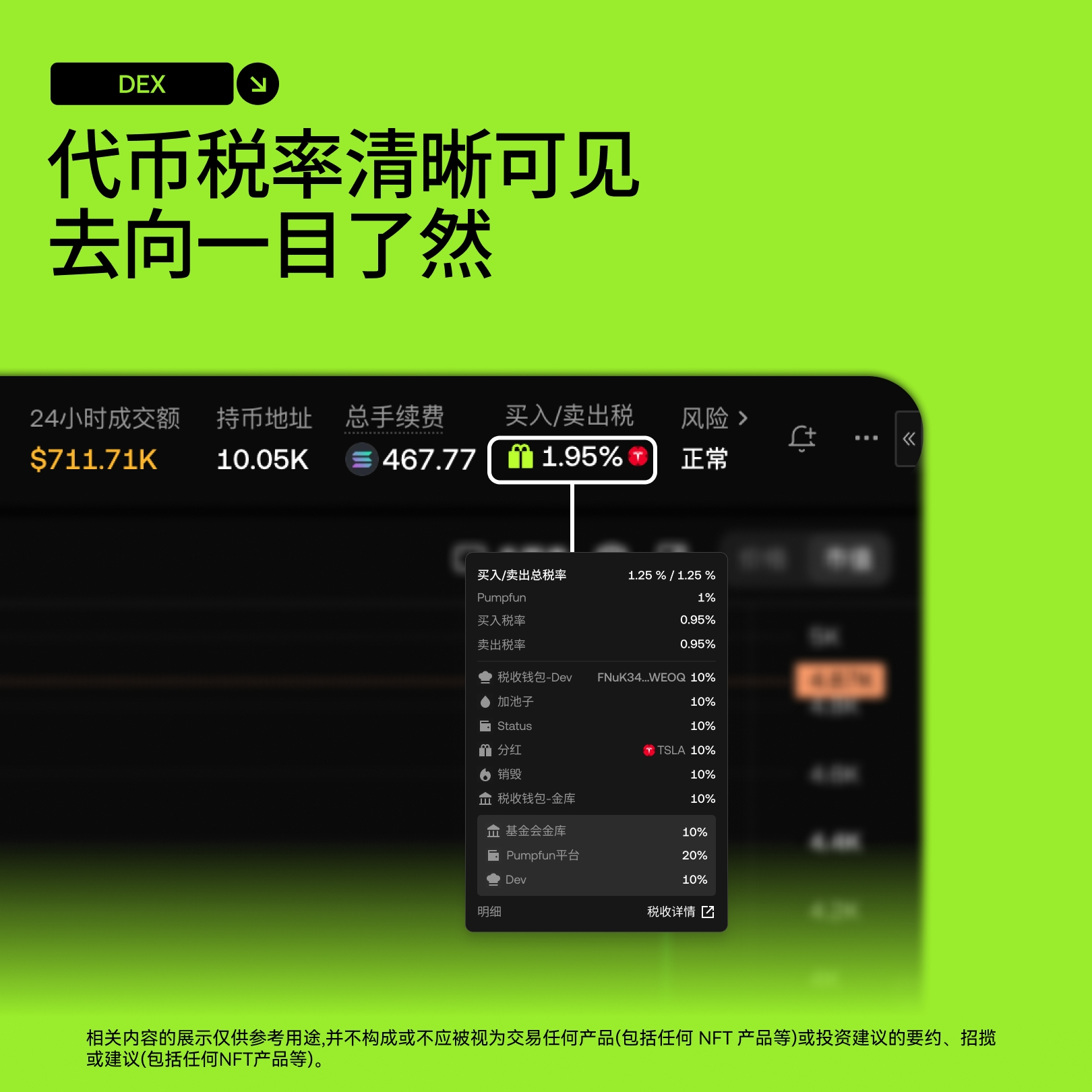
- Whether there are additional fees or tax rates on the token.
Especially during market closures, significant volatility, or low on-chain liquidity, token prices may deviate from the latest closing prices of traditional markets.
Therefore, users should treat tokenized stocks as a type of on-chain asset that requires separate study, rather than as interchangeable substitutes for traditional stocks.
How to find more valuable opportunities from the 400 million dollar increment?
Step 1: First look at asset categories, not just price changes
Users can first decide what they are observing:
- Broad-based indices;
- AI and semiconductors;
- Platform technology companies;
- High-volatility thematic assets.
Different categories correspond to different sources of risk. Focusing only on "who rose the most today" may lead to chasing short-term fluctuations while neglecting the logic of the assets themselves.
Step 2: Look at trading volume and liquidity
A large market capitalization does not necessarily mean active on-chain transactions, and the high visibility of traditional stocks does not guarantee that their tokenized versions have sufficient trading depth.
Before trading, one should check:
- 24-hour trading volume;
- The bid-ask spread;
- The impact of trading prices;
- Expected quantity acquired;
- Conditions for transaction failure;
- Whether there are buying or selling taxes.
Step 3: Observe the relationship between price and the underlying market
If the traditional market is trading, users can compare the underlying market prices and on-chain quotes; if the traditional market is closed, particular attention should be paid to on-chain liquidity and price deviations.
Step 4: Test execution paths with small amounts first
For first-time trades or unfamiliar assets, it is not advisable to invest large amounts directly. Instead, small trades can be made to confirm:
- Whether the contract address is correct;
- Whether the transaction can be completed normally;
- Whether the actual quantity received matches the estimate;
- Whether the selling path is available;
- Whether fees, network costs, and slippage are acceptable.
Step 5: Calculate both on-chain yield opportunities and price risks together
If users participate in stock-like RWA liquidity pools or lending, they should not look only at APY. They also need to consider:
- Price changes of underlying stocks;
- Impermanent loss;
- Price deviations between the token and reference assets;
- Insufficient liquidity;
- Liquidation risks;
- Smart contract risks;
- Price fluctuations of the reward tokens themselves.
Yield is an indicator at a given point in time, not a fixed commitment.
Why is OKX Wallet an important entry point for observing on-chain US stocks?
After the X Layer scale surpasses 400 million dollars, users need more than just a buy and sell button; they need an on-chain entry point that can complete "discovery—research—trading—management."
The advantages of OKX Wallet can be understood from four aspects:
Discovery
Users can observe stock-like assets, popular rankings, trading volumes, and market data through the token page.
Research
Users can make judgments based on market capitalization, trading volume, price-to-earnings ratio, price changes, and underlying company logic, rather than relying solely on social media messages.
Trading
Through X Layer and OKX DEX, users can conduct asset exchanges and portfolio adjustments on-chain. The official introduction of OKX DEX indicates that its routing will comprehensively compare liquidity, order splitting, prices, slippage, and network costs.
Management
After trading assets, users can continue to view holdings in the wallet, track prices, participate in on-chain applications, or perform further operations based on officially supported products.
A participation path suitable for beginners
- Open the official entry of OKX Wallet;
- Enter the stock or tokenized asset page;
- Start by understanding index assets like SPYx and QQQx;
- Then research single company assets like AAPLx, MSFTx, NVDAx, and TSLAx;
- Check fields like price, market cap, 24-hour trading volume, and price-to-earnings ratio;
- Verify contract addresses, issuance mechanisms, liquidity, taxes, and trading risks;
- Test with small amounts for the first use;
- Decide based on your plan whether to continue holding, trading, or participating in on-chain applications.
If choosing to participate in DeFi lending or liquidity pools, read the specific activity rules and product terms beforehand, and do not confuse the price increase of tokenized stocks with DeFi rewards.
Conclusion
The scale of X Layer tokenized stock assets reaching a historical high of 400 million dollars indicates that the market attention and application space for on-chain US stocks are expanding.
The core change it brings is not turning traditional stocks into risk-free crypto assets, but providing users with opportunities to encounter more stock-like assets on-chain and explore new combinations for holding, trading, and lending.
A truly valuable way to participate is not to chase scale breakthroughs immediately but to:
First look at asset mechanisms, then at trading depth; first calculate complete costs, then decide on trading scale; first confirm tokenized structures, then discuss yield spaces.
Exclusive benefits for AiCoin users
Use OKX Web3 Wallet to "invest in global assets!"
Bind the invitation code 【AICOIN88】 to enjoy a 20% saving on trading costs (Gas optimization and other benefits)!
Download/upgrade OKX Web3 Wallet now and catch the trend:
https://jump.do/xlink?checkProxy=true&proxyId=24
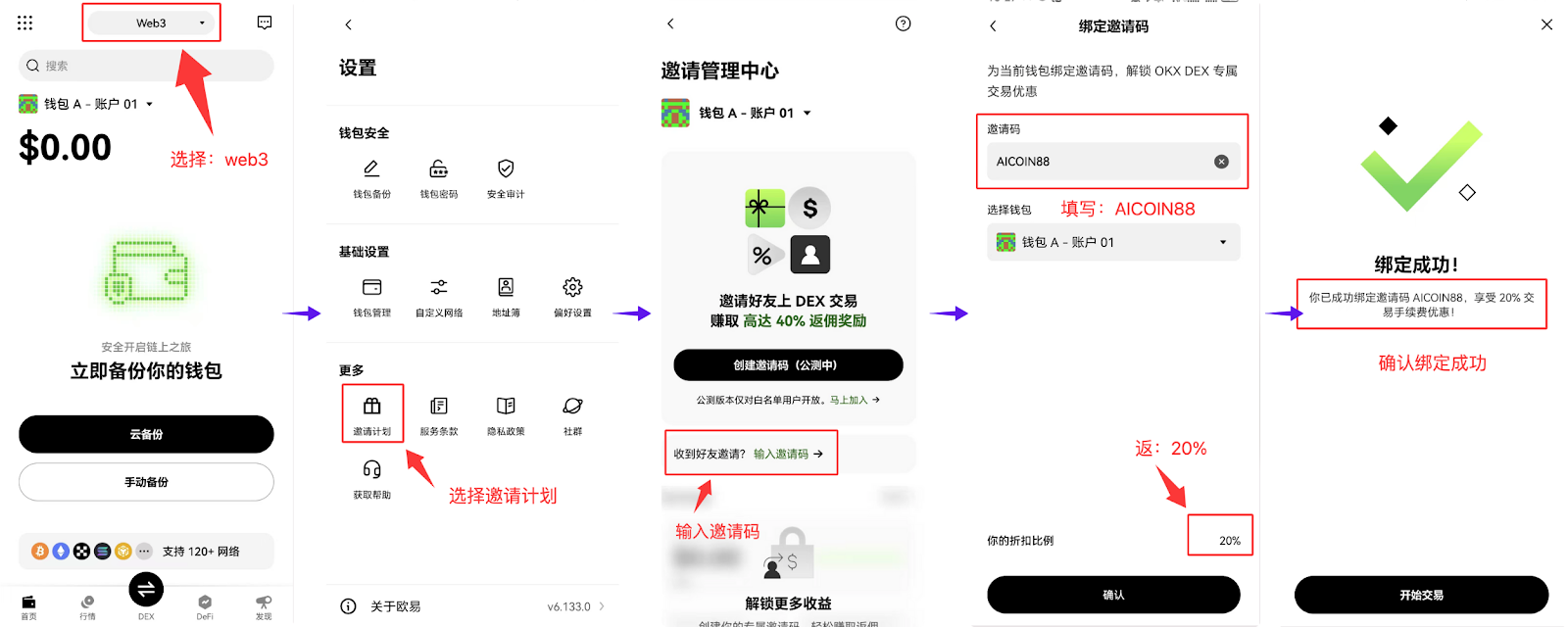
Use the exclusive invitation code 【AICOIN88】 to bind to OKX Wallet, the web version can also be easily operated!
https://web3.okx.com/ul/joindex?ref=AICOIN88
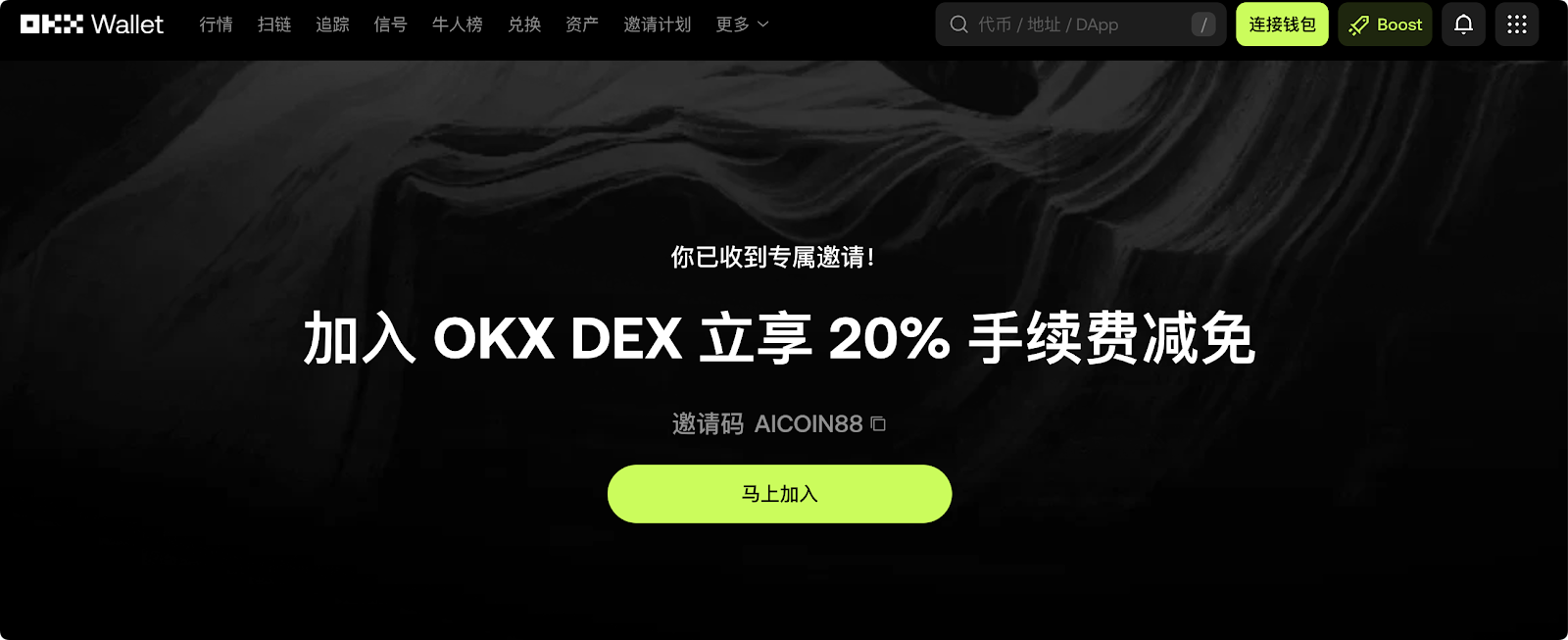
Don’t wait, set up your OKX Wallet, bind benefits, and gain new wealth!
免责声明:本文章仅代表作者个人观点,不代表本平台的立场和观点。本文章仅供信息分享,不构成对任何人的任何投资建议。用户与作者之间的任何争议,与本平台无关。如网页中刊载的文章或图片涉及侵权,请提供相关的权利证明和身份证明发送邮件到[email protected],本平台相关工作人员将会进行核查。