On the evening of November 16, on-chain detective MLM detected an abnormal withdrawal of 10.39 million USDC on Lighter, pushing Lighter into the spotlight of a security incident. A wallet initiated with about 10,000 dollars withdrew a large amount of funds from the platform, quickly converted it into ETH, and then dispersed it to different addresses. Meanwhile, the price of LIT briefly dropped by about 8%.
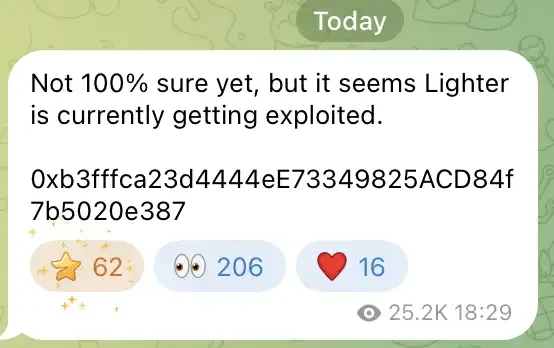
The news of "Lighter being hacked" quickly spread. However, as the flow of funds gradually became clear, subsequent analysis pointed the attack towards institutional accounts, with clues leading to Abraxas Capital. The attacker is suspected to have obtained its trading API key, using the permissions of the public pool to transfer the funds in the account to themselves. The Lighter protocol itself was not hacked.
The Attack Started with Small-scale Probes
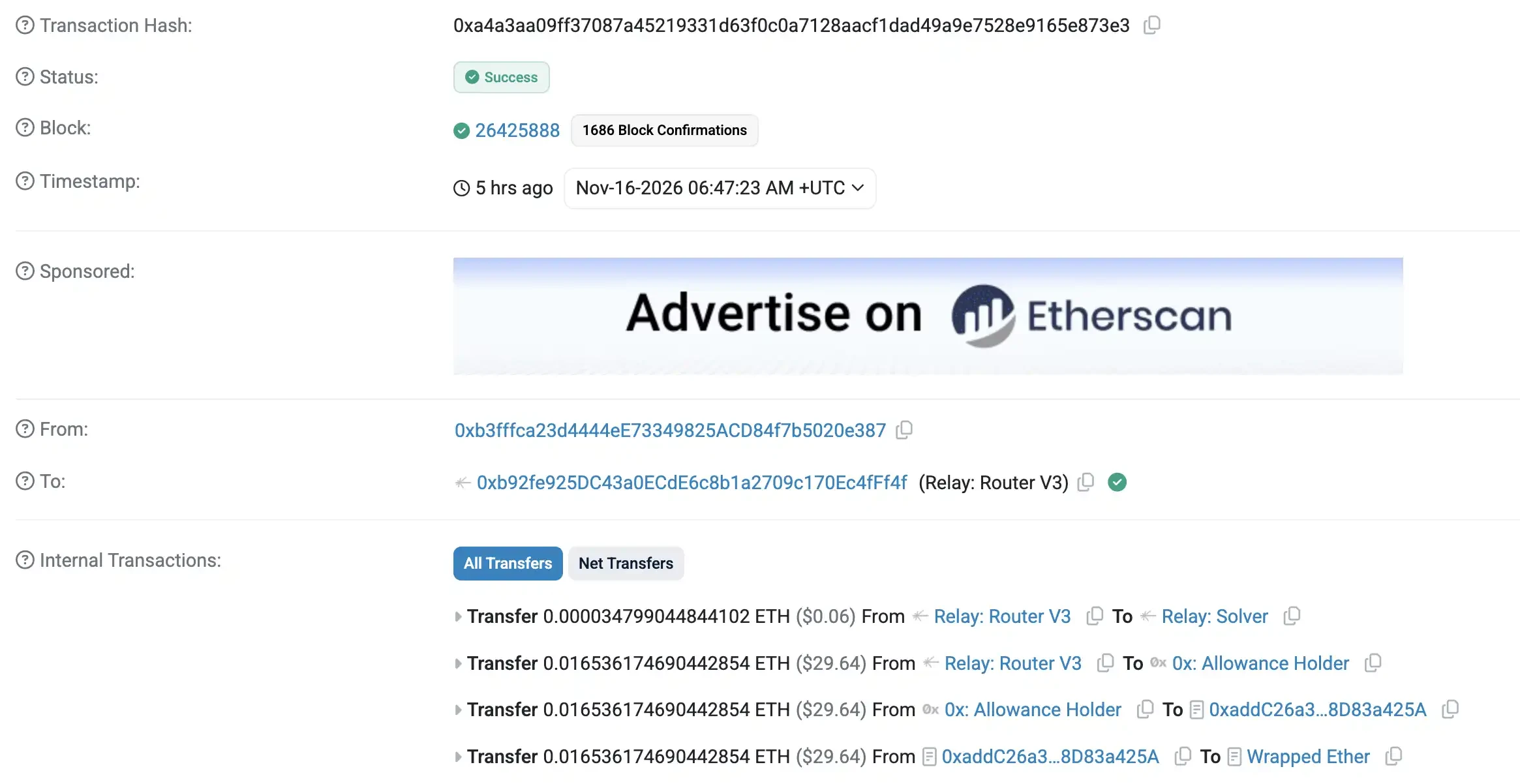
The attack address is a wallet ending in 0xb3ff, corresponding to Lighter account #769455. Its preparations began several hours earlier than the community alert.
At 14:47:23, this address used Relay routing to exchange a small amount of ETH for 29.959999 USDC, directly depositing it into Lighter.
At 16:45, approximately 10.5 thousand USDC arrived at this address via cross-chain transfer. At 17:35, the hacker deposited 10,200 USDC into Lighter, starting the preparations for the first round of operations.
At 17:40:10, Lighter account 714710 (the hacked account) created a public pool with a transaction fee of 0. Initially, the hacked account used 1 USDC to buy into the pool, while the hacker deposited 9,999 USDC into the pool, acquiring 99.99% of the shares.
This arrangement exploited two identities of the public pool.
For the pool creator (the hacked account), the public pool belonged to their Ethereum address, allowing internal fund transfers through the API without needing signatures. For external participants, the public pool allowed the purchase of shares and redemption of assets based on the holding proportion.
Normal subscriptions would result in corresponding share rewards. This time, the hacked account used "internal transfers," meaning that when funds entered the pool, it did not increase its corresponding shares. Therefore, the more money transferred into the pool, the more assets the attacker, who already held 99.99% of the shares, could redeem. This could perhaps be understood as a bug in Lighter.
The attacker first verified this path using 1 USDC.
At 17:44:13, the victim account transferred 1 USDC to the public pool. In less than 3 seconds, the attacker redeemed 9,999.9999 USDC. Subsequently, the attacker reinvested the funds into the pool, amplifying the same set of operations.
At 17:45, the victim account continuously transferred ten transactions of 1 million USDC each, followed by an additional approximately 384,000 USDC. At 17:45:38, the attacker redeemed about 10.393 million USDC and immediately initiated a mainnet withdrawal.
Timeline
At 18:11:47, the first withdrawal was completed. The Ethereum transaction receipt shows that the Lighter mainnet contract paid the attacking address 10,393,056.789298 USDC.

After obtaining the funds, the attacker again deposited 10,200 USDC into Lighter, applying the same method to the second victim account 714723.
At 18:25, the second public pool was created. The victim account contributed 1 USDC, and the attacker contributed 9,999 USDC, followed by another internal transfer and redemption test of 1 USDC. At 18:27, five transactions of 1 million USDC and a surplus amount entered the pool, and the attacker redeemed again. At 18:28:45, a second withdrawal request of approximately 5.097 million USDC was submitted.
At 18:29, MLM detected this outflow of funds in the tg channel.
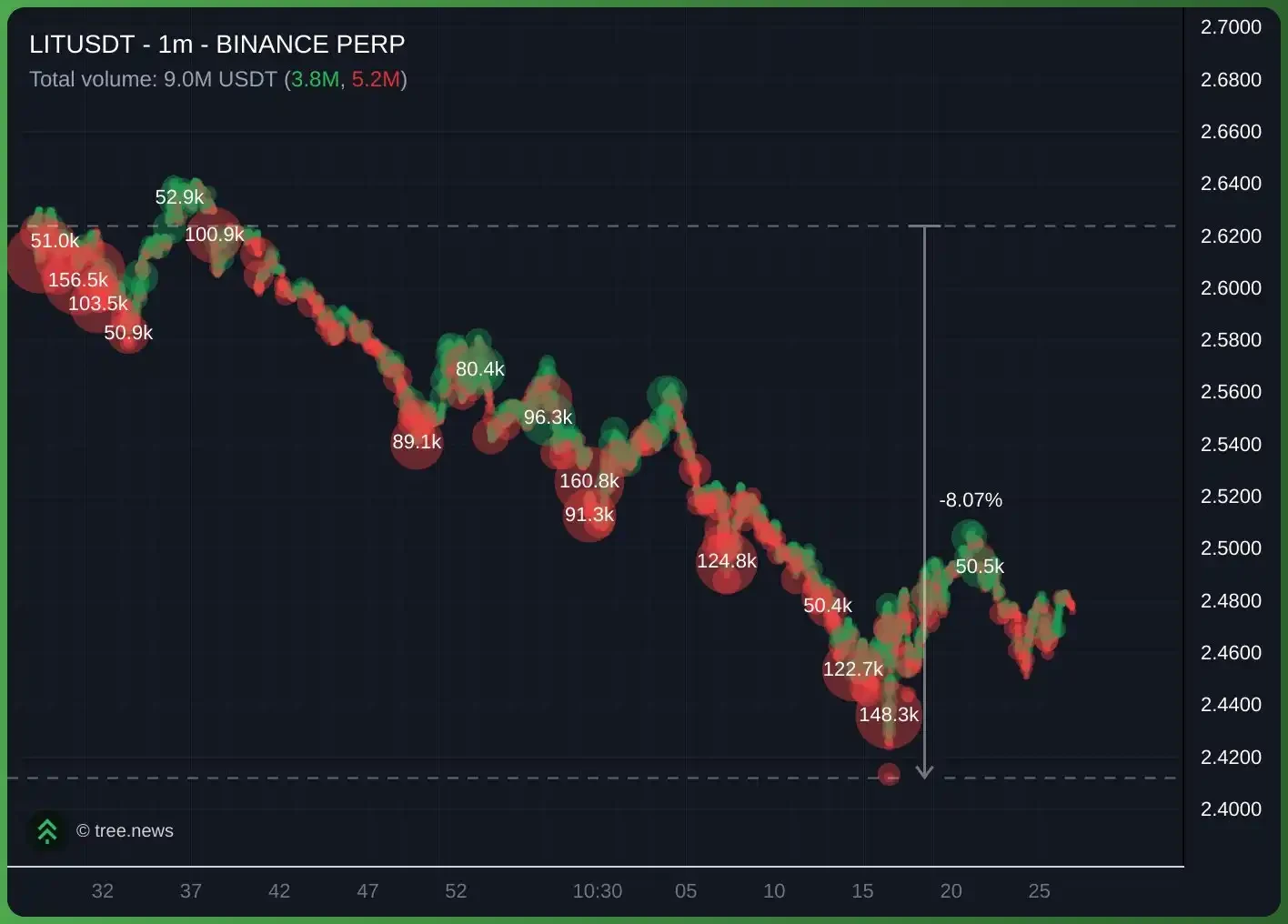
Binance's minute market data recorded an immediate sell-off. The LITUSDT perpetual contract opened at $2.725 at 18:29, dropping to as low as $2.3218 by 18:34, retracting about 14.8% within minutes.
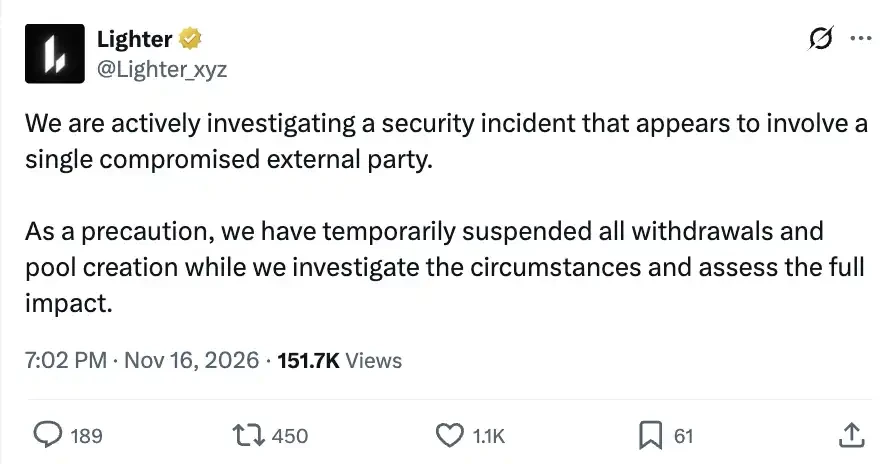
At 19:02, Lighter announced an investigation into the security incident, stating that it seemed to involve a single external entity, and preemptively paused all withdrawals and public pool creations.
Funds Entered Hyperliquid via Arbitrum
After the first withdrawal was credited, the attacker sold approximately 10.383 million USDC through six transactions, obtaining a total of 5,764.47 ETH equivalent assets.
Then, funds started to be split into batches of 160 ETH each.
For example, for the sub-address beginning with 0x63d09, at 18:19:59, it received 160 ETH from the main address. In less than two minutes, this sub-address called LiFi to execute cross-chain transactions through LayerSwap.
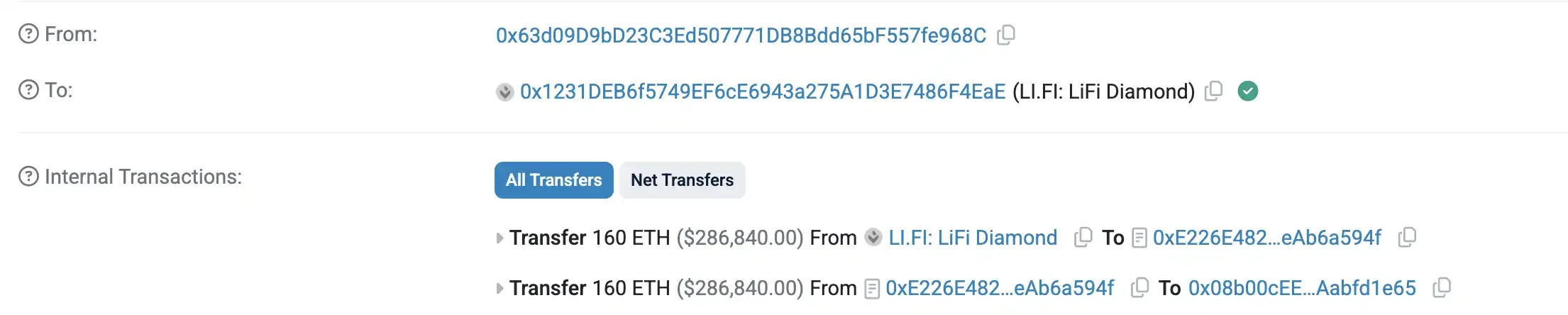
At 18:37, the same address on Arbitrum received 287,557.5548 USDC; at 18:39, it transferred the exact same amount to the Hyperliquid deposit bridge.

After the funds were transferred to the Hyperliquid spot account, the hacker continuously bought 552 XMR1 (Monero).
Other sub-addresses of the hacker repeated this route. ETH was transferred from Ethereum to Arbitrum, received USDC, and then entered Hyperliquid to purchase spot token XMR1.
Victim Accounts
Now let's take a look at the victims.
Lighter account 714710 corresponds to an Ethereum address that begins with 0x0d1D. On February 16, a previously marked Hyperliquid wallet, 0xb83de, transferred 0.1 ETH to it on Arbitrum to replenish its fees.
This record supports the assessment that the hacked Lighter account is related to Abraxas Capital.
According to our previous institutional introduction, Abraxas Capital was founded in 2002 in London by Fabio Frontini and Luca Celati, both from traditional banking backgrounds, initially engaging in global macro trading before shifting to digital assets in 2017. The Elysium Global Arbitrage Fund launched in 2018 began with cross-market arbitrage on Bitcoin and later expanded to stablecoin arbitrage. On-chain data shows that the assets managed by this institution consistently exceed 1 billion dollars.
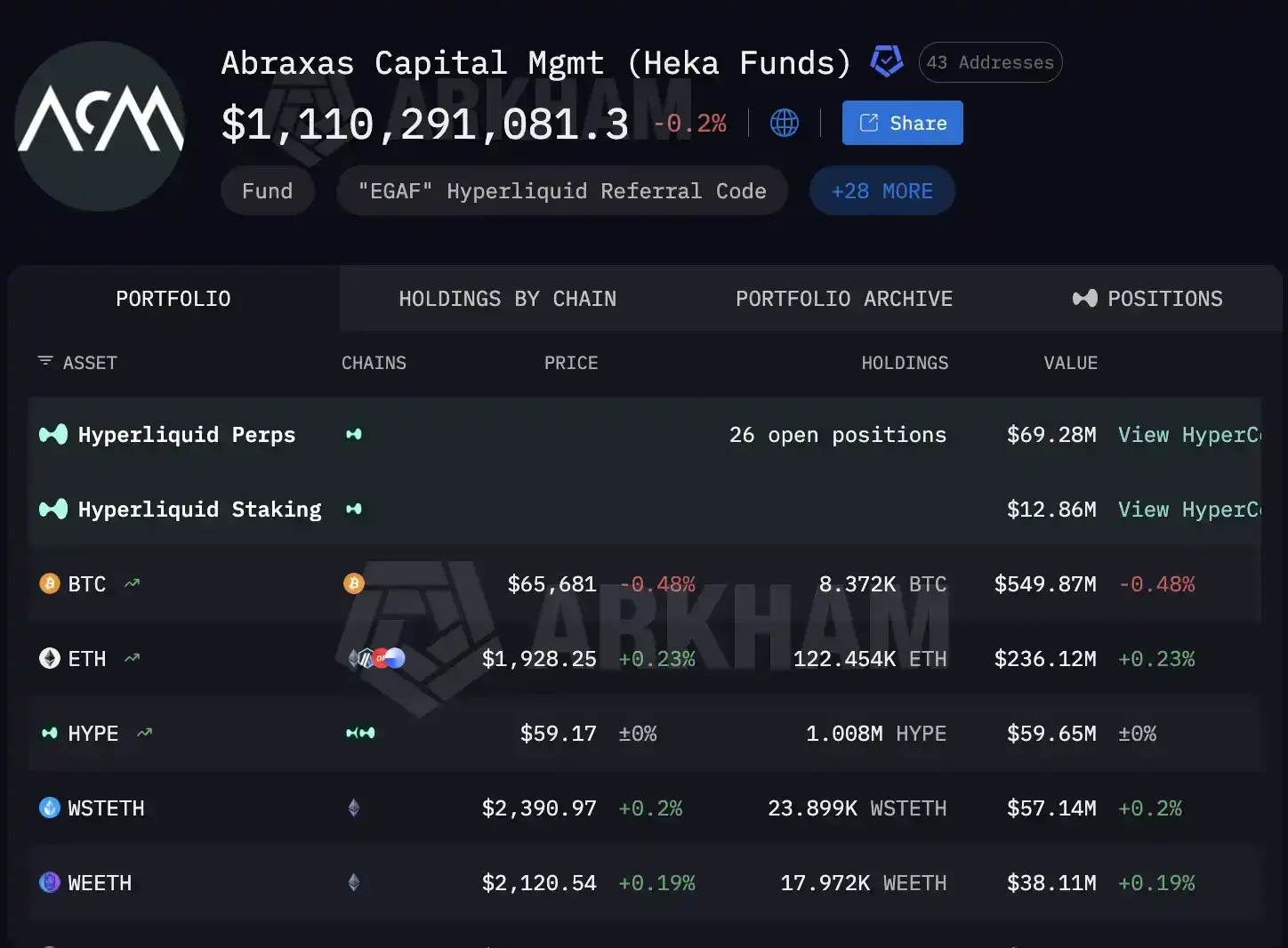
For institutions like this that rely on program trading, cross-platform adjustments, and capital turnover, maintaining APIs is part of daily operations; however, a single oversight allowed the leaked API to be exploited by hackers.
The tremors from the late October Binance hack had not yet subsided when Lighter also suspended withdrawals due to this security incident.
It can be expected that with the further development of AI, more funds will be cautious and even withdraw directly due to frequent security incidents. Hacker threats will continue to loom over the cryptocurrency industry for the long term.
免责声明:本文章仅代表作者个人观点,不代表本平台的立场和观点。本文章仅供信息分享,不构成对任何人的任何投资建议。用户与作者之间的任何争议,与本平台无关。如网页中刊载的文章或图片涉及侵权,请提供相关的权利证明和身份证明发送邮件到[email protected],本平台相关工作人员将会进行核查。


