On November 12, 2025, during discussions in South Korea regarding the regulation of on-chain Korean won tokens, Financial Committee Digital Finance Policy Officer Yoo Young-joon proposed an intriguing scenario: in the future, the Korean won token issuance alliance could be held by a majority of banks, while still allowing a technology company to become the single largest shareholder. This means that under a compliance framework dominated by banks, the real power may rest with the technology platforms responsible for the technology and traffic entry, rather than traditional financial institutions. With regulatory sentiment shifting, the token BP quickly surged about 44% during a positive diffusion period, only to then rapidly decline to around $1.094, with the price curve resembling a transactional vote on "who will dominate the Korean won on-chain." Alongside the redefinition of the boundaries of on-chain issuance rights, the chips of the technology assets themselves are also quietly rearranging: Jensen Huang has transferred about 58.96 million shares of Nvidia stock to heirs, with a nominal value of approximately $10.7 billion calculated at $181.93 per share at the time of the transfer, while at least 12 family offices, including Soros Fund Management, chose to reduce their holdings in Nvidia in the previous quarter, with Soros' family office cutting almost one-fifth. While the regulatory power around Korean won on-chain token regulation is being granted to tech giants, the representative tech asset Nvidia is witnessing founder stock transfers and family funding reductions, this set of parallel signals points to the same conclusion: both the regulatory landscape and technological chips are undergoing subtle adjustments, as technological power shifts from off-chain capital to on-chain token structural power redistribution.
Korean won token alliance opens up to technology major shareholders
At the token regulation forum on November 12, Yoo Young-joon first proposed the "basic version" structure of the Korean won token issuance alliance: composed of several banks holding more than half of the shares, forming a solid compliance control layer, then building a framework for issuance and clearing on-chain (according to Decenter). This design effectively locks the entry for Korean won tokens on-chain in the hands of traditional financial institutions, ensuring that the initial issuance rights and regulatory interfaces are controlled by a bank-led alliance, rather than an open technology community or market consortium.
The real turning point was his qualification: even if the banks hold a majority, technology companies can still become the single largest shareholders within the alliance (according to a single source). This suggests that regulators are willing to reserve a place for "on-chain discourse power" for technology platforms without relaxing overall control by the banks—this is not merely outsourcing technology but entering the equity and governance level. Local media quickly interpreted this statement as a signal that the Korean won on-chain token business is opening up to tech companies, with the ecological development of Korean won tokens likely evolving along the path of "banks overseeing compliance while tech platforms handle product forms and user engagement,” making tech giants structural shareholders on-chain and serving as key participants in the new alliance, where they must adhere to regulatory boundaries while participating in rule design.
BP token's calm after a 44% surge
As soon as the regulatory discourse indicated that tech companies could become the single largest shareholders in the Korean won token issuance alliance, the market quickly found a target to bet on. In the days following the news, according to single-source market data, the BP token saw an intraday peak increase of nearly 44%, and subsequently retraced a considerable portion of that gain, with the latest quote around $1.094. The shape of the price curve resembles a brief sprint surrounding the narrative of "Korea opening on-chain token equity to tech giants," rather than the result of any fundamental improvement in a specific project, as the chips flowed in and out, completing a typical emotional amplification and rapid cooling cycle.
From the perspective of trading motives, this rapid response to the regulatory expression is essentially a round of narrative-driven trading: regulatory officials threw out the idea of "banks collectively holding shares and tech companies being the largest shareholders," and participants began to price potential "tech platform + on-chain token" combinations in the secondary market. However, in the absence of BP token project background, team information, and direct business relationships with Korean regulators, this pricing is closer to an emotion projection on the materials rather than a rational discount on future cash flows or on-chain usage scenarios. The materials similarly did not provide any addresses, position structures, or on-chain funding data; current analysis can only remain at the level of public market information and news, unable to determine whether clear directional long positions exist behind this surge. Therefore, such price fluctuations are more suitable as windows for observing market sentiment rather than as verified on-chain trend signals.
U.S. regulatory approval of Backpack and the new order of Korean won tokens
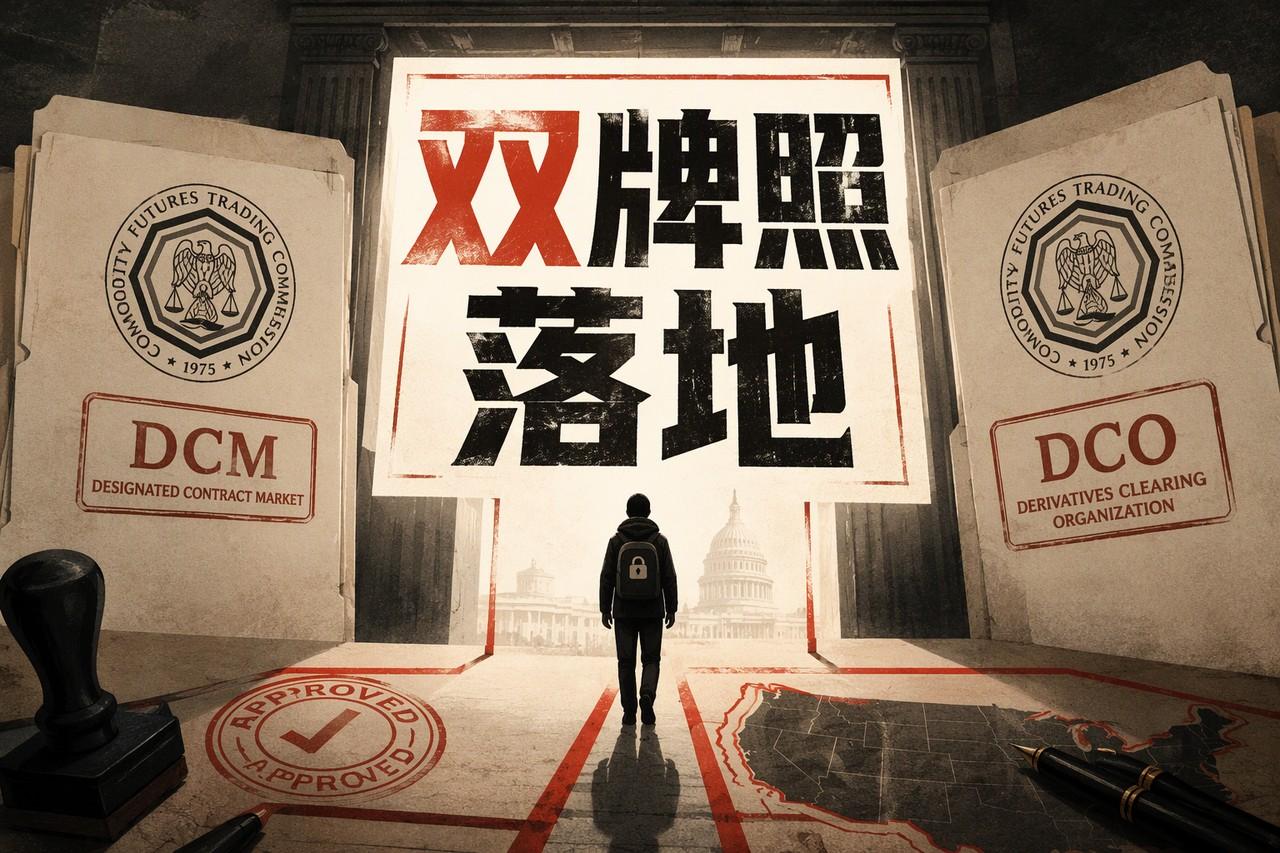
Almost simultaneously with South Korean regulators reserving control for tech companies within the Korean won token issuance alliance, the U.S. has also taken a step concerning on-chain financial infrastructure. According to public information, Backpack has received approval from the U.S. CFTC, obtaining a Designated Contract Market (DCM) and Derivatives Clearing Organization (DCO) license, planning to establish a blockchain-based derivatives trading platform and clearing organization in the U.S. This means that the previously considered "gray area" of on-chain contract matching and settlement is starting to be integrated into the mainstream derivatives regulatory framework in the U.S., and the attempt in Korea to design a “bank + technology” co-management structure for Korean won tokens resonates with the same underlying intention under different regulatory systems: on-chain infrastructure is no longer just a technical experiment but is being seen as a financial foundation that can be institutionalized.
From a regulatory perspective, behind the Korean won token is the on-chain bookkeeping of payment layers, while Backpack targets the on-chain clearing of derivative layers; both are still in the early exploration phase and have yet to see large-scale user or transaction data that can prove "widely adopted by the market." However, the direction remains highly consistent—payment tokens and on-chain derivatives are simultaneously moving toward a new order of compliance. One is about redistributing discourse power within the issuance alliance, allowing banks and tech platforms to jointly bear responsibility; the other is about delineating boundaries for on-chain trading and clearing within the U.S. derivatives regulatory system. As these two pathways progress in parallel, the transition of on-chain finance from the tool level to the infrastructure level is no longer just a technical community concept but is becoming a policy option that various countries' regulatory bodies are willing to openly discuss and attempt to implement.
Jensen Huang's stock transfer and family offices reducing tech holdings
Around the same time regulators are redrawing boundaries for on-chain finance, Jensen Huang, who has long led Nvidia, chose to complete an astonishingly large equity restructuring before officially stepping down—approximately 58.96 million shares of Nvidia stock were transferred to heirs. At the time, calculated at $181.93 per share, this transfer had a nominal value of about $10.7 billion, even recalculated at the current stock price is still around $9.2 billion. Reports emphasized that this stock transfer occurred just before he officially stepped down; however, the specific date, transfer pathway, and tax arrangements were not disclosed, leading the outside world to interpret this as a family-level chip redistribution rather than a simple reduction for cashing out from the scale and timing perspective.
Echoing the founder family's internal completion of equity transfer is the slight "shrinkage" of external long-term capital in the same tech asset. According to Barron's Weekly and references from SEC documents, at least twelve family offices reduced their holdings in Nvidia in the previous quarter, with Soros Fund Management cutting nearly one-fifth, making it one of the larger tech stock reductions reported this year. Data from Golden Finance Morning News indicates that the probability of the Federal Reserve raising interest rates by 25 basis points in its December meeting is around 95.7%. In the environment of high-interest rates and rate hike expectations, the specific number of shares and motivations behind these reductions have not been made public, leading the outside world to interpret this as a "chip adjustment" on core tech assets: not a sell-off, nor a retreat, but quietly adjusting Nvidia from an absolute heavy holding to a more controllable weight. At the intersection of the founder's stock transfer and family offices reducing holdings, the capital structure of tech assets is changing in a slow yet clear manner.
From Korean won on-chain tokens to Nvidia equity, regulatory and capital follow-up
From the alliance design of Korean won on-chain tokens to Backpack obtaining DCM and DCO licenses, this round of regulatory breakthroughs is not an isolated event but is redefined for on-chain finance: on one end is the Korean won token issuance alliance controlled by banks, which allow tech companies to become the single largest shareholders, while on the other end is an attempt to shift derivatives trading and clearing onto the chain within a compliant infrastructure. Together, they indicate "moving core financial functions onto the chain, but still firmly tied within the regulatory framework." According to AiCoin data, after a quick surge of about 44% around this narrative, the BP token has retraced to approximately $1.094, amplifying this structural change into a typical emotional test in pricing: regulatory positives can ignite short-term trading, but when specific terms, timelines, and product forms are not yet fully established, the market will quickly re-evaluate the impulse for chasing prices back into a more cautious risk preference. Correspondingly, there’s a slight adjustment in Nvidia’s chip structure between the founder's stock transfer and the reductions from multiple family offices—no definitive sell-off, but a quiet return of the weight of "core tech assets" to a more controllable range under high-interest rate expectations. The ways for the equity opening of on-chain Korean won tokens, the progress in constructing Backpack’s compliance platform, and the changes in long positions and equity arrangements of tech giants like Nvidia form a coordinate system of regulatory and capital restructuring; in the coming period, what truly deserves attention is the policy documents, the physical realization of alliances and platforms, and whether the slow rearrangement of technology asset holding structures continues along the trajectory that has already begun to emerge today.
Join our community to discuss and grow stronger together!
AiCoin exclusive Hyperliquid benefit: https://app.hyperliquid.xyz/join/AICOIN88
AiCoin exclusive Aster benefit: https://www.asterdex.com/zh-CN/referral/9C50e2
On-chain Telegram community: https://t.me/AiCoinWhaleData
On-chain community: https://www.aicoin.com/link/chat?cid=N6OVMor5g
AiCoin on-chain Twitter: https://x.com/aicoinwhaledata
免责声明:本文章仅代表作者个人观点,不代表本平台的立场和观点。本文章仅供信息分享,不构成对任何人的任何投资建议。用户与作者之间的任何争议,与本平台无关。如网页中刊载的文章或图片涉及侵权,请提供相关的权利证明和身份证明发送邮件到[email protected],本平台相关工作人员将会进行核查。