Dr. Deng Shuming, Visiting Professor at the Department of Geography, Faculty of Engineering and Data Science, and Faculty of Social Sciences, The University of Hong Kong
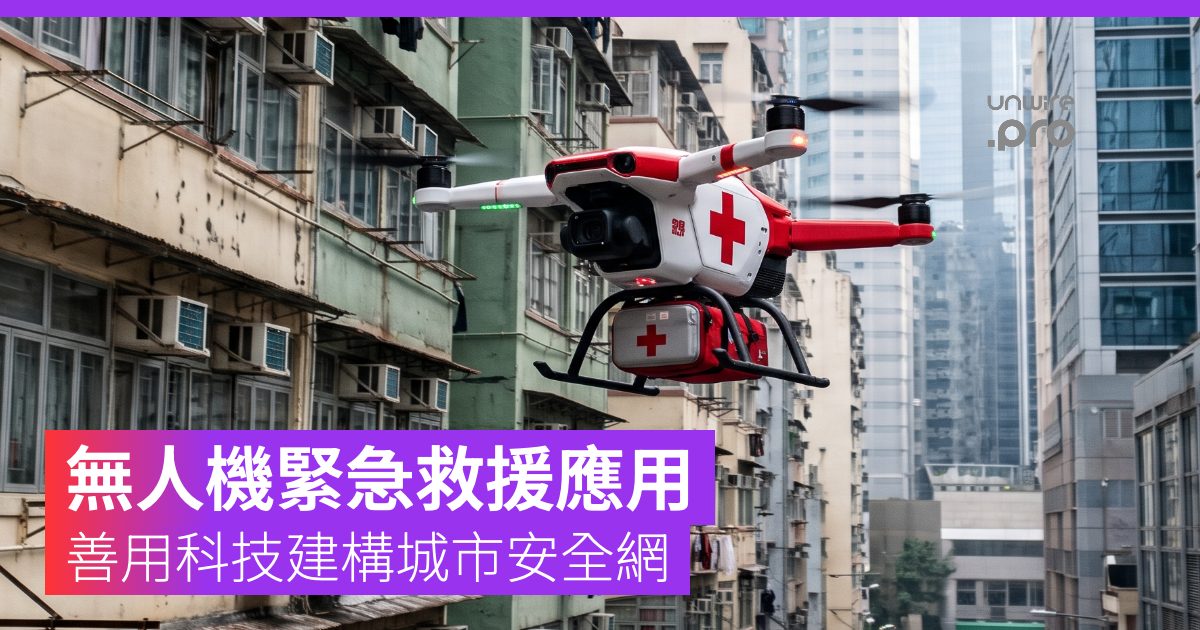
Emergency rescue services race against time; any slight delay can affect the safety of those in need of help. Although Hong Kong has efficient emergency medical services, the risk of rescue delays significantly increases when faced with some dense and narrow streets, as well as tong lau buildings without elevators.
A student team from Chinese University of Hong Kong conducted a special study on the risks of emergency rescue in Sham Shui Po and planned a drone emergency medical delivery network. The team utilized Geographic Information Systems (GIS) to integrate diverse data to identify high-risk aggregation areas and assessed the suitability of rooftop takeoff and landing conditions using a three-dimensional network, then developed the optimal drone flight routes. The team also recommended that the service operate in conjunction with an application and interface with Hong Kong's existing "Safe Bell" alarm system and the Hospital Authority's "HA Go" platform, making the drone service more relevant to the needs of the elderly.
In fact, drones have become an important tool for emergency rescue today. Last year, the authorities used "Advanced Mobile Location Service" (AML), combined with aerial drone searches, eventually successfully locating an injured and trapped missing hiker in a dried-up creek. In July this year, continuous heavy rain in Guangxi caused multiple towns to be surrounded by floods with power and internet outages. The authorities not only dispatched drones to deliver drinking water, medicines, and rescue supplies like inflatable boats to those stranded but also used drones to carry 4G public network base station equipment and communication satellite signals to build a "wireless router" in the air, temporarily restoring communication in the villages.
Proper use of technology can not only optimize emergency rescue processes but also lay a crucial safety net for cities. The author is pleased that the "Policy Address" proposed establishing a central drone management system and installing drone storage facilities to expand automatic patrol coverage, allowing for rapid arrival at the scene during the early stages of emergencies to provide immediate observation. It is believed that by expanding the application of technology and strengthening our emergency rescue system, we can further enhance social security guarantees.
The Battle of Autonomous Driving Solutions: Who Will Better Capture the Future Market, Nvidia, Horizon, or BYD?
The Monetary Authority Partners with Swift to Explore Tokenized Deposit Cross-Border Settlements, Financial Transfers May No Longer Be Restricted by Business Hours
This article is reproduced from unwire.pro, and the copyright belongs to the original author and original media.
免责声明:本文章仅代表作者个人观点,不代表本平台的立场和观点。本文章仅供信息分享,不构成对任何人的任何投资建议。用户与作者之间的任何争议,与本平台无关。如网页中刊载的文章或图片涉及侵权,请提供相关的权利证明和身份证明发送邮件到[email protected],本平台相关工作人员将会进行核查。


