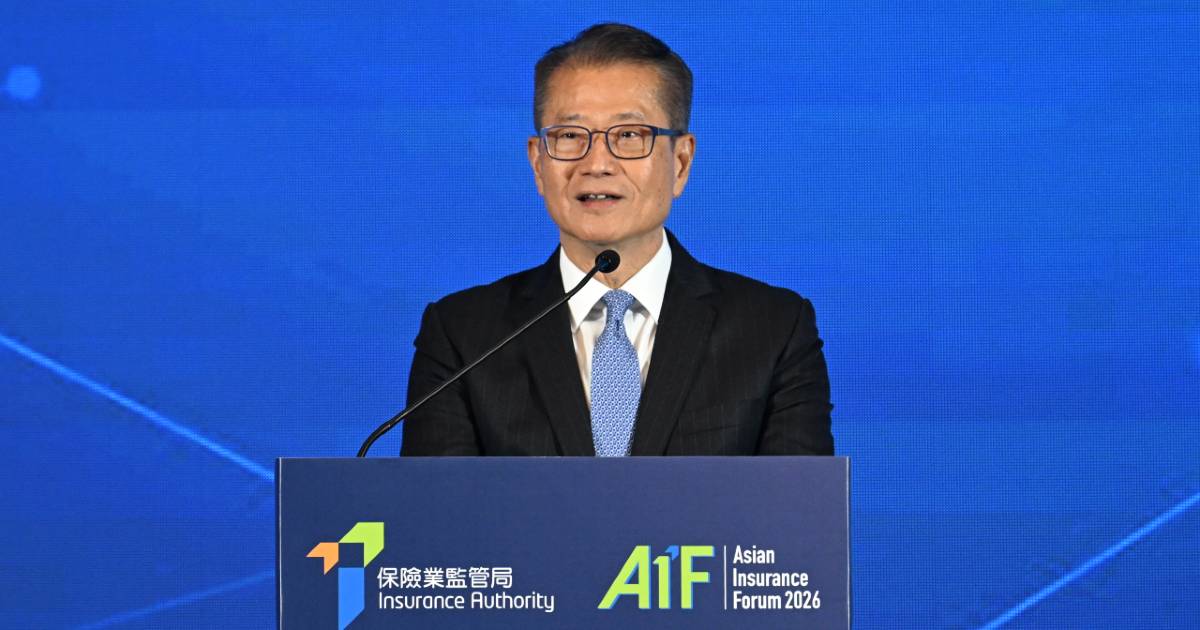
The Financial Secretary Paul Chan said in a speech at the third International Shipping Alliance Hong Kong Global Shipping Trade Summit that Hong Kong's port growth strategy will upgrade from "volume" to "value", focusing on the development of high-value shipping services such as bulk commodity trade, marine insurance, and green fuel refueling. The government will submit legislation within this year to introduce the much-anticipated dual registration arrangement for vessels by the industry.
Paul Chan pointed out that container handling at the terminal only earns processing fees, while the financing, insurance, management, fuel, and arbitration behind the voyage are where the value lies. For example, bulk commodities account for more than half of the shipping cargo volume, and the mainland receives a quarter of the world's shipping goods. The Legislative Council is currently reviewing a bill to provide a half-tax concession on profits tax for physical commodity trade. In terms of insurance, Asia builds 90% of the world's new ships, but about half of the hull premiums are still underwritten in Europe. Hong Kong already has the first local headquarters mutual insurance association and "shipping special risk pool." Regarding green fuel, the mainland accounts for about 60% of the global production capacity of green methanol, while Hong Kong's positioning is "manufacturing and storage in South China, refueling and trading in Hong Kong, serving global vessels."
He said that data application has also seen progress, with nearly 10,000 businesses registered since the launch of the port community system in January. The CargoX project led by the Monetary Authority has 21 banks participating in testing and has so far approved about 10 trade finance applications, with loan amounts reaching 180 million. Hong Kong is also reviewing maritime laws to test autonomous vessels in local waters. The advantages of "one country, two systems" will not change; Hong Kong remains a free port and a separate customs territory, insisting on free trade and zero tariffs. Last year, the average stay of ocean-going container ships in the port was about one day, while the top twenty container ports worldwide were two days, earning Hong Kong the nickname "overtime port."
Regarding the global situation, Paul Chan stated that trade this year has been stronger than expected, with the World Trade Organization raising its 2026 goods trade growth forecast from below 2% in March to nearly 4%. However, three major trends are reshaping the shipping industry. The first is the regionalization of trade, with container transport volume within Asia growing nearly 9% in the first half of the year, and the ASEAN region's share of Hong Kong's commodity trade increasing from less than 13% in 2020 to nearly 16% this year.
He noted that the second trend is green transformation, with nearly half of the contracted vessels capable of using alternative fuels, but only 25 ports globally provide methanol refueling. The third trend is artificial intelligence, with related products accounting for nearly half of global goods trade growth in the first half, but port operations are constrained by dispersed data, resulting in slower effectiveness; he believes that whether ports will be selected in the future depends more on the reliability of rules, the ability to save time, and the services behind them, in addition to their scale.
Paul Chan also proposed three areas of cooperation. He cited estimates from WTO economists that if the world splits into opposing camps, global output would lose about 5%, and he hopes that all economies resist protectionism. Ports should also strengthen connections, as research shows that if container ships know their berth times early, they can save about 14% fuel on a journey.
He mentioned that in terms of talent, the global fleet currently lacks about 39,000 senior seafarers and will need an additional approximately 114,000 by 2030. The Hong Kong Maritime and Port Development Council has signed a memorandum of cooperation with the International Shipping Alliance Academy, and the government plans to establish a maritime academy with renowned universities and shipping enterprises.
This article is reproduced from the Xinbao, and the copyright belongs to the original author and original media.
免责声明:本文章仅代表作者个人观点,不代表本平台的立场和观点。本文章仅供信息分享,不构成对任何人的任何投资建议。用户与作者之间的任何争议,与本平台无关。如网页中刊载的文章或图片涉及侵权,请提供相关的权利证明和身份证明发送邮件到[email protected],本平台相关工作人员将会进行核查。


