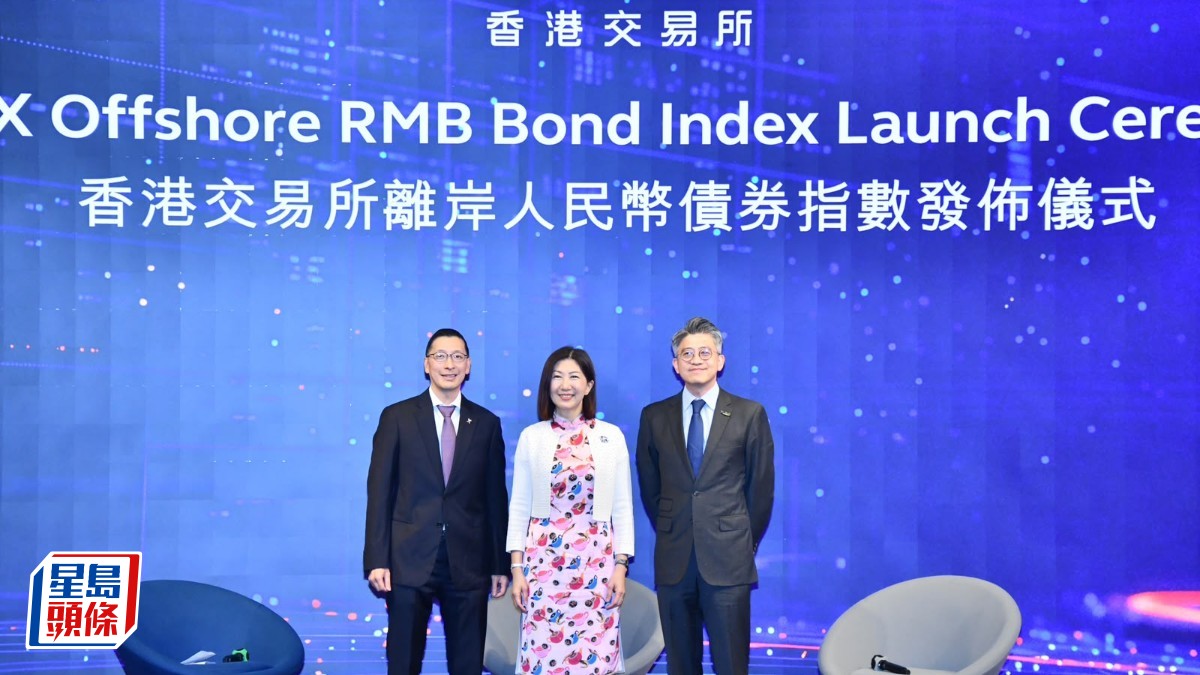
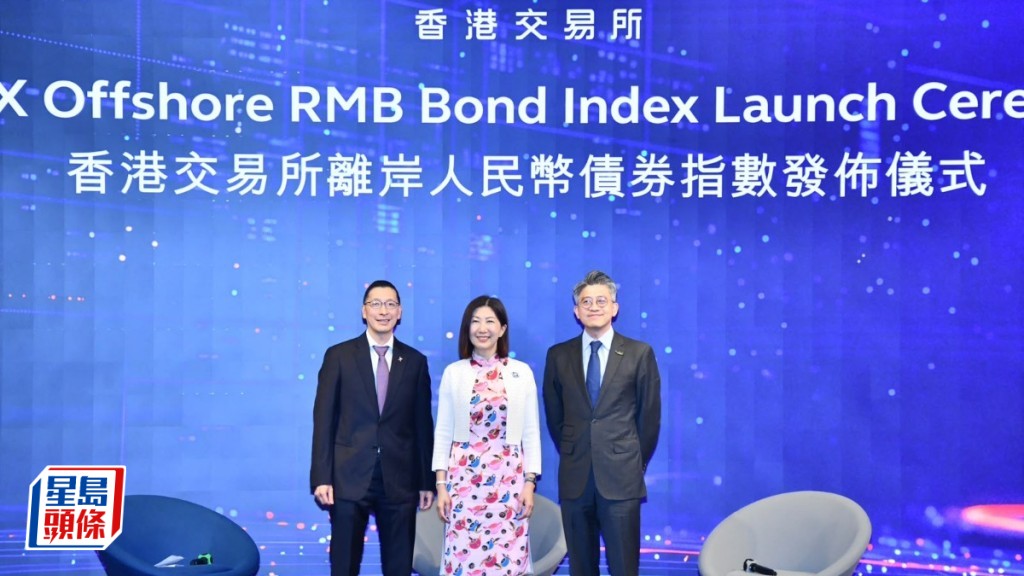
The Hong Kong Stock Exchange (388) announced today (19th) the launch of the "Hong Kong Stock Exchange Offshore RMB Bond Index," which is the first named fixed income index of the Hong Kong Stock Exchange and also the first benchmark index in Hong Kong tracking dim sum bonds issued in Hong Kong. The Hong Kong Stock Exchange stated that the new index provides investors with a transparent and representative market reference, supports product innovation, and further reflects the Hong Kong Stock Exchange's commitment to developing the offshore RMB ecosystem in Hong Kong.
The Hong Kong Stock Exchange collaborated with Bloomberg to develop a joint offshore RMB bond index series, which was also launched today, including the Bloomberg-Hong Kong Stock Exchange Offshore RMB Bond Index, Bloomberg-Hong Kong Stock Exchange Offshore RMB 1-3 Year Bond Index, Bloomberg-Hong Kong Stock Exchange Offshore RMB 3-5 Year Bond Index, among 8 indices, for use in passive and active investment strategies, benchmark comparisons, and market analysis. Additionally, 12 asset management companies, including Bank of China International, Prudential Asset Management, Southern Eastern Asset Management, and Daiwa International Asset Management, have completed index licensing arrangements with Bloomberg and are actively preparing to launch exchange-traded funds (ETFs) and index funds tracking the relevant joint index series.
The Financial Secretary, Chan Mo-po, also pointed out that the index serves as a landmark on the city skyline; a good index can provide a recognizable reference point for the market, showing market participants where the market stands and how it moves. The "Hong Kong Stock Exchange Offshore RMB Bond Index" launched today tracks over 300 RMB bonds listed in Hong Kong and provides investors with a clear benchmark for measuring market performance; at the same time, it lays the foundation for index-linked products, making investment in these bonds more convenient.
He continued to state that the internationalization of the RMB is entering a new stage, and with regional trade ties becoming increasingly close, the RMB is playing a greater role. In the first half of this year, China's cross-border RMB payments exceeded 42 trillion yuan, growing more than 20% year-on-year. Trade allows the RMB to enter international use, and to sustain this kind of use, businesses and investors need more avenues to invest their RMB assets for returns, which require deep liquidity markets and financial tools for managing related risks.
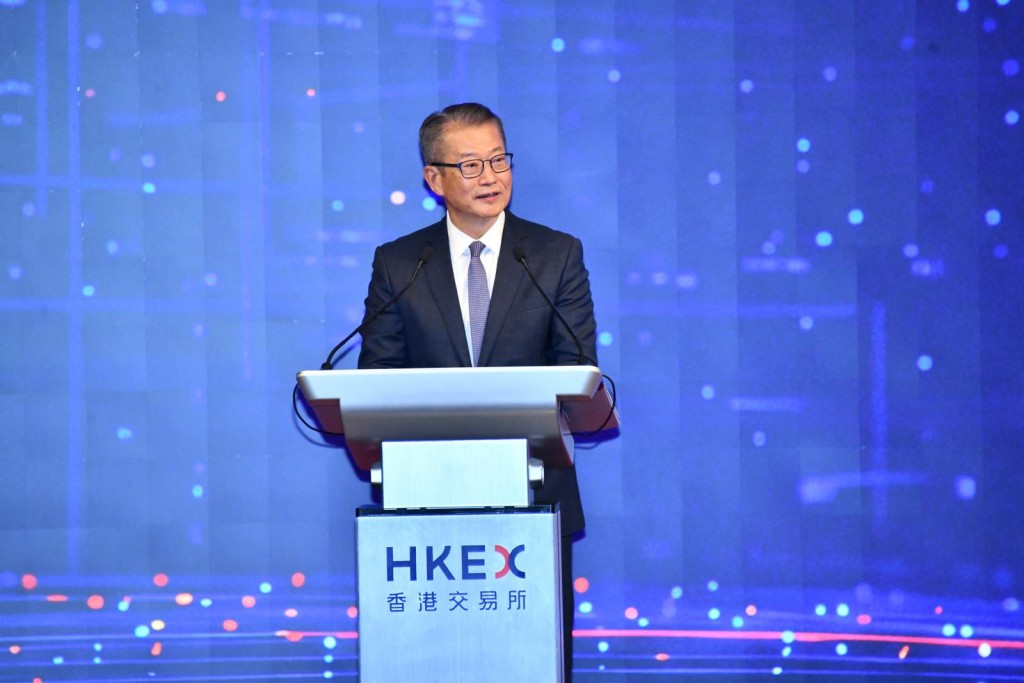
Chan mentioned that with the support of the mainland government, Hong Kong’s offshore RMB market continues to deepen. The 5-year Chinese government bond futures launched in August had transactions of over 998,000 contracts within the first 3 months, with a nominal value exceeding 50 billion yuan; government bonds and policy bank bonds can be used as non-cash collateral. Since 2009, the Ministry of Finance of China has issued government bonds in Hong Kong for 18 consecutive years, cumulatively issuing over 500 billion yuan. These bonds have always been an important cornerstone of the Hong Kong market. Furthermore, an increasing number of overseas governments, enterprises, and multilateral development banks are choosing to raise RMB funds in Hong Kong, making RMB financing a more competitive cost choice in the market.
He also stated that Hong Kong's offshore RMB ecosystem is now largely formed. In terms of stocks, investors can trade Hong Kong stocks in RMB in over-the-counter transactions, and there is also research being conducted to incorporate RMB counters into the Southbound trading. In the fixed income area, the Bond Connect provides cross-border investment channels; the Swap Connect and Chinese government bond futures allow investors to manage interest rate risks. The new index is an important piece of this puzzle, providing a benchmark for offshore RMB bonds listed in Hong Kong. The current clear goal is to make Hong Kong the preferred market for global enterprises and investors to raise RMB funds, invest in RMB assets, and manage RMB operations.
The Chairman of the Securities and Futures Commission, Huang Tianyou, stated at the same occasion that the important significance of the index lies in creating value, including that investors and asset management institutions can use it to build investment portfolios and measure performance; issuers can establish ETFs, index funds, and other benchmark-linked products around it; futures and swaps can use it to serve different investment strategies and risk preferences. The index thus begins to generate a multiplier effect, where higher-quality benchmark indicators can support quality information; quality information helps make more informed investment decisions; and wise investment decisions can further deepen the market.
He continued to say that Hong Kong is not only a gateway between mainland China and international capital, but can also further become a deeper market for RMB assets that allow capital to stay, invest, and grow. Based on this, Hong Kong needs not only an issuance mechanism but also liquidity, transparency, reliable pricing, and a wider range of products to increase investor confidence. A credible benchmark is part of the market infrastructure, which is also aligned with the current work of the SFC, the Monetary Authority, and other market stakeholders, including deepening Hong Kong's fixed income and currency markets, broadening investor options, and strengthening Hong Kong’s role in the continued internationalization of the RMB.
The Chairman of the Hong Kong Stock Exchange, Tang Ka-shing, stated during the index opening ceremony that the launch of the index will not only help consolidate Hong Kong’s strong primary issuance business but also support more product innovations in the secondary market; expand the participation of investors; and enhance bond issuance through Hong Kong’s market infrastructure.
He further stated that the "Hong Kong Stock Exchange Offshore RMB Bond Index" is a flagship index, backed by a broader range of sub-indices and custom index series, and the overall index will promote the fixed income market ecosystem towards higher debt scale, greater liquidity, and stronger investment attractiveness.
The CEO of the Hong Kong Stock Exchange, Charles Li, stated that the launch of the "Hong Kong Stock Exchange Offshore RMB Bond Index" will drive Hong Kong's fixed income market to move from product issuance to a more complete ecosystem, enhancing market depth, liquidity, and investability.
Bloomberg’s Asia-Pacific President, Li Bing, also pointed out that the continuous advancement of RMB internationalization brings significant opportunities for Hong Kong to further solidify its role as a global leading financial center and an offshore RMB hub. The development of the dim sum bond market is an important part of this process, connecting global investors with RMB-denominated assets.
Data shows that as of September 30 this year, the issuance scale of offshore RMB bonds exceeded 590 billion yuan, and the total amount of bonds issued on the Hong Kong Stock Exchange this year has also increased by 18.6% compared to the total for last year. Starting from 2024, 50% of all dim sum bonds issued on the exchange will be chosen to be issued through the Hong Kong Stock Exchange.
This article is reprinted from Sing Tao Headlines, with copyright belonging to the original author and original media.
免责声明:本文章仅代表作者个人观点,不代表本平台的立场和观点。本文章仅供信息分享,不构成对任何人的任何投资建议。用户与作者之间的任何争议,与本平台无关。如网页中刊载的文章或图片涉及侵权,请提供相关的权利证明和身份证明发送邮件到[email protected],本平台相关工作人员将会进行核查。


