
In 2026, the AI circle undoubtedly considers world models one of the hottest yet most chaotic concepts. Scholars like Yang Likun and Li Feifei have jumped in, with embodied intelligence and robotics companies all following suit, as if the end goal of world models is destined to simulate physical laws and drive physical machines.
However, one question is, apart from the physical world, wouldn’t a specialized world model be even more necessary for the business world, which encompasses commercial rules, user decisions, and business causality that form the consumer loop?
AI Agents also find themselves in an awkward situation. The vast majority of deployed products remain at the edges of customer service Q&A, content generation, and spreadsheet organizing, with very few intelligent agents reaching deep into the core chains of sales and operations, autonomously completing long-term tasks and directly creating revenue.
The real pain points presented here indicate that it is not that current model capabilities are insufficient, but rather that current AI is not yet prepared to enter real business scenarios for long-term training and validation.
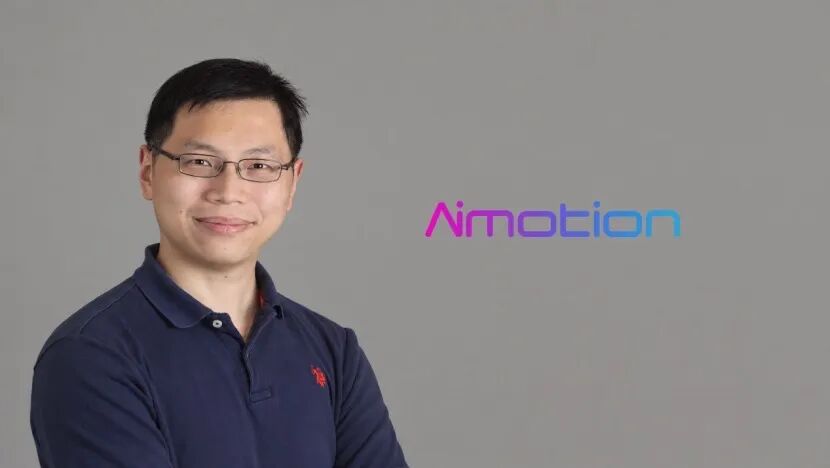
However, recently, the Silicon Valley-based commercial AI company Aimotion announced that renowned AI scientist Li Mu has taken on the role of co-founder and CTO to fully helm the next-generation industrial-grade AI technology system. At the same time, Li Mu will maintain his position as co-founder and CTO of Boson AI, with the two parties collaboratively tackling industrial-grade world models and commercial AI Agent technology.
A top AI scientist deeply involved in foundational models and a company that has already entered the automotive marketing scene have sent a clear signal: the true value realization period for commercial AI is about to begin.

Li Mu's New Choice
Within the domestic AI practitioner circle, Li Mu is recognized as a representative of “technical prowess.” He graduated with a bachelor's degree from Shanghai Jiao Tong University and later obtained a Ph.D. in Computer Science from Carnegie Mellon University. He served as a senior chief scientist at Amazon AWS and is one of the core contributors to the open-source deep learning framework Apache MXNet.
In addition, Li Mu is also a co-author of "Dive into Deep Learning." This book has lowered the learning threshold for machine learning through a combination of theory and coding practice, making it a textbook selected by numerous prestigious foreign universities, and has earned him the title of “cyber mentor” among countless young AI developers in China.
In 2023, Li Mu co-founded Boson AI with machine learning scientists like Alex Smola to explore the research and commercialization of large model technology.
We can clearly see that from deep learning infrastructure to large model startups and now to exploring industrial-grade world models, Li Mu's technical journey has consistently revolved around one direction: transitioning AI from algorithm research to intelligent systems capable of operating in real environments. This precisely represents the core bottleneck in commercial intelligence moving from “usable” to “usable effectively.”
In Li Mu's public shares, he frequently mentions a viewpoint: the next stage of AI's development should not focus on achieving higher evaluation scores, but rather deeply embedding itself in complex commercial scenarios, fully unleashing the value of the next generation of commercial intelligence agents.
This collaboration with Aimotion is, in a sense, a continuation of his thought: injecting the technological capabilities of foundational models into real industrial business flows, allowing intelligent agents to not just remain in demos but to directly generate commercial revenue.

Aimotion's Secret Weapon
In fact, before Li Mu joined, Aimotion had already established its own commercialization rhythm in the automotive AI marketing vertical.
From its existing product layout, Aimotion is not limited to a single content generation tool; instead, it has built a product system centered around enterprise marketing and sales processes, creating a complete Octo product matrix covering automotive marketing's traffic and lead acquisition, long-cycle interactions and conversions with potential customers, cross-platform data analysis, and more.
At the same time, Aimotion has transformed automotive marketing Know-how into a professional marketing capability platform that can be called upon by any AI Agent. This layout is also closely related to the business characteristics of the automotive industry.
The automotive sector is an exceptionally unique vertical industry, characterized by high customer unit prices and long decision-making cycles. Users often go through a prolonged decision-making process from developing an interest in purchasing a vehicle, understanding vehicle models, comparing configurations, scheduling test drives, negotiating prices, to ultimately making a transaction.
For brands and dealers, sales personnel must not only continuously follow up with clients but also promptly understand the changes in demand and assess the decision-making stage the client is in. The high human resource costs and noticeable efficiency ceilings, coupled with traditional marketing automation tools that mainly rely on preset rules for customer classification, message pushing, and lead distribution, can improve some operational efficiency but find it hard to handle complex customer needs and dynamically changing sales processes.
Aimotion targets exactly this efficiency pain point at the industry level. Currently, Aimotion's services cover major global markets in the Americas, Europe, and Asia-Pacific, serving clients from large automotive enterprise groups to small and medium regional dealers, solidifying TB-level industry pre-trained data along with millions of fine-tuning samples that include detailed specifications and parameters of global vehicle models, visual materials, and localized marketing scripts, thereby structurally addressing the prevalent issues of AI hallucinations and inaccurate information within the automotive scenario.
It is precisely due to this solid scene and data accumulation that Aimotion has the confidence to pursue deeper technological breakthroughs, hoping to provide an industry-level intelligent foundation aimed at business environments across various industries.
This is precisely what Boson AI and Li Mu's team excel at.

The Next Key Move for Commercial AI
According to the directions disclosed by both parties, the core is to integrate the foundational model capabilities of Boson AI with the real industrial scene insights of Aimotion, bridging the gap between foundational technology and industrial application to create an industrial-grade world model aimed at business environments.
Many people's understanding of world models may still be stuck at the level of physical simulation: simulating the physical rules of the real world, training robots in virtual environments, generating more realistic dynamic scenes in games, and so forth.
However, what Aimotion aims to do is different from such general simulation-type world models. Its technical direction will model commercial rules, customer decision-making logic, and business causality, enabling scenario simulation, trend prediction, and long-cycle task planning, empowering AI Agents to upgrade from passive Q&A to becoming intelligent entities capable of autonomously executing complex sales tasks, pushing AI from being a marketing aid tool to a business intelligence system that generates actual revenue.
In simpler terms, world models hope to enable machines not only to understand the information in front of them but also to learn the operational rules of the environment, anticipate the results that different actions might generate, and plan subsequent actions based on this.
For instance, in automotive sales, when a consumer inquires about a particular vehicle multiple times without scheduling a test drive, the AI will correlate past communications, budget, and product preferences to discern the customer's true concerns and decide the appropriate next action. If customer demands change, the system will promptly adjust the original plan without any human intervention.
This requires commercial Agents not only to possess natural language interaction capabilities but also business status understanding, long-term memory, task planning, and execution feedback abilities.
Therefore, the true challenge lies not only in equipping the model with more industry knowledge but also in helping it understand how business statuses evolve and what results different decisions may lead to. This imposes higher requirements for industry data, business knowledge modeling, long-term memory, and task planning.
Of course, once the complete closed loop of industrial-grade world models is operational, this set of technical capabilities can be replicated across other high-value, long-decision-cycle industries such as real estate, finance, high-end manufacturing, and B2B services, opening up a trillion-dollar market space.
It is worth mentioning that Aimotion has previously completed a multi-million dollar Series A funding led by BAI Capital, and as top technical talents like Li Mu continue to venture into the industry scene, the industrial-grade world model track will attract more attention and investment.
Image source|Company supplied image
免责声明:本文章仅代表作者个人观点,不代表本平台的立场和观点。本文章仅供信息分享,不构成对任何人的任何投资建议。用户与作者之间的任何争议,与本平台无关。如网页中刊载的文章或图片涉及侵权,请提供相关的权利证明和身份证明发送邮件到[email protected],本平台相关工作人员将会进行核查。


