
On November 16, during the Solana Breakpoint in London, one of the world's largest on-chain meme trading platforms will hold a grand final. The champion of the GMGN Global Championship will take home a customized Aston Martin Vantage. Thousands of traders have completed the online qualifiers, and the final 7 will compete in live trading.
Among the sponsors, names like Base, Solana Mobile, and Hello Moon are familiar. However, there are two new faces—Rill Wallet and Tenon—who will debut as Silver Sponsors at this event. Notably, GMGN is integrating these two companies' wallets and infrastructure services into the platform.
Rill will provide wallet capabilities for the GMGN platform. Users can log in to obtain a self-custodial wallet, and every transaction will undergo a strategy check before signing to reduce the risk of abnormal operations and unauthorized transactions. Tenon serves as the underlying infrastructure, responsible for cross-chain transfers of USDC, supporting purchases of cryptocurrencies through Apple Pay, Google Pay, or credit cards, and providing card issuance capabilities for other institutions as an upstream issuer. For the platform, this means it can access deposit and payment capabilities without having to apply for fiat licenses or card issuance approvals in various locations.
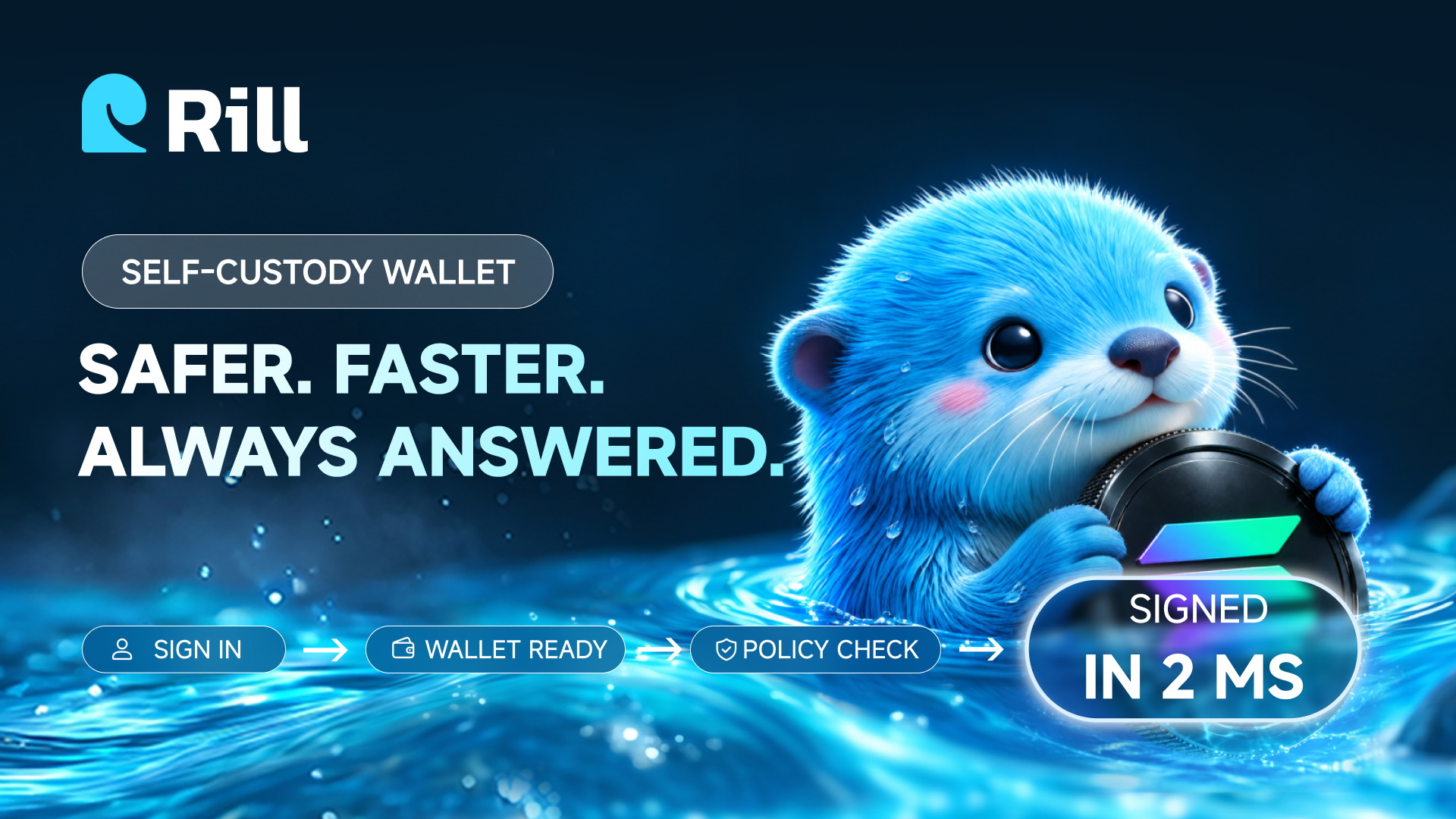
For a platform where daily active traders can reach tens of thousands and monthly trading volumes can reach billions of dollars, the choice of wallet and payment solutions is not a trivial matter. High-frequency on-chain trading cannot afford slow signing or weak custody solutions. Rill's median signing time is 2 milliseconds and offers a 99.99% availability SLA. Exporting private keys requires simultaneous approval from both the user and the platform's server, making it impossible to transfer funds solely with stolen login credentials. Strategy rules run before each signing, allowing transactions to be intercepted by method, chain, or amount. The significance of these mechanisms is that the platform can maintain self-custody while having some control over risks, without leaving all decisions to users or completely to the system.
Tenon's cross-chain bridge completes USDC settlements in an average of about 30 seconds. Its fiat deposit channel manages KYC, risk control, and chargebacks, alleviating the platform from having to handle these aspects independently. Both products are designed to be embedded rather than standalone consumer applications. This design is more in line with the actual needs of most trading platforms today: users do not want to download an independent wallet or jump between different products repeatedly.
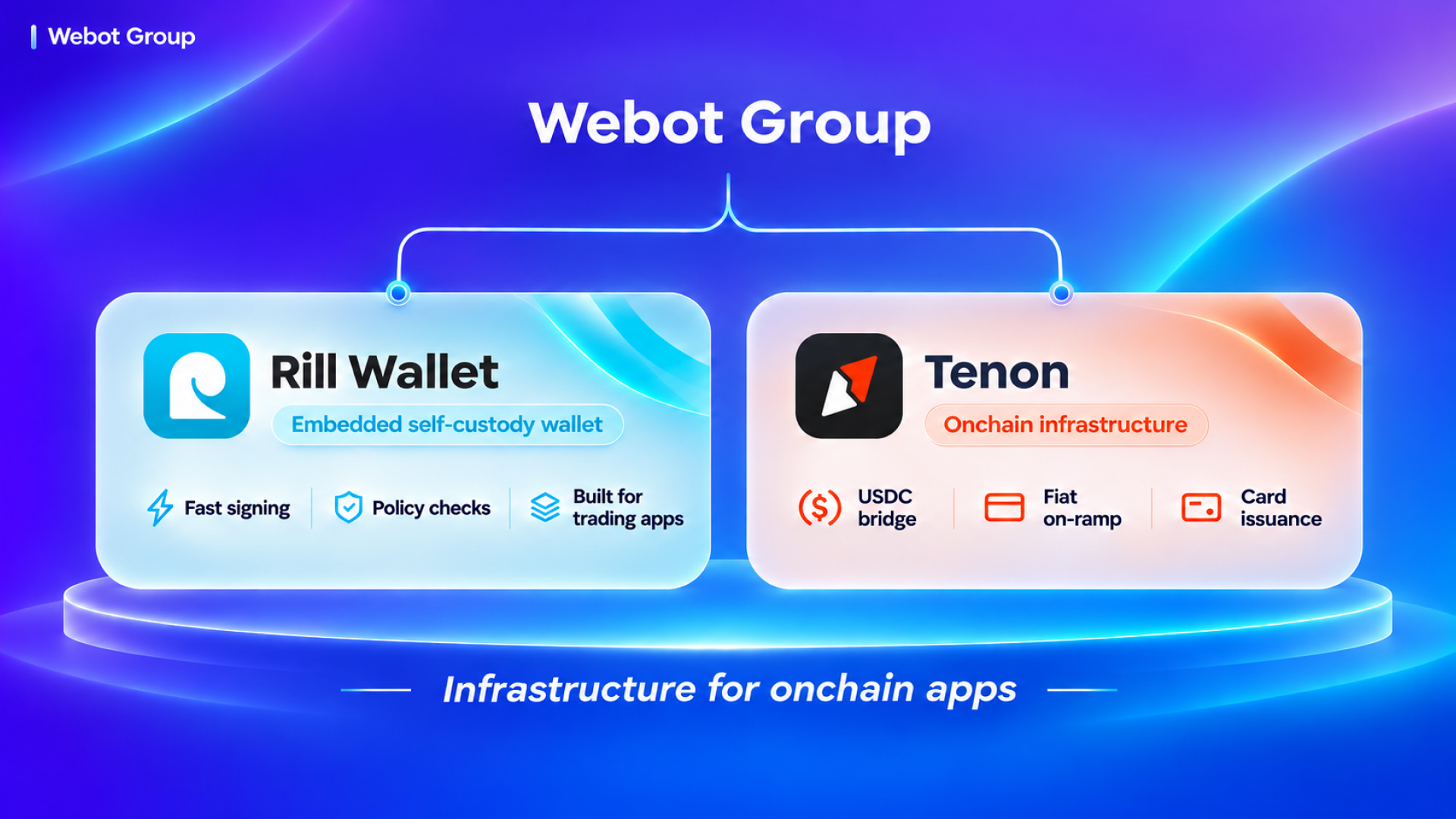
They come from the Webot group. They believe compliance is becoming a basic threshold when touching real users and real funds, rather than a differentiating selling point; meanwhile, most actual activities are migrating to on-chain. Rill and Tenon are built for this intersection. The group holds licenses in multiple U.S. states and the EU MiCA authorization, providing a regulatory basis for fiat deposit, withdrawal, and card issuance services, so the platform itself does not need to apply for these licenses separately. However, these two products are designed for on-chain applications, not as extensions of centralized exchanges.
The London event marks the public debut of these two brands. For the Webot group, this is a step towards on-chain infrastructure based on existing compliance. More and more licensed institutions are seriously exploring the on-chain ecosystem, which itself illustrates the point: in the future, on-chain decisions will not just be based on the judgments of on-chain teams but are becoming a broader consensus.
免责声明:本文章仅代表作者个人观点,不代表本平台的立场和观点。本文章仅供信息分享,不构成对任何人的任何投资建议。用户与作者之间的任何争议,与本平台无关。如网页中刊载的文章或图片涉及侵权,请提供相关的权利证明和身份证明发送邮件到[email protected],本平台相关工作人员将会进行核查。


