Written in the beginning
This article is dedicated to Mr. Huang.
Dedicated to the boy who came from Tainan, who served dishes and washed bowls in America, dedicated to the black leather jacket worn for twenty years, impervious to knives and guns, and also dedicated to an era that has just come to an end.
This article aims to answer three questions:
Who wanted him to step down? It wasn’t the Democratic Party, nor was it the old man from the Anglosphere who unloads the donkey after the grind.
Golden Hair advised him to fight, Mark shouted injustice for him, over 1,600 employees signed a petition to keep him, why did he let go himself?
Is Nvidia still the same company without Mr. Huang?
The full text is about 15,000 words, divided into three parts:
Part One: The Game · Political Underpinnings
Part Two: The Person · What He Was Thinking Over 14 Days
Part Three: The Industry · Value and Reshuffling
This is not just a scandal, it is the epilogue of the AI frenzy's first half.
The era that relied on a leather-clad captain to lead the Pacific Fleet in blind rushing ended this week.
I want to document it completely.
Part One: The Game · Political Underpinnings
One
On the morning of November 12, Nvidia officially announced: Mr. Huang, who led the company for 33 years, resigns immediately as CEO, taking a bare departure.
A business tycoon who turned a graphics card workshop into the global central bank of computing power and virtually supported half of the US stock market bull run over the past three years, was swept out in just 14 days.
In recent days, the Chinese online discourse surrounding such a huge political business drama in Washington has quickly fallen into two simplistic explanatory frameworks:
The first perception is that the Democratic Party is engaging in political persecution. The Democratic Party just won Congress in the midterms and immediately sacrificed Golden Hair, the number one financier in Silicon Valley, to show a flag;
The second perception is that the Anglosphere is unloading the donkey after the grind. "No matter how hard the Chinese work, they are just high-level workers! So what if they reach 5 trillion dollars? The old man from the Anglosphere sees you rising to prominence and can fabricate any charge to take over."
Directly concluding: Both are wrong.
To tell the truth, I thought at first that this had to involve the Democratic Party. Until just 15 hours after Mr. Huang handed over the company stamp, the typically liberal CNN unusually assembled six core line reporters to jointly publish a heavy report to inform the world that there is currently no evidence to substantiate that Miss Huang is a fan of the Beijing Workers' Stadium.
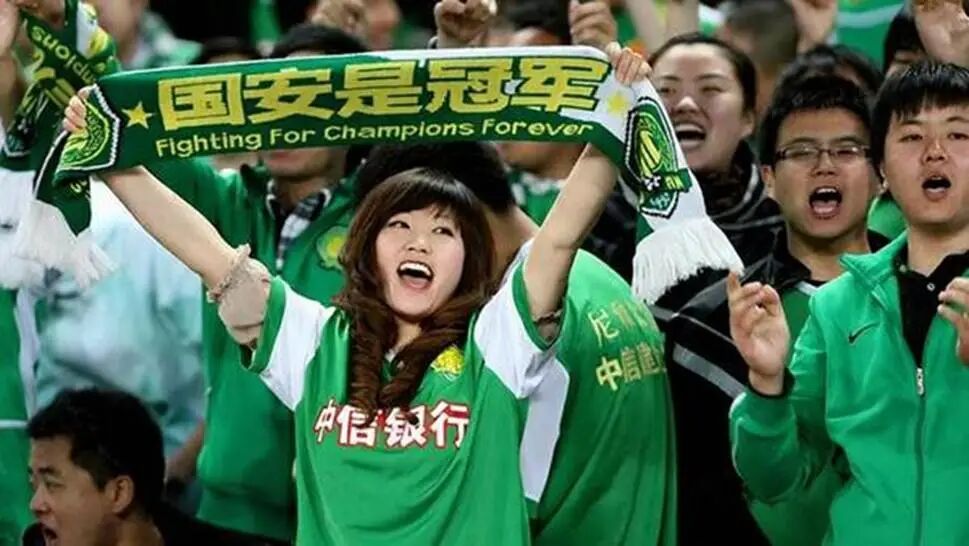
Seeing this report, I could finally grasp the entire chess game.
A week ago, in the midterms, the Democratic Party had just swept both houses of Congress and would officially take over Capitol Hill in January, at which point they would have the power of subpoenas in their hands. If it was indeed a trap set by the Democratic Party, intending to use this incident to take down Mr. Huang and Golden Hair, what would they be doing now?
They would certainly be making "a scorching iron case of Miss Huang sleeping with Nvidia's CEO for a year while Golden Hair was already in the loop and covered it up" a century-old matter.
How could it be that Mr. Huang just stepped down on Thursday morning, and by Thursday afternoon, CNN and the Democratic chairman of the House Intelligence Committee were already rushing out to pour cold water and publicly telling the world that "there is no actual evidence"?
The right-wing accounts on X were stunned, posting in excitement, "Wait -- is CNN defending Jensen?"
Connecting all the dots, there is only one truth:
The real driving force behind forcing Mr. Huang down was, in fact, the Republican Party, rooted in the White House internal circle of Golden Hair himself.
Two
To understand this conclusion, one must first look at another news item.
Three days after the midterms, the White House officially announced that Stephen Miller would replace Susie Wiles as Chief of Staff.
Susie Wiles, the former chief of staff, is a veteran from Washington’s top lobbying firm, Ballard Partners. We all know that Golden Hair's administration was very keen on the Mar-a-Lago route; Silicon Valley big bosses flew to Florida for steak dinners, donated political contributions, and took smiling photos, skipping the cumbersome national security bureaucratic process to deal directly with Golden Hair himself for major issues. Opening the doors for them at the White House was Susie Wiles.
And the newly appointed Stephen Miller is a staunch MAGA hardliner, described by seasoned lobbyists of K Street as being unyielding and "impossible to lobby." Upon taking office, Miller immediately set a hard rule that no White House personnel could discuss policies with registered lobbyists on White House grounds without prior approval from the legal counsel's office.
This personnel change means that for the final two years of Golden Hair's presidency, the tech giants relying on personal connections via the "Mar-a-Lago express" need a significant adjustment, which is also a fundamental understanding of the mentality of various parties in the White House regarding the entire Huang incident.
If you do not understand the political structure of the United States, you might interpret all the political struggles in Washington as a conflict between the Republican Party and the Democratic Party. In reality, the true power structure is multi-faceted. Even under the same roof of the White House, there are three distinctly different groups:
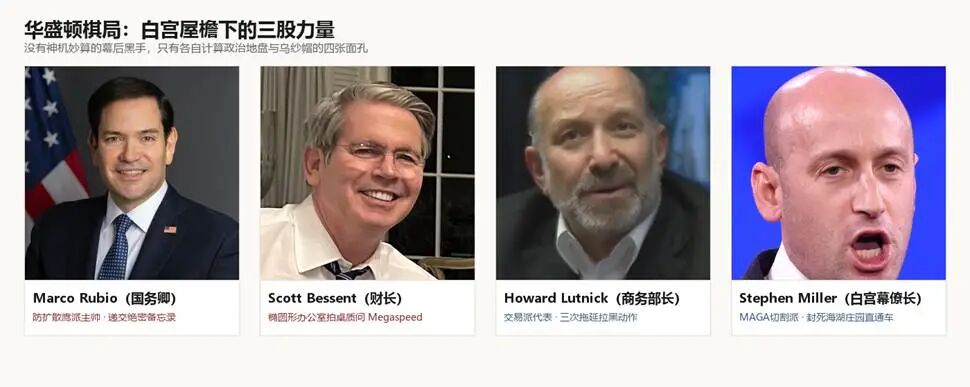
The first group consists of Golden Hair, Secretary of Commerce Lutnick, and White House AI Czar David Sacks, who are business-oriented. Lutnick is the owner of Wall Street brokerage Cantor Fitzgerald, and Sacks serves as a mouthpiece for Silicon Valley's tech right.
The second group is led by Secretary of State Rubio and hardliners in Congress, alongside Treasury Secretary Bessent, who are hawks focused on cutting off vulnerabilities in chip supplies to China.
The third group includes local populist heads like new Chief of Staff Stephen Miller, whose demands focus on shutting the doors to minimize losses and cutting off the political liability of the Mar-a-Lago political business lobbying, so the White House doesn’t get dragged into the mire of Congressional hearings next year. This may also involve Vice President JD Vance (who remained a mute bystander throughout).
Standing from the perspectives of these three groups helps one understand how they perceive Mr. Huang's actions over the past three years.
Mr. Huang has been negotiating AI sovereignty across various countries, and his actual power radius has exceeded that of a single listed company, effectively balancing on a tightrope between the US and China.
On the surface, the story he presented to Washington was titled "Selling cut cards is the best defense." In reality, faced with the thirst for computing power worth hundreds of billions, his commercial instincts drove him to run frantically in the gray areas. A small territory like Singapore at one point accounted for 22% of Nvidia’s total revenue (totalling $10.2 billion, which was only reconciled after Nvidia internal disputes with Megaspeed led to a recalibration in accounting standards in June this year).
Chris McGuire, the former White House National Security Council (NSC) author of chip control, publicly accused Mr. Huang of pushing the Golden Hair government to relax export controls to China in two successive instances in early 2025 and 2026.
Golden Hair allowed Mr. Huang to continue this tightrope act because, in Golden Hair's view, Mr. Huang brought him several benefits:
1. Selling H20 special supply cards brought a 15% government cut; the commission for H200 increased to 20%; export controls turned into a profitable business;
2. Nvidia’s nearly $6 trillion market value helped sustain the facade of the US stock market;
3. AI was Golden Hair's largest political achievement, but OpenAI and Anthropic constantly promoted "theory of human extinction," calling for increased regulation, while Mr. Huang, dressed in leather, sang along with Golden Hair, becoming his most favorable ally in the tech field.
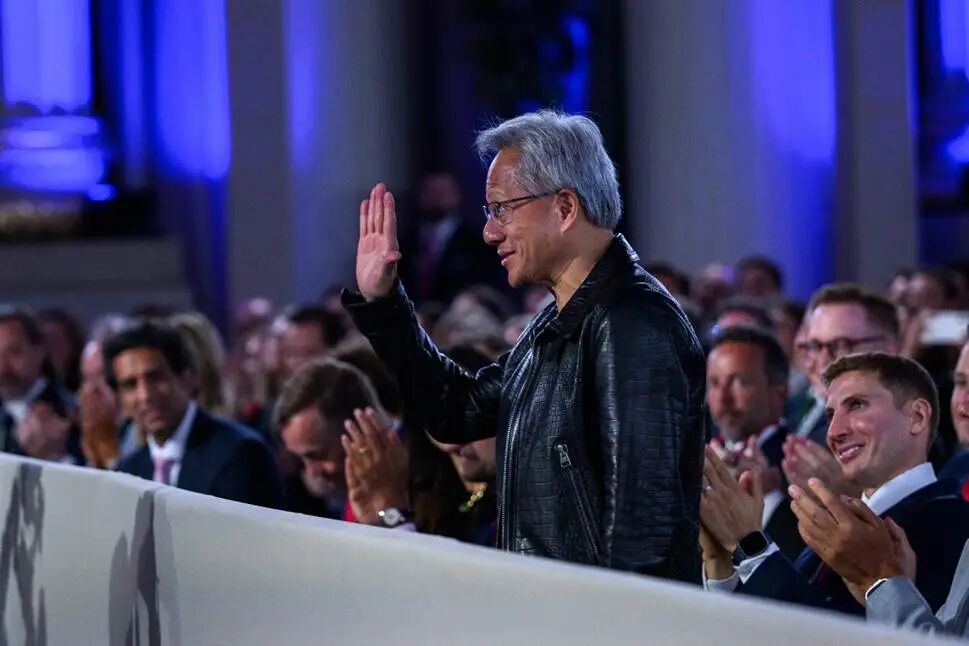
However, in the eyes of the non-proliferation hawks, the AI computational power war is the "Manhattan Project 2.0" that will determine the global leadership in the 2030s; high-end GPUs are the enriched uranium of the 21st century; how could they allow commercial commissions and a few quarters' earnings to send high-end chips through the Southeast Asia funnel to their adversaries?
However, they encountered a leader like Golden Hair, who was blinded by profit; every time the bureaucratic system wanted to tighten the fence, Mr. Huang would still find a way to go directly to Golden Hair and Lutnick for clearance, becoming an uncontrollable national security node.
Mr. Huang was already a member of the Presidential Advisory Committee on Technology. At the end of last year, together with David Sacks, he blocked the proposed "GAIN AI Act," which would have required chip manufacturers to prove that all domestic buyers had fully filled their orders and were not waiting in line before applying for export overseas; furthermore, Mr. Huang had repeatedly lobbied behind the scenes over the past eight to nine months to allow the latest Blackwell chips to enter China illegally.
How to deal with it?
Clear the inner circle.
Three
Many conspiracy theorists like to interpret events as a script of "carefully planned and laid traps to take down Mr. Huang a year in advance." But if you line up all the first-hand facts that have occurred over the past several months in chronological order, you will find that there is no seamless script at all.
The hawks were gradually forced into a corner until they had to upend the table and clear the inner circle.
Scene One (mid-2024 – end of 2025)
The starting point of the matter has nothing to do with Mr. Huang's private life; it purely originated from investigating the chip smuggling funnel.
The Singapore computational power company Megaspeed unexpectedly became the largest computational power buyer in Southeast Asia in just over a year. Its Malaysian subsidiary, Speedmatrix, wildly purchased $4.6 billion in chips from the end of 2024 to this January, with the core figure behind this mysterious company being Miss Huang.
In mid-2024, the US Department of Commerce's Bureau of Industry and Security (BIS), in conjunction with the intelligence community, targeted Miss Huang while tracking the Southeast Asian computational power funnel. Upon monitoring her communications, they discovered she was maintaining highly frequent and close private exchanges with a US citizen who was masked by the system (masked). By 2025, the intelligence department, along with Secretary of State Rubio, completed the legal unmasking process and, upon unveiling the mask, all parties gasped: the person was none other than Nvidia's leader, Mr. Huang.
On October 9, 2025, the NYT published the first investigative report, carefully avoiding any mention of extramarital affairs, simply writing about Megaspeed's compliance concerns regarding its massive acquisition of chips while casually referencing the June 2024 bar bet in Taipei where "I can call Jensen out for drinks" and a dinner with him in May 2025.
Initially, the hawks in Washington did not intend to directly target Mr. Huang. Republican Senator Tom Cotton's letter only requested the Commerce Department to investigate and blacklist Megaspeed. If Mr. Huang had cooperated and cut ties with Megaspeed, this uproar might have been settled a year ago.
Scene Two (end of 2025 – October 2026)
Why did the matter not settle down? Because the non-proliferation hawks tried to close loopholes through standard procedures but ran into two formidable walls.
The first wall was within Nvidia. Starting from the end of 2025, under internal compliance inquiries, Mr. Huang repeatedly denied having any relationship with Miss Huang for ten consecutive months; externally, he personally appeared on television to vouch for Megaspeed, claiming that onsite inspections had confirmed that all 86,000 GPUs were in place.
What made the Washington investigators even angrier was that Nvidia’s General Counsel Tim Teter directly intervened by inserting modification comments into the BIS's draft rules and even demanded investigative information from the government to intervene in the case; meanwhile, Jeffrey Kessler, the Deputy Secretary of Commerce responsible for BIS, surprisingly slowed down and halted the move to blacklist Megaspeed.
The second wall stood before Golden Hair. Since the Commerce Department remained inactive and the intelligence sector had figured out their underground affair during surveillance, in the spring of 2026, Secretary of State Rubio personally supervised the drafting of a confidential memorandum designating Miss Huang as “the fan of the Workers' Stadium.” In May this year, when Golden Hair flew to Beijing, Air Force One made a stop in Anchorage to refuel, and accompanying Rubio presented this confidential memorandum to Golden Hair, urging him not to take Mr. Huang to Beijing.
What was the result? Golden Hair chose to do nothing after reading the memorandum and still took Mr. Huang on the flight to China.
Scene Three (October 29, 2026 – November 5, 2026)
As time crossed into late October of this year, why couldn’t the hawks wait for a second?
A Bloomberg White House reporter revealed the most urgent time window: just a week later, Golden Hair was about to embark on an Asian trip for the third head-to-head summit of 2026. In the eyes of the hawks, internal memos were suppressed, and the Commerce Department's investigatory process was stalled. With Golden Hair preparing to sit at the negotiating table next week, if Mr. Huang leveraged this opportunity to advocate for easing chip controls or even include Blackwell in summit package deals, their entire line of defense in computational power would collapse.
With all regular channels blocked, the hawks had only one option:
use the Democratic Party’s media to upend the table and clear the inner circle.
Because ordinary commercial violations could easily be pardoned by Golden Hair’s words, only by labeling the "fan of the Workers' Stadium" could they place him in an irreparable inquiry, one that even Golden Hair could not protect under the public glare.
On October 29, five days before the midterms, an anonymous official dropped the first bombshell on the NYT, exposing "fan of the Workers' Stadium + close relationship + Golden Hair's previous inaction after receiving the briefing."
On November 3, during the midterm elections, the Republican Party suffered a defeat and lost control of both the Senate and House overnight.
Take another look at who on Capitol Hill is firing at Mr. Huang:
On November 4, the three chairpersons of House committees swiftly issued a co-sign letter and, by November 13, delivered an ultimatum: "If you do not comply within 24 hours, we will issue compulsory subpoenas.” — all of them Republicans.
On the Senate side, publicly denouncing Secretary of Commerce Lutnick must “account to God and the nation,” pressuring Lutnick to agree to appear in a public congressional hearing with Mr. Huang, were bipartisan Senate Banking Committee Chairman Tim Scott and the barrage of questions from Tom Cotton, Jim Banks, and John Kennedy—all again Republicans.
What was the Democratic Party doing? Democratic Senate members Elizabeth Warren and Chris Coons sent formal evidence preservation letters to Secretary of Commerce Lutnick, Secretary of State Rubio, and new Chief of Staff Stephen Miller, instructing the White House and the Commerce Department to lock up all chat records, emails, and memoranda related to Nvidia and Megaspeed, promising that anyone who dared to delete or modify them would be obstructing justice.
The Democratic Party actually understood that they did not need to pull the trigger themselves to force Mr. Huang to resign. They just had to watch the conflict unfold, waiting for the Republican hawks to hand over the knife themselves, stripping the White House bare. Next January, with the power of subpoenas in hand, they could follow the scent of evidence preservation to completely dismantle the entire "Mar-a-Lago political business network."
Returning to the White House's internal dynamics. The day after the election loss (November 5), the Oval Office witnessed a significant showdown. According to Axios, six high-ranking White House officials revealed that day, the Secretary of the Treasury Bessent, Secretary of State Rubio, Secretary of Defense Hegseth, Trade Representative Greer, and Jay Clayton, along with a consultant on a conference call Mark, unanimously agreed on strictly combating the Southeast Asian circumvention of chip supply to China.
Overwhelmed by the pressure from cabinet members, Golden Hair, during this year’s third opportunity, verbally approved tightening restrictions again.
Who would have thought that after stepping out of the Oval Office, Secretary of Commerce Lutnick and Deputy Kessler would still delay enacting measures, saying, "Let’s first draft a few plans before we revert?" This infuriated Secretary of the Treasury Bessent, who slammed the table and confronted him, asking, “How come Megaspeed isn't on the entities list?”
Scene Four (November 6, 2026 – November 11, 2026 late night)
At this point, the hawks should have given up. As long as Mr. Huang held the position of CEO at Nvidia, any policy blockade would be useless. They had to use Nvidia's board to directly eliminate the commander.
On November 6, the Financial Times exposed Mr. Huang’s underground relationship with Miss Huang. This revelation blew up within Nvidia: Tim Teter, the General Counsel, who had always shielded Mr. Huang, found out he had been deceived for a full ten months; he rushed to confront Mr. Huang at home and received a confession about the relationship on the spot.
On November 8, Mr. Huang sent out a company-wide letter acknowledging infidelity, and the board officially invited the fiercest law firm in Wall Street, Wachtell, to initiate an independent investigation, with former U.S. Attorney for the Southern District of New York Joon H. Kim leading the charge. At that time, the market still considered this to be merely a public relations crisis, with Polymarket pegging the likelihood of him stepping down before the end of the year at a mere 15%.
The real coup de grâce happened during the afternoon to late night of November 11.
At 4:09 PM Eastern Time, Marc Caputo, a core political reporter within Rubio’s circle (Axios), received inside information about the Oval Office's confrontation, Golden Hair's three verbal approvals, Lutnick's three defiant delays, and Secretary Bessent's table-slamming questioning. This jaw-dropping revelation substantially crippled the political space for the White House’s intervention to save Mr. Huang.
Only ninety minutes later (around 5:30 PM after hours), the first wave of "the Nvidia board is meeting tonight to discuss replacing Mr. Huang" broke out in Washington. Moreover, the journalists rushing out this news were nearly all political reporters who typically did not cover Silicon Valley or Nvidia at all.
Pause for three seconds and think about why this is the case?
While the Nvidia board was searching for headhunting for a replacement, they had notified the White House in advance. If Mr. Huang, the White House, and the Republican Party were a united front, why would the board notify the White House, only to be met with a collective push by Washington political reporters urging Mr. Huang to step down?
That evening, Golden Hair called Mr. Huang, persuading him to fight to keep his position, but it was futile. The news had not only reached Golden Hair's ear; it had also reached the likes of Rubio, Bessent, and Miller. For the clearing factions and cutting factions, Mr. Huang was a nuclear waste that could blow up the White House at any moment. They quickly leaked the board's meeting to the political reporters in Washington, making it a fait accompli that he would have to step down “tonight.”
Following that night, the NYT dropped the second bomb, exposing the second long-term extramarital affair of Mr. Huang with Kimberly Powell, the company’s direct subordinate and VP of Medical Business, along with the scandal involving using the company’s security team to sign nondisclosure agreements to silence the matter.
On the night of the video board meeting, Mr. Huang’s psychological defenses completely collapsed, and he decided to hand over control and leave.
At this point, even if the CIA director personally entered the video room to testify that Miss Huang might not be "the fan of the Workers' Stadium," the board would find it hard to keep him. Because that "fan of the Workers' Stadium" label was just a battering ram, and once it smashed through, an independent prosecutor would come in and rummage through the boxes, leaving four more knives ready to cut Mr. Huang down.
The first knife is the loss of trust due to lying internally for ten months. From the end of 2025 to early November this year, Mr. Huang faced internal inquiries while continuously lying about the affair for ten months, so trust was already at zero.
The second knife is the internal control red line with subordinates and the avalanche of internal breaking windows. Once Wachtell steps in, half-public secrets would be unearthed, leaving Mr. Huang and the board confronted with expectations of an internal investigation revealing "multiple women." Just after Mr. Huang’s resignation, Reuters exclusively revealed that he had also been involved with a second female employee within the company. How could the board keep a CEO who would have to issue a new apology letter every week?
The third knife is the criminal investigation not relying on the “fan of the Workers' Stadium” designation, along with the betrayal of the key legal counsel. The Department of Justice (DOJ) is currently simultaneously advancing three independent criminal investigations targeting Nvidia, Megaspeed, and Alice Huang for allegedly aiding smuggling through Southeast Asia with Super Micro servers. Following counterintelligence law enforcement iron rules, as long as two people are in the same room and can access phones or computers, the investigative department must assume that the secrets have been leaked; once it is verified that Mr. Huang pushed for transactions in compliance checks, it would directly touch upon criminal liability boundaries of "aiding and abetting or collusion."
When General Counsel Tim Teter discovered that Mr. Huang had concealed the affair from him for ten months, he pushed the hesitant board to immediately convene a meeting, becoming the only escape pod for this legal counselor. Nvidia's legal armor could no longer protect Mr. Huang.
The fourth knife is the subpoena hell after the power shift in both houses. As long as Mr. Huang remained in position, the entire company would have to be strapped to the stake of Congressional hearings for the next two years. The board's only chance for survival was to quickly replace him with Colette Kress, who had served as CFO for thirteen years and had a consistent hatred of risks, as the interim CEO.
Ironically, until the day of November 12 when Mr. Huang personally resigned as a sacrificial offering, Megaspeed, which initially sparked the entire storm, had not only not been blacklisted by the Department of Commerce, but was still prominently listed on Nvidia's website as an "Official Cloud Partner."
Four
On Thursday morning (November 12), the announcement of Mr. Huang's resignation was officially issued. Just the night before, Golden Hair had been urging Mr. Huang on the phone to "fight," and by that morning, he didn’t spare a single moment for sadness, instead posting on social media to move on, specifically calling for Apple CEO Tim Cook to take over Nvidia, under the guise of "a legend succeeding a legend."
Immediately after, by Thursday evening, just 15 hours after Mr. Huang handed over control, the scene described at the beginning of this article unfolded:
Democratic mouthpiece CNN suddenly threw out a major report, unprecedentedly co-signed by six star reporters—Natasha Bertrand, Alayna Treene, Katie Bo Lillis, Evan Perez, Zachary Cohen, and Jennifer Hansler—unanimously dousing cold water on the "fan of the Workers' Stadium" narrative:
The Attorney General of the United States believes that the existing evidence "is inconclusive";
The CIA has not been convinced by claims of her being a fan of the Workers' Stadium;
A Democratic chief member of the House Intelligence Committee, having just attended a classified briefing, stated, "Today I see no solid proof”;
The Office of the Director of National Intelligence (ODNI) directly pointed out that Rubio's memo was not entirely accurate, and the conclusion was over-torqued.
Online, there was an uproar about how the fanfare of calling her a "hardcore fan of the Workers' Stadium" just hours after Mr. Huang’s resignation, every intelligence and judicial department in Washington suddenly lined up to say “there is no solid evidence?”
The truth is, the factions wanting to take down Mr. Huang were already satiated and had retreated, while each department was racing to preserve their own hats for next year:
Jennifer Hansler, working the State Department line, is backed by the victorious Rubio hawks. With Mr. Huang out of the picture and conservative Kress stepping up, coupled with the accelerated push for the Southeast Asian remote computing ban, Congress is also planning to leverage the year-end National Defense Authorization Act to bundle bills for the RASA Act, the AI Overwatch Act, the MATCH Act, and the Chip Security Act for computational power control.
The hawks had achieved 100% of their strategic objectives and didn’t care how others would spin it afterward; they merely left a cocky anonymous hawk rebuttal in the article: "Simply by her being a successful Chinese female entrepreneur collaborating with America’s strongest companies, it would be irrational to not believe she is an agent."
Katie Bo Lillis, working for the CIA / ODNI, and Evan Perez working for the DOJ, were sweaty-palmed leaders of the intelligence and judicial professions. Consider the calculations for the CIA Director and the National Intelligence Director: If the narrative of "the fan of the Workers' Stadium slept with the Nvidia CEO for a year" were allowed to become a historical conclusion, who would be the first to get a slap from Congress’s subpoena next January? Surely it would be the CIA, ODNI, and DOJ. You had already targeted it in mid-2024, unmasked it in 2025, realizing it was Mr. Huang, why did you let it slide for over a year without arresting anyone, not even issuing a formal defensive warning briefing to Nvidia? This is a serious dereliction of counterintelligence duty!
Now that Mr. Huang has stepped down, intelligence heads must immediately ensure it is recorded: “Everyone must see clearly, the original surveillance did not state she was a licensed fan of the Workers' Stadium; it was merely those writing memos from the State Department who over-torqued the narrative, next year, don’t come looking for us about any dereliction!”
Alayna Treene, working in the White House core circle, is aligned with the establishment faction and AI Czar David Sacks. Mr. Huang’s fall was merely the first domino to fall; the next domino likely positioned in the chip release chain to China is probably Lutnick, followed closely by Sacks himself! His screams on X for catching leakers are actually just digging trenches for his and the White House’s defensive battle in next year’s congressional hearings.
For CNN, their number one rival in political news isn’t FOX but rather the blue camp’s NYT. Over the past two weeks, the NYT leveraged exclusive information to take down the founder of the world’s most valuable company, currently basking in the limelight; now, the four major intelligence and judicial bureaucracies actively hand over knives, stating that the grand case the NYT dramatized all year actually lacks solid proof, thus smacking NYT across the face and exposing the disarray among the State Department, intelligence sector, and White House. Which media editor would refuse such a gift?
See, the entire dark line loops back here, with no mastermind in the shadows.
Each department, every politician, every media outlet is merely calculating its own claims, territories, and positions. But when everyone's calculations align precisely, they effectively grind Mr. Huang into a sacrifice.
If one must say that there is a mastermind able to perceive the whole situation, it’s that Mr. Huang could fall, but the Nvidia AI national destiny engine must be preserved. With Mr. Huang already ousted in favor of the obedient and conservative Kress, and the Southeast Asian remote computing ban progressing smoothly, now cooling down the "fan of the Workers' Stadium" incident preserves Nvidia from scrutiny and absolves all departments from their derelictions.
Five
Yesterday, a popular repost in the WeChat group asked, "Why was Steve Jobs pushed out for having supposedly had an affair with Mrs. Ma and a scandal with Tongliao?"
The highly-upvoted reply was simply: "There’s nothing to be done; he is not one of the Song people."
This sentence struck a chord with many people's emotions.
Jiang Feng (a character) can thrust four knives into himself and leave proudly, but Mr. Huang’s underlying card is Duan Zhengchun.
AMD’s head is Lisa Su, Broadcom’s head is Hock Tan, and the recently appointed head taking over Intel is Lip-Bu Tan. Today, half of the American semiconductor industry is already in the hands of Chinese CEO leadership; where's the systematic cleansing script based on ethnic lineage?
Looking back, who among all those who fervently supported Mr. Huang until the last moment, vehemently criticized Nvidia’s board, and loudly called for a special shareholder meeting to keep Mr. Huang?
Mark, David Sacks, Gavin Baker, Epic Games founder Tim Sweeney, Silicon Valley patriarch Ron Conway, Bill Ackman—each one a white face.
In the matter of the chip war that determines the national interest, neither racial heritage nor partisan grievances apply.
“Who let him not be one of the Song people” is just an elite version of a killing narrative. The reason this clumsy anti-Chinese narrative resonates so easily is that many subconsciously long for a racial jungle where rules are not observed across the ocean.
Only by imagining oneself in a parallel dimension and realizing that even in a different place, one cannot live well, can one find a trace of relief in the current predicament. As long as it is proven that the outside world also ranks individuals based on lineage, there is no need to ponder how the roof above one’s head was constructed; one can immediately reconcile with reality and require no change.
Part Two: The Person · What He Was Thinking in 14 Days
One
Returning to those involved, Silicon Valley and Wall Street erupted after Mr. Huang’s bare resignation.
Prominent voices criticized, stating that the Nvidia board was repeating the foolishness of firing Jobs from Apple, calling for a special shareholder meeting to bring him back. Over 1,600 employees on the company intranet jointly petitioned for his retention.
The public opinion seemed to think that Mr. Huang was forcibly thrown out by the board, based on misunderstandings surrounding the fan of the Workers' Stadium, which, once clarified, would see him return.
This understanding is also wrong.
Resignation was Mr. Huang’s initiative; at the last moment, this was his only option to prevent further losses.
I do not judge private matters from a moral standpoint, nor do I enjoy acting as a sage from hindsight to point out where others made poor moves.
To understand a character or study history, the genuine way to build insight is to restore the scene and observe how a person will act in their circumstance. This helps to realize that there aren’t so many infallible strategies, that human limitations, diverse choices, and the randomness of the world come into play.
Let us assume, if you were Mr. Huang, how would you think and act at the time when the NYT published that report at the end of October?
Two
Tim Cook took 14 years to bring Apple from $300 billion to $4 trillion; you needed only 4 years to push Nvidia from $300 billion to nearly $6 trillion. Over sixty executives report directly to you; there is no second-in-command within the company, and every major order and every individual’s compensation package ultimately passes through your eyes.
You are not confused at all. Miss Huang does have her appeal, but you are aware of what she seeks by sticking to you; she knows that you know her intent, and you are also aware that she knows you know.
You know exactly who the big client behind Megaspeed is. As for whether she is a fan of the Workers' Stadium, you have no idea.
In June 2024, at a bar in Taipei, Miss Huang bet someone that you would walk in wearing leather and have a whiskey; in May of the following year, you were spotted dining together.
Your bottom line is firm: Singapore-based, Johor data center, full set of KYC, not a single document can be missing. Selling cards to Southeast Asian cloud factories, Nvidia has publicly earned over a hundred billion dollars from this in the last two years, and there’s nothing to fault on paper.
The rest of the business honestly doesn’t need you to say anything.
“Miss Huang is a good friend of the boss,” that sentence naturally allows those below to gain the maximum convenience under the rules. Sales managing quotas do not require your approval, and if the Commerce Department comes over, General Counsel Tim Teter will block it for them. In your view, it is utterly normal for the CEO to endorse major clients worth billions; the conflicting interest disclosure and avoidance clauses in the business conduct guidelines did not even occur to you.
As for Kimberly Powell, having been in the company since 2008, working with you for 18 years, it’s normal for two workaholics to develop a bond. However, you have been indifferent to personal ties at work, and the whole company is aware of it. The budget review for Powell's medical division is conducted quite formally.
In March, an intimate moment captured at the San Jose GTC hotel was filmed, and security was involved with an NDA; to you, it is merely a household separation from the paparazzi.
Throughout ten months, there were some probes, but you consistently denied it; no issues arose.
Months ago, a fellow board member privately approached you with what seemed to be intimate photos, and you confidently said, “just a photo with a regular client,” which they happily chose to ignore.
During a trip on Air Force One, Rubio submitted compromising materials, and Golden Hair didn’t move against you.
In your perception, the relationship with these two women is coherent; you have not leaked any information, betrayed the country, engaged in bribery, or issued anyone any improper directives. The only guilty feeling lies with your wife Lori, whom you have been married to for forty years.
Do you have time to contemplate who is behind all this, who is looking to take you down, and how to prepare for it?
Perhaps you have considered it briefly, but soon enough, work emails would inundate any concern.
You are greatly occupied, regularly needing to visit Taiwan to meet with certain leaders to establish supply chains, visiting South Korea to negotiate with chaebols, globally selling sovereign AI, advocating for open-source support, monitoring the annual updates for flagship products from your 60 VPs, and keeping an eye on the budget pockets of four leading families while managing the financing for your godsons…
You also might have hit a streak of good luck, thinking that as long as the cards are not lost, documents are in order, and Golden Hair supports you, there will be nothing unmanageable. You can defer any issues for later.
What you do not realize is that the non-proliferation hawks have been silently eyeing you for quite some time, and once this tacit arrangement comes under the scrutiny of the FBI, Congress, and prosecutors, each aspect holds unambiguous compliance crimes.
Three
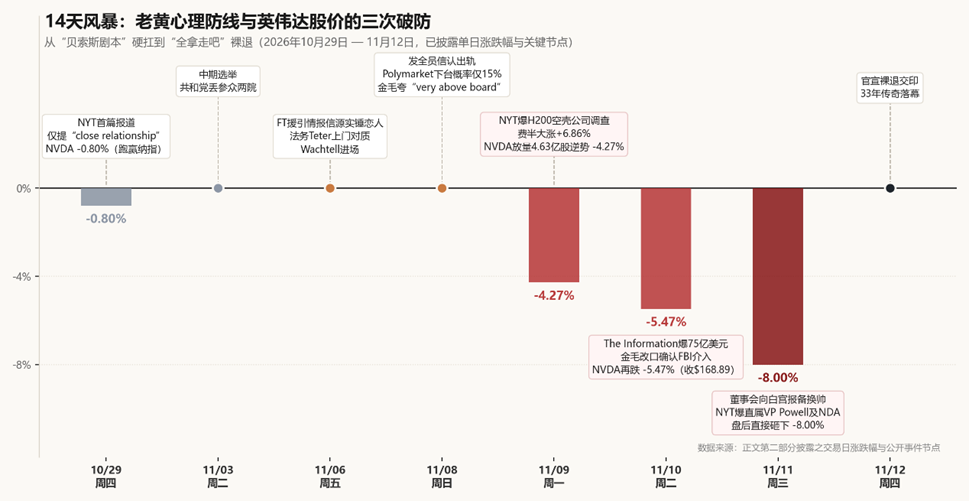
On October 29, the NYT published the first report. The article dared only to write "close relationship," without mentioning extramarital affairs. That day, Nvidia only dropped 0.80%, even outperforming the Nasdaq. The old friend board remained silent.
Mr. Huang's judgment was straightforward: they had no solid evidence. If they had actual goods, the NYT wouldn’t have stopped short at calling it "close."
If they intended to act against him, Golden Hair would have acted a year ago after receiving the briefing.
He confidently walked in front of the Bloomberg camera, stating, “It was all completely normal and not unusual.” Throwing out inventory accounts, affirming that 86,000 GPUs were accounted for on-site, all remained in their places. Internally, he persisted in denying personal affairs.
In the engineer's mind, as long as the cards are in place, the issue is resolved. But with that line of reasoning, a personal moral issue that could have remained buried surged into public view as an outright lie against the board, legal team, and market.
On Friday, November 6, the window paper shattered.
Just three days prior, the Republicans had lost both houses in the midterms, and the inquiry letter soon followed. On Friday, the Financial Times quoted sources from intelligence agencies to confirm: the two of them are lovers, a "romantic relationship."
The old friend board, which had protected him for several months, finally realized they had been severely deceived, and were now face-to-face with an entrusted responsibility risk. General Counsel and board secretary Tim Teter drove over to confront Mr. Huang personally, with Mr. Huang admitting it on the spot.
He might have expected the big legal advisor to return to the board to help calm down the situation, but Teter understood that continuing to aid in damage control would implicate him as an accessory. Thus, he turned around and pressured the board into inviting Wachtell in to lead the charge, taking the reins was the former U.S. Attorney for the Southern District of New York.
At this juncture, Mr. Huang might have felt there was still room left: as long as Miss Huang deals professionally from her end, in his mental ledger, it merely constituted a family issue, and being outed only meant hurting his wife, while the business side remained clean.
What he needed to do was to compartmentalize these two columns, resulting in the company-wide letter on November 8.
“I was unfaithful to my wife. There is no excuse for what I did.” He admitted to the infidelity while pledging to safeguard national security, without mentioning Miss Huang or Megaspeed. The board’s statement backed him up: there is no reason to believe that national security or company secrets were compromised.
This was similar to Amazon's Bezos’ script from 2019: acknowledging and apologizing for the affair while not being killed outright. Simultaneously, shedding the foreign labels, shifting public attention towards private life, leaving the remainder for the law firm to handle.
The reasoning was appropriate; that day, Golden Hair even praised him for being “very above board.” Polymarket had only gauged his likely departure at 15%.
On the same morning, the NYT published an investigation into the approval of H200 sold to a shell company in China, after which the “business compliance” shield was pierced. Rubio coldly dropped a line, calling it an “internal corporate matter,” essentially delegating the knife to the board.
Monday's opening brought a sharp rise in fees of 6.86%, while Nvidia released a staggering 463 million shares, plummeting 4.27% against the trend. The institutions clearly did not align with the Bezos narrative, sensing that it was not just a romantic incident but starting to price governance and political costs.
The hawkish public sentiment strongly pressed one point: being in a romantic relationship with the female owner of a company under investigation constitutes an interest conflict, it amounts to extortion.
On Tuesday, November 10, The Information revealed that this relationship had led to at least $7.5 billion, approximately 240,000 GPUs flowing to China. That same day, Golden Hair publicly reversed course, confirming that the FBI had already intervened.
Once the shield over Mar-a-Lago was withdrawn, Nvidia alone dropped another 5.47% that day, closing at $168.89.
For decades, Mr. Huang had always replied to “Top-5 priority emails” almost instantly. On this day, the responses noticeably slowed down. He quietly hired the top criminal defense law firm, Paul Weiss, in his own name. By this point, the risks he was guarding against had evolved into personal threats.
In the afternoon of Wednesday, November 11, the board briefed the White House on the plans for a leadership change, resulting in political reporters leaking information. Shortly after, Mr. Huang’s phone rang, with a reporter from the NYT calling to verify his romantic involvement with VP Powell, including the NDA signed with the security team in March at the San Jose hotel.
The one who had been in command of everything his entire life, Mr. Huang coldly replied, “I don't think you should be talking to me directly.” and hung up.
At that moment of hanging up, he realized everything.
The line with Miss Huang could still be said to involve business; documents and inventories could still serve as defense; however, Powell was a direct subordinate, without any document to speak for him. The fact that reporters could reach him directly indicated that someone within the company was leaking information.
By the evening, as the news erupted, the stock price fell down 8% post-hours.
Four
In those days, many brothers asked me if I thought Mr. Huang would resign, and I said it entirely depended on him.
If he was willing to fight, negotiate, or compromise, he would definitely have the chance to survive. But if he let go in one go, then it would be all over.
Late Wednesday night, they connected for a video board meeting. Golden Hair just urged him over the phone to "fight" while Mark and others raised a mighty uproar on X, and more than 1,600 workers were signing on the intranet, with Harvey Jones, who had partnered with him for 33 years, sitting across the screen with him.
As long as Mr. Huang stubbornly remained steadfast, even if he took half a step back to take a break and wait for the investigation's conclusion, or maintain a board seat or chief architect title, these old friends who had no succession plans would find it hard to dismiss him.
But if Mr. Huang decided to fight to the last breath, pushing every single provision onto the table, there were three gatekeeping issues he could not bypass.
The first is his persona. Golden Hair is a political animal rolling in the mud with zero sense of shame, even thriving on scandals. But for Mr. Huang, who has spent 40 years constructing his own image, besides "the king of computing power," another half of his image is "the perfect East Asian engineering god." When the persona collapses, he can't wield the armor of thick skin that Golden Hair possesses.
The second is the expectations of execution, which is a genuine fatal flaw. Outside, Mark and Golden Hair shout “fight,” but outsiders do not know how many mines await beneath; only Mr. Huang knows all too well,
not to mention multiple women.
He is all too aware that even if the fan of the Workers' Stadium hat is removed, the internal breaking of windows cannot stop: as long as he remains defiant tonight, resisting leaving, the Wachtell investigation, along with a media frenzy, would gradually peel back layers, revealing the names, photos, chat records, and hotel surveillance of second and third female subordinates to the world. Every day of resistance translates into a day of dragging himself and his family deeper into the meat grinder.
In facing a deadly gathering of chip companies, Mr. Huang could fight, but standing in front of the ruins of his family, he cannot wield a sword.
The third is the cost of survival. If he listens to Golden Hair and holds his ground, the best outcome will be a year and a half later when Wachtell presents a mild report, with him retaining a patched-together title.
If he opts for survival, it means that for the next year or two, he must
face countless piercing eyes with a thick skin and see Wachtell lawyers exposing personal affairs from the office;
watch Congress politicians publicly humiliate him in televised hearings;
see his wife Lori, who has been with him for 40 years, waking up every morning faced with new scandals in the headlines.
Return to the company and navigate intrigues with General Counsel Teter, who has already betrayed, and Kress, who has taken control.
For the past 33 years, this leather-clad tough guy has faced technical challenges, been on the brink of bankruptcy, and endured Wall Street's skepticism, bravely pressing forward; back then, he stood tall in front of his family and his subordinates, with only money and face at stake.
Yet on late Wednesday night, upon realizing that preserving his throne meant dragging his wife and all his attractive female acquaintances into the mud with him, rendering them sacrificial pawns while he secretly survives, that energy which had supported him for over 30 years fluttered and released.
For someone as intensely controlling as Mr. Huang, who could manage 60 VPs, there is no intermediate state of "humbly becoming a nominal consultant." He must either control the empire completely, or once the balance is lost past that critical point, it would directly snap, "whatever," take it all away, leaving not a title behind, just asking to preserve his family; this is his only card for minimizing losses.
Thirty achievements turned to dust, so be it.
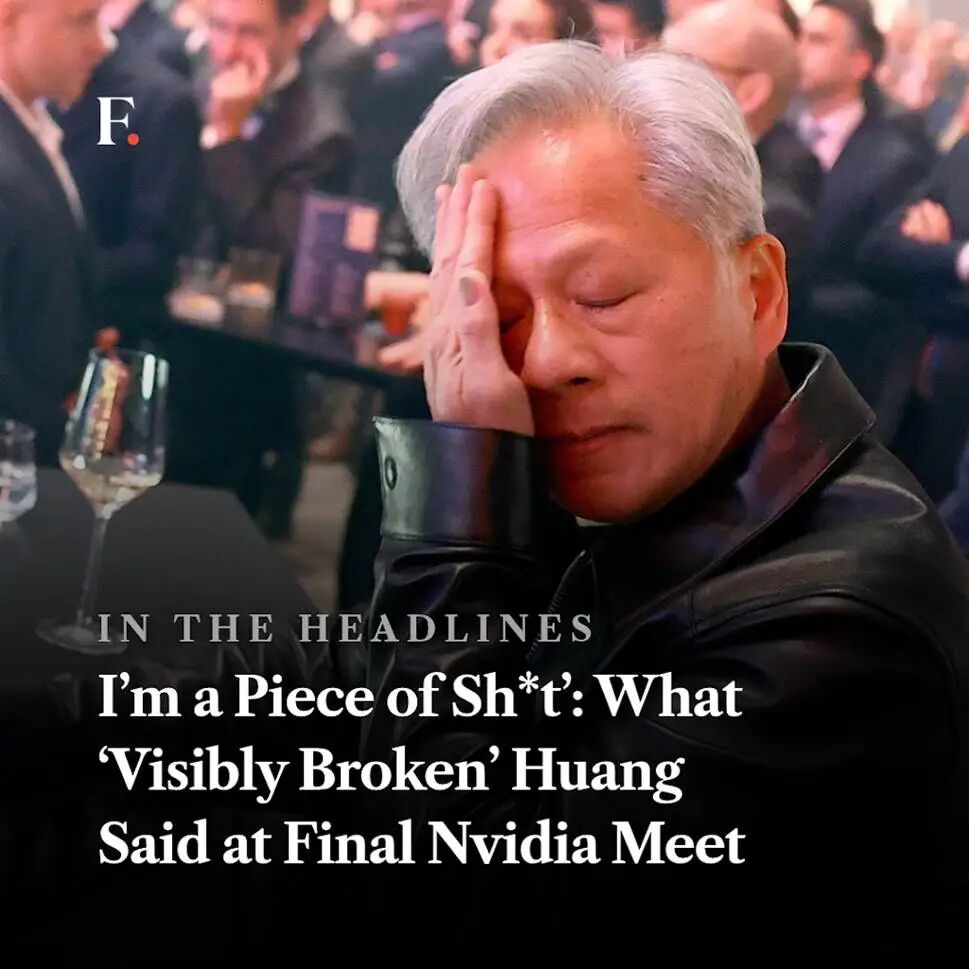
When the energy dissipated, the iron-fisted ruler immediately transformed into a weary elder, hauntingly muttering “I don’t care” and “I’m a piece of shit” through the video interface.
That black leather jacket, worn for twenty years and impervious to knives and guns, finally became too heavy to wear that night.
Part Three: The Industry · Value and Reshuffling
One
Two weeks ago, in the weekly report dissecting the third-quarter results, I made an analogy referencing the scene of "Infernal Affairs 2" at a hot pot.
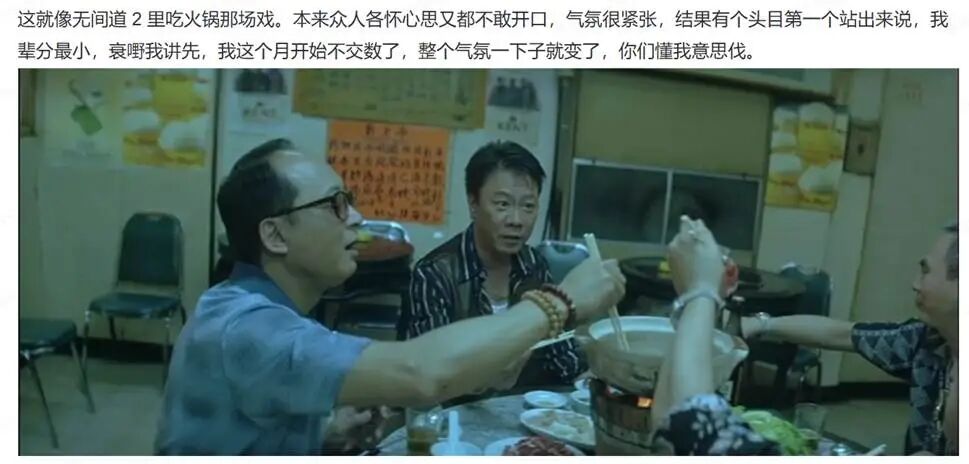
When I wrote that passage, Mr. Huang had just been named in the NYT for a day. No one anticipated that just two weeks later, Tsim Sha Tsui’s real dragon in charge, Ni Kun, would indeed collapse in the street.
In the film, after Ni Kun was fatally stabbed, the four families who had to contribute monthly tributes to the Ni family circled around the steaming hot pot, eagerly preparing to jointly stop paying protection fees that night and overturn the Ni family's table.
Right at that crucial moment, Ni Yongxiao, the family accountant sporting gold-rimmed spectacles, who had been working for the Ni family, leisurely made four phone calls. He held damning evidence for every individual of the four families tightly in his hands, combined with Han Chen, who was guarding exclusive supplies for the Ni family from Thailand, effortlessly striking fear into the hearts of the entire table.
Today, with Mr. Huang's sudden exit, Colette Kress, now with the Nvidia baton, happens to also be an accountant by training.
The question is, can Kress make those four calls to keep the four largest tech giants in Silicon Valley—Microsoft, Amazon, Google, and Meta—continuing to obediently increase their CAPEX?
The answer is a definitive no. Nvidia only has a bookkeeper to maintain the status quo and cannot breed a Ni Yongxiao.
Two
Mr. Huang's management philosophy, of not appointing a COO or departmental presidents, allowed over sixty VPs to report directly to him, with all sending priority emails directly to the top. The only premise for this efficient operation is the presence of a central figure who understands both the bottom-level transistors and CUDA, while also comprehending the global supply chain games, capable of single-handedly approving hundreds of billions in risk exposures.
This set-up, where the founder monopolizes everything, had been a nuclear reactor pushing Nvidia to a near $6 trillion valuation. But once Mr. Huang stepped away, the same structure would face immediate fractures.
On the day before Mr. Huang’s resignation, we were analyzing internally who could succeed him, only to discover an extreme dislocation in the executive list.
The legal executive roster had no chip manufacturers at all: 58-year-old CFO Kress managed the bookkeeping; 71-year-old Debora Shoquist oversaw backend operations; the 59-year-old General Counsel Tim Teter was himself mired in a federal investigation; Nick Parker, responsible for sales, had just been parachuted from Microsoft at the end of August and had been in his new role for less than three months.
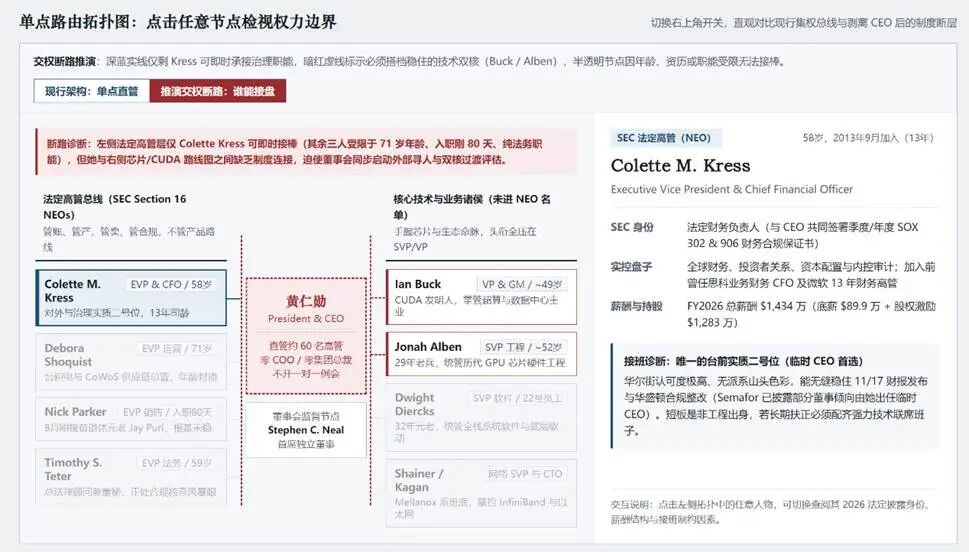
Among the individuals truly capable of shouldering technical responsibilities, there are three prominent figures; however, to prevent any one of them from becoming too powerful, Mr. Huang never included any of them in the official executive ranks for training purposes, having wholly neglected plans for succession.
Ian Buck: GM of supercomputers and data centers, father of CUDA;
Jonah Alben: oversees GPU hardware engineering for 29 years, wielding thousands of hardware engineers;
Dwight Diercks: an employee since day 22, overseeing all of the company’s low-level driver, systems software, and AI platform software development.
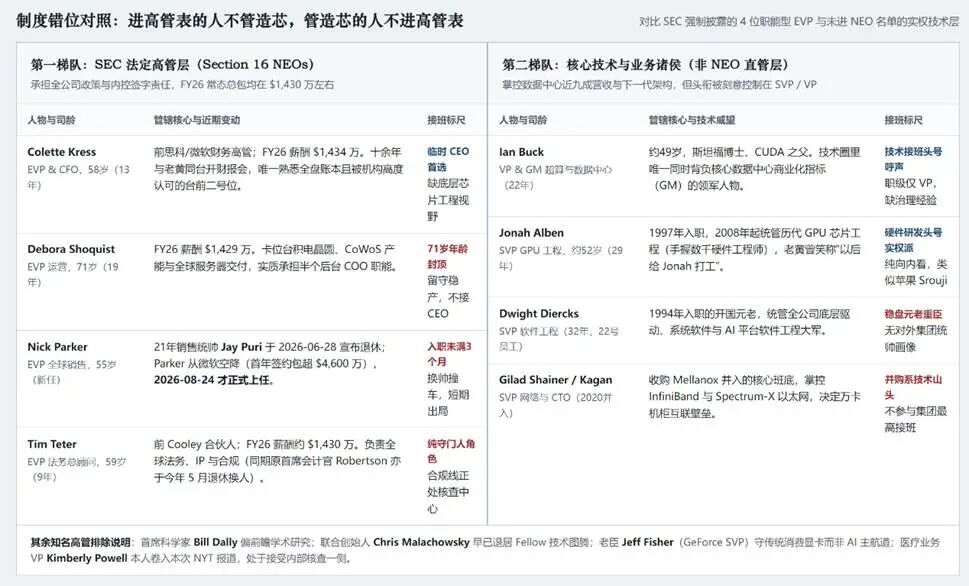
Faced with Congressional subpoenas and DOJ investigations, the board pushed for Kress to be appointed as interim CEO and 73-year-old veteran board member Harvey Jones to serve as the first independent chairman, essentially submitting a “maintaining compliance and accounting transparency” credential to Washington. Whether the trajectory leads to “financial and technological” dual governance or external recruitment, two key aspects of Huang’s era cannot be reclaimed.
The first is long-term and efficient decision-making capability. Once the reckless spirit that lasted over a decade, burning money to grow CUDA against Wall Street's outcry has faded, the capacity to adapt to the decoupling of Prefill and decode technological trends is lost. Mr. Huang was able to promptly decree using Rubin CPX to plug the gap last year, and this year, integrate Groq 3 LPX cabinets into the Rubin framework. This multifaceted adaptability across chips, networks, and software is not something managerial professionals can replicate. Losing Mr. Huang would be akin to Apple without Jobs, unable to produce the next disruptive new species.
The second is the off-balance-sheet checks of the AI central bank. In an executive meeting last August, Mr. Huang strongly advocated for a provision of $250 billion in credit guarantees to OpenAI, while Kress fiercely cut it down to just above $100 billion, earning him the public scorn: the deer caught in headlights is just a CFO making reports.
Now, that same CFO is grasping the big seal. As of the second-quarter report skyrocketing to $5.3 trillion in off-balance sheet commitments, along with undiscussed guarantees for neocloud’s godsons, he will be the first stepping on the brakes.
Three
Last September, when I first wrote about the AGI gamblers alliance, two groups sat at the computational power poker table in Silicon Valley. One group was the four major families, enjoying impressive profit margins of 20-40%+, adhering to shareholder return discipline, unwilling to burn through free cash flows, with every family developing their chips at risk of Nvidia. The other group was essentially gambling everything with the AGI-focused OpenAI.
Mr. Huang knew better than anyone that the four major families would eventually conspire to overthrow him. So he personally became the grand leader of the gamblers alliance: tying Sam Altman with one hand, while bringing fellow partners who bet their lives, such as Oracle, Softbank, and CoreWeave, aboard, employing off-balance guarantees and preferred card allocation rights to seize electricity and chips outside, creating a fear of "you’re out if you are not following up”. The stable four key families could only tearfully pay the protection fees.
At that point, the leader was OpenAI that had put everything towards Nvidia. Today, the conversation leaders of the AGI camp have already shifted to Anthropic. Upon reading Anthropic’s IPO prospectus, the most counterintuitive aspect is:
That the world's strongest model company surprisingly does not depend heavily on the best compute chips available globally.
As of the end of October, Anthropic’s computing resource commitments are about $855 billion. The largest inclusion is Anthropic Direct: unlocking dogs brother's TPU from the premium provided by GCP's cloud service, with financing backed by Broadcom to buy hardware, then leasing it to ANT in installments.
Anthropic's main computing is running on Google TPU and Amazon Trainium, yet they remain firmly stationed at the leading front. Meanwhile, the most advanced NV cards in Mark's possession have been treated as high-interest rentals by ANT, with discussions at the IPO briefing suggesting they may not renew the lease when it expires next year.
The core belief underpinning Nvidia bulls over the past three years—that low-cost ASICs can only execute low-end inference, and that you must buy Nvidia for cutting-edge models—has now been disproved by the leading figure himself.
Mr. Huang's former staunch little brother can no longer push the accelerator either. At the end of October, Oracle called for a reduction in CapEx for the second half of 2028. Post-market on November 10, just 36 hours before Mr. Huang’s resignation, CoreWeave, his top godchild, disclosed during a conference call that if they only delivered the committed backlog orders, CapEx for 2027 would be roughly on par with this year's figures of $37 billion to $39 billion, and their recovery would depend on about 300,000 old cards expiring over the next two years to manage renewals and rent.
The four major families are also tightening their financial accountability. So far, the forecasts for 2027 CapEx have not budged, but it will be challenging after 2028, depending on how progresses on ARR unfold in the first half of next year.
If the leader no longer relies on him, if the little brothers cannot be rallied again, and if the grand alliance is toppled while simultaneously a CFO supported by U.S. capital structures is put in place, it’s akin to the plot within the film wherein Ni Yongxiao threatens others. Currently engulfed in the investigation and hastily trying to clear his name is Nvidia itself. The speed and pricing power of computing resources have the chance to finally return to the buyers’ court for the first time in three years.
Four
There are conspiracy theories suggesting that Anthropic is in fact the driving force behind Mr. Huang’s downfall. The logic is as follows: Mr. Huang supports open-source and sales of computing power to China, while Anthropic, disinterested in Nvidia’s cards and most hostile to distillation, sees Mr. Huang's fall as advantageous for them, negatively impacting open-source developments in China while favoring Anthropic.
This could be merely an overthinking.
At the most recent White House AI banquet, Golden Hair looked at Dario the way one might look at a dummy. If Anthropic had such substantial political energy, why did they end up clashing so embarrassingly with the Pentagon this year? Why would they get caught up in a global export stop-use order?
Anthropic could not orchestrate political assassinations in Washington, yet they could indeed reap a significant windfall from Mr. Huang’s demise.
Chinese model factories must hurry to catch up, either through distillation or training. The gray computational power that had leaked into Southeast Asia, serving the Chinese large models, now has physical DAT centers established in Malaysia and Singapore. Yet at this point, as Mr. Huang fell because of Megaspeed, the new management team will necessarily maintain a tight guard, combined with Washington's push for an overseas remote computing ban, leading to significantly limited channels moving forward.
Once both legs are shackled, the time and costs for chasing the forefront will be forcibly lengthened.
Five
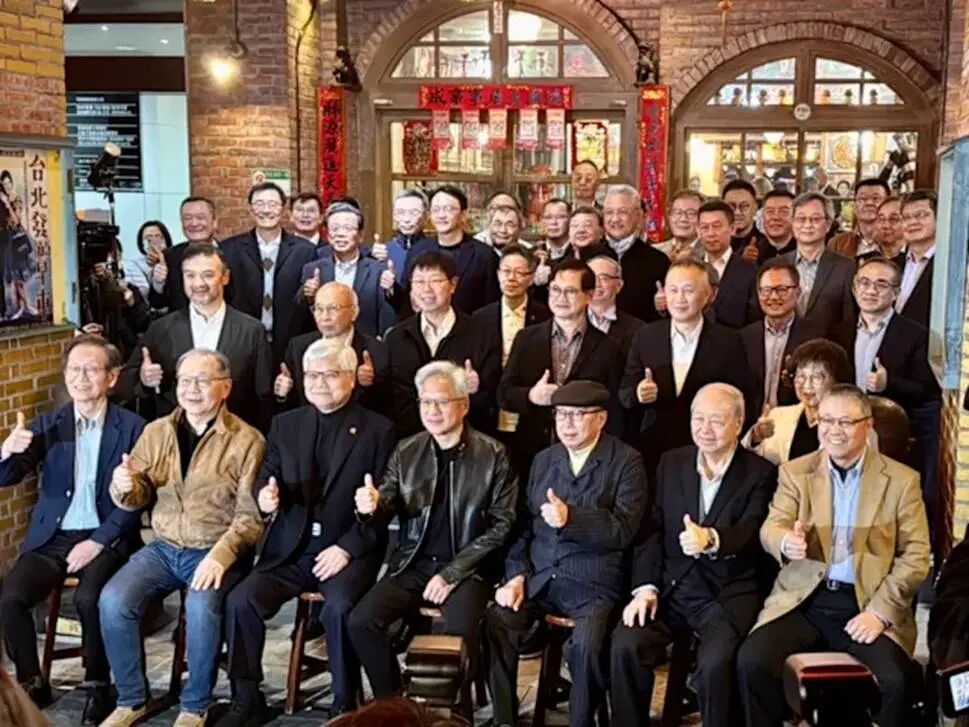
At the beginning of the year, in front of the old store with brick walls on the streets of Taipei, that famous photo from the "billion banquet" was taken. Under soft yellow lights, a group of graying industry veterans crowded together, with Mr. Huang in black leather sitting squarely in the front, beside him was Wei Zhe-jia from TSMC, and on his other side, Lin Bai-li from Quanta in a beret, also seated were representatives from MediaTek, ASUS, Wistron, and standing behind was Liu Yang-wei from Foxconn.
This group, nearing seventy, started their careers in factories in Hsinchu and Taipei, hustling through forty years of motherboards, laptops, and contract manufacturing for meager profits as thin as blades. Little did they expect that in their twilight years, following this leather-clad man, also from Tainan, who had washed dishes in America, they would crash into the peak of the computing power industry.
To outsiders looking at this photo, they might either think that Nvidia depends on Taiwan for supplies or that Mr. Huang is merely doing charity for his fellow Taiwanese. However, both perspectives are shallow.
Although Nvidia holds sway in the buyer's market, what Mr. Huang wanted was speed—massive annual overhauls; simply throwing contracts would not suffice.
Do you all remember the challenging breakthrough of Blackwell? Before fully ironing out the designs, it dared to directly use liquid cooling at the cabinet level, with 5,000 copper cable backplanes and the new CoWoS-L packaging. The result was that the masks needed to be reworked, cabinet liquid cooling joints leaked, and high power dissipation warped while the unthinkable engineering dirty work exploded just before mass production.
If the standard American corporate managerial team were in charge, approaching supply chains with cold contracts, legal penalties, and bidding comparisons, or leaving it to local North American suppliers under 9-to-5 rules, the rational response from suppliers would be to conduct matters dispassionately: "Not funding materials until your offerings are frozen; if you change designs midway, I won't consider it and will charge a fee for changes if it leads to production halts; if there is yield accident, clarify whose liability it is first."
That unprecedented supercomputer, Blackwell, could mass-produce within a year fundamentally stemmed from Mr. Huang's unique ability to combine America’s top architecture with Japan’s materials and substrates, South Korea’s HBM storage, Taiwan’s wafer packaging, and tedious system engineering jobs into a powerful advance.
Looking across the global tech sphere, only Mr. Huang could accomplish such an impossible task, able to iterate low-level operators in California by morning, and be in Taipei’s night markets that evening for drinks—leading these old industry leaders, who dared to commit hundreds of billions during cyclical fog to amplify production, allowing a crowd of Taiwanese engineers to sleep on the production line during Lunar New Year to ensure deliveries under Mr. Huang’s unfinalized designs.
Now, that person in the center of the photo has left his position.
Among the table's occupants, only TSMC and Hynix remain in the seller's market. With Mr. Huang gone, it diminishes a long-time client who cultivated deep ties over decades; they will remain in charge this cycle. Capacity allocated at market prices to external companies like Broadcom, Google, AMD; TSMC and Hynix may stand to benefit more.
As for Broadcom and AMD, the interpretation is clear—they stand to benefit greatly. If Mr. Huang’s stronghold on TSMC’s CoWoS and Hynix’s HBM flattens with his departure and allocations shift towards custom ASICs and second suppliers. Margins in this competitive landscape will prompt buyers to explore secondary supply choices.
On the flip side, for the abundance of Taiwanese contractors, assemblers, and component heads, the situation becomes more complicated. Mr. Huang's exit and a shift to an entirely American executive team could reshape the Taiwanese industrial chain while simultaneously inflicting more discreet internal injuries on Nvidia. Even if no supplier is replaced, the relationship would transition from “a life-or-death fighting unit consuming meat” back to “a contractual relationship adhering to details.”
The moment no one is willing to risk enlarging production for you in advance or take on the unselected engineering plans, Nvidia's past three years of "Hopper → Blackwell → Rubin," with extreme iterations annually, risks losing its physical base.
I truly believe innovations in computational power will still flourish, but that kind of system-level violent leaps doubling physical limits every year will likely become the final chapter.
Six
What kind of company Nvidia has transformed into without Mr. Huang has already become clear.
It will not collapse into the second Intel. The pipelines for Rubin’s engineering have long since been locked down for the next four to six quarters, CUDA’s two-decade legacy of millions of developers will not vanish overnight, and the data centers approved in North America are still in the process of deliveries, solid performance will almost automatically arise by 2027.
However, the three layers of magical premium attached to Mr. Huang personally over the last three years that the market had applied to Nvidia have been permanently stripped away as of the morning of November 12: the founder-led decision-making, the technical miracles of crushing competitors at 150 mph across generations; leveraging off-balance sheet guarantees to support the big gambler alliance, pushing the entire industry for infinite betting as the AI central bank leveraged; maintaining the iron curtain faith of securing a 75% monopoly profit margin.
Kress's role now is merely managing the accounts, ensuring compliance is in place, and scheduling buybacks and dividends. These are all responsibilities of a good CFO, but they cannot uphold the valuation of an innovative creator company.
The Nvidia that has lost Ni Kun and lacks Ni Yongxiao is transitioning from a company that creates demand and defines its own rules to a mature top-tier semiconductor cash cow that must squarely confront cycles of buyer capital expenditure, second supplier diversions, and reverting gross margins.
Closing
Before this political storm erupted, the demand side and financial side of the AI industry had already shown signs of fatigue: large companies’ cash flow was dwindling, approvals for energy were getting stalled, and computational power buyers were raising warnings of approaching expenditure limits, signaling that the entire industry was sliding towards a game of slower progress.
On the supply side, since 2023, the driving force enabling the surge in computational capability to exceed physical laws over the past three years was fundamentally due to Mr. Huang's singular command over the Pacific elite known as the "Pacific Fleet." Now that the captain has stepped down, the White House's trade faction has lost power, the non-proliferation iron curtain has descended, and the new regulations for re-routing, re-rooming, and reshaping supply chains have become the new rules of the game, the advancement speed of the most advanced computing architecture innovation will undoubtedly slow down.
The deceleration in buyer cycles, juxtaposed against the geopolitical disassembly of supply sources, coincidentally colliding head-on in this deep autumn, closes the chapter of the fervent AI rush of the first half of the year.
Ten years from now, if we re-examine the entire development history of AI in the 2020s, the end of 2026 may likely be marked as a genuine historical turning point.
The era where the super captain, leading the Pacific Fleet and clad in leather, undid his jacket, and where the wild running of the computing industry came to a head, has concluded this week.

(End)
免责声明:本文章仅代表作者个人观点,不代表本平台的立场和观点。本文章仅供信息分享,不构成对任何人的任何投资建议。用户与作者之间的任何争议,与本平台无关。如网页中刊载的文章或图片涉及侵权,请提供相关的权利证明和身份证明发送邮件到[email protected],本平台相关工作人员将会进行核查。


