Author: Alma Li, Techub News
Introduction
Ewan used to develop a trading strategy, which required long communication back and forth with a programming teacher, consuming a lot of time for even a small strategy. He couldn't write code himself, and to do quantitative trading, he needed to form a team first. Now with ChatGPT and Codex, he says: as long as you have ideas, the large models can completely replace you in doing these jobs; ordinary people with trading experience can also build a small trading team themselves.
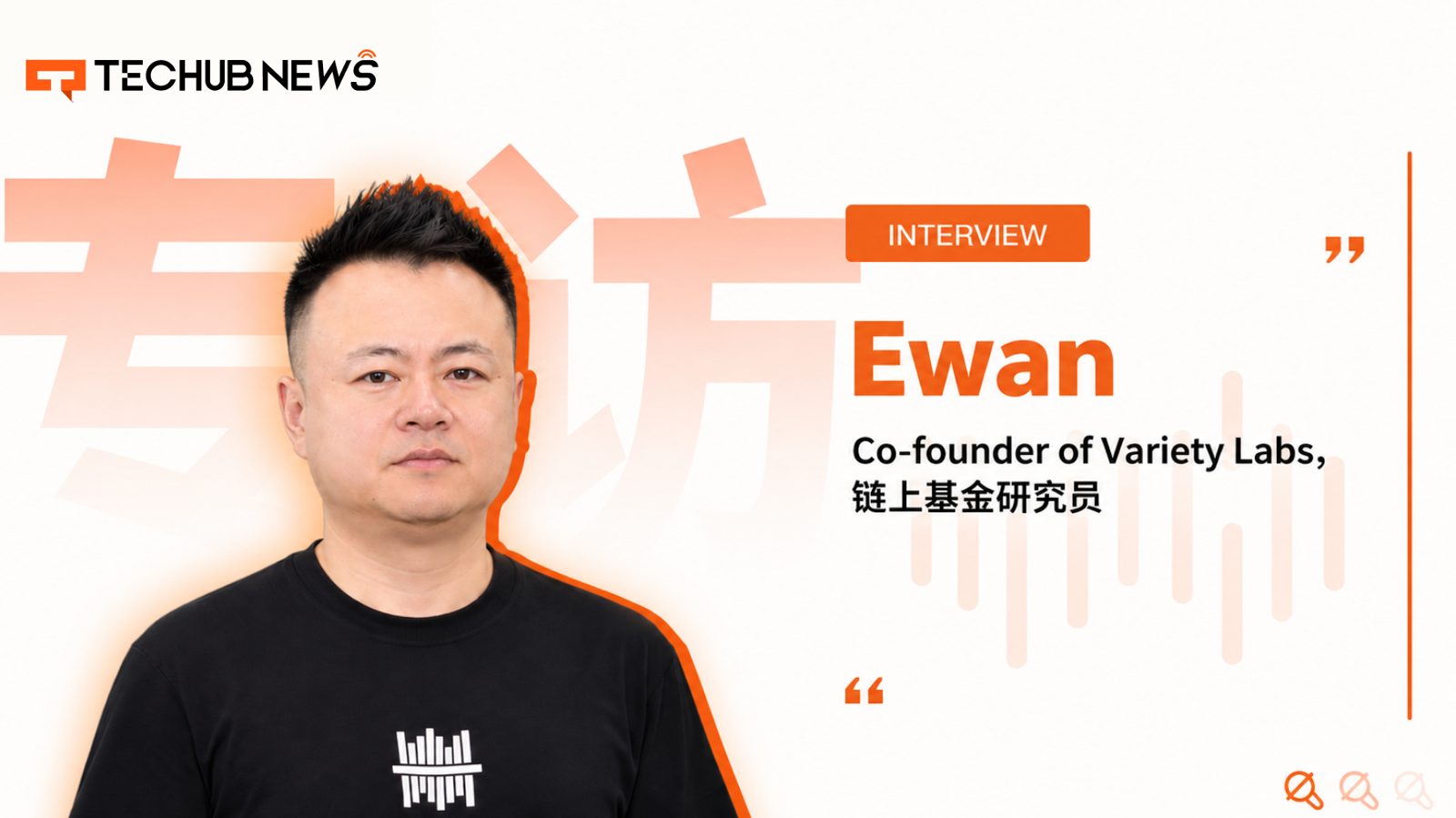
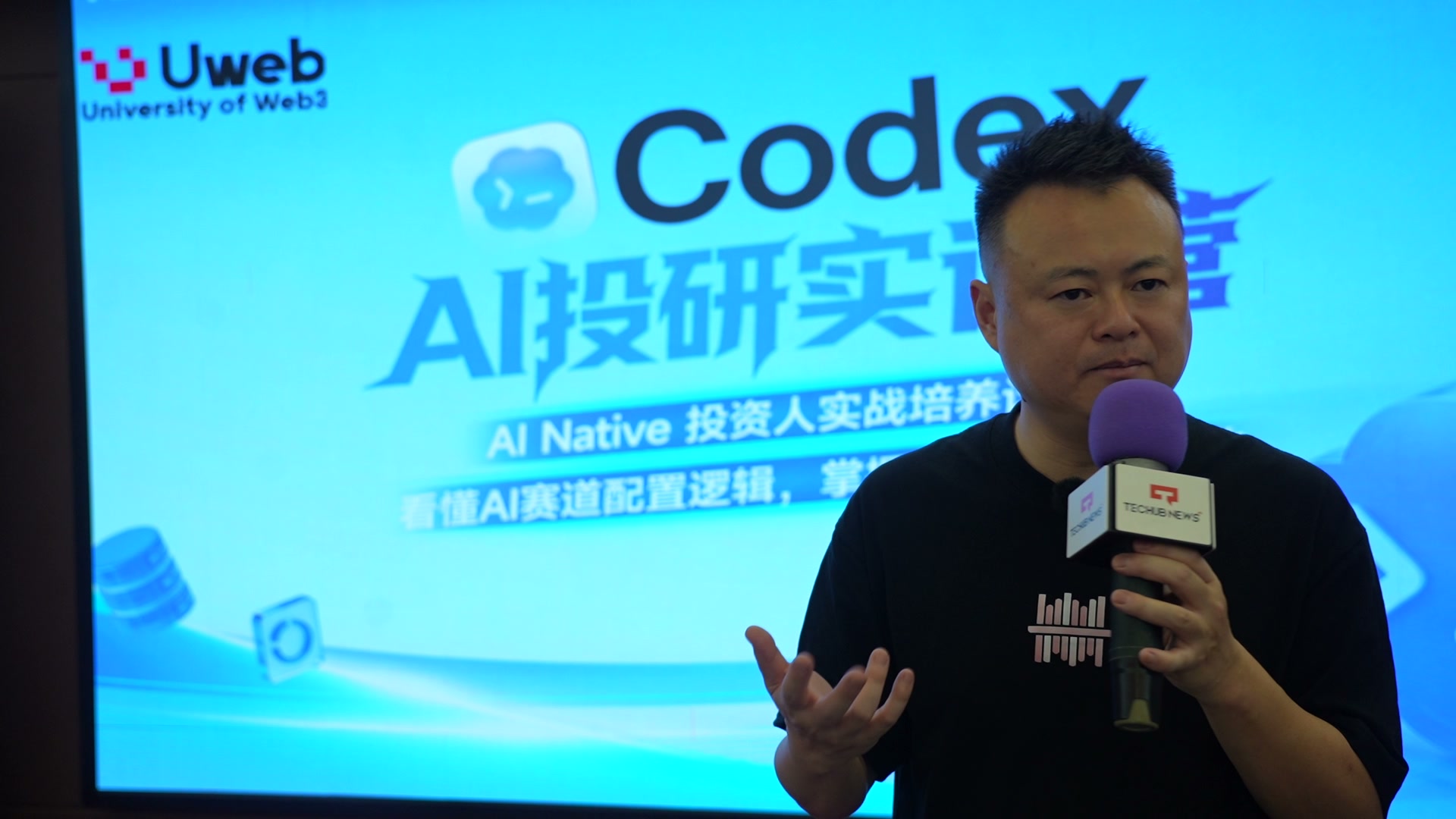
Ewan is a co-founder of Variety Labs and an on-chain fund researcher. Initially, Variety Labs was a professional Forex FX algorithm trading team, now focused on researching on-chain derivatives trading strategies. On November 8, he taught "How to Achieve Cross-Platform Arbitrage with AI" and a practical course "Airdrop Practical Teaching" at the Codex AI research and training camp in Shenzhen hosted by Uweb, and later accepted an interview with Techub News. He judges that future trading will no longer be a competition between people but rather between Agents; however, the differentiating factor will still be people.
Key Summary
- Ewan observed that around May and June of this year, AI began to integrate into trading terminals, upgrading from "connecting to exchanges to place orders" to "listing trading opportunities for users to operate simply", making such strategies accessible tools for ordinary traders.
- Ewan believes that the biggest change brought by large model Agents to trading is "equity": previously, individuals could hardly access quantitative trading, while now, as long as they have trading experience and ideas, they can have AI complete programming and other tasks.
- Ewan stated that the competition between Agents still ultimately depends on people: everyone’s trading experience, entry points, stop-loss and take-profit strategies are different, determining the differences among Agents.
- Ewan suggests that ordinary traders use Agents in two steps: first, pass their existing dozens to hundreds of strategies to different Agents to "replicate themselves", then improve each one individually to filter out the few that can really make money.
- Ewan anticipates that traditional exchanges and large institutions will bring ordinary users to the blockchain through compliant traditional app entries, and this will become an increasingly larger trend.
AI Enters Trading Terminals: From Ordering Tools to "Foolproof Operations"
Editor's Note: This segment of the recording starts from the interviewee's answer midway; previous questions are not recorded.
Ewan: Previously, such tools were quite professional and mainly used by institutions or small investment groups and had not yet been popularized for individual traders. Earlier trading terminals were purely terminals; they allowed you to connect to Perp DEX or centralized or decentralized exchanges to place orders, but had not yet upgraded to using AI Agents to assist in ordering. Around May and June of this year, AI began to integrate into trading terminals, allowing trading strategies to be generated through questioning. But at that time, it wasn't yet in the highly specialized form discussed in class today, where it lists all trading opportunities for you to do simple operations.
I believe this is a trend. Previously, we placed orders using terminals and at the same time used other AI Agents for analysis; now, it’s as if all AI Agents have been integrated into the trading terminal. Therefore, for ordinary traders, this is no longer a very difficult strategy; it has become an inclusive strategy.
What This Class Aims to Teach Students
Alma: I noticed you were very dedicated, coming in yesterday for today's class. What do you hope the students will gain from today's course?
Ewan: I came yesterday to look over the whole curriculum outline, which is step-by-step: first, learn to use Codex, then learn to use AI Agents. The gain is actually quite simple; everyone willing to come and learn surely hopes to master the use of AI Agents, trading terminals, and Codex tools. We play a guiding role. Some of the concepts are difficult to encounter without guidance; but once they do, they will find it very interesting and more willing to delve deeper into research. With this ongoing learning action, today’s learning outcomes will be achieved.
AI Brings "Equity": Ordinary People Can Build Trading Teams
Alma: There has been a lot of automation in quantitative trading. What do you think is the most crucial innovation or new capability of the large model Agents now?
Ewan: If you have some trading experience, it is a true equitizing action, allowing ordinary people to have easy access to quantitative trading. In the past, it was almost impossible to engage with quantitative trading solely based on personal trading abilities and conditions; you had to build a quantitative team with programming and other talent. I have deep experience, as I didn’t know code at all; working with a programming teacher, a single strategy took an incredibly long time to communicate, and creating a small strategy consumed a lot of time. Now with ChatGPT and Codex these large models, as long as your ideas are on point, you can have them completely replace your work.
For ordinary, experienced traders, as I mentioned earlier, you can also form a small trading team. Your experience and trading strategies are becoming increasingly close to traditional professional teams, and I believe this is also a future trend.
Alma: How much funding do you currently authorize your AI Agents with? Or what is the general amount?
Ewan: We may not have discussed a concept during the class, called proprietary trading, which could be a rapidly emerging trend. Suppose we spend 25 dollars; we can buy a 5000 dollar account; the actual cost is only 25 dollars, and if we make money, we can share 80 percent. It is also a project based on Hyperliquid.
Alma: Sounds like a very popular category of products in the Forex circle, trading tickets.
Ewan: Yes, it has now begun to enter the blockchain, moving into the Perp DEX decentralized trading exchange track. Very few people know about it now, similar to last year's funding rate arbitrage, but I believe it will become a new trading way in the coming months.
Editor's Note: Proprietary trading platforms usually require traders to pay a fee to participate in assessments or obtain simulated funding accounts, and only upon meeting specific rules can they participate in profit-sharing. If they do not meet the standards, the fees are non-refundable, and rules vary widely across platforms. The 25 dollars and 5000 dollars account with 80 percent sharing ratio mentioned by the interviewee is an example; this article has not verified specific platform terms.
Alma: From what I understand, these types of products are very popular in the Forex circle and have matured in projects promoted in the U.S.; however, I encountered a project in Dubai last year that didn't perform well in the Chinese community. After going on-chain, what differences does it have from past off-chain products? Would Chinese users be reluctant to use such products?
Ewan: That is not important; this is precisely our research direction: the earlier it is, and the fewer people that are using it, the more willing we are to utilize it. We have identified several top products, most of which are used by European and American users. Moreover, since it is built on Hyperliquid, every transaction on-chain is traceable, making it highly transparent and essential. It also has some airdrop expectations, so I am currently getting involved at an early stage. Now there are trading terminals capable of connecting to such proprietary trading platforms, and I will fully empower the Agents to engage in proprietary trading.
Alma: Fully empowering Agents for automated trading, how much funding do you authorize them with?
Ewan: It merely buys the tickets; you give it a 5000 dollar account, but only spend 25 dollars, so there's no need to worry about it messing things up.
The Future Is Competition Between Agents, But the Differentiation Is Still People
Alma: You said in class that future trading will not be a competition between people, but rather between Agents. Could you explain this in detail?
Ewan: I have been trading for many years, and many strategies were difficult or nearly impossible to implement before the development of Codex this year, or would require too much effort and time. With AI this year, if you have trading experience, you can build your own trading team. As mentioned in yesterday's class, we are now essentially directing a trading team to trade. Previously, we directed people and had to hire various professionals, which was very costly; now you can delegate ideas that were previously unattainable to AI Agents and enable them in trading.
Alma: In the competition between Agents, since everyone is using the same cutting-edge models, what would set them apart?
Ewan: Still, it all comes down to people, at least at this stage we cannot escape this point.
Alma: What do people impart to Agents?
Ewan: It's your trading experience and strategies. Some trading experiences and strategies cannot be public; everyone is different, and each one’s entry points, stop-loss, and take-profit strategies are unique.
Alma: Hyperliquid has opened more and more products; what characteristics of these on-chain derivatives suit Agents to leverage?
Ewan: There are too many; I believe all products are suitable for AI Agents to execute.
Institutions Going On-chain Will Bring Ordinary Users On-chain
Alma: Going on-chain itself has already eliminated a part of the population. In the crypto circle, everyone has been discussing how to get more people to use on-chain. Will this change with the continuous iteration of AI technology? Right now, centralized platforms still have more users.
Ewan: That’s a very good question. One trend this year has been traditional exchanges and large institutions going on-chain, including BlackRock, Kraken, Ondo, as well as the European online bank Revolut. Currently, all the on-chain participants are large institutions with traffic in the millions. This trend is gradually bringing ordinary users through traditional app entries onto the blockchain, and there’s no need to worry about compliance or scams since the entry channels are entirely legal and come from compliance-driven sources in Europe and America. I believe this will become an increasingly significant trend.
Alma: In the future, everyone will have their Agent for trading. If Agents use the same model and obtain the same information, will everyone eventually receive the same advice and perform the same operations? Earlier in practice, my Agent prompted me to focus on a certain token, and I noticed your process was the same. The financial market is a zero-sum game; who is losing money, and who is making money?
Ewan: At the beginning, everyone is in an exploratory phase, and in times of uncertainty, they may rely on existing models or current trading strategies, leading to some similarity. However, if everyone is willing to research, as studies deepen, everyone’s ideas will surely differ. If similarities lead to collective losses, the market must change, causing everyone's thought processes to alter, so this is an evolutionary process that may take six months, a year, or two years; it isn’t something we can solve at this stage. But you must first attract ordinary users to this track by using some simple methods and straightforward strategies to pique their interest before fully expanding this endeavor.
Two Steps to Using Agents: First Replicate Yourself, Then Filter Out the Profitable Ones
Alma: You have been doing Forex trading for many years; from your own and your students' experiences, what is currently the biggest pain point in trading? Have the existing Agents fully resolved this issue? Is the improvement in trading capabilities due to personal experience or the use of AI?
Ewan: I won’t mention the pain points; they are traditional issues—trading will naturally involve losses and gains. For ordinary traders, using Agents is in two steps. The first step is to have them learn your existing trading experiences step by step; simply put, it's about replicating yourself: handing over your current trading strategies, such as fifty or a hundred, gradually to different fifty or one hundred Agents. The second step is to improve each Agent and ultimately select five or ten that can help you make money. It’s not the case that you don’t understand anything and leave it all to an Agent to earn money or trade for you. You have to have your own ideas and strategies first, replicate them to the Agents, and train them in this way, so that the effect reaches greater than one plus one, greater than one hundred, or greater than two hundred.
After the Class: Two Months of Online Courses and Continuous Q&A
Alma: For the students who have completed the class today, how will you verify who truly understands and has learned? Will there be post-class assessments and reviews?
Ewan: Uweb has two months of online courses and Q&A afterward. If students are willing to explore and research on their own, we can communicate online whenever there are questions; that's not an issue.
Alma: During the teaching process, did interacting with students help you and provide insights?
Ewan: Certainly. Yesterday I also came early to experience the course. Everyone has a different starting point and is doing different things, but from the teaching process, it’s clear that everyone is very interested in this topic. After all, this is trading; it directly relates to money. After intensifying the online classes, if each person can form their trading mindset or establish a fixed profit model, I think this course will be very effective.
Editorial Note: This article is based on a recorded interview conducted on November 8, 2026, at the Uweb Codex AI research and training camp in Shenzhen. The formal interview recording is about 15 minutes long; the preliminary dialogue for adjustments before shooting has been removed, and the recording starts from the interviewee’s response. The question-and-answer exchanges have been edited to remove fillers, repetitions, and agreement. Responses are true to the original speech and have not been reviewed by the interviewee. Some platform names and token names in the recording could not be deciphered and are not reflected in this article; "Kraken" corresponds to the pronunciation of '海妖'. The introduction of the interviewee is based on materials provided by the event organizer and course poster; details about proprietary trading costs, profit-sharing ratios, and the judgment on institutions going on-chain are personal views of the interviewee. Disclosure of interest: Techub News cooperated with Uweb, the organizer of this training camp, to write the "AI Intelligent Investment Manual".
Disclaimer: This article is for informational sharing only; the views of the interviewee do not represent Techub News's stance and do not constitute any investment advice. On-chain derivatives and leveraged trading carry extremely high risks and may lead to the loss of entire capital; please participate with caution.
免责声明:本文章仅代表作者个人观点,不代表本平台的立场和观点。本文章仅供信息分享,不构成对任何人的任何投资建议。用户与作者之间的任何争议,与本平台无关。如网页中刊载的文章或图片涉及侵权,请提供相关的权利证明和身份证明发送邮件到[email protected],本平台相关工作人员将会进行核查。


