Author: Alma Li, Techub News
Introduction
On the Thursday after the U.S. midterm elections, the Nasdaq fell by more than 5% in a single day. Wesley admitted that he did not escape that day: he judged that the U.S. economy would not enter a recession, and that tech stocks had fallen to a reasonable valuation, but did not expect the market's panic to run ahead of the fundamentals.
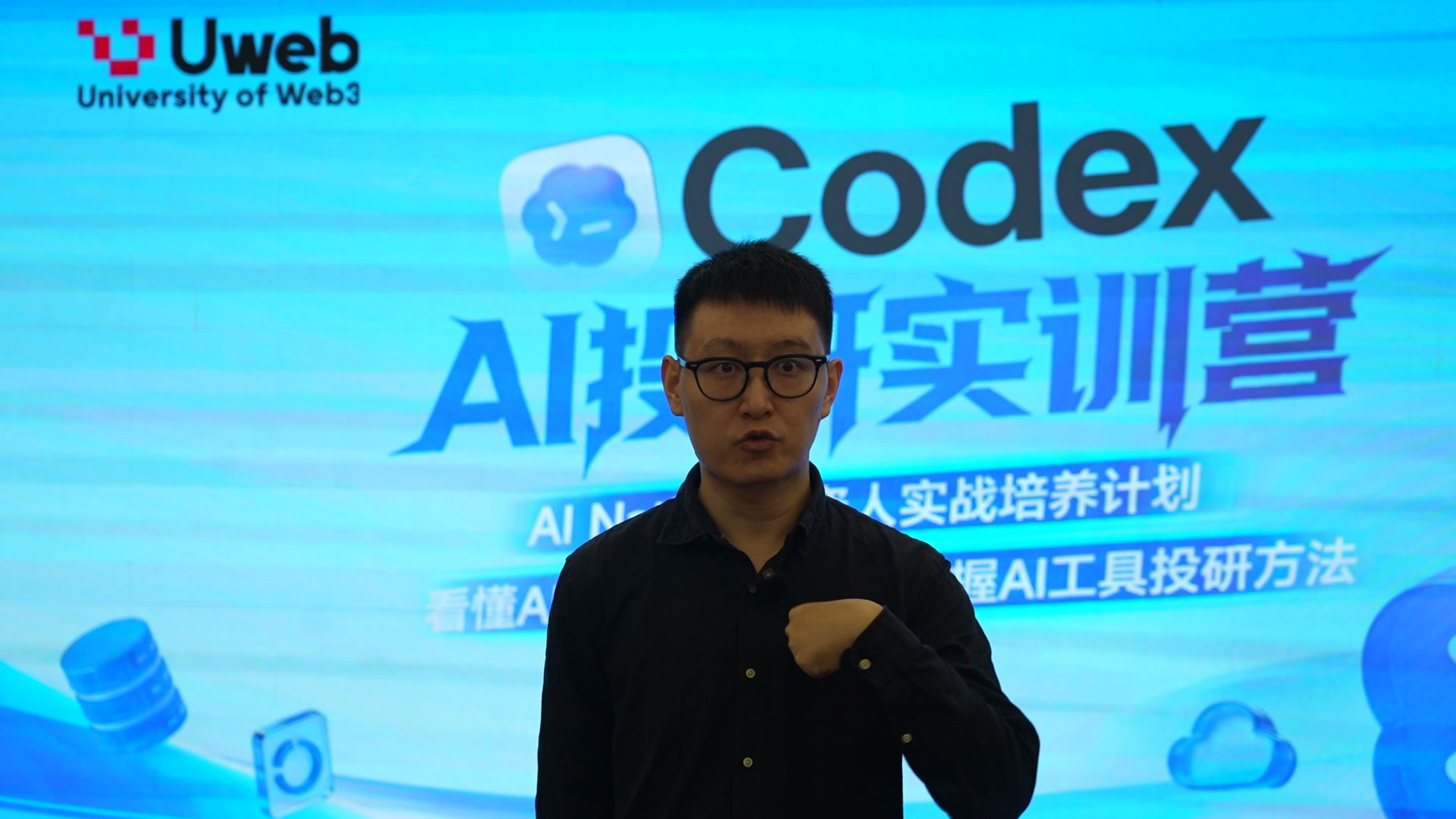
Wesley is the coordinator of the WeChat account "Wesley’s Investment Research Notes," and has served as an investment insight manager for the Chief Investment Office (CIO) for a foreign financial institution in China, with nearly ten years of global macro and investment research experience. He previously worked at institutions such as Xijing Investment in Hong Kong, Futu Securities, and Huaxing Securities. On November 7, he taught "Opportunities and Risks in the U.S. Capital Markets" at the Codex AI investment training camp hosted by Uweb in Shenzhen, and later accepted an interview with Techub News. His judgment is straightforward: the current U.S. stock market is macroeconomically held hostage by microeconomic factors; the U.S. economy depends on capital expenditures in AI; and what ordinary investors should do first is understand themselves.
Core Summary
- Wesley believes that for ordinary investors facing tail-risk events like midterm elections, the best approach is to hedge beforehand and respond afterward, and not to gamble before risk events.
- Wesley says that to evaluate the value of a market view, one should first ask under what circumstances it would fail; any investment view is "if-then," and exceptions are more important than certain causal relationships.
- Wesley believes that those who are not interested in investing but just want to make money are best suited to do simple asset allocations rather than trading, such as six parts stocks to four parts bonds, or six parts stocks to four parts gold, or by buying S&P ETFs.
- Wesley judges that the current U.S. economy depends on capital expenditures in AI, and U.S. stock investors should first study the financial reports of major AI companies and the supply and demand in AI; the AI sector will definitely differentiate within the next year.
- Wesley states that this course is most suitable for those interested in investing and who have experienced market fluctuations; he hopes students take away the distinction between long, medium, and short-term investment perspectives, as well as the "anchor points" for judging U.S. stock market ups and downs.
Post-Election Plunge: Do Not Gamble Before Risk Events
Alma: Hello, Teacher Wesley, I am Alma, the founder of Techub News. I attended your class this morning. Many people, including myself, have a confusion about investing: Even though information is particularly advanced now, especially with the advent of AI, when the market changes, people still do not know how to judge. What indicators do you mainly look at when investing? For example, after the midterm election results came out.
Wesley: It depends on your investment methodology or the assets you invest in. For instance, I do global asset allocation, and midterm elections have both macro and micro impacts. My judgment beforehand was that the impact would be limited because the market had already fully priced it in: previous elections had shown that it was certain the Democrats would sweep the polls, and in the preceding weeks, stock prices had already had significant adjustments, with sectors favorable to the Democrats significantly rising and unfavorable ones falling sharply. The surprising point was in the gubernatorial elections, where the Democrats won in Texas, a state long held by the Republicans and a key data center state. At least in the market's understanding, this brought a very large panic regarding AI.
Editor’s Note: According to U.S. media reports, Democratic candidate Gina Hinojosa defeated incumbent Governor Greg Abbott in the November 3 elections, becoming Texas's first Democratic governor since 1995.
I judged that the impact of the midterm elections would mainly be on fiscal policy and AI regulation, both of which were controllable, but the market's reaction exceeded my expectations based on the fundamentals. The market is like a startled bird, and such panic cannot be anticipated in advance.
In this situation, for individual investors facing events with tail risks, the only choice is to hedge beforehand. Historical data also shows that the market will usually have at least a month of adjustments before the midterm elections and then experience a relatively certain rise afterward. Everyone wants to avoid uncertainty. Regarding institutional funds, we also observed many hedge funds continuously reducing leverage and lowering stock positions before the elections. If institutions are hedging, you should also follow mainstream funds to reduce positions and then increase risk exposure based on market fluctuations after the elections. Do not gamble before risk events; instead, wait to respond once they materialize. This is what I think is the best advice.
Selecting Perspectives: First Ask When It Will Fail
Alma: Every time an event occurs, there are many voices in the market. For investing students, how should they select valuable insights from the multitude of perspectives?
Wesley: It still depends on oneself. There is a lot of information in the market, which is mainly supply-side information, but you cannot be bound by the supply side; you must first understand what your own demands are. You cannot just accept any information that comes your way. This requires the most caution in investing. For example, some influential investors may present many views that are not necessarily suitable for your investment logic and risk preference. If you see it and accept everything, that is the greatest risk for individuals. So, the first thing this question depends on is who you are.
Alma: Let’s try an example. For instance, if someone says, "Lower interest rates are more beneficial for risk assets," what would you ask next? What kind of answers would indicate that you really understand this viewpoint?
Wesley: When would this conclusion fail? As I mentioned at the start of my class today, investing is not a science; there are no certainties. Any view or methodology is "if-then," with a prerequisite followed by a conclusion. For instance, if it is said that interest rate cuts will benefit risk assets, when would that prerequisite fail? Is there a bigger reason behind that benefits risk assets than the Federal Reserve cutting interest rates? It might be that A does not equal B; instead, A and C together equal B, and the risks associated with C have been overlooked. You need to look at it in the context of each previous rate-cut cycle in history: whether every time assets increased or if there were exceptions, and what the influencing factors for those exceptions were. Will there be such exceptions this time? I believe exceptions are more important than certain causal relationships. For ordinary investors, there are many opportunities, but risks are even more worth guarding against.
From Institutions to Individuals: The Simpler the Allocation, the More Suitable for Ordinary People
Alma: You were previously the investment insight manager at the Chief Investment Office of a foreign financial institution in China and have developed your own investment research system. What parts of your growth experience can students draw from?
Wesley: For ordinary investors, what is most important is that you need to understand yourself. I have interacted with many investors and high-net-worth individuals both in foreign institutions and domestic ones. Financial institutions help you with allocations and sell allocation products, but their biggest problem is selling products they want to sell, not the best products for the clients, because they are sales-oriented and product-oriented. Clients often lack the ability to filter and end up selecting products that do not match their own risk preferences.
What is most crucial for ordinary investors is understanding what products they are buying and what risks they are undertaking. The simpler the investment logic and the simpler the products for allocation, the more suitable they are for ordinary people. Instead of only looking at historical returns and comparing returns with those around them to conclude that a particular product is best, this is the biggest risk. From my experience, there are many very simple investment logics, such as asset allocation, which are very simple and very effective. However, many people are unwilling to do it because they only see the returns and do not consider the risks. They only realize after suffering losses that they are not suited for their current investment methods. If you are not interested in investing and solely want to make money, it is best to do allocations rather than trading, conserving energy to focus on what is most valuable to you. Trading, when you are not good at it, consumes a lot of energy, making it the least suitable state for most people.
Alma: What does doing allocation mean? Is it handing over money to someone else to manage?
Wesley: No, you can do allocation yourself. The simplest allocation strategy, such as six parts stocks and four parts bonds, or six parts stocks and four parts gold, are very simple and effective strategies that have historical performance to prove them. Buffett has also mentioned that if you just buy the S&P ETF, you can outperform 60% of actively managed funds. So why try to time the market or buy other assets? Most likely, you will end up underperforming the index. If you are not interested in investing, you should save your energy to pursue other matters.
A Review: Fundamentals Were Correct, but I Underestimated the Panic
Alma: Knowing is easier than doing in many cases. Can you provide an instance from your own investment experience where your judgment deviated and led to a change in your research habits?
Wesley: Let me use a recent example: the market fell sharply this past Thursday. Before Thursday, I started from the fundamentals and did not believe that the U.S. economy would enter a recession, so I did not expect U.S. stocks to drop more than 10%. Secondly, I believed this year’s U.S. stock market was more about rotation, tech stocks had fallen to a relatively low point, defensive sectors and value stocks had reached new highs, and the macro environment and liquidity did not support them continuing to reach new highs while tech stocks continued to reach new lows. Thus, I believed that tech stocks had fallen out of the reasonable valuation in the past month.
On Wednesday, the market was actually stable, seemingly able to digest the risks of the midterm elections, but on Thursday, an unexpected drop of over 5% occurred, equivalent to the drop seen when additional tariffs were first imposed on "Liberation Day" in 2025, when the market directly anticipated an economic recession. Now the market has also begun to expect a recession, due to anticipated slowdowns in AI capital spending. I believe this panic does not align with the fundamentals, but its greatest impact on me lies in market volatility. I had previously been clear that market volatility does not only stem from fundamentals; sentiment plays a very significant role in the short term. But I still too relied on the fundamentals without adequately hedging against this tail risk. My Nasdaq-related positions saw my net worth fall about the same amount as the stock market, while I had liquidated my bonds and gold just when the Fed's interest rate hike cycle began. In this instance, both bonds and gold could have hedged against the decline of the U.S. stock market.
Editor’s Note: According to Yahoo Finance data, the Nasdaq Composite Index dropped by 5.52% on November 5 (Thursday) and the S&P 500 Index dropped by 4.36%.
Therefore, my conclusion is to maintain awe for the market. Even if fundamentals are still there, market panic always runs ahead. Anticipating panic is extremely difficult because it may reverse at any time; if you overly hedge and liquidate, you may miss out on the upward movement. The biggest instance of underperformance for my net worth this year was during the major rise of tech stocks in April, where I lost ground due to excessive hedging. Thus, in situations where the fundamentals of tech stocks have not changed, I would not reduce my holdings in tech stocks because of pullbacks caused by sentiment. However, before risk events arise, you cannot be overly arrogant and think that the worst-case scenario will have a limited impact on the fundamentals and remain optimistic. Just because you think the impact is limited does not mean the market shares that sentiment. That is a significant lesson for me.
Alma: Will you adjust your positions?
Wesley: In the future, when encountering similar events, I will try to hedge in advance. Because in the most pessimistic scenarios, the market may price in an even worse outcome. By hedging early, I will have a better opportunity to buy. This time, I didn't manage to avoid the decline; I will only increase my positions.
How to Research in Half an Hour a Day: Now Only Focus on Micro
Alma: You mentioned in your public articles about the method of reading research reports with questions. If students have only half an hour each day, how would you recommend they arrange their reading, thinking, and note-taking?
Wesley: First, consider what they are investing in. Simplifying a bit, assume they only look at U.S. stocks; that would also depend on whether they invest top-down or bottom-up: a top-down approach requires looking at macro factors, while a bottom-up approach focuses on corporate earnings reports. I recommend that investors take a top-down approach because the threshold for bottom-up investing is still quite high; even with AI tools, covering hundreds of companies is overwhelming. Macro investing is relatively simple, and index investing also is.
For example, if you only invest in ETFs and not individual stocks, half an hour is sufficient. In that half-hour, first, look back: what caused the price movements overnight? If you cannot analyze it, look at the analyses provided by the market. Review your investments over the past day, week, and month, identifying which fluctuations you did not understand and which risks you underestimated. Secondly, look forward: what macro data or risk events are about to be published that could cause fluctuations, and how you might adjust your positions in advance in response. These two activities should definitely be done within that half-hour.
Alma: How much time do you spend each day?
Wesley: Not just half an hour; it could be five or six hours, all spent reading research reports or conducting review analyses.
Alma: How do people focused on AI, tech companies, and digital assets assess when to pay more attention to macro factors and when to look at industry fundamentals?
Wesley: At this current juncture, one can only look at micro factors. Macro factors have now been held hostage by micro factors: the U.S. economy depends on AI capital expenditures, rather than on Fed interest rate cuts or fiscal expenditures; these have already become secondary factors. The market is pricing whether AI capital expenditures can be sustained. Therefore, for any U.S. stock investors—indeed for any global market investors—the main thing to study now is the financial reports of major AI companies, along with the supply and demand of AI; this directly determines investment returns in the coming years. Even if you don't invest in AI, by understanding these thoroughly, you can also discover opportunities in other assets.
Currently, there are two categories of assets in the market: AI assets and non-AI assets. Non-AI assets also have many opportunities, but the threshold is similarly high, provided you already have a basic research capability. Most assets have already been hijacked by AI, being directly related to AI; you must first thoroughly research the AI industry chain before looking at other assets, which will be more helpful.
Alma: You discussed the cycles of technological innovation, corporate earnings, and valuations together in class. Why do some people correctly identify the long-term trend of AI yet still fail to make good investment decisions?
Wesley: It depends on their investment time horizon. Just like the recent market, I still believe that the supply and demand dynamics and opportunities in the AI industry chain are clear, and it stands out among other sectors in the U.S. stock market for certainty. However, if the positions are too crowded, there will still be a lot of volatility, and this volatility is not driven by fundamentals but rather by the capital situation, position structure, and chip structure. Long-term trends are the easiest to discern; looking out three to five years has the highest certainty, but over one year, three months, or one month, that certainty significantly diminishes. The influences of capital and technical factors will exceed those of fundamentals. Therefore, you need to first distinguish your investment time frame, and when fundamentals do not dominate, you must respect other dominant factors.
Alma: After seeing the industry trend, how do you make judgments when focusing on a specific company?
Wesley: Classification is necessary. The AI sector can be divided into five sub-sectors based on upstream and downstream dynamics, and the growth cycle of each is different. In the past few years, infrastructure may have been rising, but in the future, AI applications might be the ones increasing. With the logic of supply and demand in the industry chain, you will realize it is not a universal rise. While the past two to three years may have witnessed a broad rise, the coming year will definitely see differentiation. You must find the segments that benefit the most; do not just invest in past winners, as they may very well become losers in the future. This differentiation exists not only across sectors but also within individual stocks; the semiconductor industry is differentiating internally, and large cloud service providers are differentiating internally as well. The methodologies that worked in the past may become ineffective, necessitating the investment of energy into research.
What AI Does in Investment Research
Alma: This morning, you talked a lot about data, industries, and macro judgments. What role does AI currently play in your personal investment research?
Wesley: I find it very helpful for quantitative analysis and reviews. After establishing an investment strategy, previously you would have to use specialized quantitative software for backtesting, which is very time-consuming; now, with AI’s help, finding data and doing backtesting is much less time-consuming.
Alma: Specifically, what tasks have you delegated to AI, and which tasks do you still handle yourself?
Wesley: For instance, when creating investment dashboards. Previously, when looking at macroeconomic data, I had to search various websites individually. I was not a paying user, so I could only access free resources, which was more complex. Now I can consolidate all this data onto one dashboard, clearly seeing how economic data fluctuates and how market rotations occur, allowing for more time-efficient trends in understanding the market, which is very important.
Alma: If AI offers an analysis, how do you judge whether it's accurate or whether it captured the right data?
Wesley: Because these are data I frequently analyzed before; I am not starting from scratch, so I can distinguish. For someone starting from zero, they have to first understand this knowledge before they can discern; it cannot be avoided. It’s the same with anything; you need to understand something first to discern it.
Who is This Course Suitable For and What Will Students Take Away?
Alma: This morning's class, which type of student would it most help? What problems does it primarily solve?
Wesley: First of all, they must be interested in investing. If they are not interested, they won’t be able to focus on such a lengthy discussion. Secondly, they need to have some investment experience to discern that investment volatility has many factors and to understand whether the logic I present is a main factor. If they haven't lost money before, they won’t be able to grasp the importance of certain correct insights, as they lack discernment. Experiencing market downturns is what educates one. Those who have not encountered market fluctuations may forget what they learn, as there are no lessons.
Alma: After the course, how can students prove that they truly understood?
Wesley: If today’s share can be summarized in one main conclusion, I hope students learn: when making any investment, one must first view an asset through the lens of long-term, medium-term, and short-term, rather than only look at the short-term market. Different investment time frames correspond to different investment logic. Many investors fail to make this distinction, thinking all investments are short-term. However, you actually have other choices. Looking from a medium to long-term perspective, you will obtain a more certain probability of success, which might suit you better. You need to step outside of the market to understand yourself; this distinction is the most important.
Secondly, I want them to understand that the stock market operates logically, and price changes have anchor points. Many investors lose sleep over market fluctuations because they don’t understand why stocks rise and fall. If you have an anchor point and know that price changes do not alter the fundamental logic, you won’t fear them moving up or down: the more they fall, the more excited you become; if they rise too much, you become cautious. The anchor point shared today is fundamentals, specifically the economy. The U.S. stock market reflects the U.S. economy. In the coming year, if you genuinely believe the U.S. economy is resilient and will not enter a recession, any decline in the U.S. stock market represents a buying opportunity. This is the most critical premise for judgment and the reason to study the U.S. economy. Once understood thoroughly, at least in long-term investments, the probability of losses is minimal, as having an anchor enables you not to sell at a low point.
Alma: You already have articles on your public account, and students can self-study using AI. What additional value does attending this offline course provide?
Wesley: First, online, I do not have such a systematic framework to share; I tend to talk according to the market situation rather than a structured framework. Additionally, framework-based sharing is more like a reading guide; I aim to spark interest, with many details and data requiring students to explore themselves, rather than providing ready-made information. I pose open-ended questions to hope discussions yield more questions, prompting students to want to answer them on their own and digest this knowledge into their understanding rather than adopting it passively. After listening, they will realize that investing involves numerous choices and many factors that influence the market, leading them to new questions about their investments and guiding them in establishing their investment framework, which is ultimately what matters most.
Alma: What kind of people do you hope will sign up to learn this course?
Wesley: Again, those who are interested in investing and willing to delve in, which is the most important. I can study so many things precisely because I am interested in investing. People who only wish to make money without any interest in investing will not be interested in methodologies; they prefer to engage in momentum trading and remain trapped in that cycle unless they incur sufficient losses to break free. Therefore, I hope students first embrace fundamental investing and develop an interest in it, as this requires substantial research work. After establishing a framework, they can then explore technical analysis, momentum analysis, and timing for buying low and selling high, but they must first have a foundational understanding of the fundamentals; otherwise, they will always be speculating on the market, which carries substantial risks.
Alma: What value do you find in interacting with students during offline courses?
Wesley: The greatest benefit is that they can ask more questions and bring up points I might not have considered. When I share research, I ask and answer my own questions, focusing only on what interests me, while investors have different interests in questions, covering perspectives I do not address. Today, there wasn’t such an instance, but in the past, there have been. I remember during my third sharing, many investors were deeply interested in SpaceX, asking a lot of technical questions while it was still unlisted. I didn’t know much about it then, viewing it merely as a speculative asset, thinking it was only about Starlink and satellites, not directly related to my research. However, as I studied the entire industry chain, I realized when it became a computing and cloud services provider, it played a crucial role with significant research value. Through my further research, I found those initial interests from investors were indeed worthwhile. What the market and investors focus on is vital feedback for me. Each person has a different investment style; mine will not cover all such assets, but that does not mean I am right and they are wrong.
Writing, KYC and Investment Philosophy
Alma: I have encountered many experts in investment research who habitually take notes, output their thoughts, or communicate with others, claiming it helps them clarify their investment logic. Do you share this experience?
Wesley: Yes. I write for my public account, often doing daily updates to output and organize my thoughts, which is definitely helpful. It’s a habit; just like reading, if you read without taking notes or writing articles, you will forget much content. You need to output what you input to turn it into your own insights. Therefore, I encourage everyone to write public articles, blogs, or even journals; writing is the best approach, and it is essential to produce written work, as it promotes critical thinking.
Alma: After the course ends, what advice do you have for students who are interested in investing? How can they determine their suitability for investing and establish their investment framework?
Wesley: In every sharing, I start with the methodology, discussing epistemological matters: first, you must understand the market you are investing in, understand the risks you are taking on, and whether you can bear them. The first task for everyone in investing is KYC (Know Your Customer)—understanding yourself. It is something everyone overlooks, but it is absolutely vital. If the first step is not done well, subsequent investments will deviate significantly, leading to major lessons. Many seasoned investors eventually become philosophers or study Buddhism or Taoism; I think that's normal. In the end, research reveals that it is a fight against oneself, a battle with one’s inner self, so one must understand oneself.
Alma: In your many years of experience, how have you managed to achieve the unity of knowledge and action?
Wesley: You must establish an investment philosophy that fits and belongs to you. At the beginning of my class, I mentioned three investment masters: Buffett, Soros, and Ray Dalio; they all write books. Reading their books, you can see that they have not only succeeded in investing but also in life philosophies; their life philosophies are intertwined with their investment approaches, providing feedback on both life and investment, establishing a system that fits them best. The same goes for everyone; I also have my own investment philosophy. Because of this understanding, I am less likely to stray from my anchor point, less easily swayed by market sentiment, and do not carry investment emotions into my daily life. Successful individuals typically have their own life and investment philosophies.
Alma: What is your investment philosophy?
Wesley: Accepting the unknown nature of the market. I mentioned at the beginning that investing is not a science, but it can be a philosophy or an epistemological inquiry. You must recognize that no view or methodology is certain; building an investment methodology is a process, not a result. You should continuously improve your ability to invest, as it is fundamentally a probability issue. Understanding this will motivate you to persistently iterate your methodologies, knowing that your views have limitations and will surely make mistakes. Accepting the market's uncertainties will make you more humble and cautious. I believe most losses stem from an overconfidence in one's understanding. Sometimes this confidence can lead to gains, such as during a Bitcoin boom when your investment decisions may be driven more by belief than by fundamentals. However, gains and losses often stem from the same source; in the past few quarters, I have seen too many investors lose back the profits they made in AI over the last two years due to leveraging. They have not built their investment methodologies and life philosophies, only clinging to what they call beliefs, which eventually collapse under the strain of market realities. You must understand the market and understand yourself to establish such concepts.
Editor’s Note: This article is based on approximately 32 minutes of interview footage conducted on November 7, 2026, at the Uweb Codex AI Investment Training Camp in Shenzhen. The Q&A has been edited to remove filler words, repetitions, and affirmations. The answers are faithful to the original words and have not been reviewed by the interviewee; it is recommended to confirm with the interviewee before publication. The recording was briefly interrupted due to a malfunction of the venue's screen; related dialogues and concluding pleasantries have been removed. The interviewee's introduction is based on materials provided by the organizer and course poster; statements regarding personal positions, net worth performance, and research duration are self-reported by the interviewee. Disclosure of interest: Techub News collaborated with the organizer Uweb to write the "AI Smart Investment Handbook."
Disclaimer: This article is for informational purposes only; the views expressed by the interviewee do not represent the position of Techub News and do not constitute any investment advice. Investing carries risks, and caution is advised before entering the market.
免责声明:本文章仅代表作者个人观点,不代表本平台的立场和观点。本文章仅供信息分享,不构成对任何人的任何投资建议。用户与作者之间的任何争议,与本平台无关。如网页中刊载的文章或图片涉及侵权,请提供相关的权利证明和身份证明发送邮件到[email protected],本平台相关工作人员将会进行核查。


