Written by: Alma Li, Techub News
Introduction
Most students that Zhang Ruibin encounters are still using AI in a way that is reminiscent of two to three years ago: they ask questions, such as whether Nvidia is worth buying, or how to view the future of the A-shares market. In his opinion, if it’s just Question and Answer, AI is unlikely to become a true tool for investment research. What the training camp aims to teach is more about mindset than technique: first, to let the large model "distill" the analytical logic you accept, and then provide it with accurate primary data, allowing Codex to produce results according to the workflow.
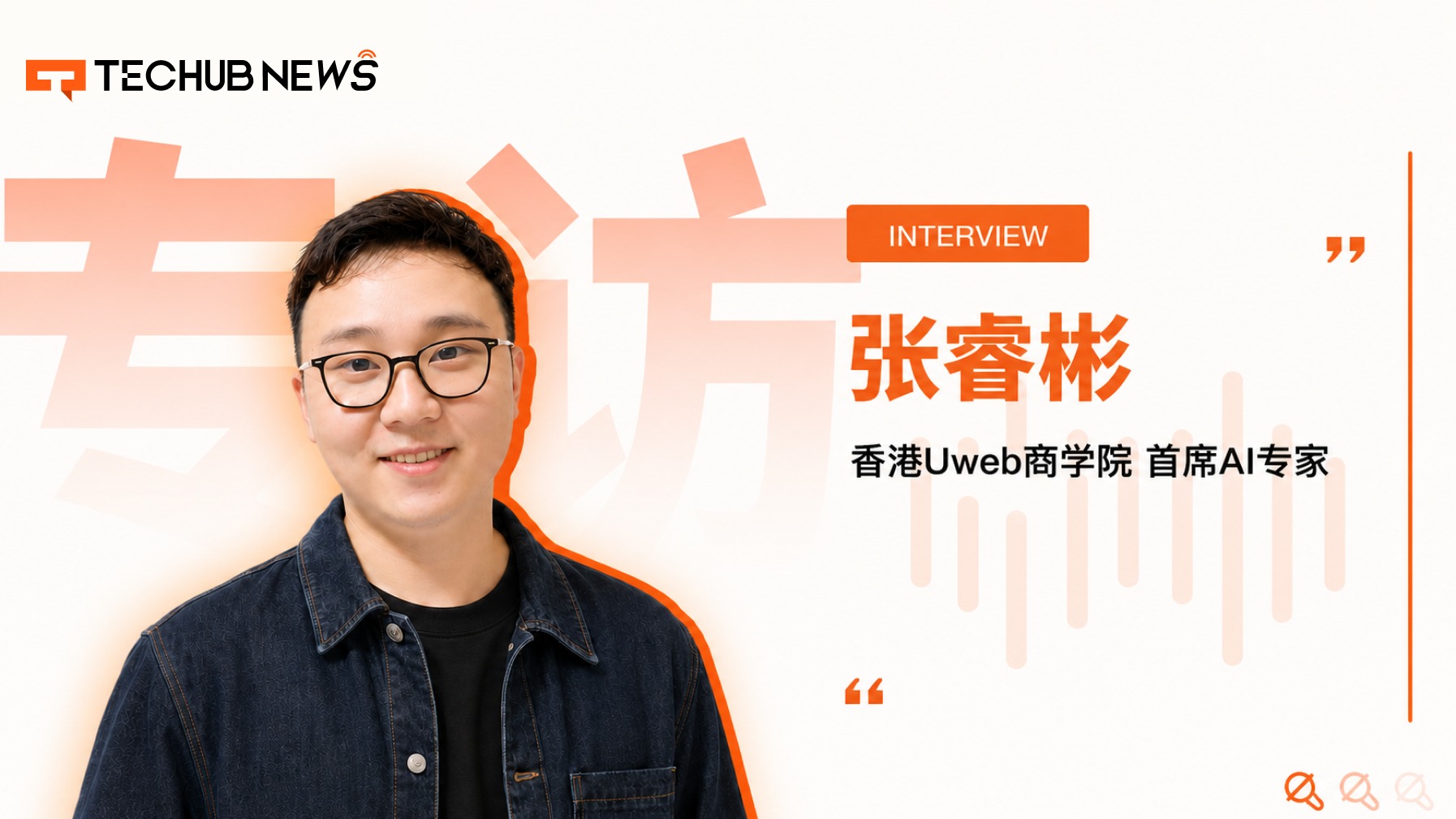
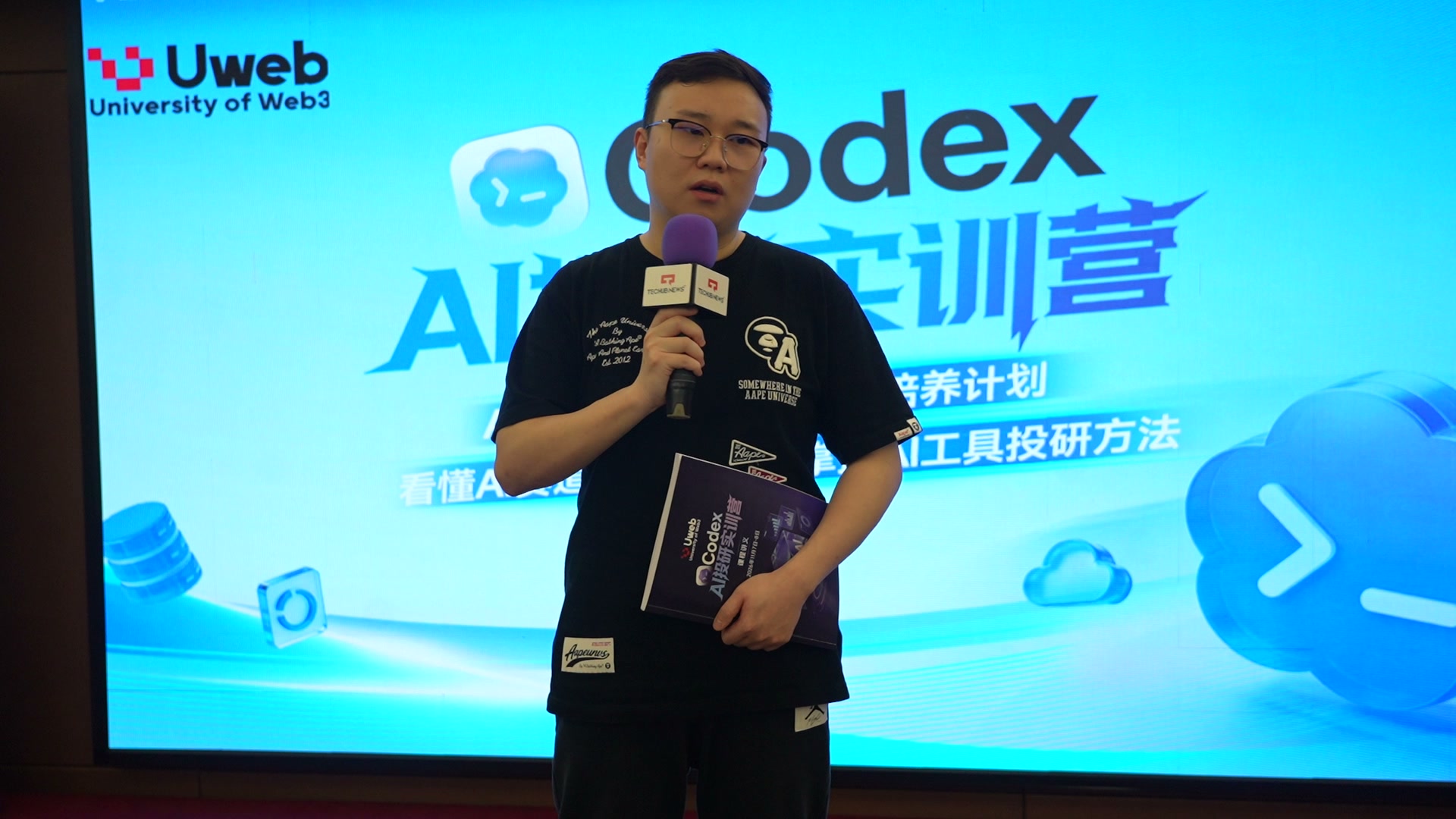
Zhang Ruibin is the head of enrollment at Uweb and shares AI investment research content on Xiaohongshu as "@The Elegant Teacher Zhang.AI Investment Research". In November, the fifth session of the Codex AI Investment Research Training Camp, hosted by Uweb, began in Shenzhen, where he taught "Five Steps to Build an AI Investment Research Dashboard." During a break in the course, he accepted an exclusive interview with Techub News, discussing the most common misconceptions students have when using AI, how to ask the same A-share question before and after class, and three reasons he gives to those interested in enrolling.
Core Summary
- Zhang Ruibin observed that most students are still stuck in "Q&A" when using AI, such as asking whether Nvidia is worth buying or how to view the future of the A-shares market, making it difficult for AI to become a tool for investment research or productivity.
- Zhang Ruibin believes that what the training camp offers students is not primarily skills, but rather a mindset for using AI: how to truly meet your needs with AI, instead of just answering your questions.
- Zhang Ruibin says that the long prompt "Assuming you are a financial expert with ten years of experience" is outdated and the current approach is to let the large model distill the analytical framework you accept, such as market theory or methods of certain macro analysts.
- Zhang Ruibin believes that while the same intelligent large models can be used, the effectiveness largely depends on the corpus and data, and the course aims to ensure that AI obtains more accurate and primary data.
- Zhang Ruibin provides three reasons for enrollment: AI is an irreversible trend, early learning gives a first-mover advantage; striving to become a "human + AI greater than AI" person; and joining a group of peers who are still actively trying.
Students using AI largely stuck at "Question and Answer"
Alma: Teacher Zhang, I see that the Codex AI Investment Research Training Camp has already conducted many sessions. In fact, many people are using Codex and various AI models. From your experience with students’ hands-on practice, what are the differences in using AI before and after taking the course? Where are the gaps? Why must one come to learn at this investment research training camp?
Zhang Ruibin: This is a very good question. What improvements can students gain in their use of AI through the course is a crucial issue. Most students we encounter initially use AI in ways that are still at the level of 2023, 2024, or even 2025, that is, in a Q&A format. For example, they might ask: "What will the weather be like tomorrow? What is the most convenient flight or high-speed train from Beijing to Shanghai?" Or they might ask investment research questions like whether Nvidia is worth buying, focusing mainly on questioning.
However, since the arrival of the wave of OpenClaw this year and the popularity of Codex and domestic tools like Kimi, we have started to discover that the correct way to use AI is no longer just Q&A. If it’s just simple Q&A, it is very difficult for it to become a true investment research or productivity tool to help everyone complete tasks or even replace some manual labor.
Thus, what we hope to bring to everyone in our course is not an enhancement of technique, but rather an enhancement in thinking and mindset, which is key. AI tools always evolve toward being better and easier to use, but your understanding of how to use AI requires your personal improvement or opening of thought. Many students have heard that some people can manipulate multiple agents to automate trading and investment research, or design posters, create websites, or make mini-apps using different agents. In our teaching plan, there is a system that can be built entirely by oneself, capable of logging into both domestic and international platforms, including integrating WeChat's ecosystem and Codex's use cases. These iterative methods and ideas are what we want to teach everyone in the course: how to truly use AI to meet your needs, rather than simply answering your questions.
Another important point is that we all open our minds together. AI has already become a new productive force that cannot be ignored in this era. What other tasks can it help us with? This needs everyone to explore more interesting ways of using AI together in our classroom.
How to ask the same A-share question before and after class
Alma: Teacher Ruibin, can you provide specific examples of the detailed issues that arose when everyone used Codex and AI before the course, and what they realized after class about "this is how to use AI"?
Zhang Ruibin: Here’s a simple example on how to view the trend of A-shares. Many students who have gone through the 2024 and 2025 wave of so-called "prompt engineers" and prompt writing will ask: "Assuming you are an expert with ten years of financial work experience, how do you view the future trend of A-shares in relation to macroeconomics?" They write a long list of prompts for AI to play this character. This way of using, I think, is still stuck in the logic of the end of 2025. As large models continue to improve and become smarter, we actually no longer need to make it play a character.
Now, when using Codex to answer ultimate questions about the future trend of A-shares, we will divide it into several key steps. The first step is to determine an analytical logic. Previously, writing "you are a financial practitioner with ten years of experience" actually endows it with an analytical logic, but it is very vague: what kind of logic does a financial industry practitioner have? It’s also quite general, and you may not know, and the large model may be guessing. But now, we can help the large model accurately distill the relevant analytical logic. For example, if you really like the analysis in K-line, you can have the large model help you distill or learn a series of analytical frameworks in that area; if you are more concerned about macro policies and macroeconomics, you can also have the AI large model distill some analytical methods mastered by macro analysis experts you trust. At this point, the model is not just endowed with a character, but has truly mastered that capability, representing an enhancement in capability.
The second point to note is that there is definitely an enhancement in data. The previous way of asking is "you are a financial practitioner with ten years of experience, help me analyze the future trend of A-shares," which actually does not include the source of data. If you and I are using the same smart large model, for example, you use GPT, I also use GPT, you use a certain model, I also use that model, then why is my use of AI better than yours? It may largely depend on whether I have better corpus or data. How to help AI obtain more accurate, high-quality, and first-hand data is what we aim to solve in our course. AI's analysis is not on a whim; it is not imagined but based on accurate data sources, such as K-lines for A-shares, and some macro corpus analysis, which is very important.
Combining the two aspects above, first, we have an analytical logic we accept, and second, we have accurate, effective, and real data, the results produced by Codex after these workflows, I believe, are certainly more credible than a long simple prompt that reads "assuming you are a financial practitioner with ten years of experience."
Three reasons for enrollment: first-mover advantage, mastering AI, finding a community
Alma: Finally, please give three reasons to those considering enrolling in the AI Investment Research Training Camp, to convince them to sign up and pay for Codex AI Investment Research Training Camp.
Zhang Ruibin: The first reason, which I think is very important, is that AI has already become an irreversible trend that cannot be ignored, and has certainly become a new productive force. For everyone now, there is only a difference between "I learn now" or "I learn later." It's just like smartphones; you either accept and use smartphones now or wait until they are truly widespread to use them. There is a clear advantage here, simply put, early learning equals early enjoyment, early use equals early benefit. Getting in early, enjoying it early, this is the first point, talking about the first-mover advantage.
The second point, previously a prominent figure said something that inspired me: in the future, there will only be two types of people in the world, one is "human + AI greater than AI" and the other is "human + AI equal to AI." Everyone can reflect on the underlying meaning of this statement: if you cannot tame AI or bring value to AI or create some value using AI in the physical world, then you can only be a user of AI products. We believe that if you are just a user of AI products, you cannot enjoy the benefits of the era, nor can you become a beneficiary of asset redistribution. Therefore, it’s important to strive to become a "human + AI greater than AI" person, learning how to harness AI. This is no longer just a skill; it is an opportunity that everyone can seize now. Compared to previous times, the opportunities now are extremely limited. Quickly learning to use AI and mastering it to seize opportunities can be the greatest opportunity you can grasp immediately, whether in investment research, work, or other areas. This is the second point, emphasizing the importance of mastering AI.
The third point, I think there is another critical reason to enroll, which is the community is very important. When any new technology arrives, whether you are using it or learning it, first integrating into a community around that new technology is crucial. We have witnessed the AI Investment Research Training Camp from the first season to the fifth season; with so many students, you will find that those who are willing to learn AI and use AI for investment research at this stage are truly ambitious, a group that is still working hard in this era instead of giving up and striving to forge ahead. Being part of such a group is very crucial for your life, investment, and overall personal growth. Those are the three reasons.
Editor’s note: This article is based on a video interview conducted in November 2026 at the Uweb Codex AI Investment Research Training Camp in Shenzhen, lasting around ten minutes. The Q&A has been edited for verbal fillers, repetitions, and confirmations, with answers faithful to the original words. The responses have not been reviewed by the interviewee and should be confirmed before publication. The interviewee's title and course name are based on the Uweb Shenzhen offline training course poster. "OpenClaw" and "human + AI greater than AI" are presented based on pronunciation; there are individual names of domestic AI tools and model version numbers in the recording that could not be confirmed and are not included in this text. The interviewee is the head of enrollment at Uweb, and the enrollment reasons are personal opinions. Disclosure of interest: Techub News collaborated with the training camp organizer Uweb to write the "AI Intelligent Investment Handbook".
Disclaimer: This article is for information sharing only; the views of the interviewee do not represent the position of Techub News and do not constitute any investment advice.
免责声明:本文章仅代表作者个人观点,不代表本平台的立场和观点。本文章仅供信息分享,不构成对任何人的任何投资建议。用户与作者之间的任何争议,与本平台无关。如网页中刊载的文章或图片涉及侵权,请提供相关的权利证明和身份证明发送邮件到[email protected],本平台相关工作人员将会进行核查。


