Author: Alma Li, Techub News
Introduction
Everyone is using AI, but many people still ask AI investment questions by opening a dialog box and saying, "Help me analyze if NVIDIA is a good buy." Yu Jianing refers to this practice as "worshipping the cyber God of wealth." In his opinion, asking AI to help you make money with a single sentence was impossible in the past, and it is impossible in the future. AI has not lowered the threshold of financial markets; rather, it has raised it.
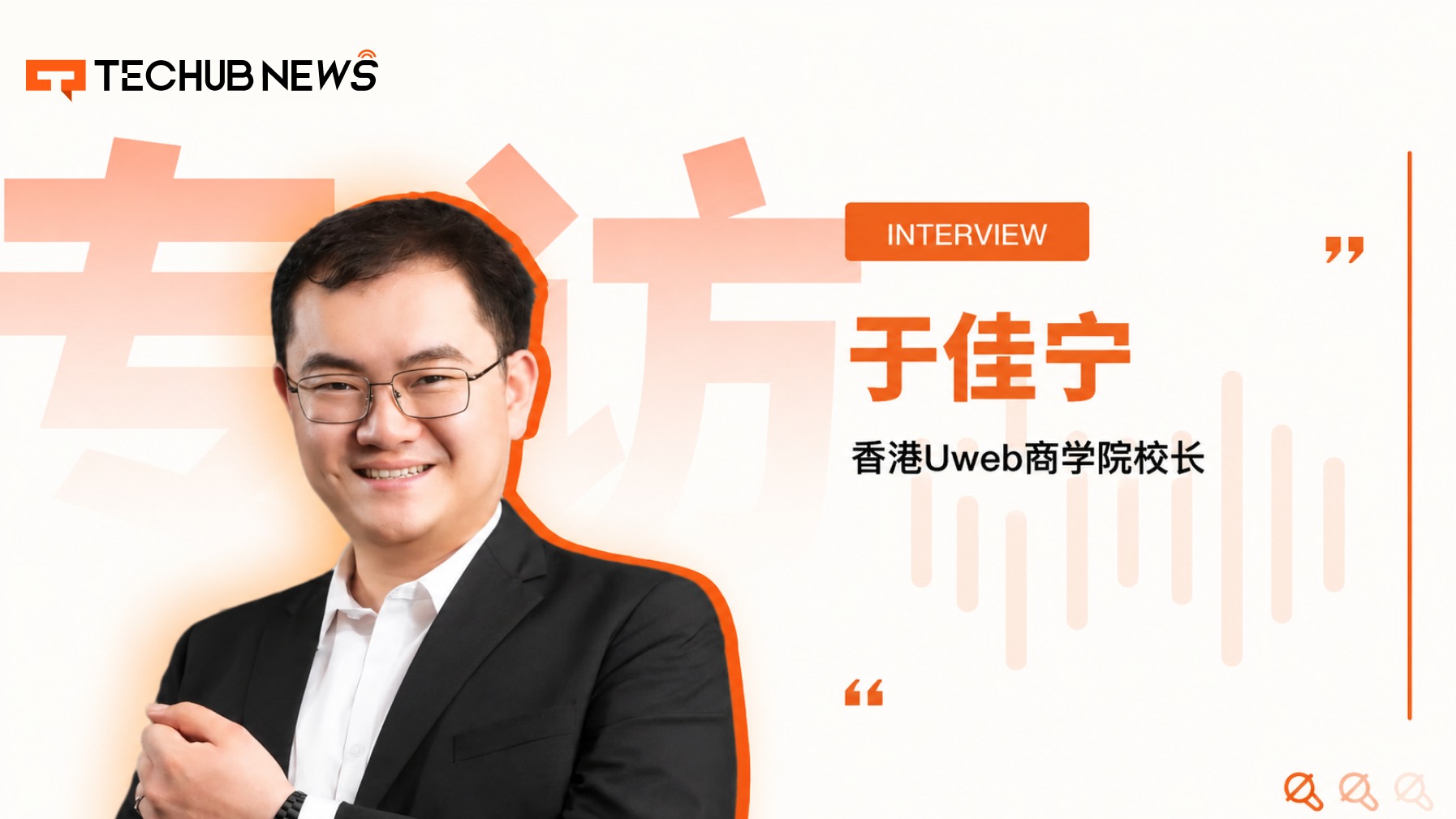
In November, the fifth session of the Codex AI Investment Research Training Camp organized by Uweb started in Shenzhen. During a break in the course, Yu Jianing, President of Uweb Business School in Hong Kong, Executive Director of the Hong Kong Registered Digital Asset Analysts Association, and rotating chairman of the Academic Committee, accepted an exclusive interview with Techub News, discussing where ordinary investors commonly face challenges using AI for investment, what a complete AI investment research process should look like, and how this training camp teaches, who it is suitable for, and who it is not suitable for.
Key Summary
- Yu Jianing believes that the first hurdle most people face when using AI for investment is that they are still at the stage of chatting with AI; the second hurdle is knowing that AI can work but not clearly communicating the background, goals, constraints, and data sources, expecting results from a single sentence.
- Yu Jianing says that while there is more information and deeper research than in the past, people are still not making money. The reason is that they treat investment research as investment itself; there are several gaps to cross from research to strategy and then to trading.
- The AI investment research process suggested by Yu Jianing is: First, understand oneself (KYS), then conduct in-depth research, transform research into strategy, manage emotions during execution with AI, continuously track positions, and finally review the trades.
- Yu Jianing introduces that the training camp adopts a format of two days and one night of offline classes combined with two months of online teaching, with the course divided into "Using AI for Investment Research" and "Researching Investment AI." The goal is to help students bridge the gap from chatbot to Agent.
- Yu Jianing states that this course does not focus on background or capital amount, but rather on the determination for self-evolution; those looking to find a wealth code immediately and expecting the course to double their returns are not suitable.
Hurdle: Still Chatting with AI, Expecting Results from a Single Sentence
Alma: Hello, President Yu. It is a great honor for you to accept the interview with Techub News. You have been involved in business school-related training and are currently focusing on empowering investment trading with AI. In your communication with students, what are the most common questions you encounter from trading learners?
Yu Jianing: Hello, everyone. I am Yu Jianing, President of Uweb Business School in Hong Kong, Executive Director of the Hong Kong Digital Asset Analysts Association, and rotating chairman of the Academic Committee. I have been researching fintech for over ten years and previously served as the director at the Institute of Industrial Economy Research at the Information Center of the Ministry of Industry and Information Technology, where I gained a unique understanding of artificial intelligence, digital assets, and many cutting-edge technologies.
We have been engaged in education on digital assets, AI, and cutting-edge fintech. We believe that in the era of AI, everyone’s skills, thinking, abilities, and investment methods need a radical upgrade. We increasingly feel that everyone should evolve into "half human, half AI," truly achieving a state of collaboration between silicon-based and carbon-based life forms. If one does not evolve quickly, they will surely be eliminated. The financial market is often the ultimate testing ground for this evolution: whether your mindset and abilities have truly evolved to compete with emerging institutions using the most powerful AI tools, and the key factor is your grasp of AI and understanding of this new investment framework. Therefore, we always strive to bring the latest and most cutting-edge AI investment research practices to everyone.
Alma: So, where are the specific hurdles generally found?
Yu Jianing: Today, everyone is using AI, but the methods of using AI differ. A large number of people may still find AI difficult to use: too many illusions, forgetfulness, conservative answers, inaccurate data retrieval, or an inability to find data. However, the capabilities and potential of AI today far exceed our imagination.
There are several specific hurdles. First, many people are still stuck at the chatting stage with AI, which is a big mistake because AI has undergone significant changes from chatbot to Agent era. AI can not only answer your questions but also help you complete tasks, such as building an investment research system, creating strategies, making dashboards, regularly generating research reports, conducting in-depth analysis of targets, and even executing trades directly on your behalf, all these are feasible.
The second hurdle is that those who have recognized that AI can work still do not understand how to drive AI effectively. They often believe that "a single sentence can get AI to do something amazing." In reality, when using AI, you should be more verbose; a bit of "fluff" is necessary. We often encourage people to operate AI using voice instead of typing, because when speaking, you tend naturally to express many related thoughts; whereas, when typing, you tend to hold back. Large language models depend on your input, whether to help you work or to answer questions. If the provided information is too scant, without explaining the background, objectives, constraints, or data sources, and one expects to make money based on a single sentence, we call this behavior "worshipping the cyber God of wealth." No AI could do this, it was impossible in the past, and it will be impossible in the future.
The financial market is meant for experts. AI has not lowered the threshold of financial markets; instead, it has raised the threshold.
Another evident phenomenon is that everyone feels that they have much more information than before and that their research is much deeper. But why are they still unable to make money, or even losing money? The reason is that they have turned investment research into the investment itself. Research is essential, but it does not equate to investment profitability. There are several gaps to cross from research, information gathering, to strategy, and finally to trading behavior, all of which we hope to share in our course.
From Research to Profitability, Several Gaps to Bridge
Alma: I noticed that you have also taken the book "AI Intelligent Investment Manual." We do not lack information today, and with AI, we can analyze information, but many people have not made money from this and have not made better trading decisions. How do this book and the research outcomes of the investment elite incubation program help everyone make better trading decisions?
Yu Jianing: We are also honored to have co-authored this book with Techub News, the media conducting today’s interview; the host of this interview is also one of the executive editors of this book.
This book aims to help people truly understand that using AI is not as simple as one sentence making you money. It is a complex system. Of course, it is relatively simpler than before. In the past, there was a significant gap between ordinary and professional investors. AI can bridge this gap, but it cannot be crossed with just one sentence.
This first includes the understanding of oneself. Many people say they want to hold a digital asset or a stock for the long term, intending to hold it for three to five years, but after three or five months, due to urgent need for money, serious losses, or someone suggesting a better target, they sell it. The result is that when they held it, they lost money, but once they sold it, the price skyrocketed. I believe many people have had this experience. This reflects a lack of self-understanding: not understanding their risk tolerance, funding timeline, or future financial planning, but these are issues that AI can help you address.
Another dimension is that AI can help you connect research to the final strategy, and importantly, it can help you with review processes. Everyone knows that reviewing is important, but very few actually do it. With AI, the process of reviewing becomes relatively simple: AI can capture a lot of data, and on the other hand, you can tell it your thoughts, decision-making process, and psychological state in a fragmented way, and it can help you create in-depth notes and reviews. There are specific methodologies that are elaborated in the book.
The key is that you need to have this awareness. How much AI can be utilized can be learned and gradually enhanced as the models become smarter. But ultimately, you will find that your self-awareness and fundamental understanding of investment issues, along with what we often emphasize as "taste," which is the ability to discern the results provided by AI, are often more important than simply using AI. This book is somewhat like "the master leads you to the door, but the cultivation is up to the individual," helping you push open a door to see the new world changed by AI. Many people are currently stuck, unable to push the door open.
A Complete AI Investment Research Process: From Understanding Oneself to Reviewing
Alma: What do you think a complete trading learning system should include?
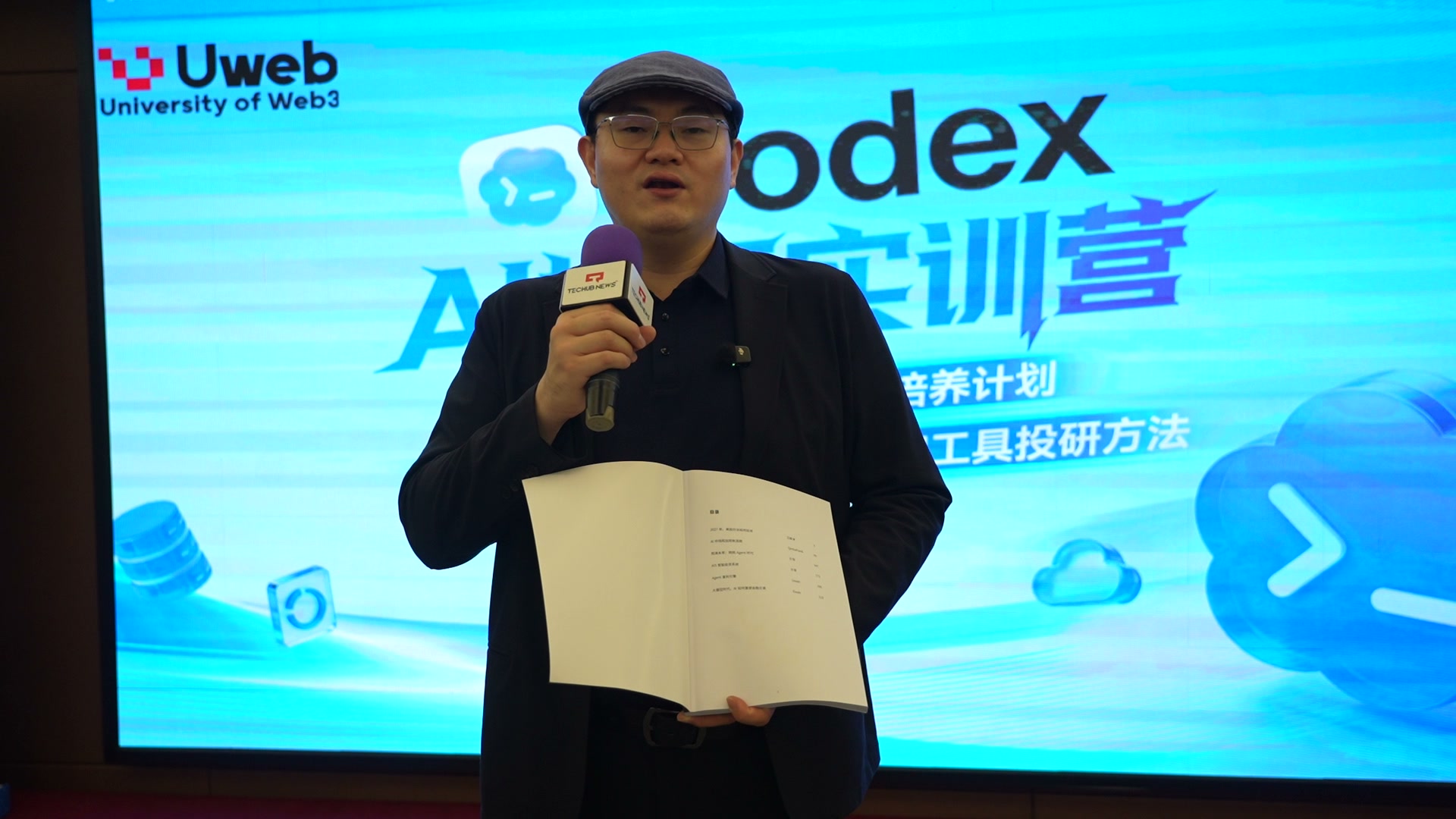
Yu Jianing: You can see that I have brought this thick handout, which is the latest version from the fifth session of the Codex AI Investment Research Training Camp organized by Uweb. The material we provide is divided into two levels: one is how to use AI for investment research and the other is how to research AI.
Using AI, investment performance will not change dramatically overnight; it is a gradual and long-term learning process. However, the more you use AI and understand AI, the easier it will be to seize opportunities in the AI field. After the midterm elections, the AI sector saw a sharp correction; some said AI was discredited, while others believed that the demand and innovation for AI remain. Regardless of whether you are bullish or bearish, the key is not the conclusion but whether you have enough logic. Investment in the AI era largely comes from your own feelings. It is difficult to do AI investment without your own sense; simply looking at research reports will not suffice. Therefore, "Using AI for Research" and "Researching AI Sectors" are complementary.
As for the entire process, I think there are several steps.
First, understand yourself deeply, combine your investments with your financial needs, and build your own "AI family office" based on financial needs. In the past, a family office that super-rich individuals could afford would cost millions of Hong Kong dollars, but now everyone can have one.
Second, gain in-depth understanding of certain sectors. Stocks, commodities, gold, and digital assets differ, and having non-consensus views on company earnings expectations, especially those that exceed consensus, is very important. To have non-consensus views, you need to conduct very thorough research on the industry. For instance, if you say you are researching AI, do you fully understand NVIDIA's strategies, the probabilities of these strategies being realized, and their impacts on stock prices? Research must not stop at a surface level.
Third, research does not equate to profitability; you need to turn research into effective strategies. For example, we previously helped students create a multi-Agent research model that analyzed both the fundamentals of companies and technical aspects to identify buying and selling points, while also looking at public sentiment and analyzing the macro environment. This is not simply saying, "Help me analyze if NVIDIA can be bought," but rather defining various sub-Agents well, conducting individual research, then gathering results, and clearly defining the workflow. During the research process, you will encounter issues such as data retrieval failures, inaccurate data, confusion in units, and misalignment of years, all of which need to be closely monitored. After successfully researching through many pitfalls and avoiding many others, you can crystallize it into work standards, which we refer to as skills, to help AI avoid pitfalls in the future. All of this is achievable, and the course will cover it.
Fourth, trading execution. A significant issue is that many people still trade emotionally. Clearly, they agreed to invest periodically, but when prices rise, they want to bet everything; when they fall, they hesitate to buy. Regular investing is designed to avoid chasing highs and cutting losses, but many people's results end up doing precisely that. Thus, AI should help you overcome emotions, create a daily trading plan, and push you to execute.
Fifth, continuous tracking. Those who can buy are novices, while those who can sell are masters. Many people, after buying, either get increasingly anxious or forget about their assets altogether, only to find themselves experiencing a rollercoaster ride or selling just before a surge. I believe AI should help maintain a kind of tenuous relationship with your positions: being overly focused can lead to missed opportunities, while forgetting can cause you to ride a rollercoaster, ultimately turning profits into vapor.
Sixth, review. When we were young, everyone wrote diaries, but how many people still do today? However, keeping a trading diary is significant; every trader is cultivated through constant reviewing. Let AI assist you in reviewing from a data perspective, mindset perspective, and tracking perspective.
Therefore, starting with understanding oneself, which is KYS (know yourself), moving to research, creating trading plans to form strategies, guiding execution, continuous tracking, and finally reviewing; this is a relatively good, AI-based complete process that we will cover in nearly every aspect of our classroom.
What Problems Does the Training Camp Solve: Pushing Through the Door of Agent
Alma: What problems does Uweb's Codex AI Investment Research Training Camp primarily hope to help students solve? What courses does it include?
Yu Jianing: The first step is to push through the door of Agent. When encountering difficulties, asking Chatbot or Q&A has become less mainstream; the mainstream now is to have AI help you do work and deliver what you want. However, crossing from chatbot to Agent is not easy. Although attending classes seems like a traditional method, the more we are in the AI era, the more interactions with people can solve problems. If you constantly consume AI content, your thinking may gradually become AI-like, and your speech may increasingly have an "AI flavor." To maintain your "humanity," you need to find methods to input information on a one-to-one basis; for every amount of AI content you consume, you should balance it with human conversation. Offline practical communication often helps you truly overcome certain barriers.
The second point is that AI investment research is not easy yet, with many pitfalls we have long experienced. For instance, many people see others' beautiful data dashboards and want to create one themselves; however, their data is often incorrect. These are usually problems with basic methods of using AI. Trying to solve these issues individually can result in confusion, and often lead individuals from novice to quitting. Offline learning can quickly shorten the learning curve, allowing you to see results rapidly. Once you receive positive feedback, your path on the AI journey becomes smoother.
The third point is that we teach both how to use AI for research and how to research AI. Currently, the vast majority of people are consumers of AI, spending a lot of money daily on AI, but can they make money using AI? This is not easy. We hope to help everyone discover a potentially profitable way after researching and using AI, with financial investment often being a feasible direction.
Finally, we form a continuous learning community where everyone gets to know each other and communicates offline. In addition to offline classes, there will be ongoing online courses afterward to help everyone continually iterate and upgrade, including assignments and continuous communication.
How Classes Are Conducted, Who Teaches, and What Happens After Completion
Alma: You mentioned that the most important thing is to push through the door of Agent. In the offline courses, how do you teach students to use Agent? How do you determine if students have truly learned?
Yu Jianing: The classroom combines theoretical and practical teaching. The theory of AI is easy to find; you can see a lot on social media, but theory often becomes overwhelming, and people struggle to take that next step. In our class, there will be segments that guide you through practical operations. Some operations may not be difficult, but during the first attempt, many issues arise, making it easy to go from being a novice to giving up. Offline courses are designed to solve this problem, preventing you from quitting and pulling you forward.
If you do not understand some principles of AI usage, you may find yourself stuck in a relatively basic state, spinning in circles. By learning, you can master some advanced methods without having to continue exploring through trial and error, especially since good AI model tokens can be quite expensive. For example, many people ask if Codex is easy to use; in truth, it is not; it has many limitations. Through offline courses, we will help everyone overcome these limitations to ensure that Codex can be used relatively stably and continuously. While these may seem like minor issues, together they form a considerable mountain blocking many people from stepping into the new world of AI Agents. This course gives you a definitive path, leading you into this new world.
Alma: Could you provide specific details about the courses in this session and the mentors you have invited? What is the general background of the students?
Yu Jianing: Each session will make slight adjustments to the instructors and content based on current hot topics and student interests, but the overall logic comprises two parts: how to research AI and how to use AI for research.
Taking this session as an example, the morning class on the first day was taught by Teacher Wesley, who is a very well-known operator of a public account with a large following. He is an essential KOL in the field of investment research in US stocks. He publishes daily updates and provides timely, in-depth insights on the US stock market—all driven entirely by indicators and data analysis. Anyone who takes his class can take away a set of indicator frameworks, not just hearing conclusions but also learning how he analyzes.
We also invited Teacher qinbafrank, a top influencer on X in the Chinese-speaking community regarding US stocks and AI research, who publishes a lot of viewpoints almost every day. For example, before the recent midterm elections, he performed very in-depth analyses of the candidates’ viewpoints and statements, aiding in understanding the market conditions post-election. This is not looking back only after the event, but rather foresighted analysis.
We also have invited Teacher ewan, who has unique insights on using AI for trading: how to build one's trading strategy with AI, how to implement arbitrage with AI, and how everyone can quickly capture market opportunities.
Additionally, there is Teacher Fang Jun, who has served as a director at Sohu and as CEO at Chuangye Bang, and is a well-known expert in the Chinese technology circle who has written numerous books on AI, providing a systematic explanation of these contents. We also have practical classes, such as Teacher Zhang Ruibin, who will guide everyone in AI investment research practices. Therefore, this course certainly emphasizes not just theory but is highly practical and operational, ultimately helping everyone implement improvements in their investment practice.
The editor’s note: According to Uweb's Shenzhen offline training course poster, Wesley is the host of "Wesley’s Investment Research Notes," presenting "Opportunities and Risks in the US Capital Markets"; Qinbafrank presents "Macroeconomic Analysis and Federal Reserve Policy"; ewan, a co-founder of Variety Labs, presents "How to Achieve Cross-Platform Arbitrage" and the practical "Airdrop Practical Teaching"; Fang Jun, a technical partner at Uweb and author of "Becoming a Question Engineer," presents "Rehearsing the Future: Embracing the Agent Era"; Zhang Ruibin, head of enrollment at Uweb, presents "Five Steps to Building AI Investment Research Dashboards."
Alma: How many sessions of the course have already been conducted? In which locations have they been held? What industries do most students come from?
Yu Jianing: The courses have been held in different cities, such as Hong Kong, Shenzhen, and more. There are already several hundred students, with each session accommodating between 30 to 50 people. There were fewer in the early stages, and now there are more.
The student demographic can be categorized into several types. One type includes heads of various financial institutions, including owners of large financial organizations, as well as fund managers, traders, and wealth management advisors. The second type is very capable individual investors who manage their wealth themselves and want to continuously enhance their understanding to manage their resources better. The third type includes individuals working in major tech companies; they are familiar with AI but lack understanding in finance, encountering barriers in AI investment research, striving to fill these financial knowledge gaps through education. An interesting subset involves generational pairings, such as young individuals just turning 18 attending with their parents, helping both children find new career directions and accelerating family wealth inheritance. Thus, the course primarily caters to high-end institutions and high net-worth investors.
Alma: After students complete the two-day offline course, what ongoing support is available?
Yu Jianing: Following this, there will be two months of online teaching. These two days serve as a starting point to help you push through the door, but whether or not you can continue forward, we also need to supervise and empower your journey. Everyone needs to keep attending classes and complete assignments. AI investment practice is constantly iterating, models are evolving, and methods are changing, so in addition to the subsequent online education, there will also be a re-training mechanism that allows everyone to continue learning.
Who Is It Suitable For, Who Is Not
Alma: For whom is this course most suitable? What foundation is needed, and how much time, effort, and money should one invest?
Yu Jianing: To be honest, there are no particularly clear requirements for a foundational background. Our students range from those just turned 18 and entering college, learning alongside their parents, and becoming AI experts themselves, to friends in their fifties, nearing sixty. Different individuals gain varied experiences. Younger students, once they get started, can quickly explore many ways to engage with AI, turning creative ideas into reality, and even developing products. Older students may not be as familiar with computers and technical aspects, but they manage businesses and their funds with various practical problems, making them ideal candidates to experiment with using AI in their solutions.
As long as you are an adult, genuinely recognize AI's importance, and wish to achieve self-evolution, this course will certainly be valuable. Of course, our content is skewed towards investment research, so an interest in finance is essential. If you feel finance has nothing to do with you, then this course will not be suitable. But if you see the potential for everyone’s skills to be reshaped in the AI era and understand the growing importance of asset income and financial income, then this course is definitely for you.
Alma: If someone says, "President Yu, if I enroll in your class, can I double my money? Is there a wealth code in the course?" How would you respond?
Yu Jianing: I have been in fintech education for nine years now, and I have always adhered to the view: teaching a man to fish is better than giving a man a fish, and investment methodologies are extremely important. Wealth codes are mentioned everywhere, but if someone informs you when to buy, will they also tell you when to sell? Is it suitable for you, can you withstand its fluctuations, can you accept its investment timeline? You will find that when friends are continuously profiting from their investments and share their strategies with you, you might actually end up losing money by following them. Even if you let them manage your funds, there is still a likelihood for losses. This situation is quite common.
We still need to grasp a correct, institutional-level investment methodology and understanding. Before AI, it was challenging for individuals to compete with institutions; however, now there is something called OPC — one person company or one-person team, where an individual can operate like a team, establishing institution-level investment methodologies and practices with institutional-grade strategies. This is what we hope to deliver in our classes.
Alma: One last question. If potential students are considering enrolling, what questions do you hope they will contemplate beforehand?
Yu Jianing: There are a few points to clarify. First, do you genuinely have a strong willingness to evolve, or do you prefer to stick to the old ways? Every technological revolution is similar. We see some investment bigwigs on Wall Street using button phones from a decade ago, and they are doing just fine with significant wealth. Not everyone has the intent to evolve. When attending our classes, you must first consider whether you have made up your mind to dance with AI and transform into a "half-human, half-AI" state.
Second, are you determined to keep following the AI field in the long term? Investments in the AI domain are often long-term. If you hope to double your money immediately, that is deceptive and highly suspect; you might even get swindled. Many successful investors have investment timelines of three to five years, and pension funds are usually decades long. Buffett's greatness lies in his ability to achieve excellent long-term returns over many years, yet in individual years, there have been many occasions he did not outperform the S&P 500. Therefore, those eager to find wealth codes quickly are likely not suitable.
Conversely, if you are already using AI but feel it is ineffective or presents many issues, this course is particularly suited to you; learning with questions is always the best way. If you feel uncertain about your career future and suspect that AI may replace many jobs, you need to clarify: are you willing to actively embrace AI and recover costs through AI? This recent midterm election in the US also indicates that many people globally do not favor AI and may even oppose it. Additionally, curiosity is crucial; large language models fundamentally require you to have enough questions. If you lack the willingness to explore the world, AI will be useless in your hands.
Foundation is unimportant, and wealth amount does not matter; what is important is your determination for self-evolution and to change the world. To sum it up in one sentence, these two points are the most critical.
Disclaimer: This article is for informational sharing only and does not constitute any investment advice. Investment involves risk, and course learning does not guarantee investment returns.
免责声明:本文章仅代表作者个人观点,不代表本平台的立场和观点。本文章仅供信息分享,不构成对任何人的任何投资建议。用户与作者之间的任何争议,与本平台无关。如网页中刊载的文章或图片涉及侵权,请提供相关的权利证明和身份证明发送邮件到[email protected],本平台相关工作人员将会进行核查。


