Original author: Dong Jing
Original source: Wall Street Insights
Jensen Huang's sudden departure not only marks the end of an era for Nvidia but also plunges the most critical funding source for the entire AI startup ecosystem into deep uncertainty. In the past three years, Nvidia has cumulatively invested over $140 billion in AI startups, cloud computing providers, and cutting-edge AI laboratories under Huang's leadership, becoming the industry's irreplaceable "biggest donor." Now, with the exit of this founder, it remains to be seen whether this funding pipeline can continue, as the market reassesses.
Nvidia's stock price fell nearly 7% during intraday trading on Thursday (November 12) following the news of Huang's resignation, with the cumulative decline over the past two weeks exceeding 25%. Meanwhile, the stock prices of emerging cloud computing companies CoreWeave and Iren, which are part of Nvidia's portfolio, both fell approximately 7% that day. According to technology media The Information, venture capitalists, startup founders, and semiconductor executives generally expect Nvidia to slow down its aggressive investment pace—having already reached a cumulative $140 billion in just the first two months of this year, including large-scale credit guarantees.

At the same time, Wall Street Insights reported that the $500 billion AI computing infrastructure financing platform jointly created by Nvidia and six major asset management firms was already facing multiple challenges before Huang's exit, and now its prospects are even more uncertain. Under his leadership, Nvidia was referred to as "the central bank of AI", establishing confidence in this still nascent industry by holding shares throughout the AI ecosystem and providing a safety net. This role was most prominently reflected in the announcement of the financing platform in August. However, with Huang being forced out due to an extramarital affair scandal, the advancement of this platform has lost its core driving force.
Wall Street Insights article mentioned that on Thursday, Nvidia announced that Huang resigned from the positions of president, CEO, and board member, effective immediately. The company's chief financial officer Colette Kress has taken over as interim CEO. According to The Information, sources familiar with Nvidia's investment decisions indicated that Kress had previously raised objections to transactions strongly promoted by Huang, and her style is distinctly more conservative, thus it is expected that she will not push transactions as swiftly as Huang.
Which deals are signed, and which are still pending
According to The Information, investments with legally binding contracts are expected to be unaffected. Safe Superintelligence (for which Nvidia plans to invest $5 billion) and Thinking Machines Lab, founded by former OpenAI CTO Mira Murati (for which Nvidia plans to invest approximately $2.5 billion, accounting for about half of the company's $4 billion to $5 billion financing round)—people close to these two companies stated that relevant contracts were signed months ago, and the investments are expected to proceed as scheduled.
However, deals still in negotiation face greater uncertainties:
Anthropic: Nvidia plans to invest $10 billion in the upcoming IPO of Anthropic, but whether this plan can continue remains unclear. Previously, Nvidia provided Anthropic with $105 billion in data center lease credit guarantees.
Figure AI: Nvidia has previously invested in this humanoid robot company twice, and recent reports indicate discussions about an additional $1 billion investment, but the latest developments are unknown.
Nscale: Nvidia is negotiating to provide over $5 billion in credit guarantees for this emerging cloud computing company to build a 460-megawatt data center, and as of the end of October, the agreement had not yet been signed.
Firmus: This Australian cloud computing provider is seeking at least $2 billion in private funding following the withdrawal of its IPO, and Nvidia was previously involved in negotiations, but the outcome remains uncertain.
Lambda: Nvidia has committed to guarantee nearly $20 billion in leases and signed a $1.5 billion chip leaseback agreement; this company is in a new round of financing, and it is unclear whether Nvidia will participate.
Reflection AI: Nvidia has invested over $1 billion in this startup, and reports indicate that the company is currently discussing additional investments with Nvidia, but sources close to the company have stated that Reflection is not currently in financing.
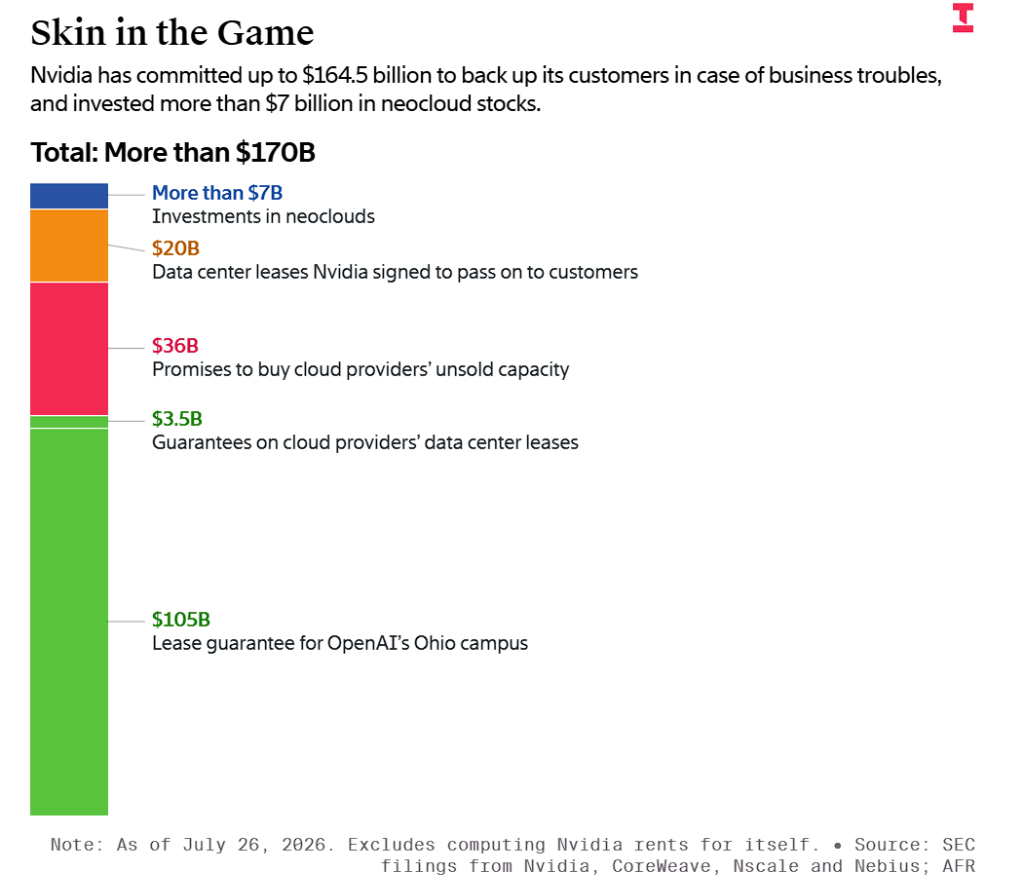
According to The Information, Huang was highly personally involved in Nvidia's investment decisions. He would meet with founders directly and quickly act when he found a favored startup with other potential investors. Nvidia typically does not lead funding rounds or set valuations but often writes the largest check.
Reports state that an investor who has invested in several startups backed by Nvidia remarked:
“Jensen's support for the startup ecosystem is real because he has a founder's mentality, and if the next CEO does not share the same perspective, they are unlikely to be as generous.”
Huang was also known for pushing employees to prioritize speed over thorough due diligence, according to sources familiar with Nvidia's investment operations. This style is expected to undergo a fundamental change after Kress takes charge.
$500 billion financing platform: After a stunning debut, it is now stagnant
Additionally, Wall Street Insights article stated that in August this year, Huang, wearing his signature leather jacket, appeared alongside executives from Apollo Global Management, BlackRock, Blackstone, Brookfield Asset Management, Goldman Sachs, and KKR on television to jointly announce the establishment of a financing platform targeting up to $500 billion for AI computing infrastructure. However, months have passed since that stunning appearance, and the platform has yet to facilitate a single transaction.
According to Bloomberg, insiders revealed that after failing to facilitate any transactions in recent months, Nvidia has faced pressure from some clients and Wall Street partners in the past month to increase its financing support ratio. Nvidia's current commitment for its "residual value support agreement" is capped at 25% of the transaction size, lower than that of competitors like Broadcom, and this gap is seen as a crucial factor hindering deal execution. According to insiders, Nvidia may not be able to announce any transactions until January next year.
Broadcom has already successfully facilitated such transactions through its "AI XPV" platform established in collaboration with Apollo and Blackstone—this May, Broadcom provided guarantees for $30 billion of a $35 billion debt transaction, supporting Anthropic's lease of TPU chips produced jointly by Broadcom and Google's parent company Alphabet; according to Broadcom's submitted 8-K filing, Broadcom will also provide approximately 72.5% (about $43 billion) of the guarantees for another $63 billion transaction. In contrast, Nvidia has only committed to a 25% guarantee, highlighting a significant gap.
Kress takes over: A more conservative style, a more complex situation
According to The Information, Kress, 59 this year, joined Nvidia in 2013, previously serving as CFO of a department at Cisco and as a financial executive at Microsoft. She is the only executive besides Huang who regularly attends Nvidia's quarterly earnings conference calls and has some recognition in the investment community.
However, Kress faces challenges far beyond just adjusting the investment pace. According to The Information, an executive from a cloud computing provider purchasing Nvidia chips stated that the uncertainty brought about by Huang's departure is prompting the company to consider turning to other chip suppliers such as Google or AMD—previously, the company had considered diversifying its procurement but refrained for fear of offending Huang.
On the Washington front, Huang previously had a close relationship with the Trump administration, actively lobbying for the relaxation of chip export restrictions. After Kress takes charge, it remains uncertain whether Nvidia will continue to have the same level of influence on policy matters. According to The Information, bipartisan lawmakers have begun calling for stricter export controls on Nvidia chips, with related legislation possibly passing in the coming weeks as part of the National Defense Authorization Act.
According to The Information, competitors such as AMD and Broadcom do not possess Nvidia's capability to provide large-scale credit guarantees to cloud computing providers and data center developers in the past year, but whether this advantage can be maintained in the post-Huang era remains unknown.
"Nvidia has been leveraging its balance sheet to drive substantial investments," said Craig Coben, managing director of financial consulting firm Seda Experts and former investment banker in equity capital markets at Bank of America, "without Jensen at the helm, can the company maintain this frantic pace of transactions?"
免责声明:本文章仅代表作者个人观点,不代表本平台的立场和观点。本文章仅供信息分享,不构成对任何人的任何投资建议。用户与作者之间的任何争议,与本平台无关。如网页中刊载的文章或图片涉及侵权,请提供相关的权利证明和身份证明发送邮件到[email protected],本平台相关工作人员将会进行核查。


