Original Author: Jensen Huang
Original Source: Wall Street News
On the night of November 11, Eastern Time, a remote meeting of NVIDIA's board of directors concluded, marking the end of Jensen Huang's 33-year tenure as CEO.
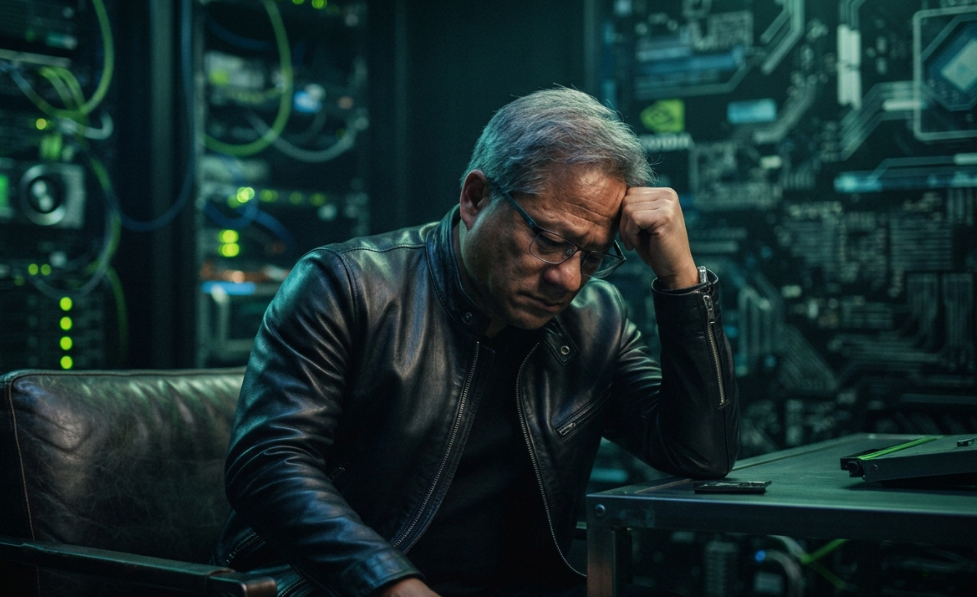
After weeks of denial and struggle, Huang completely gave up that night. He "looked broken and heartbroken, his signature energy completely depleted." He began frequently saying things like "whatever" and "I don't care." — this is extremely rare for a founder who previously managed nearly 60 direct executives with meticulous attention.
On November 13, Bloomberg published an in-depth report revealing the inside story of the last few hours before Huang resigned as CEO.
According to reports, people who had recently spoken with him revealed that Huang began to harshly scold himself, saying: “I’m a Piece of Sh--.”
Admitting Infidelity
The starting point for this situation was in late October. At that time, the media reported that Huang had a close relationship with a woman named Alice Huang. However, Huang had consistently denied this.
It can even be traced back to the end of 2025. At that time, there were already questions raised inside NVIDIA about Huang's relationship with Alice Huang, while Huang firmly insisted on his loyalty to his wife. In his last few public interviews during his tenure as CEO, he told Bloomberg that his interactions with Alice Huang were no different from those with other clients and corporate executives.
"Everything is completely normal; there is nothing unusual," he stated at that time.
The turning point occurred on November 6. The Financial Times cited sources from U.S. officials reporting a romantic relationship between the two.
Shortly after the report was released, NVIDIA's General Counsel Tim Teter personally visited Huang's home to question him. This time, Huang admitted.
Most board members still did not want to make a public statement. However, Teter, who also served as the board secretary, clearly informed the board: Action must be taken.
On November 7, NVIDIA announced that it would launch an investigation, hiring the well-known law firm Wachtell, Lipton, Rosen & Katz to lead it.
On November 8, Huang sent an email to all employees, publicly admitting to the affair, apologizing to his family, and promising to "fully cooperate" with the board's investigation.
Late-Night Meetings
The scandal did not die down.
On November 11, The New York Times further disclosed that Huang also had an extramarital relationship with NVIDIA's Vice President of Medical Health Business Kimberly Powell.
This time, the board did not hesitate any longer.
The directors quickly convened a remote meeting that lasted into the night. The final result was that Huang was asked to resign, leaving him with no other choice.
Thus, Huang's 33-year tenure as NVIDIA's CEO came to an end; he also stepped down from the board and will no longer hold any management or board positions.
In the last few hours before his resignation, Bloomberg quoted insiders describing that Huang had "given up" in the eyes of onlookers.
After Huang's resignation, a third affair was also revealed. According to Reuters, two informed sources disclosed that Huang had a close relationship with a second employee besides Kimberly Powell. The media has not disclosed the name of this second employee and has been unable to reach her.
Notably, multiple reports of the board meeting on Wednesday night were written by Washington journalists — these journalists do not typically cover NVIDIA. This has led to speculation that the White House may have leaked information to the media to pressure Huang into resigning. The answers to these questions remain unverified.
Email Responses Slowed Down
The impact of this scandal quietly seeped into the details of NVIDIA's daily operations.
NVIDIA employs a non-typical management structure: approximately 60 executives report directly to Huang. The company requires all employees to submit their five most important work tasks via email for Huang to review progress and priorities.
In the past, Huang handled these emails almost around the clock, responding very quickly regardless of whether it was day or night.
However, Bloomberg reported that in the days leading up to his resignation, the response rate noticeably slowed down.
This detail reflects another passage in Bloomberg's original article: Huang was known for his attention to detail, "from chip architecture to the compensation plans of the most basic employees," all were under his control.
Preparation for Congressional Testimony, He Says "I Don't Care"
Leaving the CEO position at NVIDIA does not mean that Huang can disappear from the public eye.
According to Bloomberg, he is expected to appear before the U.S. Congress to testify on November 18. Lawmakers will focus on questioning him about his relationship with Alice Huang and whether this relationship jeopardized NVIDIA's advanced chip technology secrets.
And according to sources who recently spoke with Huang, he claimed that he doesn’t care what he will face next. He said that what he worries about most now is his wife and that he does not want to "ruin" the lives of the women publicly connected with him because of the scandal.
NVIDIA, What’s Next?
After Huang's departure, the biggest challenge facing NVIDIA's board is finding a true successor.
Potential external candidates currently attracting attention include AMD CEO Lisa Su and Arm CEO Rene Haas. The most frequently mentioned internal candidates are Ian Buck, who has worked at NVIDIA for 22 years and is widely regarded as the creator of CUDA, and Jonah Alben, Senior Vice President of GPU Engineering.
Currently, NVIDIA's senior CFO Colette Kress will serve as interim CEO. During the search for Huang's successor, NVIDIA will be temporarily led by her. Meanwhile, the company also appointed its first-ever chairman, 73-year-old board member Harvey Jones, who previously headed chip design software manufacturer Synopsys Inc.
After the news was announced, NVIDIA’s stock price dropped about 10% to around $156, falling below the 52-week low, with about $420 billion in market value evaporating in a single day. Several Wall Street investment banks promptly lowered their target prices, but the majority still maintained a buy rating, with the core logic being "orders are secured until 2028, and the fundamentals are sound in the short term."
However, as Bloomberg pointed out, Huang had previously taken on multiple roles such as technology development, corporate management, market promotion, government lobbying, and brand representation, making it difficult to imagine someone completely filling this gap. Moreover, NVIDIA has never established a formal CEO succession plan.
免责声明:本文章仅代表作者个人观点,不代表本平台的立场和观点。本文章仅供信息分享,不构成对任何人的任何投资建议。用户与作者之间的任何争议,与本平台无关。如网页中刊载的文章或图片涉及侵权,请提供相关的权利证明和身份证明发送邮件到[email protected],本平台相关工作人员将会进行核查。


