Many people focus on the price fluctuations, trading volume, and wallet addresses when researching Meme coins; however, a variable that often gets overlooked but truly impacts trading outcomes is the token tax rate.
For the same purchase of $1,000 worth of tokens, if one token has a buying tax close to 0% and another token has a high buying tax, selling tax, and multi-level fund distribution, the actual cost of the two transactions could be entirely different.
More importantly, trading taxes are not just a percentage. Users also need to know:
- How much tax is charged for buying and selling;
- What the tax components consist of;
- Where the tax flows to – developers, liquidity pools, foundations, platforms, or burn mechanisms;
- Whether these distribution ratios affect token circulation and selling pressure;
- Whether the tax rates will change with the contract or the state of the project.
OKX Wallet’s latest update suggests: Open OKX DEX to view the buying/selling tax rates, tax composition details, and the distribution ratios and directions of the taxes for Meme coins.
The value of this feature is not to tell users which Meme coin will definitely rise but rather to present the most easily overlooked costs and contractual mechanisms before a trade in a more intuitive data interface.
Where do the taxes on a Meme coin transaction actually go?
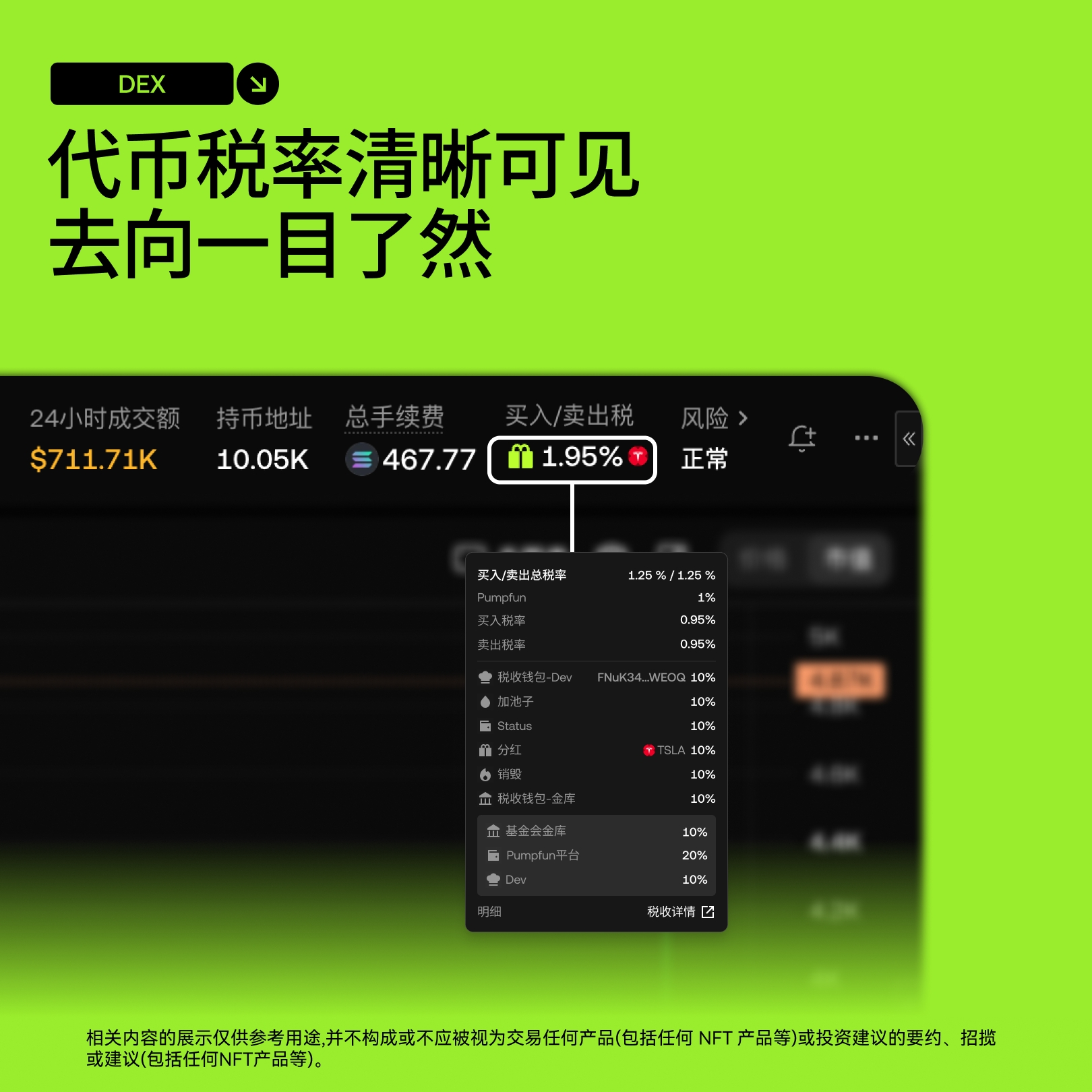
The on-chain data in the example includes:
- 24-hour trading volume: approximately 711.71K;
- Number of wallet addresses: approximately 10.05K;
- Cumulative fees: approximately 467.77 SOL;
- Page risk label: normal;
- Top of the page buying/selling tax rate prompt: approximately 1.95%, next to which shows dividend assets are marked with TSLA identifiers.
Expanding the tax details shows further in the screenshot:
- Total buying/selling tax rate: 1.25% / 1.25%;
- Pump.fun: 1%;
- Buying tax rate: 0.95%;
- Selling tax rate: 0.95%;
- Tax wallet—Dev: 10%;
- Add to pool: 10%;
- Status: 10%;
- Dividends: TSLA 10%;
- Burn: 10%;
- Tax wallet—Treasury: 10%;
- Foundation treasury: 10%;
- Pump.fun platform: 20%;
- Dev: 10%.
Users can further open the details and see that the tax fees are not a vague “handling fee” but consist of multiple parts, corresponding to different funding directions.
Why must buying tax and selling tax be viewed separately?
Many newcomers only ask, “Is there a tax on this coin?” But the more important question is: Are the buying tax and selling tax the same?
Assuming a certain token:
- Buying tax rate is 0.95%;
- Selling tax rate is 0.95%.
If a user buys $1,000 worth of assets, looking only at the buying tax, the theoretical tax fee is about $9.50; if they later sell it for about $1,000, it would incur another $9.50 selling tax, making the round-trip transaction tax about $19, not including DEX handling fees, network fees, price slippage, and changes in price itself.
This is just a static example for ease of understanding; actual results will be influenced by transaction amount, trading price, tax calculation base, contract rules, and execution paths.
Therefore, when assessing Meme coin trading costs, the formula to use should be:
Actual trading cost = buying tax + selling tax + DEX handling fees + network fees + slippage + price fluctuation losses.
If users only see that the token price has risen by 5%, without accounting for buying/selling taxes and slippage, they may overestimate their real returns.
Tax composition is more important than tax rate numbers
Taxes do not all go to an unknown address, but are divided into multiple parts.
1. Dev and developer-related allocations
The illustration shows that the tax wallet—Dev and Dev each account for 10%.
This means that part of the tax fees may flow to developer-related addresses. Users need to pay attention to the on-chain behavior of these addresses:
- Are they continuously selling;
- Are they holding long-term;
- Are they dispersing to multiple addresses;
- Are they used for project development and operation;
- Is there significant concentrated transfer in a short time?
“Flowing to Dev” does not necessarily mean it is negative or that it will definitely be used for project development. Only by combining address labels, transfer records, and position changes can potential selling pressure or project expenses be assessed.
2. Add to pool: Is there continuous liquidity support?
10% of tax fees are allocated to add to the pool.
If taxes are continuously used to increase liquidity, it can theoretically improve trading depth and reduce some price impact of trades; however, users still need to confirm:
- Which specific pool does the liquidity enter;
- Is there a lock-up or withdrawal mechanism;
- Does the increase in liquidity match trading volume;
- How does the pool asset structure change when token prices fall.
Adding to the pool is just a label for the usage of funds, not a representation of permanently locked liquidity, nor does it imply there are no risks associated with smart contracts and project teams.
3. Status, Treasury, and Foundation
Among them, Status, tax wallet—Treasury, and Foundation Treasury each display 10%.
For these fund categories, users should further consult project documentation and on-chain addresses to confirm:
- Who controls the addresses;
- Is it a multi-signature wallet;
- Are there public budgets or usage rules;
- In the past, did the funds flow to exchanges or external addresses;
- Will treasury funds create future selling pressure.
The significance of transparent tax rates is to let users know “there are these allocations,” but transparency does not automatically imply that the use of funds is reasonable or that the project is trustworthy.
4. Dividend mechanism
The dividend portion occupies 10%, and is displayed with TSLA-related identifiers.
The dividend mechanism may be part of the Meme coin narrative, but users need to further understand:
- How are dividend assets generated;
- Who can receive dividends;
- Do dividends require holding or meeting other conditions;
- Will dividends incur additional taxes;
- How is the price risk of the dividend assets themselves handled.
If the price of dividend assets fluctuates greatly, the nominal quantity of dividends and the actual dollar value may differ significantly.
5. Burn mechanism
The burn portion is 10%.
Burning will reduce token supply, but “supply decrease” does not mean that prices will necessarily rise. The final price still depends on buying and selling demand, liquidity, position structure, project progress, and market sentiment.
6. Pump.fun platform allocation
The Pump.fun platform allocation is 20%.
The platform allocation is part of the trading tax structure, and users need to account for it in the actual trading cost. Understanding the platform allocation helps users assess the relationship between token taxes and the issuance platform’s mechanisms.
Trading taxes and slippage are not the same concept
These are the two costs that are most easily confused in Meme coin trading.
Trading tax
The trading tax is determined by the token contract rules and is typically deducted proportionally when buying or selling, distributed to different addresses or uses as set by the project.
Slippage
Slippage is the difference between the expected transaction price and the actual transaction price, usually influenced by pool depth, trading scale, market volatility, and quoting changes.
A token can simultaneously have:
- 0.95% buying tax;
- 0.95% selling tax;
- More than 2% slippage;
- Additional DEX handling fees;
- Network gas fees.
Therefore, the page showing around 1.95% in buying and selling tax alerts does not mean that the total trading cost is only 1.95%. Users need to estimate tax fees, slippage, and network costs together.
OKX DEX’s official explanation states that slippage cannot be completely avoided, especially when market volatility or liquidity is insufficient; users can reduce costs by choosing assets with higher liquidity, controlling transaction size, and setting reasonable slippage parameters.
Why is "token tax rate transparency" important for traders?
1. Avoid discovering unacceptably high selling costs after purchasing
Some users only look at the token price and its increase without checking the selling tax. After buying, if they find the selling cost is high, they may be forced to incur significant losses.
2. Assess whether the trade has a positive expectation
If the combined buying and selling taxes are already high, users will need a larger price increase to cover the costs. Transparent tax rates help in calculating the break-even point before the trade.
3. Observe the project’s economic model
The flow of taxes to developers, liquidity pools, dividends, burns, and the platform can help users understand the operational mechanism of the token and potential selling pressure.
4. Identify data anomalies and risk changes
If the token tax rate suddenly changes, or if the tax distribution addresses and ratios are adjusted, it may indicate changes in contract permissions, project strategy, or trading rules.
5. Reduce information asymmetry
On-chain transactions themselves have transparency, but regular users may not find it easy to quickly understand the tax structure from contracts and transaction records. Visualizing buying/selling tax rates and funding directions can help reduce information blind spots before trading.
Four-step research process suitable for data analysis users
Step 1: Start by checking buying tax and selling tax separately
Do not just look at a “total tax rate” label; record the buying and selling tax rates separately. If they differ, the break-even point for trading strategies will also be different.
Step 2: Expand the tax composition
Check the proportions of tax fees flowing to Dev, liquidity pools, treasuries, foundations, dividends, burns, and the platform.
Step 3: Verify on-chain address behavior
Conduct address analysis on important tax wallets, observing fund inflows, outflows, position changes, and transfers to exchanges. An address name cannot substitute for real on-chain behavior.
Step 4: Incorporate tax fees into the complete cost model
You can use the following estimation framework:
Net revenue = selling income − buying cost − buying tax − selling tax − DEX fees − network fees − slippage costs.
If obtaining dividends or airdrops is among the purposes for trading, the value of received assets and claiming costs also need to be included in the calculations.
How should the data be interpreted?
The illustration showcases a Meme coin case with a 24-hour trading volume of approximately 711.71K, around 10.05K wallet addresses, and a cumulative fee of approximately 467.77 SOL, with the page risk label displaying “normal.”
This data can assist users in establishing preliminary observations but cannot directly conclude “the project is safe” or “the token is worth buying.”
24-hour trading volume of 711.71K
The trading volume indicates that trading activities occurred over a period, but it does not mean that the trades necessarily came from genuine long-term demand, nor does it indicate liquidity is sufficient to handle large transactions.
Number of wallet addresses: 10.05K
The quantity of wallet addresses can reflect one dimension of participant numbers, but the number of addresses does not equate to real independent users. One user may own multiple addresses, and there may also be bots or dispersed holdings.
Cumulative fees: 467.77 SOL
The scale of fees indicates that taxes or related mechanisms have already generated a certain level of on-chain economic activity, but further confirmation is needed regarding the statistical period, fee composition, and specific attributions.
Risk label: “normal”
“Normal” only indicates that the current page risk detection results did not trigger certain alerts, which does not mean there are no price risks, contract risks, liquidity risks, or project team risks. Users still need to verify contract permissions and trading conditions themselves.
What should beginners look at when using OKX DEX?
It is recommended to check at least the following information before clicking to confirm a transaction:
- Whether the contract address matches the official channel;
- Whether the buying and selling tax rates are clearly stated separately;
- Which addresses and purposes the taxes are specifically distributed to;
- Whether there are trading limits, wallet restrictions, or blacklist mechanisms;
- Whether the liquidity of the pool matches the 24-hour trading volume;
- Estimated slippage and final quantity obtained;
- Network fees and transaction validity period;
- Whether authorization is required, and what the authorization limit is;
- Whether the project team or Dev addresses have been concentrating asset transfers recently;
- Whether there are special mechanisms for the token that makes buying easy and selling difficult.
How do the aggregated trading and tax rate recognition work together at OKX DEX?
OKX DEX’s official introduction states that X Routing will compare multiple DEXs and liquidity providers, comprehensively considering price, splitting orders, slippage, and network fees, to help users find better execution paths.
However, route optimization and token tax rate recognition address different issues:
- Route optimization: helps compare trading paths and quotes;
- Tax rate recognition: helps understand the buying and selling costs at the token contract level;
- Risk alerts: help users identify anomalies or high-risk signals;
- On-chain analysis: helps observe liquidity, wallet addresses, and flow of funds.
Only by combining these dimensions can users more comprehensively assess the actual costs of a Meme coin transaction.
Conclusion: Knowing the tax rates before trading helps to understand what you are paying for
The opportunities for Meme coins often come with high volatility, but high volatility does not equate to high profit. For traders, the most important thing is not just to see how much the price has increased, but to know:
How much tax was paid when buying, how much tax will need to be paid when selling, where the tax fees ultimately flow to, and how much can be left after completing the transaction.
Exclusive benefits for AiCoin users
Use OKX Web3 Wallet to "invest in assets around the world"!
Bind your invitation code 【AICOIN88】 to enjoy a 20% savings on trading costs (Gas optimization and other benefits)!
Download/upgrade the OKX Web3 Wallet now and catch the trend:
https://jump.do/xlink?checkProxy=true&proxyId=24
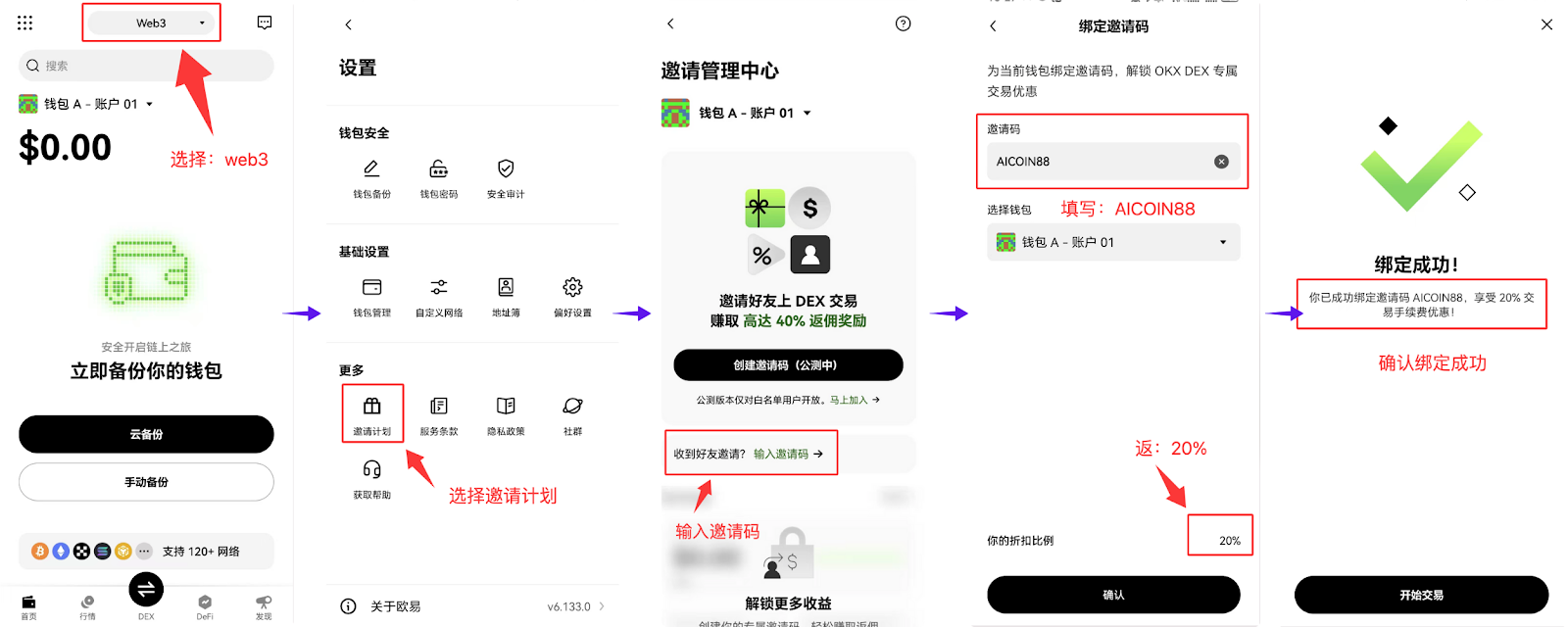
Use the exclusive invitation code 【AICOIN88】 to bind the OKX wallet; the web version can also be operated conveniently!
https://web3.okx.com/ul/joindex?ref=AICOIN88
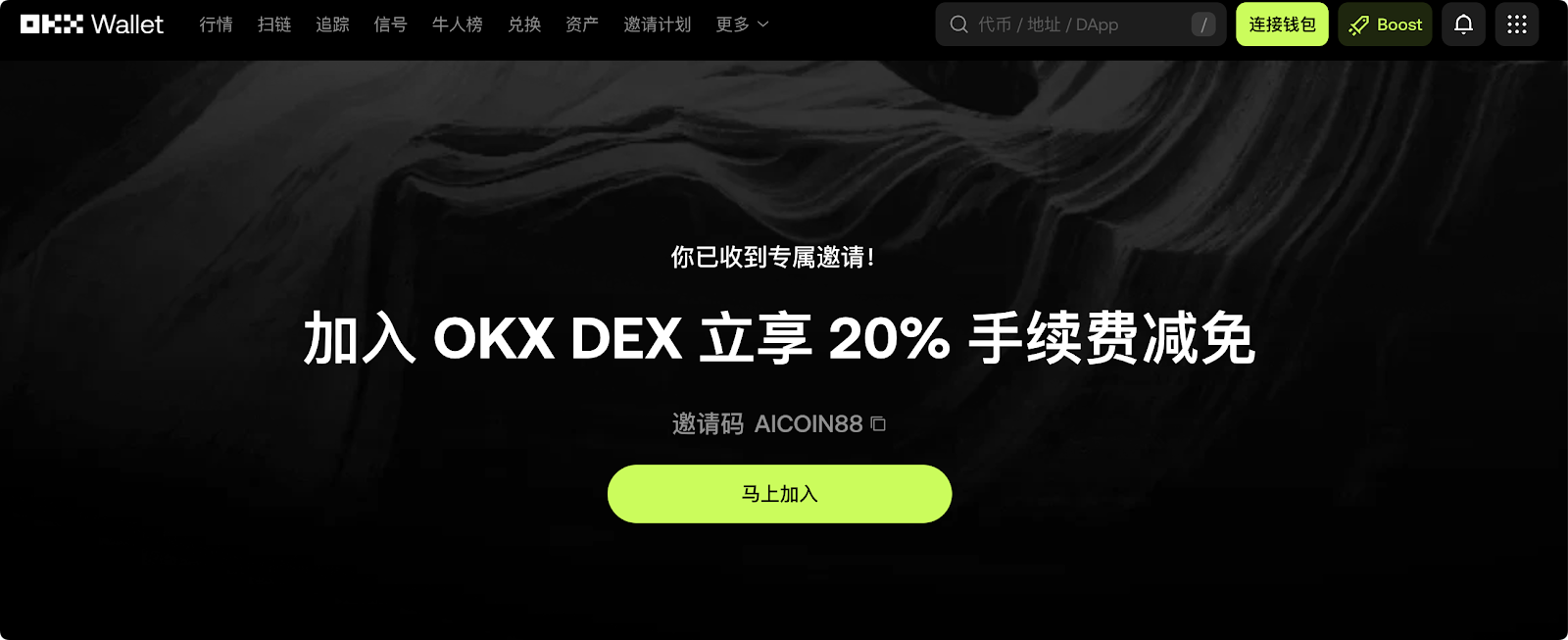
Don't wait, set up the OKX wallet and bind the discount to gain new wealth!
免责声明:本文章仅代表作者个人观点,不代表本平台的立场和观点。本文章仅供信息分享,不构成对任何人的任何投资建议。用户与作者之间的任何争议,与本平台无关。如网页中刊载的文章或图片涉及侵权,请提供相关的权利证明和身份证明发送邮件到[email protected],本平台相关工作人员将会进行核查。