Original author: Long Yue
Original source: Wall Street Journal
Anthropic officially launched its IPO roadshow on November 10, concurrently releasing a 42-minute roadshow video and a 57-page roadshow PPT, with a price range set at $70 to $78 per share, planning to price on November 18 and list on Nasdaq on November 19, with the stock ticker ANT.
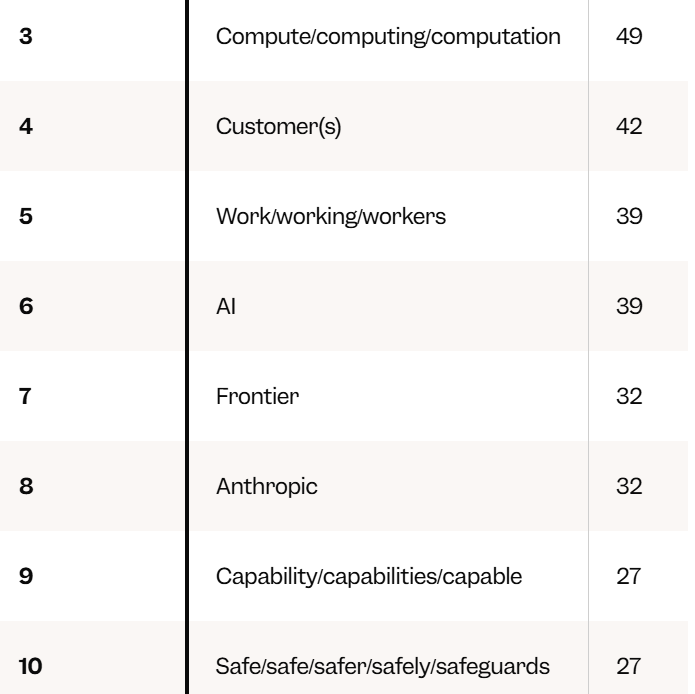
In the roadshow video, the first person to appear is CEO Dario Amodei. In the opening about 30 seconds in, he mentioned that AI could be used to produce biological weapons. He also referred to AI as "the most promising technology in human history," stating it "captures the essence of cognition" and emphasizing that safety is the company's top priority. In the video, aside from "Claude" and "model," the most frequently mentioned word is "compute," occurring 49 times, with "safety" related terms mentioned 27 times.

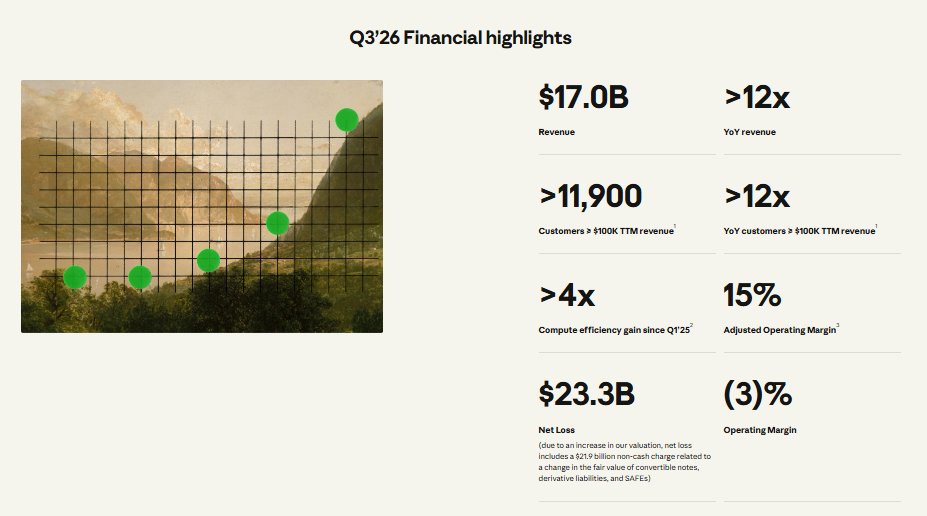
Outside the video, the company also released a 57-page PPT. The PPT indicates that Q3 2026 revenue is $16.956 billion, over 12 times that of the same period last year, with an adjusted operating margin of 15% and a GAAP measure of -3%. Compute commitments are about $899.5 billion, with a long-term profit margin target of over 35%.
Most Mentioned Word in the Roadshow: Compute
Business Insider asked ChatGPT and Claude to analyze the video transcript, counting high-frequency words and themes. The report stated that after excluding "Claude" (65 times) and "model" (58 times), "compute" appeared 49 times, followed by customer (42 times), work (39 times), AI (39 times), and frontier (32 times). "Safety" related terms appeared 27 times, placing tenth.
By merging statistics by theme, "models and training" ranks first with 83 occurrences, "compute and infrastructure" 81 times, "financial performance and growth" 77 times, "efficiency and value" 69 times, "customers and enterprises" 62 times, and "safety, alignment, trust, and risk" 55 times, ranking sixth.
The prominence of compute relates directly to the company's funding needs. According to Anthropic's revised S-1, the company expects to spend about $895 billion on compute and infrastructure, with nearly half expected to occur before the end of 2030.
In response to concerns about safety, the company stated:
We found that safety has not held us back. It is precisely because we can trust Claude's work that we can apply its findings to the real world for everyone's benefit.
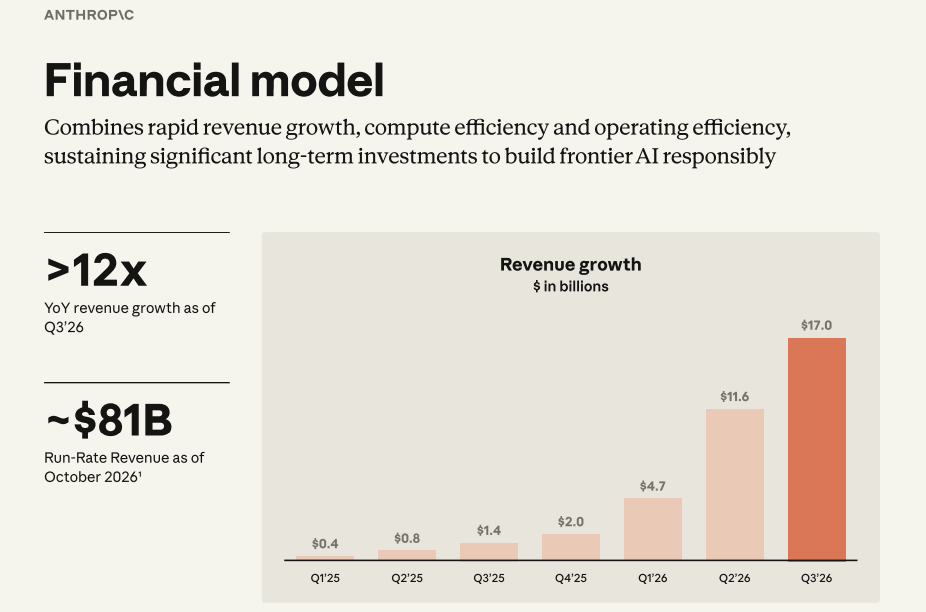
Revenue: From approximately $1.4 billion a year ago to $17 billion now
The PPT shows that Anthropic's Q3 2025 revenue was $1.382 billion, while Q3 2026 revenue is $16.956 billion. As of October 2026, the annualized run rate revenue is approximately $81 billion.
By the company's definition, the run rate revenue is the sum of two parts: the revenue from the last 28 days of metered billing multiplied by 13, plus the monthly subscription fees multiplied by 12.
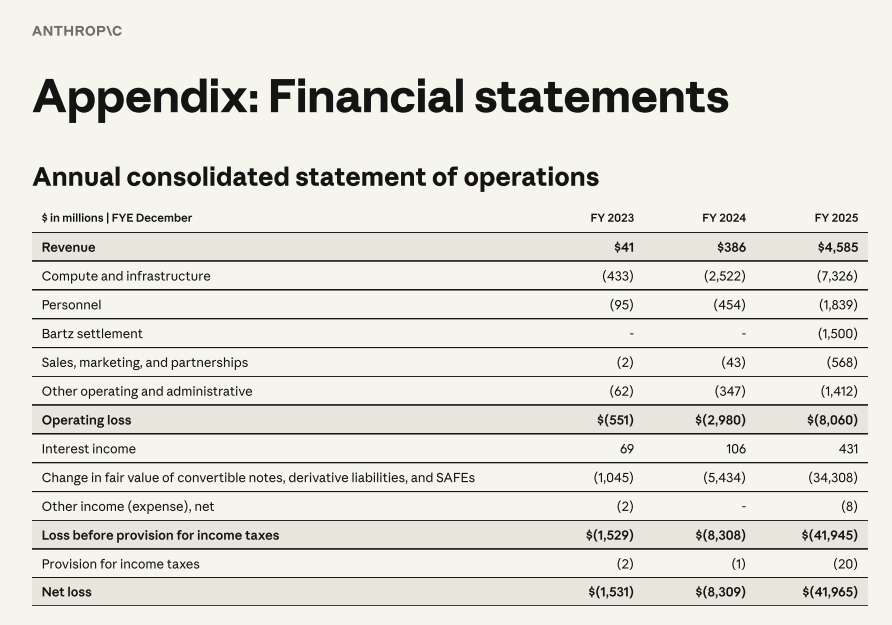
Annual data indicates the company had revenues of $41 million in 2023, $386 million in 2024, and $4.585 billion in 2025. The net loss in 2025 was $41.965 billion, mainly attributed to changes in the fair value of convertible notes, due to an increase in the company's valuation.
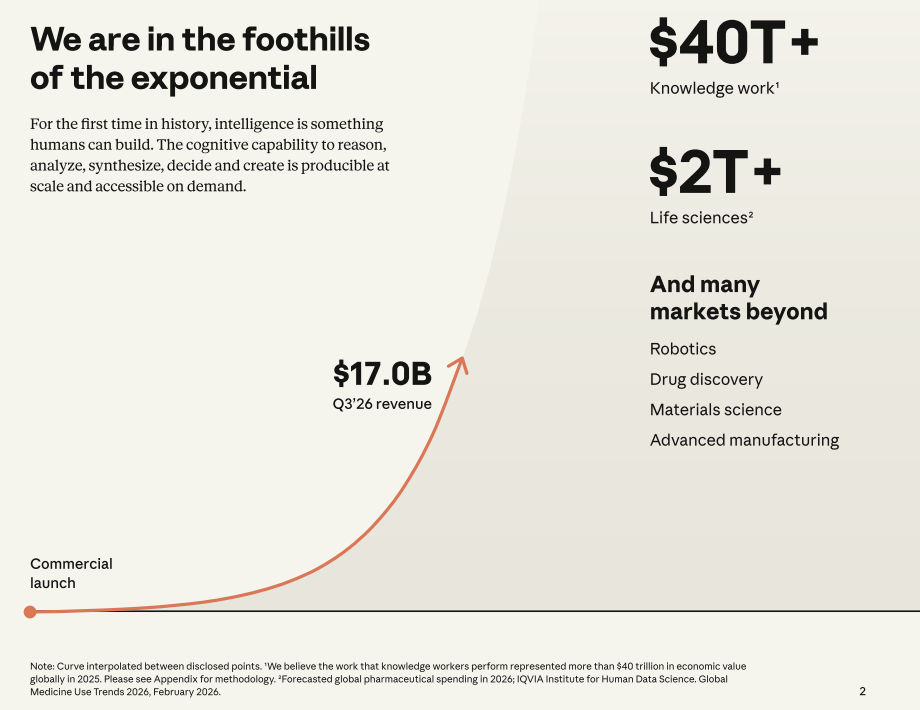
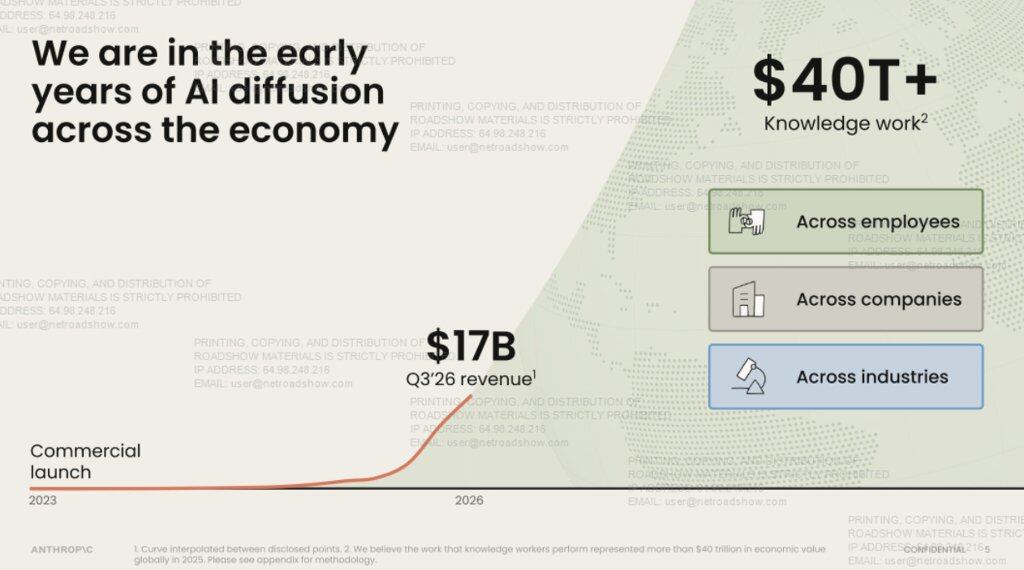
The company's assessment of market space is: the global economic value created by knowledge work is expected to exceed $40 trillion by 2025, with current revenue in the "early stages." This is the company's own estimate (based on the U.S. Bureau of Labor Statistics wage data, projected globally based on the International Labor Organization's labor income as a percentage of GDP).
Models: 250 models, products, and features released
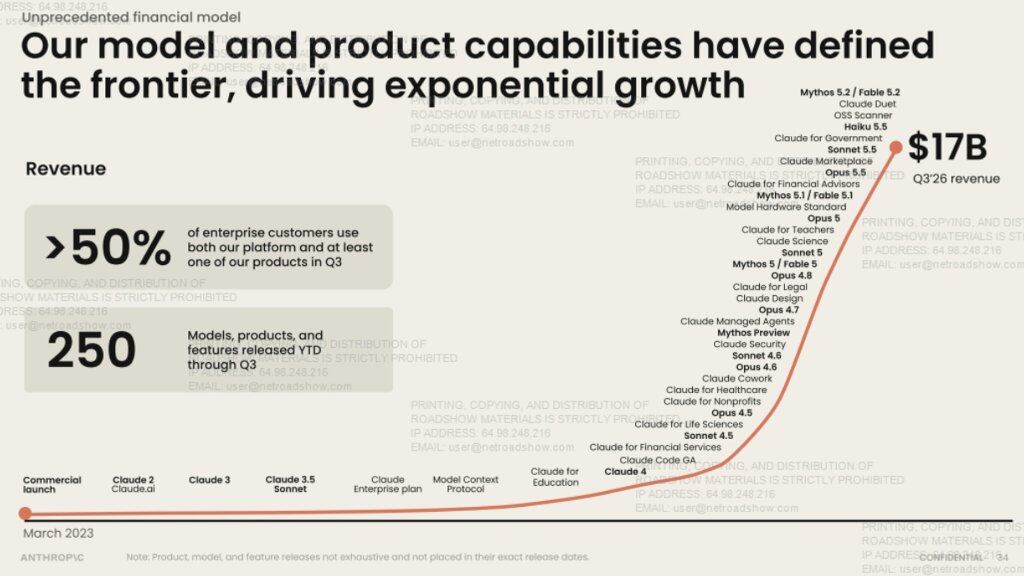
The PPT depicts this growth with a curve. The curve begins from March 2023 commercialization, marking milestones such as Claude 2, Claude 3, and Claude Code along the way, with an endpoint of approximately $17 billion in Q3. The company states that by the end of Q3 2026, 250 models, products, and features have been released.
Customers: Paid key customers increased nearly 8 times in one year
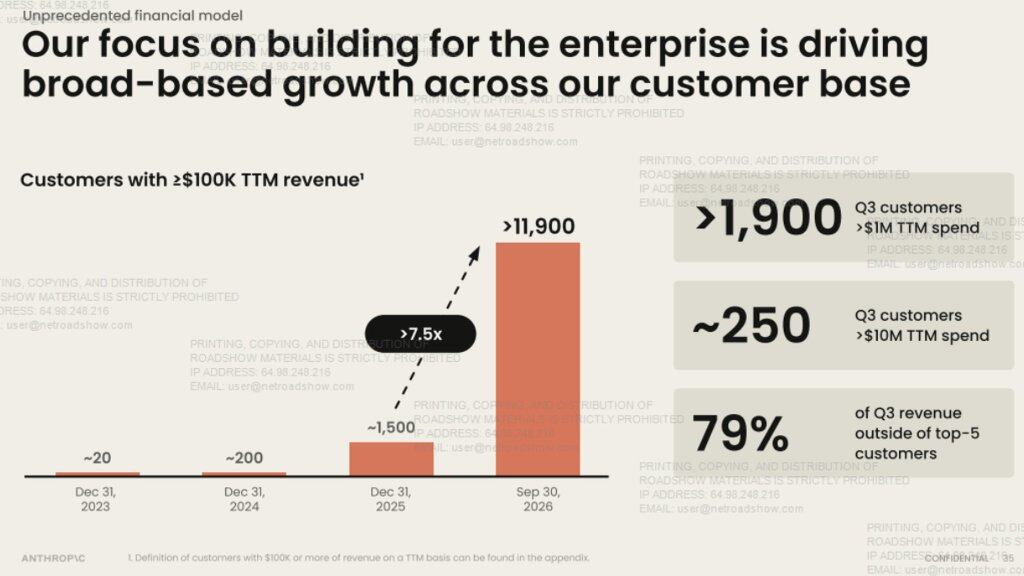
The PPT indicates that as of September 30, there were over 11,900 customers who contributed at least $100,000 in revenue over the past twelve months. By the end of 2025, this figure is expected to be around 1,500, approximately 200 by the end of 2024, and around 20 by the end of 2023. Customers with annual spending over $1 million exceed 1,900, and those over $10 million number about 250. In Q3, 79% of revenue came from customers outside the top five.
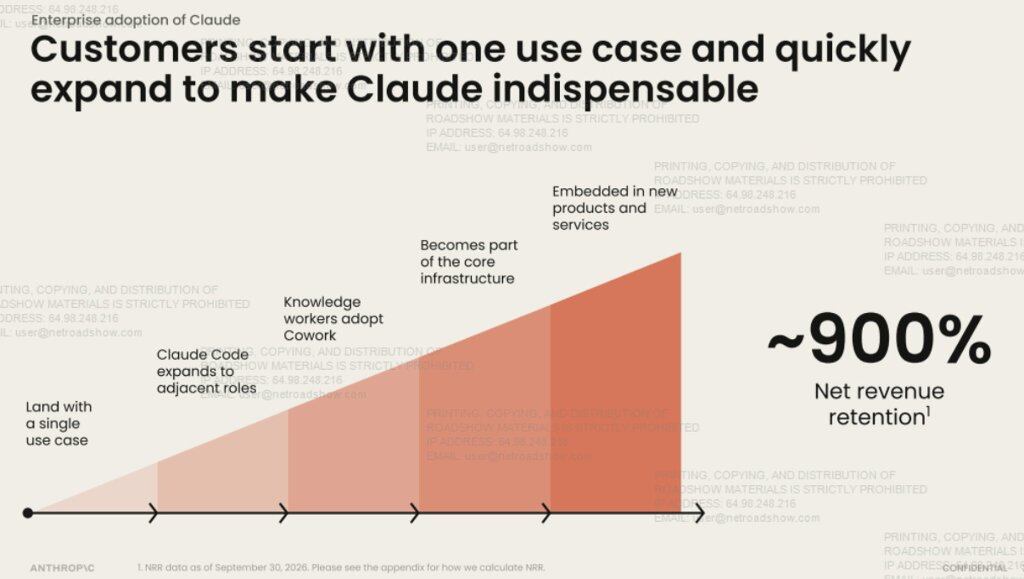
The company's disclosed net revenue retention rate is about 900%, meaning the revenue contributed by the same group of qualified customers in this quarter is approximately 9 times that of the corresponding quarter a year ago. The count excludes fixed price subscription users such as Pro, Max, Ultra.
The PPT uses a stair graph to depict the customer expansion path: starting with one use case, Claude Code expands to adjacent positions, knowledge workers begin using Cowork, then into core infrastructure, and finally embedded in the customers' own products.
Customers start with one use case and rapidly expand until Claude becomes indispensable.
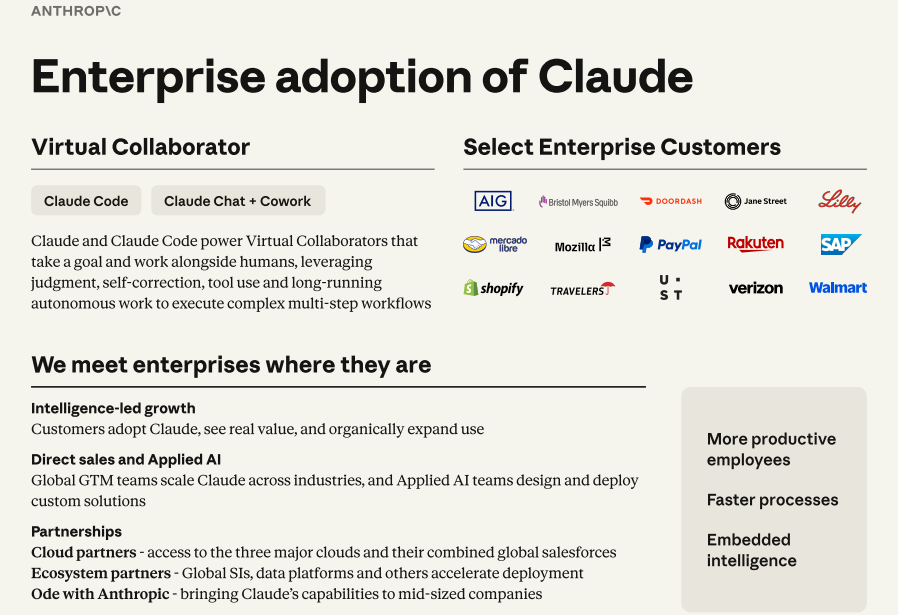
Some corporate clients include AIG, Bristol Myers Squibb, DoorDash, Jane Street, Eli Lilly, Mercado Libre, Mozilla, PayPal, Rakuten, SAP, Shopify, Travelers, UST, Verizon, and Walmart. The proportion of enterprise clients using both the platform and at least one product exceeds 50%, expected to be 30% by the end of Q4 2025.
In terms of sales approach, the company states there are three paths: direct sales and AI application teams, three major cloud vendors and ecosystem partners, and "Ode with Anthropic" targeting mid-sized enterprises.
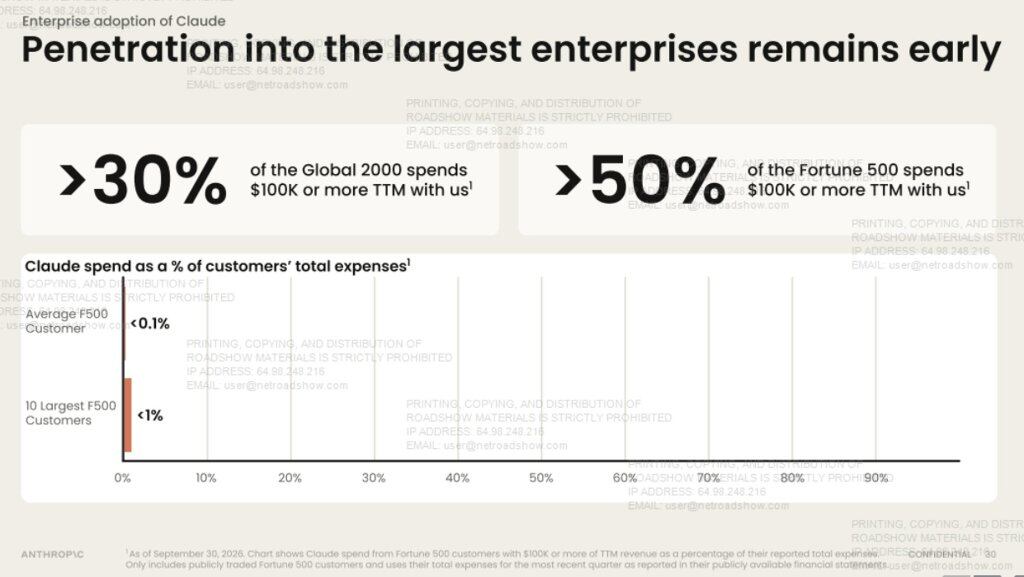
Over 30% of the Global 2000, and over 50% of the Fortune 500, spent at least $100,000 on Claude over the past twelve months.
However, the title of this PPT page is "Penetration into the largest enterprises is still in the early stages": the average spending of Fortune 500 clients on Claude accounts for less than 0.1% of their total expenses, and even the top 10 spent less than 1%. This statistic only includes publicly-listed Fortune 500 clients and uses their total expenses from the most recent quarter in their public financial reports.
Model Capability Changes
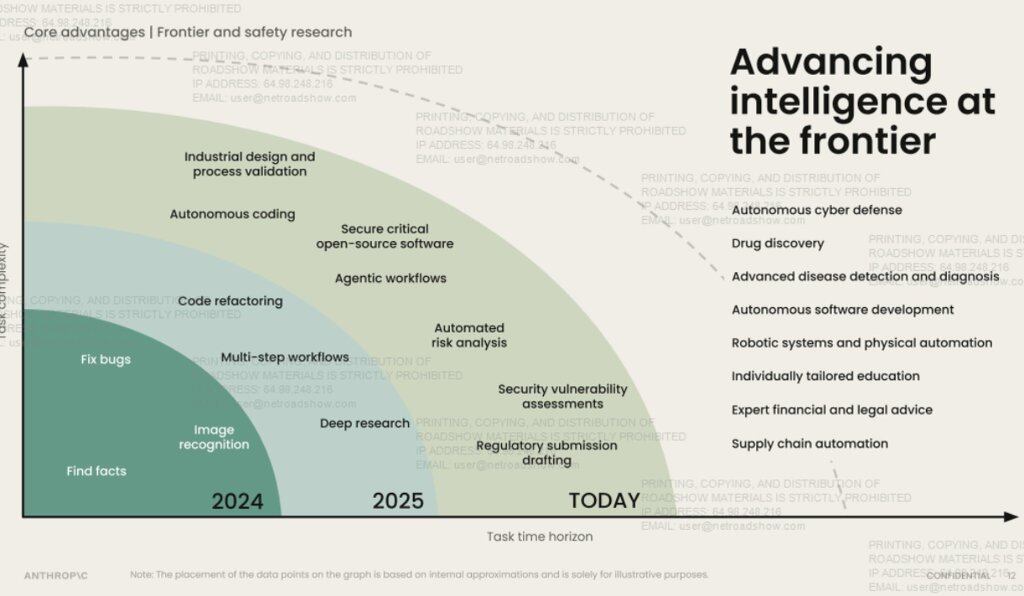
Supporting customer expansion is the change in model capabilities.
In 2024, the focus was mainly on fact-checking, fixing bugs, and image recognition; in 2025, it expanded to code refactoring, multi-step workflows, and deep research. Currently listed tasks include autonomous programming, agent workflows, security vulnerability assessments, and drafting regulatory filings. Drug discovery and disease diagnosis are noted as directions for the next stage.
The product form has also changed: Claude has evolved from a tool that responds to single prompts to a "virtual collaborator" that can complete long-cycle complex work alongside employees.
Revenue increases 45 times, compute costs rise by about 10 times
Since "compute" is the most frequently mentioned word in the video, the compute accounts in the PPT are the parts most worth examining.
From Q1 2025 to Q3 2026, revenue grew over 45 times, while compute and infrastructure costs increased by about 10 times. The company defines compute efficiency as the revenue divided by compute and infrastructure costs, with this ratio rising from 0.40 times to 1.72 times, an increase of 4.3 times.
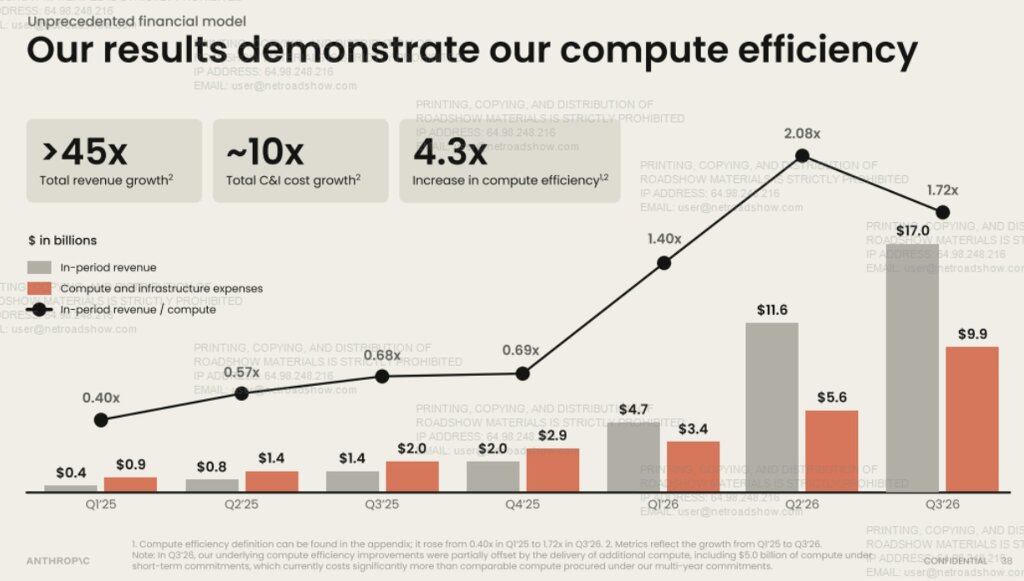
However, this ratio did not consistently rise. In Q2, it was 2.08 times, and in Q3 it fell back to 1.72 times. In Q3, compute and infrastructure costs were $9.863 billion.
The company explained that the additional compute delivered in that quarter included $5 billion of short-term committed compute, whose cost was "significantly higher" than that of comparable compute procured under multi-year commitments.
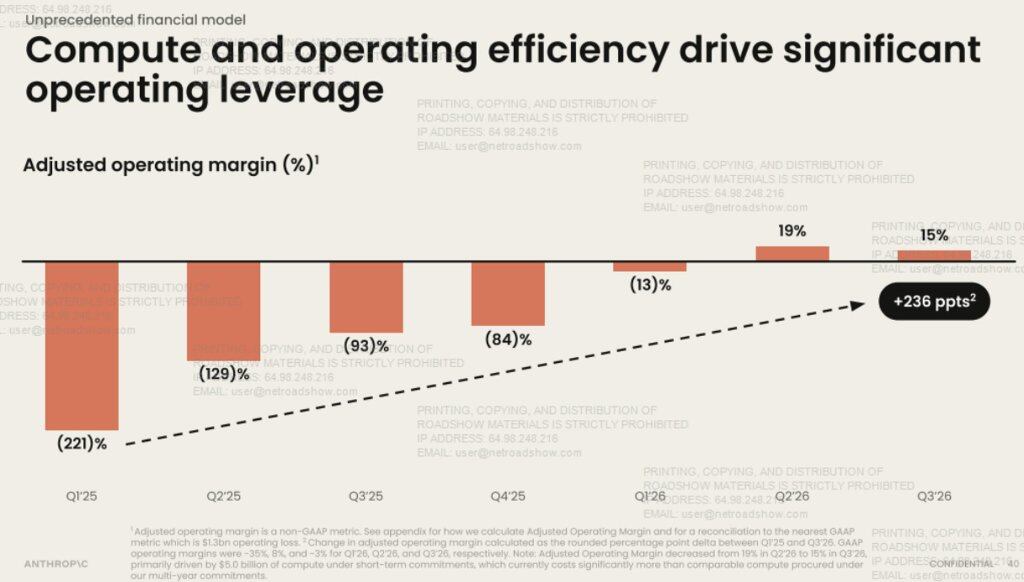
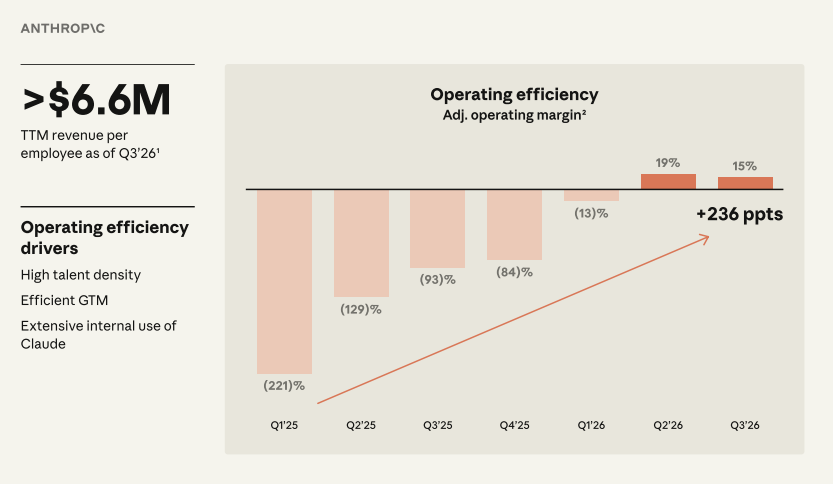
This directly reflected in profit margins. Adjusted operating margin rose from -221% in Q1 2025 to 19% in Q2 2026, then fell back to 15% in Q3. The company attributed the decline to the aforementioned $5 billion short-term compute.
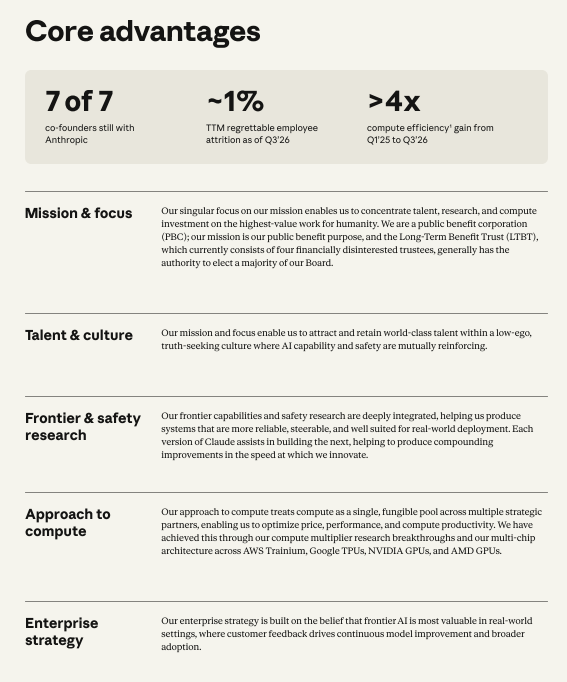
The company regards compute as a unified resource pool across multiple partners, involving four types of chips: AWS Trainium, Google TPU, NVIDIA GPU, and AMD GPU, attributing efficiency improvements to research on compute multipliers and multi-chip deployments.
The company also disclosed that all seven co-founders are still with the company. The company also refers to itself as a public benefit corporation, with a long-term benefit trust currently composed of four trustees with no financial interests, generally entitled to elect the majority of the board. This echoes the emphasis on "mission" and "safety" repeated in the video.
On the customer side, the company claims that improved model efficiency can reduce customer costs. For equivalent workloads, customer costs for Fable 5.1 are about 25% lower compared to Fable 5, and Opus 5.5 is about 40% lower than Opus 5. The company's statement is:
Higher model efficiency allows us to reduce customer costs while maintaining profit margins.
Adjusted operating margin 15%, GAAP at -3%
The recurring theme of "margin" in the video and PPT should be viewed separately based on two measures.
The Q3 adjusted operating revenue was $2.463 billion, corresponding to a margin of 15%. Under GAAP standards, there was an operating loss of $567 million, with a margin of -3%.
The difference arises from adjustments: $1.07 billion in stock-based compensation and $1.96 billion in non-cash charitable donations in that quarter. By the company's definition, the adjusted metrics do not include prior Bartz settlement costs. For the entirety of 2025, the adjusted operating loss was $4.854 billion, with an adjusted margin of -106%.
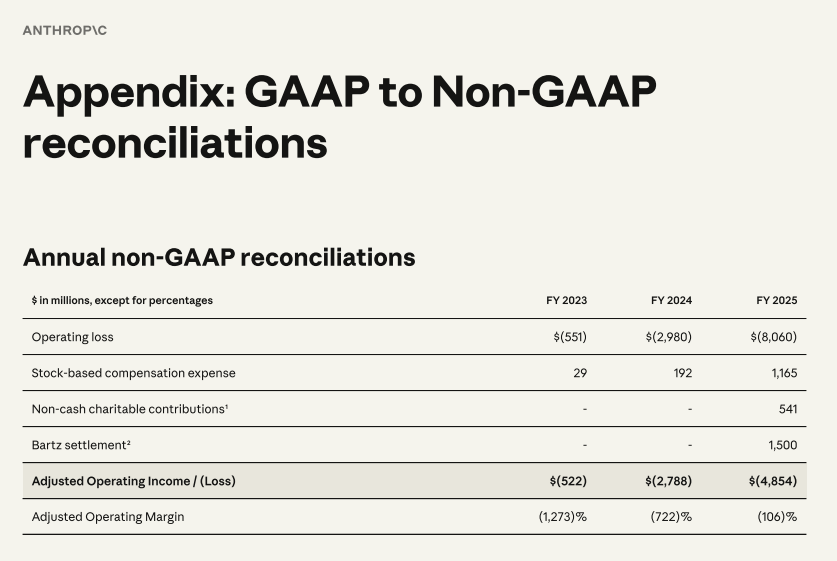
The net loss in Q3 was $23.291 billion, of which $21.936 billion was due to changes in the fair value of convertible notes, among other factors.
Long-term Goal: Adjusted Operating Margin Over 35%
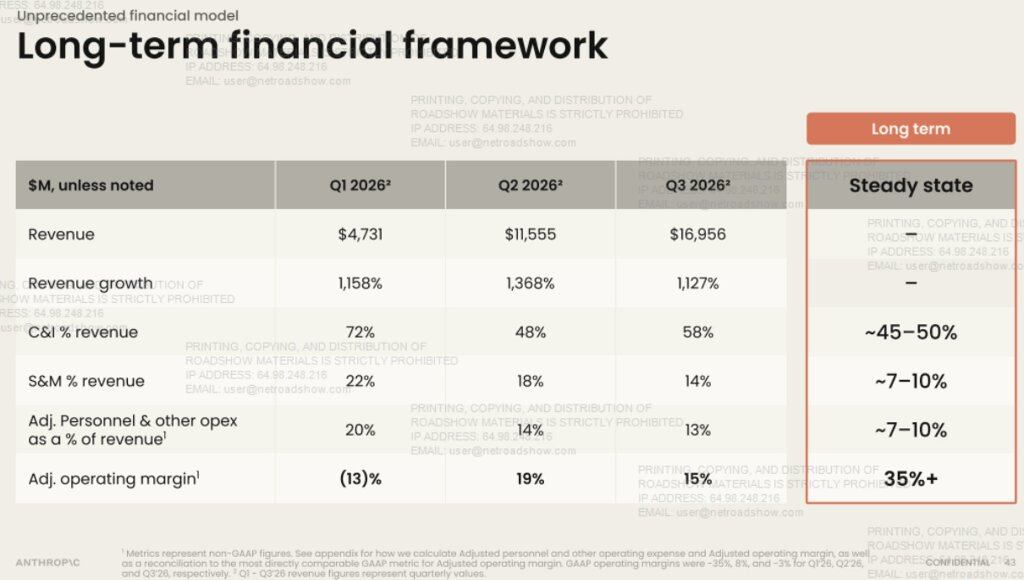
Based on this, the company has set a long-term goal of an adjusted operating margin of over 35%. The expense structure is as follows:
As a proportion of revenue: Long-term steady state compute and infrastructure 58% approximately 45%-50% sales and marketing 14% approximately 7%-10% adjusted personnel and other operating expenses 13% approximately 7%-10% adjusted operating margin 15% over 35%
Being the First Customer: Per Engineer Code Output is Over 45 Times That of 2024
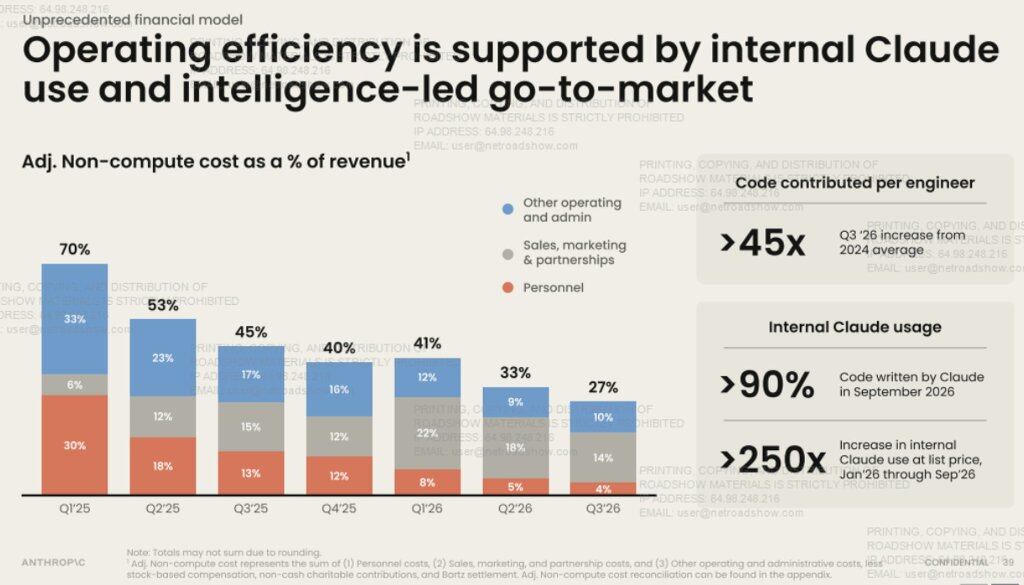
The company attributes the decrease in personnel costs to internal use of Claude.
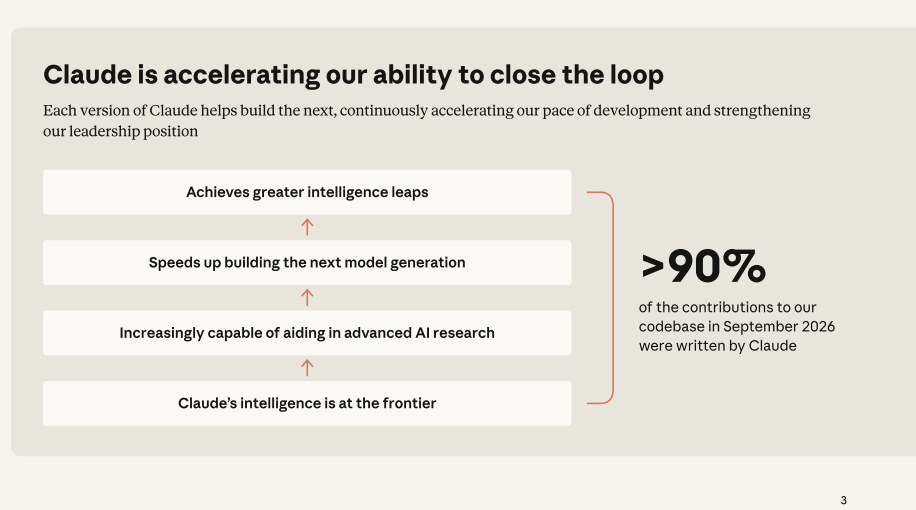
In Q3 2026, the combined lines of code per active engineer were over 45 times the average level in 2024. This multiple was 1.3 times in Q1 2025, 6.2 times in Q1 2026, and 10.3 times in Q2. The company also mentioned that more than 90% of the contributions in the code repository as of September 2026 were written by Claude.
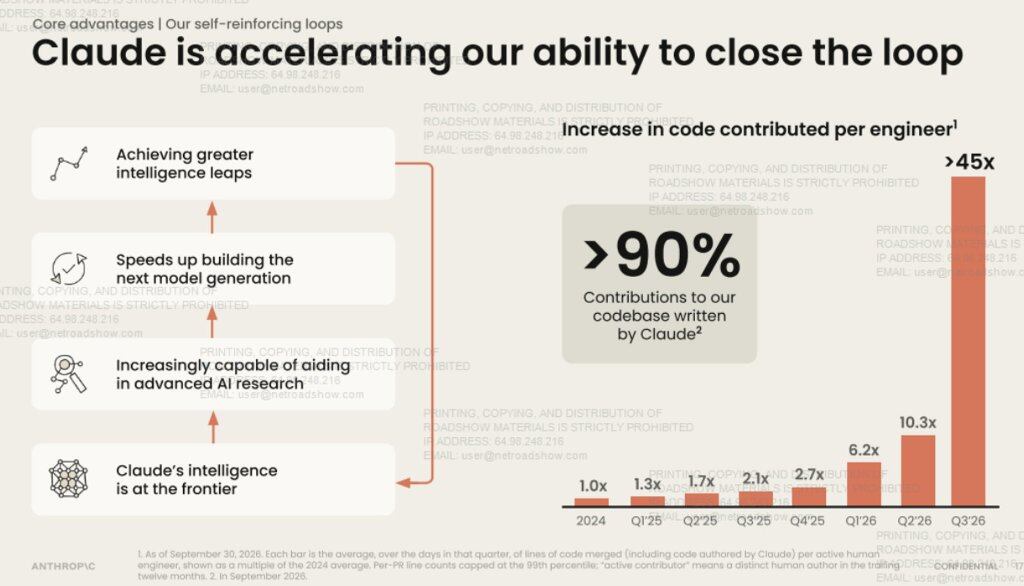
The company describes this logic as a "closed loop":
Each generation of Claude helps build the next generation, continuously accelerating our development pace.
Furthermore, the adjusted non-compute expenses as a percentage of revenue dropped from 70% in Q1 2025 to 27% in Q3 2026. The proportion of personnel costs decreased from 30% to 4%, other operational and administrative costs dropped from 33% to 10%, and sales, marketing, and partner expenses rose from 6% to 14%. This page also discloses that at list prices, the scale of internal use of Claude grew over 250 times from January to September 2026.
Over the past twelve months, the revenue per employee exceeded $6.6 million, including full-time and part-time employees.
Compute Commitments Approximately $899.5 Billion, Pre-IPO Liquidity $216 Billion
As of September 30, the company's contractual obligations total $320 billion, with purchase commitments (mainly cloud service provider hosting) applying to about $313.8 billion. Leases signed but not yet commenced amount to $451.2 billion, with minimum consumption agreements that can be canceled or are within 12 months totaling $17.4 billion, and new agreements signed after September 30 amounting to $105.7 billion. This totals approximately $899.5 billion.
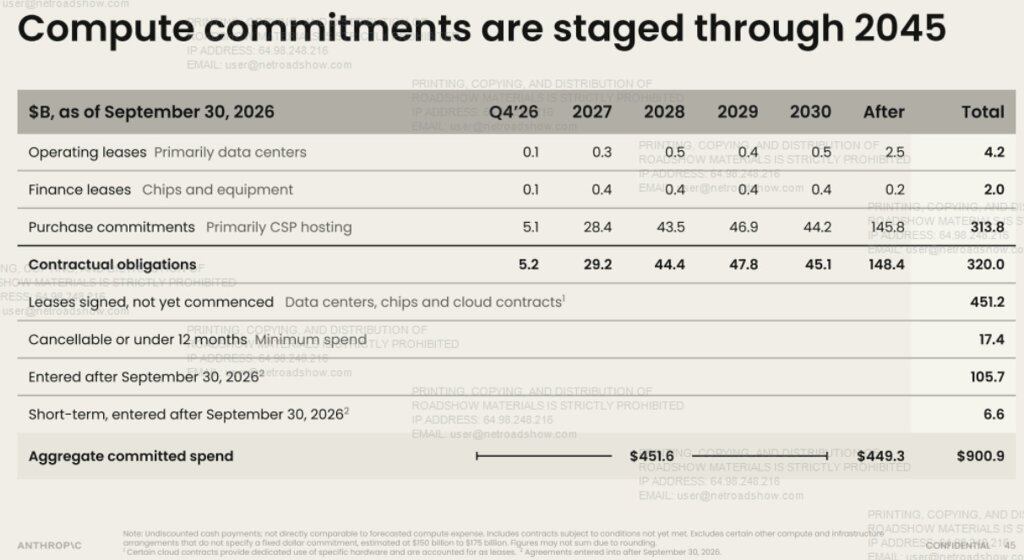
Of these, about $451.6 billion is expected to occur by the end of 2030, with nearly all of the remaining balance expected to occur from 2031 to 2045, and about $70.7 billion maturing in the next twelve months. These are undiscounted cash payments, which cannot be directly compared to forecasted compute costs, and do not include other arrangements without specified fixed amounts, estimated by the company to be between $150 billion and $175 billion.
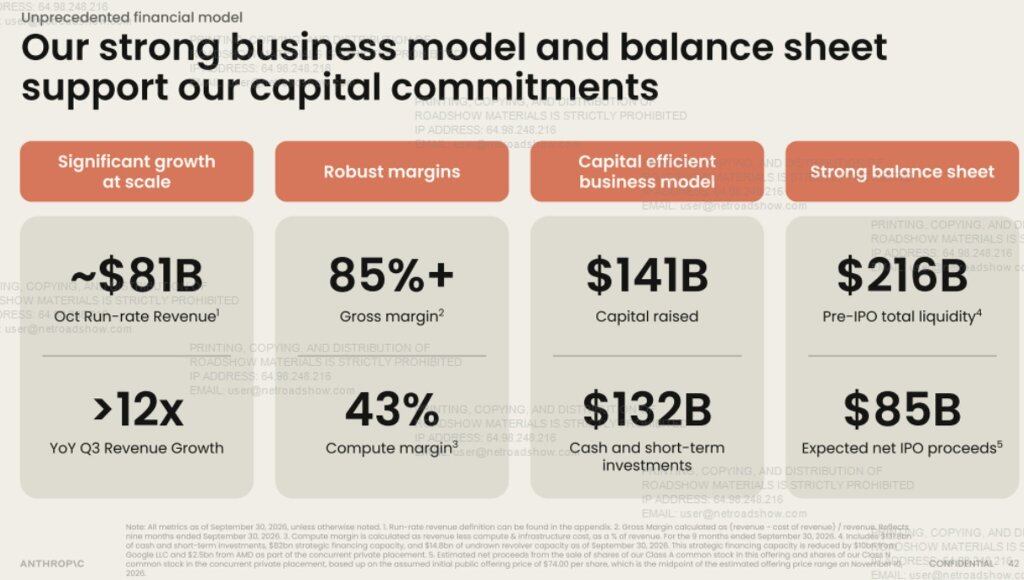
In terms of funding, the company has raised approximately $141 billion, with cash and short-term investments of about $132 billion, giving total liquidity before the IPO of $216 billion, which includes $82 billion from strategic financing and $14.8 billion in unused revolving credit. The strategic financing figure has deducted $10 billion from Google and $2.5 billion from AMD in the concurrent private placement.
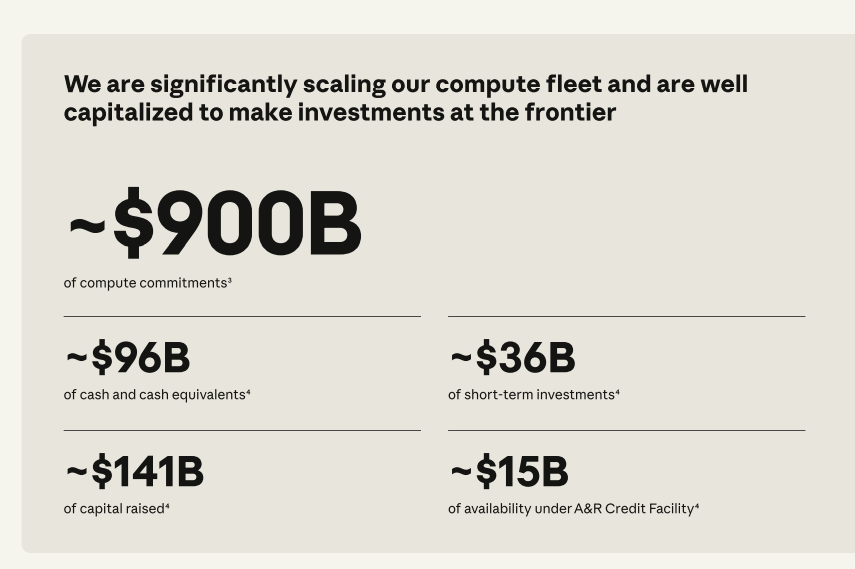
The PPT also breaks down the funding composition: approximately $96 billion in cash and cash equivalents, about $36 billion in short-term investments, and about $15 billion in available credit facilities.
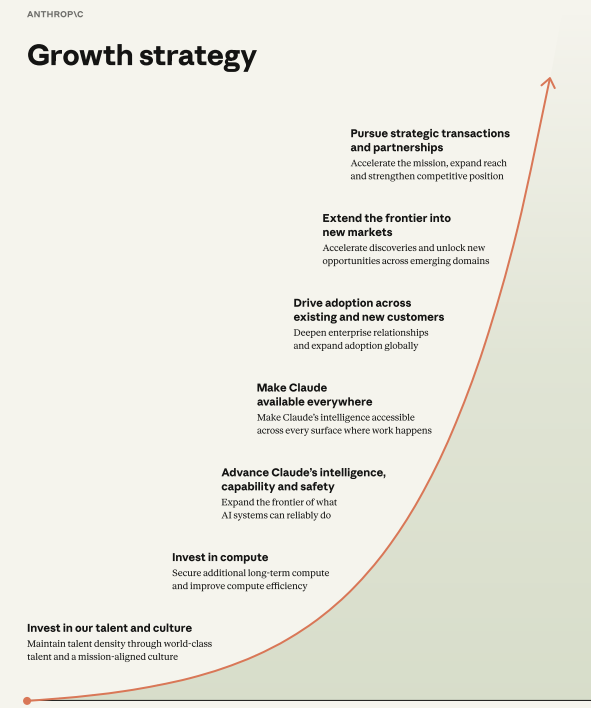
Seven Growth Strategies
Investing in talent and culture, investing in compute, enhancing Claude's intelligence and safety, making Claude "ubiquitous," expanding adoption among existing and new customers, extending cutting-edge capabilities into new markets, as well as pursuing strategic transactions and partnerships.
免责声明:本文章仅代表作者个人观点,不代表本平台的立场和观点。本文章仅供信息分享,不构成对任何人的任何投资建议。用户与作者之间的任何争议,与本平台无关。如网页中刊载的文章或图片涉及侵权,请提供相关的权利证明和身份证明发送邮件到[email protected],本平台相关工作人员将会进行核查。


