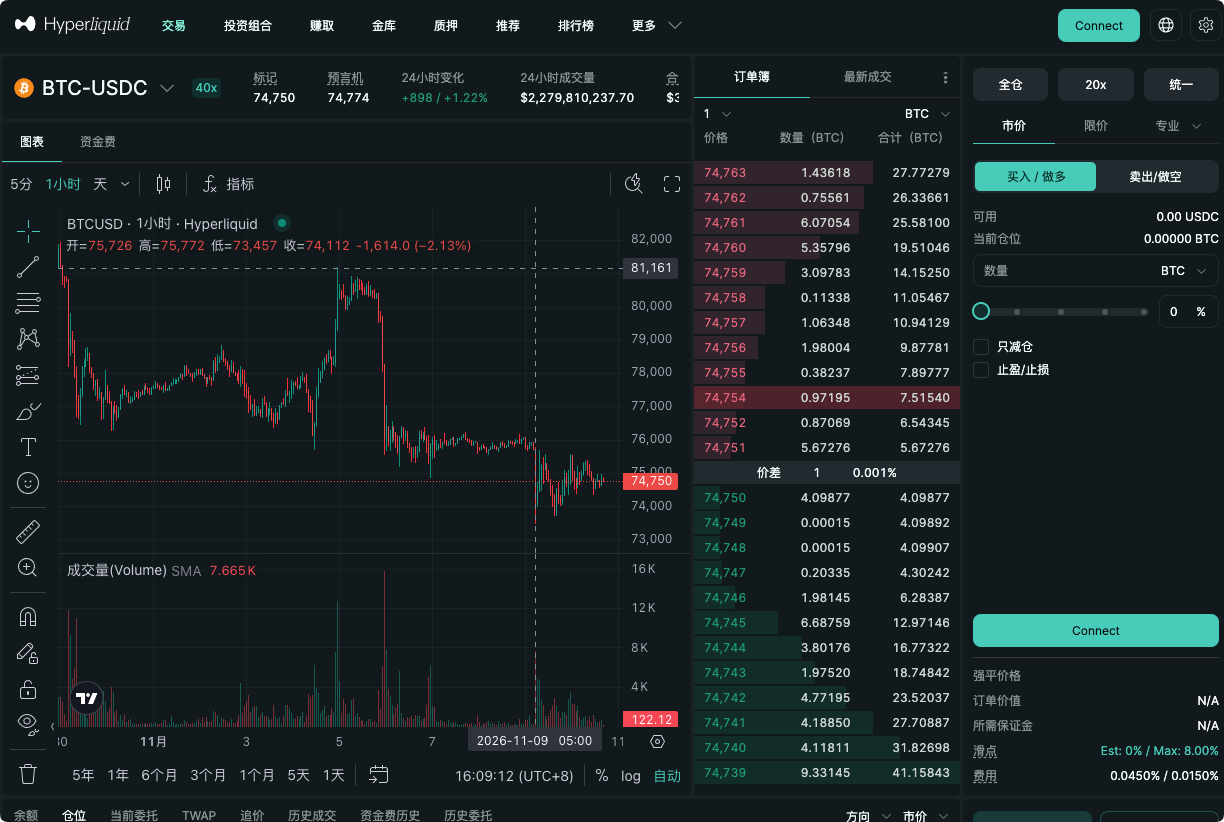
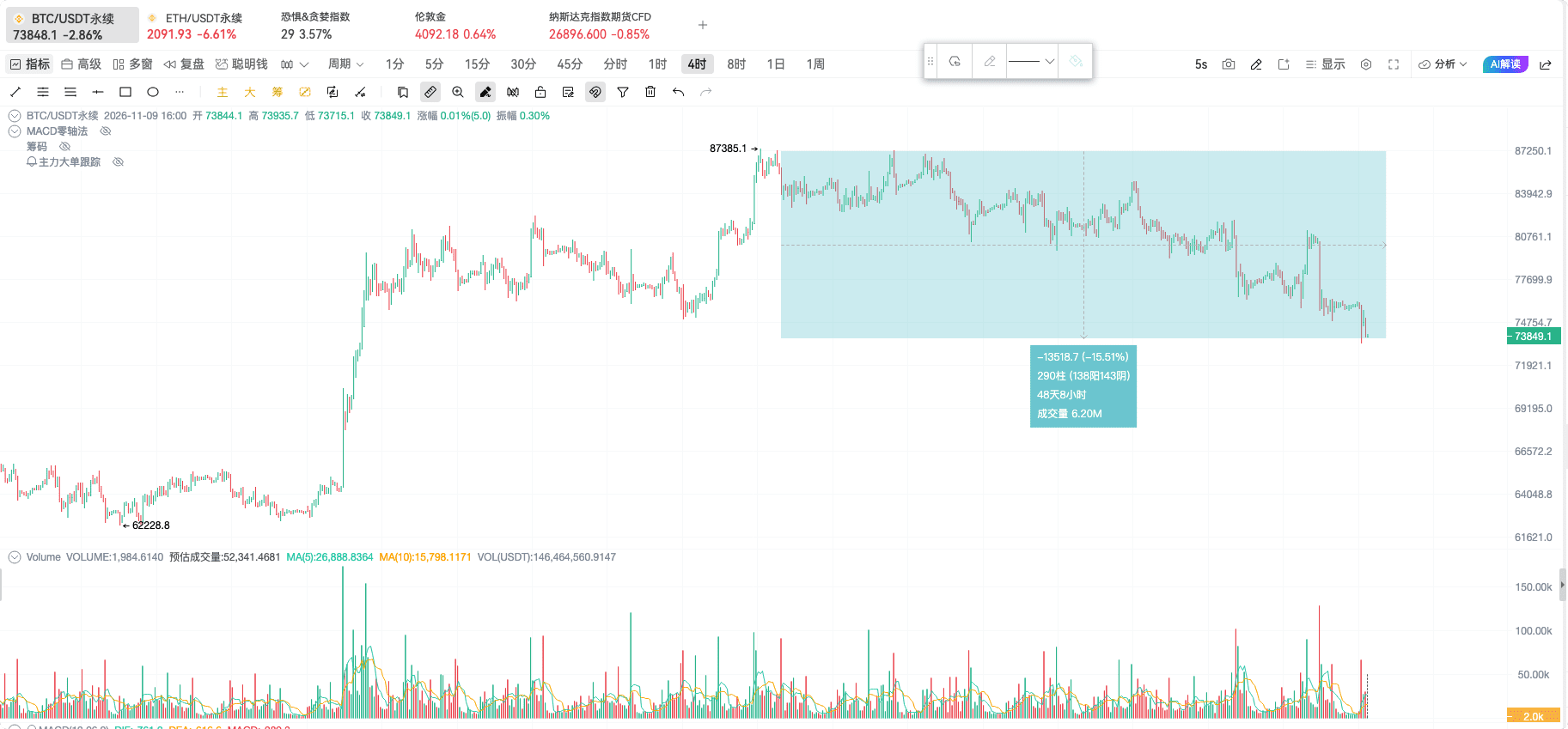
The most dangerous moment in the market is sometimes not when prices have already fallen, but when most traders feel that "the pullback will end soon." When long contracts are clearly overcrowded, once the price breaks below a key area, forced liquidation of leveraged positions may amplify selling pressure, leading to rapid long liquidations and expanded volatility. This logic explains why the long-short ratio is worth paying attention to, but it does not mean that "a high long-short ratio will immediately lead to a crash."
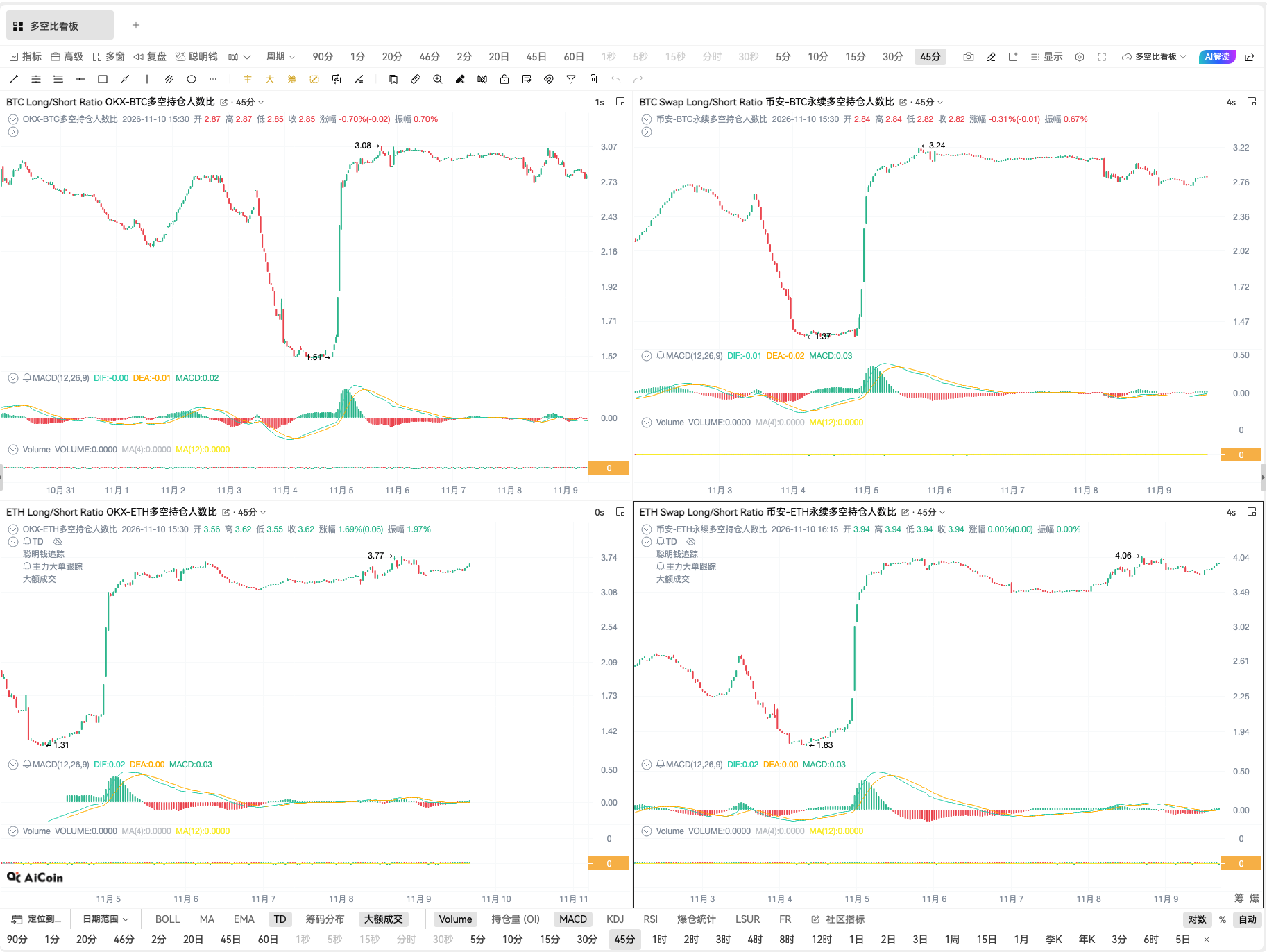
AiCoin data shows that in a 45-minute cycle, the number of long holders for BTC on OKX is about 2.85 and about 2.82 on Binance; for ETH, it is about 3.62 on OKX and about 3.94 on Binance. Within the selected range in the chart, the ratio for BTC on both platforms once dropped to about 1.51 and 1.37, while ETH dropped to about 1.31 and 1.83, and then quickly rose and remained at relatively high levels.
Why does crowding in longs amplify downside risk?
In the derivatives market, the positional risk between trading parties is asymmetrical. If a large number of accounts are on the long side, during a price decline, some traders may take the initiative to stop-loss or reduce their positions; leveraged positions may also hit forced liquidation conditions. If long positions need to sell contracts during liquidation, a concentrated occurrence may increase short-term selling pressure. A price drop may also trigger more stop-losses and forced liquidations, creating a feedback loop of "decline—reduction—further decline."
However, this feedback does not automatically activate. When there are many long accounts, prices may continue to rise; crowded longs may also gain unrealized profits, maintain their positions, or delay liquidation by adding margin. Even if a decline occurs, if buying support is sufficient, the scale of forced liquidations may not be enough to drive a trend crash. Therefore, the long-short ratio informs us of potential fragility or positional skew, but not directional certainty.
Another notable change in the chart is that the ratio quickly rose after a low point around November 4 and jumped to a high around November 5; subsequently, while there has been volatility in the BTC and ETH ratios, they remain at relatively high levels. This indicates that there has been a significant change in the proportion of long accounts in the short term. It could be due to newly added longs or adjustments related to short liquidations and price rebounds. This chart alone cannot distinguish which mechanism is dominant.
To judge "the washout is near," at least three types of evidence are needed
First, observe whether the price structure weakens. If BTC and ETH have a high number of longs while the rebound peaks gradually decrease, key supports are effectively broken, and the pullback cannot recover, then evidence that crowded positions face price pressure will strengthen. If the price continues to raise higher peaks and key support remains valid, then a high long-short ratio may just be a positional structure within an upward trend.
Second, monitor the open interest and funding rates. A high ratio of long holders does not necessarily mean a high total amount of leverage. If open interest remains high or continues to increase while the funding rate is clearly positive, it may indicate that participation and holding costs for long positions are high; if open interest rapidly declines when the price weakens, it may indicate that positions are being liquidated. These indicators need to be viewed in conjunction with actual platforms, contract types, and time cycles; they cannot be replaced by the long-short ratio from the chart alone.
Third, confirm whether there is forced liquidation or accelerated trading during declines. Only if price breaks down accompanied by expanded forced liquidations, increased volumes, and weakened rebounds does it fit the path of "longs de-leveraging possibly amplifying the drop." Conversely, if the price drops but volume does not expand, and the long-short ratio retreats while the price quickly recovers, the narrative of a crash washout needs to cool down.
Therefore, a more rigorous conclusion is: Currently, BTC and ETH show that the proportion of long accounts is relatively high, indicating a potential downside fragility caused by crowded longs; however, to escalate this to "a crash washout is imminent," we need to see price breakdowns, leverage position pressures, and actual selling behaviors corroborating each other.
Prepare scenarios for both outcomes to avoid betting on a single conclusion
Bearish scenario: BTC or ETH breaks below the support area marked by traders, pullbacks cannot recover, and open interest, funding rates, or forced liquidation data show changes consistent with long de-leveraging. At this time, one can assess whether to participate in short trades according to personal strategies and determine stop-loss, position, and target risks in advance.
Conversely, bullish scenario: If prices hold the support and continue to rise, the long-short ratio remains high but does not trigger obvious selling pressure, or the ratio gradually retreats as the market rises. In this case, the market may digest the crowding through time and price, rather than liquidating longs through a crash. If shorts continue to hold based solely on "high ratios," they may encounter squeezes.
Trading plans should clearly outline what facts would invalidate a bearish viewpoint. A high long-short ratio is not a direct sell signal, nor is it a reason to ignore stop-losses. Especially when BTC and ETH positions are highly correlated, simultaneously shorting both could be a repeated bet on the same macro direction; a high number of accounts does not necessarily equate to risk being naturally diversified.
Multi-account ordering: Quickly execute established plans after trigger conditions are met
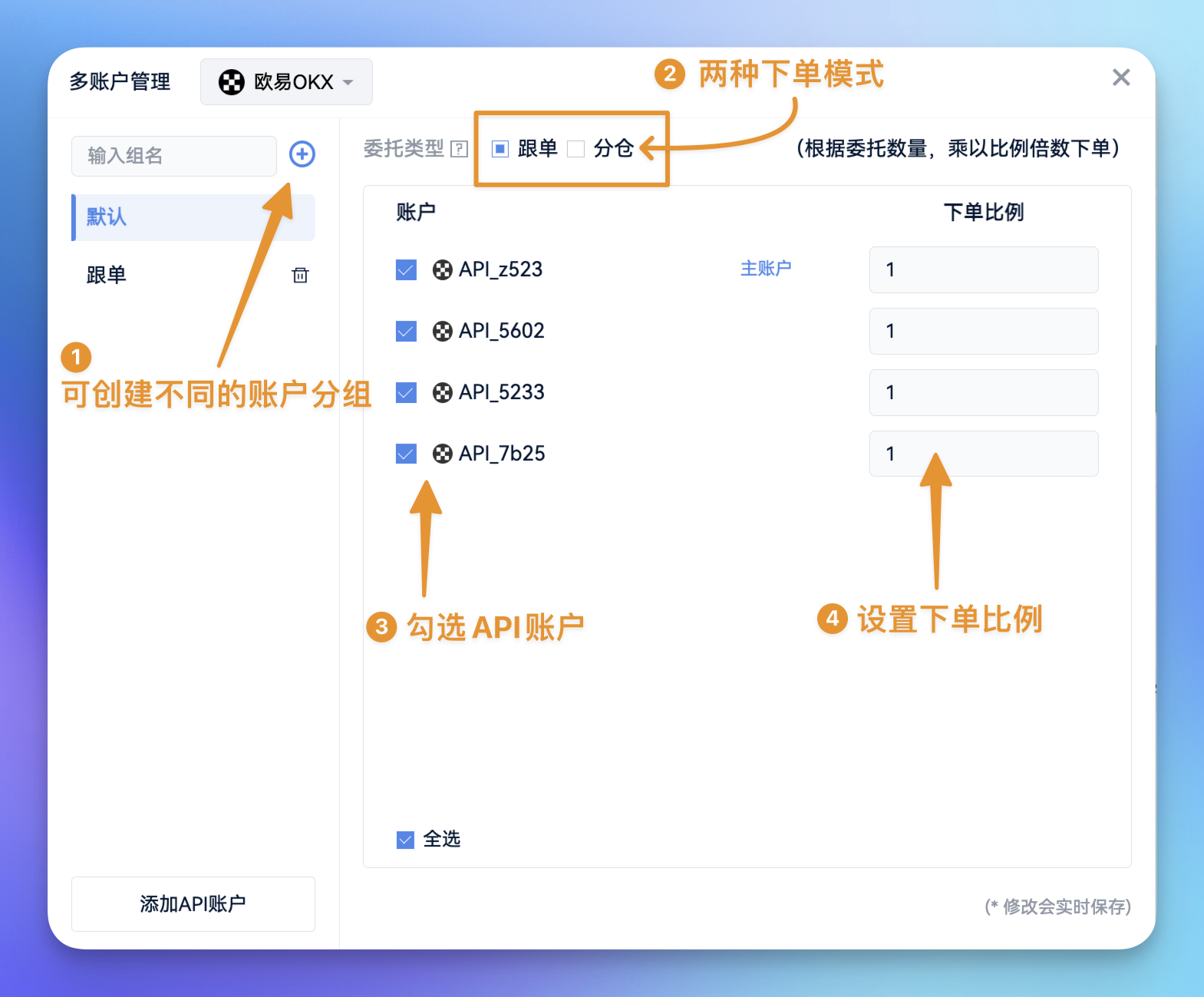
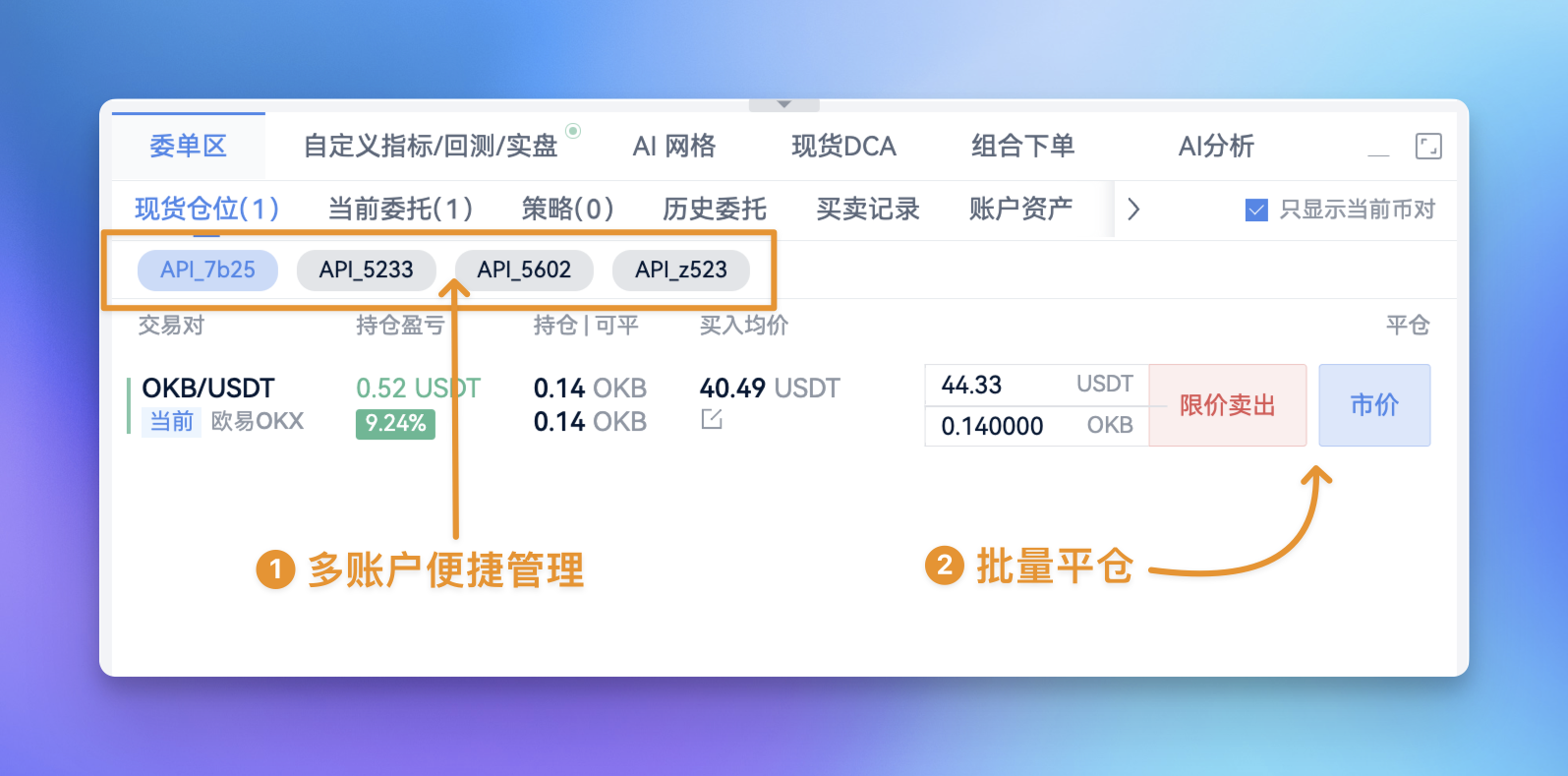
When traders have already created a clear short plan based on price structures and risk indicators, the execution efficiency between multiple accounts becomes crucial. Switching accounts one by one, repeatedly selecting trading pairs and directions, and re-entering quantities can easily delay the timing and lead to account selection errors or inconsistent quantities. The value of AiCoin's multi-account ordering lies in putting multiple API accounts into a unified ordering process, reducing repetitive operations and executing collaboratively according to preset ratios.
The copy trading model is suitable for setting a base order quantity first, then having other accounts follow according to their respective ratios or multiples. If traders want multiple accounts to use the same strategy but with different position sizes, they can configure the ratios in advance to reduce redundant calculations before the order.
The partitioning model is suitable for first determining the total order amount that multiple accounts need to execute, then distributing it to each account according to a ratio. If the core goal is to control the overall order size and specify how much each account receives, the partitioning method is more intuitive. Simply put, copy trading emphasizes how accounts follow the base quantity, while partitioning emphasizes how the total amount is divided.
Operational Sequence: First confirm the signal, then allocate accounts and risks
1. Treat the long-short ratio as a risk background and not as an entry trigger; first confirm whether the price structure weakens, and supplement with funding rates, open interest, or forced liquidation data for verification.
2. Clearly define the trigger conditions for shorting, judge invalidation conditions, stop-loss locations, and the total maximum risk across multiple accounts. Before placing simultaneous orders, check existing positions and available margin in the accounts.
3. On the AiCoin order panel, activate multi-account ordering, select the API accounts participating this time, and confirm the accounts, exchanges, and authorization statuses.
4. Choose copy trading or partitioning according to plan, set account ratios or multiples; after checking the BTC/ETH trading pair, shorting direction, order type, and quantity, submit the order. Do not skip risk checks just because "synchronization is quick."
5. After placing orders, check the actual transaction prices, quantities, positions, and risk exposure for each account. If the price reclaims a key level or other invalidation conditions appear, stop-loss, reduce positions, or cancel orders according to the plan. The execution results across multiple accounts may differ due to balances, exchange rules, liquidity, and transaction timing.
Multi-account ordering enhances execution speed and consistency but does not predict crashes, nor does it guarantee that all accounts will transact at the same price. If multiple accounts simultaneously establish positions in the same direction, the total risk could rapidly accumulate. Therefore, before using tools, first define the overall risk, and then decide how to allocate it across accounts.
Conclusion: Crowding in longs is a warning, not a judgment of a crash
The long-short holder ratio for BTC is about 2.85 on OKX and 2.82 on Binance; for ETH, it is about 3.62 on OKX and 3.94 on Binance. Compared to the low points in the selected range in the chart, these readings are significantly high, indicating that the tendency for long accounts is worth being wary of. If prices subsequently break, rebounds fail, and are accompanied by de-leveraging and accelerated selling, the risk of a crash washout will increase.
However, as long as prices can hold key areas or there are no signs of passive liquidation in long positions, a high long-short ratio is not enough to prove that a major drop is imminent. The correct approach is to continue validating, rather than betting based on a single indicator. Once the trigger conditions genuinely occur, then use AiCoin's multi-account ordering for either copy trading or partitioning to quickly and uniformly execute a clear plan across multiple accounts.
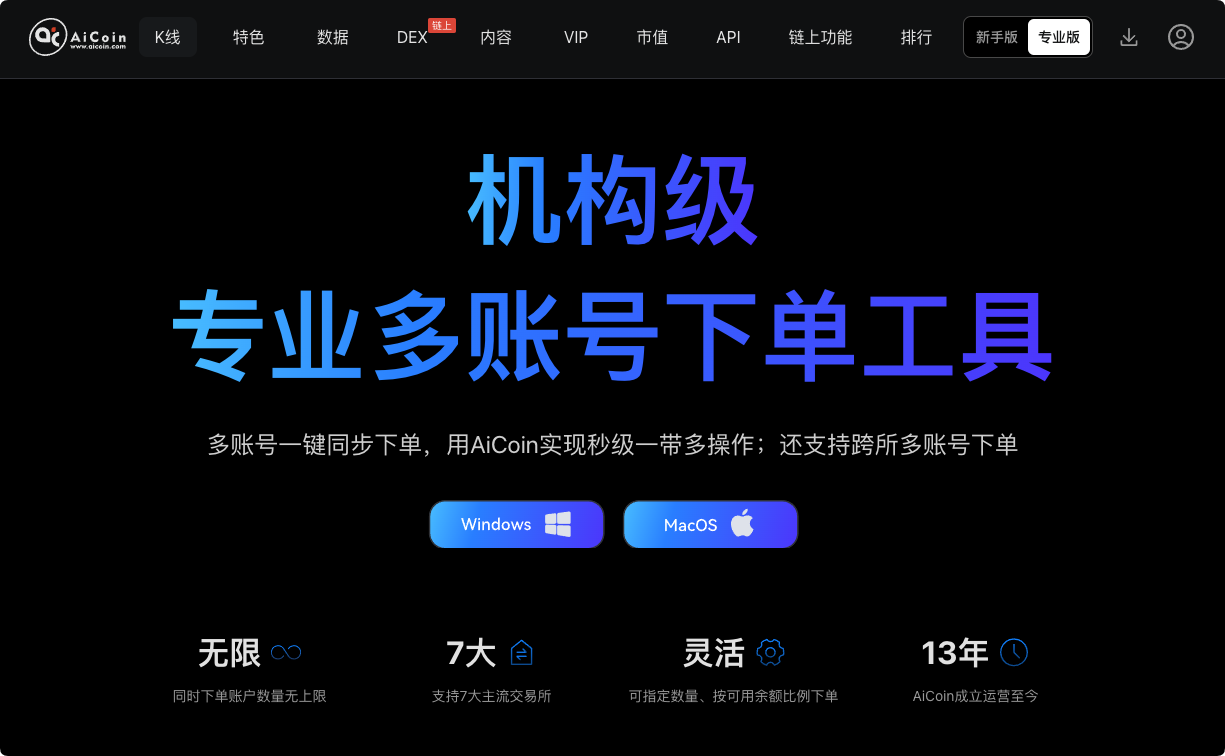
The exclusive "Multi-Account Ordering" super tool for AiCoin users
One-click synchronous ordering with multiple accounts; perform multi-step operations in seconds with AiCoin; also supports cross-exchange multi-account ordering:
https://www.aicoin.com/zh-Hans/tg/multi-account
免责声明:本文章仅代表作者个人观点,不代表本平台的立场和观点。本文章仅供信息分享,不构成对任何人的任何投资建议。用户与作者之间的任何争议,与本平台无关。如网页中刊载的文章或图片涉及侵权,请提供相关的权利证明和身份证明发送邮件到[email protected],本平台相关工作人员将会进行核查。