Hyperliquid has recently appeared with three seemingly separate signals.
First, according to market data, Hyperliquid's protocol revenue for the first ten months of 2026 is approximately $557 million, with the last three months annualized over $800 million.
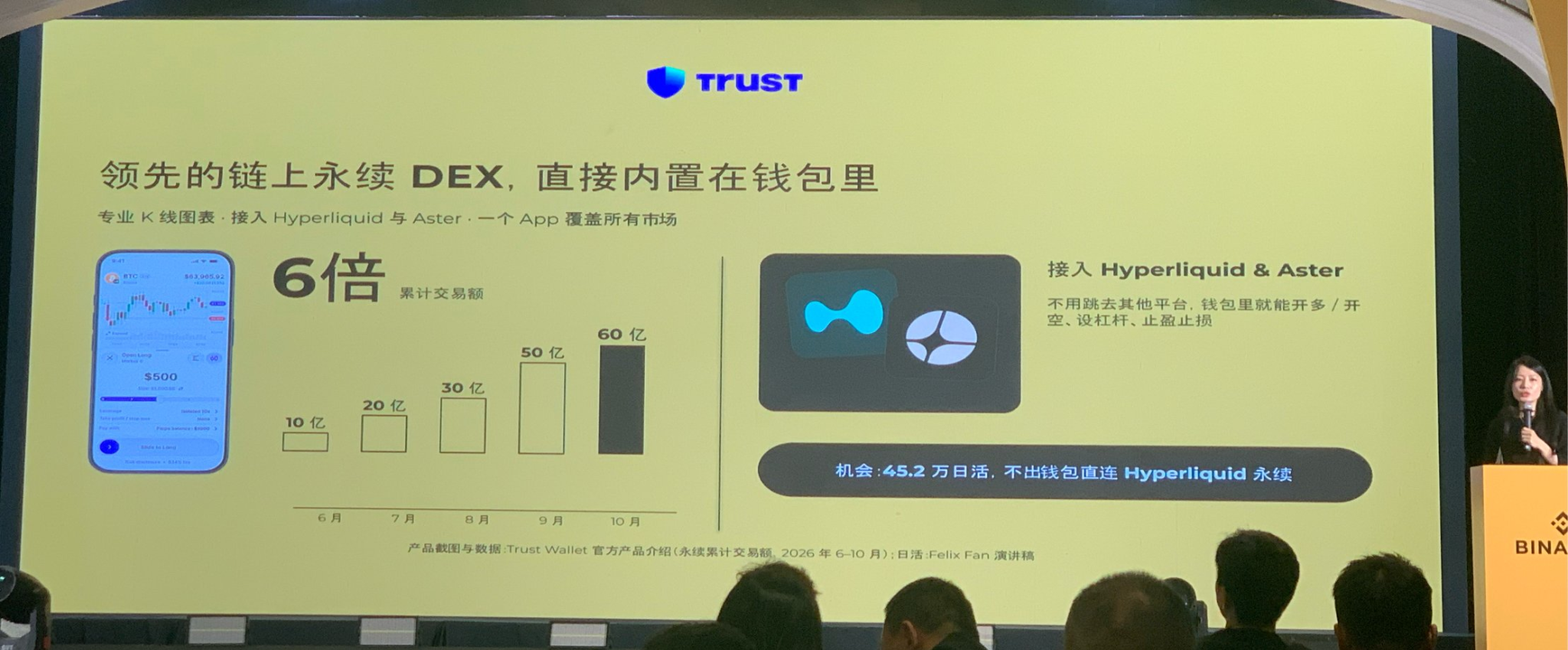
Second, Hyperliquid is starting to be used by trading platforms as underlying liquidity and execution infrastructure. The large African trading platform VALR has replaced its existing perpetual contract backend with Hyperliquid; wallets like Trust Wallet and Bitget Wallet have also been observed by the community to start embracing Builder Codes.
Third, Chandler Guo reminds the market: Hyperliquid cannot be simply described as "absolutely unfreezable." Old bridges can be paused, certain spot tokens may retain token-level freeze permissions, and cross-chain channels for USDC also have blacklist checks and pause mechanisms.
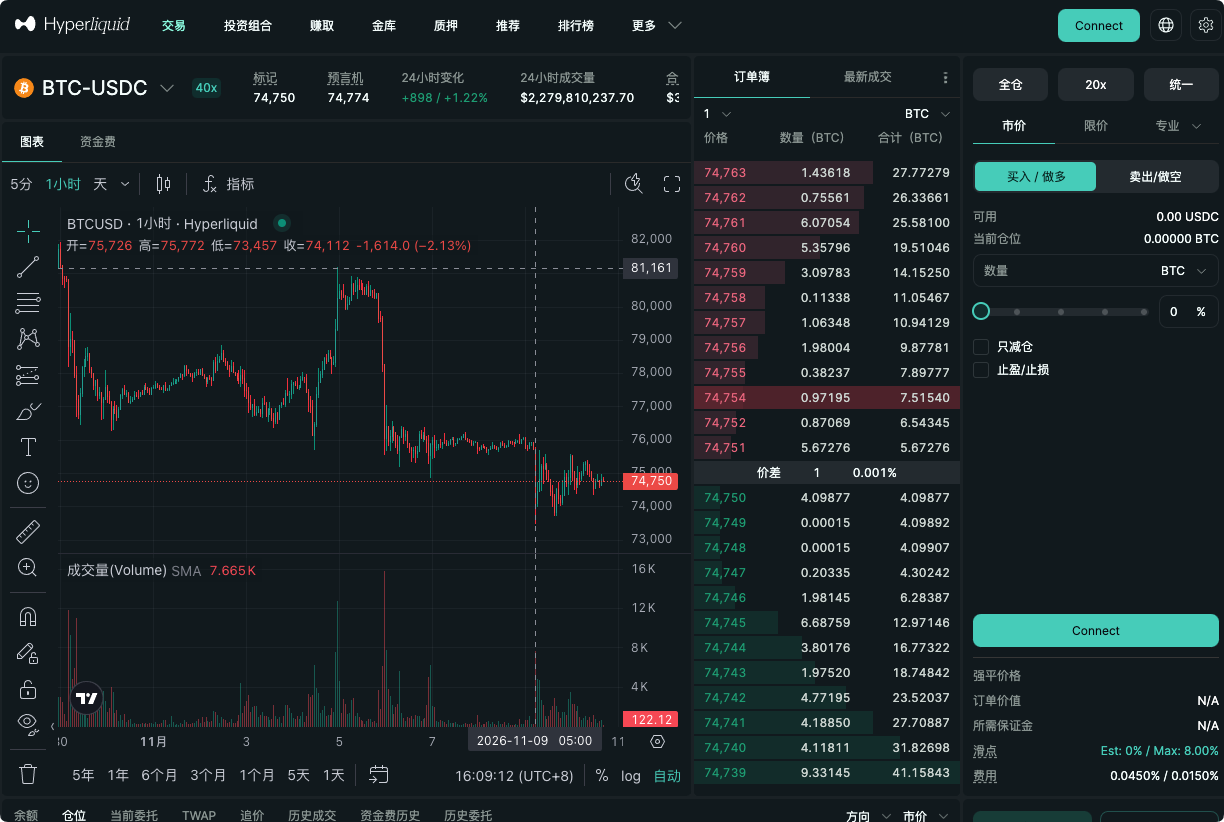
Looking at these three things together, what Hyperliquid has really accomplished may not be establishing an exchange that can "never be intervened," but rather breaking down the trading market into several components that can be observed, called upon, and must bear responsibility separately.
Its core value is not absolute unfreezability, but rather liquidity, execution, distribution, and permissions no longer being entirely hidden within a centralized company's internal database.
1. First, correct a number: $557 million is not net profit in the traditional sense
More accurately, $557 million should be said as: Hyperliquid reached approximately $557 million in the first ten months of 2026.
This is not the audited net profit of Hyperliquid as a company, nor can it be directly equated to cash flow that the team can freely dispose of.
However, it is still very significant. The reason is that this income is not derived from one-time financing or a single token issuance event, but rather generated by ongoing usage behaviors such as trading fees, perpetual market activities, spot market activities, HIP-3 market, and stablecoin reserve earnings.
The quality of the revenue is now shifting from "project narrative" to "infrastructure usage volume."
2. What is truly frightening is not the revenue, but where the revenue comes from
The scale of a trading platform's revenue cannot be viewed in isolation from its trading structure.
If revenue comes from high listing fees, short-term liquidity incentives, or one-time airdrops, then its sustainability is weak. In contrast, if revenue is derived from a large number of traders continuously completing open positions, closing positions, hedging, and liquidation across different markets, it indicates that the protocol has become embedded in real trading processes.
Hyperliquid's fee documentation indicates that perpetual and spot use different fee structures; a user's 14-day weighted trading volume determines the fee tier, and spot trading volume is counted with higher weight for fee tier. The HIP-3 market also has independent deployer fees and market parameters.
This means that Hyperliquid's revenue is not the income from a single product, but rather the result of multiple market layers stacked together:
- Native crypto perpetuals provide high-frequency trading and leverage demands;
- The spot order book contributes spot trading fees;
- HIP-3 allows deployers to create new perpetual markets;
- Builder Codes integrate orders brought by external applications into the same liquidity and execution system;
- AQAv2 allows some stablecoin reserve earnings to enter the protocol revenue criterion.
From an investor's perspective, the most noteworthy observation is not how much revenue reaches a certain day, but whether the revenue can continue to be maintained after the market's enthusiasm decreases.
From a trader's perspective, revenue growth also has another layer of meaning: the more the platform relies on real transactions, the greater the need to maintain the market depth, execution speed, oracle quality, and the stability of liquidation mechanisms.
The larger the revenue, the heavier the responsibility for infrastructure.
3. VALR access indicates: Hyperliquid is changing from a "trading platform" to a "liquidity backend"
The VALR case is more noteworthy than a simple trading volume leaderboard.
Hyperliquid's official announcement states that VALR previously had its own perpetual trading backend, which was completely replaced by Hyperliquid's existing infrastructure. VALR continues to manage the user-friendly interface and trading experience, while Hyperliquid provides the underlying on-chain liquidity and execution.
This does not mean that users simply jump from VALR to Hyperliquid's web trading, but rather that users may continue to stay within the VALR interface while indirectly using Hyperliquid's market infrastructure.
This is precisely the significance of Builder Codes.
Hyperliquid's official documentation states that Builder Codes allow applications to submit orders for users and charge Builder fees upon transaction completion. Users need to approve the maximum fees for each Builder, and permissions can be revoked at any time; the fee logic for Builder Codes is processed on-chain.
The official also clarifies the boundaries: the maximum perpetual Builder fee can reach 0.1%, spot can reach up to 1%, and each user can activate a maximum of 10 Builder authorizations simultaneously.
From a product structure perspective, Builder Codes have shifted the competitive focus of traditional trading platforms.
In the past, trading platforms typically needed to maintain matching, margin, liquidation, liquidity, and the user interface themselves. Now, applications can focus more on user relationships, product experience, and distribution channels while delegating part of the underlying trading capabilities to Hyperliquid.
Hyperliquid's official comparisons this model to cloud infrastructure: applications hold their own users and interfaces, while the underlying protocol provides liquidity and execution.
This also explains why "Will CEX be replaced by DEX?" may not be the most accurate question.
The more likely outcome is:
CEX retains user entry points and compliance relationships, while DEX protocols provide liquidity and execution capabilities.
What traders see are different brands of frontends, but behind the scenes, they may connect to the same set of on-chain market infrastructure.
4. Jeff Yan's judgment from a year ago is turning into competition at the distribution layer
Reflecting on Jeff Yan's judgment during the TBPN interview in October 2025: CEX closure might occur within a year, opting to transition to Hyperliquid; one year later, VALR's access to Hyperliquid and wallets beginning to use Builder Codes are seen as realities supporting this trend.
Here, it is essential to distinguish facts from commentary.
VALR's access to Hyperliquid is an officially announced ecological partnership; Builder Codes are a publicly disclosed product mechanism by Hyperliquid; however, "some CEX will eventually shut down" remains Jeff Yan's judgment and community interpretation of industry trends, not an already completed industry statistical conclusion.
Nonetheless, structural changes have indeed occurred.
Trading platforms are facing two choices: continue to place all capabilities in their closed backends, or invest resources in distribution, branding, fiat entry points, and customer relations, while using external liquidity infrastructure.
This is reminiscent of the early internet transitioning from self-built servers to cloud services, but cannot be entirely equated. Trading systems involve clearing, asset safety, market manipulation, compliance, and extreme market risk, which are far more complex than typical application servers.
For Hyperliquid, the value of Builder Codes is not merely an additional source of fee income.
It allows Hyperliquid's liquidity to potentially reach users through more frontends, while passing on the competition for user entry to wallets, CEX, quantitative terminals, and other trading applications.
Once more applications connect to the same depth, Hyperliquid will no longer just be a DEX that requires users to actively visit, but may become a liquidity layer used by multiple trading products.
5. "Can it be frozen?" must be broken down into four questions
For a truly accurate analysis, four questions must first be asked:
- What asset is being frozen?
- Which layer is the asset located in?
- Who holds the corresponding permissions?
- Which deposit and withdrawal channels are active?
1. The old bridge can be paused, does not mean the entire account is emptied
Hyperliquid's official USDC documentation clearly states that CCTP is the preferred way to enter Hyperliquid L1 natively, and the old Arbitrum bridge has been marked for deprecation.
The old Bridge2 contract code indicates that bridging withdrawals require validator signatures; the contract has a pause mechanism, and withdrawals also go through a dispute period. The code also contains logic for marking specific withdrawals as invalid.
This means the old bridge indeed has intervention capabilities at the governance and validator levels. However, a strict distinction needs to be made:
- Pausing bridging does not equal emptying HyperCore's internal balance;
- Invalidating a withdrawal does not equal permanently freezing the entire account;
- The permissions of the old bridge do not mean that native HYPE, all USDC, and all market positions share the same freeze switch.
2. Token-level freeze does not equal protocol-level freeze
Some HyperCore spot tokens allow deployers to enable and retain freeze permissions at the time of creation, which may prevent specified addresses from trading, sending, or receiving that token.
This is a permissions design at the asset issuance layer.
It illustrates that issuing a token on Hyperliquid does not automatically mean that the token possesses the same permissions structure as HYPE or USDC. Deployers can set different rules for their assets, and users need to read the token and market information before trading.
However, this permission cannot be directly extrapolated to mean "all HYPE and USDC margins can be frozen by the same button."
3. USDC must simultaneously consider both Circle layer and HyperCore layer
The Circle official documentation states that the balance within HyperCore is a record of protocol-level limits, while the native USDC remains in the CoreDepositWallet contract on HyperEVM; users need to go through the withdrawal process to redeem it as native USDC on HyperEVM.
Thus, USDC involves at least two different levels:
- The asset layer issued and cross-chain transferred by Circle;
- The layer of tradeable balances recorded internally within HyperCore.
Entry channels may have blacklist checks or pause mechanisms, but this does not automatically prove that after Circle takes action against a certain address, it will immediately empty all internal margins and open positions from that address.
True risk judgment must consider which layer the funds are currently on, which channel is being used, and what permissions the relevant contracts and validators hold.
Conclusion
The $557 million in revenue indicates that market usage is already strong enough; VALR and Builder Codes indicate that Hyperliquid's liquidity is starting to be called upon by external applications; the discussion on freeze permissions reminds the market that on-chain systems have never been a simple world with only "decentralized" or "centralized" options.
A more accurate description is:
Hyperliquid is dismantling the exchange into a set of callable infrastructures, yet this infrastructure is still composed of different tiers of contracts, validators, issuers, deployers, and frontends.
Its competitiveness is not based on a promise of an unpauseable, uninterruptible utopia, but rather on enabling users and applications to more clearly see where transactions occur, where liquidity comes from, who holds the permissions, and what different risks actually reside at which levels.
For ordinary traders, what is truly worth learning is not the slogan "absolutely unfreezable," but rather doing three things like an institution: first look at liquidity, then look at prices; first look at permissions, then look at assets; first look at data hierarchy, then make trading judgments.
Exclusive Benefits for AiCoin Users
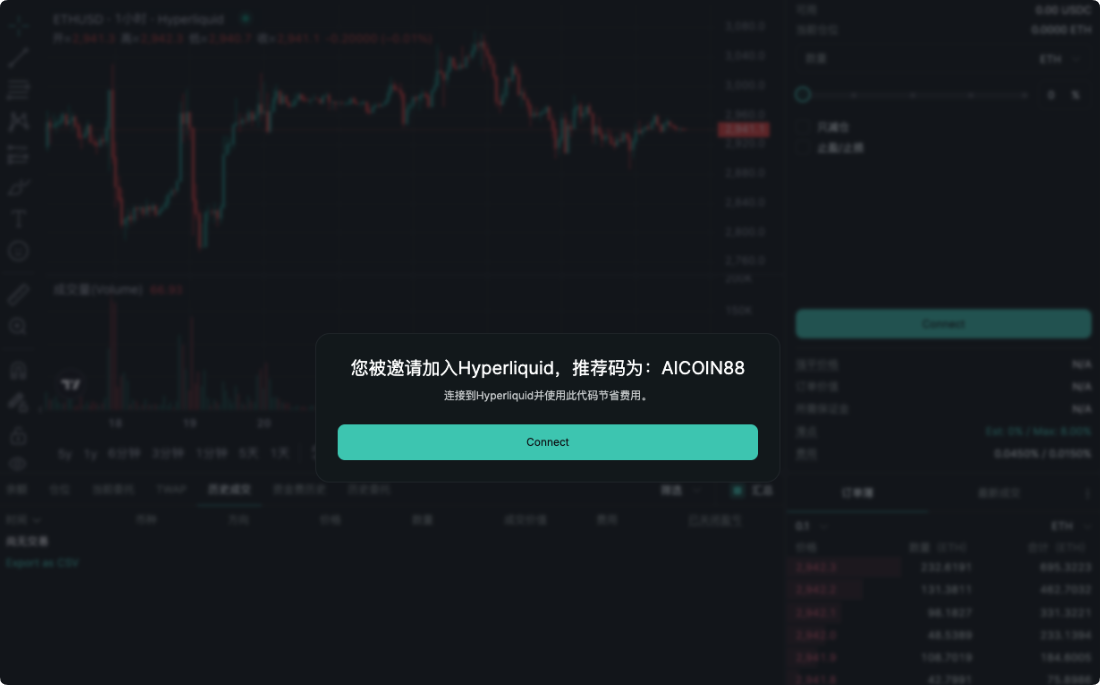
👉 Enter invitation code AICOIN88 when binding your Hyperliquid account to enjoy a 4% commission rebate
🔗 Exclusive registration link:
https://app.hyperliquid.xyz/join/AICOIN88
📖 Beginner Tutorial:
- “AiCoin PC Hyperliquid Authorized Trading Tutorial”:
https://www.aicoin.com/zh-Hans/article/514197
- “AiCoin Mobile Hyperliquid Authorized Trading Tutorial”:
https://www.aicoin.com/zh-Hans/article/541383
- “Zero-Basis Introduction! Hyperliquid First Trade Super Detailed Illustrated Tutorial”:
https://www.aicoin.com/zh-Hans/article/510225
📖 Community Communication:
- Telegram:
https://t.me/AiCoinWhaleData
- Discord:
https://discord.gg/5XSXjXSpz
- AiCoin-Group Chat:
https://www.aicoin.com/link/chat?cid=N6OVMor5g
The content of this article only represents the author's personal views and does not represent the position of this platform. The viewpoints, conclusions, and suggestions in the article are for investors' reference only and do not constitute any investment advice related to this platform. Investing in US stocks still requires individuals to bear market risks, regulatory risks, and compliance risks with local laws and regulations (especially foreign exchange control, overseas investment declaration, etc.)
免责声明:本文章仅代表作者个人观点,不代表本平台的立场和观点。本文章仅供信息分享,不构成对任何人的任何投资建议。用户与作者之间的任何争议,与本平台无关。如网页中刊载的文章或图片涉及侵权,请提供相关的权利证明和身份证明发送邮件到[email protected],本平台相关工作人员将会进行核查。