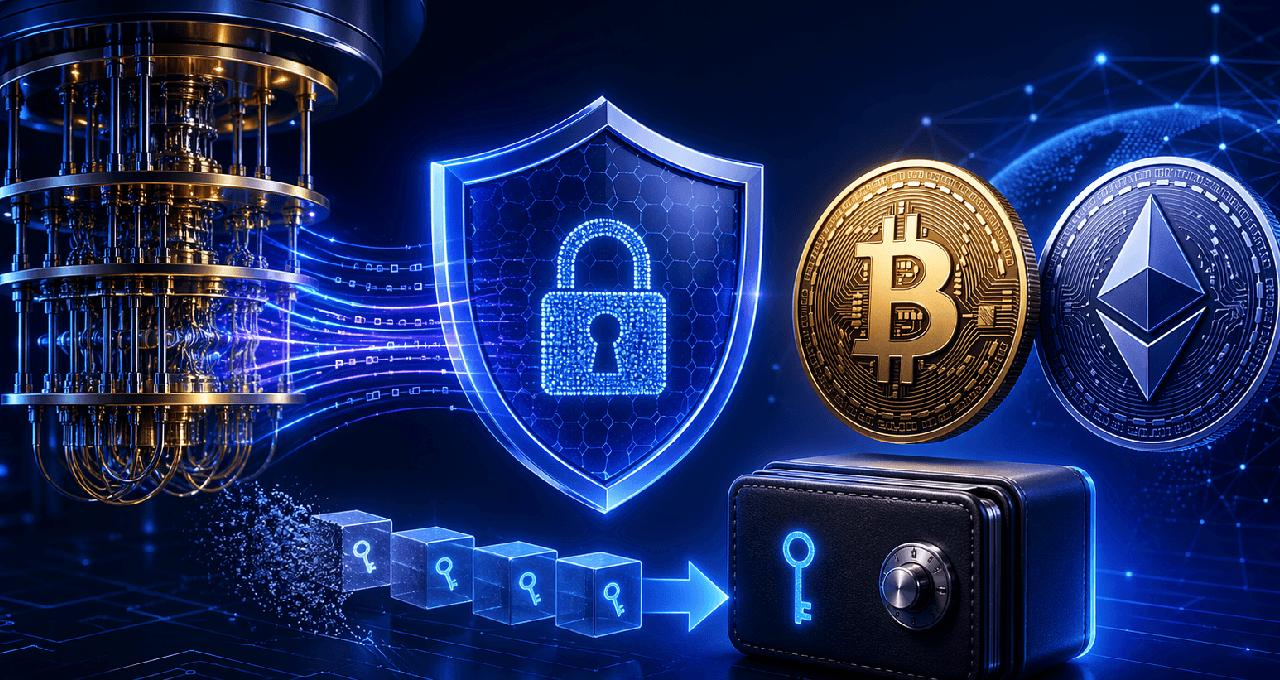
The development of quantum computers has recently brought up a topic worth discussing in the crypto market:
If quantum computers in the future can crack today's encryption algorithms, are BTC and ETH still safe? Which one has a better chance of becoming the next generation of digital gold?
Some believe that ETH has stronger technological upgrade capabilities and will more easily adapt to the quantum era; others argue that BTC's scarcity and consensus are stronger, and its status as digital gold will not change easily.
But there is an easily confused issue here:
Quantum resistance does not equate to digital gold. The ability to upgrade technology does not mean that an asset's value will necessarily be higher.
For those just entering the crypto market, understanding this is more important than rushing to judge who will win between BTC and ETH.
1. What kind of asset can be called digital gold?
Let's look at BTC first.
The most important feature of Bitcoin is its total supply cap of 21 million coins. Its issuance rules are written in the protocol, and new supply will continue to decline with halving.
This means that BTC's value narrative is largely built upon scarcity, decentralization, and market consensus.
It does not need to continuously generate profits like a company, nor does it need to rely on complex application scenarios to prove its worth. The increasing willingness of more people to hold it is part of its value system.
Now let's look at ETH.
The positioning of Ethereum is not entirely the same. It is more like an open financial and application infrastructure that supports smart contracts, DeFi, stablecoins, and RWA applications.
ETH not only undertakes functions like network fees and staking but also participates in the economic operation of the Ethereum ecosystem.
However, ETH does not have a fixed supply cap of 21 million coins like BTC. Its supply is influenced by mechanisms such as issuance, staking rewards, and fee destruction.
So, the core difference between the two is:
- BTC emphasizes scarcity and value storage more.
- ETH emphasizes network utility and ecological value more.
This is not a matter of who is more advanced, but rather two different asset designs.
2. What exactly does quantum computing threaten in the crypto market?
To understand the impact of quantum computing, you first need to know what protects assets in today's blockchain.
In simple terms, blockchain verifies transactions through cryptographic mechanisms, ensuring that only those who hold the private keys can transfer assets.
The elliptic curve digital signature algorithm currently used by mainstream blockchains is one of the targets that quantum computing may challenge in the future.
The most noteworthy is Shor's algorithm.
On sufficiently powerful quantum computers, Shor's algorithm could theoretically accelerate the solving of certain mathematical problems significantly. If sufficient scale and error correction capabilities are reached in the future, it may derive the corresponding private key from the public key.
What does this mean?
If an attacker can derive the private key from the public key, they could potentially forge signatures and transfer assets in the corresponding address.
But it's important to emphasize: being theoretically crackable does not mean it can be done today.
Current quantum computers are still far from stably and scalably cracking the cryptographic systems used by mainstream blockchains.
The real concern is to what extent quantum computing capabilities will develop in the future and whether blockchains can complete upgrades in time.
Another detail worth noting: not all cryptographic mechanisms will be threatened to the same degree.
For example, Shor's algorithm primarily threatens public key cryptosystems; hash functions will also be impacted by quantum computing, but their risk mechanisms are not the same as those of signature algorithms.
Therefore, it cannot be simply said that as soon as quantum computers appear, the entire blockchain will become invalid.
3. If ETH completes quantum resistance upgrades first, can it replace BTC?
This is the most worth discussing point of the whole matter.
From a technical perspective, Ethereum has the ability to continuously upgrade. In the future, if there is a need to change the signature algorithm or adjust the account system, it can theoretically adapt gradually through protocol upgrades.
But upgrading is not a simple task.
It involves multiple participants, including developers, node operators, wallets, exchanges, and users. Even if technical solutions are mature, it requires coordination across the entire ecosystem to execute.
BTC also does not lack upgrade potential.
The Bitcoin network's upgrades are relatively cautious, but caution does not mean it cannot upgrade. The real challenge lies in how to complete necessary cryptographic migrations while ensuring decentralization and network consensus.
More importantly, even if ETH achieves quantum resistance upgrades first, it does not directly imply that it will replace BTC.
Because the competition for digital gold is not just a technological competition.
The core value of BTC comes from a long-formed market consensus, supply rules, degree of decentralization, and asset storage narrative.
ETH's core advantage lies in application ecology, smart contracts, and network economic activities.
Quantum security addresses the issue of whether assets can be securely held, while digital gold addresses the question of why people are willing to hold it long-term.
The two are not in the same dimension.
4. What we should really worry about may not be quantum computers, but current security issues
For newcomers to crypto, it is necessary to distinguish between two types of risks:
One is the potential cryptographic risk that may arise in the future, while the other is the asset security risk that already exists today.
The more realistic risks currently often come from:
- Phishing websites: Imitating exchanges, wallets, or project pages to trick users into entering their accounts and mnemonic phrases.
- Malicious authorization: Users allowing unknown contracts to operate their assets without understanding the content of the authorization.
- Private key leakage: Screenshots of mnemonic phrases, cloud backups, or sending them carelessly to others can lead to asset theft.
- Platform risk: Keeping all assets long-term on an exchange requires bearing risks related to platform operations, custody, and security management.
Many newcomers, upon buying BTC or ETH, start researching which wallet is safer and which chain is more advanced, but overlook the most fundamental safety habits.
In reality, account passwords, two-factor verification, withdrawal whitelists, and mnemonic phrase management—these seemingly ordinary operations may be more meaningful than researching the quantum computing risks of ten years from now.
Of course, self-custody does not mean absolute safety. Managing private keys oneself means bearing risks related to backup, devices, and operations.
5. What should crypto newcomers do now?
If you have just entered the crypto market, there is no need to rush to adjust all your assets just because of news about quantum computing.
A more reasonable approach is:
First, do not put all your assets in one place.
Exchanges are suitable for trading and partial asset management, but it should not be assumed as the only option for permanently storing all assets.
Second, learn to protect your account.
Enable two-factor verification, set up withdrawal whitelists, do not click on unfamiliar links, and do not connect to unknown wallets carelessly.
Third, understand self-custody.
If you plan to hold assets long-term, learn to use personal wallets and understand the role of private keys and mnemonic phrases. Test with small amounts to confirm that you can back up and restore correctly before considering transferring more assets.
Fourth, do not be swayed by technological narratives.
Quantum computing, AI, RWA, Layer 2—new popular concepts emerge in the market periodically. However, a technological breakthrough does not equal token price increases, nor does it mean that investments will definitely be profitable.
Fifth, platform selection and coverage capacity
While acknowledging that there is no such thing as absolute safety, most users still need to use exchanges for deposit, trading, and withdrawal. Complete self-custody has a higher operational threshold for novices and also carries risks of private key loss or authorization errors. Therefore, choosing platforms with better liquidity, greater transparency in reserves, and the capacity and willingness to cover losses in incidents, remains a practical path to reduce daily operational risks.
Binance has long been at the forefront of spot and contract trading volume, with a reserve proof mechanism running for many years and a user safety asset fund established. In the October 2026 event, although the hot wallet was affected, the exchange still stated it would cover user losses and froze part of the transferred assets through the issuer.
OKX also provides reserve proof, supports multi-chain access, and has relatively strict risk control and withdrawal auditing processes in the industry. The relative advantages of the two mainly lie in: trading depth can support normal buying and selling without being easily swayed by small amounts; reserve proof can publicly verify part of the assets; the capability to cover losses through self-owned funds or insurance funds in historical incidents; and providing relatively complete security settings (two-factor verification, withdrawal whitelists, device management, etc.).
These advantages do not mean "will not be attacked." The Binance incident has shown that even major platforms may have their internal signing processes abused. The recommendation is based on: when there is a need to use an exchange, choosing a platform that has relatively stronger liquidity and event coverage capacity can reduce slippage, withdrawal delays, and the probability of uncaptured losses. Users should still avoid keeping all their assets long-term on a single platform, and consider transferring a portion of holdings to self-managed wallets. Platforms provide convenience, but control should be retained as much as possible in one’s own hands.
Binance referral link:https://jump.do/zh-Hans/xlink-proxy?id=3
Or log in to the Binance app and directly enter the referral code aicoin668. Below are the exclusive registration benefits for AiCoin referral code:
Benefit 1: New customers can receive up to 440 USDT
1. Deposit 100 USDT + trade 100 USDT → receive a 100 USDT position voucher
2. Deposit 1,000 USDT + trade 50,000 USDT → receive an additional 300 USDT position voucher
3. Deposit 3,000 USDT + trade 200,000 USDT → receive an additional 40 USDT cash voucher
The three tiers stack, so depositing 100 USDT can get the first tier
Benefit 2: Open blind boxes, with a maximum of 25 RE coins
1. Register + deposit 50 USDT + trade 100 USDT + log in to the App
2. After completion, a blind box will activate, randomly drawing RE tokens, with a maximum of 25 coins
This means that a new user can enjoy double benefits after completing the tasks
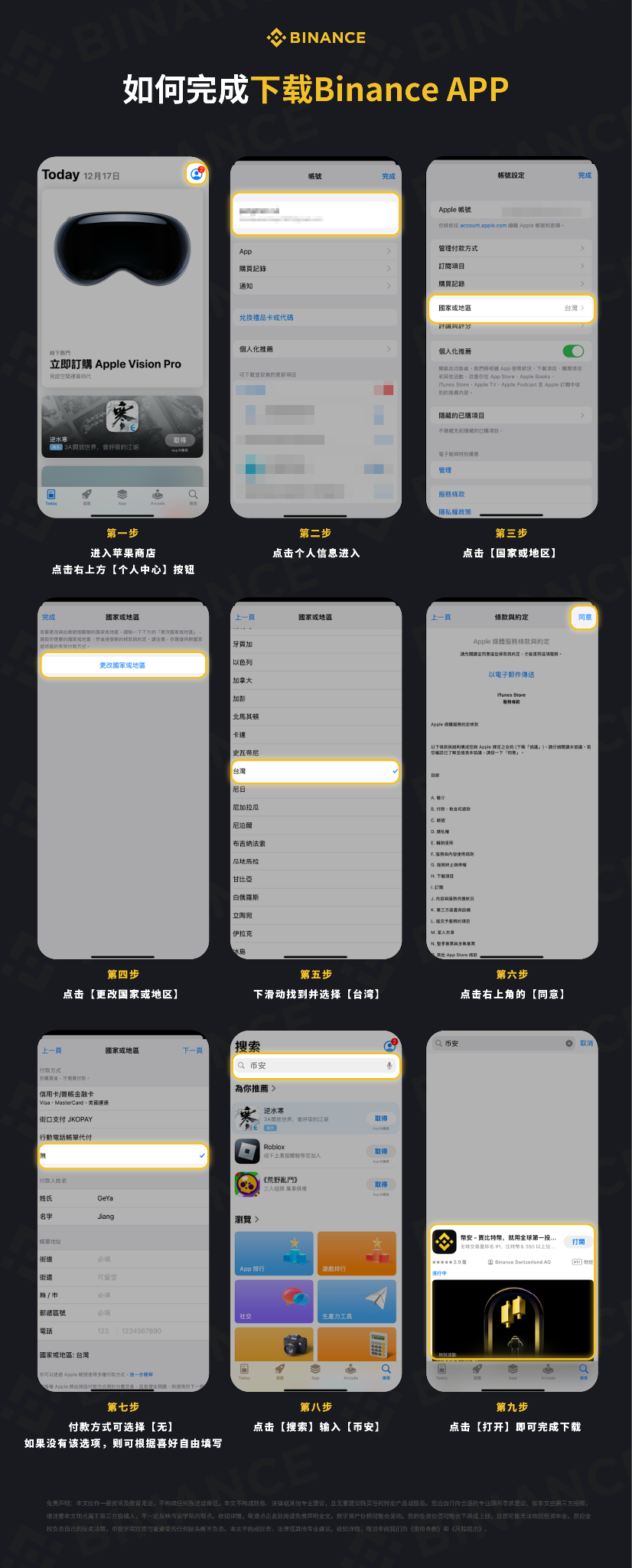
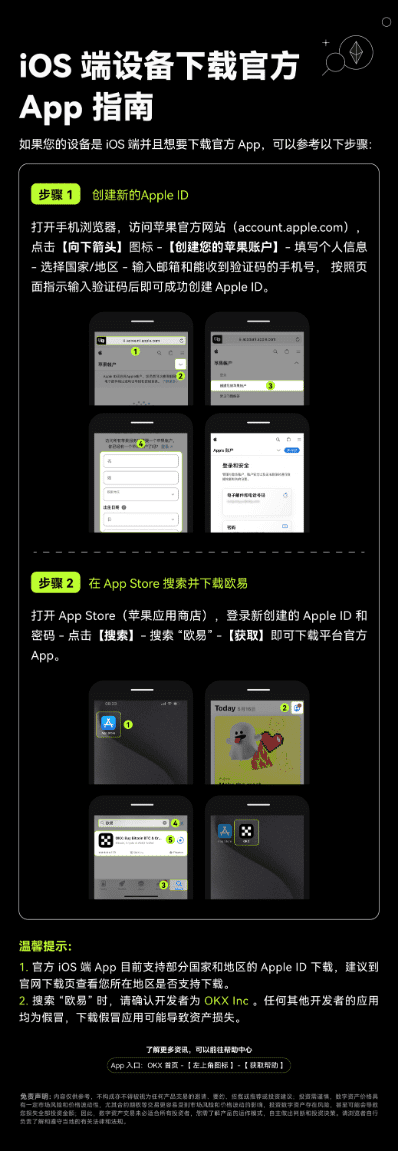
OKX referral link https://jump.do/zh-Hans/xlink-proxy?id=2
Or log in to the OKX app and directly enter the referral code aicoin20, exclusively enjoy a permanent 20% rebate on transaction fees.
Finally: The competition between BTC and ETH is far more than just quantum computing
In the future, quantum computing may indeed change the security system of blockchain, but this does not mean that BTC will lose its value, nor does it imply that ETH will automatically become the new digital gold.
The advantage of BTC lies in its scarcity and value storage consensus; ETH's advantage lies in smart contracts and ecological applications.
If quantum computing truly poses a threat in the future, both will need to face the issue of cryptographic upgrades.
Ultimately, what will decide their long-term value will remain network security, the degree of decentralization, ecological development, market trust, and actual demand.
For newcomers, the most important thing is not to bet on who will become the winner right now, but to first clarify what assets they are buying, where their value comes from, and what risks they should bear.
Do not equate technological advancement directly with investment opportunities, nor should future risks be used as justification for today's panic trading.
This article is for knowledge sharing only and does not constitute investment advice. Cryptocurrency assets are highly volatile, please make decisions cautiously based on your risk tolerance.
免责声明:本文章仅代表作者个人观点,不代表本平台的立场和观点。本文章仅供信息分享,不构成对任何人的任何投资建议。用户与作者之间的任何争议,与本平台无关。如网页中刊载的文章或图片涉及侵权,请提供相关的权利证明和身份证明发送邮件到[email protected],本平台相关工作人员将会进行核查。