The global trading volume of crypto perpetual contracts has reached $61.7 trillion, while the United States has just begun to establish a domestic regulatory framework for such products. The CFTC is attempting to bring cryptocurrency and individual stock perpetual contracts into a regulated market, yet industry organizations supported by CME, Cboe, and Citadel Securities have filed lawsuits one after another. The crux of the dispute is not whether perpetual contracts can be traded, but whether they should be classified as futures or swap contracts.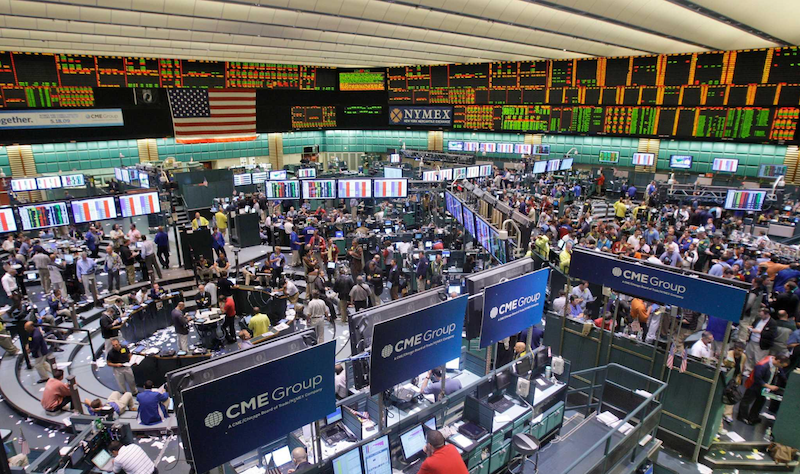
This regulatory dispute is expanding from crypto derivatives to the traditional stock market.
According to CryptoQuant data, the global trading volume of crypto perpetual contracts is expected to reach $61.7 trillion in 2025, a year-on-year increase of 29%. For a long time, these products have mainly been concentrated on trading platforms outside the United States, making it difficult for American investors to participate directly in the domestic regulated market.
On May 29, 2026, the CFTC approved Kalshi to launch Bitcoin perpetual futures and released a policy statement providing a pathway for other qualifying regulated trading venues to list similar products.
On June 18, CME Group filed a lawsuit in the federal court of the United States to overturn the relevant decisions of the CFTC. CME believes that perpetual contracts, which have no fixed expiration date, do not fit the core characteristics of traditional futures and should be regulated as swap contracts.
On November 3, the CFTC further allowed qualifying regulated markets to launch individual stock perpetual futures. On the same day, an industry organization initiated by Capital Markets Alliance, supported by Cboe Global Markets and Citadel Securities, filed another lawsuit against the CFTC, attempting to prevent individual stock perpetual contracts from being listed through the existing pathway.
At this point, the two lawsuits concerning crypto assets and traditional stocks have pushed the regulatory controversy surrounding US perpetual contracts into a new phase.
Why is the US starting to push for the localization of perpetual contracts?
Perpetual contracts have become one of the most important trading tools in the global crypto derivatives market.
Unlike traditional futures, perpetual contracts do not have a fixed expiration date, allowing traders to hold positions continuously without the need for regular rollovers. They typically use a funding rate mechanism to keep contract prices fluctuating around the spot price.
For example, when the perpetual contract price is higher than the spot price, longs generally need to pay funding rates to shorts; conversely, when the contract price is lower than the spot price, the direction of funding payments may reverse.
This mechanism allows perpetual contracts to continually anchor the underlying asset's price without a fixed expiration for delivery.
However, the US market has long faced issues regarding regulatory classification and trading channels, resulting in a significant amount of perpetual contract trading being concentrated on overseas platforms.
The core goal of the CFTC's localization efforts is to enable US investors to participate in related product trading through regulated venues, while also bringing trading activities that currently occur in overseas markets back into the US financial system.
Approving Bitcoin perpetual futures in May and further opening individual stock perpetual futures in November is an extension of this regulatory pathway.
Why do CME and Cboe oppose it?
The main contention of these two traditional trading institutions and their supporters lies in the legal nature of the perpetual contracts.
CME believes that traditional futures typically have a clear expiration date and achieve price convergence through expiration, settlement, or delivery. Since perpetual contracts have no expiration date and rely on funding rates to maintain price, they are closer to swap contracts.
If classified as swap contracts, the products will be subject to different capital, margin, reporting, and trading regulatory requirements.
CME asserts that the CFTC's treatment of them as futures alters the existing regulatory boundaries and could provide different treatment for new entrants in terms of regulatory costs and product listing conditions.
Cboe and the Capital Markets Alliance supported by Citadel extend the dispute to individual stock perpetual contracts.
Their core argument is that perpetual contracts based on individual stock prices, with no expiration date, may substantively belong to securities-like swaps and should be regulated by the SEC, rather than entering the retail market through the CFTC's futures framework.
This organization believes that the CFTC's approach may circumvent the existing congressional regulatory arrangements for the securities market, forming a synthetic trading market that parallels the traditional stock market.
On the other hand, the CFTC believes that perpetual contracts possess the characteristics of futures products, allowing them to be listed on regulated trading venues, which would aid market innovation, competition, and investor protection.
Therefore, this dispute is not merely a competition between traditional exchanges and crypto platforms, but also involves the division of authority between two major financial regulatory systems in the United States.
What are the differences between futures and swap contracts?
The most important difference lies in the contract structure and regulatory requirements.
Traditional futures generally have a clear expiration date, requiring traders to settle or deliver at expiration; whereas swap contracts typically settle through cash flow exchanges agreed upon by both parties.
Perpetual contracts have no fixed expiration date, with funding rates assuming part of the functions of traditional futures in achieving price convergence at expiration.
This raises new regulatory questions: If a contract has no expiration date, how should regulators determine its classification as a type of derivative? What margin, capital, and risk control requirements must trading venues meet? In the event of severe market fluctuations, could automated clearing further amplify price volatility?
For traditional exchanges, these issues pertain to regulatory fairness among different products; for the CFTC, they concern whether it can incorporate new financial products under the existing legal framework.
On November 3, in the lawsuit concerning individual stock perpetual contracts, a federal judge in New York denied the plaintiff's urgent request to immediately suspend trading but expressed preliminary concern about their legal claims. Relevant products can temporarily continue trading, but subsequent hearings of the case may still alter regulatory arrangements.
What does this mean for Hyperliquid?
This controversy has direct implications for on-chain derivative platforms like Hyperliquid.
Previously, Hyperliquid's competitive advantage mainly derived from the on-chain perpetual contract market, including 24/7 trading, asset variety expansion, and on-chain liquidity. As the US begins to establish domestic regulatory channels for perpetual contracts, the competitive landscape may change.
If the CFTC's regulatory pathway ultimately receives court support, regulated platforms like Coinbase and Kalshi will have opportunities to further expand their perpetual contract businesses, and US users may gain more local trading options.
This implies that on-chain platforms may face competitors not only from other crypto exchanges but also potentially from traditional derivative exchanges and large financial institutions.
However, if the lawsuit leads to the overturning or readjustment of the regulatory pathway, the expansion of domestic products may slow, and overseas and on-chain platforms may retain certain market space.
It is important to note that the lawsuit against the CFTC does not equate to a direct prohibition on Hyperliquid. Hyperliquid and its HIP-3 market encompass different operational and regulatory structures, and the outcomes of lawsuits aimed at US regulated trading venues cannot simply be equated with regulatory conclusions on the entire on-chain protocol.
With a global trading scale of $61.7 trillion, perpetual contracts have become a market that traditional finance cannot ignore. However, what the US truly needs to address is not just how to bring these products into the domestic market, but who should regulate them and under what rules. For on-chain platforms like Hyperliquid, the outcome of this lawsuit could influence the competitive landscape in the future US market and will determine how the boundary between traditional finance and on-chain derivatives is redrawn.
If you are also paying attention to the crypto market and want to participate in trading or asset allocation, you can register through the following exclusive channels and enjoy discounts:
Binance: Register through the exclusive link and enter the invitation code aicoin668 to enjoy a 10% rebate.
Registration link: https://jump.do/zh-Hans/xlink-proxy?id=3
Benefit group: https://www.aicoin.com/link/chat?cid=gmLgwvKD1
OKX: Register through the AiCoin exclusive link to enjoy a permanent 20% rebate.
Registration link: https://jump.do/zh-Hans/xlink-proxy?id=2
Benefit group: https://aicoin.com/link/chat?cid=l61eM4owQ
Bitget: Register through the AiCoin exclusive channel to enjoy a 10% trading fee rebate.
Registration link: https://jump.do/zh-Hans/xlink-proxy?id=6
Benefit group: https://aicoin.com/link/chat?cid=N63yYYKQE
You are also welcome to join AiCoin's related communities to get more information about new coins and profit-making opportunities from exchanges:
Official Telegram community: https://t.me/aicoin_support
AiCoin Chinese Twitter: https://x.com/AiCoinzh
This article reflects the author's personal views and does not represent the position of this platform. The views, conclusions, and suggestions in this article are for investor reference only and do not constitute any investment advice related to this platform. The market has risks and investment must be cautious.
免责声明:本文章仅代表作者个人观点,不代表本平台的立场和观点。本文章仅供信息分享,不构成对任何人的任何投资建议。用户与作者之间的任何争议,与本平台无关。如网页中刊载的文章或图片涉及侵权,请提供相关的权利证明和身份证明发送邮件到[email protected],本平台相关工作人员将会进行核查。