Regarding the United States' chip export controls on China, what consequences will there be? The tech giants in the U.S. are very clear about this. Jensen Huang, Elon Musk, and Bill Gates have all expressed their views; they all understand China well and also understand the mechanisms of business operation. Those who strongly support chip controls are either individuals with direct conflicts of interest, like Anthony's Dario Amodei, or politicians with a Cold War mindset. Dario understands the technological consequences but is more concerned about personal interests, while politicians are completely detached from business.
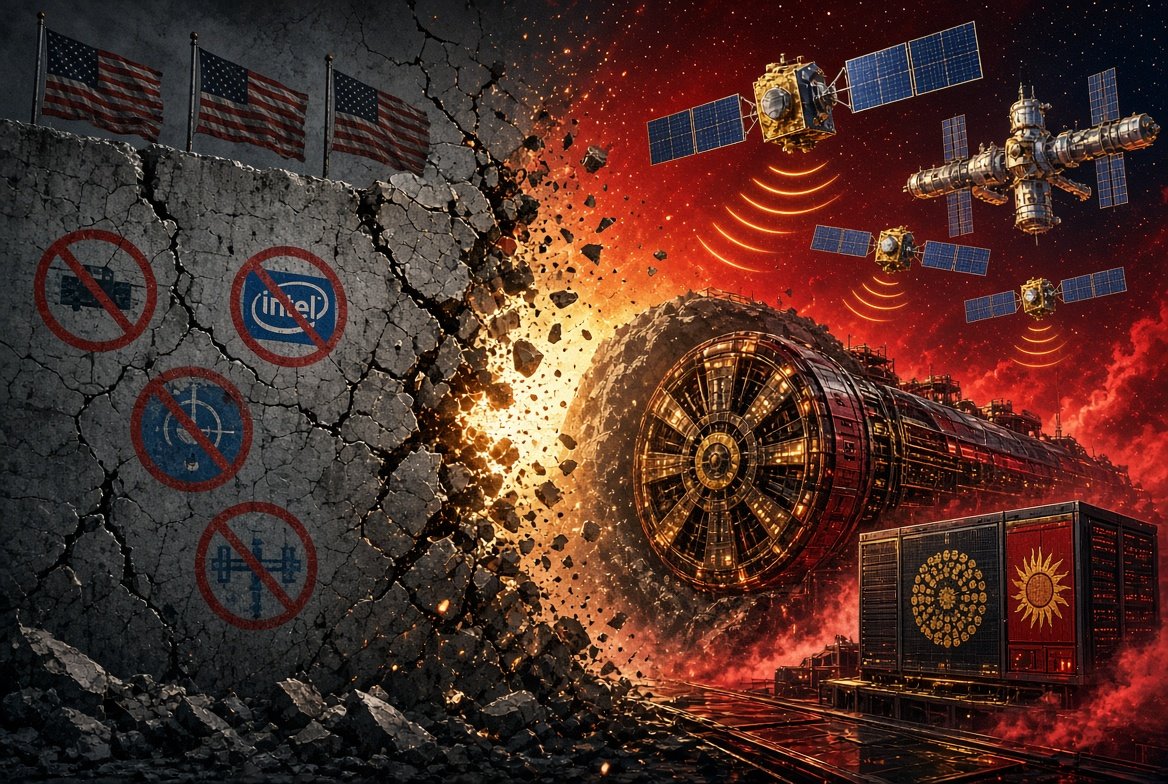
Let’s take stock of some cases where blocking Chinese technology and high-end products has produced counterproductive effects:
1. Around the year 2000, Germany implemented a commercial monopoly and after-sales control on the heavy shield tunneling machines needed by China. China spent 20 years on independent research and improvements, and now China's market share of shield tunneling machines exceeds 70% globally.
2. In 2003, Europe initiated the "Galileo" global satellite navigation system project to break the U.S. monopoly on GPS. China responded positively at the time, committing to invest a significant amount of 230 million euros to join the project, and quickly made an initial payment of nearly 70 million euros. Later, the European Space Agency began to completely exclude China, resulting in China withdrawing from the "Galileo" project and independently developing "Beidou".
3. In 2015, the U.S. Department of Commerce prohibited Intel from exporting Xeon chips for supercomputers to China. Later, China developed its own chip called "Sunway TaihuLight," causing Intel not only to lose the market but also its technological advantage.
4. At the end of the last century, when the International Space Station was being established, China was very eager to join, but was excluded by the U.S. In 2011, the "Wolf Clause" was introduced, totally blocking Chinese aerospace technology, which almost propelled the rapid development of China's aerospace technology, leading to China eventually creating its own "Tianhe" space station.
免责声明:本文章仅代表作者个人观点,不代表本平台的立场和观点。本文章仅供信息分享,不构成对任何人的任何投资建议。用户与作者之间的任何争议,与本平台无关。如网页中刊载的文章或图片涉及侵权,请提供相关的权利证明和身份证明发送邮件到[email protected],本平台相关工作人员将会进行核查。


