After encountering a security incident on August 20, when tokens were stolen, MANTRA chose to bring the recovery efforts back to the blockchain itself: the project initiated governance proposal number 40, which plans to reclaim approximately 37.96 million MANTRA tokens that have not yet been transferred from the attacker's address during the next on-chain software upgrade, amounting to approximately $119,000 according to public reports. This means that as long as the vote passes before the deadline of November 13 at 12:10, it will be answered for the first time through on-chain governance whether the stolen assets can be "written back to the community ledger from the hacker's wallet." Simultaneously unfolding with MANTRA's localized "on-chain counterattack" is a larger set of high-pressure security scenarios: on one side, Binance suffered approximately $6.3 billion in stolen assets, with the FBI and Binance pointing the blame at hacker groups related to North Korea, which the North Korean government denied; on the other side, a theft case of about $11.4 million worth of NVIDIA computing hardware occurred in East Oakland, California, where computing equipment vanished during transport. Under pressure from repeated corporate damages, the Japanese government announced an emergency cybersecurity measure totaling approximately 10 billion yen, clearly stating that it would strengthen protection and response capabilities through artificial intelligence. The intertwining of on-chain governance's "rewriting" of asset ownership, the insurance industry's reverse scrutiny of the technology stack, and national-level concentrated investment in cybersecurity and computing power infrastructure is coalescing into a new round of global network offense and defense involving agreements, capital, and sovereignty.
MANTRA Votes to Reclaim Tokens from Hacker Account
On August 20, 2026, MANTRA encountered a security incident where project tokens were stolen, and the official details of the attack method and vulnerabilities have not been disclosed to date. According to AiCoin data, after the attack was completed, about 37.96 million MANTRA tokens remained stuck at addresses related to the incident, amounting to approximately $119,000 based on reports. This "stuck on-chain" asset became the direct target of the later governance proposal number 40: the team and community are attempting to reclaim these tokens still in the attacker's address through an on-chain software upgrade at the protocol level. The governance proposal number 40 has currently entered the voting phase, with a deadline set for November 13, 2026, at 12:10, and the voting results have not yet been announced.
Rather than saying proposal number 40 is about "recovering stolen property," it is more accurate to say that it tests the community's tolerance for the boundaries of "contract immutability" through a vote. If the reality of modifying the balance of a specific address through software upgrades becomes achievable, it serves as a remedy tool for users who have faced attacks, using collective will to resist hackers. However, it simultaneously tears open another layer of perception: in a network driven by governance multisig and voting, account balances are not absolutely immutable, but rather subject to the possibility of being "rewritten" by majority consensus. MANTRA's extension of governance power to the disposal of specific address assets means a shift from parameter adjustments to direct intervention in individual account states; this choice may restore some trust in the short term, but inevitably puts the issues of protocol credibility, governance abuse risks, and boundary of user property rights in front of all participants.
State-Sponsored Hacker Attacks Binance for $6.3 Billion
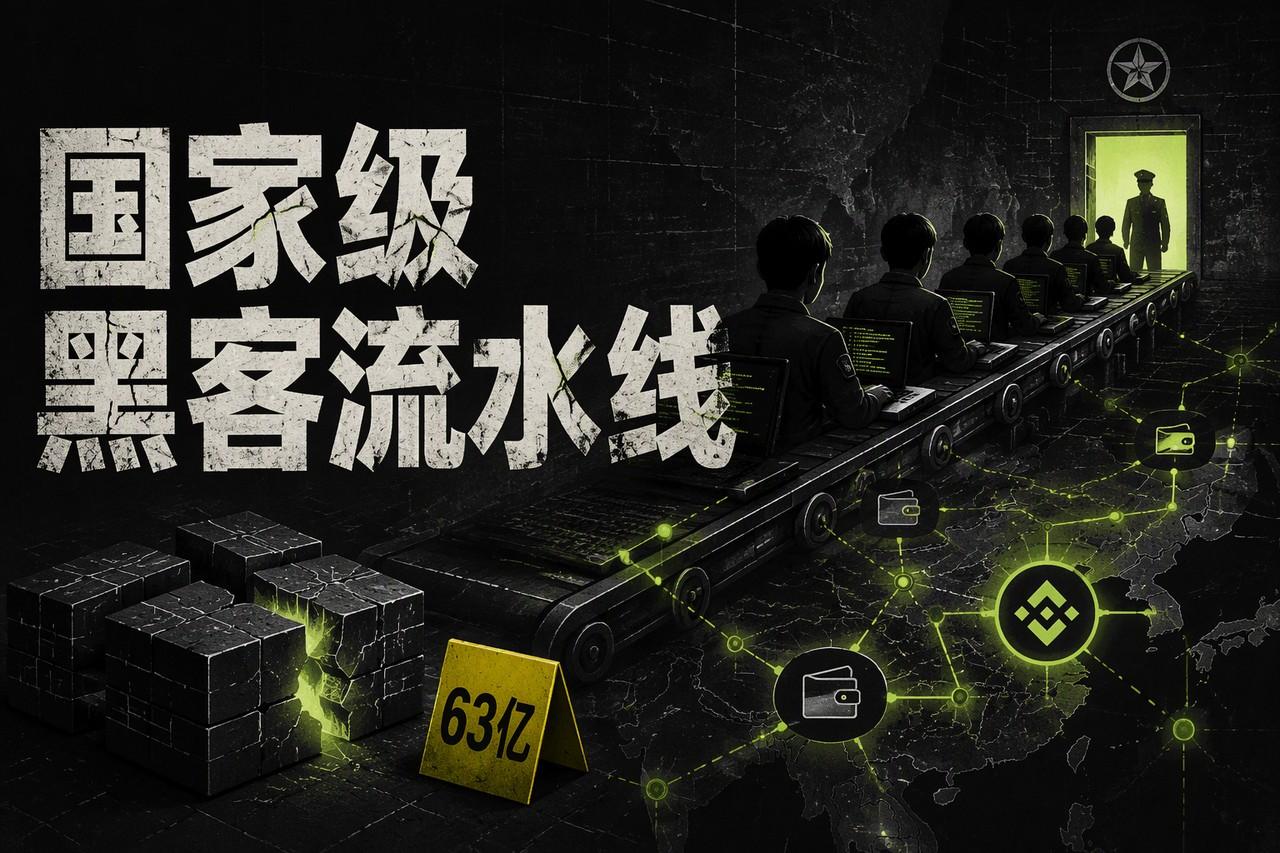
If MANTRA's governance vote "rewriting" the attacker's balance remains on the consensus layer of the blockchain, then the approximately $6.3 billion asset theft that Binance suffered elevates the threat to the level of state power. Public information reveals that North Korea has long screened about 150 to 200 students each year from middle school into a closed computer education system through state-sponsored talent selection programs, with some ultimately funneled into military network departments, forming a professional team primarily focused on cyberattacks. In the large theft incident disclosed by Binance "last week," the FBI and Binance both attributed the attack to North Korean-related hacker organizations, while the North Korean government firmly denied involvement in external statements, turning the question of "who is behind the keyboard" into a geopolitical tug-of-war.
The aftershocks of this incident quickly spread from exchanges to traditional financial institutions. Reuters quoted industry insiders stating that after Binance was hacked, several insurance companies began systematically reviewing their underwriting strategies for crypto enterprises, specifically adding two questions in the insurance and renewal processes: how reliant the enterprise is on Binance's assets and business, and whether there are similar security weaknesses in their own systems. Once common vulnerabilities are identified during due diligence, insurance companies often list "repair first then insure" as a prerequisite, transforming what was originally a security incident targeted only at a single giant exchange into a chain pressure on the entire industry’s infrastructure and project protection levels.
NVIDIA Hardware Theft Exposes Shadows of Computing Power Security
While insurance companies focused their due diligence on exchange system vulnerabilities, an incident that occurred in a warehouse in East Oakland, California, shifted the risk focus from "server rooms" back to the most ordinary logistics process: a truck suspected to belong to a food transport company picked up a batch of NVIDIA computer hardware as planned, with Texas as the registered destination, but vanished along with the goods during transportation. Based on public estimates, the total value of this batch of computing power devices is approximately $11.4 million, local police have intervened in the investigation but have not disclosed the identities of any suspects or progress in solving the case, leaving only complete pickup procedures and high-value hardware assets that disappeared along the way.
NVIDIA hardware plays a critical role in artificial intelligence training and some demand for computing power related to cryptocurrencies, effectively becoming a computing power asset carrier that can be "loaded onto a truck and directly monetized." As attack targets expand from on-chain assets and trading systems to servers that provide underlying computing power, GPU clusters, and even the trucks transporting them, the security boundary is no longer just a string of private keys or a line of contract code, but encompasses the entire supply chain from warehouse in-and-out logistics, freight company qualifications, transport route visibility to the physical protection of data centers. For project parties and upstream manufacturers relying on computing power infrastructure, such incidents force them to incorporate "where the hardware is, who controls it, and whether it can be compensated if lost" into their risk control frameworks; otherwise, even the most sophisticated on-chain protection solutions could be easily breached by a truck that disappears on the highway.
Japan Invests 10 Billion Yen to Strengthen Cyber Defenses with AI
In the wake of a series of cybersecurity vulnerabilities that have impacted Japanese businesses, the Japanese government has taken the initiative to elevate "patching holes" to a national project: announcing the launch of emergency cybersecurity measures totaling approximately 10 billion yen (around $63.2 million). Prime Minister Sanae Takaichi publicly emphasized that this is not traditional budget allocation but aims to directly embed artificial intelligence into the defenses—on one end to strengthen basic protection and real-time attack response, and on the other to enhance the efficiency and accuracy of post-incident investigation and analysis, providing practical technical support and legal evidence for businesses after they face invasions.
If the approximately $6.3 billion assets stolen from Binance led insurance companies to reshape market external constraints by tightening underwriting conditions and scrutinizing clients' exposure to Binance's risks, then Japan's budget of 10 billion yen proactively raises the lower limit of the "average defense line" at the policy level; while in the on-chain world, MANTRA attempts to reclaim approximately 37.96 million tokens from the attacker's address, reported to be worth around $119,000, and erase the technical stack profits from the attack in the next software upgrade. Regulatory agencies are using AI to thicken the moat, insurance institutions are amplifying the cost of incidents through clauses, and public chain projects are employing governance and upgrades to pursue stolen assets. These three forces combined are pushing network offense and defense from single-point defense to a new phase of institutional and technological co-shaping.
The Next Step from On-Chain Voting to National Game
From MANTRA's governance proposal number 40 seeking to recover approximately 37.96 million tokens from the hacker's address, to the approximately $6.3 billion theft at Binance attributed to North Korean-related hacker organizations, and further to Japan's one-time expenditure of around 10 billion yen to enhance cyber defenses and attack tracking with AI, these seemingly disparate threads converge in one direction: network offense and defense is transforming from sporadic incidents into a normalized, upgraded institutional competition. North Korea selects and trains cyber talent annually through state-supported programs, and the approximately $11.4 million worth of NVIDIA computing hardware went missing during transport, while the subjects of attacks and penetrations have long since crossed single exchanges or agreements, extending into the entire digital economy supply chain. In this environment, for crypto projects and users, "security" is no longer equivalent to a single contract audit, but rather tests whether governance design can function in critical votes like that around November 13 at 12:10, whether partners expose common vulnerabilities, whether upstream hardware and service providers are reliable, and how much resources the jurisdiction is willing to invest in regulation and protection. What is worth observing next is whether the final count and execution effect of MANTRA's proposal number 40 will become a model for on-chain "recovery," how insurance institutions will redraw industry safety benchmarks with insurance thresholds following the Binance incident, and whether governments, especially those like Japan that are early adopters of AI security, will further increase budget allocations for network offense and defense. These variables will jointly determine whether global crypto and digital infrastructure can stand firm in the increasingly fierce network game.
Join our community, let's discuss and become stronger together!
AiCoin exclusive Hyperliquid benefits: https://app.hyperliquid.xyz/join/AICOIN88
AiCoin exclusive Aster benefits: https://www.asterdex.com/zh-CN/referral/9C50e2
On-chain Telegram community: https://t.me/AiCoinWhaleData
On-chain community: https://www.aicoin.com/link/chat?cid=N6OVMor5g
AiCoin on-chain Twitter: https://x.com/aicoinwhaledata
免责声明:本文章仅代表作者个人观点,不代表本平台的立场和观点。本文章仅供信息分享,不构成对任何人的任何投资建议。用户与作者之间的任何争议,与本平台无关。如网页中刊载的文章或图片涉及侵权,请提供相关的权利证明和身份证明发送邮件到[email protected],本平台相关工作人员将会进行核查。