The results of the U.S. midterm elections have altered the political landscape in Washington. The Democratic Party has gained control of both the House of Representatives and the Senate, meaning the Trump administration's legislative agenda for the next two years will face more checks and balances. For the cryptocurrency industry, the most direct impact is that the previously obstructed CLARITY Act may need to be renegotiated, and institutional entry and new product approvals will face a more complex regulatory environment.
In the U.S. midterm elections held on November 3, the Democratic Party successfully took control of both houses of Congress. According to the election results released by the Associated Press, the Democratic Party not only won the House but also flipped several seats in the Senate.
This means that the Democratic Party will hold significant agenda-setting power, investigative authority, and hearing rights in the new Congress. Although Trump still retains presidential veto power, the Republican government's ability to push legislation will be clearly limited.
This change is particularly important for the cryptocurrency industry. Over the past two years, U.S. cryptocurrency policy has progressively moved towards establishing a unified regulatory framework under Republican leadership; moving forward, Congress may shift its focus from promoting industry legislation to overseeing regulatory agencies, conflicts of interest, and consumer protection.
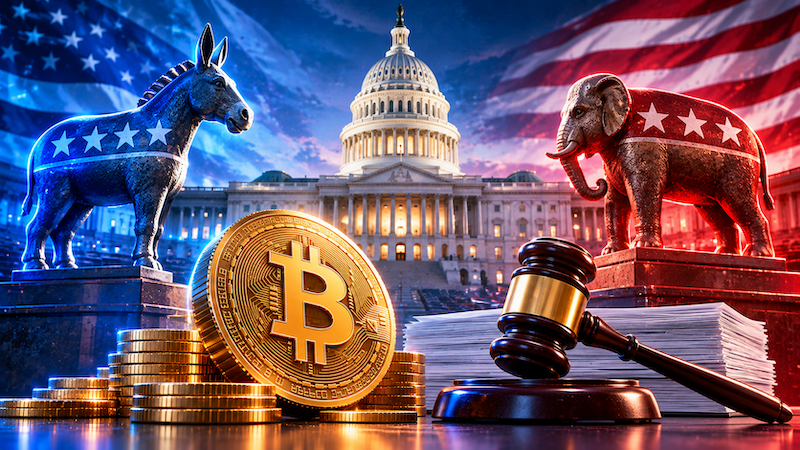
CLARITY Act: Previously Obstructed, Next Steps May Require Renegotiation
The most directly affected is the Clarifying Lawful Overseas Use of Data Act (CLARITY Act).
The core goal of this legislation is to clarify the regulatory division of labor between the SEC and CFTC regarding the digital asset market, establishing a clearer legal framework for trading platforms, token issuers, and market participants.
However, the act failed to meet the necessary 60-vote threshold in the procedural vote in the Senate on September 15, ultimately coming to a standstill. Prior disagreements over stablecoin yield arrangements, competition with bank deposits, and conflicts of interest involving government officials participating in crypto business had already stalled bipartisan negotiations.
After the Democrats won both houses, the difficulty of moving the act forward increased further.
Democratic lawmakers who previously participated in negotiations hope to include stricter anti-money laundering provisions, consumer protection measures, and regulations to limit government officials' involvement in crypto business. Whether DeFi developers and protocol operators need to bear broader regulatory responsibilities may also become a contentious issue in the next round of negotiations.
This means that even if the new Congress is willing to revisit market structure legislation, the final version may differ significantly from the text previously promoted by the Republicans.
Whether the CLARITY Act can be restarted in the short term depends on the new committee leadership, the willingness of both parties to negotiate, and whether key issues that previously reached no consensus can be resolved.
Regulatory Focus May Shift from Industry Development to Oversight and Conflicts of Interest
The change in congressional control does not mean that the existing U.S. cryptocurrency regulatory system will be overturned immediately, but the focus of regulatory discussions may change.
First, anti-money laundering and consumer protection are expected to receive more attention. Management of client assets by trading platforms, market manipulation, fund flows, and the responsibility boundaries of DeFi protocols may all become topics of discussion in congressional hearings.
Second, the Trump family's business ties to the crypto industry may face increased investigative pressure. The Associated Press reports that Democratic lawmakers have begun to propose expanding investigations into Trump and his family's business interests, which includes crypto business.
It should be noted that a congressional investigation does not equate to an established finding of wrongdoing, nor does it mean that the relevant companies will necessarily face penalties. However, more frequent hearings, document requests, and public inquiries may increase compliance and operational uncertainties for the companies involved.
Additionally, the regulatory work of the SEC and CFTC will also be subject to stricter congressional oversight. Regulatory agencies can still proceed with rule-making based on existing laws, but the continuity of related policies, the pace of enforcement, and future committee personnel arrangements may all be influenced by political changes.
ETFs and Institutional Funds: Not Immediately Stopped, but Approval Expectations May Change
For institutional investors, the impact of the election results means not all crypto products will be suspended immediately.
Existing spot ETFs will continue to operate under the established regulatory framework, and tokenized stocks, funds, and on-chain financial services can continue to develop within the boundaries allowed by current law.
However, for products that require new regulatory interpretations, approval pathways, or market structure legislative support, the situation may become more complex.
For example, ETFs involving more categories of digital assets, complex derivatives, DeFi-related financial products, and businesses that need clear jurisdictional boundaries for the SEC and CFTC may face longer policy discussion cycles.
The attitudes of banks and large asset management institutions are also worth noticing. The prolonged delays in establishing a unified market structure bill mean that some institutions still have to face issues related to asset classification, custodial responsibilities, trading platform regulation, and compliance costs.
This may not necessarily deter institutional entry but could lead them to prefer businesses with clear legal bases and relatively mature regulatory pathways.
Can Markets like Hong Kong and South Korea Absorb Some Demand?
The rising regulatory uncertainty in the U.S. also makes the institutional frameworks of other markets more worthy of attention.
Hong Kong is advancing a regulatory framework for virtual asset trading platforms, funds, and tokenized financial products; South Korea continues to improve regulations on trading platforms, investor protection, and digital asset-related systems.
If U.S. market structure legislation continues to be delayed, some international institutions may pay more attention to compliance pathways in different jurisdictions, distributing their business layout across multiple markets.
However, the degree of regulatory stringency is not the only factor institutions consider when choosing markets. Capital scale, market liquidity, banking services, tax regimes, and cross-border business restrictions will also affect institutions' actual decision-making.
Therefore, the regulatory progress in Hong Kong and South Korea can serve as a reference for observing changes in global cryptocurrency business layouts, but it cannot be simply understood as a direct migration of U.S. business to Asia.
Next, Focus on Three Time Windows
First, the new Congress will start operating in January 2027, and the arrangement of committee chairs and members in both houses will determine whether the CLARITY Act re-enters the legislative agenda.
Second, the SEC and CFTC's forthcoming rule-making, public hearings, and regulatory statements will affect the speed at which cryptocurrency business progresses under the existing legal framework.
Third, Democratic investigations into Trump family crypto businesses and related regulatory agencies may become significant variables in U.S. cryptocurrency policy over the next two years.
This election hasn't made the U.S. cryptocurrency market lose its direction towards compliance, but it has changed the political conditions for achieving that goal. In the short term, the CLARITY Act may face a longer negotiation cycle, and institutions will need to adapt to a more stringent supervisory environment. For the cryptocurrency industry, the next phase's key role is no longer just whether the U.S. supports Crypto, but whether the two parties can reach a new consensus on market rules, conflicts of interest, and consumer protection.
If you are also paying attention to the Crypto market and want to participate in trading or asset allocation, you can register through the following exclusive channels and enjoy discounts:
Binance: Register through the exclusive link and fill in the invitation code aicoin668 to enjoy a 10% rebate.
Registration link: https://jump.do/zh-Hans/xlink-proxy?id=3
Benefit group: https://www.aicoin.com/link/chat?cid=gmLgwvKD1
OKX: Register through AiCoin's exclusive link to enjoy a permanent 20% rebate.
Registration link: https://jump.do/zh-Hans/xlink-proxy?id=2
Benefit group: https://aicoin.com/link/chat?cid=l61eM4owQ
Bitget: Enjoy a 10% transaction fee rebate by registering through AiCoin's exclusive channel.
Registration link: https://jump.do/zh-Hans/xlink-proxy?id=6
Benefit group: https://aicoin.com/link/chat?cid=N63yYYKQE
You are also welcome to join AiCoin's related communities to get more information about new coins and earning opportunities on exchanges:
Official Telegram community: https://t.me/aicoin_support
AiCoin Chinese Twitter: https://x.com/AiCoinzh
The content of this article represents only the author's personal views, not the position of this platform. The views, conclusions, and suggestions in the article are for reference only for investors and do not constitute any investment advice related to this platform. The market has risks, and investment requires caution.
免责声明:本文章仅代表作者个人观点,不代表本平台的立场和观点。本文章仅供信息分享,不构成对任何人的任何投资建议。用户与作者之间的任何争议,与本平台无关。如网页中刊载的文章或图片涉及侵权,请提供相关的权利证明和身份证明发送邮件到[email protected],本平台相关工作人员将会进行核查。