Author: AiPlot Research Institute
Focus: RWA / Digital Assets / In-depth Analysis of Financial Infrastructure
Website:https://aiplot.com/?utm_source=aicoin
The RWA market is undergoing a significant change: the representation of tokenized assets is no longer limited to U.S. Treasuries, money market funds, and U.S. technology stocks; large asset management institutions in Europe are also starting to connect core stock index funds to blockchain infrastructure.
In November 2026, the large European asset management institution Amundi announced the launch of a tokenized share class for its flagship European equity index fund. This share class is issued on public Ethereum and collaborates with CACEIS's tokenization technology and infrastructure. The fund still retains traditional subscription and redemption methods, and the tokenized shares are simply an additional category within the existing fund framework.
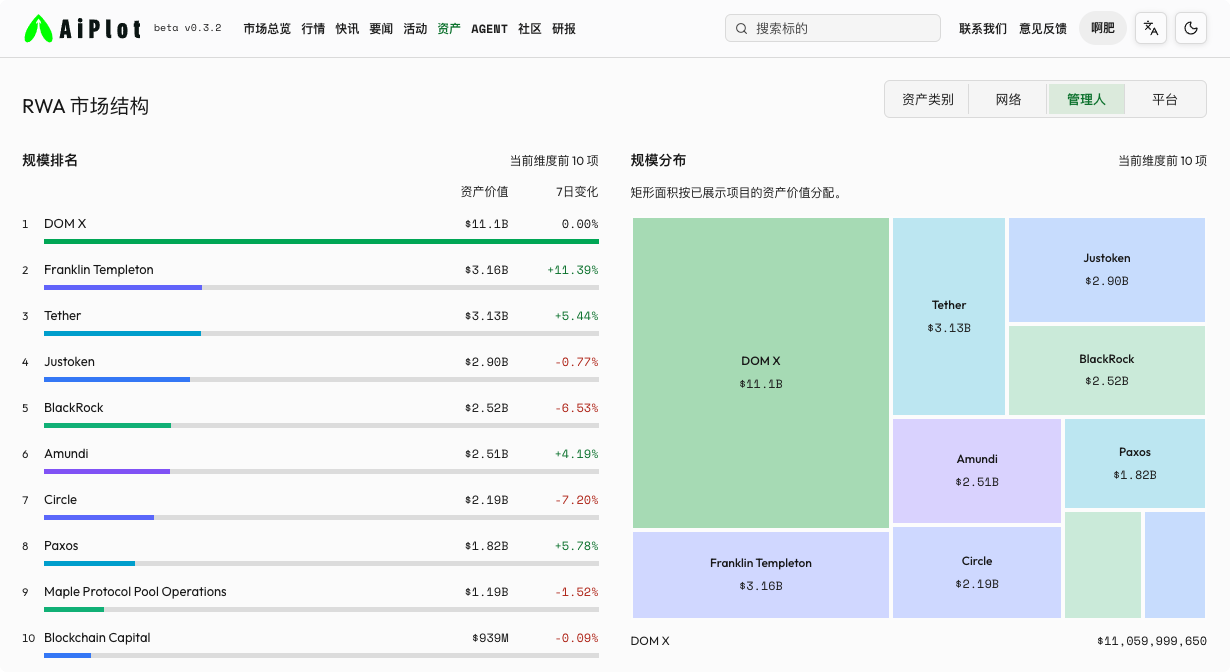
This product corresponds to the Amundi Core STOXX Europe 600 index fund. The index covers about 600 large, mid, and small-cap companies in developed European markets and is one of the core benchmarks for European stock allocation. The scale of related traditional funds or corresponding products is about €2.28 billion, but it should be emphasized that this does not mean that €2.28 billion of assets have all been tokenized; what has been tokenized is the new share class.
The core of this matter lies not in "Amundi choosing Ethereum," but in that traditional European asset management is entering RWA in an incremental manner:
It does not overturn the existing funds, does not forcibly move the entire product onto the blockchain, but rather adds a programmable, verifiable, and digitally platform-oriented distribution track beyond the existing operational system.
1. This is not about moving the entire ETF onto the blockchain, but rather adding a tokenized share class
To understand Amundi's action, it is essential to differentiate between three things: underlying assets, fund products, and tokenized shares.
The underlying assets are European stocks, including companies from various countries and sectors covered by the STOXX Europe 600 index.
The fund product is the European equity index fund managed by Amundi. Investors gain market exposure to a basket of European stocks through fund shares, rather than holding a single stock directly.
The tokenized share class is a newly digitized share within the same fund system. Its ledger recording and transfer methods utilize blockchain, but the fund itself is still subject to the constraints of the original fund operation, management, custody, and regulatory frameworks.
Therefore, Amundi is not transferring the entire traditional fund onto the blockchain, nor is it issuing a European stock token detached from the fund's legal structure. A more accurate description would be:
The same investment strategy, with an added blockchain-based expression and distribution method for shares.
This is also the path that institutions find easiest to adopt. Existing clients can continue to invest through banks, brokers, and fund platforms, while digital asset clients or institutional digital platforms can utilize tokenized shares. The coexistence of two channels can reduce transformation costs and avoid a complete overhaul of the fund's operational processes.
Amundi officially states that this share class remains fully integrated into the existing operating model, and the fund continues to be offered through traditional channels.1
2. Why tokenized stock funds are closer to institutional needs than single stock tokens
Market discussions about stock tokenization often center on whether single U.S. stocks can be traded 24/7. However, from the perspective of asset management institutions, the tokenization of index funds may have more practical significance.
A single stock token primarily provides price exposure to a company, but investors still face issues related to individual stock volatility, corporate governance, dividend handling, and market liquidity.
Index funds, on the other hand, provide a combination of assets directly. The STOXX Europe 600 covers multiple European countries and industries, allowing investors to gain broad exposure to European stocks through a single fund share.
This brings three benefits.
First, the product itself is already a mature asset allocation tool. Institutions do not need to re-understand an emerging crypto asset but can transfer their familiar index investment approach into a digital distribution environment.
Second, composite products are more suitable for entering collateral, wealth management, and fund management processes. Compared to a single stock, index shares more easily become part of a multi-asset portfolio.
Third, fund operations already include standard processes such as subscriptions, redemptions, share registration, net asset value calculation, and asset custody. Blockchain can automate these processes rather than designing a new financial product from scratch.
Thus, Amundi's choice indicates that the main line for institutional RWA may not be "the more stocks tokenized, the better," but rather integrating standardized, decentralized, and market-accepted investment products into the digital market.
3. The significance of Ethereum in this transaction: not a conceptual preference, but a ready-made public settlement environment
Amundi chose to issue tokenized shares on public Ethereum. This choice is symbolic, but it cannot be simply interpreted as Ethereum monopolizing all institutional RWA.
What Amundi has officially confirmed is that the new share class is issued on public Ethereum and utilizes CACEIS's technology and infrastructure to complete the tokenization of fund shares.
It reflects at least three realistic considerations.
First, Ethereum already has a mature public blockchain infrastructure, including wallets, nodes, development tools, data services, and institutional service providers. For large asset management institutions, using an existing network is often easier for connecting with external ecosystems than building a new chain independently.
Second, many stablecoins, tokenized government bonds, on-chain funds, and digital asset applications already exist on Ethereum. Tokenized fund shares may in the future be used in combination with digital currencies, collateral, and on-chain fund management tools.
Third, public chains do not equal permissionless openness. Financial products can still control investor scope through share eligibility, identity verification, transfer restrictions, and service provider permissions. The public settlement layer of blockchain can coexist with the compliant access layer of financial products.
Therefore, the institutional value of Ethereum lies not only in transaction speed but also in whether it can become a public connection layer between fund shares and digital financial applications.
However, it is equally necessary to maintain boundaries: this issuance does not mean that all investors can freely buy and sell the share directly on Ethereum, nor does it imply that the fund already has an active on-chain secondary market.
4. Explanation of CACEIS's Role: The core competitiveness of RWA still lies in fund operational infrastructure
Amundi did not complete this tokenization alone but in collaboration with CACEIS. CACEIS is an important asset service institution in Europe that can provide fund custody, fund administration, transfer agency, and related digital asset technical support.
Users' documentation describes CACEIS as a transfer agent and tokenization agent. Amundi has officially confirmed that this solution uses CACEIS's technology and infrastructure to complete fund unit tokenization.
This is more noteworthy than "a certain chain supports a certain fund."
Fund tokenization is not merely calling upon smart contracts. It also needs to resolve:
- Who records the legitimate shares of investors;
- Who handles subscriptions and redemptions;
- How the fund's net asset value is updated;
- Whether token transfers meet share eligibility requirements;
- How dividends or earnings are distributed;
- How on-chain records and the fund registration system remain consistent;
- How to reconcile holder data between traditional and digital channels.
If these questions are not addressed, tokenization can only remain at the level of technical demonstration. CACEIS's involvement means that tokenization is embedded within the fund service system and not just issued as assets by a blockchain project independently.
This also explains why the value capture of institutional RWA may not first fall onto the underlying public chain token. The truly chargeable components may include fund registration, custody, compliant transfer, digital wallets, net asset value data, settlement, and asset services.
5. Global tokenized stocks are growing rapidly, but the structure remains highly skewed towards U.S. assets
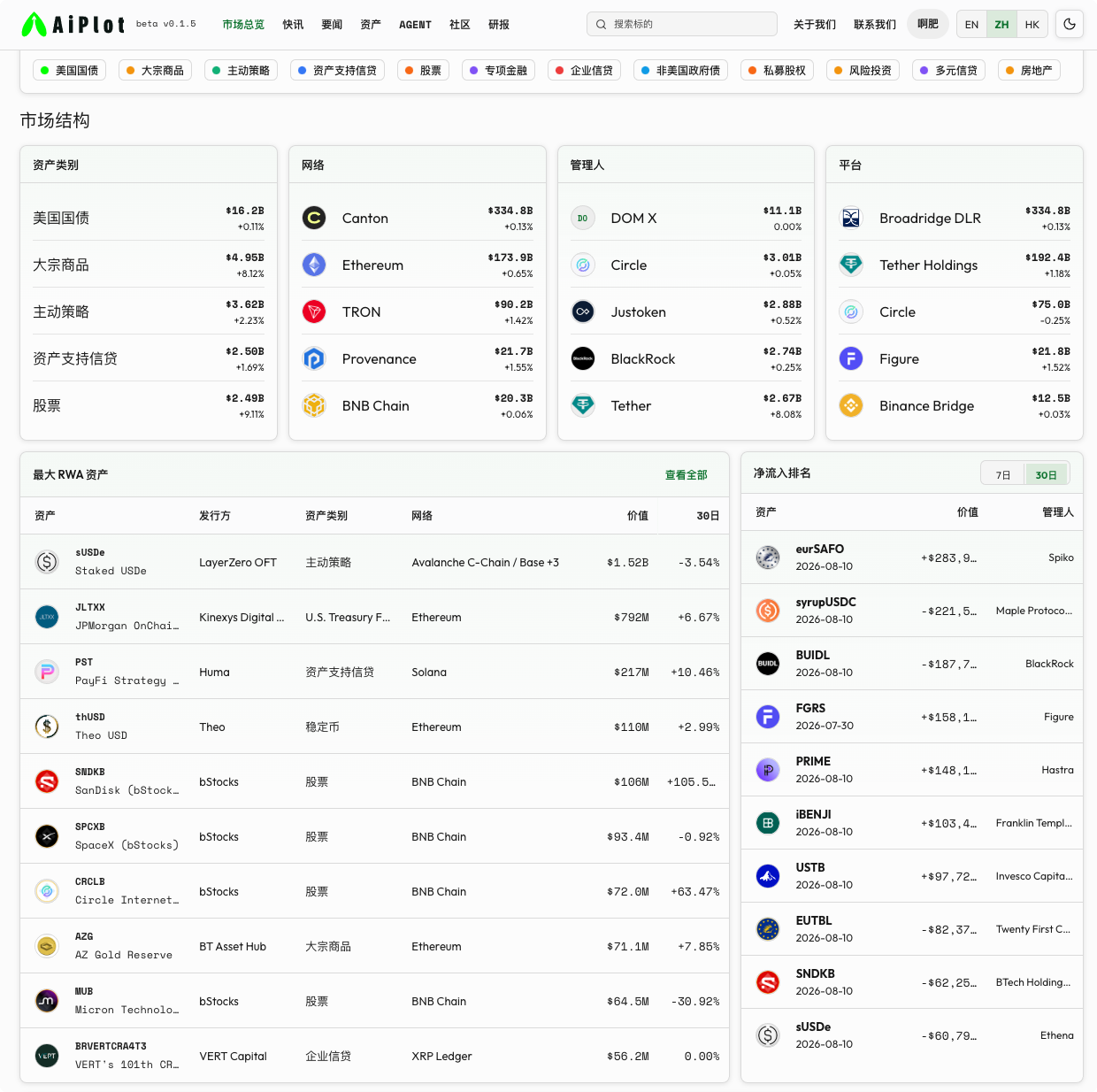
The global scale of tokenized stocks is approximately $4.24 billion, growing by about 27% in the past 30 days. This growth data indicates that stock tokenization is gaining market attention, but the scale increase alone should not be used to judge whether the market is mature.
Currently, leading tokenized stock products are primarily focused on U.S. related assets, including large U.S. technology stocks, exchange-traded funds, and company stocks highly correlated with the digital asset market.
Therefore, Amundi's European equity index fund holds significance on two levels.
First, it expands the geographical coverage of RWA. European stocks are no longer just offline assets in traditional financial markets but are also starting to enter the on-chain environment in the form of compliant fund shares.
Second, it expands the type of asset. The market has previously more easily understood stock tokenization as digital replicas of single popular stocks, whereas index funds represent a more productized approach closer to wealth management and institutional allocation.
However, it is essential to avoid overinterpretation. The launch of tokenized shares by a European index fund does not signify that European stocks have formed large-scale on-chain trading. True validation will depend on subsequent issuance scale, number of investors, on-chain transfers, secondary trading, and digital platform distribution.
6. The primary value of tokenized shares is not price discovery but reducing operational friction
Many articles about RWA conclude the value of tokenization as 24/7 trading and global liquidity. However, for fund shares, the initially realized value may come from operational efficiency.
Traditional funds involve multiple intermediaries and systems: asset managers are responsible for investments, custodians safeguard assets, fund administration calculates net asset value, transfer agents register investors, and distribution channels are responsible for fundraising, while banks and brokers handle the cash flow.
If any of these links still rely on manual reconciliations or decentralized databases, it will be challenging for the fund to achieve true end-to-end digitization.
Tokenized shares can help improve the following processes:
- Real-time updates of holders' records;
- Control of conditions for share transfers;
- Automated subscriptions and redemptions on digital platforms;
- Settlement of fund shares with digital currencies;
- Programmatic execution of investor qualifications and transfer restrictions;
- Reconciliation between traditional systems and on-chain systems.
Amundi has summarized tokenization's potential value as process automation, digital distribution, faster settlement, and enhanced transparency.
This means that the first phase may not necessarily be 24/7 free trading of fund shares, but making it easier for funds to enter digital banking, digital wealth management platforms, and institutional fund management systems.
7. The key direction for European RWA: extending from cash management to index investment
Amundi is not attempting tokenization for the first time. Previously, the company has launched tokenized money market fund shares and explored subscription through stablecoins. Expanding this scope to European equity index funds implies that its tokenization strategy is extending from cash management to broader asset allocation.
This path is quite representative.
Money market funds are suitable to be the first phase product because they have low volatility, clear cash management attributes, and are easily connected with stablecoins and tokenized deposits.
Index equity funds belong to the second phase. They bring longer-term risky asset allocations onto the blockchain, requiring the handling of valuation fluctuations, market time zones, corporate actions, dividends, and cross-border sales issues.
If this expansion continues in the future, more tokenized products may emerge:
- European equity and bond index funds;
- Multi-asset allocation funds;
- ESG and thematic investment funds;
- Private market funds;
- Combination of money market funds and short-term bonds;
- Institution-focused collateral and cash management shares.
The combination of these products may pave the way for a truly on-chain wealth management market.
8. From "tokenized shares" to "composable assets," secondary liquidity still needs to be addressed
Amundi's action achieved innovation at the product issuance level, but issuance does not equate to liquidity.
For tokenized shares to become efficient digital assets, several questions still need answers:
First, do the shares support secondary transfers between investors, or can they only interact with the fund operator during subscription and redemption?
Second, is there a regulated platform or market-making mechanism providing buying and selling liquidity?
Third, can on-chain prices promptly reflect changes in fund net asset value and the underlying European stock market?
Fourth, how is cross-timezone trading handled? The European stock market has fixed trading hours, but Ethereum operates around the clock. Clear rules are needed for how on-chain shares are priced and transferred during European stock market off-hours.
Fifth, how is investor eligibility verified? Tokens on a public chain can be transferred, but the transfer of fund shares may not be open unconditionally.
These questions determine whether tokenized shares are a "digital registration tool" or "truly composable on-chain financial assets."
Hong Kong has recently promoted secondary trading of tokenized money market funds and is exploring a pilot for tokenized gold ETFs, highlighting that regulation and the market are transitioning from the issuance phase to the liquidity phase.
Amundi's next steps will also need to be validated through on-chain holder data, transfer volumes, subscription and redemption sizes, and secondary trading arrangements.
9. What this means for RWA market participants
For asset management institutions, Amundi offers a low-risk tokenization path: retaining the traditional fund structure, adding digital shares, and gradually observing institutional and digital platform demands.
For custodians and fund service providers, competitive focus will broaden from traditional asset services to blockchain accounts, transfer controls, on-chain registration, and digital settlement.
For Ethereum, the continued selection of public chain for fund share issuance by major asset management institutions helps reinforce its positioning as the infrastructure for institutional digital assets. However, true network value still depends on whether assets continuously circulate rather than being a one-off issuance event.
For other public and consortium chains, the competition is not over. Institutions may choose different networks based on privacy, transaction permissions, compliance control, costs, interoperability, and customer coverage. Ethereum's advantages lie in its ecology and public infrastructure, while consortium chains may excel in permissions and institutional collaboration.
For investors, Amundi's product should not be directly understood as a new short-term trading opportunity. Currently, it is more worthwhile to observe whether this tokenized share can bring new distribution channels, subscription methods, fund management tools, and secondary liquidity.
Conclusion: The true significance of Amundi is that mainstream asset management in Europe is starting to view blockchain as distribution infrastructure
The launch of tokenized shares for the STOXX Europe 600 index fund by Amundi is a significant case of traditional European asset management entering RWA, but its significance does not lie in moving the entire €2.28 billion fund onto Ethereum or in immediately creating a new stock trading market.
What it truly showcases is a more realistic institutional path:
Retaining the original fund, custody, operation, and regulatory structure while adding a blockchain-based digital share class.
This incremental innovation lowers the adoption threshold for institutions and allows traditional channels and digital channels to coexist. The asset allocation function of the fund remains unchanged, but subscription, registration, transfer, settlement, and distribution may gradually enter more programmable systems.
This also means that the next phase of competition for RWA will not just be about "who issues the token first," but rather:
- Who can incorporate tokenized assets into real asset allocation processes;
- Who can connect fund shares to stablecoins and digital payments;
- Who can provide compliant and liquid secondary markets;
- Who can reduce inter-institutional reconciliation and settlement costs;
- Who can continuously obtain holder, transfer, and asset service data.
Amundi's choice of Ethereum, CACEIS's provision of fund services and tokenization infrastructure, and STOXX Europe 600's broad exposure to European stocks combine to illustrate that institutional RWA is expanding from U.S. Treasuries and single U.S. stocks to more standardized, composite, and global investment products.
For more data and analysis, please follow Aiplot:
https://aiplot.com/?utm_source=aicoin
📖 Community Communication:
- Telegram:
https://t.me/+IIYMcJigBAo4Mjg1
The content of this article represents the author's personal points of view and does not represent the stance of this platform. The opinions, conclusions, and recommendations in the text are solely for investors' reference and do not constitute any investment advice related to this platform. The market has risks, and investment should be approached with caution.
免责声明:本文章仅代表作者个人观点,不代表本平台的立场和观点。本文章仅供信息分享,不构成对任何人的任何投资建议。用户与作者之间的任何争议,与本平台无关。如网页中刊载的文章或图片涉及侵权,请提供相关的权利证明和身份证明发送邮件到[email protected],本平台相关工作人员将会进行核查。