Just now, OpenAI released GPT-6 Cyber, a secure large model as a result: The model found 948 local privilege escalation vulnerabilities in the Linux kernel, as well as 81 high-risk vulnerabilities in Firefox
Other key points:
This model allows for writing attack programs
In OpenAI's Preparedness cybersecurity rating, this model is rated as Critical, the highest tier
Currently open to the first batch of approved Daybreak Red customers
Differences with GPT-6 Astra
GPT-6 Astra is capable of performing routine tasks well, but is blocked when carrying out attacks exploiting vulnerabilities, whereas GPT-6 Cyber is based on Astra and has been retrained with security tasks, thus loosening various security restrictions and achieving these results
Test | Exam Focus | Astra | Cyber |
|---|---|---|---|
RemoteExploitBench | Remote attacks on known vulnerabilities | 0% (Denied) | 94.7% |
ExploitGym | Exploiting specified vulnerabilities to breach targets | 42.4% | 48.5% |
ExploitGym Hardened | Same as above, with added protections on target | 29.7% | 36.9% |
ExploitBench Internal Version | Writing exploits for newly disclosed vulnerabilities | 39.0% | 42.0% |
SEC-Bench Pro | Finding vulnerabilities in JS engines | 85.4% | 87.0% |
SRE-Bench | Reverse analyzing binary programs | 88.0% | 92.8% |
Web Penetration | Finding website vulnerabilities without source code (Recall Rate) | 32.0% | 40.3% |
948 Linux privilege escalation vulnerabilities
In mid-October, OpenAI scanned the latest Linux kernel using an automated pipeline:
Filtering: Out of 40 million lines of code, approximately 2.8 million lines that regular users might encounter were selected
Analysis: 2,308 suspected vulnerabilities identified in 12 hours
Reproduction: Running test programs in an isolated virtual machine confirmed 1,724
Exploitation: Writing exploits, gaining root access on a standard desktop system with all default protections (SMEP, SMAP, KASLR) enabled, resulted in 948 after deduplication
Review: Researchers reviewed and reported the most severe 304 along with patches to the maintainers
On average, the API cost per exploit is $1,279. The hacker competitions Pwn2Own and TyphoonPWN historically awarded prizes of $20,000 and $70,000 for such achievements
Using the same process, GPT-5.6 Sol only found 166 in July, which means:
As models upgrade, more vulnerabilities will be discovered
For attackers with advanced models, everything is root
81 high-risk vulnerabilities in Firefox
Firefox has already been scanned by multiple generations of cutting-edge models this year, and GPT-6 Cyber found 81 previously unknown high-risk vulnerabilities, each with reproducible tests. Firefox 159, released on October 27, fixed 108 high-risk vulnerabilities, 41 of which were reported by OpenAI
Simulated power plant testing
The industrial control security company Dragos placed the Daybreak Red model in a simulated power plant, providing almost no hints. The model distinguished between the office network and power plant equipment, and found two unknown vulnerabilities (0days) in the engineering software that manages protective devices, thus gaining access to protective set values and circuit breaker tripping logic
This rollout simultaneously added interception: high-risk requests involving industrial control, basic services, and election systems will be blocked. Defense teams for power plants and water treatment facilities can apply for a separate Daybreak Red for Critical Infrastructure, with a funding plan of $1 billion for cash-strapped government agencies and basic service providers
How to use it
To use these models, one needs to apply for OpenAI's Daybreak program, which has two tiers:
Daybreak Blue: Uses the general model GPT-6 Astra, with some security restrictions eased, suitable for code audits, vulnerability checks, and writing fixes
Daybreak Red: Uses the specialized model GPT-6 Cyber, can write attack programs, perform authorized penetration testing, with stricter review processes. Companies need to implement single sign-on, multi-factor authentication, and IP whitelisting, while individuals must be invited, verified with real names, and use hardware security keys
However, if you just want to scan your own code, you can directly use OpenAI's tool Codex Security. After access to your repository, it will sequentially perform vulnerability discovery, issue validation, prioritization, task assignment, issue fixing, and checking, and then provide you with the final results
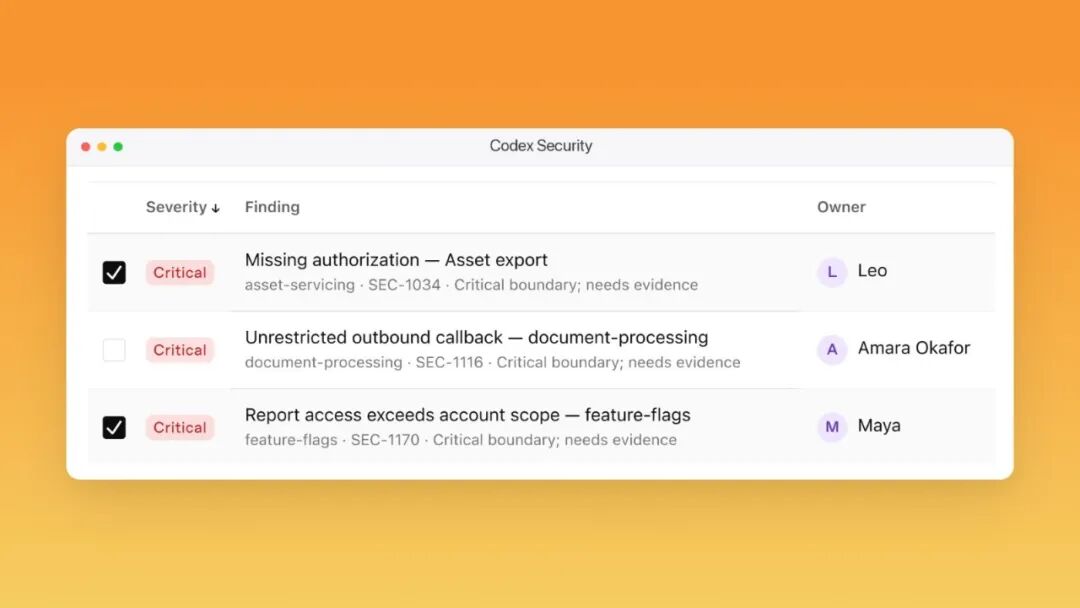 Discovery
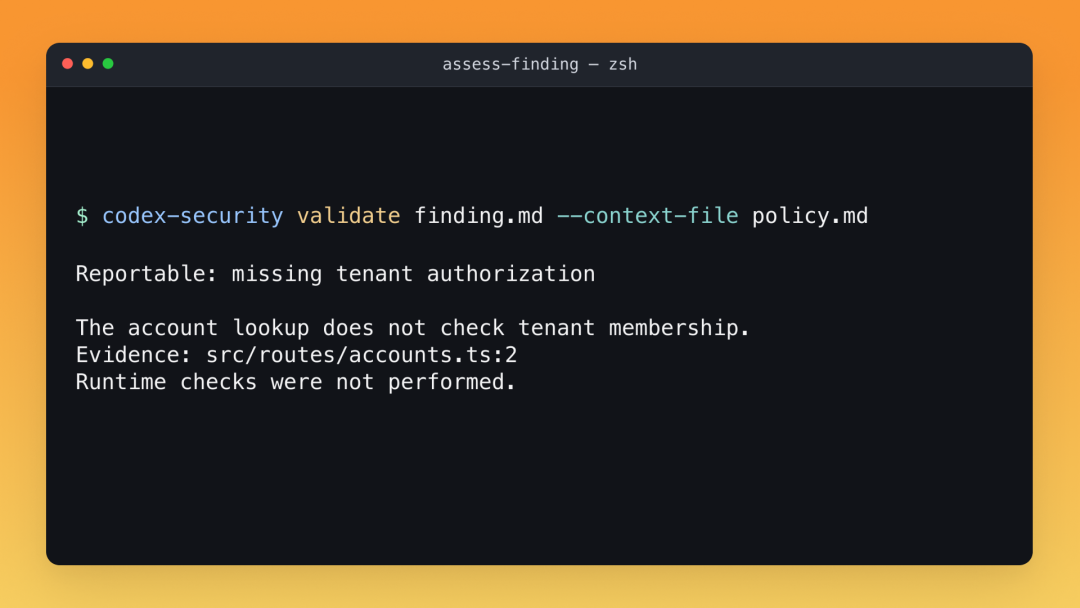 Validation
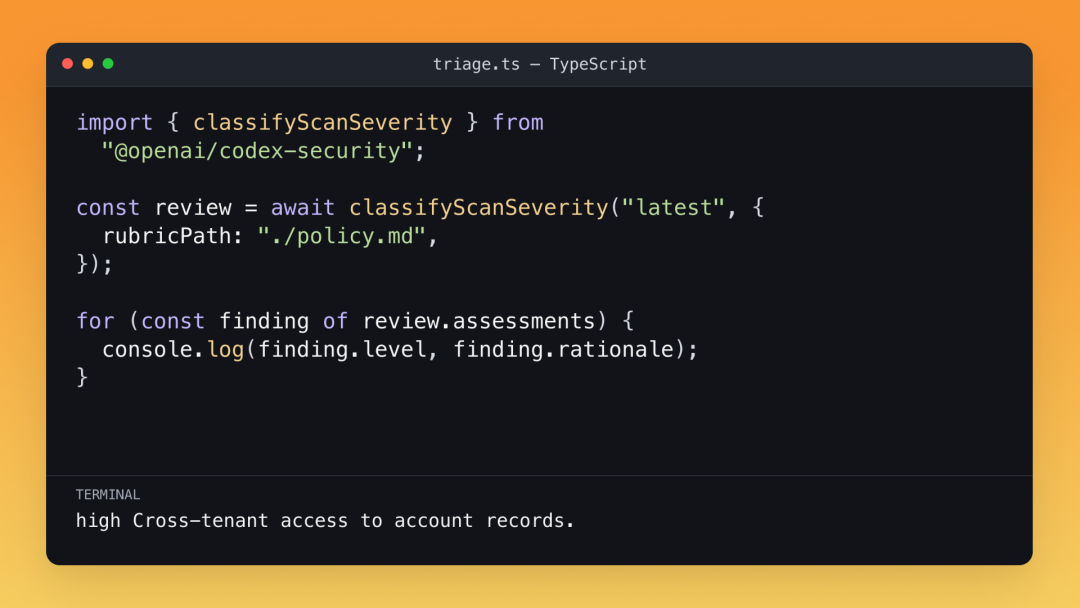 Prioritization
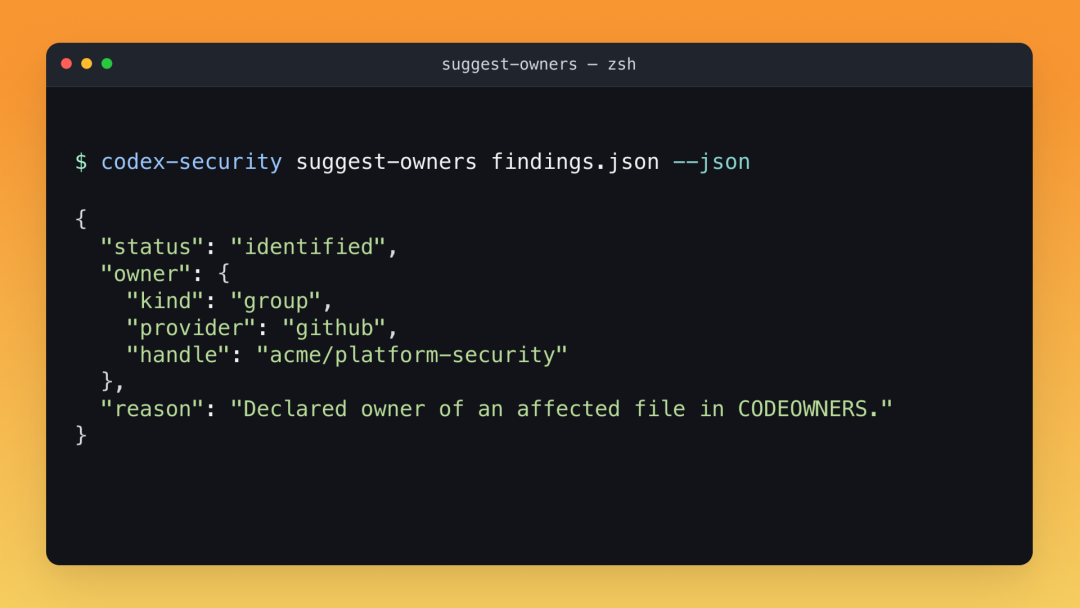 Assignment
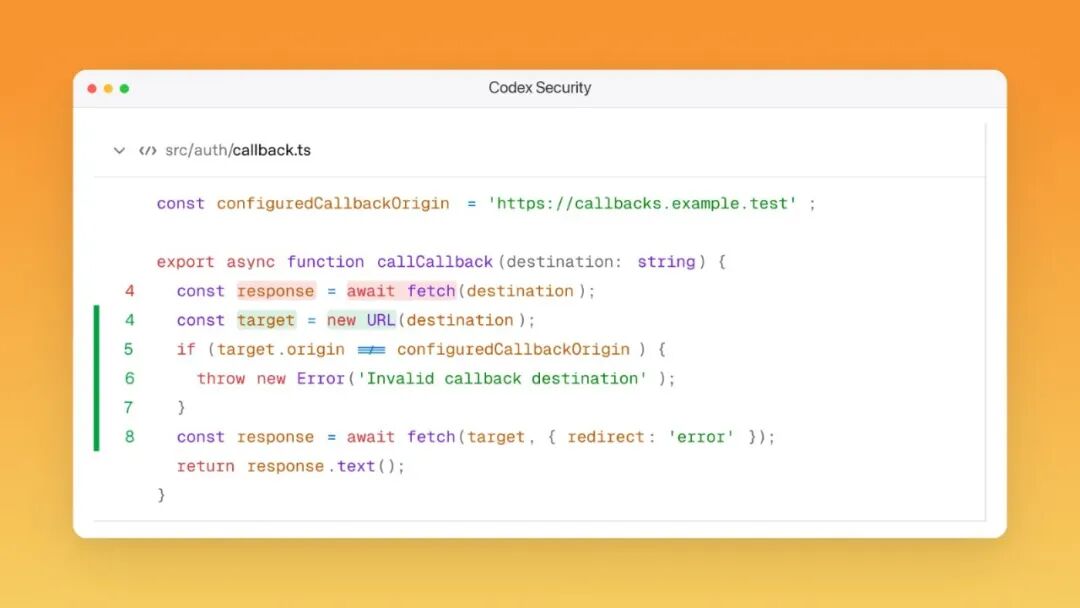 Fixing
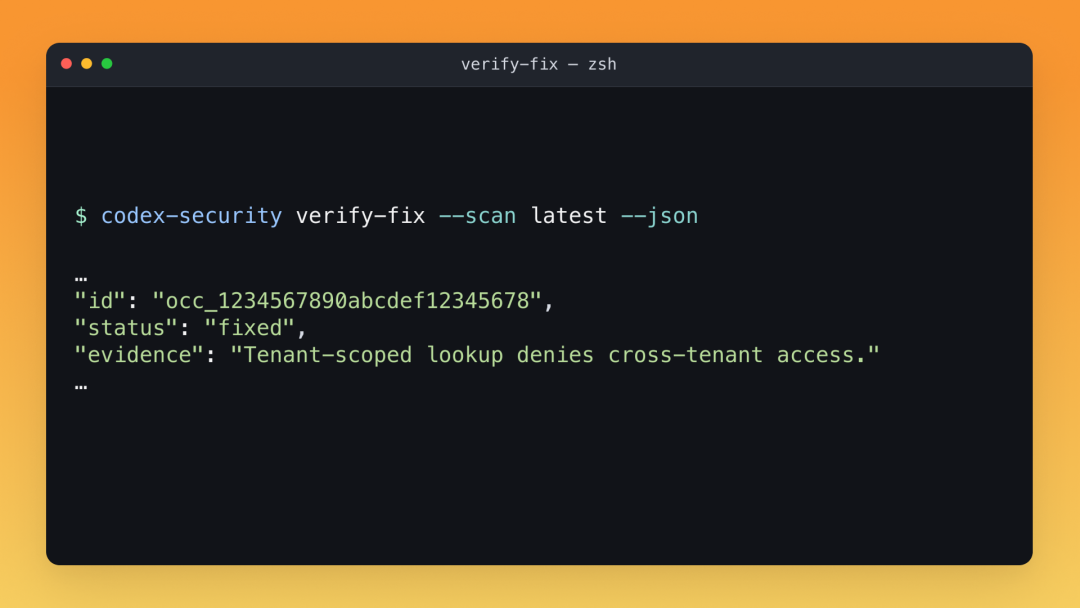 Verification
免责声明:本文章仅代表作者个人观点,不代表本平台的立场和观点。本文章仅供信息分享,不构成对任何人的任何投资建议。用户与作者之间的任何争议,与本平台无关。如网页中刊载的文章或图片涉及侵权,请提供相关的权利证明和身份证明发送邮件到[email protected],本平台相关工作人员将会进行核查。


