Apple has delivered a record-breaking financial report, yet it has provided guidance indicating weak profit growth. iPhones and Macs still sell, but rising storage costs are consuming the profit from revenue growth. The gross margin guidance for the December quarter has been lowered to 45%-46%, implying that the market needs to reassess the intrinsic value of this growth cycle.
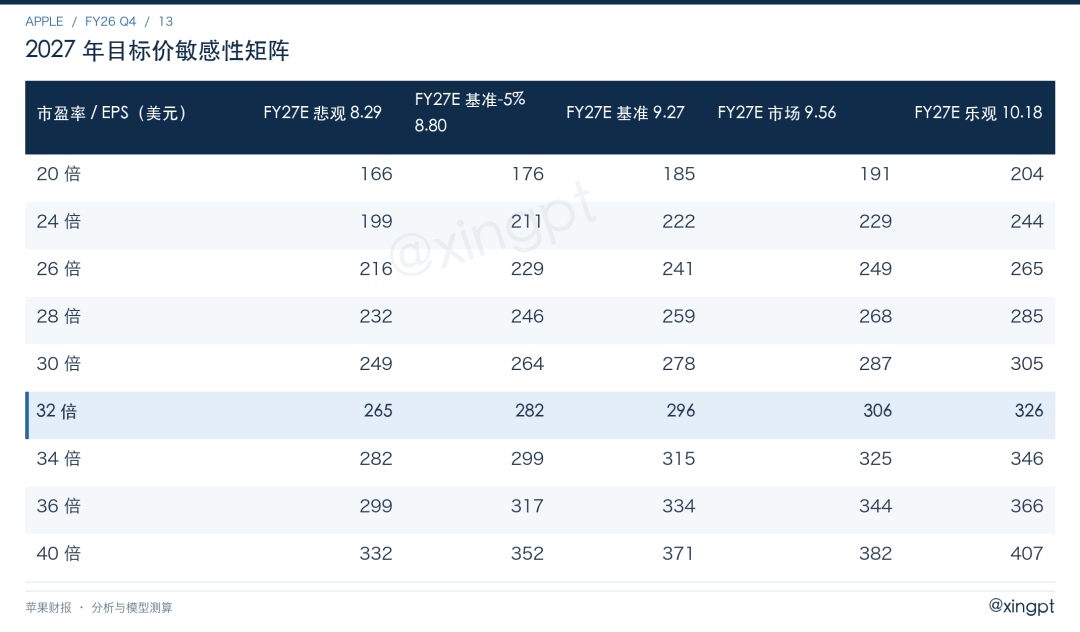
Our benchmark model predicts that based on FY27 EPS of approximately $9.27 and a price-to-earnings ratio of 32 times, the corresponding valuation is approximately $296.5. Following the convention of rounding to the nearest $5, the target price for 2027 is $295, about 10.7% lower than $330.22. Even considering a recovery in the second half of the year, the current stock price has limited safety margin. (Complete model and tracking updates can be found at the end of the article.)
1. Record Revenue, but Profit Turnaround Expected Next Quarter
Demand Remains Resilient; One-Time Gains Inflated Book Performance
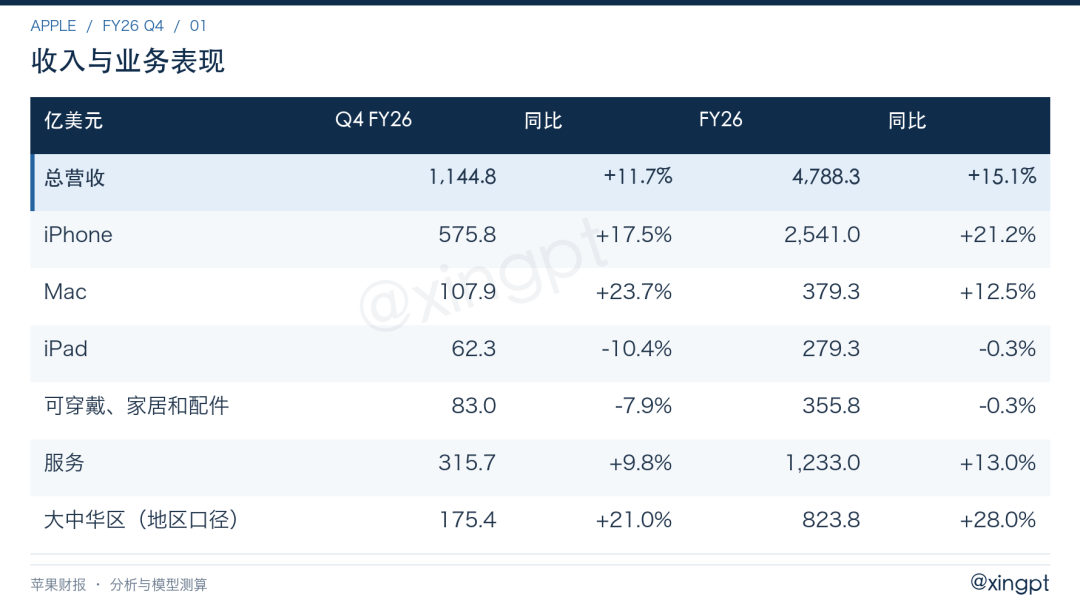
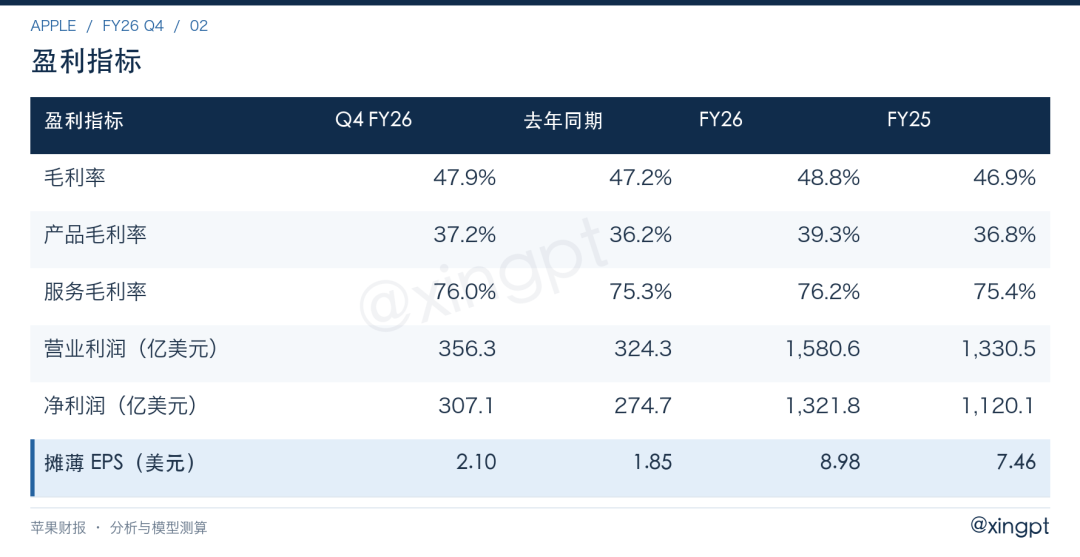
In the September quarter, Apple achieved revenue of $114.48 billion, a year-over-year increase of 11.7%; diluted EPS was $2.10, up from $1.85 in the same period last year. For FY26, total revenue and EPS reached $478.83 billion and $8.98, respectively, both setting historical highs. Considering that iPhone, Mac, and iPad were all constrained by supply, and that exchange rates negatively impacted revenue growth by nearly 2 percentage points, this growth reflects the resilience of end demand. However, the 47.9% quarterly gross margin includes about a 1 percentage point contribution from tariff refunds. Excluding this one-time gain, the EPS is approximately $2.05, reflecting a year-over-year growth of about 11%, which is closer to the performance of the business itself.
December Quarter: Difficult to Increase Profits Despite Revenue Growth
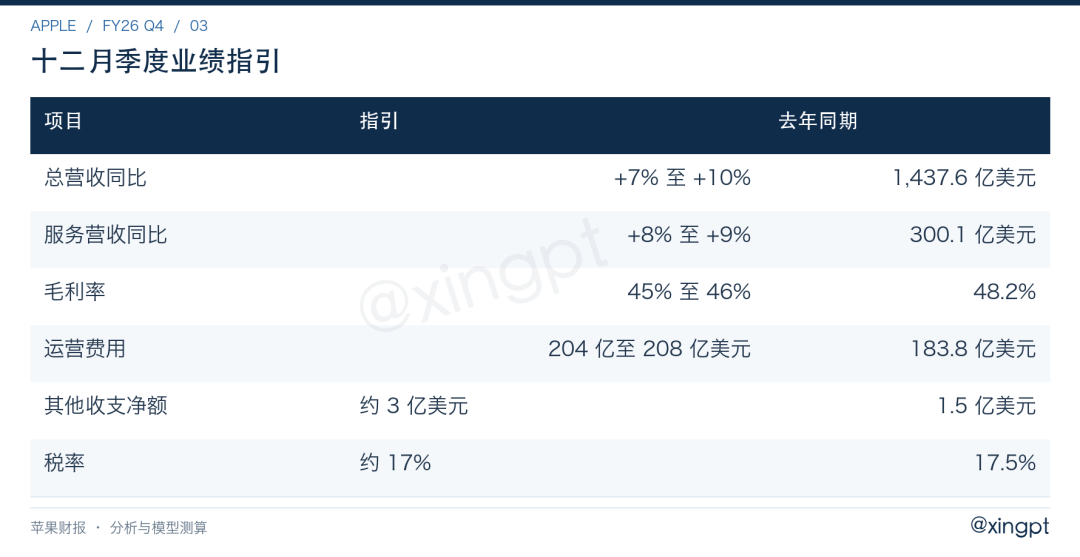
The real pressure on valuation comes from the guidance for the next quarter. Revenue is still expected to grow by 7%-10%, but the gross margin is down from 48.2% in the same quarter last year to 45%-46%, while operating expenses continue to rise. Based on the midpoint of the guidance and model assumptions, revenue is expected to be approximately $156 billion, with operating profit around $50.4 billion, essentially flat compared to last year's $50.85 billion; EPS is expected to be about $2.89, representing a year-over-year growth of only about 2%.
Revenue continues to grow, but profits are nearly stagnant, with costs becoming the core issue in this financial report.
Rising Storage Costs are Changing Apple's Profit Structure
The management described this round of rising storage costs as “unprecedented.” The midpoint guidance for the December quarter's gross margin is about 140 basis points lower than the September quarter excluding refunds, with most pressure coming from storage. More troubling is that procurement prices are expected to continue rising after December, with the buffer of low-cost inventory gradually diminishing. An increase of $33 billion in manufacturing procurement obligations for a single quarter raises concerns about future cost trends. Price increases, digestion of low-cost inventory, and cost reductions in other components can offset some pressure, but there is still insufficient observation window to adequately gauge how much demand might be lost due to rising prices.
Cost and supply are still interlinked. The bottleneck in the September quarter primarily involved advanced process capacity for SoC; by the December quarter, supply constraints for Macs and iPads shifted to storage. The iPhone Duo remains in high demand, and management is unable to determine the timeline for supply-demand balance, nor has it provided supply outlook beyond December. Whether demand can translate into revenue still depends on the recovery of the supply chain.
The fundamentals on the demand side remain robust. iPhone revenue grew by 17.5%, with strong double-digit growth achieved in both the US and Greater China. Revenue in all regions reached historic highs for the entire year. Mac revenue grew by 23.7%, with the MacBook Neo and MacBook Pro driving record annual sales. The decline in iPad sales is affected by both stock shortages and a high base effect, while the wearables business primarily bears the burden of high base pressure. With over 2.5 billion active devices, this remains the foundation for Apple’s hardware upgrades and service monetization.
The service business also struggles to completely offset hardware costs for now. Service revenue grew by 9.8% in this quarter, with the guidance for the December quarter further slowing to 8%-9%. Management mainly attributes this to exchange rates: from the March quarter to the September quarter, the exchange rate’s drag on service growth increased by about 4 percentage points. On the business level, App Store revenue remains close to last year’s figures, with weak performance in mobile games, ongoing pressure from US foreign link decisions, and adjustments in business models across certain markets. Over 1.5 billion paid subscriptions provide a stable base, but short-term growth is still insufficient to significantly improve the overall profit structure.
Siri AI is currently in a phase of cost-heavy investments with initial monetization. Siri handles over 2.5 billion requests daily, with cloud costs entering service sales costs, and deferred hardware revenue also impacting gross margins. Server-dependent functionalities will set consumption limits, with paid expansions providing an entry point for future revenue. However, the proportion of cloud requests and demand for computing power has not yet been quantified, making it difficult to determine the maximum profit margin for this business at this stage.
Costs on the expense side have seen some easing: year-over-year growth of operating expenses has decreased from 21% this quarter to guidance of 11%-13% for the next quarter, but investment in AI is still increasing significantly. Capital returns continue to provide support, with $28 billion returned to shareholders this quarter, and cash and cash equivalents at $137 billion, with total debt at $80 billion. After abandoning the target of net cash returning to zero, the allocation of cash and debt has become more flexible, and subsequent buyback efforts remain worth tracking.
2. Profitability Elasticity: Storage Costs Hold the Most Weight
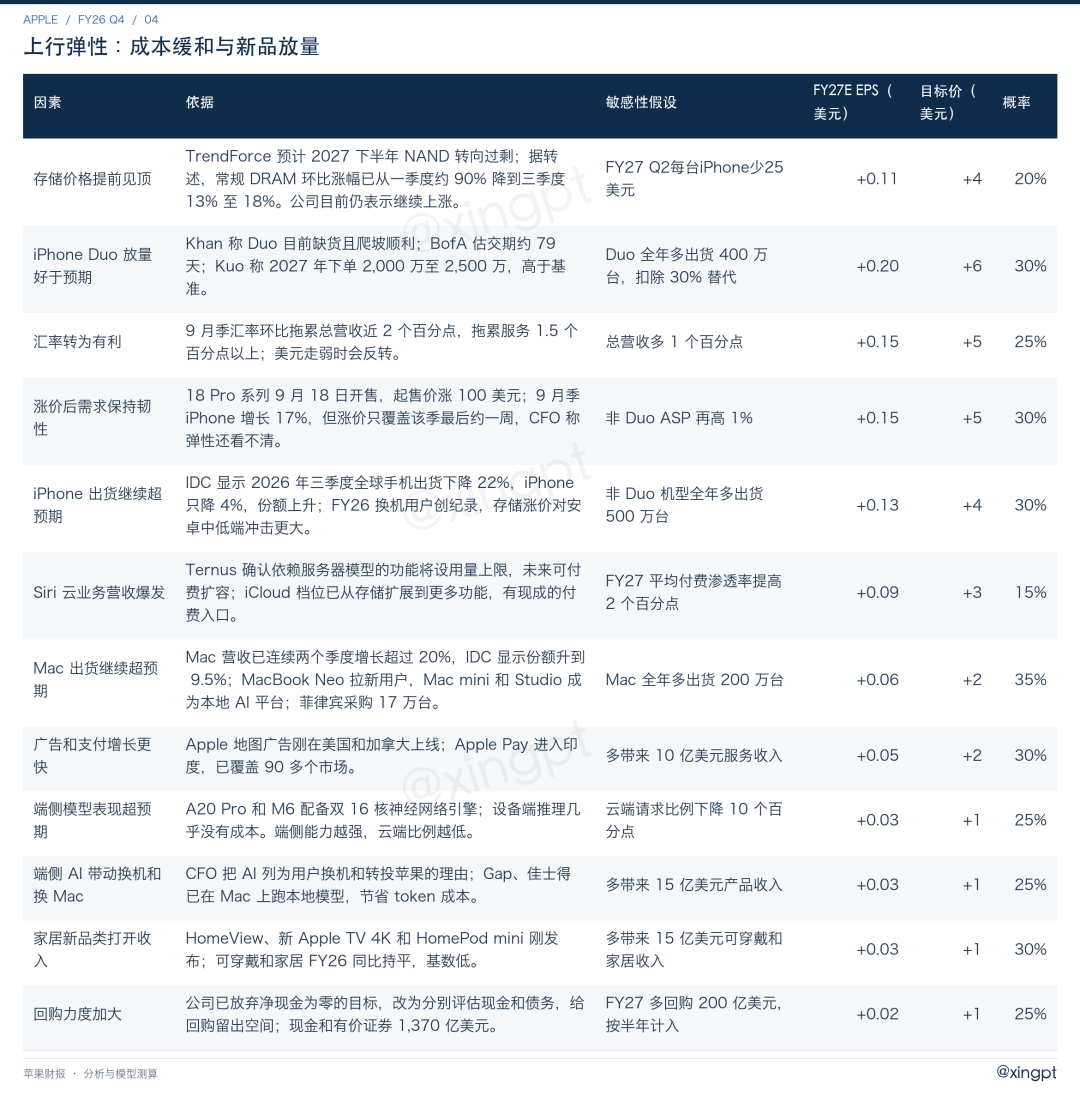
Storage remains the primary source of recent profit pressure. The benchmark model retains an estimated FY27 incremental procurement cost for storage of approximately $27.9 billion, while assuming that factors such as price increases, product structure, and cost reductions will form an offset in the second half of the year, restoring the product gross margin to 37.2% in the last two quarters. According to the model, this recovery requires a total cost reduction of approximately $7.8 billion in the second half of the year. Siri AI cloud costs are approximately $2.3 billion, with paid revenue about $350 million, netting a drag equivalent to about 0.4 percentage points on the gross margin.
Upward Potential: Cost Easing and New Products Scaling
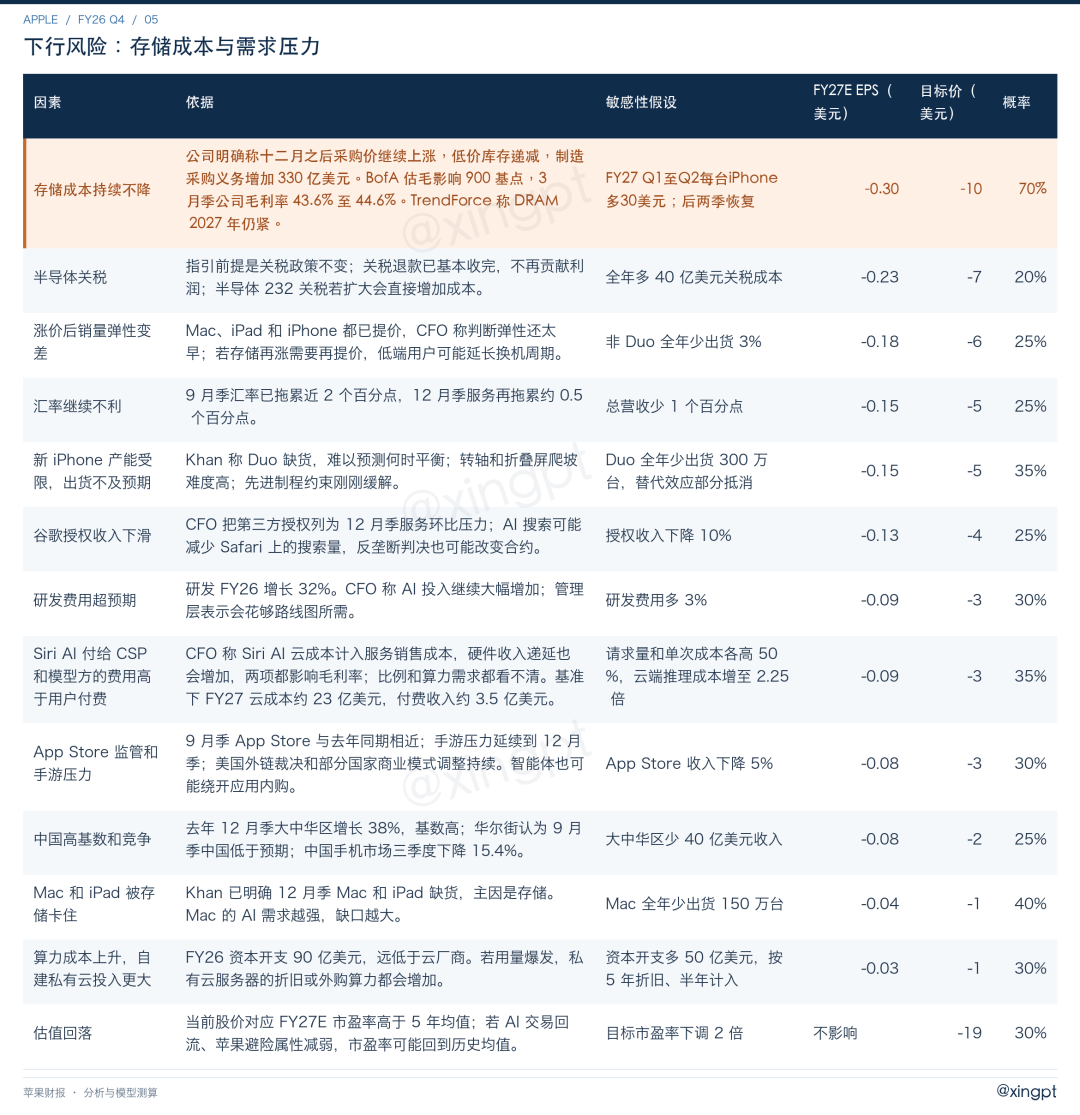
Downside Risks: Pressure from Costs, Sales Volume, and Valuation Overlap
3. Profitability and Valuation: Can Growth Absorb the High Premium?
FY27: Pressure in First Two Quarters, Recovery in Second Half
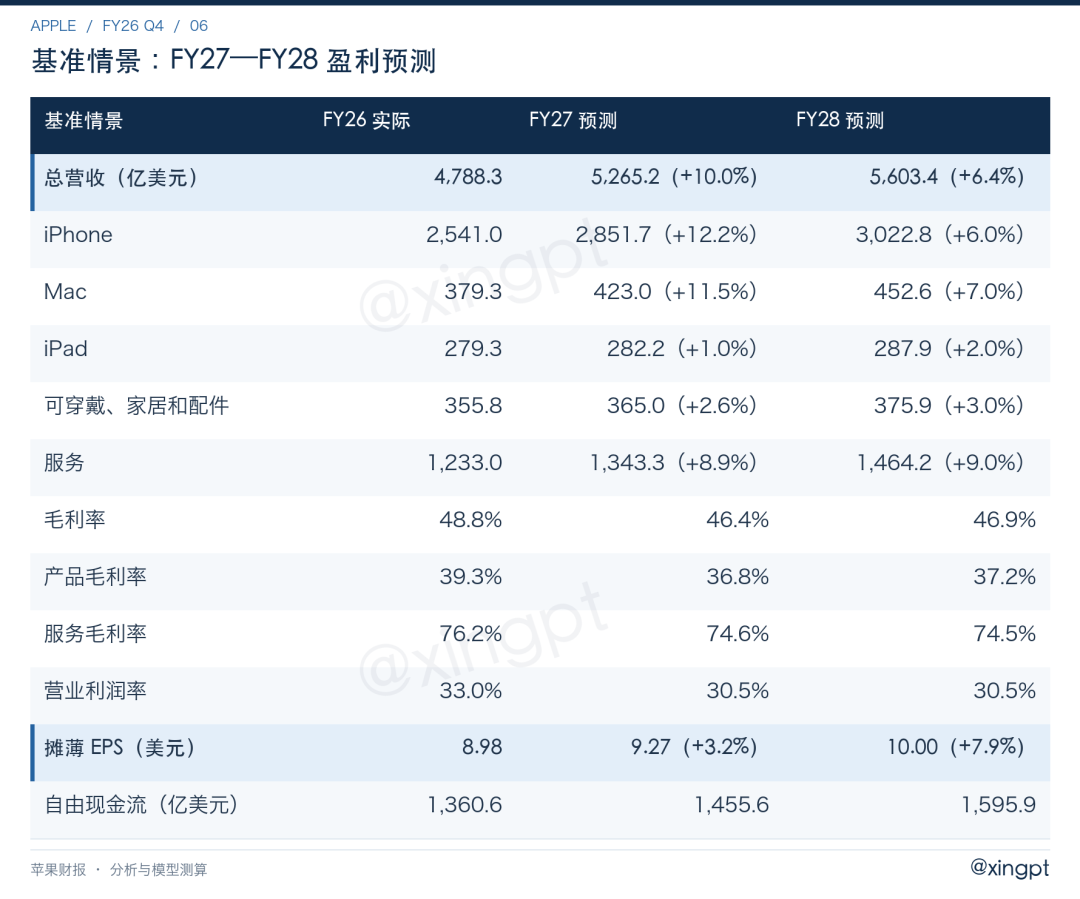
Our benchmark model anticipates FY27 revenue of $526.52 billion, a year-over-year increase of 10%; comprehensive gross margin of 46.4%, with product gross margin for the entire year at 36.8%, and EPS at $9.27, reflecting a year-over-year growth of 3.2%. The product gross margins in the first two quarters are projected to be 37.9% and 34.3%, respectively, recovering to 37.2% in the latter two quarters. For FY28, the product gross margin is expected to maintain at 37.2%, with the comprehensive gross margin at approximately 46.9%, and EPS at $10.00, representing a year-over-year growth of 7.9%. Profit recovery relies on the ability to offset costs in the second half of the year.
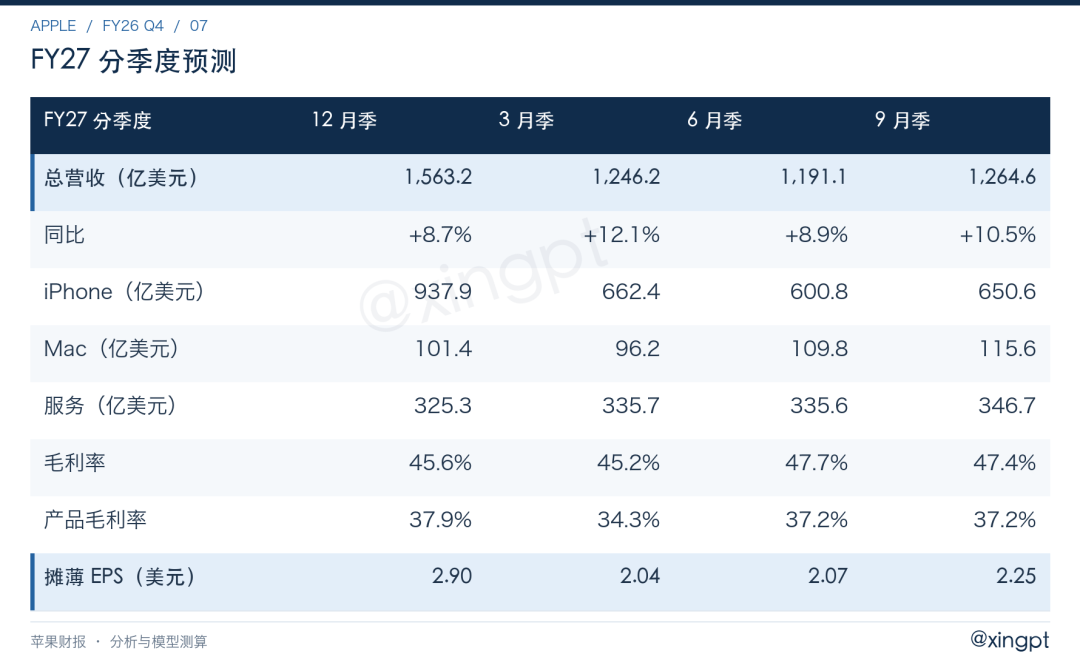
The growth of iPhones relies more on price and product structure. The benchmark model expects FY27 shipments for non-Duo models to decline by 7%, 4%, 6%, and 2% across the four quarters, with average prices increasing by 5.5%, 7%, 6%, and 5%, respectively. Duo will ship 13.5 million units for the year, with an average price of around $2,150-$2,250 and an assumed gross margin of 45%. The total iPhone shipments for the year is expected to be 256.4 million units, showing limited change from FY26’s approximately 255.5 million units. Therefore, the demand elasticity after price increases for the Duo and its growth will impact the quality of revenue more than the total shipments themselves.
The procurement cost for each iPhone's storage is still estimated at around $145-$208 for FY27. The model retains the original cost details, and separately lists the cost reductions needed to restore gross margins in the second half of the year, avoiding assuming a return to established procurement prices. Siri AI is calculated based on daily requests of 3 to 4 billion, with 25% on the cloud, at a cost of 0.4 cents per request, plus a quarterly $250 million Gemini licensing fee.
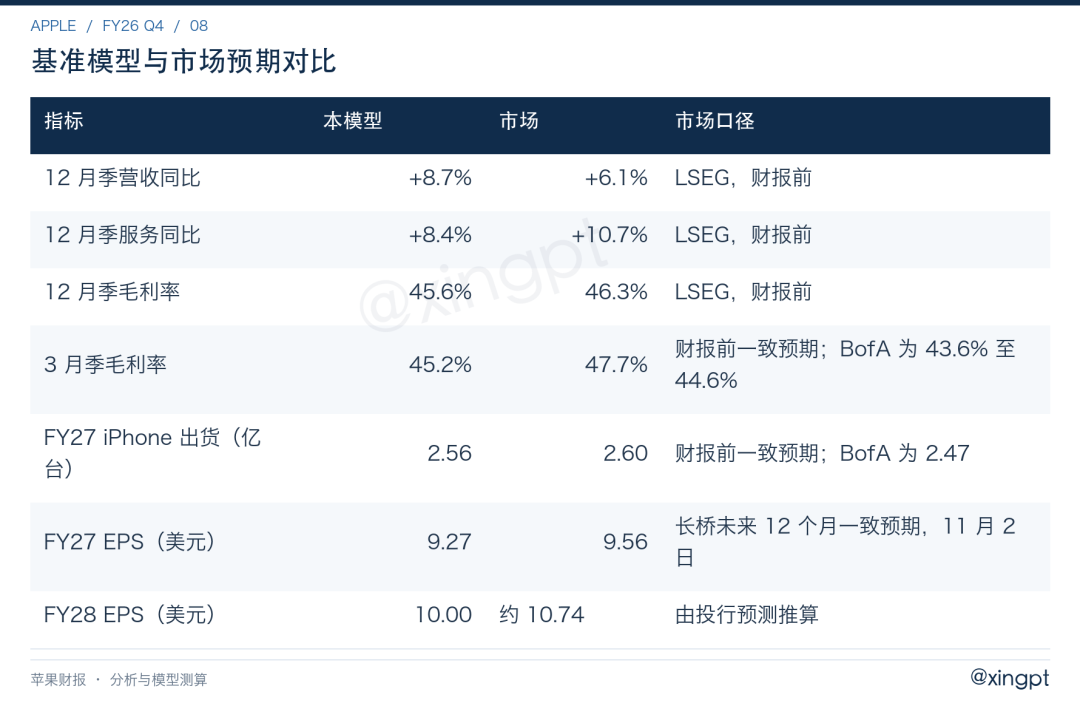
Divergences with the market still lie in the profitability conversion rate: revenue growth in the December quarter exceeded pre-report expectations, with lower gross margins; even factoring in a recovery in the second half, FY27 EPS of $9.27 is still lower than the market’s $9.56. Most market forecasts were formed before the report and have not fully reflected the new guidance.
Target Price for 2027 is $295, with Repair Expectations Already Included
The target price for 2027 is uniformly based on FY27 earnings: the unrounded EPS is $9.265, multiplied by a P/E ratio of 32 times, corresponding to approximately $296.5; rounded to the nearest $5 according to the model, it becomes $295. Relative to $330.22, this represents about a 10.7% downside, with a total return including dividends of about -10.3%. FY28 EPS of $10.00 is only used for future earnings outlook.
A P/E ratio of 32 retains a premium for Apple's ecosystem, service revenues, and cash returns. With over 2.5 billion active devices supporting this judgment, further upward valuation still requires stronger profit realization. The weights for pessimistic, baseline, and optimistic scenarios remain at 25%, 50%, and 25%.
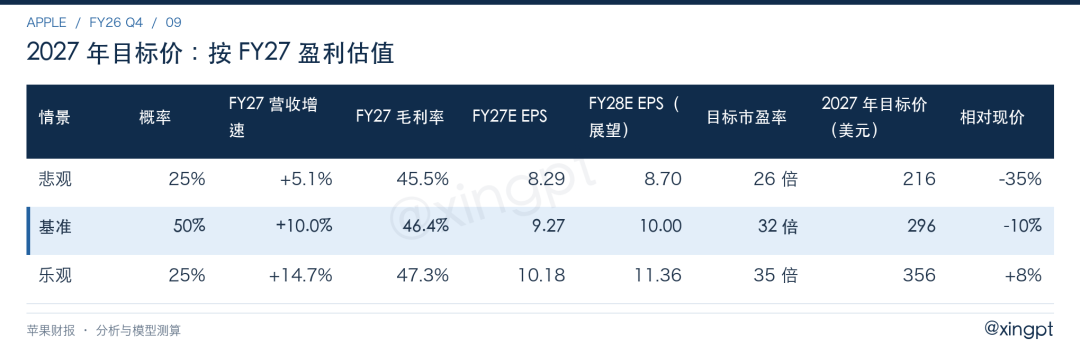
The weighted value for the three scenarios is approximately $291; the SOTP based on FY27 earnings is about $280, and the multi-year cash flow DCF is approximately $240. The DCF deducts equity incentives, using an 8% discount rate and a 3.5% perpetual growth rate. The original market reference was targeted by 44 institutions at about $332, with a range of $245-$405, and some forecasts have not yet accounted for the financial report, and valuation metrics may also vary.
Valuation at Historical High, Limited Margin of Safety
$330.22 corresponds to approximately 36.8 times the FY26 rolling P/E ratio, which is at about the 85% historical percentile over the past five years and approximately 92% over the past ten years. According to updated forecasts, the current price corresponds to about 35.6 times and 33.0 times P/E ratios for FY27 and FY28, respectively.
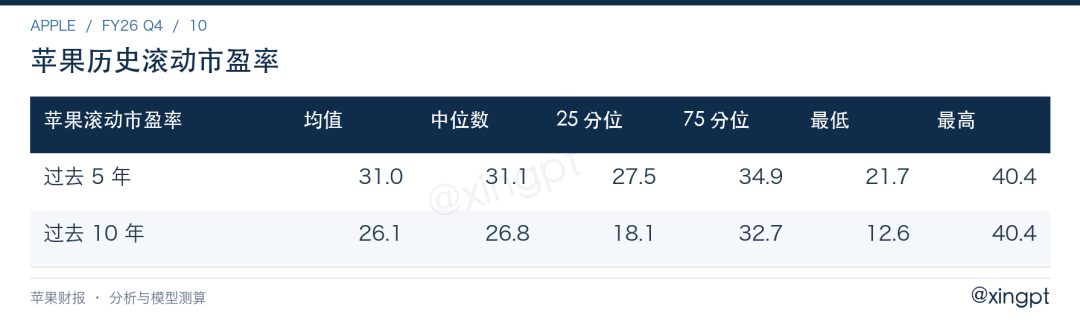
Based on the closing price on November 2 and market expectations, Apple's forward P/E ratio is 35.4 times, which is about 84% higher than the median of large techs at 19.2 times, but lower than the samples of consumer and payment sectors at 42.5 times. Different companies have variations in business and profitability metrics, and the sample does not cover hardware peers like Samsung and Xiaomi, serving only as a reference for valuation.
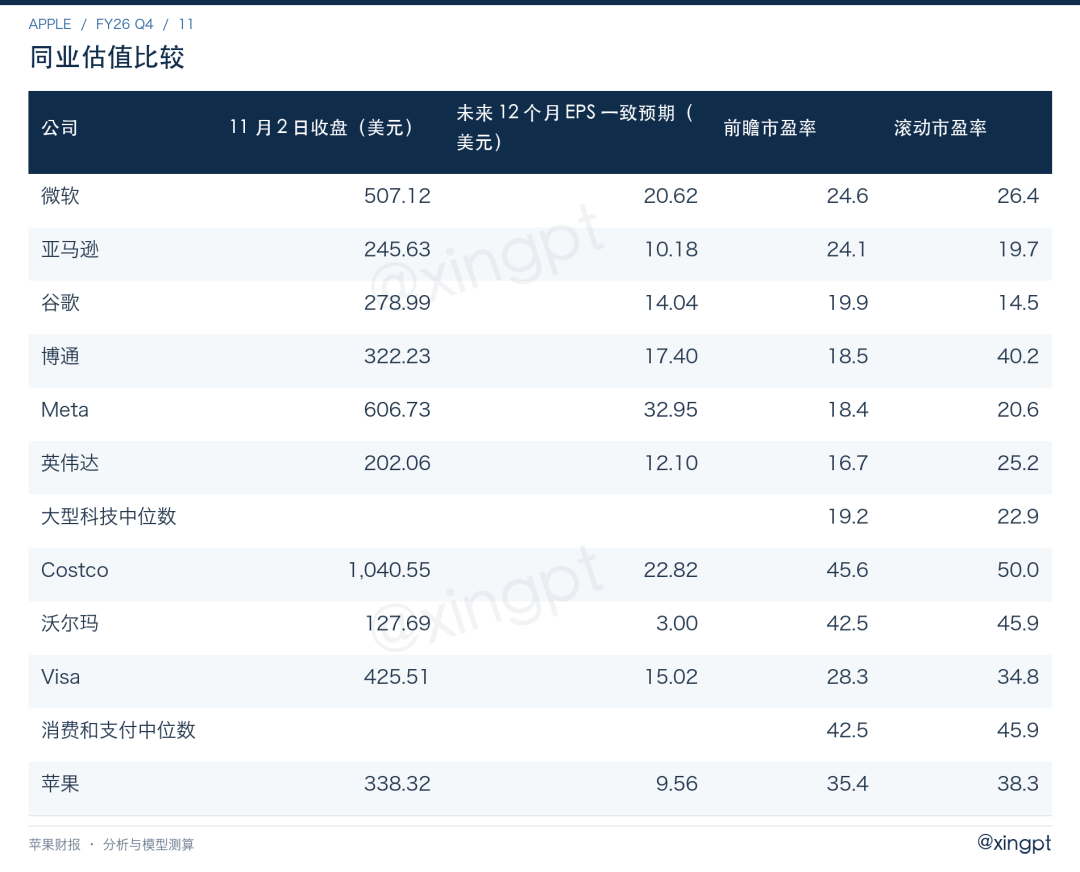
The target price and below valuation matrix uniformly uses FY27 earnings. Historical and peer multiples are used to observe the outcomes of different valuation assumptions, not indicating a complete alignment of their earnings periods with this model.
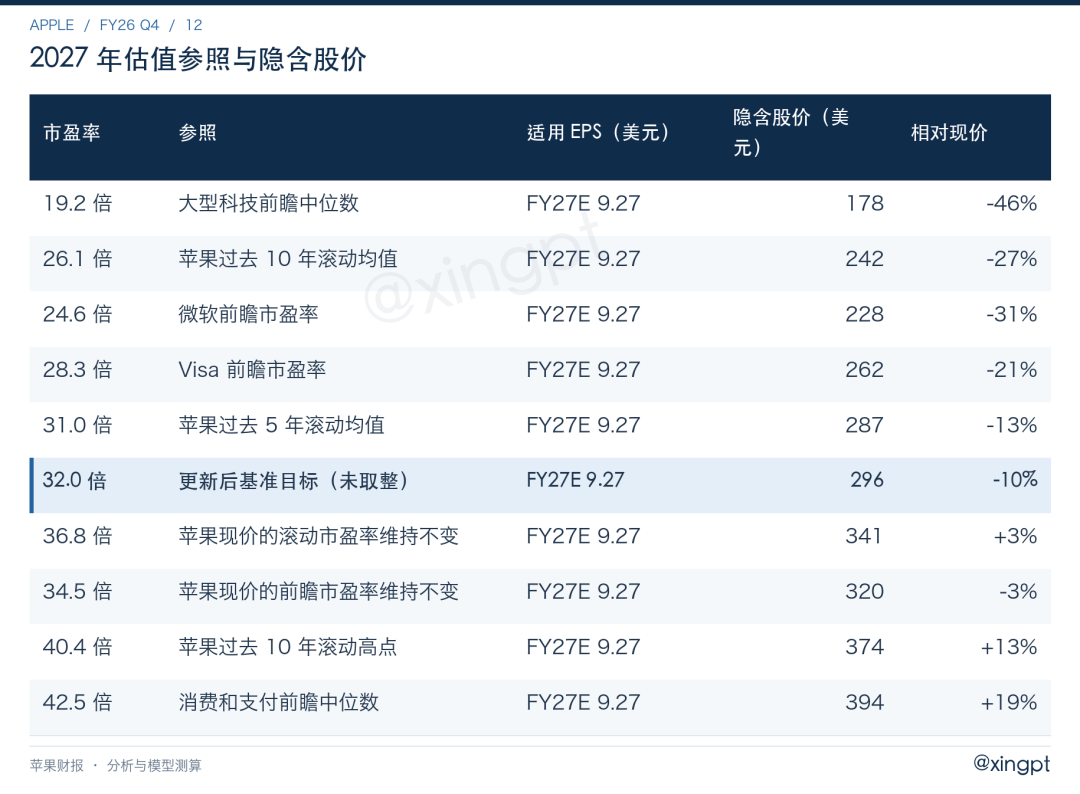
Based on FY27 EPS of approximately $9.27, a 32 times P/E ratio corresponds to approximately $296, while 34 times corresponds to approximately $315; the current price of $330.22 equates to about 35.6 times. Further increases require profits or valuations to exceed the benchmark.
Next Revaluation Should Focus on Gross Margin
The next financial report should focus on the gross margin guidance for the March quarter: the benchmark is set at 45.2%, BofA at 43.6%-44.6%, and the market before the financial report at 47.7%. In the second half of the year, the emphasis will be on verifying whether the product gross margin can return to 37.2%, and whether storage contract prices, procurement commitments, and price increases can support this recovery.
On the demand side, monitor the scaling of the Duo, the alleviation of Mac and iPad stock shortages, and sales after price increases; on the service side, observe whether revenue can return to double-digit growth, as well as the paid progress of Siri AI.
The resilience of Apple’s demand has been validated, the next step is to verify the recovery of profits. The target price of $295 for 2027 has already included the assumption that product gross margins will recover to 37.2% in the second half; if the recovery is delayed, the current valuation still lacks adequate buffer.
This article provides analysis based on publicly available data and model assumptions and does not constitute investment advice.
免责声明:本文章仅代表作者个人观点,不代表本平台的立场和观点。本文章仅供信息分享,不构成对任何人的任何投资建议。用户与作者之间的任何争议,与本平台无关。如网页中刊载的文章或图片涉及侵权,请提供相关的权利证明和身份证明发送邮件到[email protected],本平台相关工作人员将会进行核查。