In the theft report released by Binance, there is a technical detail that I don't know if you have noticed—
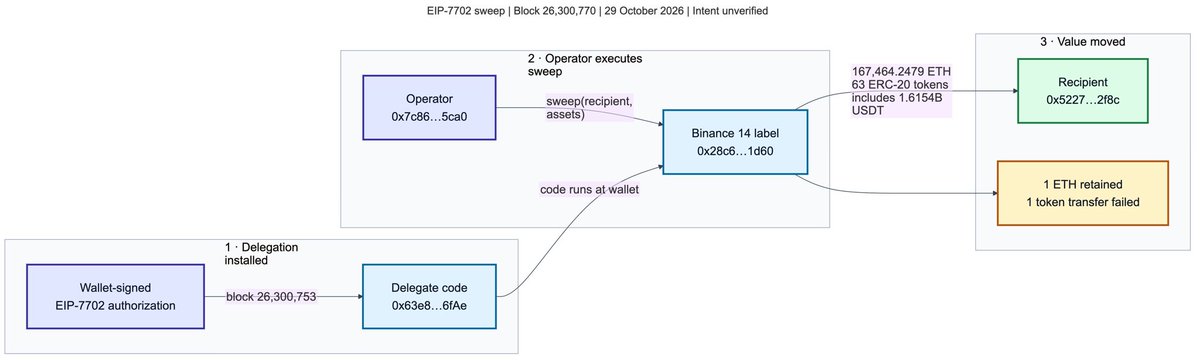
Through EIP-7702, the attacker bundled 50 signed authorizations into a single transaction.
Thus, after Binance suspended withdrawals, funds continued to flow out, with a single wallet losing about 167,464 ETH + $1.6 billion USDT.
Before EIP-7702, the exchange's hot wallet was an ordinary wallet (EOA): the private key is in the hands of whoever controls it. The exchange's freezing capability comes from a premise— as long as I do not sign, the money does not move.
However, EIP-7702 allows EOA to borrow smart contract code execution.
So the path is as follows:
EOA hot wallet
└── Sign a 7702 delegation once
└── Account behavior is then determined by the delegated contract code
└── The code can automatically transfer assets
└── Even if the exchange stops signing, it cannot be prevented
Now comes the industry-level question:
Binance took nearly 4 hours to discover and clear this malicious delegation; do other exchanges' custody designs also have the same problem?
免责声明:本文章仅代表作者个人观点,不代表本平台的立场和观点。本文章仅供信息分享,不构成对任何人的任何投资建议。用户与作者之间的任何争议,与本平台无关。如网页中刊载的文章或图片涉及侵权,请提供相关的权利证明和身份证明发送邮件到[email protected],本平台相关工作人员将会进行核查。


