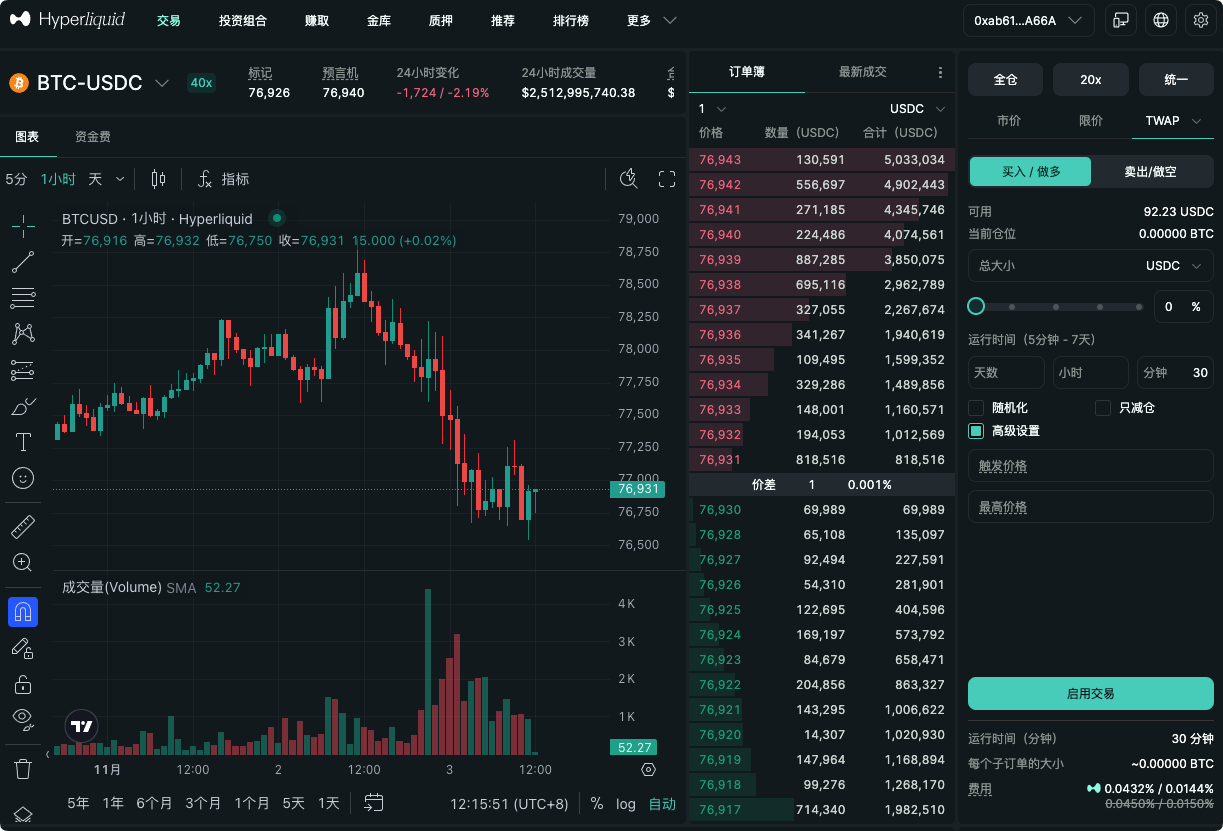
The official voting for the midterm elections in the United States has begun, while Bitcoin is still under market selling pressure.
Currently, BTC has retraced to around $76,500, with the pressure from the adjustment in tech stocks transmitting to the crypto market. Meanwhile, investors are waiting for the final outcome of Congress control in the United States.
Looking back at the last three midterm elections in the United States, Bitcoin exhibited similar trends: experiencing an adjustment after the elections, followed by a rebound within a year.
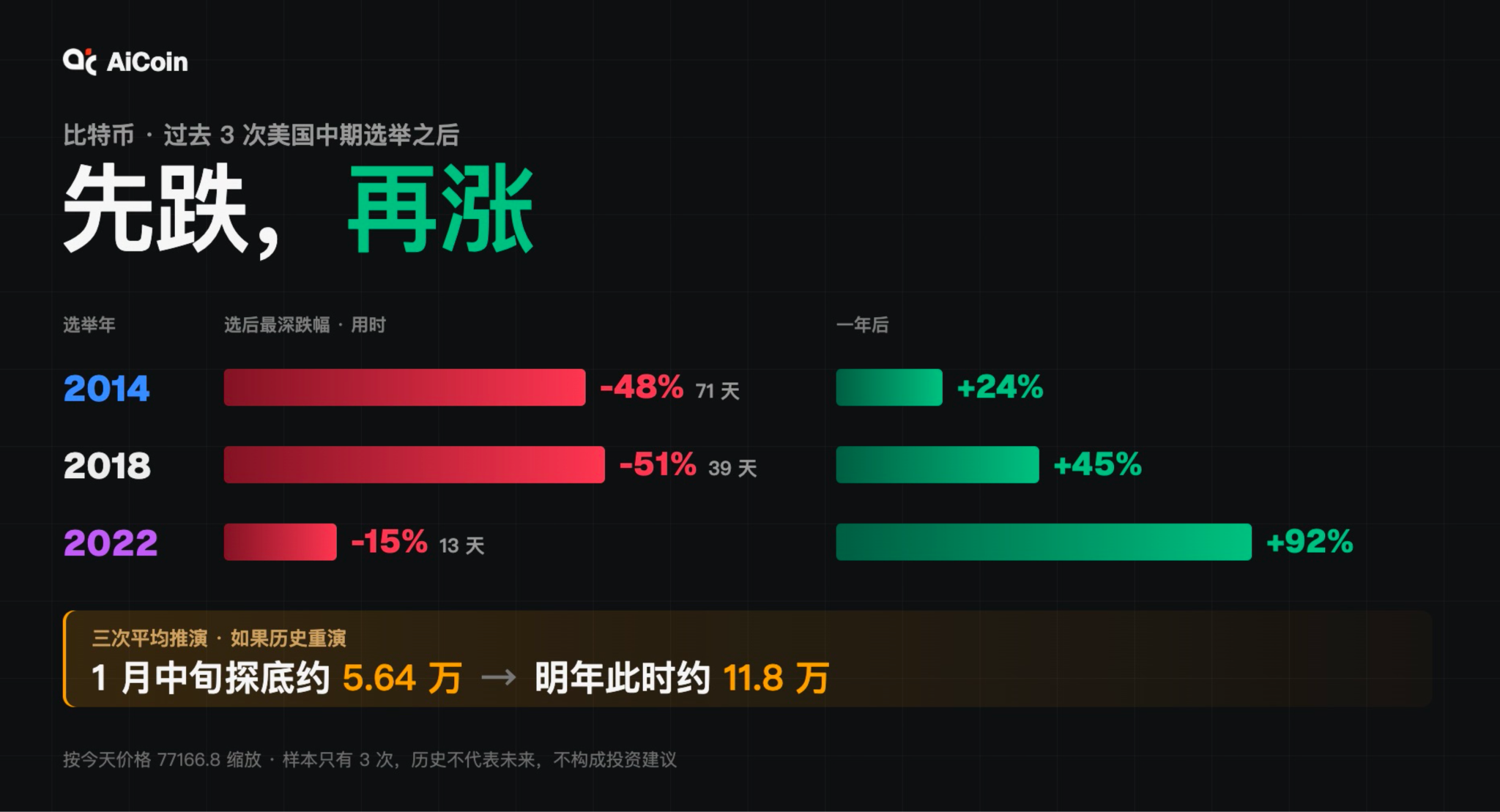
- 2014: Bottoming 71 days after the election, with a maximum drawdown of about 48%, and a year later rising by about 24%.
- 2018: Bottoming 39 days after the election, with a maximum drawdown of about 51%, and a year later rising by about 45%.
- 2022: Bottoming 13 days after the election, with a maximum drawdown of about 15%, and a year later rising by about 92%.
After the three elections, the average maximum drawdown was about 38%, with an average rise of about 54% a year later.
If we take the current $76,500 as a starting point and mechanically apply this historical data, it may correspond to a phase low of around $47,400 and a price of about $117,700 a year from now.
Of course, this is merely a scenario derived from historical data and not a prediction for the current market prices. Particularly, the decline in 2022 also included unique events such as the FTX collapse, which cannot be simply attributed to the midterm elections.
1. Why is BTC not moving up? Fund flow gives a signal
Recently, Bitcoin's weakness is not just a fluctuation in sentiment before the elections; the fund flow is also worth paying attention to.
From October 26 to 29, the US spot BTC ETF saw a cumulative net inflow of about $441 million, but on October 30, there was a single-day net outflow of about $643 million, even exceeding the cumulative inflow of the previous four days.
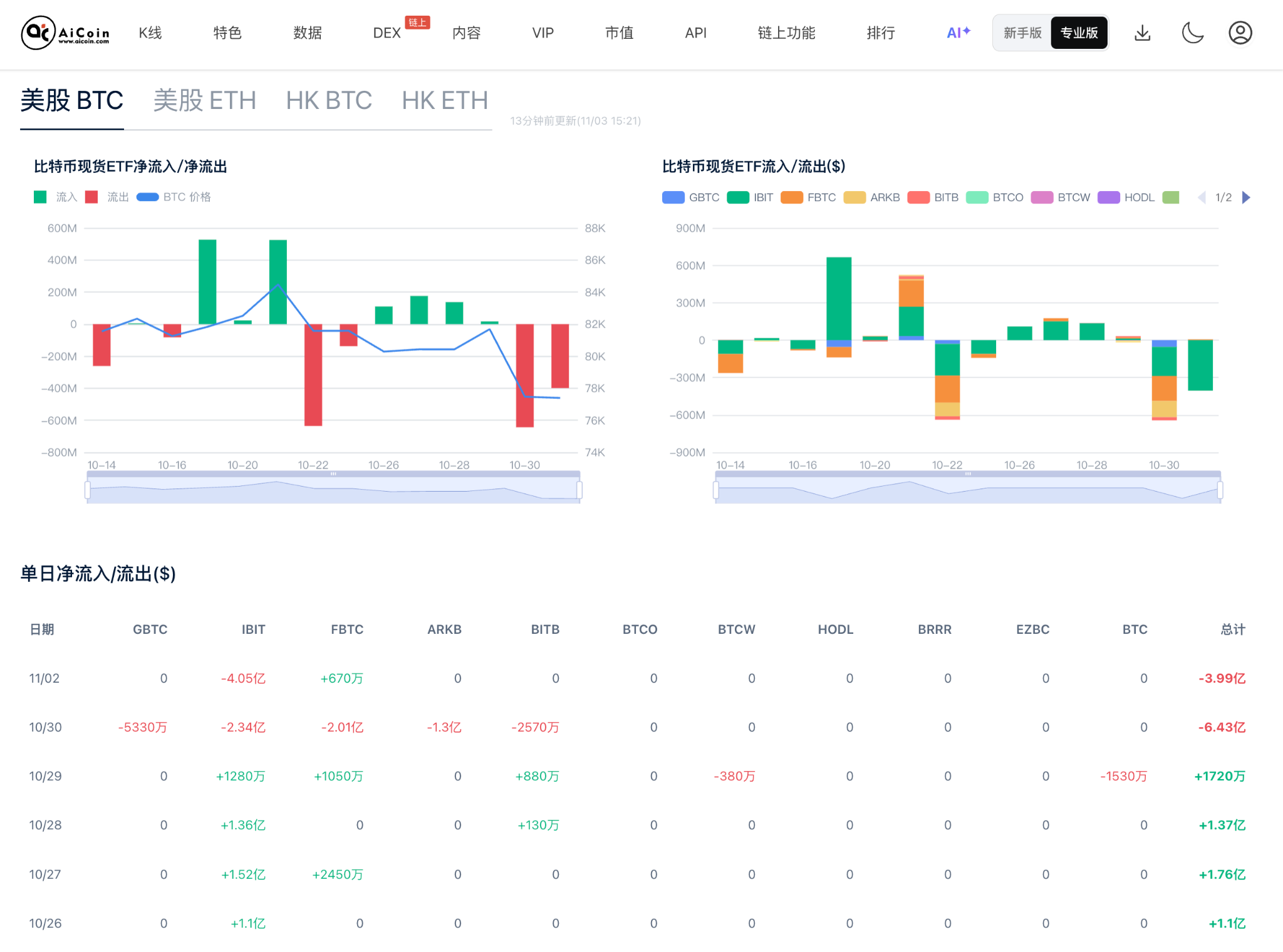
Data source: AiCoin US Spot BTC ETF Fund Flow
This indicates that institutional buying is not stable. ETF fund flows are usually regarded as an indicator of traditional market investor demand, but a single-day outflow cannot directly prove that long-term funds are withdrawing.
At the same time, the election results may affect the advancement pace of related bills in the crypto industry. With unclear policy directions, some funds choosing to remain cautious may also lead to a lack of sustained buying momentum in the market.
Therefore, it is essential to pay attention not only to the price of BTC but also to whether ETF fund flows can turn positive again, and whether there is effective support when the price retraces.
2. In the US midterm elections, which party has a better chance?
The core of this election is the competition between the Democratic and Republican parties for control of the United States Congress.
As of November 2, prediction markets generally believe that the Democratic Party is more likely to win the House of Representatives, and the competition for the Senate is also leaning towards the Democratic Party.
However, it is important to note that prediction markets reflect the expectations of traders at the time and do not equal the final election results.
Different election outcomes may bring different policy expectations:
- If the Republicans continue to control both chambers: Expectations for tax cuts, deregulation, and fiscal expansion may be strengthened, providing emotional support for certain risk assets. However, if fiscal expansion further drives up US Treasury yields and the dollar, it may also pressure tech stocks and crypto assets.
- If the Democrats take the House or Senate: Congressional checks and balances may be reinforced, making it more difficult for the Trump administration to push through bills related to the crypto industry, and the expected policy benefits may be delayed.
- If both parties share control of Congress: Major legislative advancements may be more restricted, but reduced policy changes may also make the business environment more predictable.
Therefore, the election results do not directly determine Bitcoin's rise or fall. What the market is truly focused on is whether there has been a change in policy expectations and whether these changes have already been reflected in asset prices.
3. After the election, how will BTC and US stocks perform?
After the election results are released, the market may react in two different ways.
Scenario 1: Negative expectations are realized, and the market welcomes a rebound
If the election results are not worse than market expectations, the funds that previously reduced positions due to policy uncertainty may re-enter the market.
For BTC, if the price recovers key areas, coupled with improving ETF fund flows, it may provide support for a rebound.
US stocks also have similar historical references.
Historical data shows that in the last 13 US midterm elections, the S&P 500 index averaged an increase of about 1.7% from the beginning of August before the election to Election Day; three months after the election, it averaged an increase of 5.7%, with 11 out of 13 times showing an increase; and six months after the election, it averaged an increase of 12.4%, with all 13 times showing an increase.
This indicates that after the election, the decline in political uncertainty may provide temporary support for US stocks. However, historical performance does not guarantee a rise this time, especially as the current market also faces issues with AI capital expenditure returns, fiscal deficits, and long-term US Treasury yields.
Scenario 2: Continued policy concerns, and the market remains under pressure
If the Democrats gain control of Congress, the market may reassess the pace of policy advancements related to the crypto industry.
If there are also rising interest rate expectations, a strengthening dollar, or continued ETF outflows, BTC may continue to face pressure.
As for US stocks, the conclusion of the election does not mean that all risks will disappear. Corporate earnings, AI investment returns, and fiscal policies remain important factors affecting mid- to long-term trends.
4. What should Bitcoin focus on now?
With BTC returning to around $76,500, it is essential to pay attention to whether the price can stabilize in the short term.
If the price dips and then recovers key areas, and there is capital support during the pullback, one can consider lightly observing for rebound opportunities.
However, if it breaks below the observation area and continues to lack recovery, it is necessary to reassess the original trading plan; there is no need to keep adding to positions as the price drops.
Regarding US stocks, after experiencing the previous round of adjustments, one can also observe the market reaction after the election results are released, without rushing to chase the rebound.
If not planning to enter the market for now, how should the idle funds be arranged?
Waiting for market changes does not mean that funds must remain idle.
5. During the wait for the market, idle funds can also earn rewards
If there is currently no clear trading plan, it does not mean the funds can only remain idle.
Binance has recently launched a community feedback activity, where eligible users can purchase USDT, USDC to earn interest from flexible products, RWUSD, and BFUSD during the activity period, enjoying up to 10% annualized yield.
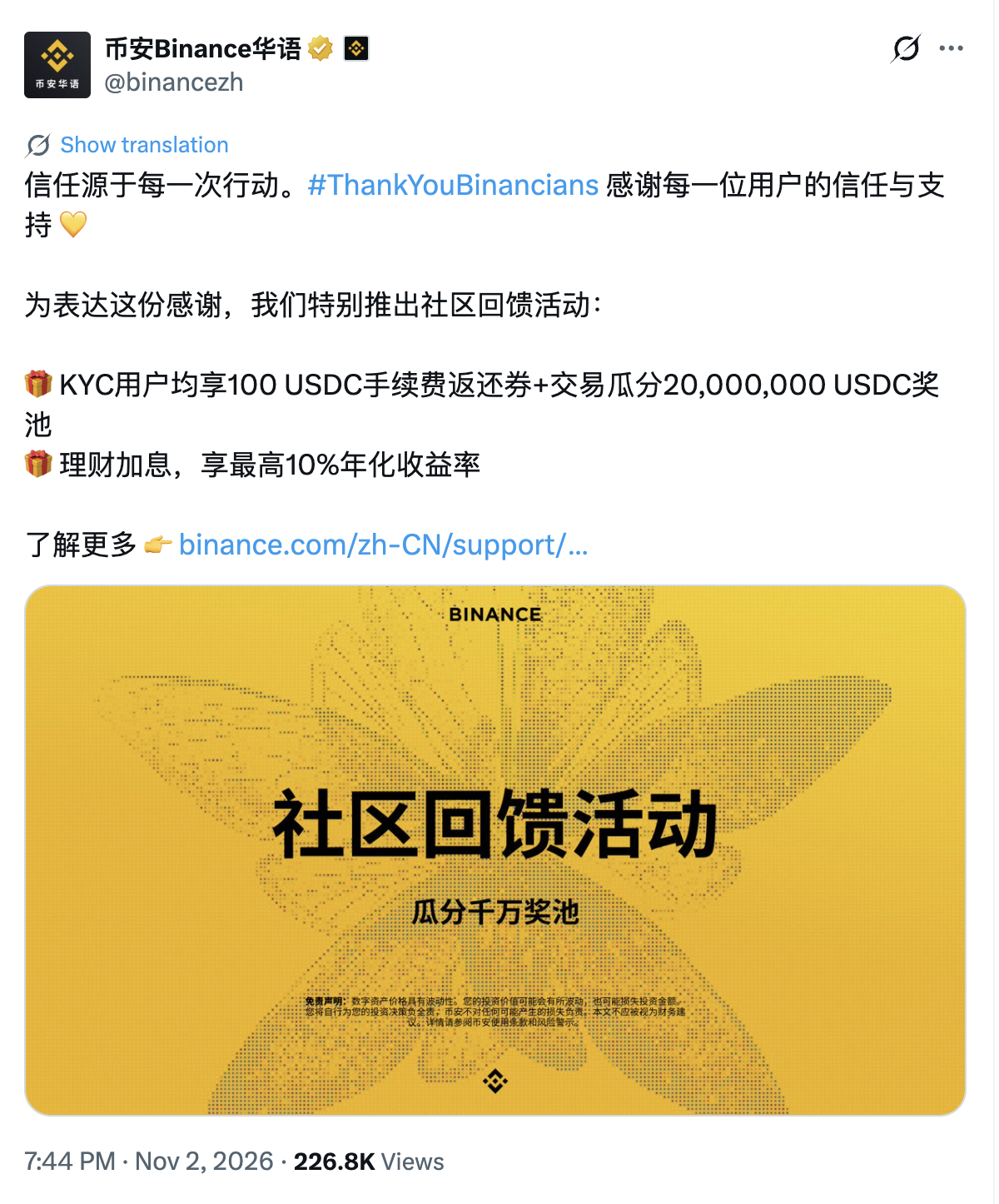
The reward rules and tiers for different products are calculated independently, and actual earnings depend on user eligibility, purchase amount, and corresponding product rules.
For users waiting for market direction, understanding the features of different products according to their fund usage needs is advisable:
- USDT, USDC earning products: Suitable for users who wish to retain flexibility with their funds. They can check the real-time APR, reward amounts, and redemption rules before purchase.
- RWUSD, BFUSD: Further understanding of each product's mechanism, reward conditions, and potential risks can help decide whether to participate.
If there are no clear trading opportunities yet, it might be wise to first understand the activity rules and reasonably arrange temporarily unused funds.
It's important to note that the maximum 10% APR is not available to all users and does not represent fixed income. Specific reward tiers, activity duration, purchase limits, and redemption rules are subject to Binance's official activity page.
6. How to participate in Binance finance?
If you don't have a Binance account yet, you can first complete registration through the link below, and then learn about the participation conditions for activities and related products.
👉 https://jump.do/zh-Hans/xlink-proxy?id=3
(Invitation code: aicoin668, enjoy a 10% rebate)
Existing account users can open the Binance App, navigate to the "Finance" page, check the activity details of the USDT, USDC earning products, RWUSD, and BFUSD, and confirm eligibility and reward rules before deciding whether to purchase.

The market changes daily, but not every fluctuation requires participation.
The election results are worth noting, and Bitcoin's price is also worth tracking. If there are currently no suitable trading opportunities, instead of trading for the sake of trading, it is better to arrange funds wisely and wait for clearer market signals.
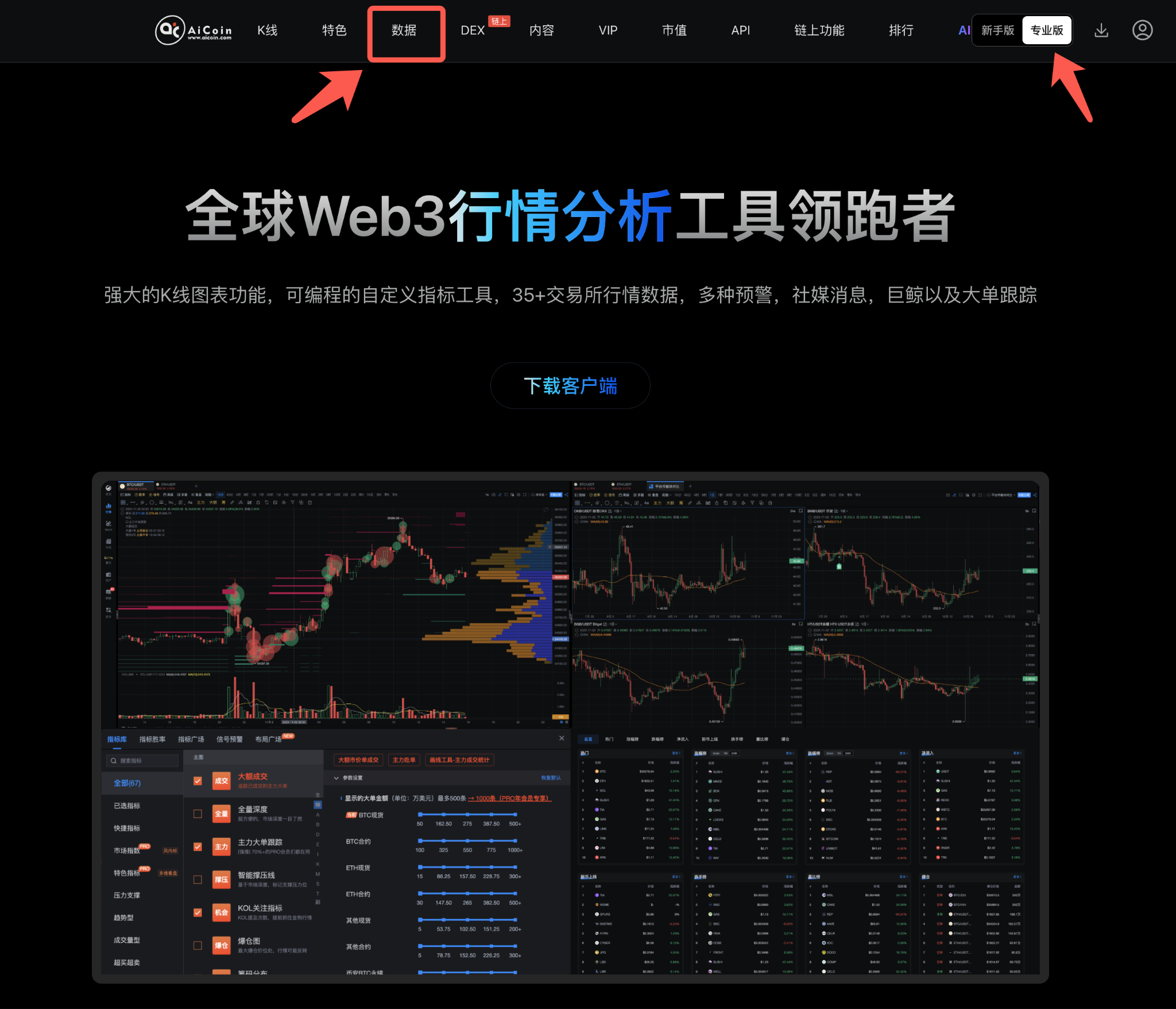
If you want to continuously track ETF fund flows, BTC price trends, and other data, you can visit the AiCoin official website, switch to the [Professional version], and click on the [Data] section on the homepage to view related metrics. Observing changes in capital and price trends can help to judge the market status more comprehensively.
Join our community to discuss together and become stronger!
Official Telegram community: https://t.me/aicoin_support
AiCoin Chinese Twitter: https://x.com/AiCoinzh
Binance welfare group: https://www.aicoin.com/link/chat?cid=gmLgwvKD1
Risk warning: This article is for market information exchange only and does not constitute investment advice. Cryptographic assets and related financial products involve market, liquidity, and platform risks; returns may vary. Please fully understand the product rules before participating.
免责声明:本文章仅代表作者个人观点,不代表本平台的立场和观点。本文章仅供信息分享,不构成对任何人的任何投资建议。用户与作者之间的任何争议,与本平台无关。如网页中刊载的文章或图片涉及侵权,请提供相关的权利证明和身份证明发送邮件到[email protected],本平台相关工作人员将会进行核查。