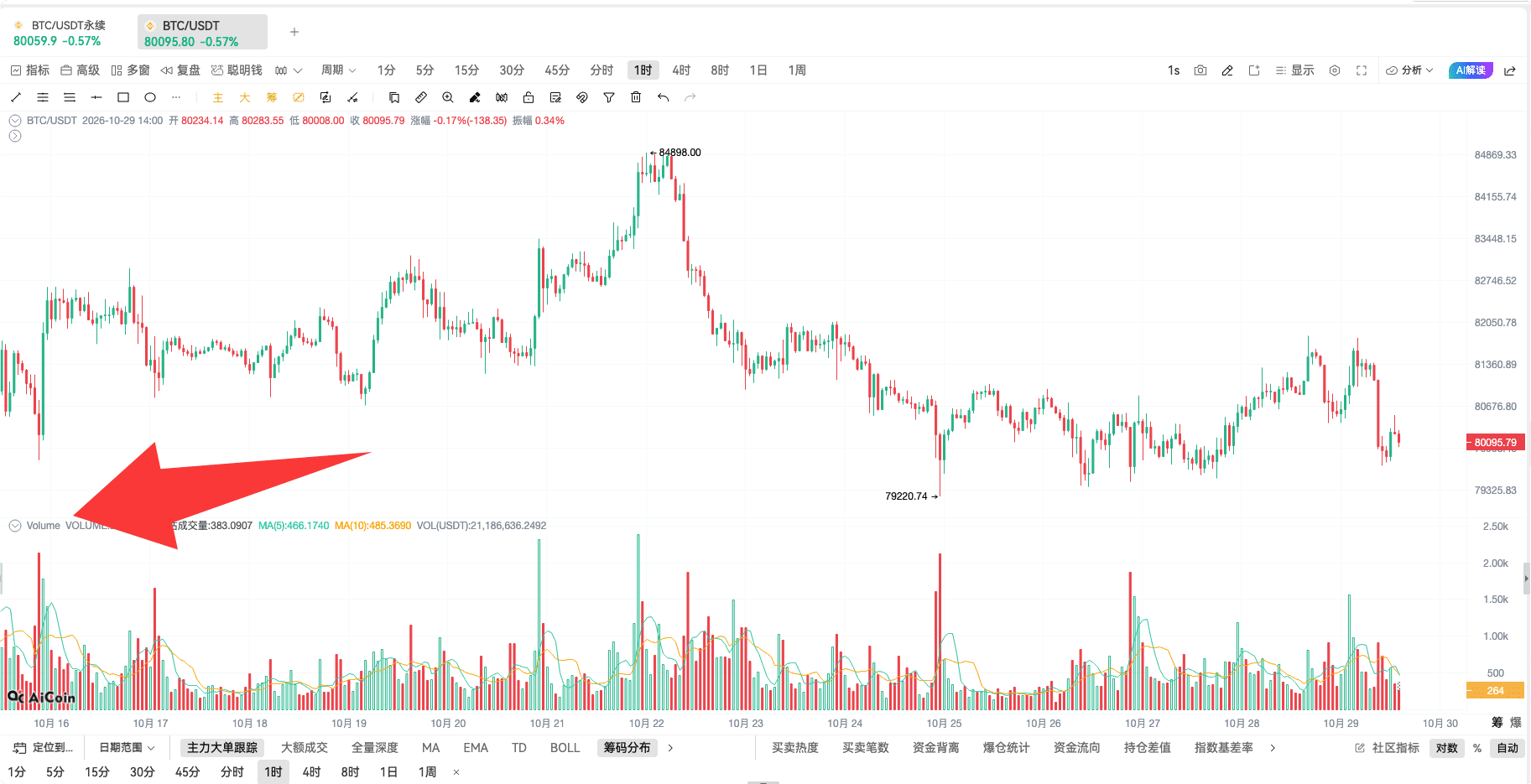
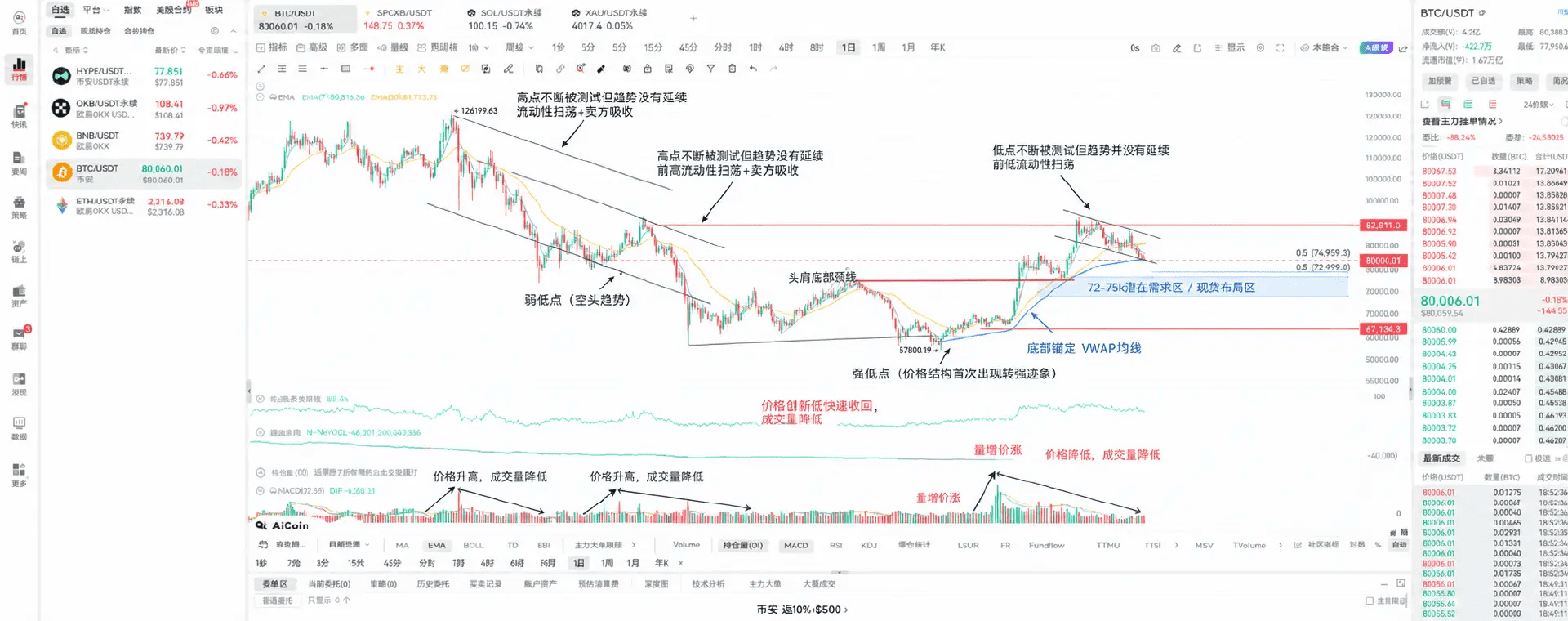
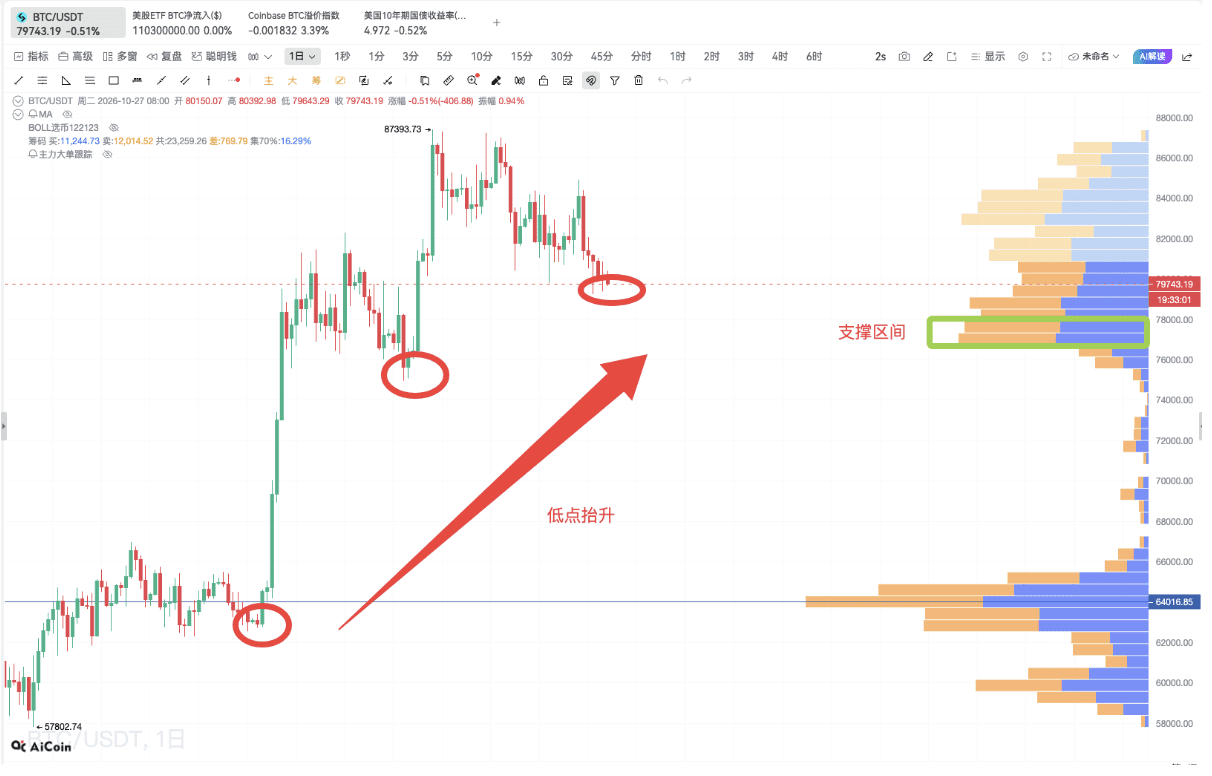
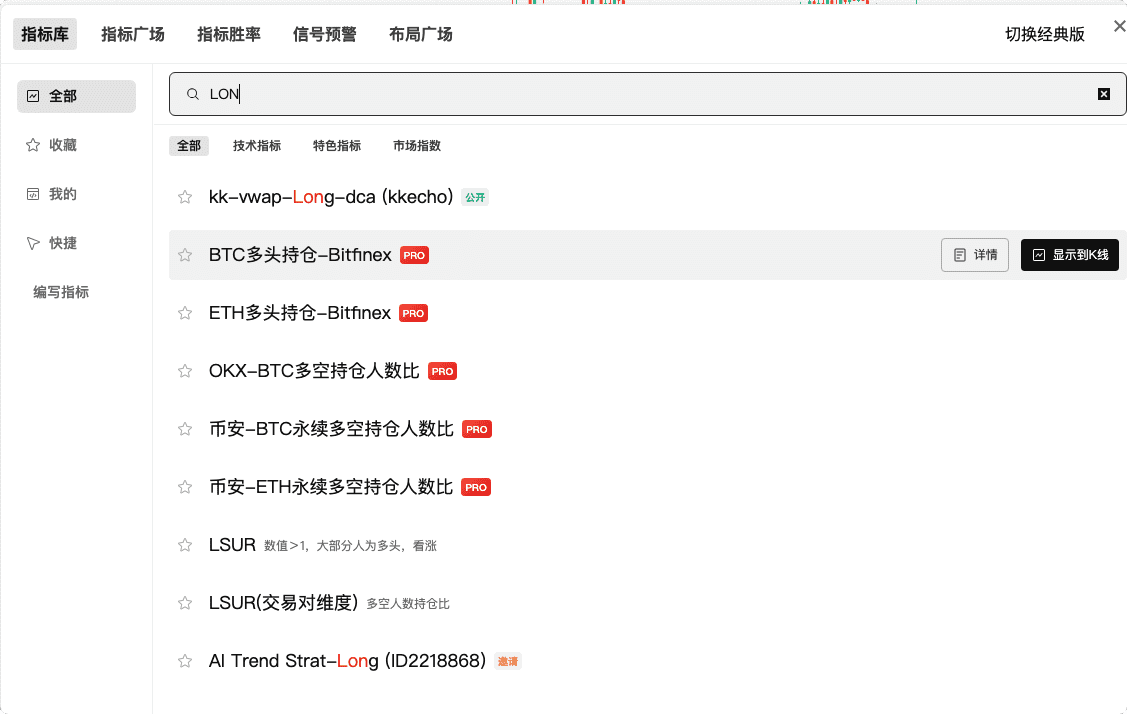
Today let's talk about a feature that is particularly suitable for those who cannot monitor the market 24/7: the AiCoin alert feature.
I guess many people have had this frustrating experience of marking a key price level in advance, getting busy with other things or taking a nap, only to find that when they check the market page again, the price has already broken through or dropped below the target. At the same time, if you are keeping an eye on several cryptocurrencies with a bunch of conditions to monitor, you simply can't keep up with just your eyes.
In fact, there is no need to stay glued to the screen. The core idea is simple: set the market conditions that matter to you in advance, hand them over to the system, and wait for notifications once the conditions are met.
Today I will walk you through three main areas:
What market signals can AiCoin alerts monitor;
How to get started with settings on the computer and mobile app;
How to build a set of convenient alert systems based on your trading habits.
Everyone has a different trading style, so the suitable alert combinations will naturally vary.
In simple terms, AiCoin alerts are an all-day, non-stop market assistant. You fill in the cryptocurrencies you want to track, target prices, technical patterns, or fund movement rules in advance, and once the market triggers the conditions, the system will notify you through software pop-ups, alert sounds, and app push notifications. It does not make trading decisions for you; it simply helps us transform the tedious and lengthy manual monitoring into a proactive checking of the market after the conditions are triggered.
Next, let’s take a look at what these alerts can help us monitor.
Basic Market Alerts
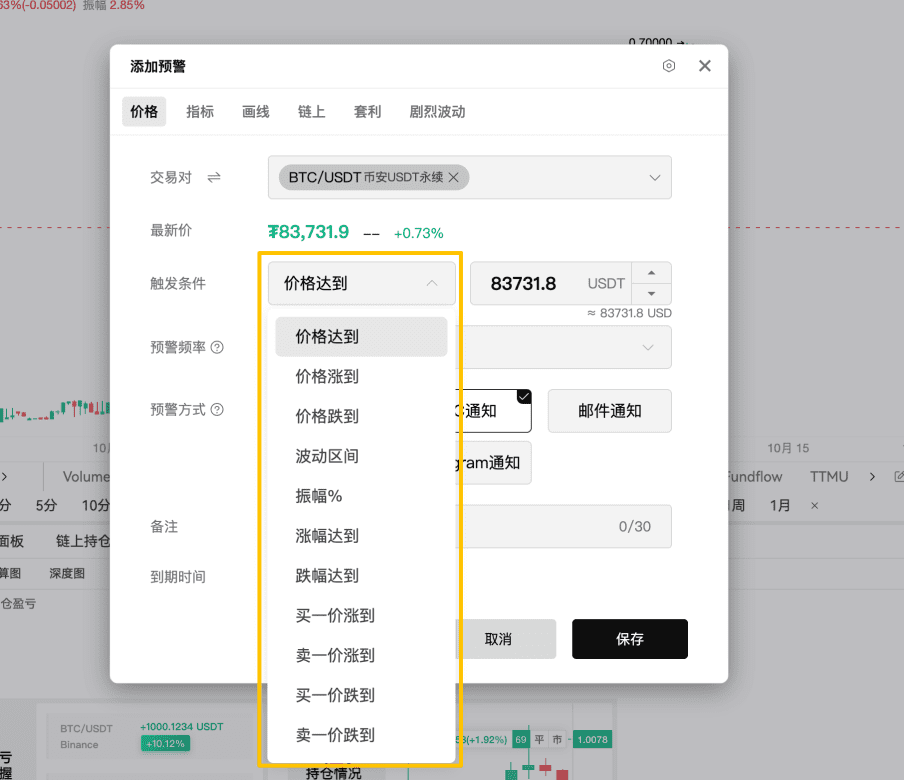
The first is the price alert, the most commonly used by everyone.
For example, if you are tracking BTC and have marked a key resistance level, planning to do further analysis once the price breaks through; or if you already hold a certain cryptocurrency and want to be reminded to assess risk when the price retraces to the support level, this scenario is perfect for using a price alert.
It can monitor both the fluctuations of the specified trading pair and trigger reminders based on your set price or amplitude conditions.
You don’t have to keep refreshing BTC’s candlestick chart; just set it up in advance, and once BTC reaches the target price, the system will send you a message. After receiving the alert, you can open the chart and analyze it based on trading volume, trends, and current market atmosphere before deciding on further actions.
The second is the volatility alert.
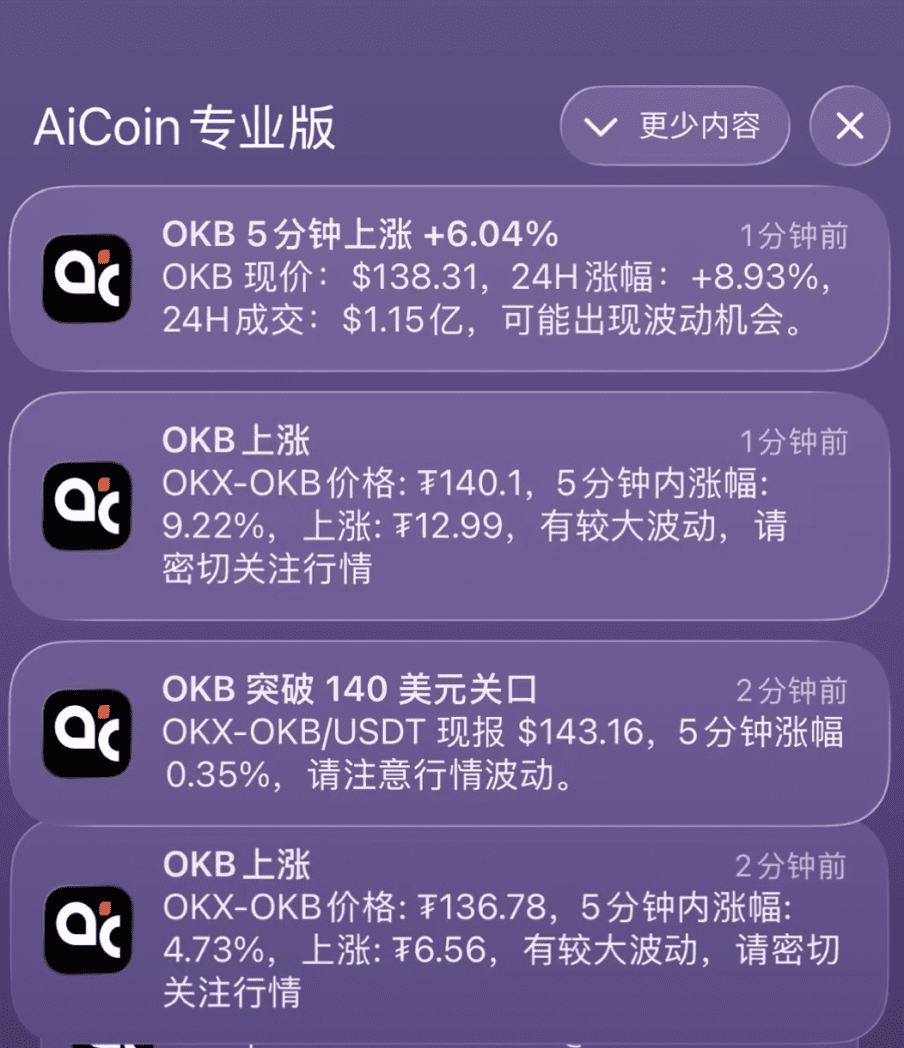
This is particularly suitable for quickly capturing sudden market movements like sharp surges or drops.
When market rumors arise or the market accelerates suddenly, you don’t need to precisely predict price levels; if the market shows significant anomalies, you will receive a notification. Friends who watch many cryptocurrencies at the same time and are afraid of missing sudden price movements can try this feature.
Once you receive a notification, first clarify which cryptocurrency it is and what period it corresponds to, then check if there are any accompanying news before deciding whether to analyze it in depth.
Indicator and Signal Alerts
This type is particularly suitable for friends who enjoy technical analysis.
Let’s start with classic signal alerts.
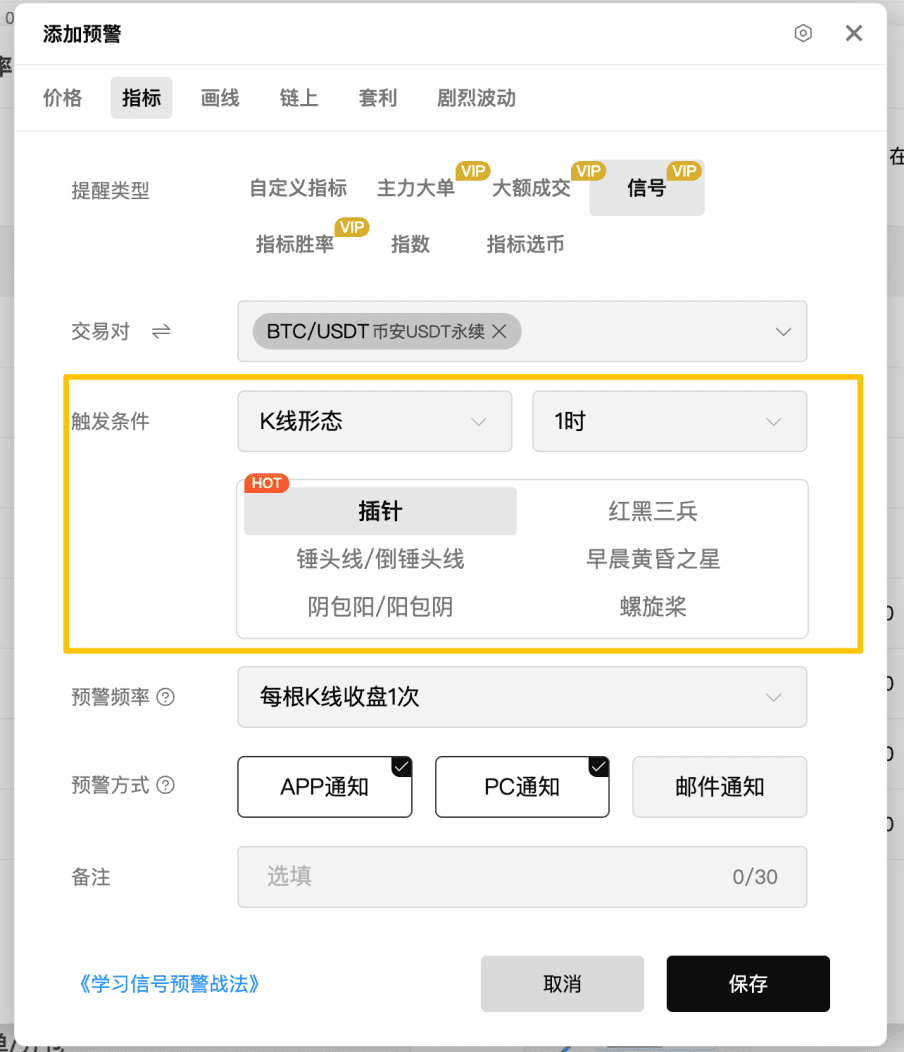
AiCoin comes with many commonly used technical signals, such as MACD divergence, moving average crossovers and dead crosses, as well as classic candlestick patterns like the Three Soldiers, Hammer, Morning Star, and Evening Star that can be found in classic signals.
The biggest advantage is that you don’t need to write code; just check the signals you want to monitor.
If your trading habit usually refers to moving average crossovers, you can specify the trading pair and candlestick period, and check the market once the signal appears.
Next is the custom indicator alert.
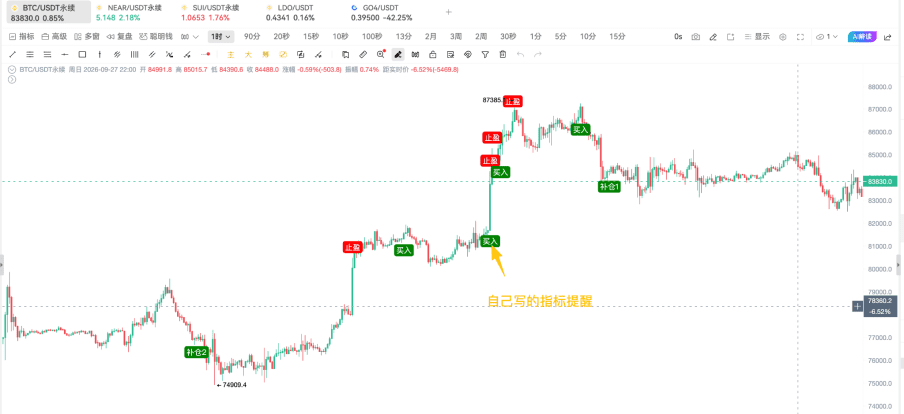
If you have your own well-defined trading logic, such as “CCI greater than a specific value while RSI is high,” or “moving average crossover combined with significant breakout,” you can use AiCoin's custom indicator along with alertcondition() to build more complex monitoring rules.
This is suitable for those who already have a fixed indicator system and want to automate their observation rules.
If you are just starting to learn technical indicators, don't feel pressured; you can start with price alerts and classic signals, and once you've gradually formed a stable observation rhythm, try custom conditions.
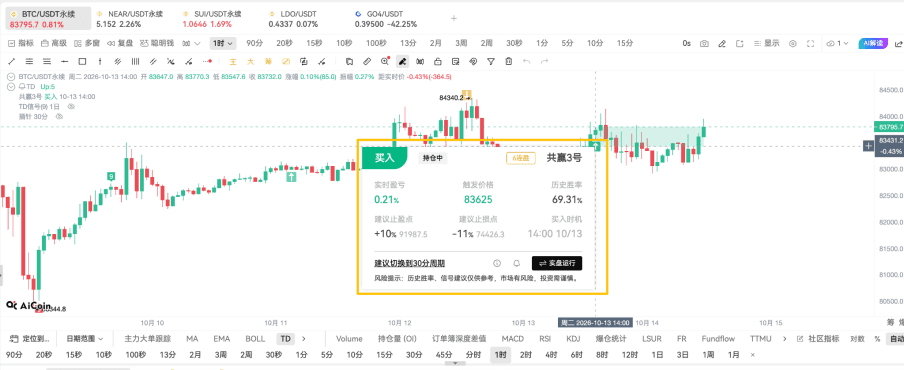
There are also indicator win rate alerts.
These rely on strategy signals derived from historical backtesting, sending notifications when buy or sell signals appear on the candlestick chart.
Here, it is essential to remember: the performance of historical backtesting does not equate to the future results of the market; every strategy has an appropriate market environment. We treat it as a clue for auxiliary observation, and never simply act on signals without further analysis.
On-Chain and Fund Flow Alerts
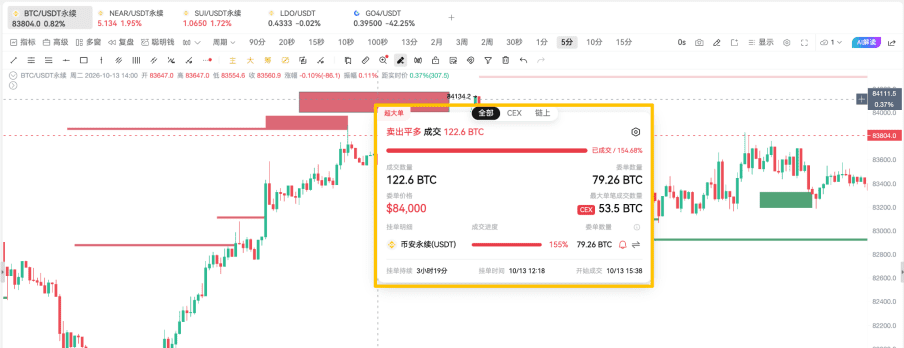
Large order alerts for major players are used to track large orders and transaction movements on mainstream exchanges, helping us to quickly capture large capital actions worth digging into.
For example, if a large order suddenly appears at a key price level, or if the market swiftly follows changes after a large order is executed, when you receive the alert, you can open the chart to continue observing: can this position form support or resistance? Is there continuity in the market after the transaction? Do the transaction volume and holdings align?
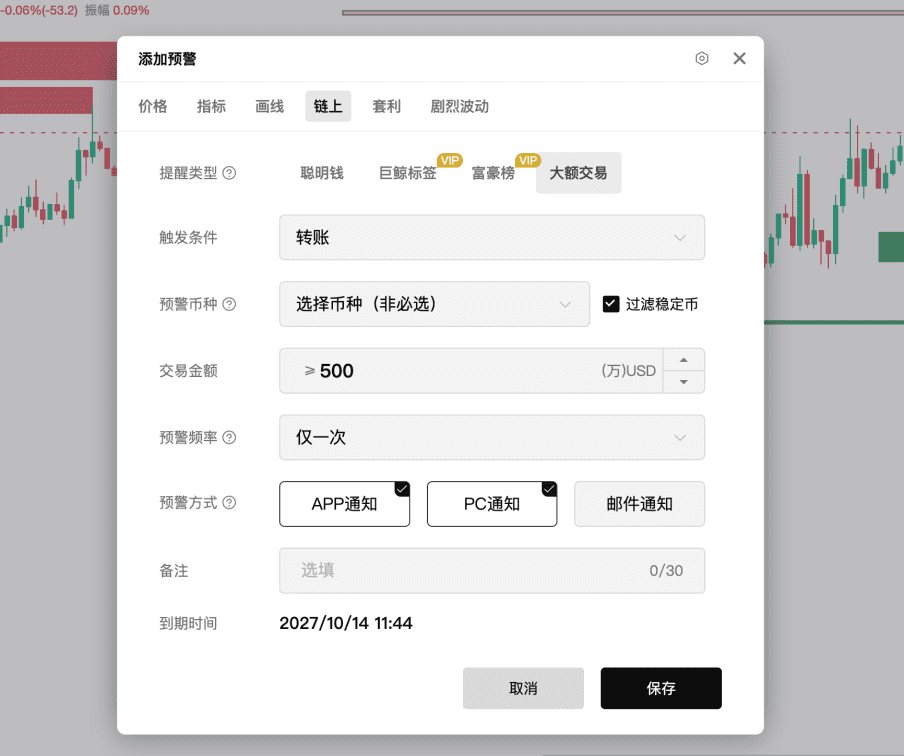
Large transaction alerts on-chain are used to monitor significant transfers and trading behaviors on-chain, and can filter based on capital flow.
When significant fund movements occur on-chain, the system will notify you to check.
However, on-chain transfers cannot be directly equated with bullish or bearish sentiment; the transfer might be for capital reallocation, aggregation, depositing into an exchange, or simply wallet transfers. Our goal is to quickly discover anomalies and then analyze them slowly in context.
Drawing and Arbitrage Alerts
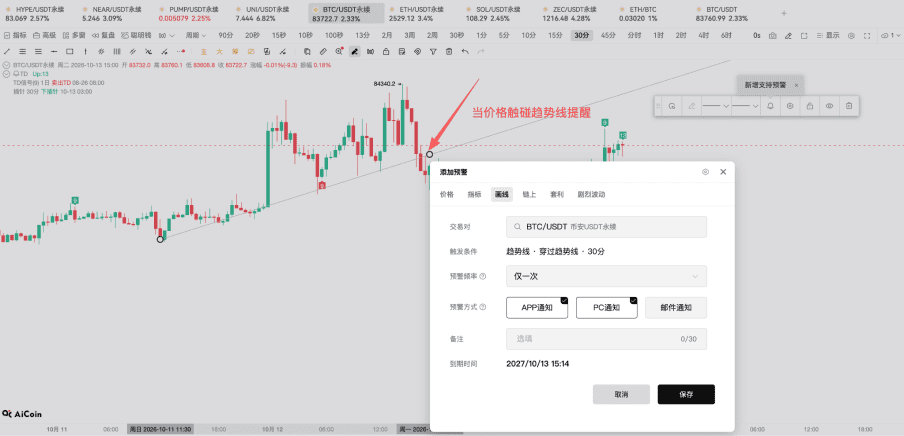
Drawing alerts are for those who are used to manually drawing on candlestick charts.
When drawing trend lines, support lines, and resistance lines, the most frustrating scenario is when the price actually approaches the line and you just happen not to monitor it.
Drawing alerts can monitor when the price touches the trend line you’ve drawn on the candlestick chart. For example, if you have drawn an upward trend line and plan to observe opportunities when the price rebounds to this line, once you have set the drawing alert, the system will notify you when the price approaches or touches the line, so you don't have to sit there waiting for the point.
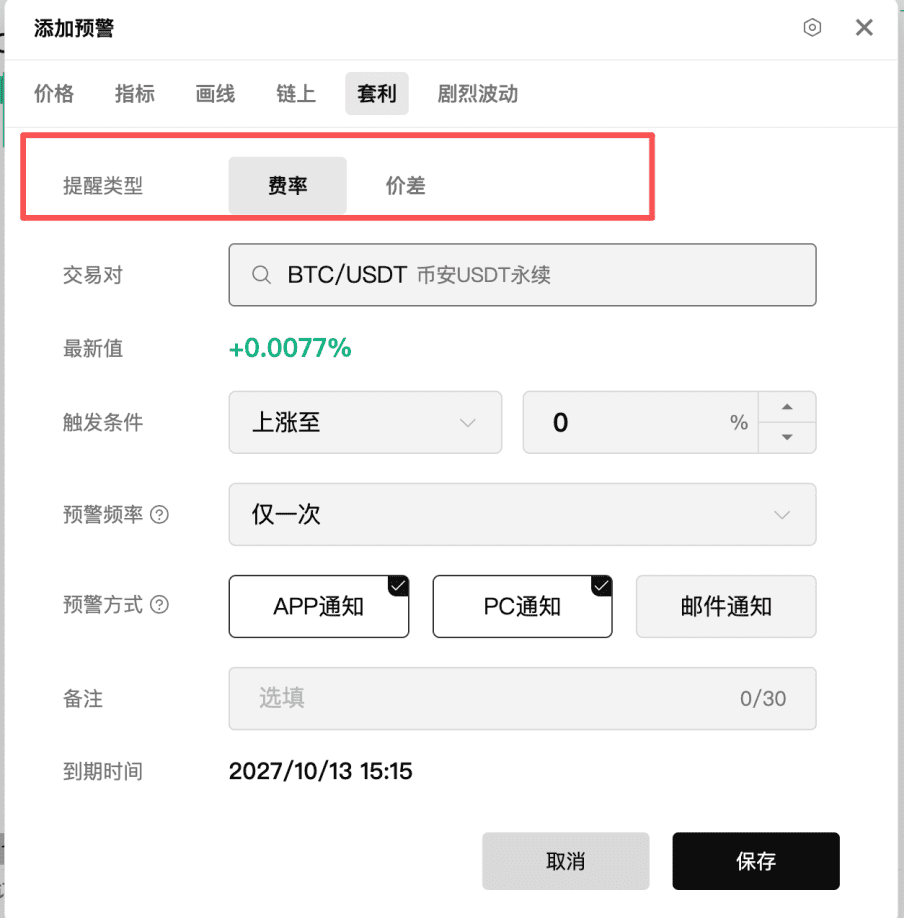
Price difference / fee rate alerts, also known as arbitrage alerts.
These can track the price differences between different exchanges' spot and futures, or the changes in funding rates for perpetual contracts.
For friends who frequently monitor futures and spot arbitrage opportunities and cross-platform price differences, it can save the time of comparing the market back and forth. It only helps you identify observation clues; the alert itself does not indicate the existence of risk-free arbitrage, and you still need to check transaction fees, conditions, and capital costs.
Diverse Notification Methods
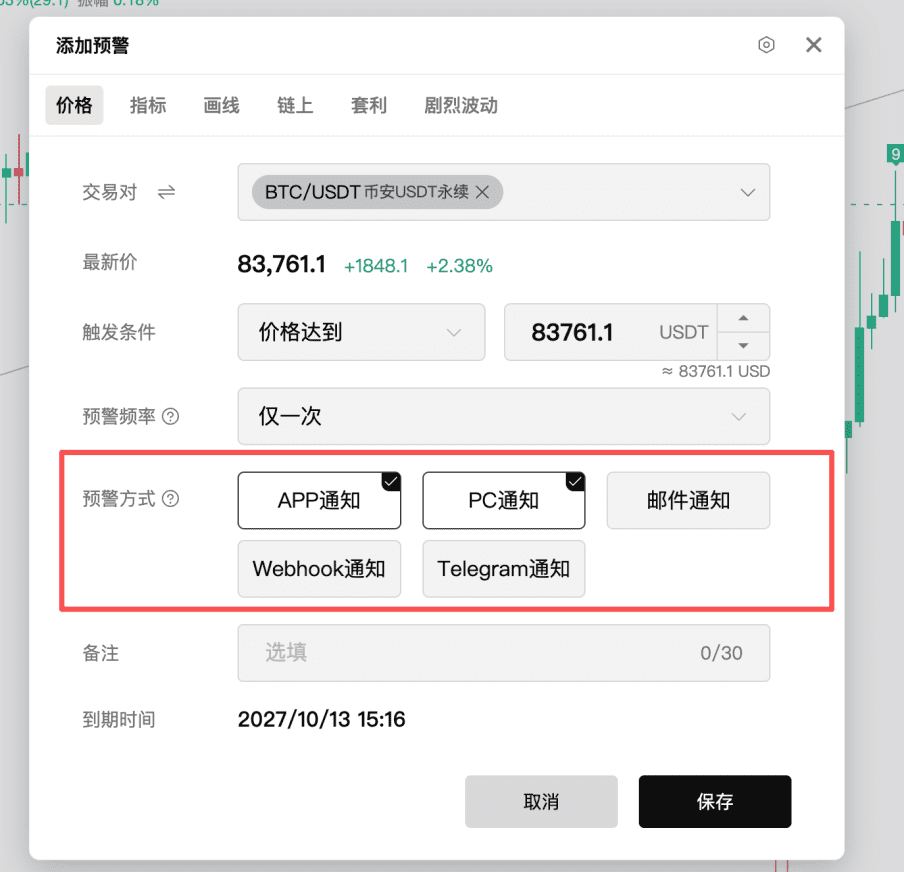
Once the alert conditions are set, the method of receiving notifications should also align with your habits.
AiCoin supports several push channels:
- Software pop-ups + alert sound notifications;
- Email notifications;
- Webhook push;
- Telegram alerts.
If you sit in front of your computer for an extended period of time, prioritize opening pop-ups and sound alerts; if you mostly check the market on your phone, remember to enable app push permissions; if you have your own bots or automation tools, you can also connect via Webhook. Whether the push permissions work properly may vary based on software versions and phone system permissions, so everyone should use their device's actual situation as a reference.
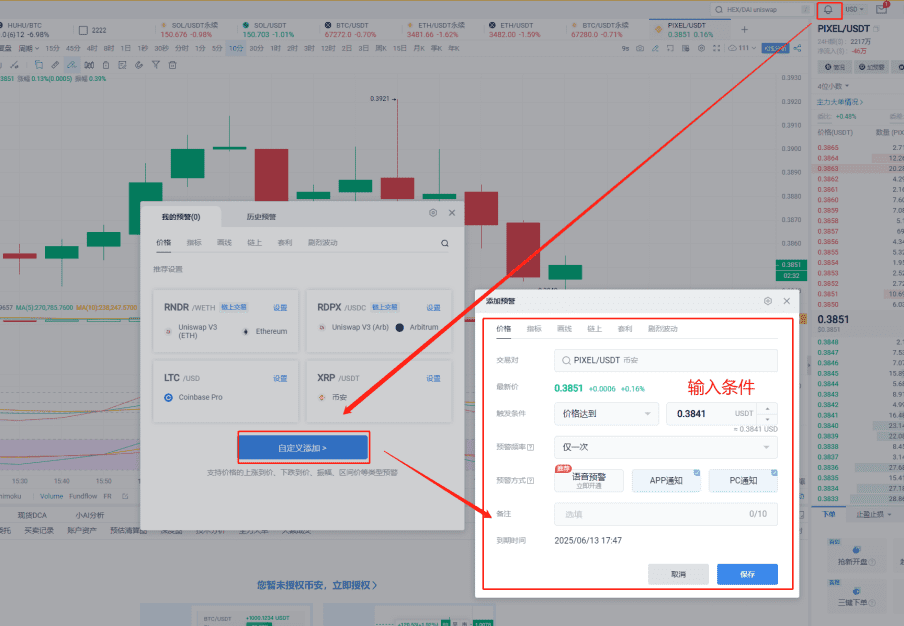
Next, I will explain how to create alerts on the PC and the app.
On the computer, simply click the small alarm clock icon in the upper right corner of the page to enter the alert addition page, select the alert type, such as price, indicator, on-chain, etc., fill in the specific conditions, and save to complete it.
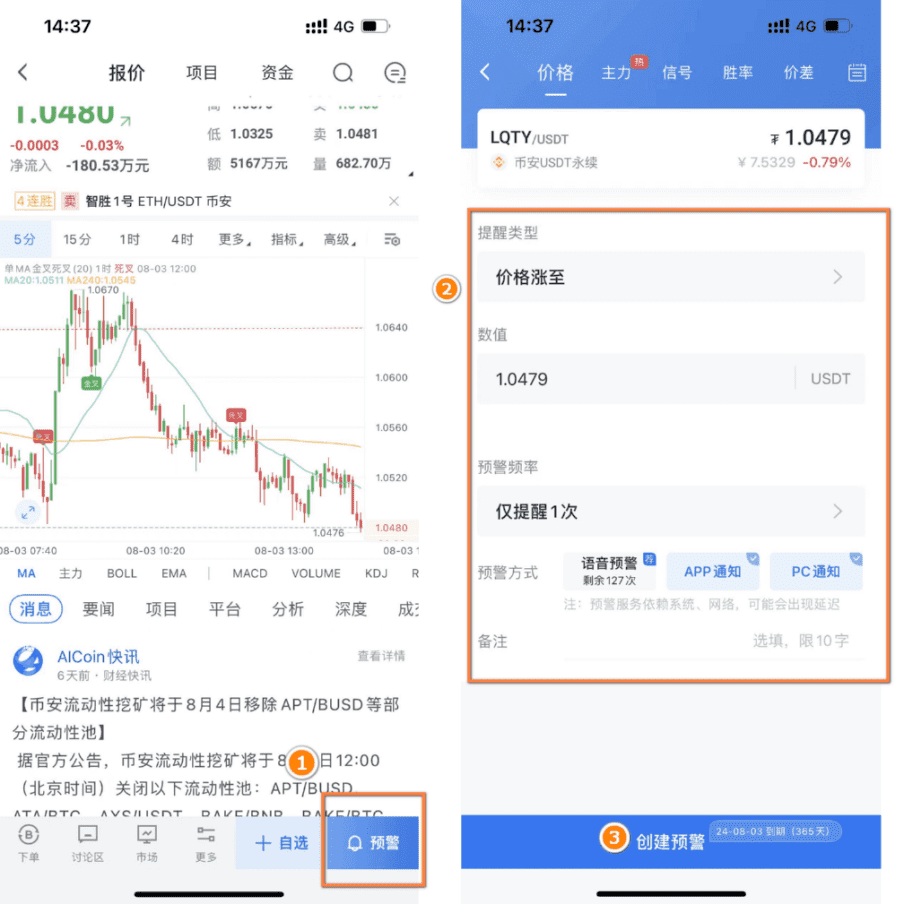
On the app, open the candlestick page of any trading pair, click the alert icon at the bottom, create a new alert, select the type, adjust the parameters, and save it.
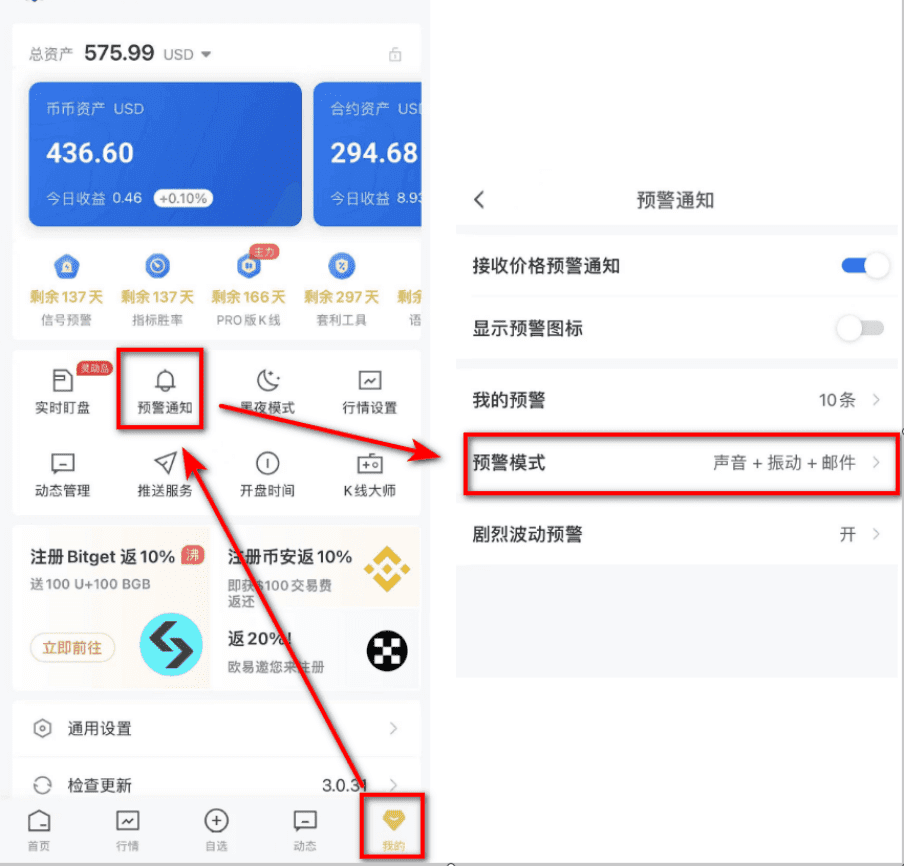
If you want to set up volatility alerts, on the PC go to “My Alerts” to find the volatility alert option; on the app, it can be found in the My Page or alert notifications section.
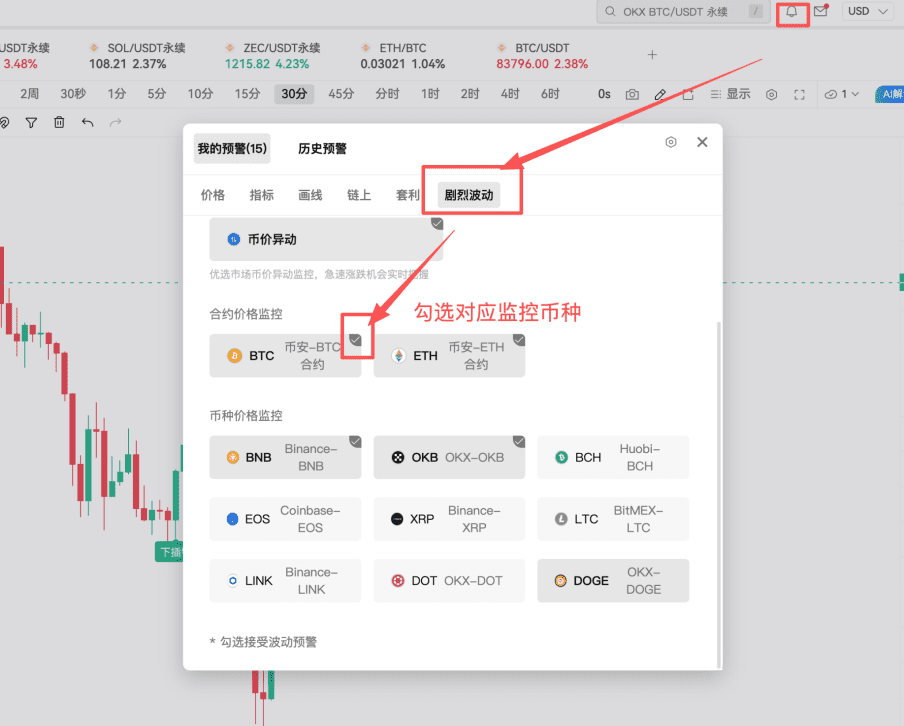
If you have already set up price alerts and want the alert lines to display directly on the candlestick chart, on the PC, open the candlestick settings and enable alert line display; on the app, do the same in the candlestick settings to turn on price alert lines.
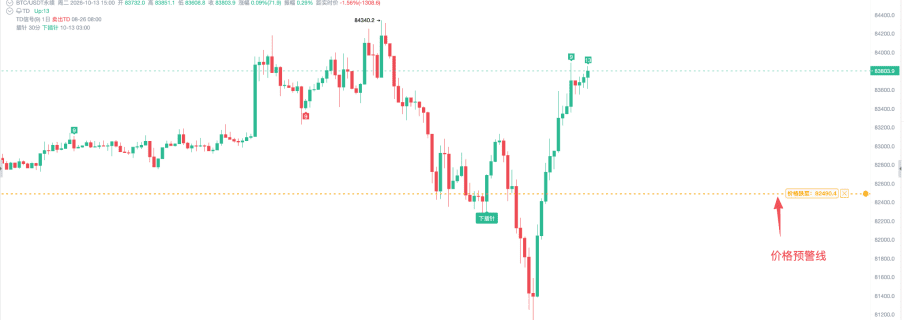
I highly recommend that after setting up price alerts, you enable the alert lines. When you open the chart later, you can quickly see why you set that alert, so you don’t forget the logic behind your observations over time.
Alerts should not just be set and forgotten; notification management is equally important.
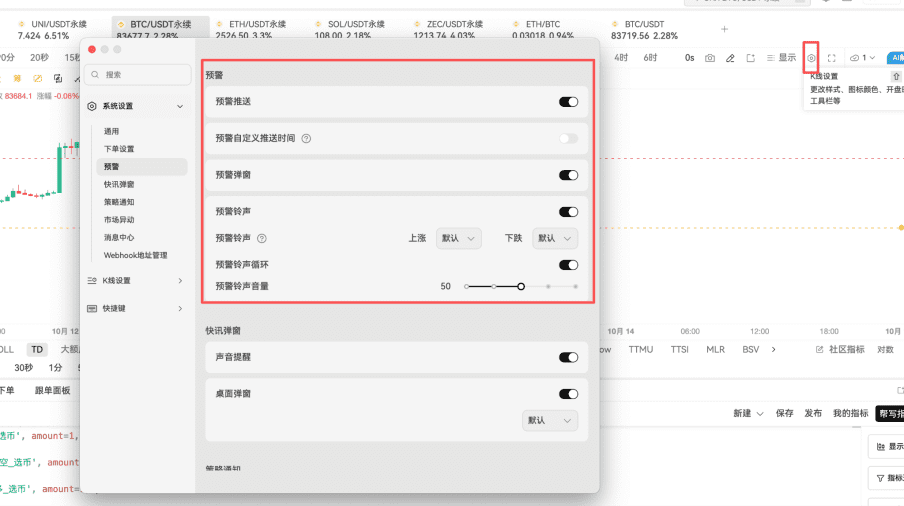
On the PC, in the system settings under the alert option, you can manage pop-ups, pushes, and alert sounds uniformly, and even set push time periods based on your schedule. For example, if you don’t want your computer to keep sending messages at midnight disturbing your rest, simply adjust the reminder times.
On the app, go to My Page, find the alert and dynamic section, and adjust the alert modes, alert sounds, and vibration settings here.
When an alert pops up, don’t just swipe it away casually.
You can open the historical alerts for review, look back at the reasons for the triggers, how the market behaved after the alert, and decide if your previous judgments need to be adjusted or optimized.
This step is truly crucial; alerts are not just a tool for message reminders, but also for our review process. By consistently reviewing for a period, you can distinguish which alerts are very helpful to you, which reminders are too frequent and interfere with your judgment, and then streamline and optimize.
For friends who are just starting out, don’t feel the need to set up a bunch of alerts at once; just prioritize these three:
One price alert for a cryptocurrency you track over the long term;
One volatility alert;
One classic signal or drawing alert that you are familiar with.
Setting it up once allows you to experience that alerts are not complicated at all; essentially, they just hand over the opportunity points we care about to the system for monitoring.
Price alerts to maintain key price levels;
Volatility alerts to capture sudden market anomalies;
Indicator and signal alerts to let the program automatically monitor technical analysis conditions;
Large order and on-chain alerts to quickly uncover valuable capital movements;
Drawing and arbitrage alerts to closely monitor the critical positions and price difference opportunities you’ve drawn;
Diverse notification channels combined with historical reviews allow the alert rhythm to align with your own life and trading arrangements.
I hope everyone makes good use of this alert tool, bidding farewell to meaningless long hours of monitoring and leaving more energy for planned observations and reviews.
Currently, there are live streams every day, welcome to keep following AiCoin friends! Reserve in advance 👇
https://www.aicoin.com/zh-Hans/live/list?tab=upcoming
Join our community to discuss and become stronger together!
Official Telegram community:
AiCoin Chinese Twitter:
Hype rebate:
https://app.hyperliquid.xyz/join/AICOIN88
Binance rebate:
https://jump.do/zh-Hans/xlink-proxy?id=3
Referral code: aicoin668
Coinbase rebate:
https://jump.do/xlink?checkProxy=true&proxyId=25
Referral code: Y8L23JL
免责声明:本文章仅代表作者个人观点,不代表本平台的立场和观点。本文章仅供信息分享,不构成对任何人的任何投资建议。用户与作者之间的任何争议,与本平台无关。如网页中刊载的文章或图片涉及侵权,请提供相关的权利证明和身份证明发送邮件到[email protected],本平台相关工作人员将会进行核查。