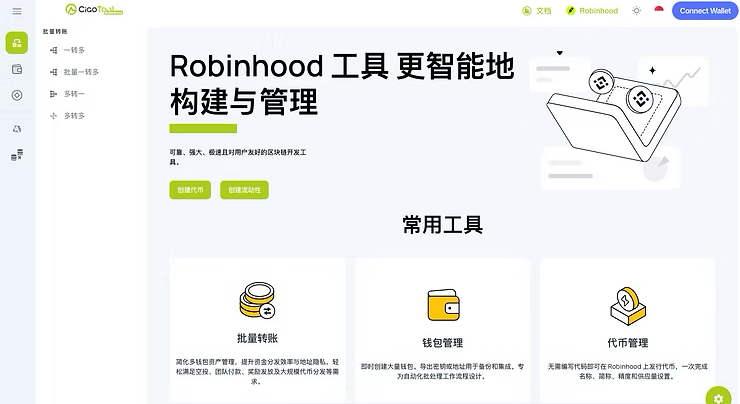
Creating a token by choosing BSC, Base, or X Layer mainly depends on your target users, trading scenarios, liquidity plans, and the native gas asset you are willing to use. With CiaoTool, tokens can be created on all three chains without coding; the basic processes are similar, but the gas token types, ecosystems, DEX liquidity paths, available tools, and actual costs differ.
In simple terms:
BSC / BNB Chain: Suitable for projects targeting BNB Chain users, PancakeSwap liquidity, meme launches, RWA / bStocks, bulk trading, and multi-address operations.
Base: Suitable for ERC-20 projects targeting Coinbase ecosystem, Base users, and Ethereum L2 trading environments.
X Layer: Suitable for projects targeting the OKX and X Layer ecosystem, using OKB for gas payments, wanting to start tokens and on-chain activities at low cost.
What are the components of token issuance costs on the three chains?
No matter where you create a token, whether on BSC, Base, or X Layer, the final cost typically consists not only of the "price to create the token," but of the following parts:
CiaoTool service fee: The service fees vary among different token creators, features, and chains.
Network gas: Charged by the blockchain network, varying with the network state and transaction complexity.
Liquidity funds: If planning to create a pool on a DEX, you need to prepare tokens and pairing assets, such as BNB, ETH, USDC, or OKB.
Optional feature fees: For example, transaction taxes, LP locking, bulk transfers, multi-address transactions, creation and bundling buys, V2/V3 liquidity management, etc.
Subsequent operational costs: Including airdrops, community rewards, trading activities, liquidity maintenance, wallet management, and other project operational expenses.
One item that is often overlooked is liquidity funds. The service fee and gas for creating an ordinary token might be low, but without reasonable trading pairs, liquidity depth, and asset management plans, the token might still face high slippage, ineffective trading, or insufficient liquidity post-launch.
BSC: Suitable for Meme, PancakeSwap and multi-wallet operations
BSC, also known as BNB Chain, is currently one of the ecosystems where Meme coins, PancakeSwap liquidity, and multi-address on-chain tools are relatively mature.
With CiaoTool, users can create BEP-20 tokens without coding and later use the PancakeSwap V2 / V3 pool creation, pool addition, pool removal, bulk trading, multi-address buying and selling, airdrops, asset aggregation, and wallet management tools. CiaoTool's BSC section also covers Four.Meme, Flap, and related scenarios for RWA / bStocks.
BSC issuance costs
Costs on BSC are typically paid in BNB and include:
CiaoTool's token creation service fee.
BNB Chain network gas.
If creating a PancakeSwap trading pair, tokens and BNB, USDT, or other pairing assets need to be invested.
If using transaction taxes, LP management, bulk trading, or multi-address tools, corresponding service fees and gas may be incurred.
If launching via Four.Meme or Flap, there may also be platform creation, trading, curve, or launch-related costs.
For example, CiaoTool's BSC PancakeSwap V2 pool creation tool page shows that the basic service fee for creating a V2 liquidity pool is 0.024 BNB, plus BSC network gas; the actual page will display costs before wallet confirmation.
Creation costs for different token types may also vary. Tokens with LP burn, transaction taxes, anti-bot features, dividends, or other complex logic typically incur higher service fees and more gas than standard BEP-20 tokens.
BSC issuance process
Using CiaoTool to create and launch a standard token on BSC can generally be completed according to the following process:
Connect MetaMask, Binance Wallet, OKX Wallet, or other wallets compatible with BNB Chain.
Switch to BNB Chain Mainnet.
Select a standard BEP-20 token or the required token feature type.
Fill in the token name, symbol, total supply, decimal places, and other optional parameters.
Confirm the creation service fee and estimated gas.
Confirm the creation transaction in your wallet.
Save the deployed token contract address.
If you wish to open trading, create a liquidity pool on PancakeSwap V2 or V3.
Use bulk transfers, airdrops, multi-address transactions, asset aggregation, or market cap management tools as needed for your project.
If the project adopts a Launchpad route like Four.Meme or Flap, you can also use their corresponding creation and trading processes. CiaoTool also supports creation and bundling purchases as well as multi-address trading scenarios for Four.Meme and Flap.
What types of projects are suitable for BSC?
BSC is more suitable for:
BNB Chain meme coins and community tokens.
BEP-20 projects wishing to create liquidity pools on PancakeSwap V2 / V3.
Four.Meme or Flap launching projects.
RWA meme, stock meme, bStocks, or RWA payment asset-related projects.
Projects needing multi-address bundling purchases, bundling sales, or bulk swaps.
Projects requiring airdrops, bulk distribution, wallet aggregation, and liquidity management.
Projects that wish to use BNB, stablecoins, or other platform-supported assets as trading pairs.
Base: Suitable for ERC-20, Ethereum L2, and Coinbase ecosystem
Base is an Ethereum L2 network suitable for projects wishing to deploy ERC-20 tokens, reach Base chain users, or enter Coinbase-related ecosystem.
CiaoTool supports creating ERC-20 tokens on Base without coding. Users simply fill in basic information such as name, symbol, and supply to automatically generate and deploy the token contract.
Base issuance costs
Costs on Base are usually paid in ETH and include:
CiaoTool's Base token creation service fee.
Base network gas.
Tokens and pairing assets required when creating liquidity on Base DEX.
Optional operation fees such as airdrops, bulk transfers, asset aggregation, multi-address transactions, and liquidity management.
Gas on Base is generally lower than the Ethereum mainnet, but gas is not fixed. Trading peaks, bridging operations, complex contract calls, and bulk trades can all affect the final costs.
If projects plan to create liquidity pools, additional preparations for ETH, USDC, or other supported pairing assets should also be made. Token creation costs are generally just a small part of the initial costs; liquidity budget and subsequent community operation budgets are worth planning in advance.
Base issuance process
The basic process to create Base ERC-20 tokens on CiaoTool is generally:
Connect a wallet compatible with Base.
Switch to Base Mainnet.
Select the ERC-20 Token Creator.
Fill in the token name, symbol, total supply, and other optional settings.
Check service fees and Base network gas.
Confirm deployment transaction in your wallet.
Save the token contract address.
According to project plans, create a liquidity pool on a DEX supporting Base.
Use airdrops, bulk transfers, asset aggregation, or other Base tools for subsequent operations.
CiaoTool's Base toolkit also supports multi-address asset aggregation, suitable for aggregating tokens from multiple sub-wallets into a designated main wallet for unified management.
What types of projects are suitable for Base?
Base is more suitable for:
Projects that wish to issue standard ERC-20 tokens.
Community projects targeting Base, Coinbase, or Ethereum L2 users.
Projects wishing to pair with common Ethereum ecosystem assets like ETH and USDC.
Teams planning to develop around EVM, Base DEX, and Ethereum L2 infrastructure.
Projects requiring closer ties to the Ethereum ecosystem while wanting to reduce mainnet gas costs.
X Layer: Suitable for OKX ecosystem and OKB gas scenario
X Layer is an EVM-compatible network related to the OKX ecosystem. With CiaoTool, users can create X Layer tokens without coding and use tools such as wallet management, bulk transfers, asset migration, and bulk swaps.
CiaoTool's X Layer Token Creator allows users to fill in the token name, symbol, and supply before deploying the token. The creation cost consists of a fixed basic service fee and X Layer network gas.
X Layer issuance costs
Fees on X Layer are mainly paid in OKB and include:
CiaoTool's basic token creation service fee.
X Layer network gas.
Tokens and pairing assets needed for building a pool or adding liquidity.
Airdrop, bulk transfers, asset migration, bulk swap, and other tool fees.
CiaoTool's X Layer tool page shows that the basic service fee for multi-address transfer and asset management tools can be as low as 0.0004 OKB per address, plus additional on-chain gas; fees for different tools and token creation features should be confirmed on the actual page.
X Layer issuance process
The basic process to create X Layer tokens on CiaoTool is usually:
Connect a wallet supporting X Layer.
Switch to X Layer Mainnet.
Select Token Creator.
Fill in the token name, symbol, supply, and other required parameters.
Check service fees and OKB gas balance.
Confirm the token deployment transaction in your wallet.
Save the token contract address.
Complete subsequent operations such as liquidity, airdrops, bulk transfers, or bulk swaps according to the project plan.
If using multiple wallets, use asset migration or aggregation tools to manage dispersed assets uniformly.
CiaoTool also supports batch creation of wallets on X Layer, and this feature page is marked as free, suitable for projects needing to prepare multiple business or active wallets.
What types of projects are suitable for X Layer?
X Layer is more suitable for:
Token projects targeting OKX or X Layer users.
Projects wishing to use OKB to pay for network gas.
Projects requiring low-cost bulk transfers, airdrops, or wallet management.
Teams planning to quickly create and operate tokens in an EVM compatible environment.
Creators wanting to initiate projects combining X Layer community, DEX, and ecological activities.
Cost comparison of issuance on BSC, Base, and X Layer
Comparison Item | BSC / BNB Chain | Base | X Layer |
Common Token Standard | BEP-20 | ERC-20 | EVM-Compatible Token Standard |
Gas Payment Asset | BNB | ETH | OKB |
Basic Issuance Method | Create BEP-20 token, or launch through Four.Meme / Flap and other platforms | Create ERC-20 token | Create EVM-Compatible Token |
Main Trading Ecosystem | PancakeSwap, Four.Meme, Flap | Base DEX and Ethereum L2 ecosystem | X Layer DEX and OKX ecosystem |
Common Liquidity Assets | BNB, USDT, stablecoins, RWA / bStocks, etc. | ETH, USDC, Base ecosystem assets | OKB and X Layer supported assets |
Liquidity Management | PancakeSwap V2/V3 Pool Building, Adding, Removing, Bulk Swap | Depends on DEX supporting Base | Depends on DEX supporting X Layer |
Multi-Address Operations | Bundled buys/sells, bulk swaps, airdrops, aggregation, etc. | Airdrops, aggregation, and available Base tools | Bulk transfers, bulk swaps, asset migration, aggregation, etc. |
RWA / Meme Scenarios | More mature, supports Four.Meme, Flap, Stock Meme, bStocks and other paths | More inclined towards ERC-20 and Base community projects | More inclined towards OKX / X Layer ecosystem projects |
Suitable Audience | Meme, RWA, PancakeSwap, and multi-wallet operation projects | Base / Ethereum L2 community projects | OKX / X Layer community and low-cost operation projects |
How to choose a chain?
If you are still unsure which chain to choose, you can determine based on project goals.
Choose BSC if you want to:
Create a BNB Chain meme coin.
Create trading pairs and liquidity on PancakeSwap V2 or V3.
Use the launching mechanism of Four.Meme or Flap.
Raise coins using bStocks, RWA narrative coins, RWA payment tokens, or Stock Meme.
Engage in multi-address bundled purchases, bundled sales, or bulk trading.
Utilize a more comprehensive suite of meme coins, liquidity, airdrops, and wallet management tools.
Choose Base if you want to:
Create a standard ERC-20 token.
Target Base, Coinbase, or Ethereum L2 users.
Use ETH or USDC as primary trading and liquidity assets.
Position the project within the Ethereum L2 and Base ecosystem.
Issue ERC-20 tokens and conduct subsequent operations at lower L2 gas costs.
Choose X Layer if you want to:
Target OKX and X Layer users.
Use OKB for gas payments.
Utilize tools such as bulk transfers, airdrops, asset migration, and bulk swaps.
Quickly deploy and manage project tokens in an EVM-compatible environment.
Launch projects combined with X Layer community and ecological activities.
Frequently Asked Questions
Which chain has the lowest token issuance cost?
Total costs depend on the selected token type, CiaoTool service fees, real-time gas, whether to create a pool, liquidity scale, pairing assets, number of wallets, and subsequent features.
If only considering normal token creation, typically compare real-time service fees and network gas shown on the page; if including liquidity, the investment in pairing assets generally becomes a more significant part of the cost.
Can BSC, Base, and X Layer all issue tokens without coding?
Yes. CiaoTool provides no-code token creation tools on BSC, Base, and X Layer. BSC is mainly used for BEP-20 token creation, Base primarily for ERC-20 creation, and X Layer offers a process for creating EVM-compatible tokens.
Is it necessary to create a liquidity pool after creating a token?
If you want the token to be publicly traded on a DEX, there usually needs to be a trading pair and corresponding liquidity. However, the specific method depends on the launch mode chosen by the project.
For instance, regular tokens can be pooled by the project party on a DEX; Four.Meme, Flap, and other Launchpads may use mechanisms like Bonding Curve and handle subsequent DEX liquidity migration after meeting conditions.
Which chain is more suitable for meme coins?
It depends on the target users and project path. BSC is more suitable for meme projects wishing to leverage tools from PancakeSwap, Four.Meme, Flap, RWA / bStocks, and multi-address operations. Base is better for meme projects targeting users in Base and Ethereum L2. X Layer is suitable for projects wishing to enter the OKX and X Layer ecosystem.
Does CiaoTool support subsequent operational tools?
Yes. In addition to token creation, CiaoTool offers tools related to bulk transfers, airdrops, wallet management, asset aggregation, liquidity operations, bulk swaps, and multi-address transactions. The specific tools supported on different chains may vary and should be confirmed on the corresponding network pages.
Summary
BSC, Base, and X Layer can all create tokens without coding through CiaoTool, but they are suited for different project directions.
BSC is more suitable for meme, PancakeSwap, Four.Meme, Flap, RWA / bStocks, and projects needing multi-address trading and comprehensive on-chain operation tools.
Base is more suitable for ERC-20, Ethereum L2, Base community, and Coinbase ecosystem-related projects.
X Layer is more suitable for OKX / X Layer users, OKB gas scenarios, and projects emphasizing bulk transfers, asset migration, and low-cost operational tools.
免责声明:本文章仅代表作者个人观点,不代表本平台的立场和观点。本文章仅供信息分享,不构成对任何人的任何投资建议。用户与作者之间的任何争议,与本平台无关。如网页中刊载的文章或图片涉及侵权,请提供相关的权利证明和身份证明发送邮件到[email protected],本平台相关工作人员将会进行核查。