As of October 23, 2026, 22 U.S. listed companies have formally submitted written objections to the OKXICE TSV platform, a joint venture between OKX and the Intercontinental Exchange (ICE), opposing the trading of their stocks in the form of third-party tokens on the platform. The list includes well-known companies such as Microsoft, Alphabet, Goldman Sachs, Wells Fargo, Arm, Cisco, Broadcom, Verizon, UnitedHealth, and McDonald's. This event has quickly become a market focus, with many interpreting it as traditional finance's resistance to blockchain. However, upon closer examination, it appears to be a deep-seated game about “systems of power” and “trading efficiency.”
Why do these companies oppose? The core issue is not the technology itself, but the asymmetry of control and risk. Traditional stocks are not merely tradable prices; they represent a set of rights maintained collectively by issuers, exchanges, custodians, and regulatory systems. This encompasses shareholder identity and voting rights, distribution of dividends and corporate actions, trade reporting and best execution, prevention of market manipulation, and allocation of responsibility when disputes arise.
Under the SEC's innovation exemption framework, third-party tokenization attempts to put the underlying shares on-chain and requires that tokens provide the same economic rights, dividend rights, and voting rights as traditional stocks. However, in practice, token holders often have contractual rights against custodians or tokenizers, rather than being directly listed as shareholders. Issues remain regarding how voting instructions are communicated, how record snapshots are generated, how corporate actions are accurately implemented, and how the beneficial owners behind wallet addresses are identified—these mechanisms are still not mature. Issuers worry that products not recognized by them could be mistakenly interpreted by investors as endorsements by the company; 24-hour trading could have unexpected impacts on price, liquidity, and volatility; and they may see no clear gains (no new capital, control over rights moving away). A few publicly-stated companies (such as Applied Optoelectronics) clearly mentioned similar concerns: uncertainty about the impact on stock prices and liquidity, and no clear benefits for the company or shareholders.
The SEC's innovation exemption framework is a temporary mechanism launched on September 17, 2026, for a period of five years (principally until around 2031). It allows qualified tokenized securities trading venues (TSV) to conduct on-chain secondary trading of tokenized U.S. National Market System (NMS) stocks under certain conditions, without registering as a national securities exchange or ATS. Key conditions include: tokens must provide the same rights as traditional stocks; platforms must notify issuers in advance about third-party tokenization, and issuers have 30 calendar days to submit written objections; once an objection is raised, the platform cannot list that token. Additionally, there are requirements regarding symbol quantity and transaction volume limits, public disclosures, and trading suspension coordination. Importantly, objections are only effective for that specific platform and do not act as a permanent global ban, nor do they prevent issuer-led tokenization or attempts by other platforms. Once the 30-day window expires without objection, that platform may commence trading. Opposition is valid for the five-year exemption period, but the exemption itself is sandbox in nature, designed to collect data and potentially guide formal rule-making, not a permanent system.
In addition to explicitly opposing companies, there remains a significant portion of the originally planned list that has not publicly objected, including Nvidia, Tesla, Apple, Amazon, Coinbase, JPMorgan Chase, and others. These companies may be regarded as having a “silent agreement” or at least not taking action to block. The proponents of tokenization tend to be more crypto-native or fintech companies: Securitize, Coinbase, and Robinhood have launched or are preparing to launch related products, and OKX itself as a joint venture partner is directly involved. The common characteristic of the opponents is that they are mostly large traditional blue chips or highly regulated sensitive enterprises (banks, tech giants, medical, consumer), with mature shareholder relations and brand systems, highly sensitive to governance control and reputational risks; in contrast, those in favor or not opposing often have intersections with the crypto ecosystem, or place more emphasis on the potential benefits of global distribution and efficiency improvements. The logic for support typically is: tokenization can expand the investor base, enable 24/7 trading and fractionalization, lower some intermediary costs, and combine with on-chain ecosystems. The current biggest point of contention is centered on “full shareholder rights vs pure price exposure”: if the rights transfer is incomplete, is it truly upgrading the securities market, or merely creating a new tradable exposure?
Tokenization has commonalities with directly purchasing company stocks but also has essential differences.
The commonality lies in economic exposure: the price follows the underlying stock's fluctuations, some products can handle dividends (often in the form of reinvestment) and corporate actions, and can be converted back to underlying shares on a 1:1 basis.
The difference, however, lies in legal status and rights integrity. Traditional brokerage accounts usually make investors beneficial owners, granting voting rights, direct dividends, and complete regulatory protection; most tokenized products (especially third-party or packaged models) do not list the holder on the shareholder register, lack direct voting rights, dividends are automatically handled through mechanisms rather than cash distributions, and in disputes, responsibility often falls more on the tokenizing party and the custodian. The advantage of tokenization lies in technological pathways: 24/7 trading, low fractionalization entry points, withdrawable to self-owned wallets, usable as collateral or composition in DeFi, allowing global users to participate without traditional brokerage accounts.
The continuing trend towards tokenization is very realistic. There is genuine demand globally from retail and institutional investors for all-weather, low-threshold, combinable exposure to U.S. equities; settlement efficiency, cross-border convenience, and on-chain combinability provide an experience that traditional systems find difficult to replicate quickly; RWA as a whole has evolved from concept to scale.
But resistance is not insurmountable. Future development space will depend on several paths:
First, issuer-led or clearly agreed tokenization, aligning rights design and interests;
Second, improving rights infrastructure (identity solutions, corporate action oracles, interfacing with transfer agents, clear responsibility allocation);
Third, layered products—parallel versions with complete rights and pure price exposure, with clear regulatory distinctions; fourth, demonstrating quantifiable benefits to issuers (global shareholder base, increased visibility, cost savings).
In the short term, third-party models will continue to face obstacles with blue chips, but price and liquidity exposure will likely lead in volume; in the long run, those who can do well in both “rights + efficiency” are more likely to become mainstream. Purely bringing technology on-chain is not enough; governance and trust issues must be resolved.
The tokenization market is no longer an early experiment. Globally, the market capitalization of tokenized equity has reached billions of dollars (different statistical measures range from $3 billion to nearly $5 billion), and the number of holders is rapidly growing to the millions. Trading activity is even higher: in the third quarter of 2026, multiple chains related to tokenized equity saw significant increases in trading volumes, with BNB Chain recording approximately $25.6 billion in a single quarter (about 11 times the previous quarter), and Robinhood Chain, Solana, etc., also contributing a considerable share; a significant amount of trading occurred outside regular hours for U.S. stocks. Since the launch of Binance bStocks in June 2026, it has surpassed $1 billion in AUM in about four months, with a cumulative trading volume exceeding $40 billion and nearly 100 products launched, allowing users to complete billions of dollars in 1:1 conversions. Ondo, xStocks, and others also occupy important shares. Global participation is characterized by significant contributions from emerging markets and non-U.S. timezone users, with both institutions and retail having layouts, and on-chain transfers along with DeFi usage growing simultaneously. This proves that demand is real; the paths of complete rights in the U.S. and price exposure overseas are developing in parallel.
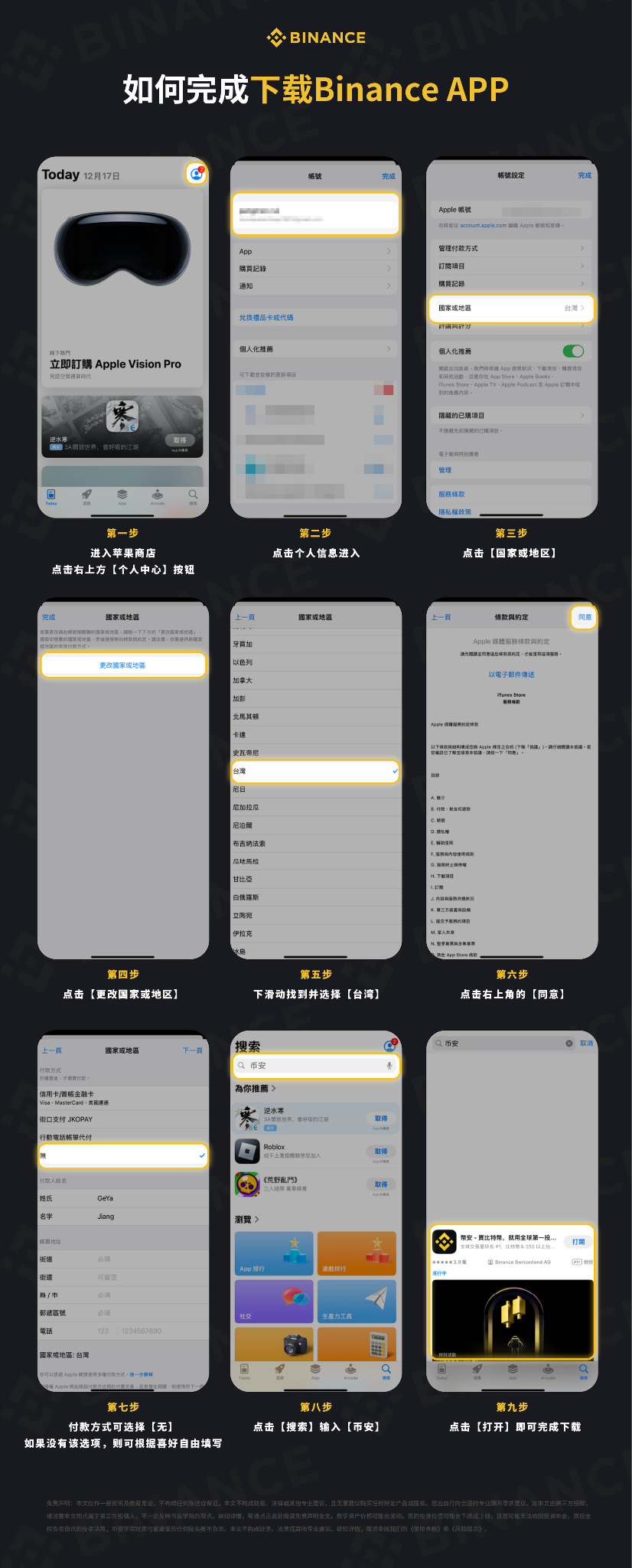
For users looking to participate in the current viable tokenized U.S. equity exposure market, Binance and OKX are two platforms worth considering. Binance's strength lies in its bStocks products, which have been scaled, supporting 24/7 trading, fractionalization, on-chain withdrawals, and 1:1 conversions, with solid liquidity and user base; OKX, as a large crypto exchange, is directly involved in the OKXICE joint venture, with a complete ecosystem, direct engagement in tokenization and on-chain trading, and a product line and compliance tailored for global users. Both possess mature identity verification, asset security, and trading infrastructure.
The participation steps are relatively simple:
Binance registration link:
https://jump.do/zh-Hans/xlink-proxy?id=3
Or log in to the Binance app directly and fill in the invitation code aicoin668. Below are the exclusive generous registration benefits for AiCoin invitation code:
Benefit 1: New customers can receive up to 440U
1. Deposit 100U + trade 100U → receive 100U position coupon
2. Deposit 1,000U + trade 50,000U → receive an additional 300U position coupon
3. Deposit 3,000U + trade 200,000U → receive an additional 40U cash coupon
The three tiers can be stacked, starting from a deposit of 100U for the first tier
Benefit 2: Open blind boxes, up to 25 RE
1. Register + deposit 50U + trade 100U + log in to the App
2. Upon completion, receive a blind box, randomly drawing RE tokens, up to 25 pieces
This means a new user can receive double benefits upon completing the task after registration
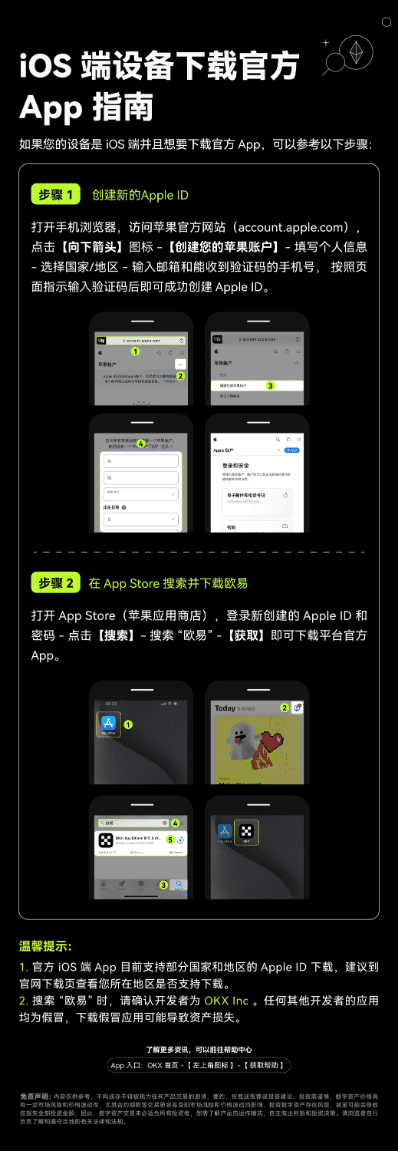
OKX registration link:
https://jump.do/zh-Hans/xlink-proxy?id=2
Or log in to the OKX app directly and fill in the invitation code aicoin20, exclusively enjoying a permanent 20% fee rebate.
Tokenization will not cease due to the objections of certain companies, but the paths will continue to differentiate. Understanding the boundaries of rights, choosing mature platforms, and cautiously evaluating are practical ways to participate currently. The market is still rapidly evolving, and continuously monitoring regulatory developments and product details is more important than simply chasing price surges.
Risk disclaimer at the end: does not constitute investment advice; you may lose all principal; comply with laws in your jurisdiction; do not use leverage, loans, or living expenses to participate.
免责声明:本文章仅代表作者个人观点,不代表本平台的立场和观点。本文章仅供信息分享,不构成对任何人的任何投资建议。用户与作者之间的任何争议,与本平台无关。如网页中刊载的文章或图片涉及侵权,请提供相关的权利证明和身份证明发送邮件到[email protected],本平台相关工作人员将会进行核查。