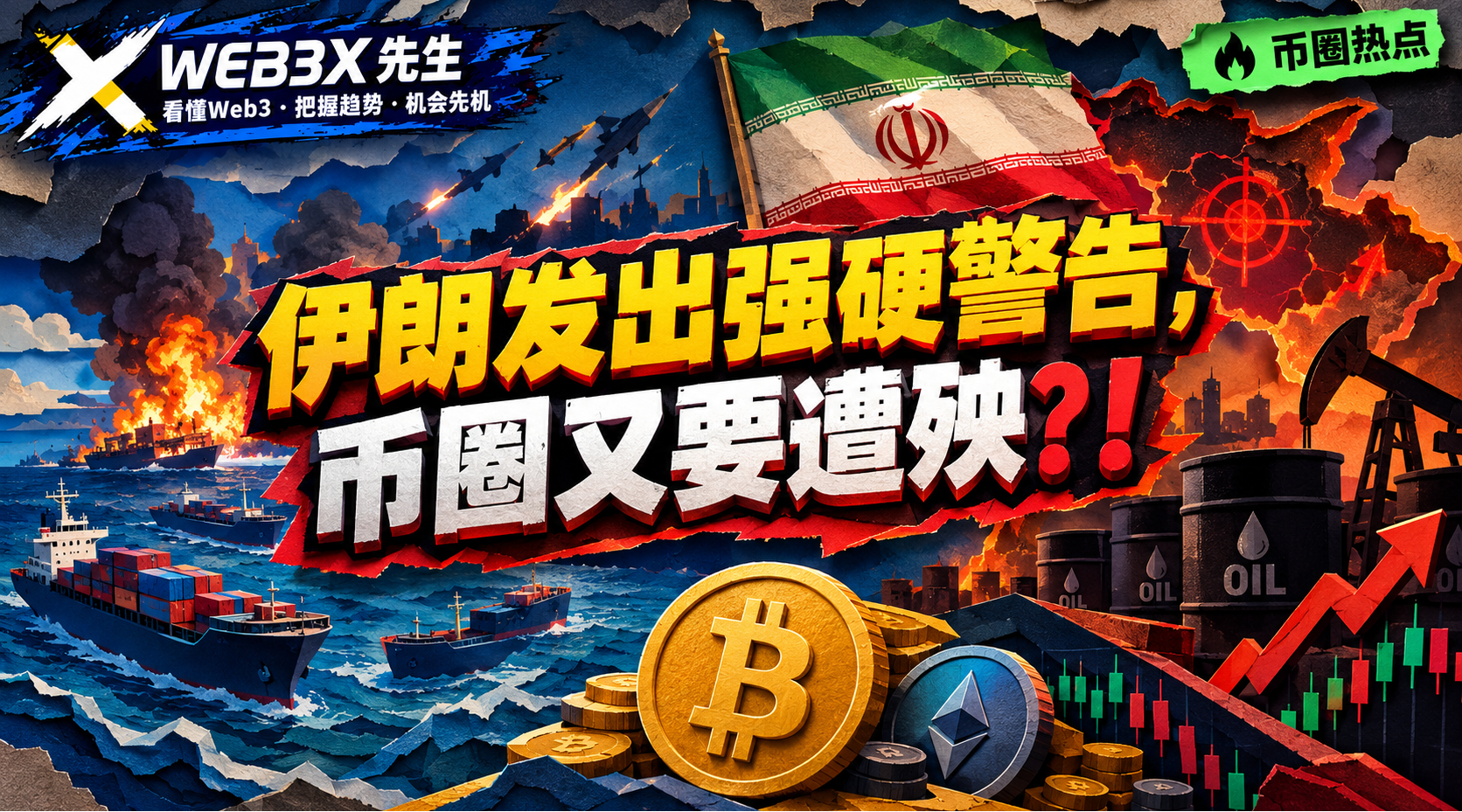
1. Iran's Overseas Oil Inventory Depletion and Export Buffer are Disappearing
Iran's oil exports are facing severe pressure.
Energy intelligence agency Kpler estimates that by mid-October 2026, Iran's previously stored floating oil inventory on overseas tankers has been depleted. The U.S. maritime blockade has limited Iran's ability to replenish crude oil stocks, and the U.S. Central Command claims this blockade has already cost Iran at least $25 billion in oil revenue.
This is not merely a simple export loss; more critically, Iran is losing a key resource that it previously used to buffer against transportation interruptions.
When the war broke out in February 2026, Iran had approximately 135 million barrels of floating oil inventory stored overseas, most of which was located in waters near Malaysia and Singapore.
This crude oil is equivalent to a floating oil storage facility. Even if subsequent transportation is restricted, Iran can still continue selling oil that has already reached overseas, maintaining export cash flow for a certain period.
However, as the inventory continues to deplete, this buffering mechanism is gradually failing.
It is important to note that different energy tracking agencies do not completely agree on the estimates of inventory size. Therefore, a more accurate understanding is that Iran's overseas floating inventory has already dropped to an extremely low level, with Kpler believing it has been depleted by mid-October, although the exact remaining quantity remains uncertain.
📌 If you want to continuously track BTC, ETH, and the impact of macro data on the market, you can follow the public account "Crypto Lao Ding," which explains important market changes and the logic behind them every day.
2. What Does a $25 Billion Revenue Loss Mean? Iran's Cash Flow Pressure is Increasing
For Iran, the impact of blocked oil exports is reflected not only in trade volume but also in fiscal revenue and foreign exchange sources.
Kpler analysts point out that oil sales account for about 30% to 40% of the Iranian government's revenue and are one of the largest sources of foreign exchange for the country. When maritime exports are difficult to restore, it becomes harder for Iran to continue earning dollars from oil sales.
At the same time, Iran is also facing economic pressures such as high inflation, currency devaluation, and material shortages. Kpler analysts indicate that since early July 2026, Iran's currency has depreciated by about one-third against the dollar, further exacerbating domestic price pressures.
Land transportation also struggles to fill the gap left by stagnant sea shipping. Compared to large-scale tanker transportation, the ability to transport oil to neighboring countries by truck is limited, making it difficult to replace the original maritime export system.
Moreover, Iran's buyers are also adjusting their procurement sources. Some Asian refineries have begun to increase procurement of crude oil from other sources. Even if transportation conditions improve in the future, Iran may still face issues like buyers shifting and market share declining.
However, the increasing economic pressure does not necessarily mean Iran will make political concessions. The U.S. hopes to force Iran to reconsider nuclear negotiations by cutting off oil revenue, but whether Iran will change its position as a result remains highly uncertain.
What truly deserves attention is whether economic pressure can be translated into negotiation progress or will further complicate the regional situation.
3. Impact of Blocked Iranian Oil Exports on Oil Prices and the Global Market
From a global energy market perspective, the blocking of Iranian exports indeed increases uncertainty around oil supply, but this does not mean that global oil transportation has come to a complete standstill.
Reports indicate that with U.S. protection and assistance facilitating non-Iranian oil passage through the Strait of Hormuz, other oil-producing countries in the Middle East continue to export oil, with some shipping volumes even exceeding pre-war levels.
This means that judging oil price trends cannot solely rely on changes in Iran's exports; it is also necessary to observe whether other oil producers can maintain supply, whether shipping safety continues to improve, and how global demand changes.
If Iranian exports are restricted over the long term and regional tensions escalate further, the market may reassess the risks of supply interruptions, leading to increased oil price volatility.
However, if other oil-producing countries continue to replenish supply or shipping arrangements gradually stabilize, the impact of declining Iranian exports on global total supply may be partially offset.
For financial markets, changes in oil prices also have a second-layer impact.
If oil prices continue to rise, energy costs may be transmitted to transportation, manufacturing, and consumption, increasing inflationary pressures. Changes in inflation expectations may affect the Federal Reserve's interest rate judgments, further influencing the dollar, U.S. Treasury yields, and global liquidity expectations.
This is why geopolitical news affects not only the energy market but may also filter through to stocks and cryptocurrency assets.
Regarding BTC, it cannot be simply understood that an increase in oil prices will necessarily lead to a drop, or that elevated geopolitical risks will inevitably trigger sell-offs. More importantly, it is crucial to observe whether oil prices continue to rise, how the dollar and U.S. Treasury yields change, and whether market funds are reducing risk exposure.
📌 If you want to continuously track BTC, ETH and the impact of macro data on the market, you can follow the public account "Crypto Lao Ding," which explains important market changes and the logic behind them every day.
📌 Mr. X of Web3: More Important than Inventory Depletion is Whether Energy Shocks Will Continue to Expand
The near depletion of Iran's overseas floating oil inventory signifies that its buffer space for maintaining oil export revenue is shrinking. The $25 billion revenue loss cited by the U.S. also reflects the pressure exerted on Iran's economy by the maritime blockade.
However, the subsequent impacts cannot be inferred solely from a single country's export data. The supply capabilities of other oil-producing countries in the Middle East, the actual navigation conditions in the Strait of Hormuz, and whether there are new negotiation developments between the U.S. and Iran will all influence the direction of the global energy market.
For participants in the cryptocurrency market, what truly needs to be tracked is whether geopolitical changes can further increase energy costs and influence market liquidity through inflation, interest rates, and the dollar.
Understanding hot topics is not merely about seeing the depletion of oil inventory and predicting a spike in oil prices, but rather clarifying the relationship between supply changes, policy responses, and market pricing.
—— I am Mr. X of Web3, with 6 years of growth in Web3, focusing on Bitcoin, the cryptocurrency market, macroeconomics, and industry trends. If you want to continuously track BTC, ETH, HYPE and the impact of macro data on the market, you can follow the public account "Crypto Lao Ding." Understand the hot topics, gain insight into logical relationships, and build your own judgment instead of just watching price fluctuations.

免责声明:本文章仅代表作者个人观点,不代表本平台的立场和观点。本文章仅供信息分享,不构成对任何人的任何投资建议。用户与作者之间的任何争议,与本平台无关。如网页中刊载的文章或图片涉及侵权,请提供相关的权利证明和身份证明发送邮件到[email protected],本平台相关工作人员将会进行核查。