October 19, 2026 16:00 · AiCoin Research Institute
What exactly are we making money from when investing in U.S. stocks?
This question seems simple, yet it is worth thinking seriously about before placing an order. Stock prices fluctuate daily, news changes every day, but when the time frame is extended, stock returns ultimately need to be supported by corporate profits, cash flow, and capital returns. Buying a company's stock means purchasing its future ability to generate profits.
The U.S. market is home to many large enterprises that have been operating for years, as well as continuously growing new companies. If corporate profits continue to grow, stock prices will have fundamental support; if the growth does not meet expectations, even a good company might see its valuation decrease. There is always a price gap between a good company and a good investment.
AI is an important thread in this explanation. Its commercialization does not only concern software companies; GPU, custom chips, storage, semiconductor equipment, and data center construction will all be influenced by capital investment. However, a rising market does not mean every stock will rise. If the direction is right but the selection of targets is wrong, one might still find themselves anxiously sitting on the sidelines.
If you do not want to spend a lot of energy picking individual stocks, you can begin your research with ETFs. There are many choices for U.S. stock ETFs, some covering the entire market, others focusing on growth and sectors, as well as those serving cash management or providing exposure to Bitcoin. Today, we will put together eight types and discuss the problems they each address and where they place risks.
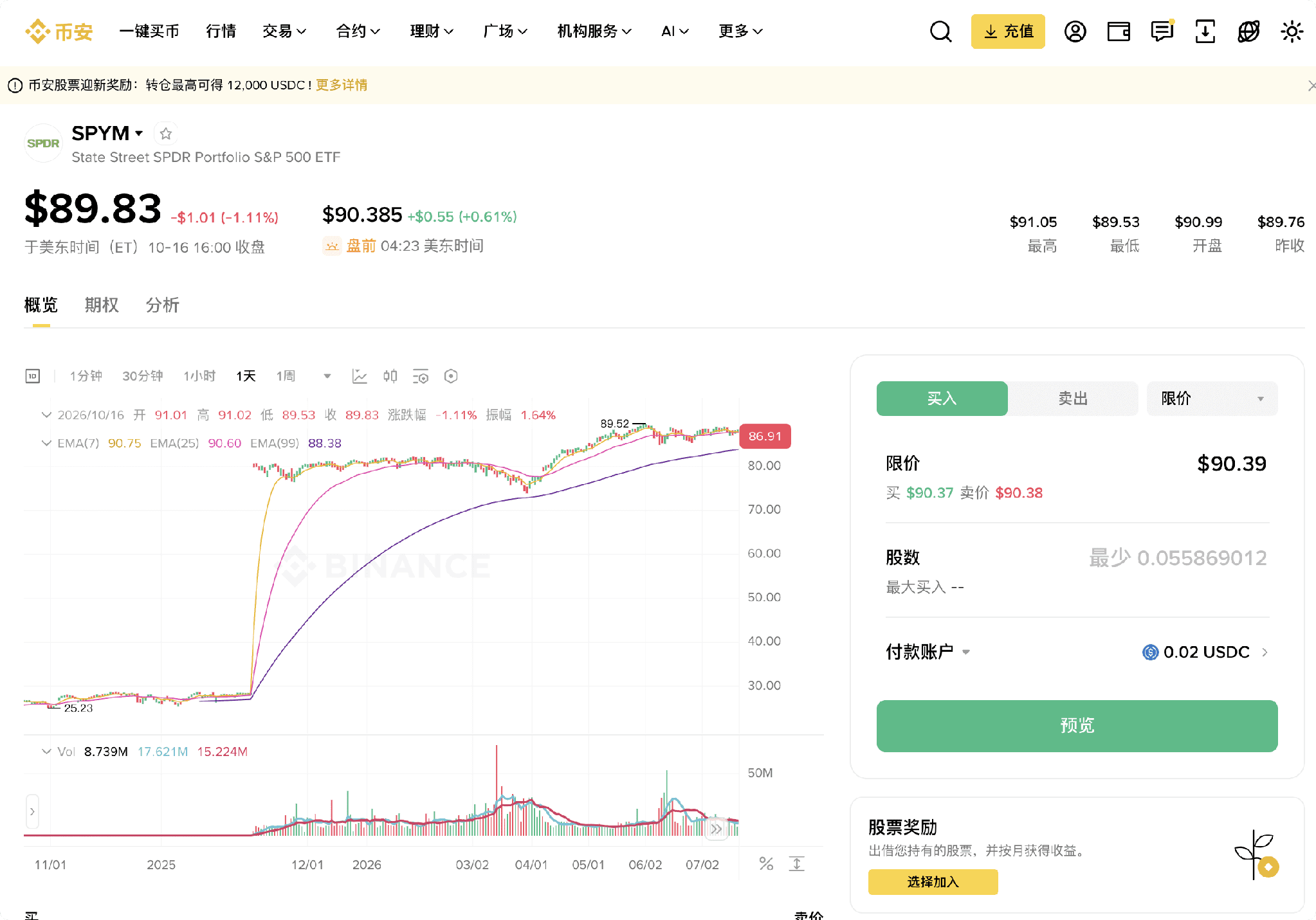
The products listed on this page should not be equated directly with holding U.S. listed ETFs, and the screenshot prices are not real-time quotes.
SPYM: Starting with the overall performance of large U.S. companies. It tracks the S&P 500 index, covering large listed companies in the U.S. and does not bet on a single industry. If you want to study the broad direction of U.S. stocks, this can be a starting point.
In the examples of holdings mentioned in this explanation, you can see familiar names like Nvidia, Apple, Microsoft, and Amazon. Their weights will change, and you cannot rely on a single historical holding sheet indefinitely. When studying, it is essential to look at both leading companies and the overall profitability and valuation of the portfolio.
Here, it is also necessary to clarify a concept: the expected growth rate of earnings per share for the constituent stocks in the coming years refers to corporate profit expectations, not the returns promised to investors by the fund. Expectations will adjust, and the purchase price will also impact returns; one cannot simply take an appealing growth number and plug it directly into their return plan.
QQQM: Focus on large growth companies, not just chasing a tech trend. It tracks the Nasdaq 100 index, with the research still focusing on how much money companies can earn in the future, as well as how much growth is already priced in today.
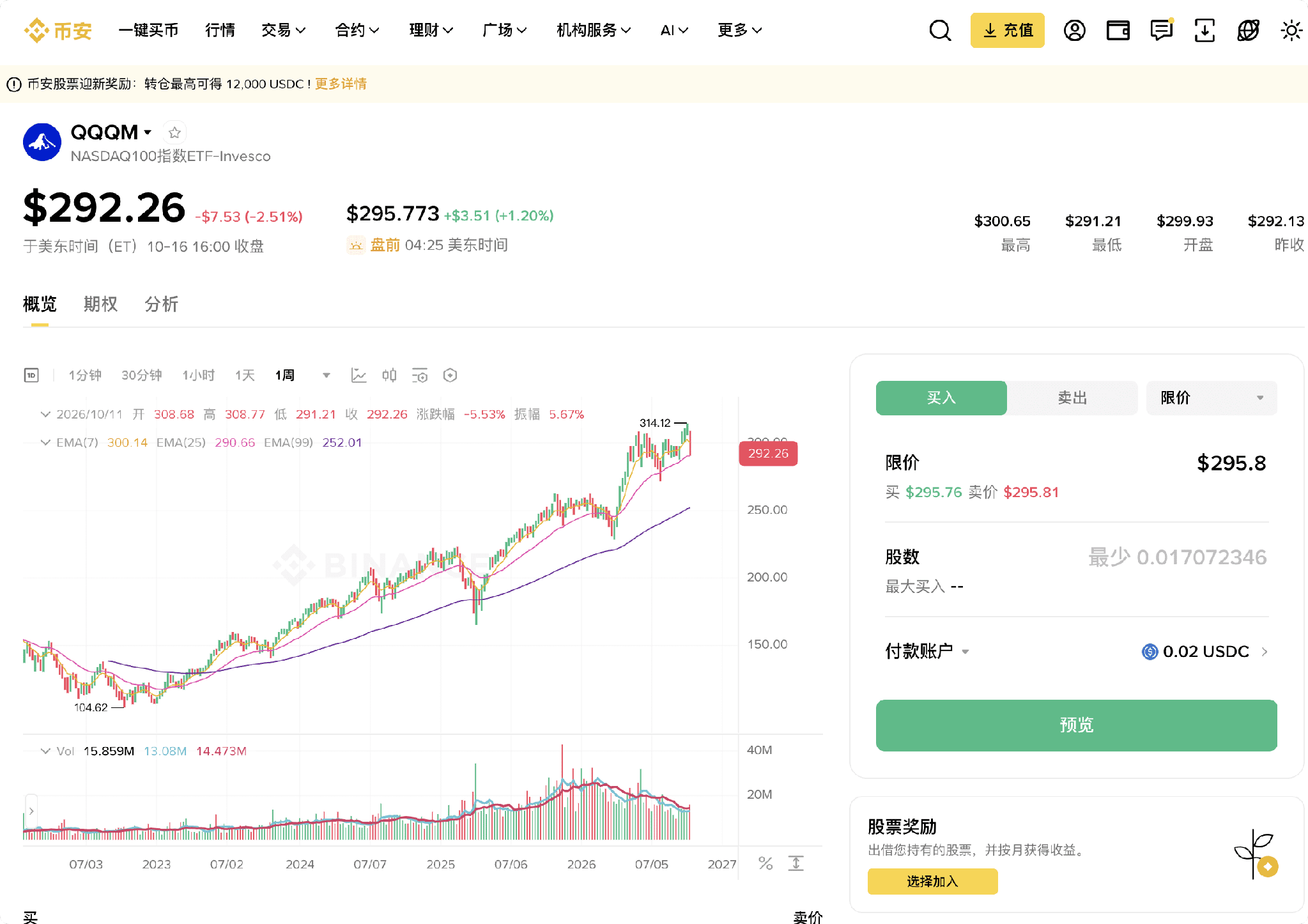
In 2022, rising interest rates and compressed valuations put significant pressure on growth stocks; by 2023, the market reassessed growth expectations and rebounded strongly. This experience reminds us that while having a long-term favorable view, we must also endure the fluctuations caused by valuation changes along the way.
If you are optimistic about AI, cloud computing, and the digital economy, you can further research QQQM. However, just being optimistic about the industry outlook is only the starting point for your research. It is crucial to continue questioning whether corporate profits are keeping pace and how much the market is willing to value them.
SPMO: Let the rules filter for relatively strong stocks. It also starts from the S&P 500 constituents but does not replicate the holding structure of SPYM; instead, it filters based on momentum rules, and holdings and sector weights will adjust with the rules.
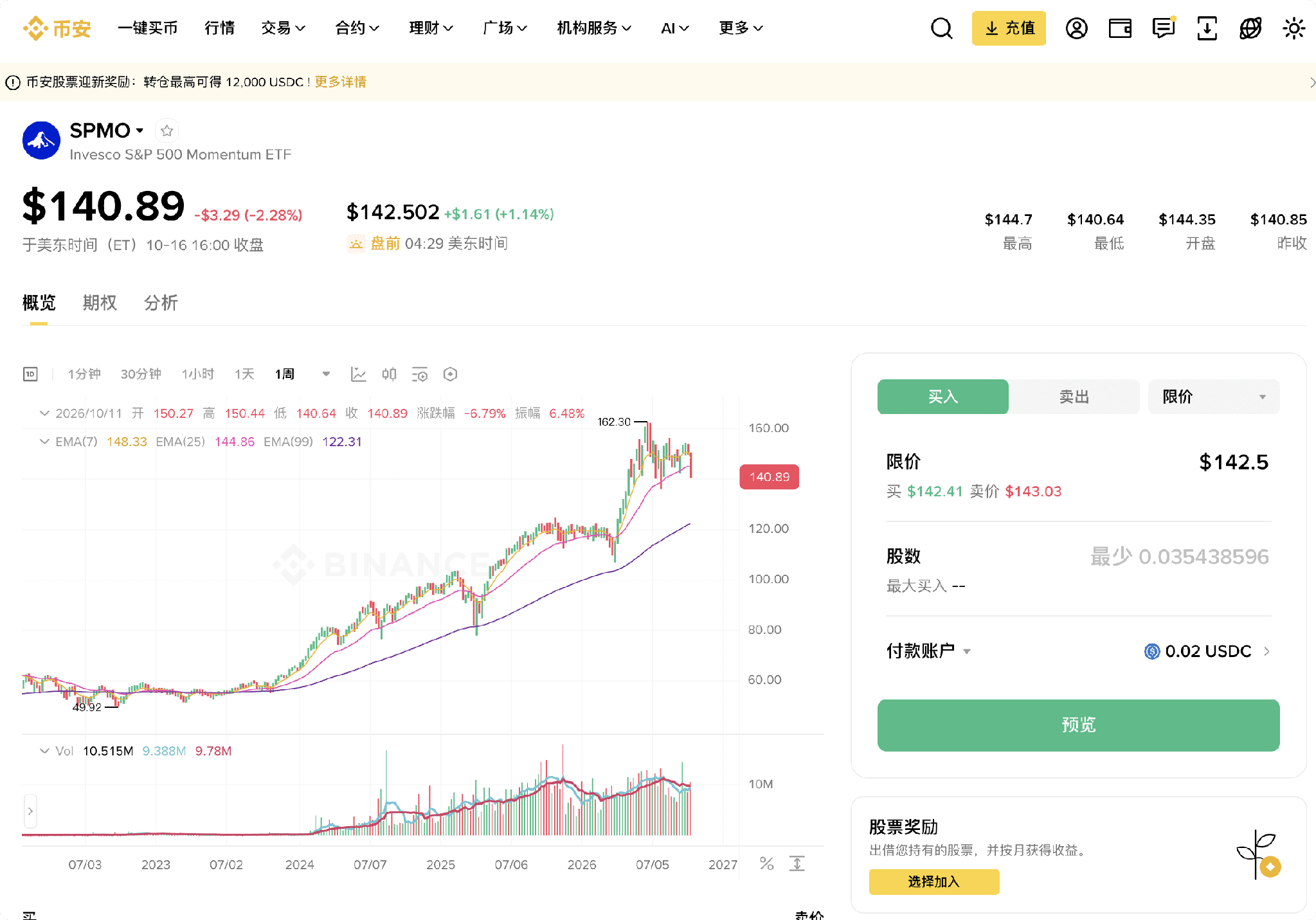
The interesting part is that we do not need to guess the next star company in advance; instead, we follow relatively strong targets using a set of clear rules. However, while rules can help filter, they cannot guarantee that winners will always be captured; when styles shift, momentum strategies may also face headwinds.
By placing these three together, the differences become apparent: SPYM leans towards the overall market, QQQM leans towards large growth, and SPMO leans towards momentum. Studying them aims to understand different selection logics, not just memorizing names to invest equally.
HDV: Focus on dividends and corporate quality. We invest in stocks to gain returns, and whether a corporation is willing and able to distribute profits is equally worth serious research.
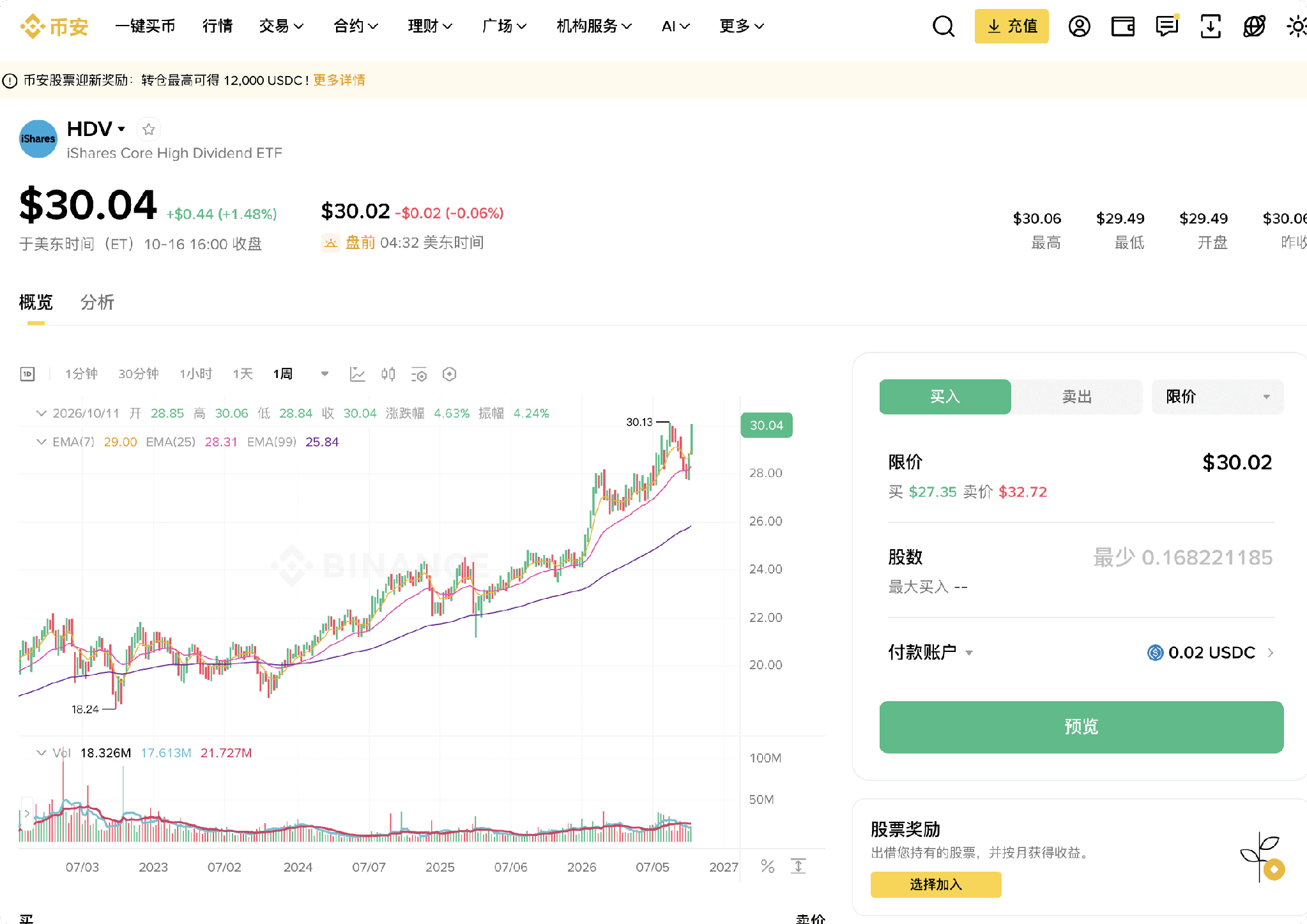
HDV focuses on high-dividend stocks and screens based on quality factors such as financial health. When studying this type of fund, one must consider whether the company's cash flow can support dividends, whether liabilities are manageable, and also pay attention to industry concentration.
Its value does not lie in necessarily outperforming growth stocks but in providing different portfolio styles. Total returns must account for changes in stock prices along with dividends. Receiving dividends does not mean that one has already made money, and stock price fluctuations cannot be disregarded from the balance sheet.
MAGS: Concentrate choices on seven tech giants. This fund has a more focused research scope, emphasizing the revenue growth, profit margins, cash flow, AI capital expenditures, and valuation of seven companies.
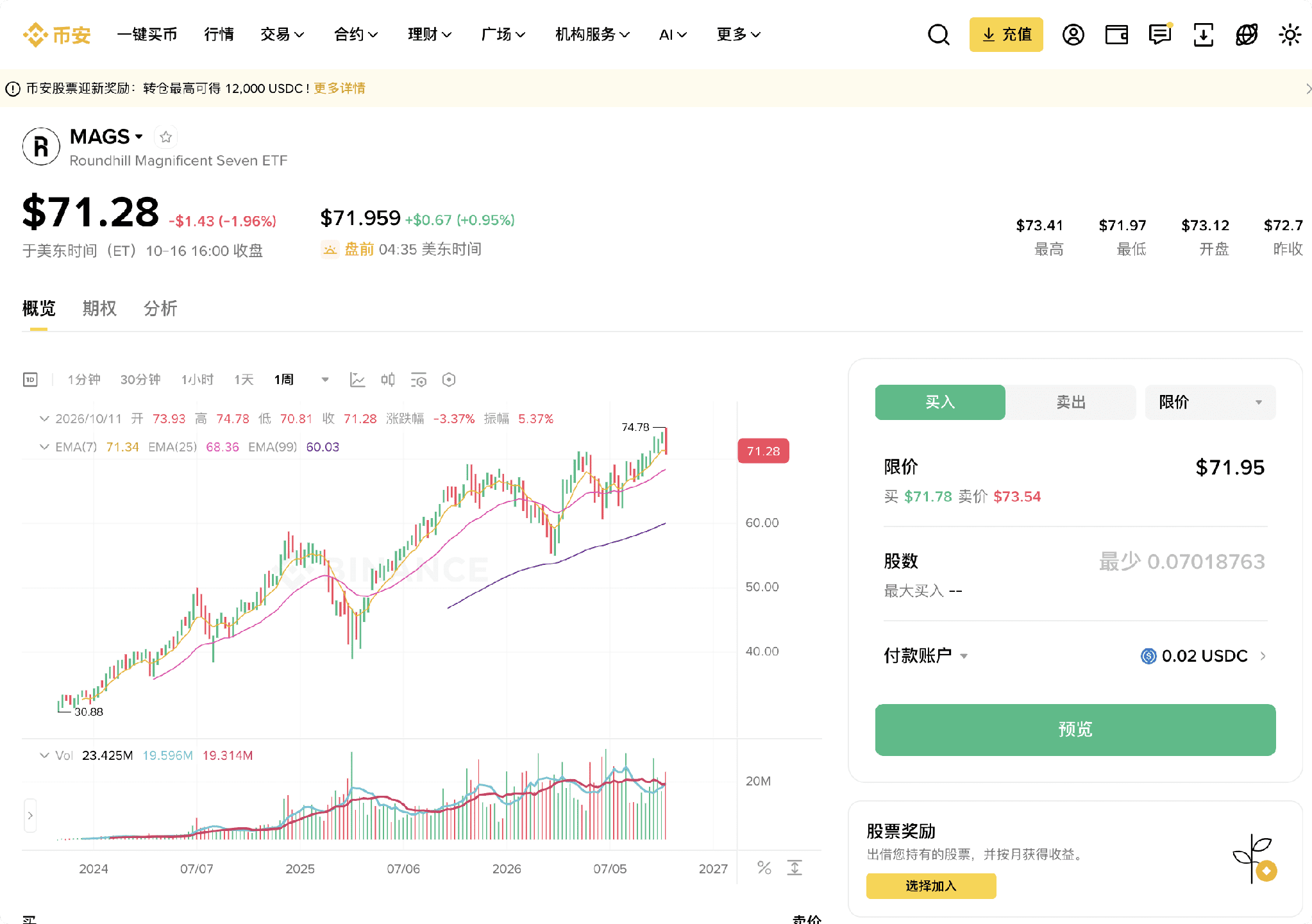
Familiarity with these companies' names does not equate to understanding their businesses. Especially as funding continues to flow into AI, it is vital to observe whether the investments can convert into revenue and profit. Concentrated holdings can express judgments strongly but will amplify the impact of a few companies' poor performance.
SMH: Research AI’s infrastructure along the semiconductor industry chain. It focuses on the semiconductor industry and involves chip-related companies and equipment; it is not solely a fund that buys AI concepts.
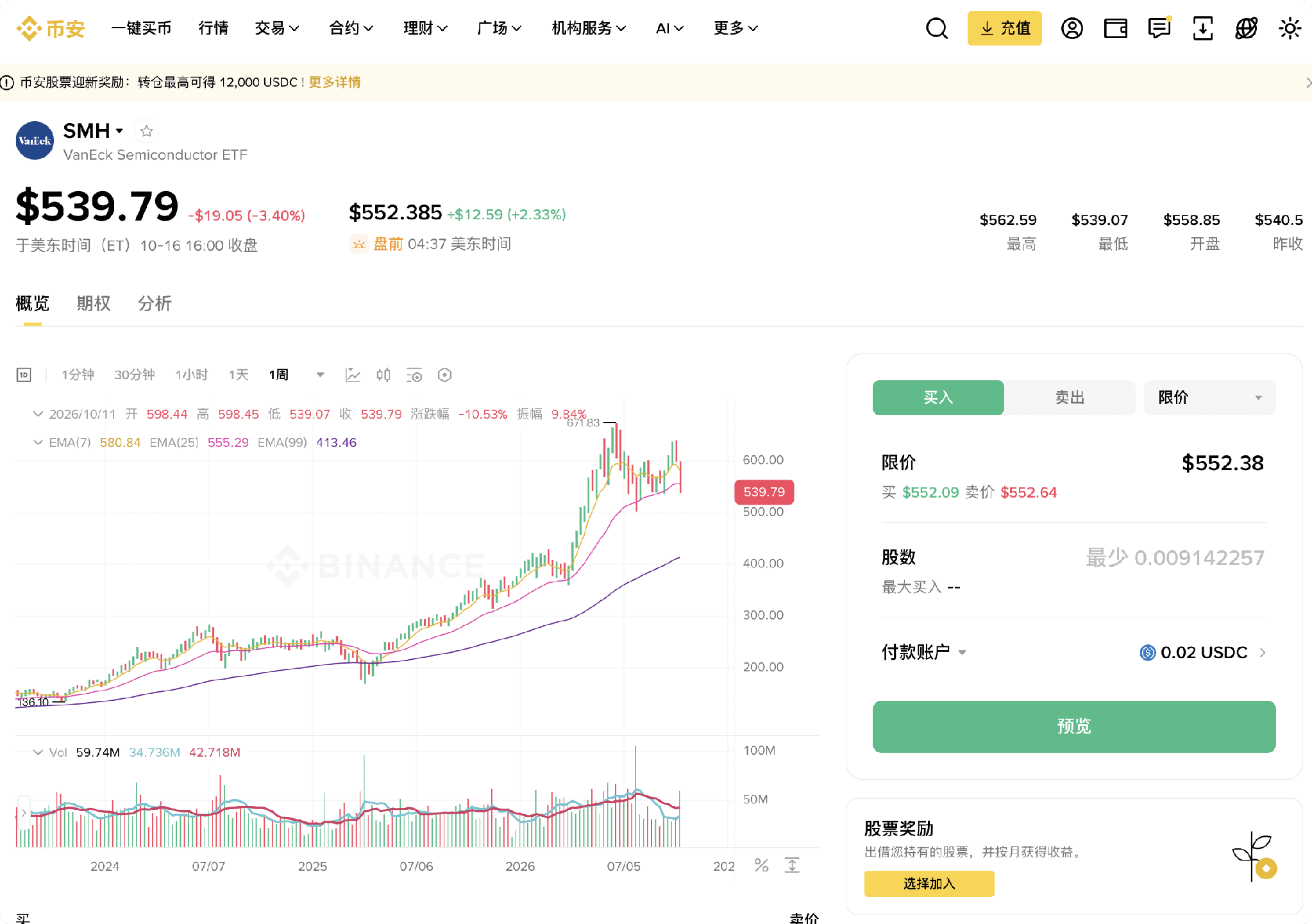
If one believes that AI has sustainable development potential, chips are indeed unavoidably foundational infrastructure. However, in addition to demand growth, one must also consider industry cycles, production capacity, competition, and valuation. Even the most promising sectors won’t automatically stabilize just because they're included in an ETF.
I prefer to focus the research on company operations, cash flow in financial reports, and corporate profits, combined with a technical perspective to observe appropriate entry opportunities. Understanding industry logic and timing for purchases are two distinct tasks that require separate diligence.
BOXX: Understanding a cash management approach distinct from stock investment. The previous discussion revolved around equity assets; here, we shift direction. BOXX mainly operates through a box options spread strategy, and it should not be understood as a typical stock fund.
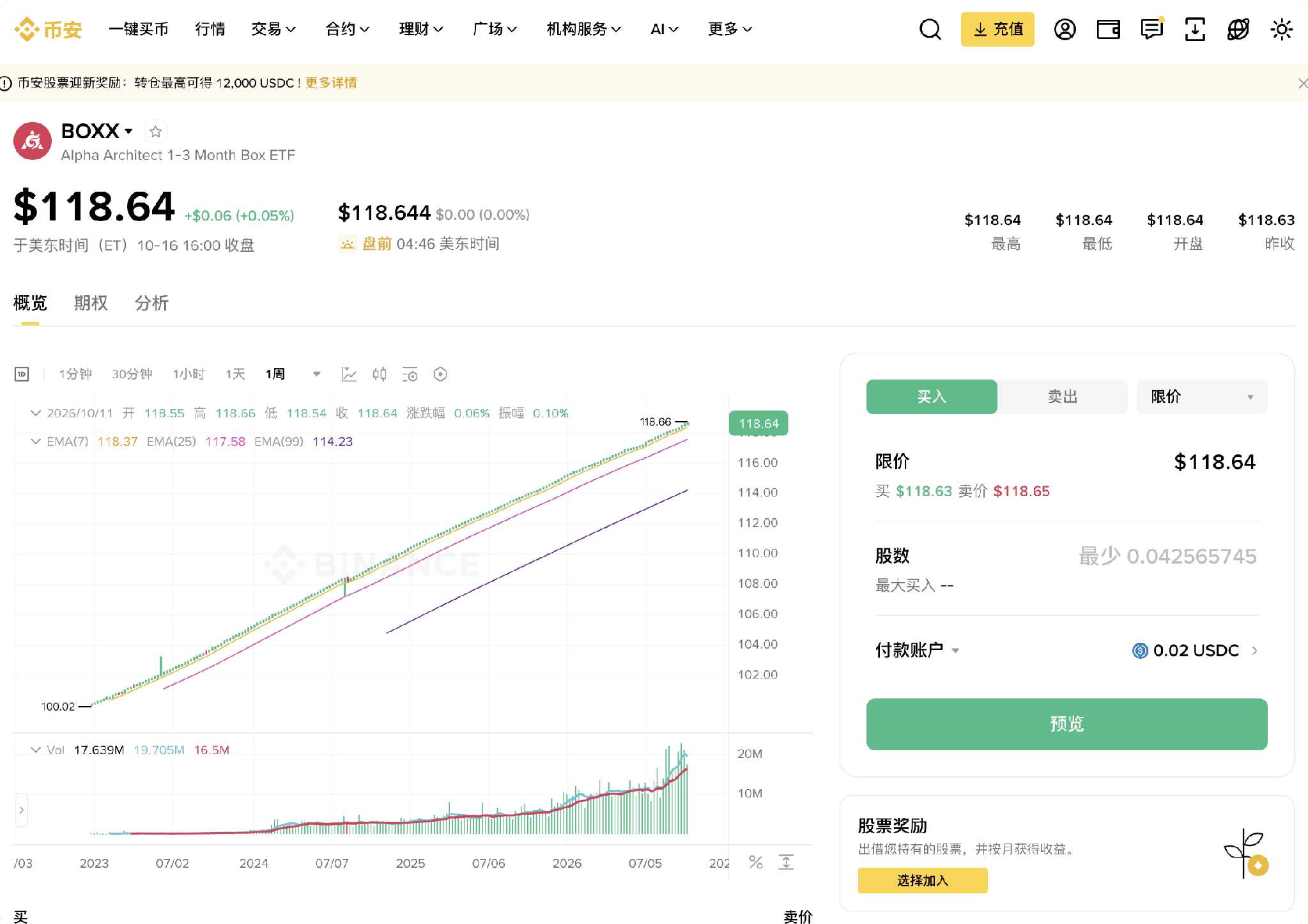
This explanation references a historical example as of the end of September 2026, with a total return of approximately 4% over the past year. The aim here is to illustrate its strategic characteristics, not to assign a fixed number for future returns; specific historical values should still be based on the fund's official disclosures for the corresponding period.
Seeing a relatively smooth historical curve can indeed make one feel at ease, but a smooth curve does not equate to the protection of principal. It is still a fund, not a bank deposit, nor a capital-preservation product. When studying short-term funds, it is necessary to clearly understand the strategic mechanism, costs, and trading risks, rather than just focusing on an annualized number.
IBIT: Obtain exposure to Bitcoin prices through a securities account. If you are interested in Bitcoin and wish to participate through such products, you can understand how IBIT operates.
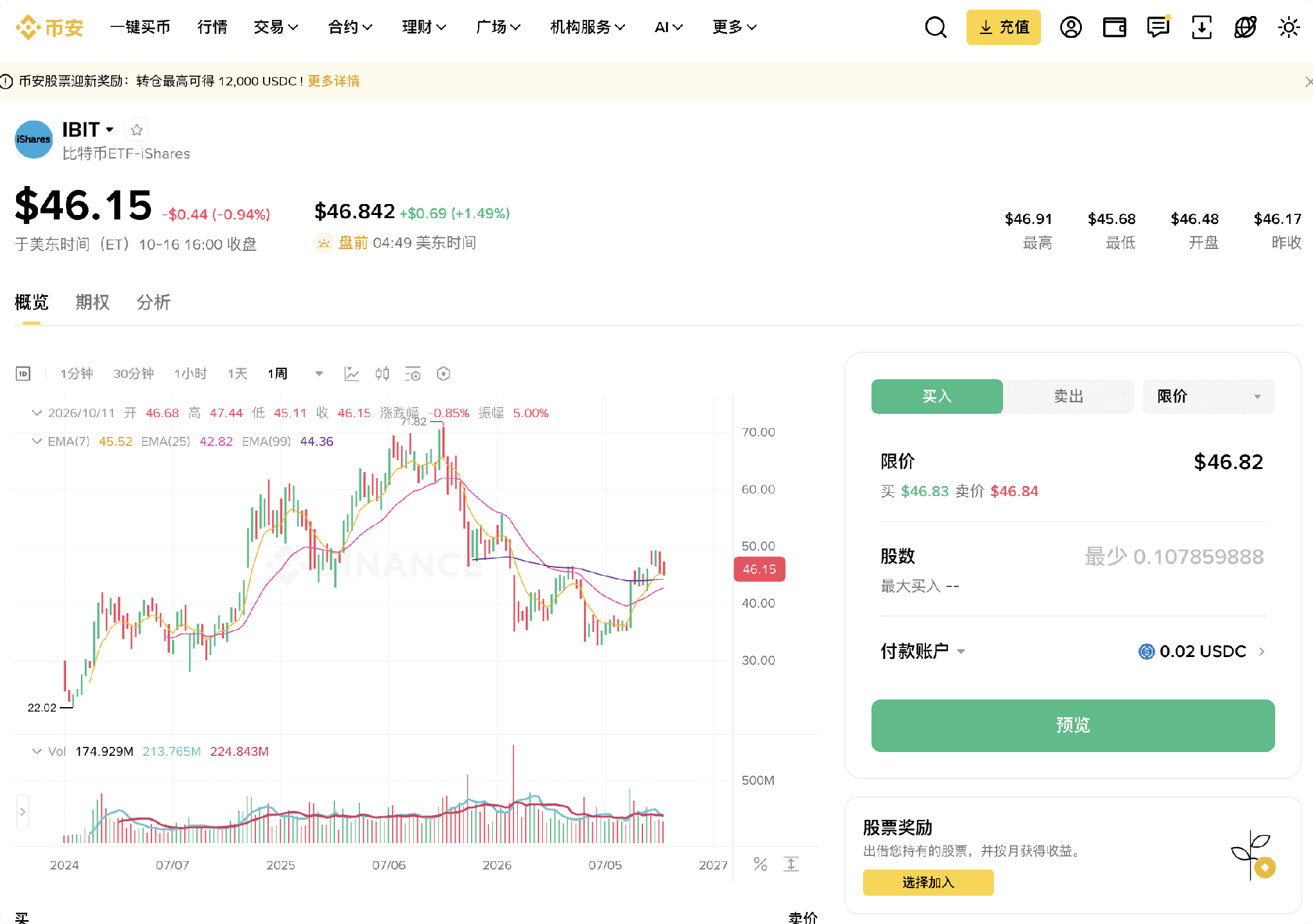
Its underlying logic differs from the previous several stock ETFs; it does not hold a basket of continuously profitable companies but mainly provides corresponding price exposure through holding Bitcoin. It is important to distinguish BOXX separately, as its underlying is an options portfolio, also not corporate stocks.
Changing the participation channel does not eliminate Bitcoin's inherent volatility. IBIT will still face significant fluctuations in Bitcoin prices; just because it has ETF in its name does not mean it should be treated as a low-risk tool.
Connecting these eight types highlights a key takeaway: a set sequence for research: what asset one wants to participate in, how it generates returns, where the risks lie, and then checking whether the price is appropriate.
If time is limited and frequent trading is not desired, ETF can reduce the burden of picking individual stocks, but the research step cannot be skipped. Understanding the role of each type in a portfolio is more useful than simply memorizing eight codes. Market opportunities will always exist; there is no need to jump on every single train.
Currently, there are live broadcasts every day, welcome to continue following AiCoin friends! Book in advance👇
https://www.aicoin.com/zh-Hans/live/list?tab=upcoming
Join our community, let's discuss and become stronger together!
Official Telegram community: https://t.me/aicoin_support
AiCoin Chinese Twitter: https://x.com/AiCoinzh
Aster Commission: https://www.asterdex.com/zh-CN/referral/9C50e2
Hype Commission: https://app.hyperliquid.xyz/join/AICOIN88
Binance Commission: https://jump.do/zh-Hans/xlink-proxy?id=3 Invitation code: aicoin668
Coinbase Commission: https://jump.do/xlink?checkProxy=true&proxyId=25 Invitation code: Y8L23JL
免责声明:本文章仅代表作者个人观点,不代表本平台的立场和观点。本文章仅供信息分享,不构成对任何人的任何投资建议。用户与作者之间的任何争议,与本平台无关。如网页中刊载的文章或图片涉及侵权,请提供相关的权利证明和身份证明发送邮件到[email protected],本平台相关工作人员将会进行核查。