
In the early morning of October 19, 2026, Musk wrote on X: "Next year, I will give one of my SpaceX shares to every kid in America. This will be the first of many." According to U.S. Census data, there are about 72 million minors under the age of 18. At SpaceX's closing price of about $146 on Friday, the total value is approximately $10.5 billion. Musk disclosed in an SEC filing in August that he holds about 6.42 billion shares (including trusts, restricted shares, and options), and this will account for about 1% of his shares. SpaceX went public in June 2026, and most of Musk's shares are restricted from being traded freely until June 2027.
This post appeared a few hours after Anthropic announced that it would invest 5% of its shares into a public welfare fund. Musk responded to Anthropic, suggesting "directly giving the shares to the public," and said, "that's what I'm going to do." Trump later stated on social media that Musk would distribute shares to the government-operated Trump Accounts project. When a user asked if it would be distributed through Invest America, Musk replied "Yes." Currently, public information does not indicate that this action is related to any war. The more direct context is a response to Anthropic's "public welfare fund" model and the connection with existing Trump Accounts.
This is not a sudden decision for large-scale charity; rather, it is a choice made to distribute shares directly in response to a competitor’s announcement of share arrangements and to integrate with the existing children's account projects. Specifics on how to determine eligibility, how to transfer shares, and whether there are age or nationality restrictions have not been disclosed by Musk.
The Custom of Independent Accounts for Children in the U.S., and Actual Cases
The U.S. has a long-standing tradition of opening accounts specifically for children. The most common is the 529 College Savings Plan: contributions grow tax-deferred, with withdrawals for qualified education expenses being federally tax-free, and some states offer tax credits for contributions. Custodial accounts (UGMA/UTMA) place assets under the child's name, managed by parents as custodians, with control transferring to the child upon reaching adulthood (typically between 18-25 years, depending on the state), providing more flexibility in how funds can be used, but with fewer tax advantages.
Established in 2025, the Trump Accounts are custodial traditional IRAs for minors. U.S. children born in 2025-2028 who meet the criteria can receive a $1,000 government seed funding. The account is managed by an adult, but the assets belong to the child. Contributions have an annual limit, with government seed funds and charitable contributions not counting towards that limit. The accounts predominantly invest in index funds that track the U.S. stock market rather than individual stocks or actively managed products. After turning 18, the accounts can be converted to Roth IRAs, with subsequent growth and qualified withdrawals enjoying more favorable tax treatment.
Why restrict to U.S. stock indices instead of allowing families to choose freely? There are several layers of consideration in the design. First, U.S. stock indices (like the S&P 500) are among the broadest with the longest historical data and best liquidity. Historical annualized returns that include dividend reinvestment typically fall in the range of about 7%-10%. It bundles the earnings, dividends, and buybacks of large American companies into a tradable basket, reducing the risk of failure from any single company. Second, passive tracking of indices incurs lower costs compared to actively managed funds, making them suitable for decades-long holding periods. Third, for accounts held by minors, limiting the investment scope can reduce excessive trading and timing, making the accounts more closely resemble "automatic accumulation" rather than "active trading." Fourth, U.S. stock indices are related to the main body of the U.S. economy, making it easier to build consensus on policies and facilitating synergy with the investment logic of existing pensions and retirement accounts.
Actual cases can be verified. SpaceX President Gwynne Shotwell had previously committed her own SpaceX shares to over 2 million children's Trump Accounts. The founder of Dell contributed about $6.25 billion to the Trump Accounts, and Micron also announced $250 million. These are not one-time stock gifts, but rather using children's accounts as containers for long-term accumulation. Families can continue to contribute to these accounts, utilizing compounding and tax rules.
What can be learned from these cases is turning "saving money for children" from a one-time action into a continuous rule: choose accounts with tax or structural advantages, make regular contributions, accept interim fluctuations, and decide on the use when the child reaches adulthood. The Trump Accounts aim to bind seed funding and index investment together, attempting to lower the barriers of "starting from scratch" with a system, rather than guaranteeing results.
The Position of Educational Funds in Family Asset Allocation, and Global Channel Comparisons
Educational funds are usually separately planned because they have a defined time window (college or vocational education), and some channels offer tax benefits. Common methods include:
- 529 plans or similar education savings accounts: clear tax benefits, usage is restricted.
- Custodial accounts (UGMA/UTMA): flexible, control transfers to the child after adulthood.
- Insurance or education annuities: some products offer guaranteed or locked-in returns, but with higher costs.
- Trusts: can set more complex conditions and timelines, higher cost and management requirements.
- Regular savings or investment accounts in the child's name: simple, but tax effects and aid applications need to be assessed separately.
Globally, similar tools vary by jurisdiction. Some countries have educational savings tax benefits, while others rely on standard family investment accounts or trusts. The common point is that: the earlier the start, the more consistent the contributions, and the more acceptance of volatility, the long-term results rely more on compounding rather than one-time timing. The crypto market can serve as one of the asset allocation tracks.
Which Functions on Binance and OKX are More Suitable for the Accumulation of Educational Funds?
The core requirement for educational funds is to keep the principal as stable as possible, with controllable volatility that can be withdrawn when needed. In the crypto market, while dollar-cost averaging in spot trading has long-term compounding potential, the significant price volatility makes it unsuitable as the primary vehicle for educational funds. More suitable are stablecoin financial products: convert funds into USDT, USDC, or other dollar-pegged stablecoins, and invest in the platform's savings or fixed-term financial products, with earnings coming from lending or platform activities, and the principal counted in stablecoins.
In Binance's "Earn Crypto," the savings product supports redemption at any time, suitable for funds with uncertain usage time; fixed-term products typically offer higher interest rates after locking in for a period, suitable for portions that won't be used for a few years. Recently, some stablecoin savings in laddered limits have reached around 6%-7% annualized returns (differences exist between regular users and VIPs, and rates will return to real-time rates after the event ends).
OKX's Simple Earn also offers both savings and fixed-term options, and the OKX Money launched in certain regions allows stablecoin holdings to earn interest, with eligible users able to see higher promotional rates on specific stablecoins. Both platforms support direct participation in stablecoins, with typically lower thresholds.
Binance referral link: https://jump.do/zh-Hans/xlink-proxy?id=3
Alternatively, log into the Binance APP and directly enter invitation code aicoin668. Below are the exclusive generous registration benefits for AiCoin invitation code:
Benefit one: Up to 440U for new customers
1. Deposit 100U + trade 100U → receive 100U position coupon
2. Deposit 1,000U + trade 50,000U → receive an additional 300U position coupon
3. Deposit 3,000U + trade 200,000U → receive an additional 40U cash coupon
Three levels can be combined; you can get the first level by depositing 100U.
Benefit two: Open blind boxes, up to 25 RE
1. Register + deposit 50U + trade 100U + log into the App
2. After completion, receive a blind box for the activity, randomly drawing RE tokens, up to 25 pieces
It is equivalent to a new user completing tasks to receive double benefits.
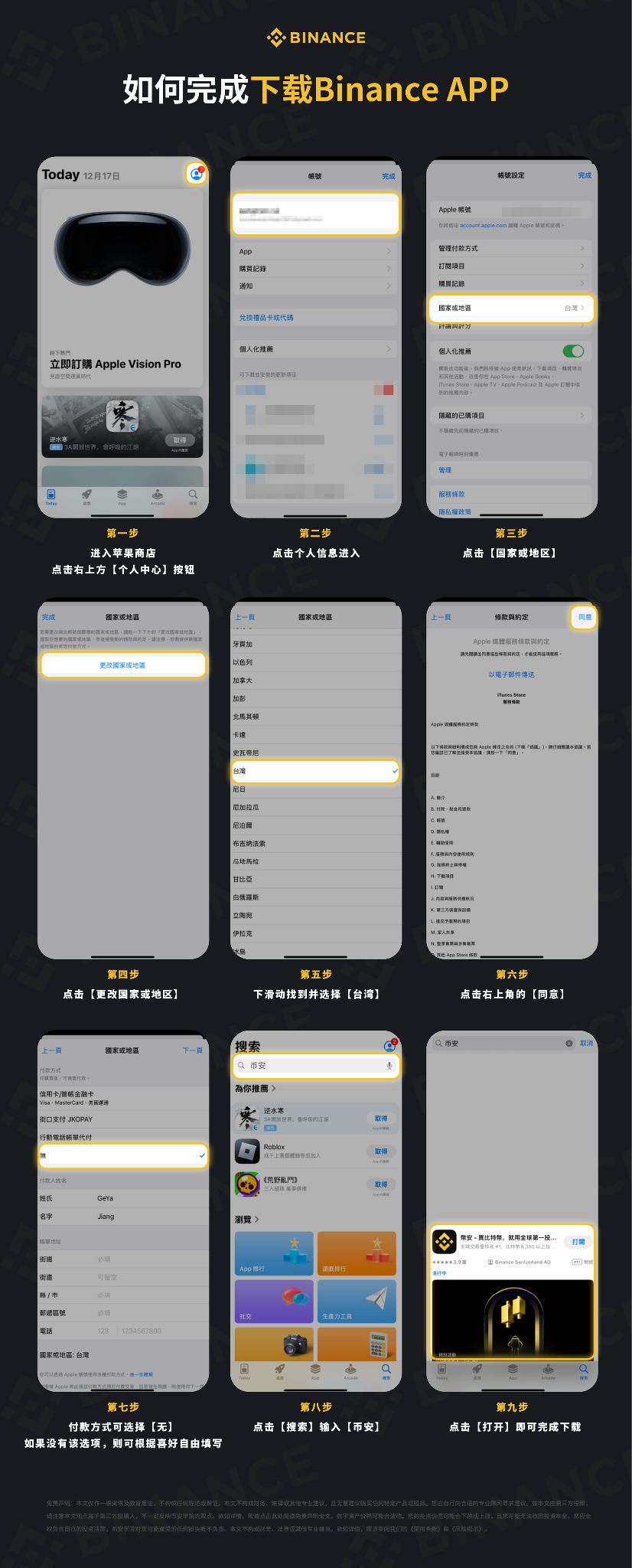
OKX referral link https://jump.do/zh-Hans/xlink-proxy?id=2
Or log into the OKX APP directly with invitation code aicoin20, exclusively enjoy a permanent 20% rebate on fees.
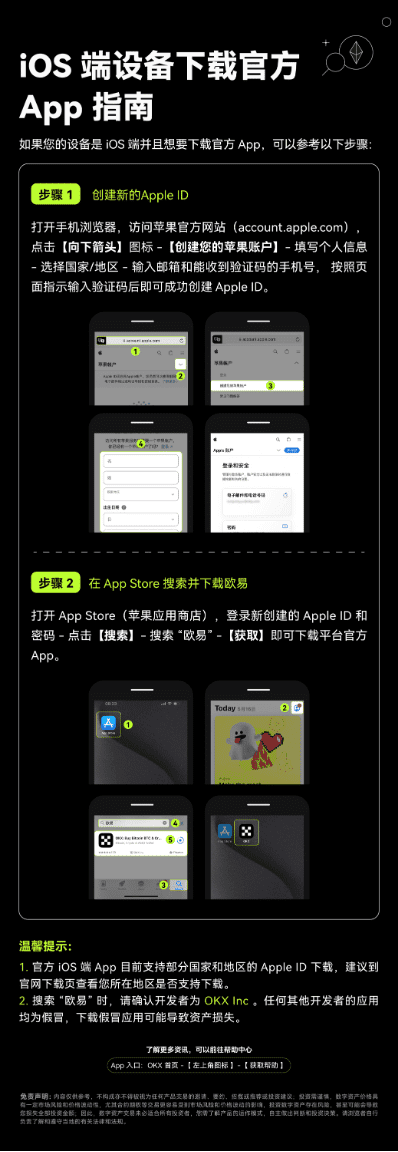
The suggested approach is to first complete identity verification, convert the funds intended for education into stablecoins, then choose savings or short-term fixed deposits. Savings allow for adjustments at any time, while fixed-term is suitable for portions that can be locked for some time. These products address the issue of "putting idle stablecoins into a profit-generating container," rather than guaranteeing the principal against losses. Platform risks, the decoupling risk of stablecoins themselves, and interest rate fluctuations still exist, and promotional rates usually have time and limit restrictions. Start with small amounts to test the process, confirm the redemption time and interest rate rules, then decide how much to invest.
What can be observed is not the value of one-time share gifting, but whether families turn the regular contributions of educational funds into a continuous rule and whether they choose vehicles with lower volatility. Musk's commitment is a one-time action; accounts and financial management are long-term containers. The results of educational funding depend on continuous contributions, whether asset volatility is controllable, and whether there are forced withdrawals in between. Binance and OKX provide stablecoin financial channels within the same account; this channel itself does not eliminate all risks, but comes closer to the goal of "trying to protect the principal" compared to directly dollar-cost averaging volatile assets.
免责声明:本文章仅代表作者个人观点,不代表本平台的立场和观点。本文章仅供信息分享,不构成对任何人的任何投资建议。用户与作者之间的任何争议,与本平台无关。如网页中刊载的文章或图片涉及侵权,请提供相关的权利证明和身份证明发送邮件到[email protected],本平台相关工作人员将会进行核查。


