
How a high-profit contract may have originated: The direction was correct, and leverage amplified the results.
Public monitoring shows that a trader opened a perpetual long position of approximately $57.5 million in SOL at around $80.86 on Hyperliquid about a month ago, using about 20x leverage. When the price subsequently rose to around $104, this position had a floating profit of about $13 million, and the account's net value was approximately $24.2 million.
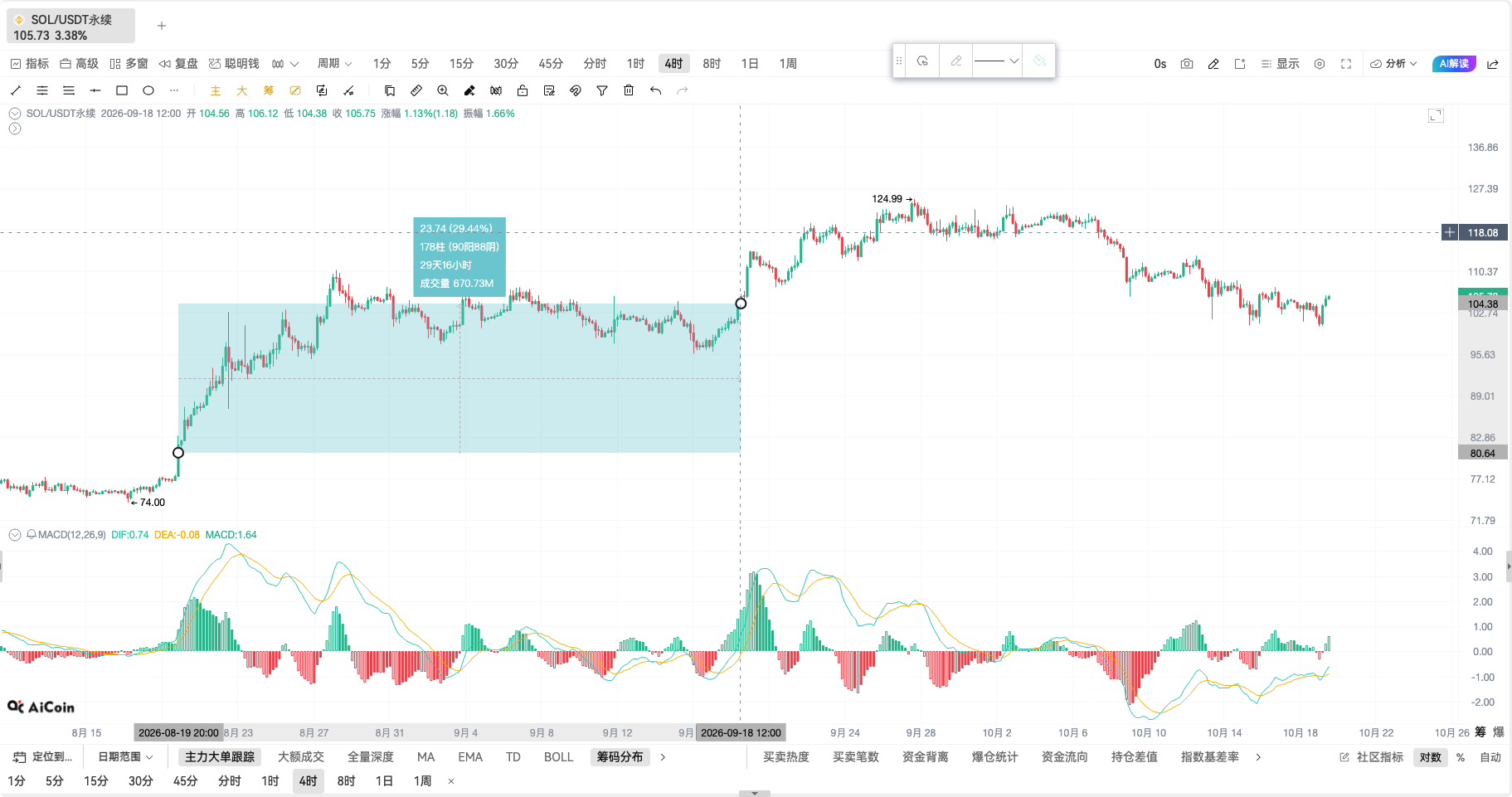
There are several possible reasons. First, the directional judgment was correct during the holding period: SOL rose from about $81 to around $104, an increase of about 29%. Second, leverage amplified the price increase: at 20x leverage, a 1% increase in price roughly changes the account equity by about 20% (ignoring fees and funding rates). Third, the price did not retract to the liquidation line during the holding period, and the margin was always sufficient. Fourth, this is a floating profit, not all positions have been closed, and subsequently, the price may still pull back.
This is not A (a stable, replicable strategy), but B (a result of being correct on direction, using leverage, and not being liquidated in between). The same leverage can quickly deplete the margin during reverse volatility. In public data, large liquidations of millions of dollars also occur frequently.
Contract knowledge: Breaking it down with life examples
Contracts themselves do not buy goods but bet on prices. Farmers worry about a drop in grain prices after a bountiful harvest, and they agree in advance with buyers to settle at today’s price three months later, making a profit if prices rise and incurring a loss if they fall. Translated to crypto: you do not hold BTC, you only settle based on the result of BTC's price fluctuations.
Going long and going short. Going long is like anticipating that concert tickets will increase in price, so you stock up on tickets and resell them when prices rise. Going short is like believing ticket prices will fall, so you agree to sell to someone next week at today’s price and buy low next week to deliver, making a profit on the difference.
Leverage is core. For a $1 million house, the down payment is $100,000, and you borrow $900,000. If the house price rises by 10%, you make $100,000, and your principal doubles; if it falls by 10%, the down payment is zeroed out. Corresponding: with 10x leverage, a 10% price increase generally results in approximately 100% profit, while a 10% decrease zeros out the principal (ignoring fees).
Liquidation is when the margin is reduced below the level needed to maintain the position, and the exchange forcibly closes the position. It's similar to a rental deposit, where if the price moves unfavorably, the deposit is gradually deducted, and when it hits a threshold, the landlord has the right to terminate the contract. It's also like stock pledging; if the stock price drops below the alert line, brokers sell off directly.
Perpetual contracts have no expiration date. Ordinary futures are like scheduled delivery, while perpetual contracts are like bike-sharing: you can rent and return anytime as long as you continually pay the "rent." This rent is the funding rate.
The funding rate prevents excessive crowding in long and short positions. If everyone is going long (too heavy on one side), longs pay shorts; conversely, shorts pay longs. A persistently high positive funding rate often indicates crowded long positions, with risk accumulating.
Open interest is the total amount still betting in the market, like the total chips on a betting table. The higher the open interest, the heavier the leverage on the market. A surge in open interest alongside unilateral price movement is more often driven by leverage rather than spot buying.
Sequential liquidations resemble a stampede or run on the bank. A price drop triggers the first batch of long liquidations, which are forcibly sold, further driving the price down and triggering the next batch. One person withdrawing funds can incite panic among others, similar mechanics at play.
Contracts can also be used for hedging. Miners, institutions, or individuals holding significant amounts of spot can hedge against downside risk by opening short positions, recouping losses in spot through their shorts. This is a primary use case for contracts.
Combined example: Assuming BTC is currently $80,000, you use $10,000 margin to open a 10x leveraged perpetual contract with a nominal position of about $100,000. If the price rises to $81,000 (+$1,000, about +1.25%), going long would yield about $1,250 profit (account equity rises by about +12.5%); going short would result in a loss of about $1,250 (account equity decreases by about -12.5%). The results would be reversed if the price moves in the opposite direction. Fees, funding rates, and slippage will alter the actual figures. The higher the leverage, the larger the percentage gain or loss corresponding to the same price movements, and the closer the liquidation threshold.
Data comparison: Transaction distribution between spot and contracts.
Spot is about buying the assets themselves; if prices fall, the asset remains. Contracts bet on price directions, and if margin is insufficient, you get liquidated. In September 2026, major exchanges had derivative transactions of about $3.84 trillion; Binance accounted for about $1.78 trillion (approximately 46.5% share), OKX about 18.2%, and Bybit about 10.6%. In the same period, spot trading ranged between approximately $700 billion and $1.1 trillion depending on different samples. The contract/spot ratio was approximately 5.51 times. Bitcoin’s perpetual/spot ratio on some platforms is even higher, reaching close to 8 times during certain periods.
The majority of transactions occur on the contract side, indicating that liquidity and speculative demand are concentrated in derivatives. This does not imply that the majority of funds are suitable for high leverage. High-leverage accounts often have shorter lifespans, with a single adverse fluctuation potentially triggering liquidation. In publicly available liquidation data, there are daily long liquidations reaching hundreds of millions, and single transactions of millions also occur frequently. Binance has consistently led in derivative transaction volume, typically offering better order book depth.
Common profiles of people who enjoy trading contracts
From public discussions and transaction data, those continually engaged in contracts often exhibit several characteristics.
The first type can accept that their principal may quickly zero out. They treat contracts as price bets, fully aware that a single adverse fluctuation might clear their margin, hence they only use spare funds and strictly set a maximum loss for each trade. This group is small but often holds positions for longer periods.
The second type pursues short-term magnified results. A 10% gain in spot feels slow; contracts use leverage to transform the same fluctuation into a higher percentage. They focus more on funding rates, open interest, and liquidation prices rather than the long-term logic of the underlying asset itself. This group trades more frequently but has a shorter account lifespan.
The third type hedges. Miners, institutions, or individuals holding significant amounts of spot use short positions to lock in downside risk, with losses in spot offset by gains in contracts. Their aim is not extraordinary profits but to minimize portfolio volatility. This usage aligns closely with the original function of contracts.
The fourth type treats contracts as high-frequency tools.
This group views perpetual contracts as short-term price tools rather than means for holding or hedging. Their characteristics usually include:
High trading frequency. Opening and closing multiple times in a day, holding periods measured in minutes to hours, rarely overnight. They focus more on order book depth, slippage, funding rates, and liquidation concentration areas rather than the fundamentals of the projects or long-term narratives.
Reliance on real-time data. They keep an eye on large transactions, changes in open interest, extreme values of funding rates, and liquidation heat maps simultaneously. When prices move quickly, they enter and exit based on these signals rather than "what this coin will do in the future."
Flexible positions but fixed rules. Individual positions may not be large, but leverage is low. The pre-set limits typically include maximum loss per trade and daily total loss limits, rather than target profits. They stop once they hit the limit rather than averaging down.
Sensitive to execution environments. More concerned about the transparency of the exchange's order book depth, liquidation rules, and system stability. Large order impacts and delays can directly affect outcomes, so liquidity-rich venues are more important to them.
Clear risk characteristics. High frequency means more exposure to slippage and funding rates, and an extreme market event can trigger multiple liquidations. Public data shows that daily liquidation events number in the thousands, and exits from these accounts are often forced. Those who can continue to participate usually do so because they only use spare funds and have strict daily loss limits written as hard rules.
These individuals do not necessarily "understand contracts better," but view contracts as a tool requiring continuous monitoring and strict risk control. Those who cannot accept frequent losses or consistently monitor trades may not be suited for this path.
If you frequently monitor the market, you can use AiCoin's candlestick tool in conjunction with major transaction data. Candlesticks only show the results of price and volume, while major transactions highlight large orders, revealing whether they are active buys or sells and where they concentrate, as well as the frequency. When using, you can set the candlestick interval to 5 or 15 minutes, while keeping the large transactions panel open, observing whether there are consecutive large active buys or sells near key price levels. If prices rise but large transactions are predominantly sales, then the increase may come more from smaller orders or passive transactions; if prices consolidate while large active buys persist, it may indicate funding is supporting the price. Funding rates and open interest can be compared on the same interface: consistently high funding rates paired with rapidly increasing open interest often indicate crowded long positions, and subsequent volatility may amplify.
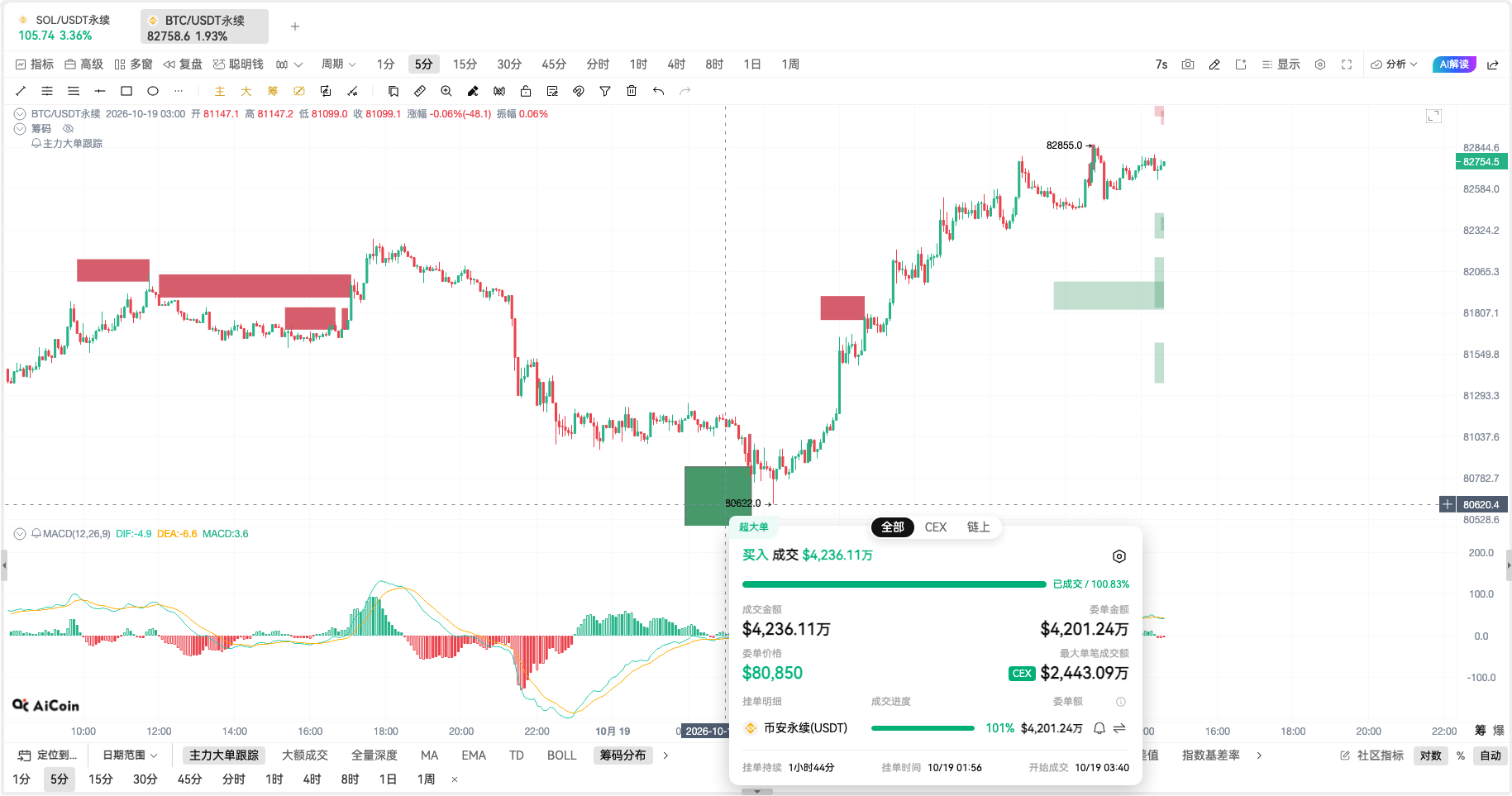
Taking recent publicly visible data as an example: during the price rebound of a mainstream coin from a low point, AiCoin's large transaction panel shows multiple million-dollar active buys concentrated in the same price range, while open interest rises in tandem and funding rates shift from negative to positive. The price continues to rise, but large transactions begin to shift towards a selling dominance, and the growth rate of open interest slows. This type of combination suggests that earlier price increases have significant funding backing, while later movements might indicate profit-taking or rampant leverage. Analyzing these data points before opening positions, rather than searching for reasons post-entry, can reduce the situation of realizing "I didn't notice the crowd until after I entered." Data serves as an observational tool rather than a signal for orders, ultimately depending on whether the pre-set loss limits are enforced.
Recommendations for beginners: Who is suited for this, and how to start on Binance
Individuals suited to trading contracts are those who can accept that their principal might significantly devalue or even zero out in a short time, only using spare funds that, if lost, do not impact their living situation, and pre-set a maximum loss for each trade as a very small percentage of their total spare funds (for example, 1%-2%), and can continue to follow rules in executing trades after losses. Those who cannot accept these conditions are better suited for spot trading or dollar-cost averaging.
New users should note: Leverage amplifies losses; funding rates are continuously incurred during the holding period; under extreme conditions, slippage and liquidation prices may deviate from expectations; do not use living expenses or borrowed funds; start with low leverage (2-5x), mainstream coins, and very small positions; write rules before opening positions.
Qualified users wanting to start on Binance should consider: Binance has long led in derivative trading volume and liquidity, encountering relatively minor large order impacts; liquidation rules are publicly transparent, supporting risk limits, stop losses, and sub-account isolation; the same account can execute both spot and contract trades, facilitating fund transfers. Complete the verification first, use only spare funds to start with low-leverage perpetual contracts in Bitcoin or Ethereum, beginning with a very small amount to test the process.
Exclusive Binance link for AiCoin:
https://jump.do/zh-Hans/xlink-proxy?id=3
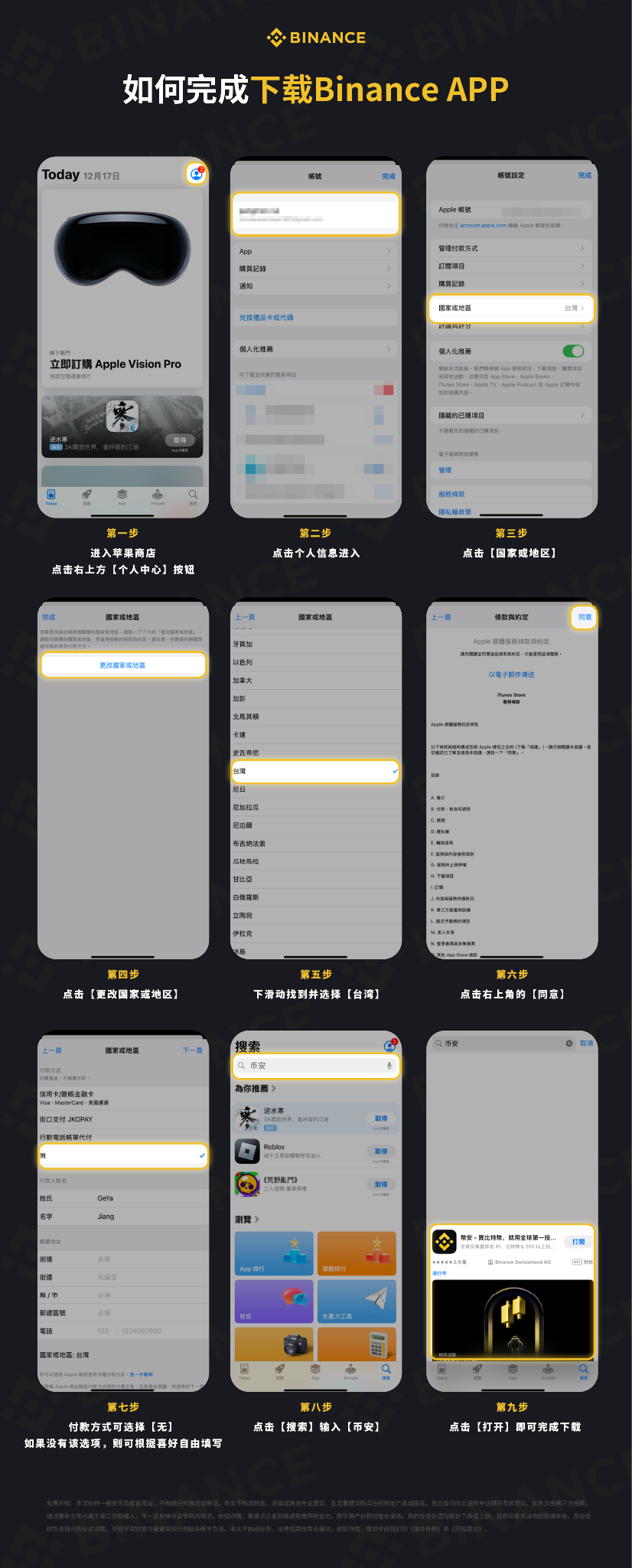
Or log into the Binance app and directly fill in the invitation code aicoin668. Below are the exclusive and generous registration benefits from AiCoin:
Benefit 1: Up to 440U for new customers
1. Deposit 100U + trade 100U → receive 100U position voucher
2. Deposit 1,000U + trade 50,000U → receive an additional 300U position voucher
3. Deposit 3,000U + trade 200,000U → receive an additional 40U cash voucher
The three tiers stack, depositing 100U allows one to obtain the first tier.
Benefit 2: Open blind boxes, with up to 25 RE tokens
1. Register + deposit 50U + trade 100U + log into the App
2. Upon completion, obtain a blind box, randomly drawing RE tokens, up to 25 pieces.
This means a new user can receive double benefits after registering and completing the tasks.
What can be observed is not how high a single floating profit is.
Look at whether you execute according to the pre-set loss ratio, monitor whether funding rates are persistently extreme, and check whether open interest accumulates rapidly in unilateral market movements. Contracts are tools for settling price fluctuations with margin; leverage is its core characteristic and source of risk. If the direction is correct, it can amplify returns; if the direction is wrong, it will quickly deplete the margin. Binance provides a venue with liquidity and clear rules, but the venue itself does not alter the risks associated with leverage. First establish rules, then determine positions.
Risk warning: This does not constitute investment advice; you may lose all principal; comply with local laws; do not participate using leverage, borrowed, or living expense funds.
免责声明:本文章仅代表作者个人观点,不代表本平台的立场和观点。本文章仅供信息分享,不构成对任何人的任何投资建议。用户与作者之间的任何争议,与本平台无关。如网页中刊载的文章或图片涉及侵权,请提供相关的权利证明和身份证明发送邮件到[email protected],本平台相关工作人员将会进行核查。