Buying in fear of a drop, selling in fear of a rise. Every day, opening the market software, the account hasn't made much profit, but the mood rides a roller coaster with the price.
If you feel the same way, you might be curious: Is there a way to not put all the hope of making money on "guessing the rise and fall"?
Binance smart arbitrage provides a way of thinking: by matching spot and contract positions, it aims to minimize the impact of price fluctuations on the combination, while attempting to earn "funding fees".
However, not being so reliant on market direction does not mean you won't incur losses. Understanding this difference is more important than remembering the annualized yield on the page.
This article is compiled based on Binance official information available as of October 19, 2026 and does not reference previous activity rates as current yield commitments.

First understand: what exactly is being done by buying and shorting at the same time
We illustrate with a set of hypothetical numbers.
Xiao Lin bought 0.01 BTC in spot, while establishing a corresponding 0.01 BTC short contract position. A short can be simply understood as: making money when prices fall, losing money when prices rise.
Assume that when the positions were opened, both spot and contract prices were 100,000 USDT, and they later change synchronously:
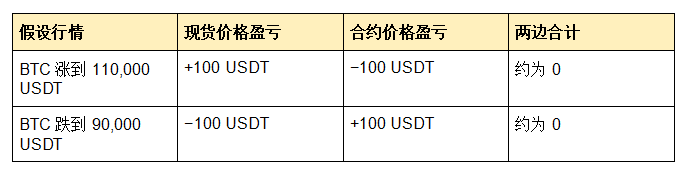
The above is a simplified teaching example, without considering trading fees, funding fees, price differences, and execution errors, and does not represent actual earnings.
After this setup, Xiao Lin did not bet all hopes on BTC rising. The price gains and losses on both sides can, in an ideal situation, offset each other.
This is the basic meaning of "hedging". Binance smart arbitrage has turned this kind of spot and perpetual contract combination into a manageable tool, reducing the steps of manual operation.
With both sides' price fluctuations offset, where does the profit come from
The key lies in the "funding rate" of perpetual contracts.
Perpetual contracts have no fixed expiration date. To keep contract prices as close as possible to the underlying price, the market has set up a mechanism for regular payments between longs and shorts.
You can remember:
When the funding rate is positive, it is usually the longs paying the shorts; when the funding rate is negative, the shorts pay the longs.
For the earlier combination of "buying spot, shorting contracts," a positive funding rate means the contract shorts may receive funding fees. However, if the rate turns negative, that party may need to pay.
This money comes from payments between position holders and should not be understood as a guaranteed fixed interest paid by the platform. The actual settlement frequency, timing, and rates depend on the rules of the corresponding contract.
Crunching the numbers: receiving rewards doesn't necessarily mean making profits
Now let’s look at an independent hypothetical example.
Assume at a certain settlement, the nominal value of the contract position is 1,000 USDT, and the funding rate is 0.01%, and you are on the receiving end.
Then, this funding fee would be:
1,000 × 0.01% = 0.10 USDT
Here, the 1,000 USDT is the nominal value of the contract position, it doesn’t mean that by subscribing 1,000 USDT, you will necessarily have the same billing position and returns.
Assuming that over a period of time, you accumulate 8 USDT in funding fees, while the costs generated by opening and closing positions and unfavorable price differences total 5 USDT, ignoring other impacts, the remaining amount would be about 3 USDT.
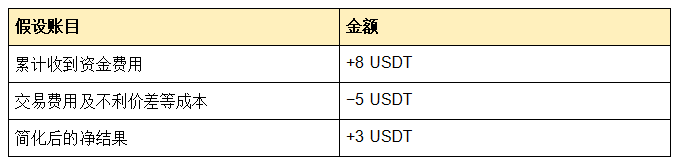
If the costs become 10 USDT, still receiving 8 USDT, you may end up losing 2 USDT.
So, "cumulative funding fees being positive" and "the entire investment portfolio being profitable" are not the same thing.
The numbers above are for explaining the calculation method, not Binance quotes or profit predictions.
What is its appeal compared to traditional wealth management
If you are familiar with bank deposits, you might be used to looking at the interest rates first, then deciding how long to deposit. But smart arbitrage is primarily a trading strategy, and its returns depend on market conditions and execution results.
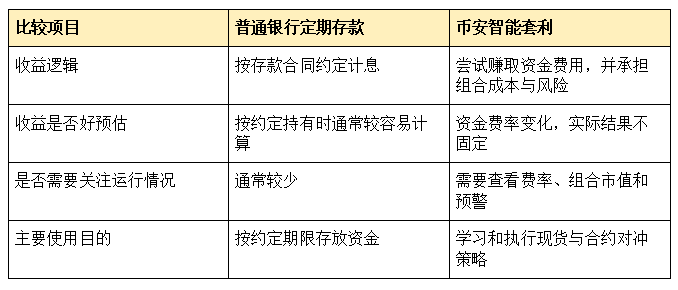
The interesting aspect of smart arbitrage is that it offers a different approach to earning compared to simply buying coins for price rises, also concentrating the operations into one entry point.
Its convenience primarily lies in execution and management; thus, it should not be treated as bank deposits protected by deposit insurance.
Want to learn about operations, where to start
Register on Binance:
https://jump.do/zh-Hans/xlink-proxy?id=3
According to the official tutorial, you can enter Binance at:
Finance → Advanced earning → Smart arbitrage
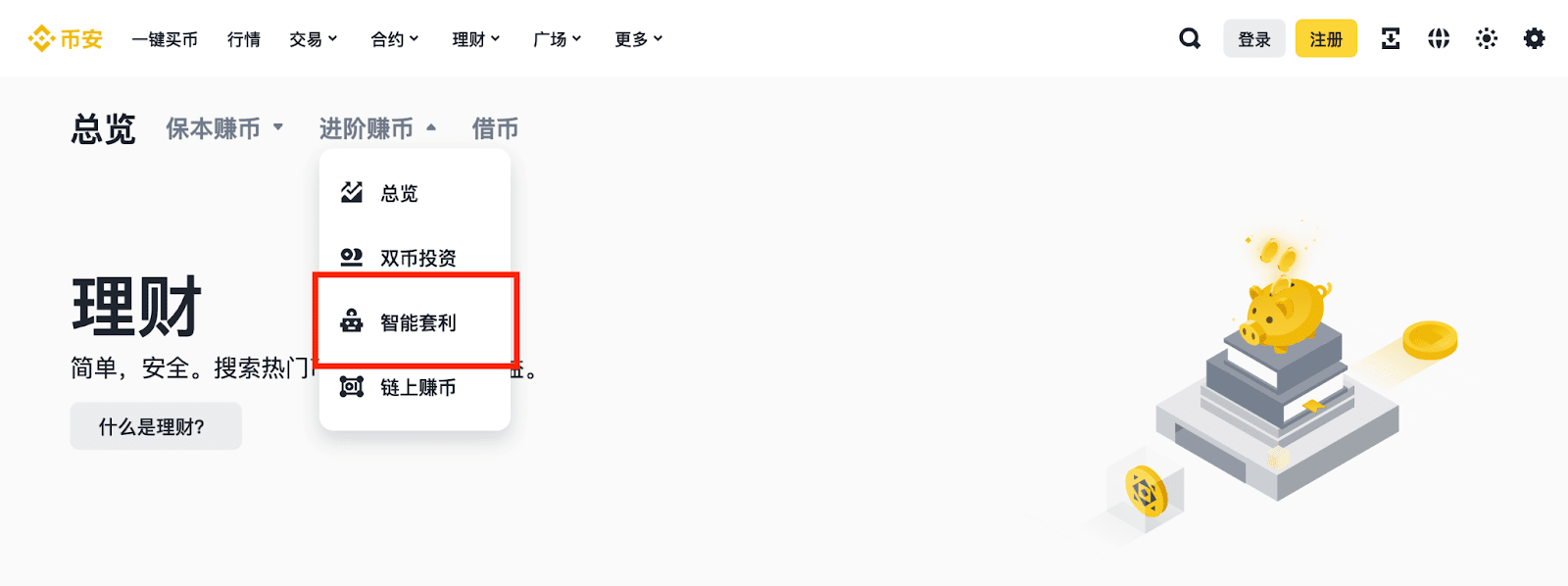
The official tutorial illustration; the interface may vary by version, and the historical data in the image is not a basis for current returns.
After entering, review the available portfolios and subscription conditions, then input the amount, read the rules, and confirm. Different regions, account qualifications, and product statuses may affect available functions; refer to your own page for specifics.
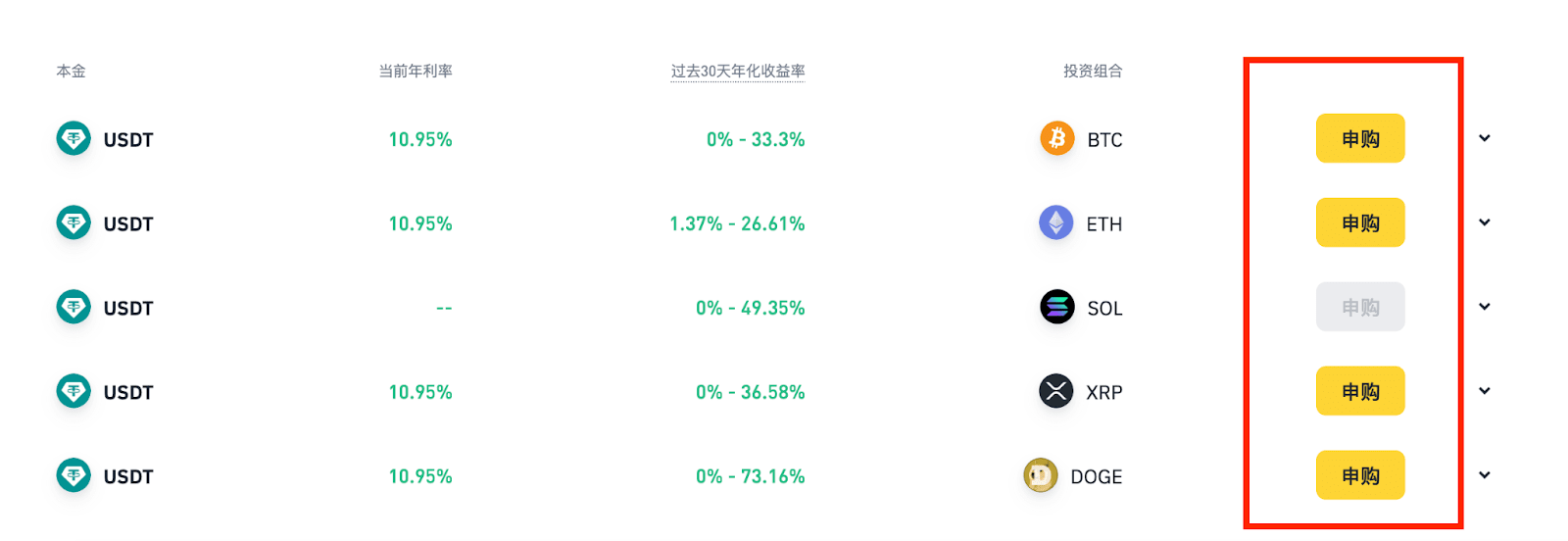
Don’t skip the product description just because a number looks particularly high. If you can’t clarify who is paying for this income, or under what circumstances you need to pay back, understanding the rules is more valuable.
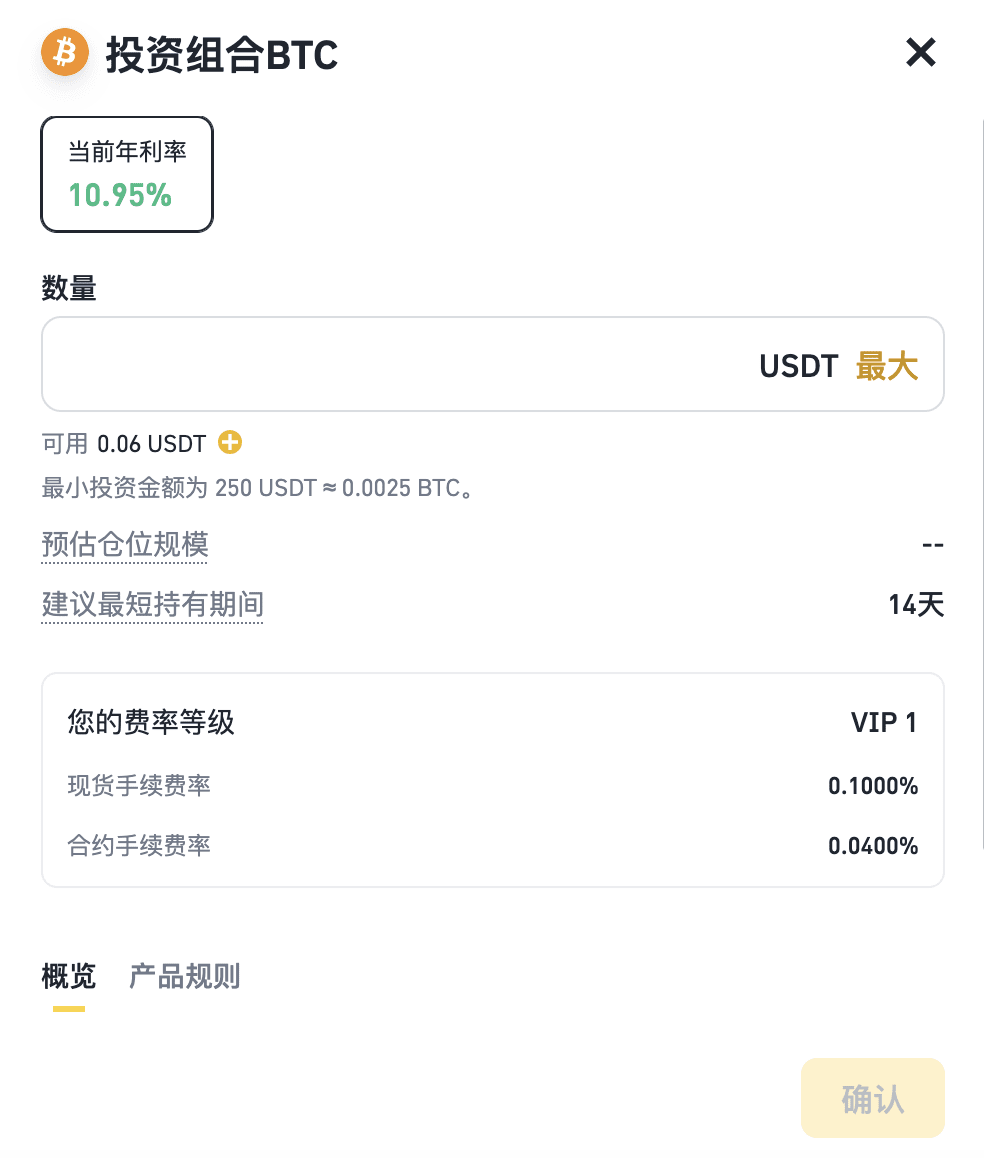
After subscribing, you can view the position, cumulative funding fees, and portfolio market value in "My Portfolios." When you need to end, use the corresponding redemption entry to close the strategy. Redemption includes the process of exiting the trading position, and the final amount depends on the actual execution results.
Details that beginners are most likely to overlook
Taking the annualized number as a promise for a year later.
Annualized is converting the profit level of a certain period into an annual basis. If a page shows a 12% annualized yield, it does not mean that an investment of 1,000 USDT will definitely earn 120 USDT after a year. You also cannot directly use a single funding rate as your annual return.
Seeing a floating loss right after subscribing, thinking there’s an error with the product.
There are costs and price differences for opening positions, and initially showing a negative yield may not be abnormal. But it shouldn’t be assumed that “waiting a bit longer will definitely break even,” as subsequent rates may not continue to be favorable.
Thinking that hedging means no risk of liquidation.
Binance clearly reminds that under extreme market conditions, the spot and contract prices may adjust unsynchronously, or unfavorable funding rates may continuously erode the margin, potentially leading to liquidation risks.
Constantly switching to show higher yielding portfolios.
If you frequently move in and out, incurring costs each time, the apparent high yields may not have been earned yet, as transaction fees have already been incurred. When comparing strategies, consider the costs of exiting old positions and establishing new positions together.
Only looking at how much money has been received without considering the overall account value.
Funding fees are part of the income. When evaluating results, the combination of portfolio market value, realized and unrealized profits and losses, and any exit costs yet to incur should be considered to avoid double counting the same income.
These issues are also factors to pay attention to when understanding the operational and cost aspects of funding rate arbitrage strategies.
Who is it suitable for understanding
If you already know the basic differences between spot and contracts and are willing to check the strategy status regularly, smart arbitrage is worth exploring as an advanced course: it can help you understand that returns in the market do not only come from "buying low and selling high".
If you hope that the principal cannot be lost at all, or if you only want to deposit and not care at all, then it does not meet that demand.
My advice is: First understand a complete yield calculation, then decide whether to participate. It is more important to be able to explain funding fees, trading costs, and loss circumstances than to find a seemingly high annualized number.
What is really worth mastering is not the easy-sounding name of "arbitrage," but the ability to judge whether a profit is worth the corresponding risk.

👉 Want to experience Binance's earning functions? Click to register on Binance:
https://jump.do/zh-Hans/xlink-proxy?id=3
(Invitation code: aicoin668, enjoy 10% commission )
Join our community to discuss and grow stronger together!
Official Telegram community:
AiCoin Chinese Twitter:
Binance benefits group:
https://www.aicoin.com/link/chat?cid=gmLgwvKD1
Disclaimer
This article is for product introduction and knowledge dissemination only and does not constitute investment advice or profit commitments. The calculations in the article are hypothetical examples and do not represent real-time prices, actual rates, or future performance. Smart arbitrage involves spot and contract trading, which is subject to risks from funding rate fluctuations, price differences, execution, liquidity, platform, and liquidation, possibly leading to a loss of principal. Product qualifications, fees, limits, and rules are subject to Binance's latest pages and applicable terms; please make independent judgments based on your own risk tolerance.
免责声明:本文章仅代表作者个人观点,不代表本平台的立场和观点。本文章仅供信息分享,不构成对任何人的任何投资建议。用户与作者之间的任何争议,与本平台无关。如网页中刊载的文章或图片涉及侵权,请提供相关的权利证明和身份证明发送邮件到[email protected],本平台相关工作人员将会进行核查。