At two seventeen in the morning, the light in his study was still on.
The computer screen cast a pale glow on his face. Three monitors were lined up side by side: on the left was the semiconductor sector after the U.S. stock market closed, in the middle was the real-time chart of the Hang Seng Tech Index, and on the right was the live liquidation data for cryptocurrencies and large on-chain transfers. The cold coffee beside him had formed a thin film of oil, and he reached for it, then paused—an alert suddenly popped up in the lower right corner of the screen, and he instinctively placed the cup back down, tapping a couple of keys on the keyboard.
During the day, someone at the dining table had commented about him: “You earn over a million a year, why are you still living in this old community? You bought your car five years ago, and you won’t even allow yourself a decent vacation. Are you particularly stingy?”
He smiled but didn’t explain.
It’s not that he doesn’t want to spend; he really has no time to spend.
While others are resting, he is “groping in the dark” for information.
For investors, there is rarely a true ‘off work’ time.
A day for U.S. stock investors often really begins at night. Once Nasdaq opens, the screen cannot leave their sight. The capital expenditure realization of the Big Seven tech giants, Philadelphia semiconductors, AI industry chain… any news could make accounts fluctuate dramatically within minutes. The recent days have been especially evident: the Fed’s minutes were hawkish, market expectations for interest rate hikes heated up, chip stocks collectively corrected; Nvidia’s market value evaporated by hundreds of billions overnight, the semiconductor sector saw significant drops. Traders have to choose the brief calm before the market opens even to drink water. Many people have completely disrupted their biological clocks: sleeping during the day, awake at night, and still need to monitor after-market news and research updates over the weekend.
People in Hong Kong stocks start even earlier. Before the morning session at nine, they need to digest everything from overnight U.S. stocks, macro data, foreign capital flows, to exchange rate changes. The Hang Seng Tech Index has recently seen considerable volatility, and the rise and fall of tech heavyweight stocks directly affect sentiment. Many people wake up around six in the morning, first checking group messages, then opening market software to confirm whether there are any unexpected bad or good news. During the day, they must continue to follow discussions in social circles and real-time comments from influential figures, fearing that they might miss key information.
A-share investors, however, are “daytime warriors.” Tension starts at the opening auction, monitoring sector rotations, main capital flows, the Dragon and Tiger list, and real-time discussions in communities during the trading session. The sell-off in the tech sector after the holiday left many still unable to recover. Optical modules, CPOs, semiconductors—one wave after another—when accounts retrace, even lunch breaks become “let me check the research report one more time.” Some people bring their lunch directly to their desks, eating while refreshing transaction volumes and fund flows. In the evening, they review trades, and during the day they monitor the market; it’s a never-ending cycle.
Those engaged in cryptocurrencies have almost no concept of day and night. The market operates 24 hours, with Bitcoin fluctuating around eighty thousand, liquidation data refreshing every few days, and the opinions of influential figures in the community, on-chain data, and ETF fund flows can all serve as key signals. While others sleep, they refresh. Some place their phones by their pillows, awaking whenever a message arrives; others simply leave their trading software open on tablets and check positions at three in the morning.
During the day, he tries to minimize rest, keeping an eye on messages in various groups, the dynamics of influential figures, and comments. A sudden news report, an analyst’s opinion, or a change in a fund’s position can all alter his judgment. Research reports seem never-ending, candlestick charts are insufficient, and information is constantly updating. His phone buzzes with messages from dozens of groups, flying by at lightning speed; he worries about missing something if he doesn’t look, but if he does, he feels overwhelmed by the noise of information.
This is the daily life of working in investment. It’s not about sitting in an office sipping tea and chatting, but the eyes and brain are almost in constant operation. An annual income of a million sounds glamorous, but the time available for consumption is squeezed to nearly nothing by work. Even planning a nice meal or watching a movie must wait until the question of “Is there something major happening in the market today?” is confirmed. Sometimes, after finally managing to arrange a meet-up with friends, a sudden market fluctuation forces them to reschedule the meal for the evening or cancel it altogether.
The market hasn’t been great lately, and my mood has followed suit
The global market has been anything but stable these past few days. The tech stocks in the U.S. have corrected, semiconductors are under pressure, and the Nasdaq has seen heightened volatility; the A-shares have undergone noticeable adjustments after the holiday, particularly in growth styles, especially in hardware technology, where many accounts have recorded losses; the cryptocurrency market has also experienced a rapid dip and liquidations, with Bitcoin battling at crucial points. The fluctuations in account numbers are clearly etched on faces.
Many people say they believe in “long-termism,” yet when their accounts drop, they still can’t sleep at night. While watching friends post pictures of weekend getaways, family dinners, and children’s smiling faces, they find themselves reconciling holdings, revisiting logic, and doubting whether they misread the market direction. The exhaustion isn’t just physical; it’s emotional too. Sometimes, staring at the red text on the screen makes them feel as if they haven’t grasped anything—money hasn’t been spent, and time hasn't been saved.
Investment itself is cyclical. There are good times when an account can gain the equivalent of several months’ salary in a single day, lifting one’s spirits; there are also bad times when one endures, waits, and doubts, even losing appetite for food. Good and bad almost inevitably alternate. No one can always be on the rising side. The market won’t reward you for your hard work, nor will it provide a clear direction just because you stayed up late. It moves at its own pace, and all you can do is adjust yourself to its rhythm.
On weekends, give yourself and your family some “tangible” time
If your account has been making you feel down lately, it might be a good idea to put down the phone and take a walk with your family. There’s no need to go far—a stroll in the park, wandering around a mall, grabbing something warm from a street vendor, or just playing with kids downstairs in the community for a while. See real people, real scenery, and the real warmth of life.
These offline experiences that can be touched, smelled, and laughed about can sometimes help one recuperate more than reviewing ten research reports. The market will continue to fluctuate, and cycles will keep turning, but those few hours with family are certain. When a child pulls your hand and runs ahead, the candlesticks on the screen may temporarily seem less important.
Family asset allocation is more important than betting heavily on a single market
Investing can be exhausting because we often tie “making money” too closely to “living.” By making family assets structurally clearer, one can actually sleep a little better. Funds earmarked for different goals should be allocated in different ways rather than thrown into one highly volatile basket.
Child education funds have a relatively defined timeline, and it's advisable to emphasize stability. Prioritize tools like annuity insurance, education insurance, or increased paying whole life insurance, which can lock in a relatively certain compounding return and are insulated from short-term market fluctuations, suitable as the “base” for education funds. On this basis, a small portion of broad-based indices or balanced funds can be added for long-term appreciation, but the proportion should not be too high. In the years closer to using the money, gradually reduce equities to avoid being forced to sell at a market low.
For your own retirement funds, with longer cycles, a higher equity ratio can be considered. Long-term holding of high-quality stocks and index funds is core, while a portion of gold or inflation-resistant assets should be allocated. If risk tolerance allows, a very small portion (e.g., 3%-5% of total assets) can be placed in alternative assets like cryptocurrencies as a supplementary long-term allocation, but this should not serve as a primary position. The goal of retirement funds is to span multiple cycles rather than pursue short-term windfalls.
Everyday emergency and survival funds should cover 6-12 months of living expenses in money market funds or highly liquid accounts, supplemented by adequate insurance for critical illness, medical needs, and accidents. This portion of money does not pursue yield; it seeks to be “always available.” First, set aside funds for survival and necessary expenses, and only then consider money-making assets.
Different fields can be integrated. A-shares and Hong Kong stocks are suitable for mid-to-long-term value and growth layouts, focusing on directions with solid fundamentals, stable dividends, or growth potential; U.S. stocks can involve global tech and consumer leaders, paying close attention to the Big Seven tech giants, AI industry chain, semiconductors, and related index ETFs, which are fields with relatively clear long-term narratives, but also be mindful of valuation and macro interest rate changes; the crypto market is more suitable as a high-volatility but long-term narrative supplement, primarily focusing on Bitcoin and Ethereum, observing ETF fund flows, macro interest rate environments, on-chain data, and overall market sentiment, participating with small positions and strictly controlling ratios.
The key is not to go all in on a single market but to let them complement each other across different cycles. Stocks, bonds, insurance, and alternative assets each play their roles, allowing for steadier family cash flow and long-term goals.
If you want to do global asset allocation, consider one platform
If you wish to engage in global asset allocation while covering traditional markets and emerging assets, consider the Binance platform. It not only offers cryptocurrency trading but has also launched tokenized U.S. stocks (bStocks) and other products, allowing users to trade crypto assets and tokenized stocks on the same platform with 24/7 trading, quick settlement, and one-click switching between different assets. For investors looking to simultaneously layout related assets in U.S. stocks and cryptocurrency markets, it reduces the hassle of cross-platform operations and facilitates overall position management and asset rebalancing.
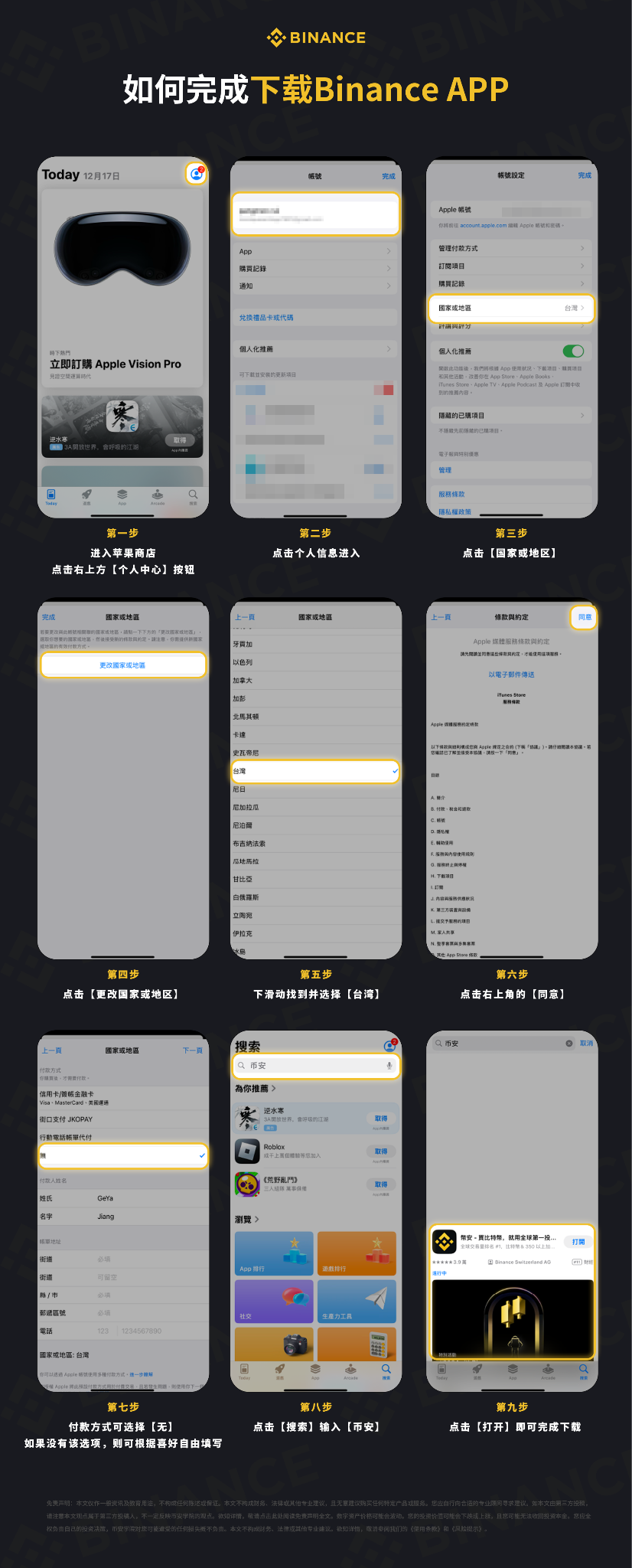
If you haven't opened an account yet, you can start with a small amount of money, complete the registration, verification, and small transactions, and get a feel for the platform’s operations and the rhythm of different assets. The cost of trying out small amounts is often much lower than regretting it later. Investment has cycles, allocation follows methods, and life should also allow for breathing space.
Exclusive Binance link for AiCoin:
https://jump.do/zh-Hans/xlink-proxy?id=3
Or log in to Binance through the APP and directly fill in the invitation code aicoin668. The following are generous registration benefits exclusive to AiCoin:
Benefit One: New customer bonus up to 440 USDT
1. Deposit 100 USDT + trade 100 USDT → receive a 100 USDT position voucher
2. Deposit 1,000 USDT + trade 50,000 USDT → receive another 300 USDT position voucher
3. Deposit 3,000 USDT + trade 200,000 USDT → receive yet another 40 USDT cash voucher
Three levels can stack; deposit 100 USDT to get the first level.
Benefit Two: Blind box draw, up to 25 RE
1. Register + deposit 50 USDT + trade 100 USDT + log in to the App
2. After completion, receive one activity blind box, randomly drawing RE tokens, with a maximum of 25 tokens.
This means a new user can receive double benefits after completing the task.
When he shut down the computer, dawn was approaching. Birds were chirping outside, and some people in the community had started morning runs. He rubbed his eyes, thinking that he must take his family out for a walk this weekend. The market will continue, but family won’t wait.
Risk Warning: This does not constitute investment advice; you may lose all principal; comply with local laws; do not use leverage, borrow, or use living expenses for participation.
免责声明:本文章仅代表作者个人观点,不代表本平台的立场和观点。本文章仅供信息分享,不构成对任何人的任何投资建议。用户与作者之间的任何争议,与本平台无关。如网页中刊载的文章或图片涉及侵权,请提供相关的权利证明和身份证明发送邮件到[email protected],本平台相关工作人员将会进行核查。


