Observation before the financial report release on October 14, 2026
Today, I want to talk with you about the U.S. stock market and the AI industry chain. Recently, companies like NVIDIA, AMD, TSMC, as well as Microsoft and Google have released a lot of news. Tomorrow, on October 15, TSMC will disclose its third-quarter financial report.
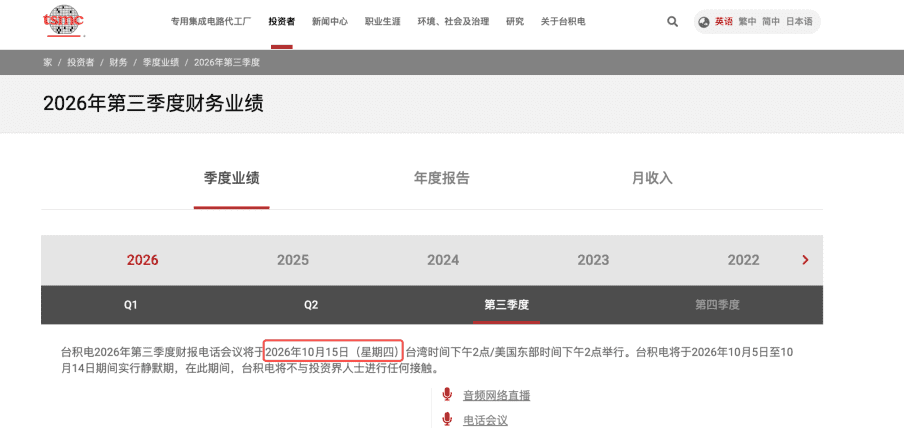
Why am I particularly focused on TSMC? The core reason is that it is positioned in the most critical manufacturing segment of the AI industry chain. The demand for high-end AI chips from companies like NVIDIA will pass on to TSMC's wafer manufacturing and advanced packaging processes. Therefore, TSMC's performance can intuitively reflect whether the demand for AI chips has truly translated to the upstream manufacturing side.
However, one thing must be clarified in advance, an increase in revenue does not necessarily mean the stock price will rise. The market is actually focused on three things: the real strength of AI demand, whether companies can convert orders into tangible profits, and whether the final performance can surpass market expectations.
Using TSMC's financial report, I want to break down a few core issues: which data in the report is worth digging into, which aspects of the AI industry chain are worth ongoing tracking, and what other variables this week will disrupt the market.
Let’s first look at the already released monthly revenue data. TSMC's revenues for July, August, and September are 467.58 billion, 514.81 billion, and 511.86 billion New Taiwan Dollars, respectively. The total third-quarter revenue is around 1.494 trillion New Taiwan Dollars, equivalent to approximately 46.7 billion U.S. dollars, increasing by 50.9% year-on-year and 17.6% quarter-on-quarter. This data has already surpassed TSMC's guidance upper limit provided in July (when the range was 44.6 billion to 45.8 billion U.S. dollars), and is also higher than the prior market expectations.
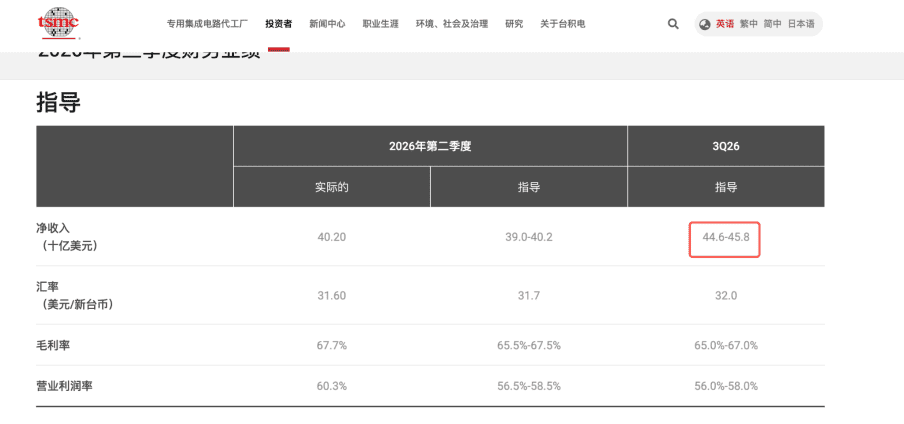
On the revenue side, it has exceeded expectations, but the real highlights of tomorrow's financial report will shift to gross margin, business structure, and the guidance for future earnings.
Tomorrow, focus on these several directions, with the first being gross margin. The company's initial third-quarter guidance range was gross margin at 65% to 67%, and operating margin at 56% to 58%. Currently, most institutions predict it will fall around 66.5% to 67%. If the gross margin stabilizes above 67%, it signifies better cost control than expected; if it falls below 65%, the market is bound to grow worried.
Regarding net profit, institutions estimate it will be around 740 billion to 746 billion New Taiwan Dollars, with a year-on-year growth of 64% to 65%. The expected EPS for the quarter is mostly between 28.5 and 30 New Taiwan Dollars.
Objectively speaking, the fundamentals seem solid with no obvious flaws, but the pressure from short-term pullbacks is still quite grueling, especially for leveraged positions. If one is optimistic about this sector in the long term, proper position management is essential; otherwise, it may be tough to withstand volatility during market fluctuations.
The second direction is advanced processes and advanced packaging. Pay close attention to management's statements on the revenue proportion from 2nm, which only accounted for 3% in the second quarter, but is expected to steadily increase thereafter; also consider the utilization rate of CoWoS capacity and the overall supply-demand structure. Advanced packaging remains the bottleneck of the entire industry chain, with demand continuing to exceed supply, directly limiting the delivery speed of high-end AI chips.
The third direction is the fourth-quarter and full-year earnings guidance. Past earnings have become a settled matter; what the market is trading is whether the company can sustain growth going forward. Currently, the market generally expects a quarter-on-quarter revenue increase of 10% to 15% in the fourth quarter. If the midpoint of the guidance is significantly higher than that of the third quarter, and the full-year revenue growth rate in dollars is confirmed to be "slightly above 40%" or even raised further, this would be a positive signal.
To summarize simply, the core of looking at a financial report isn’t about whether the performance numbers look good, but whether they can exceed market expectations. A growth of 20% isn’t bad, but if the market was already expecting 30%, there could still be disappointment when the report comes out. A decent report may not be enough to meet the expectations that the market had already established. Conversely, even if the growth rate isn’t stunning, as long as the results exceed expectations, the market is often willing to accept it.
The AI industry chain is roughly divided into three main sectors: chip design, chip manufacturing, and cloud computing and data center infrastructure. For NVIDIA and AMD, focus on data center business, product demand, and industry competition landscape. For TSMC, the key aspects are manufacturing demand, advanced processes, and packaging capacity; for Microsoft, Google, and Amazon, attention should be paid to cloud business growth and whether AI investments can translate into real income.
Various segments are interconnected, but market performance may not synchronize. For example, a sustained increase in AI chip orders is naturally good for the manufacturing side. However, if cloud vendors continue to significantly increase capital expenditures but AI-related revenue fails to meet market expectations, investors will reevaluate the return on this investment.
Therefore, in studying the AI sector market, one cannot only focus on how much companies are investing, but must also look at how much revenue and profit these investments ultimately bring.
This week, there are two variables that cannot be ignored: the U.S. CPI and the ongoing third-quarter financial reporting season for U.S. stocks.
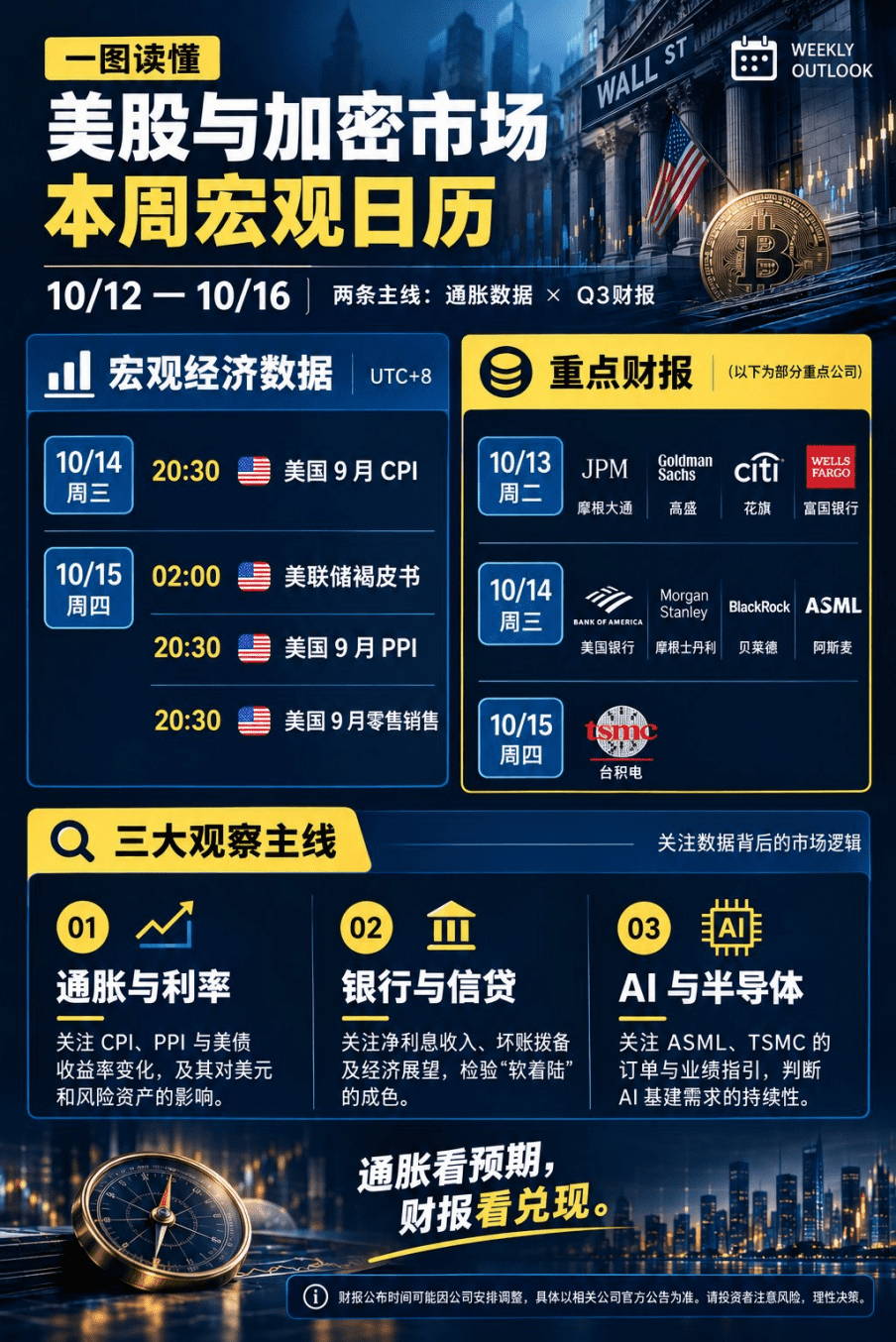
U.S. CPI: A macro variable affecting tech stock valuations The U.S. September CPI will be released at 8:30 PM tonight.
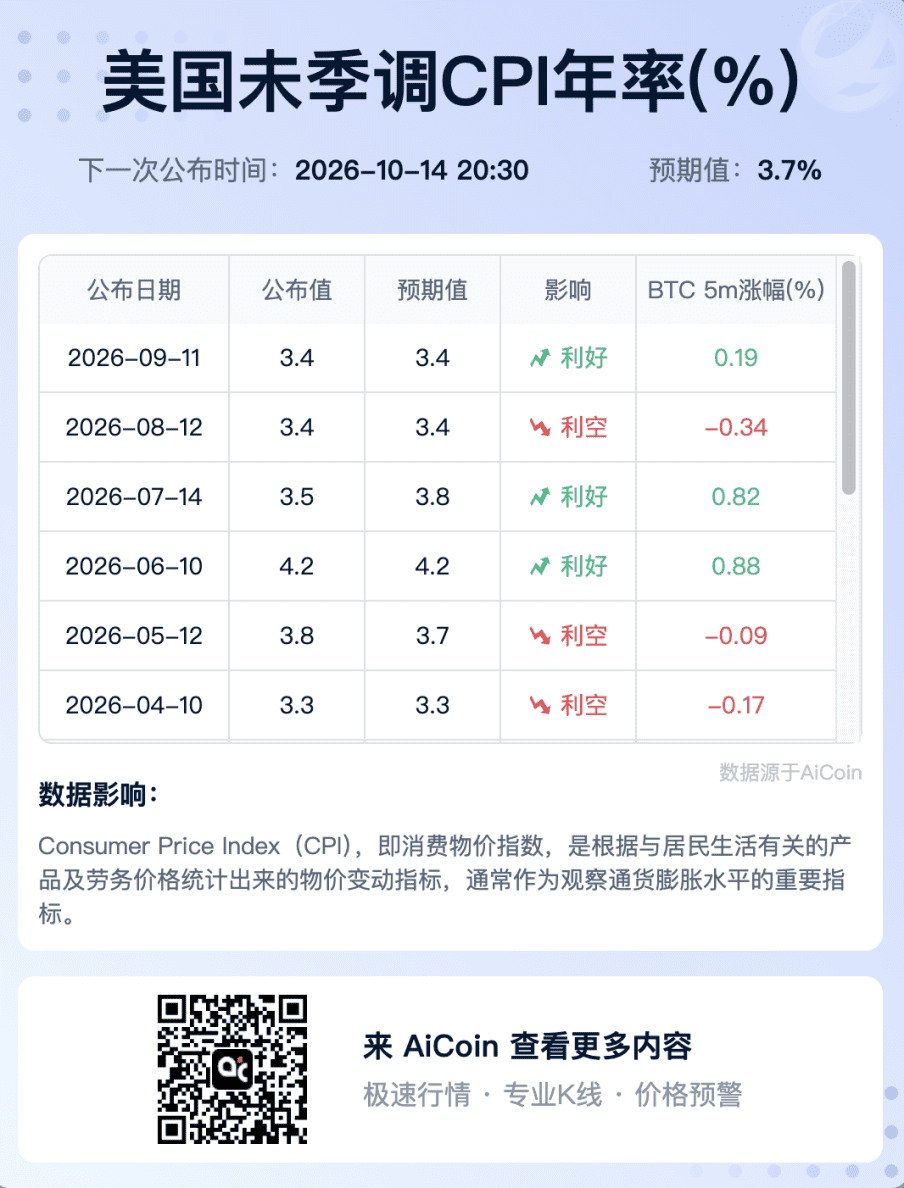
Inflation data will change the market's judgment on the Federal Reserve's interest rate direction and subsequently impact tech stock valuations. If the inflation data is lower than expected, the market will reevaluate the subsequent rate cut pace; if inflation exceeds expectations, there will be concerns about high interest rates lasting longer.
Of course, CPI alone cannot determine tech stock movements; employment data, economic fundamentals, corporate profitability, and pre-existing market expectations all collectively influence the market. For the AI industry, intrinsic growth of companies is a main line, while funding environment and valuations constitute another.
Q3 financial report season: Can AI investments yield returns Entering the third-quarter reporting phase, the market will focus on the real operational results of companies. Besides TSMC, ASML and major cloud vendors are also worth tracking. In the chip industry chain, focus on demand and order conditions; with cloud vendors, observe capital expenditures, cloud business growth rates, and whether AI-related revenues can match earlier investments.
Different companies are at different stages, some are still in the heavy investment phase, while others are gradually realizing commercial returns. This disparity will change the market’s pricing of their long-term profitability. The financial report season isn’t just about who grows the fastest, the quality of growth and whether earnings guidance can support current valuations is equally critical.
By integrating TSMC's financial report, corporate earnings, and CPI together, we can understand the current AI market from three dimensions: industrial demand, operational performance, and macro environment.
CPI, which is the U.S. Consumer Price Index, is used to measure inflation levels and directly affects the market's judgment on the Federal Reserve's rate cuts, thereby disrupting trading.
Tracking AI U.S. stocks doesn’t require spreading across dozens of companies; picking a few core targets and continuously monitoring key indicators is sufficient. For NVIDIA and AMD: focus on data center income, order conditions, and gross margins. For TSMC: track monthly revenues, demand for advanced processes and advanced packaging, and future performance guidance. For Microsoft, Google, and Amazon: focus on cloud business growth, capital expenditures, and returns on AI investments.
Before the financial report releases, first ascertain the market consensus expectations; after the report comes out, compare actual performance and future guidance with the market's reaction. The core is never about how much performance has increased, but whether the actual results have exceeded market expectations.
Here are a few key points to summarize: First, TSMC's third-quarter revenue has already confirmed to exceed expectations, approximately 1.494 trillion New Taiwan Dollars, a year-on-year increase of 50.9%. Tomorrow, focus on whether the gross margin can maintain within the guidance range of 65%-67%, the situation regarding advanced processes and advanced packaging, and whether the fourth-quarter guidance can continue the growth momentum. Second, when researching the U.S. AI market, avoid blindly following trends. Assess the fundamentals of corporate competitiveness and profit realization ability; compare reported actual performance against market expectations; understand the current trading logic in the market from the funding perspective; and use technical analysis merely as a tool to assist in judging price trends. Third, this week there are the U.S. CPI and a large number of corporate earnings announcements. By combining industrial demand, corporate profitability, market expectations, and the macro environment for a comprehensive judgment, one can fully grasp market fluctuations.
Once TSMC's financial report is released tomorrow, everyone can directly apply this framework to compare earnings, profit margins, and future guidance before observing the market’s feedback. Understanding a company isn't just about seeing how popular it is at the moment, but also about examining its underlying logic for growth, whether performance can genuinely materialize, and what the market funds are truly trading.
There are live broadcasts every day, so feel free to keep following the AiCoin community!
https://www.aicoin.com/zh-Hans/live/list?tab=upcoming
Join our community to discuss together and grow stronger!
Official Telegram community:
AiCoin Chinese Twitter:
Aster rebate:
https://www.asterdex.com/zh-CN/referral/9C50e2
Hype rebate:
https://app.hyperliquid.xyz/join/AICOIN88
Binance rebate 【Invitation code: aicoin668】:
https://jump.do/zh-Hans/xlink-proxy?id=3
Coinbase rebate 【Invitation code: Y8L23JL】:
https://jump.do/xlink?checkProxy=true&proxyId=25
免责声明:本文章仅代表作者个人观点,不代表本平台的立场和观点。本文章仅供信息分享,不构成对任何人的任何投资建议。用户与作者之间的任何争议,与本平台无关。如网页中刊载的文章或图片涉及侵权,请提供相关的权利证明和身份证明发送邮件到support@aicoin.com,本平台相关工作人员将会进行核查。


