
Friedman talks about collateral and capital flow, not just putting stocks on the chain
On October 8, 2026, Nasdaq CEO Adena Friedman was interviewed by CNBC's Joanna Ossinger at TOKEN2049 in Singapore. Her main argument is not that “stocks can be casually put on the chain,” but rather that banks and financial institutions routinely use a large amount of assets as collateral. These assets include U.S. Treasuries, stocks, money market funds, etc. Currently, their transfer and reuse are not flexible enough, which locks some capital into collateral arrangements, preventing quick deployment.
Her exact words were: “If you tokenize all those instruments along with the flow of money, then the collateral becomes very fluid.” (If you tokenize all these instruments along with the flow of money, the collateral will become very liquid.) The explicitly listed items include three asset categories plus a type of capital: Treasuries, stocks, money market funds, and the liquidity of the currency itself. The magnitude she referred to is “tens of billions of dollars,” indicating the potential efficiency of released collateral capital, not the cash already deposited into retail accounts, nor the achieved billion-scale.
She also pointed out two accompanying changes. First, institutional interest in tokenization has risen over the past year, partly benefited by the U.S. GENIUS Act establishing a regulatory framework for stablecoins. Stablecoins give “the currency itself” a programmable carrier, making it possible for capital flow to move along with assets. Second, retail demand for all-weather trading is “about ten years ahead.” The real shift towards a 24/7 market, although relatively easy for exchange infrastructure, is challenging for risk management and collateral management, which must operate continuously in real-time. The traditional windows used for system updates and risk handling during market closure will disappear. She mentioned that AI can play a role in real-time risk control. Nasdaq has already partnered with Kraken's parent company Payward (including about $100 million investment) to explore the infrastructure for tokenized stocks and launched a digital agent on the risk management platform.
This is not A (stocks have been fully tokenized and released hundreds of billions in cash), but B (making collateral and capital flow into a quickly transferable digital form, potentially improving capital efficiency). Stocks are just one category of assets; Treasuries and money market funds have a larger volume in institutional collateral scenarios.
Why tokenized stocks are the fastest-growing area on the retail side
Among the types of assets Friedman mentioned, the tokenization of Treasuries and money market funds mostly occurs in institutional collateral and clearing scenarios, with ordinary investors having less exposure. Tokenization of stocks, however, directly targets retail, as stocks are the risk assets most familiar to retail investors, and the demand for 24/7 trading is also the clearest.
The data can be verified. The total market value of tokenized stocks and ETFs has grown from around tens of millions of dollars a year ago to about $3.5 billion to $4.9 billion recently. The number of holders has significantly increased, with some statistics showing a high proportion of tokenized stocks among all RWA holders. On the issuer side, Ondo accounts for about 36%, Binance's bStocks approximately 26%, Backed/xStocks around 26%, with the rest spread across platforms like Robinhood and Coinbase. In terms of trading volume, some months show that Robinhood and bStocks together account for over 70%. These figures are still changing rapidly and are very small relative to the total market value of traditional U.S. stocks, but the growth rate is one of the fastest segments in RWA.
In operation, tokenized stocks currently fall into two main categories. One category has issuers place actual shares into custodial accounts and issue 1:1 tokenized receipts (such as Binance bStocks, some Ondo and xStocks products), designed to track the underlying price, with some allowing conversion with the underlying shares. Holders gain price exposure, usually without voting rights at shareholder meetings, with dividends potentially reflecting through a reinvestment mechanism. The other category involves trading controlled securities that carry equal rights on-chain venues, which are still subject to volume limits and venue restrictions. Most products accessible to retail belong to the first category.
User feedback focuses on three points. Positively, there is a low barrier to entry (some products start around $5), 24-hour trading is available, they can coexist in the same account as crypto assets, and settlement is quick. Negatively or as a caution: it represents price exposure rather than full ownership, voting rights are typically nonexistent, liquidity may thin out during non-trading hours, and custody and investor protection depend on the issuer's structure rather than traditional brokerage protection. Market acceptance is rising, but the misunderstanding of treating tokenized stocks as ordinary stocks is still common.
Binance bStocks: Currently one of the most direct retail entry points
Binance's bStocks is one of the fastest-growing tokenized stock products on the retail side. It provides price exposure to multiple U.S. stocks and ETFs in the form of tokenized receipts, with the underlying shares held in a regulated custodial structure, designed for a 1:1 economic correspondence. Eligible non-U.S. users can purchase using stablecoins on Binance, supporting 24-hour trading (including weekends), with a minimum entry point of about $5. The conversion between the underlying real shares is free for supported products. Spot trading follows Binance's standard spot fee rates (which may be lower for Makers during promotional periods). Holders do not receive voting rights, and dividends are usually reinvested into the positions.
For newcomers, the operational path is: complete Binance KYC → confirm availability in your region → deposit stablecoins → search for bStocks codes (e.g., SPYB corresponds to SPY-related products) in the spot or corresponding entry → make a small purchase. They can first verify the process with paper trades or a very small amount, then decide whether to increase their investment. It solves the problem of “regardless of existing crypto assets or other funds, you can register with a low threshold and gain price exposure to U.S. stocks 24/7,” without turning stocks into risk-free assets or replacing all traditional brokerage functions.
AiCoin exclusive Binance link: https://jump.do/zh-Hans/xlink-proxy?id=3
Or log in to the Binance APP and directly enter the invitation code aicoin668, below are the exclusive generous registration benefits from AiCoin:
Benefit one: New users can get up to $440
1. Deposit $100 + trade $100 → receive $100 in position coupon
2. Deposit $1,000 + trade $50,000 → receive an additional $300 in position coupon
3. Deposit $3,000 + trade $200,000 → receive an additional $40 cash coupon
Three tiers can stack, you can obtain the first tier by depositing $100
Benefit two: Open a blind box, up to 25 RE
1. Register + deposit $50 + trade $100 + log in to the App
2. After completing this, a blind box will be awarded, randomly drawing RE tokens, with a maximum of 25
This means that a new user can enjoy double benefits after completing the tasks
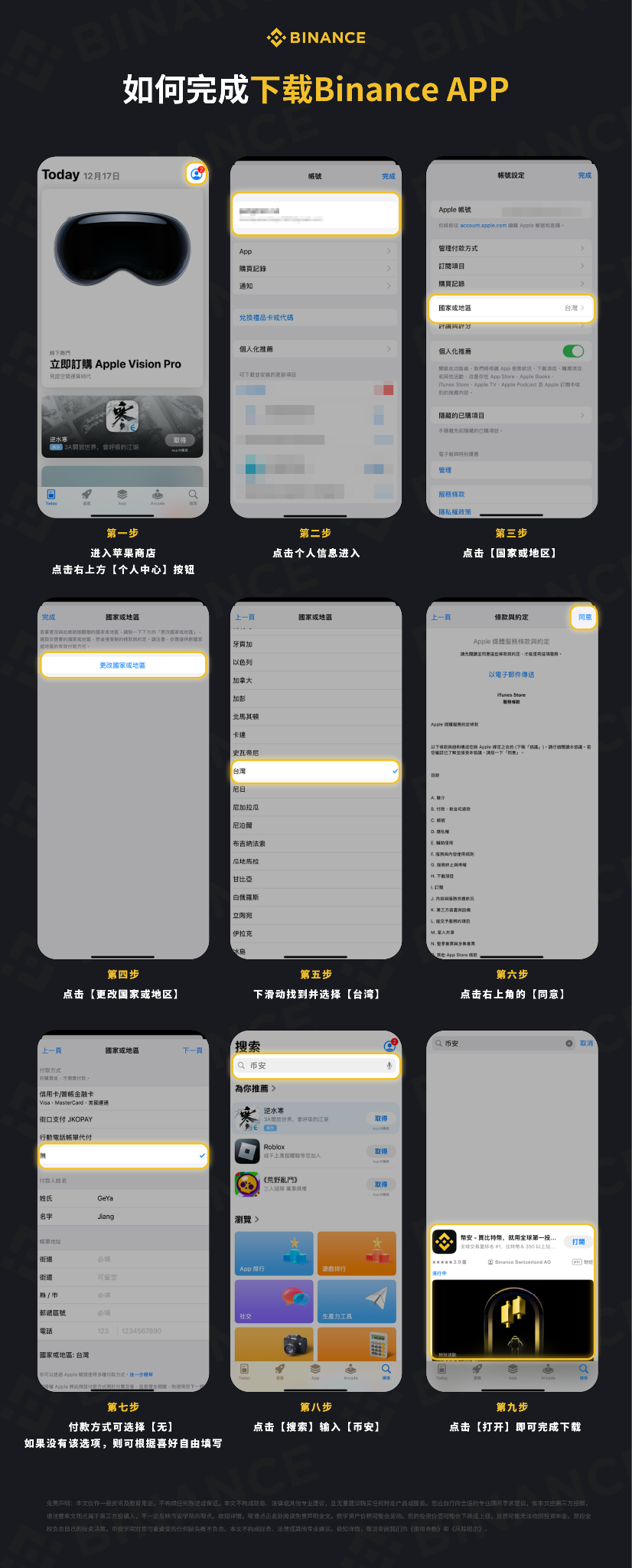
Other products on Binance suitable for newcomers besides tokenized stocks
There are several other types of products in a Binance account that are more suitable for complete beginners, which do not require understanding of the tokenized structure beforehand:
- Spot trading: Mainstream assets like Bitcoin, Ethereum, etc., bought and sold at market or limit prices, with no forced liquidation. Suitable for building the first position with spare cash, understanding buying, holding, and reducing positions per rules.
- Stablecoins and simple wealth management: USDT, USDC, etc., with some products offering flexible or fixed income, low threshold, suitable for fund transit or cash management.
- Dollar-cost averaging/swap dollar-cost averaging: Set cycle and amount for automatic purchases of designated assets (including some bStocks or mainstream coins). Reduces timing pressure.
- Real U.S. stock brokerage channel in qualified regions: Directly trade U.S. stocks and ETFs, with an experience closer to traditional brokerages; some products can convert 1:1 with bStocks.
- Learning and simulation: Market data, briefings, and AI-related tools (like Binance AI) within the platform can be used to sort information and do not automatically place orders.
The recommended order is to first get accustomed to the process with spot trading or dollar-cost averaging, then consider tokenized stocks or higher leverage products. For any products, first set a single trade loss limit (e.g., 1%–2% of total spare cash).
Comparison of operations and fees with traditional stocks
Traditional stocks are usually traded through brokerages, during trading hours on exchanges, with voting rights and direct dividends, and some regions have investor protection. Opening accounts, depositing funds, minimum amounts, and trading hours may be higher or more restricted. Most tokenized stocks support smaller amounts, stablecoin settlement, and 24-hour trading, but the rights typically involve price exposure only, with no voting rights, and protection relies on the issuer. In terms of fees, tokenized spot trading follows standard platform rates, and converting to underlying shares is sometimes free; traditional brokerage commission structures vary, with some involving maintenance fees.
What can be observed is not the "hundreds of billions" in the title
Consider whether the liquidity of collateral mentioned by Friedman is genuinely materializing in interbank markets (the tokenization collateral usage of Treasuries, money market funds), whether the market value, volume, and number of holders of tokenized stocks continue to grow, whether various platform products truly provide redeemable underlying rights, and whether individuals are following rules rather than treating receipts as complete stocks. What the Nasdaq CEO discussed is capital efficiency at the infrastructure level, and stocks are just one category of assets. Binance offers one of the most direct retail entry points for tokenized stocks currently, along with spot trading, dollar-cost averaging, and wealth management tools in the same account. While the channel has changed, the volatility and fundamentals of the underlying asset remain unchanged. Start small, write down the rules, confirm the rights, and then decide the position.
Risk warning: This does not constitute investment advice; you may lose all your principal; comply with local laws; do not use leverage, borrowing, or living expenses to participate.
免责声明:本文章仅代表作者个人观点,不代表本平台的立场和观点。本文章仅供信息分享,不构成对任何人的任何投资建议。用户与作者之间的任何争议,与本平台无关。如网页中刊载的文章或图片涉及侵权,请提供相关的权利证明和身份证明发送邮件到support@aicoin.com,本平台相关工作人员将会进行核查。


