CoinW Research Institute
Abstract
Citrini Research released the report "Breaking The Wall," listing DRV in the highest weight category of the simulated investment portfolio, sparking market interest in the on-chain options sector. With AI Agents driving automated trading and RWA expanding the scope of on-chain assets, options and risk management protocols are expected to become significant revenue entry points in on-chain finance. Derive accounted for approximately 90.4% of the on-chain options premium trading volume in the third quarter of 2026, possessing advantages in segmented tracks, and supports DRV value capture through a 35% protocol revenue repurchase mechanism. However, the current theoretical annualized repurchase scale is only about 0.6% of the circulating market value, still facing competition from centralized platforms, token releases, and valuation pressure. Citrini's focus brings short-term valuation reassessment opportunities for DRV, but whether Derive can convert its leading share in on-chain options into sustainable business value still requires market verification.
1. Citrini's "Breaking The Wall" Report Sparks Interest, Why Did DRV Come into View?
On October 8, Citrini Research published the "Breaking The Wall" report, exploring whether traditional finance's trading and settlement systems can meet new market demands as AI Agents begin to manage real-world assets (RWA) like funds, stocks, and bonds around the clock, accelerating their on-chain transition. Citrini believes that blockchain is gradually becoming a financial infrastructure capable of operating 24/7, called upon automatically by software. This report does not simply express a bullish view on the entire crypto market but seeks to identify the true beneficiaries of on-chain financial development. As more assets and funds enter the blockchain, who will continue to generate income from trading, lending, clearing, and risk management? In the publicly disclosed simulated investment portfolio, Derive (DRV) and Lighter (LIT), along with Ether.fi (ETHFI) each received around a 10% target weight and ranked among the highest allocations. However, this is only a target configuration of the simulated investment portfolio and does not represent that Citrini has completed actual positions at this ratio. After the report was released, DRV quickly became the focus of the secondary market. On October 9, DRV's 24-hour increase reached approximately 25%; as of October 10, CoinMarketCap data showed that the DRV price was about $0.55, with a 24-hour trading volume exceeding $100 million. While the rise cannot be entirely attributed to Citrini, market attention towards on-chain derivatives has clearly intensified. Why DRV entered Citrini’s investment view, and whether its business can support current market expectations, is worth further analysis.
2. From AI Agent to RWA: Why Are On-Chain Derivatives Likely to Become Revenue Entry Points?
Citrini's judgment is mainly based on two trends. On one hand, real-world assets like stocks, bonds, gold, and credit are gradually moving on-chain, expanding the range of tradable assets; on the other hand, AI Agents are beginning to possess the ability to autonomously search for information, compare prices, and execute trades, possibly becoming new traders that operate 24/7 and adjust positions automatically in the future. As more assets enter the on-chain space, market demand will extend from simple buying and selling to risk management. Investors need to hedge against price fluctuations, lock in future costs, or control risks without selling off positions, thus creating broader application scopes for derivatives like options and perpetual contracts. AI Agents may also automatically execute trading and hedging strategies based on market volatility, account risk, and price changes. Thus, as RWA expands asset supply, AI Agents may increase trading frequency, while derivative protocols can cater to the growing demand for pricing, margin, hedging, and clearing. These services can continuously generate fees, giving trading infrastructure long-term income potential. Those who can provide deeper liquidity, reliable risk control, and convenient trading experiences have better chances of becoming revenue entry points in on-chain finance. However, options involve different strike prices, expiration dates, and volatility, making market-making and risk management more complex than spot trading, which increases the participation threshold for average users. Hence, while the industry's growth potential is indeed promising, the ultimate ability to scale depends on real trading demand and product competitiveness.
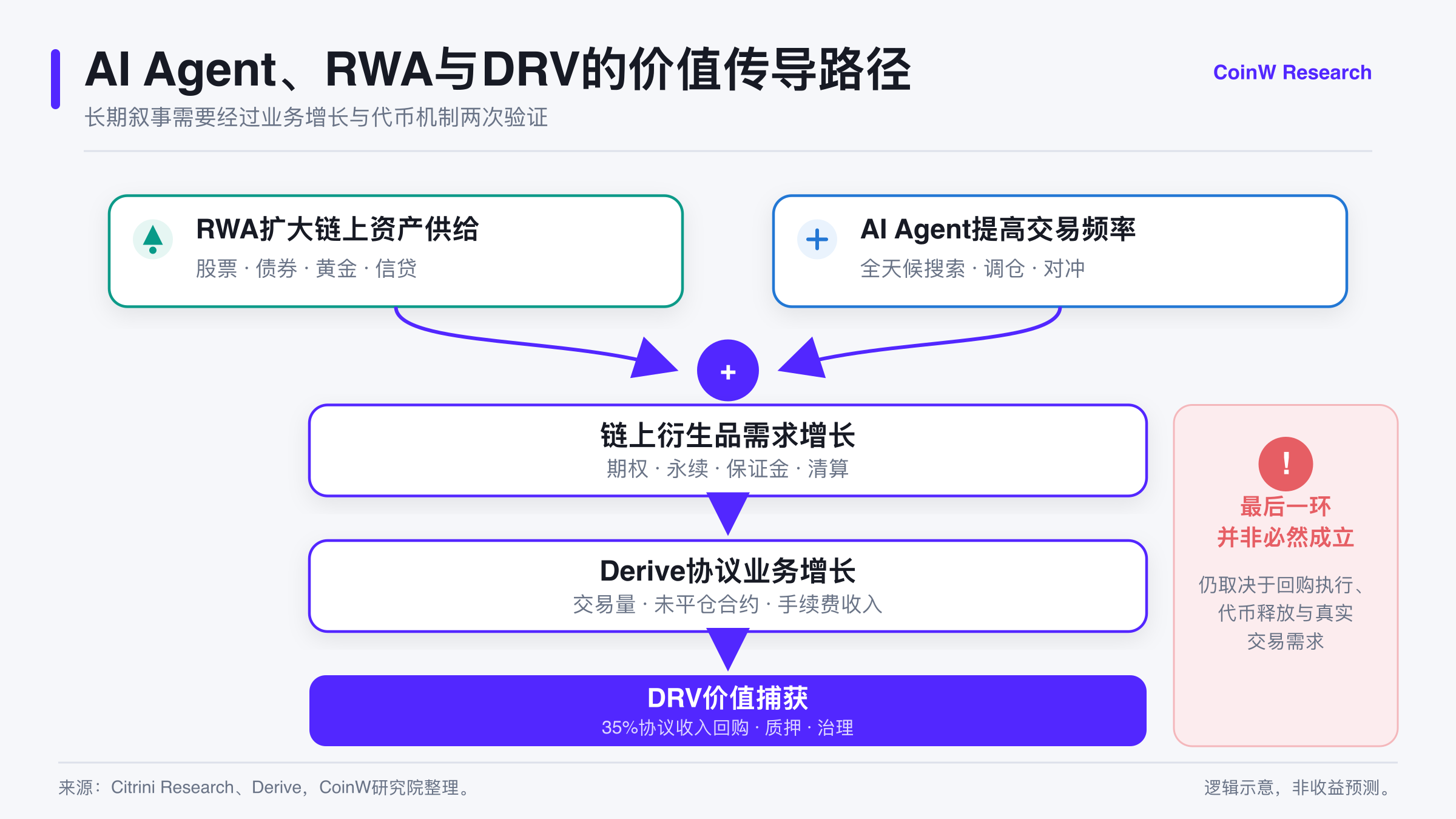
Figure 1: Value Transmission Logic of AI Agent, RWA, and DRV. Source: CoinW Research Institute.
3. What is Derive? Where is Its Competitiveness in the On-Chain Options Sector?
Derive originated as the on-chain options protocol Lyra, which launched in 2021. After years of development, it has expanded from a single options platform to a comprehensive derivatives protocol covering options, perpetual contracts, and spot trading. Its major feature is on-chain options trading. Compared to perpetual contracts, which are mainly used for long and short positions, options offer a more flexible way to manage risks. For example, if an investor holds ETH and is concerned about a short-term decline but does not want to sell directly, they can pay a premium to buy a put option to add a layer of protection to their holdings. Derive also supports portfolio margining, cross-margining, and multi-asset collateral, allowing users to comprehensively calculate risk across different positions, improving capital efficiency. Technically, Derive’s core trading operates on the Derive Chain built on OP Stack, while also supporting users to transfer assets cross-chain from networks like Ethereum, Arbitrum, Base, and Optimism. The protocol uses an off-chain matching and on-chain settlement model. Trading orders are matched quickly off-chain, while margin management, clearing, and final settlements are completed through the on-chain protocol. This improves trading efficiency and allows users to have control over their assets. However, the protocol still relies on the stable operation of off-chain matching systems, oracles, and market makers.
From a business data perspective, Derive has already established a leading position in the on-chain options market. As of October 10, DefiLlama reported that Derive's nominal trading volume in options over the past 30 days was approximately $4.44 billion, with options premium trading volume around $80.82 million and a total locked value (TVL) of about $111 million. In the third quarter of 2026, Derive accounted for about 90.4% of the on-chain options premium trading volume, demonstrating strong competitiveness in a segmented market. However, leading on-chain does not mean it can stand toe-to-toe with centralized giants. According to statistics from Alea Research, among platforms like Deribit, OKX, Bybit, Binance, and Derive, only about 3.1% of Derive's options open interest is present, while Deribit remains about 25 times larger. Derive's strengths lie in asset autonomy, transparent settlements, and its ability to integrate with DeFi protocols, but its liquidity depth and market-making scale still lag behind those of mature centralized platforms; whether it can expand its business scale in the future depends on the growth of the entire sector and how well it can continue to reduce the gap with centralized platforms.
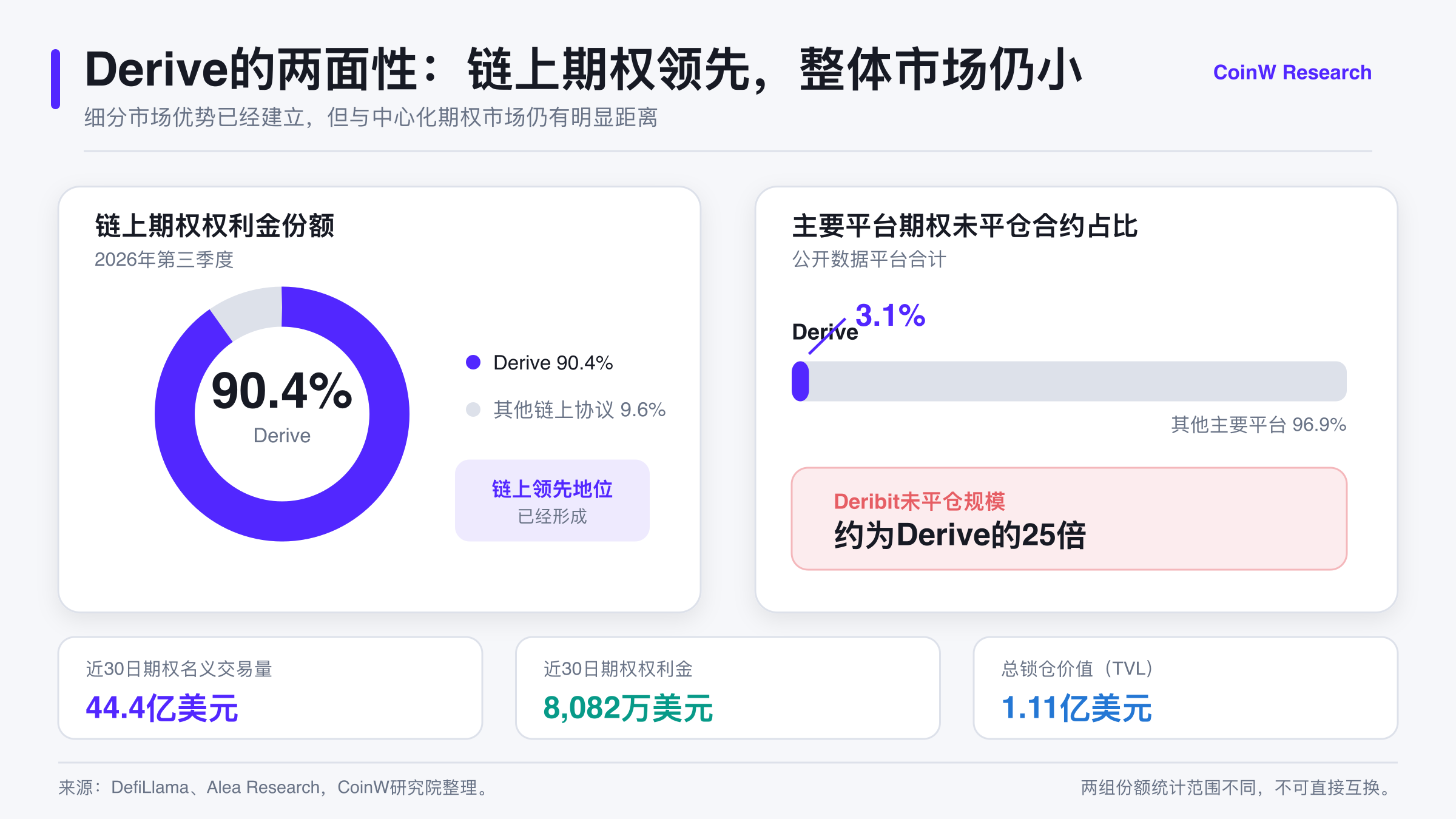
Figure 2. The Dual Nature of Derive - Leading On-Chain, Overall Market Still Small. Source: CoinW Research Institute.
4. From Protocol Revenue to DRV Tokens: Can the Value Capture Flywheel Be Established?
Derive's business growth does not necessarily mean that the DRV price will rise in tandem. To assess the long-term value of the token, it is essential to further analyze the relationship between protocol revenue, repurchase mechanisms, and token supply. As of October 10, DefiLlama indicated that Derive's total fees in the past 30 days were approximately $714,000, with protocol revenue around $574,000. Although the business scale in 2026 is significantly larger than in 2025, options trading is susceptible to market fluctuations and large institutional orders, and short-term volume increases may not be sustainable. In contrast to nominal trading volume, the actual revenue received by the protocol and whether users can continue to trade following reduced incentives better reflect the quality of the business.
35% Revenue Repurchase, How Much Support Can It Bring to DRV?
DRV is primarily used for staking, governance, and ecological incentives. Holders can stake DRV as stDRV, participate in protocol governance, and earn rewards. In April 2026, Derive DAO adjusted its governance, increasing the proportion of protocol revenue allocated for the repurchase of DRV from 25% to 35%, while reducing the weekly staking rewards from 250,000 tokens to 100,000 tokens, and shortening the unstaking waiting period from 28 days to 7 days. This has established a clearer value transmission path. As trading increases, protocol revenue grows, with 35% allocated for repurchasing DRV from the market, forming potential buying pressure. But how large is the repurchase fund? Based on the simple annualization of about $574,000 in protocol revenue over the past 30 days, the projected annual revenue is approximately $6.888 million, corresponding to a theoretical repurchase fund of about $2.41 million. Compared to the current circulating market value of around $400 million for DRV, the annualized repurchase scale is only about 0.6%. This indicates that the repurchase mechanism has been established, but at the current revenue level, it is insufficient to individually support DRV's market valuation. Additionally, a repurchase does not equate to destruction or direct dividends. The repurchased DRV may continue to be held or be used for incentives based on governance arrangements. Derive still distributes around 100,000 DRV staking rewards each week, which sums to about 5.2 million tokens annually. Therefore, beyond the repurchase amount, it is also crucial to monitor the actual destination of repurchased tokens and whether repurchase demand can offset new circulating supply.
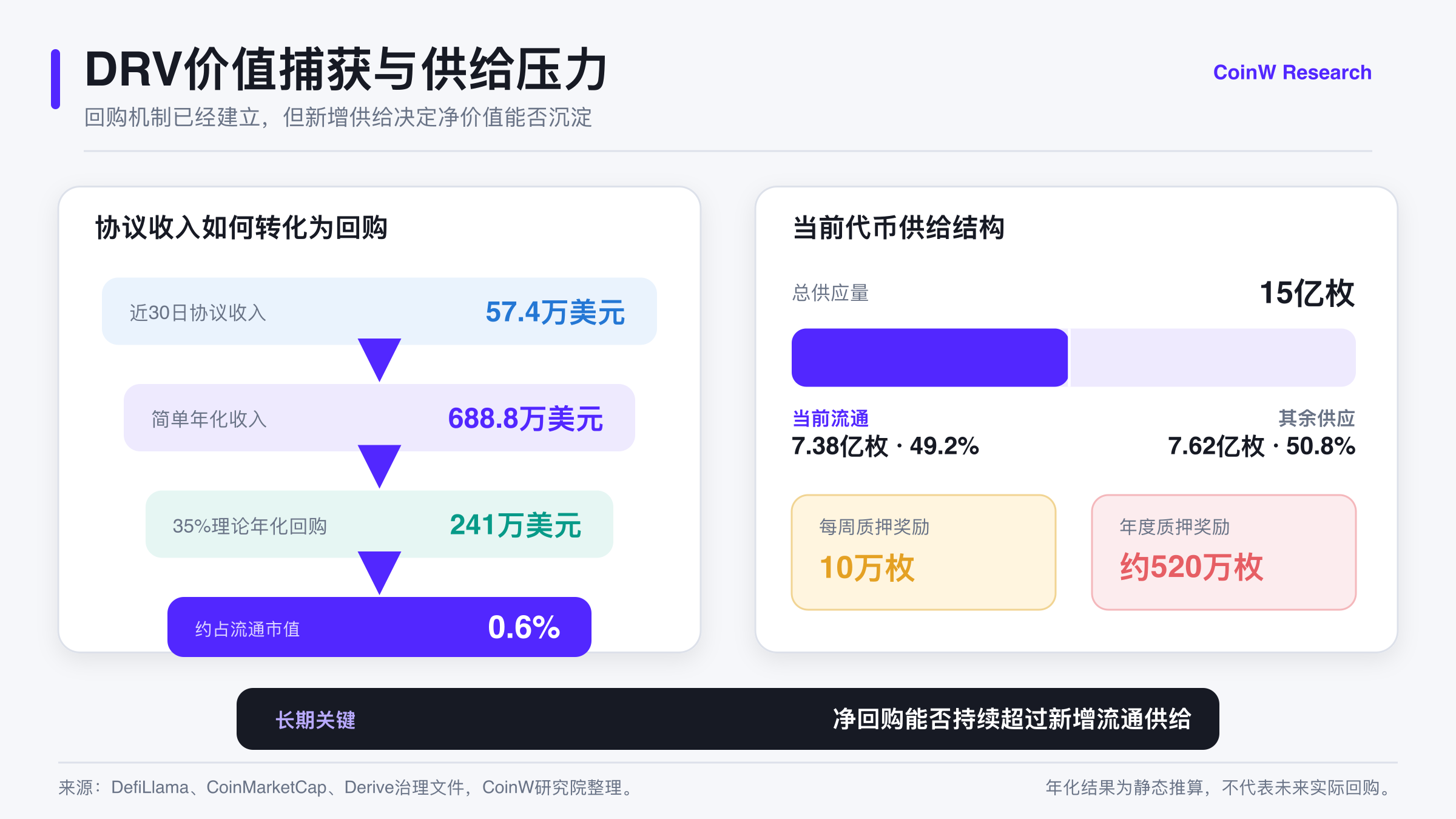
Figure 3. DRV Value Capture and Supply Pressure. Source: CoinW Research Institute.
Can Token Supply and Valuation Support Market Expectations?
DRV initially inherited a supply of 1 billion tokens from LYRA, but 500 million new tokens were approved for issuance by governance in 2025 for contributor incentives, institutional collaborations, market-making, and ecological development, expanding the total supply to 1.5 billion tokens. This means that the supply scale of DRV is not completely fixed and may still be influenced by governance decisions in the future. As of October 10, CoinMarketCap indicated that the circulating supply of DRV is approximately 738 million tokens, accounting for 49.2% of the total supply; the circulating market value is approximately $404 million, with a fully diluted valuation (FDV) of approximately $821 million. The current circulating tokens comprise less than half of the total, and future releases of tokens for contributors, the foundation, and ecological incentives may introduce new supply pressures. Different platforms also report discrepancies in circulating supply, necessitating an analysis in conjunction with official unlock arrangements and changes in on-chain wallets. DRV has established a value transmission mechanism of "trading growth - protocol revenue - token repurchase," but the scale of repurchase remains limited. In the future, only if revenue continues to grow and gradually covers the new supply resulting from token releases and incentives will the protocol's business advantages be more likely to translate into the long-term value of DRV.
5. Long-Term Value Capture, Short-Term Focus on Funds and Valuation
The Citrini report has brought new market attention to DRV, but the short-term price movements are clearly outpacing changes in the protocol's fundamentals. The 24-hour trading volume equates to about 27% of its circulating market value, reflecting active capital trading, which also means that prices are more susceptible to news, market sentiment, and leveraged funds. The current market needs to differentiate between short-term narrative drivers and long-term fundamental improvements. If DRV's rise primarily stems from the report's dissemination, while Derive’s options trading, open interest, and protocol revenue do not grow in parallel, then the market is preemptively trading future expectations. Conversely, if business data continues to improve, it indicates that this wave of attention is gradually transforming into real demand. In the long term, as RWA pushes the expansion of on-chain asset types and AI Agents accelerate automated trading, the demand for options hedging, portfolio margining, and risk management is expected to further grow. Derive has programmatic trading interfaces and automated strategy products, potentially becoming a foundational trading infrastructure for AI Agents executing complex derivative strategies. However, Derive has yet to clearly launch native AI Agent trading products; whether it can capture this incremental demand in the future still needs verification, and it also faces liquidity advantages from centralized platforms, competition from similar protocols, and token supply pressures. The four metrics that will be most noteworthy for DRV going forward are actual trading demand, protocol revenue, repurchase execution scale, and new circulating supply. In the short term, attention should also be paid to whether trading volume, capital leverage, and market sentiment can be sustained. Citrini provides an investment framework for finding revenue entry points in on-chain finance, but whether DRV can truly fulfill this logic ultimately relies on Derive's continued revenue generation and the conversion of that revenue into actual token demand as proof.
This article is intended for market research and information analysis purposes only and does not constitute any investment or trading advice.
References
1. Citrini Research "Breaking The Wall" Report: https://www.citriniresearch.com/p/breaking-the-wall
2. CoinMarketCap | Derive (DRV) Token Market, Market Value, and Circulating Supply: https://coinmarketcap.com/currencies/derive/
3. Derive Official Blog | Announcing Lyra V2 (Protocol Technical Architecture and Product Mechanism): https://blog.derive.xyz/announcing-lyra-v2
4. DefiLlama | Derive Protocol Data (Options Trading Volume, TVL, Fees, and Revenue): https://defillama.com/protocol/derive
5. Alea Research | Twice the Exposure, a Quarter Cheaper (Derive vs. Centralized Options Exchanges Competitive Landscape): https://alearesearch.io/newsletters/twice-the-exposure-a-quarter-cheaper
6. Derive DAO Governance Proposal | DRV Repurchase Ratio, Staking Rewards, and Unstaking Rule Adjustments: https://governance.alearesearch.io/item/cdb5099b-0882-4da1-87a0-e7ccdf5a0e92
7. Blockworks | Derive Token Transparency (DRV Token Supply and Distribution Mechanism): https://blockworks.com/token-transparency/filing/derive
免责声明:本文章仅代表作者个人观点,不代表本平台的立场和观点。本文章仅供信息分享,不构成对任何人的任何投资建议。用户与作者之间的任何争议,与本平台无关。如网页中刊载的文章或图片涉及侵权,请提供相关的权利证明和身份证明发送邮件到support@aicoin.com,本平台相关工作人员将会进行核查。